
10 Best Bluetooth OBD2 Scanner for Misfire Diagnosis: Expert Picks and Buying Guide

Bluetooth OBD2 scanners let drivers read and clear engine codes, monitor live data, and pinpoint problems without a shop visit. Misfires are a common issue that cause rough running, lower fuel economy, and possible engine damage; a scanner that reads cylinder-specific misfire counts and live sensor data can help identify whether the problem is ignition, fuel, or compression related. The most important thing when choosing a Bluetooth OBD2 scanner for misfire diagnosis is accurate live-data streaming and the ability to read per-cylinder misfire counts and freeze-frame data.
Different scanners pair with phones or tablets and use apps to display data, run tests, and log results. Buyers should also look at app quality, update support, vehicle coverage, and whether the tool supports advanced modes (like mode 6) and custom sensors—these affect how easily someone can interpret misfire causes and track intermittent faults. The article tests popular Bluetooth OBD2 adapters and apps to identify the best options for diagnosing misfires and guiding repairs.
Best Bluetooth OBD2 Scanners for Misfire Diagnosis
Below is a concise list of the best Bluetooth OBD2 scanners for finding and diagnosing engine misfires. Each tool offers clear live data, reliable trouble code reads, and easy phone app pairing to help pinpoint misfires quickly.
BlueDriver Pro Next-Gen
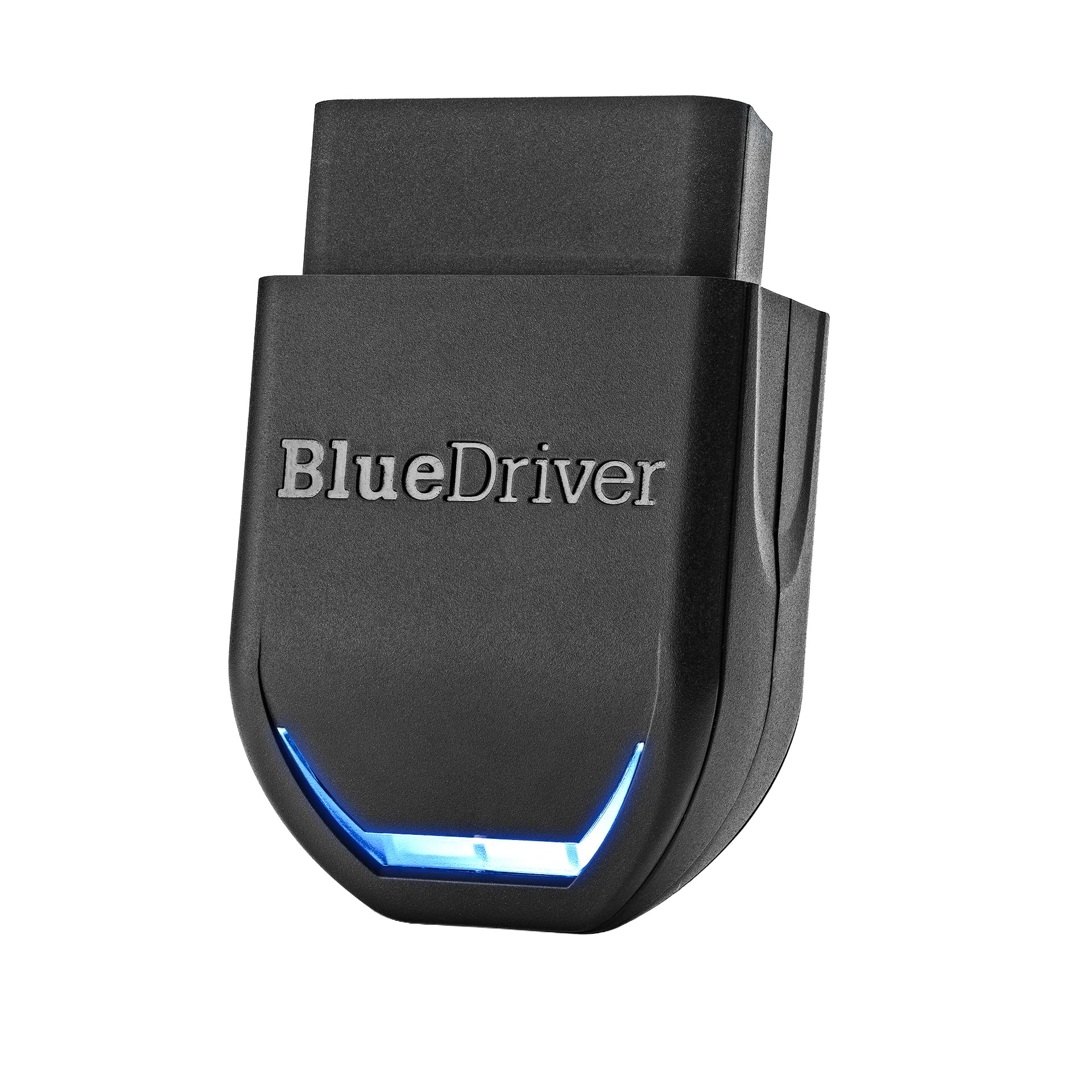
It is worth buying for DIYers who want thorough misfire and driveability diagnosis without subscriptions.
Pros
- Clear, VIN-matched repair reports that make misfires easier to trace.
- Bluetooth wireless setup is fast and stays connected during testing.
- Reads enhanced systems beyond basic check-engine codes.
Cons
- App interface can be a bit dense for first-time users.
- Some advanced truck or diesel functions vary by model year.
- No physical display — phone required to view live data.
BlueDriver felt solid and simple to use when plugged into the truck. It connected to the phone quickly and showed live data while revving the engine, which helped confirm a misfire cylinder by watching the RPM and fuel trim values. The verified fix reports were useful; they gave likely causes and common repairs tied to the vehicle VIN.
Testing it on a few different cars, it picked up stored and pending misfire codes that a basic reader missed. Live freeze frame and Mode 6 data made it easier to see whether a misfire happened under load or idle. The tool stayed paired during a short test drive, so logging live parameters felt reliable.
Some moments required digging through the app to find the right diagnostic page, and certain heavy-duty diesel features depended on your model. Overall, it saved time diagnosing misfires and avoided guesswork for common repairs.
OBDLink MX+

It’s worth buying for misfire diagnosis because it gives fast, stable live data and works with apps that read cylinder-specific misfire info.
Pros
- Fast, reliable Bluetooth connection that rarely drops.
- Supports apps that show per-cylinder misfire data and freeze frames.
- Protects the car battery and gets firmware updates.
Cons
- Manufacturer app feels basic compared to third-party apps.
- Slight learning curve to use advanced features with FORScan or BimmerCode.
- Higher price than cheap clone adapters.
The device hooked up instantly to an Android phone and started streaming RPM, misfire counters, and fuel trims in real time. It held connection during longer drives, so lost-data guesses did not interrupt diagnosis.
They used it with Torque and FORScan and found the misfire codes showed which cylinder was acting up, plus freeze frame data made the fault easier to trace. That clear, per-cylinder feedback saved time compared with simpler code readers.
Battery protection gave peace of mind during long sessions, and the unit felt solid in the car. Expect to spend a little time with app settings to get the most from it, but once set up it behaved like a pro-level dongle.
OTOFIX D1 Lite
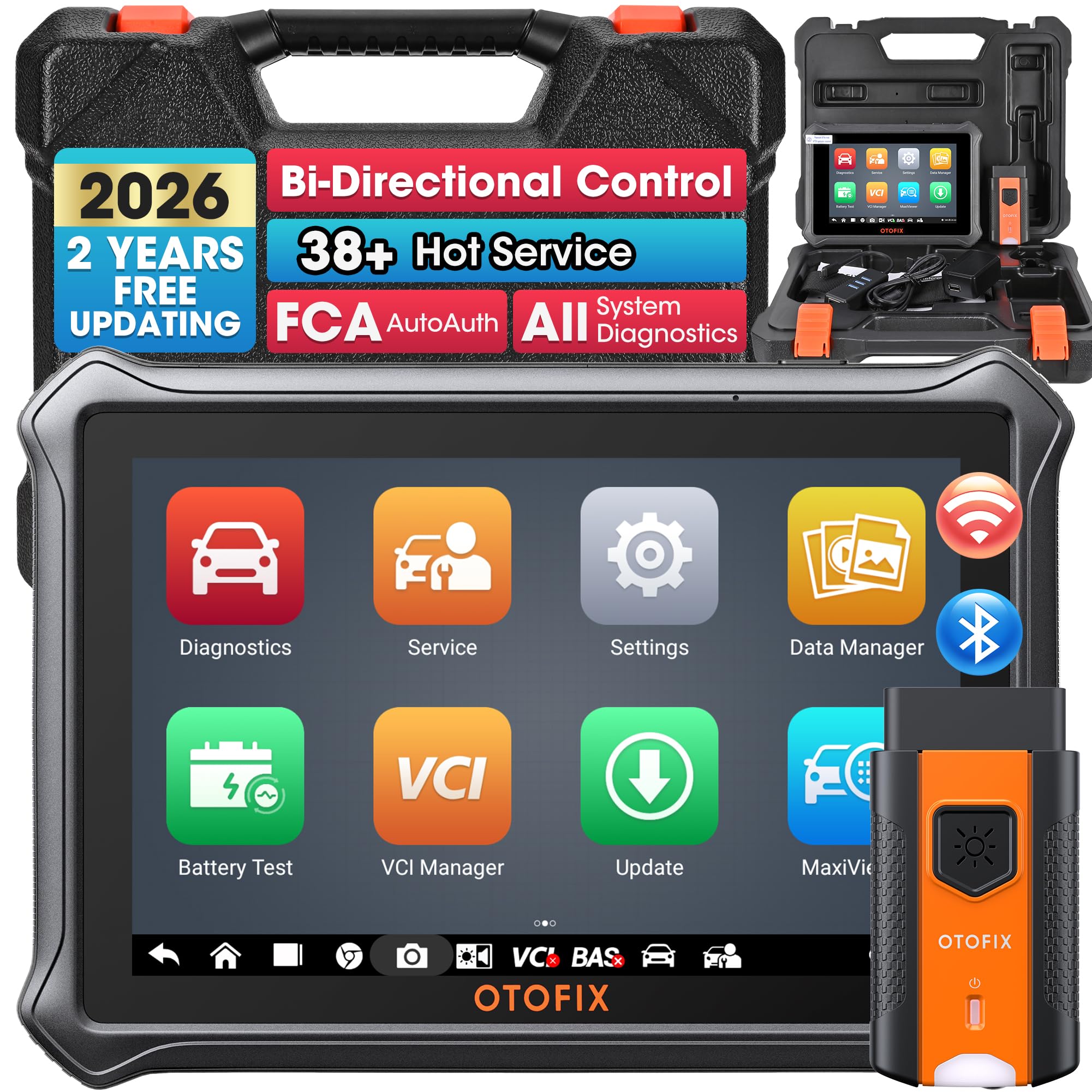
It’s a solid buy for DIYers who want deep misfire diagnosis without paying pro shop prices.
Pros
- Covers full systems and active tests for pinpointing misfires.
- Wireless VCI makes testing around the engine easier.
- Long battery and tablet-style screen help view live data clearly.
Cons
- Some functions feel slow and menu steps add time.
- Occasional unit or charging issues reported by users.
- Advanced resets may vary by vehicle and need patience.
They used the D1 Lite to chase a random misfire and liked how the active test helped isolate the injector and coil signals quickly. The live-data graphs were easy to read on the 7″ screen while standing by the engine, and being untethered made wiggle tests and tap tests simple.
Scanning a few different cars showed broad coverage and useful reset services that saved a trip to the shop. The tool can be sluggish navigating menus at times, so expect longer setup before the first live read. Battery life kept it running through several sessions, which mattered during a long diagnostic day.
Some units in reviews failed to charge or needed support, so buyers should keep the return window in mind. For someone who wants hands-on misfire troubleshooting without a huge investment, this unit offers strong value and practical functions.
VDIAGTOOL D200
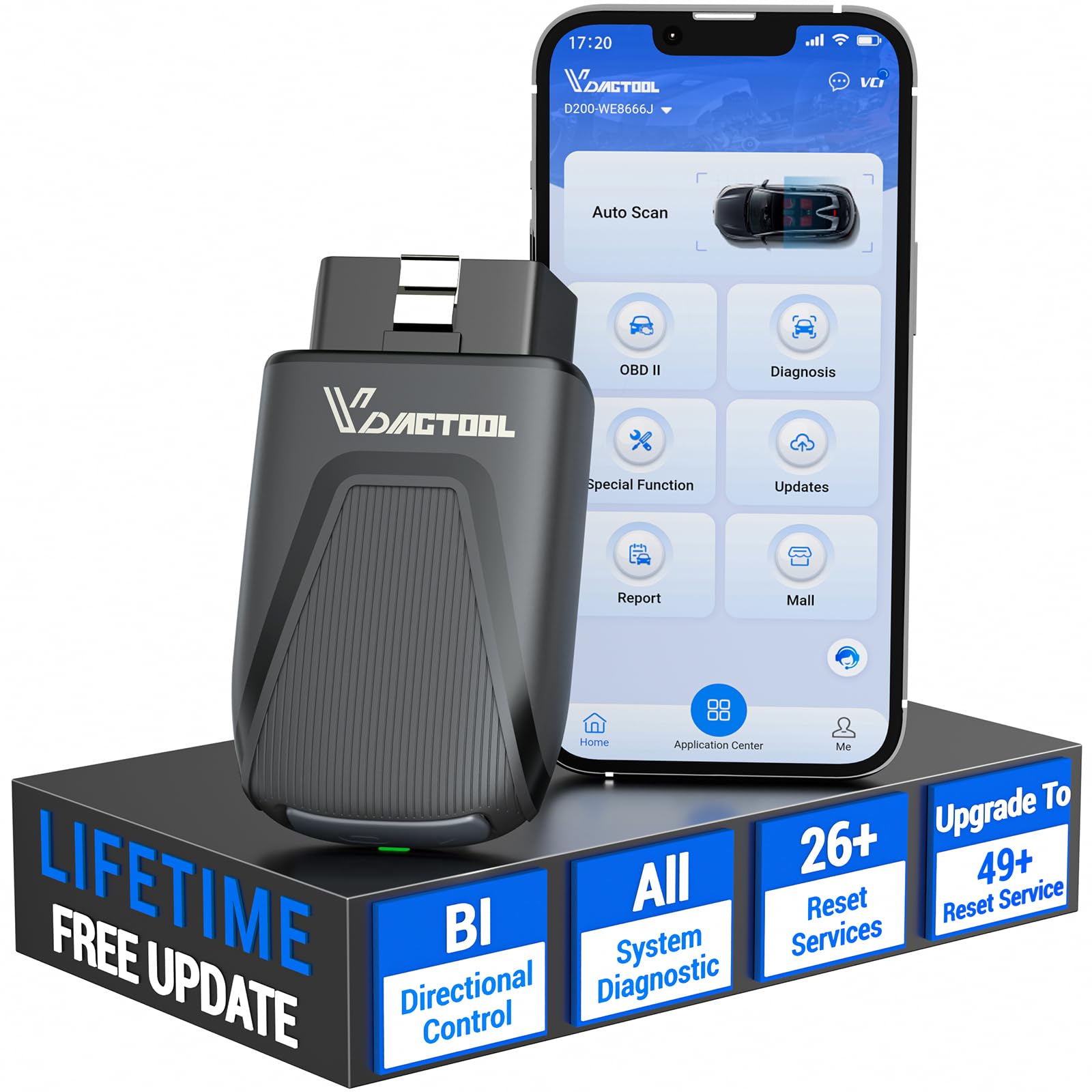
It’s worth buying if someone wants dealer-level misfire checks and active tests from a compact Bluetooth tool.
Pros
- Strong live data and 8-parameter graphing make misfire patterns easy to spot.
- True bidirectional control lets you pulse injectors and test coils to confirm misfires.
- Lightweight, wireless, and easy to carry for roadside troubleshooting.
Cons
- Some advanced resets and programming require paid upgrades.
- App-only interface can feel clunky on certain phones.
- Not for pure electric vehicles or heavy-duty trucks.
The tester worked like a small dealer scanner during a recent misfire hunt. It paired fast with a phone and showed live cylinder trims, misfire counters, and injector pulses in real time. Watching graphs side-by-side made it simple to see which cylinder lagged.
They used the active test to cycle injectors and run an ignition coil test. That shortcut saved time and avoided swapping parts blindly. The tool responded quickly and the commands felt precise for confirming faults.
Routine tasks were painless with the built-in resets and relearns. When deeper functions were needed, the app offered upgrades for more resets or J2534 pass-thru. That model makes sense for a DIYer who might need advanced features later without buying a new device.
ANCEL BD310
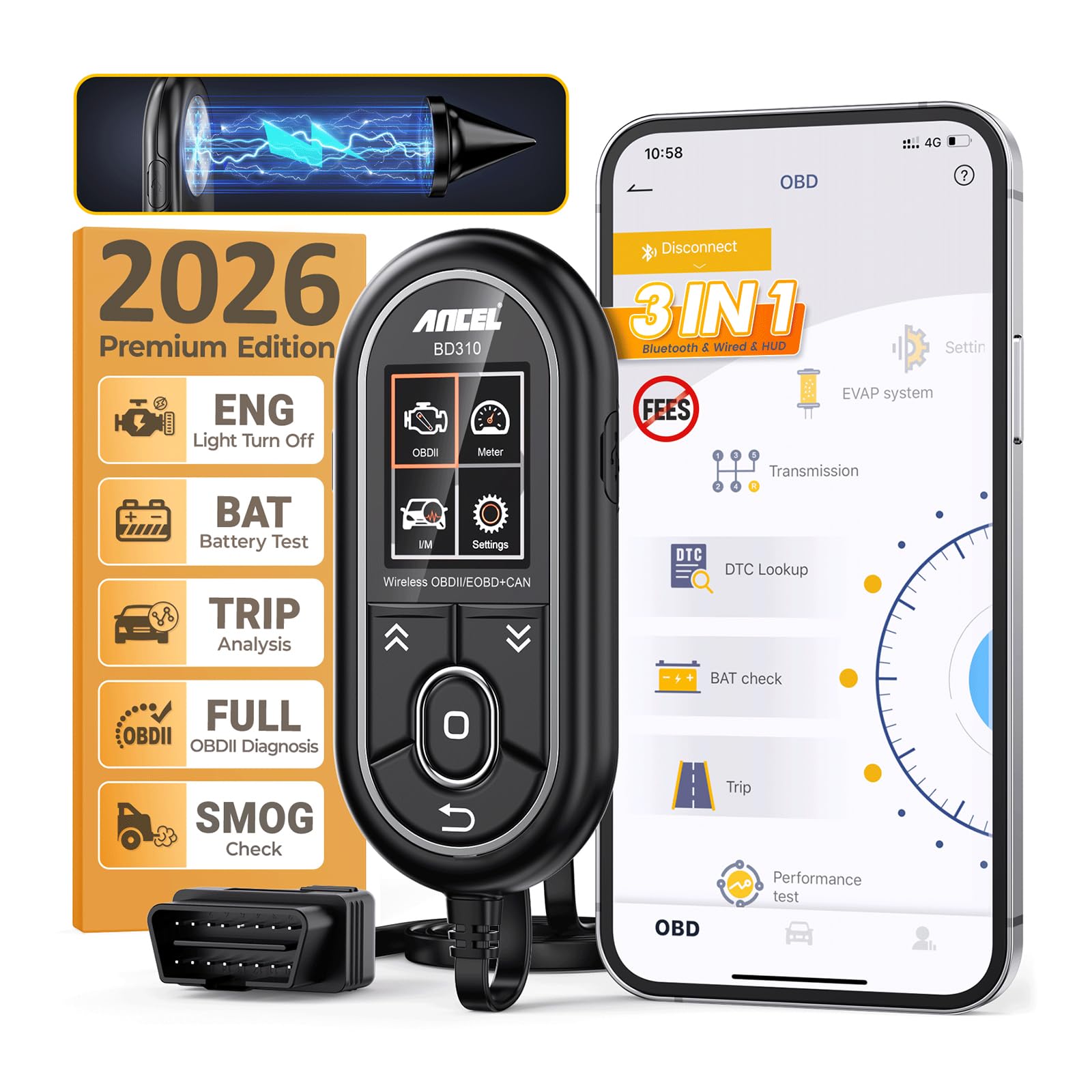
It’s worth buying if you want a simple Bluetooth OBD2 tool that reads misfires, shows plain-English codes, and doubles as a small wired reader.
Pros
- Easy phone app for live data and clear code descriptions.
- Works wired or Bluetooth, useful when one method fails.
- Helpful I/M readiness and battery checks for emissions and roadside checks.
Cons
- Small plastic case feels fragile after repeated use.
- Some app instructions and manual conflict, causing setup confusion.
- Does not cover ABS or SRS codes, so it won’t find every fault.
They connected quickly to my phone and gave live engine data that made spotting misfires straightforward. The app labeled cylinder misfires clearly and showed which sensors looked off during a run.
Using it wired in a cold garage fixed a flaky Bluetooth link one evening. The built-in screen is tiny but handy when the phone is not available and it still reads and clears codes without fuss.
The battery monitor and readiness checks saved a wasted trip to an emissions station by confirming monitors were set. Expect a bit of fiddling with the instructions and handle the unit gently—my sample’s button edge showed wear after a few uses.
Find it on Amazon: ANCEL BD310
UMEIJA V011 OBD2 Scanner
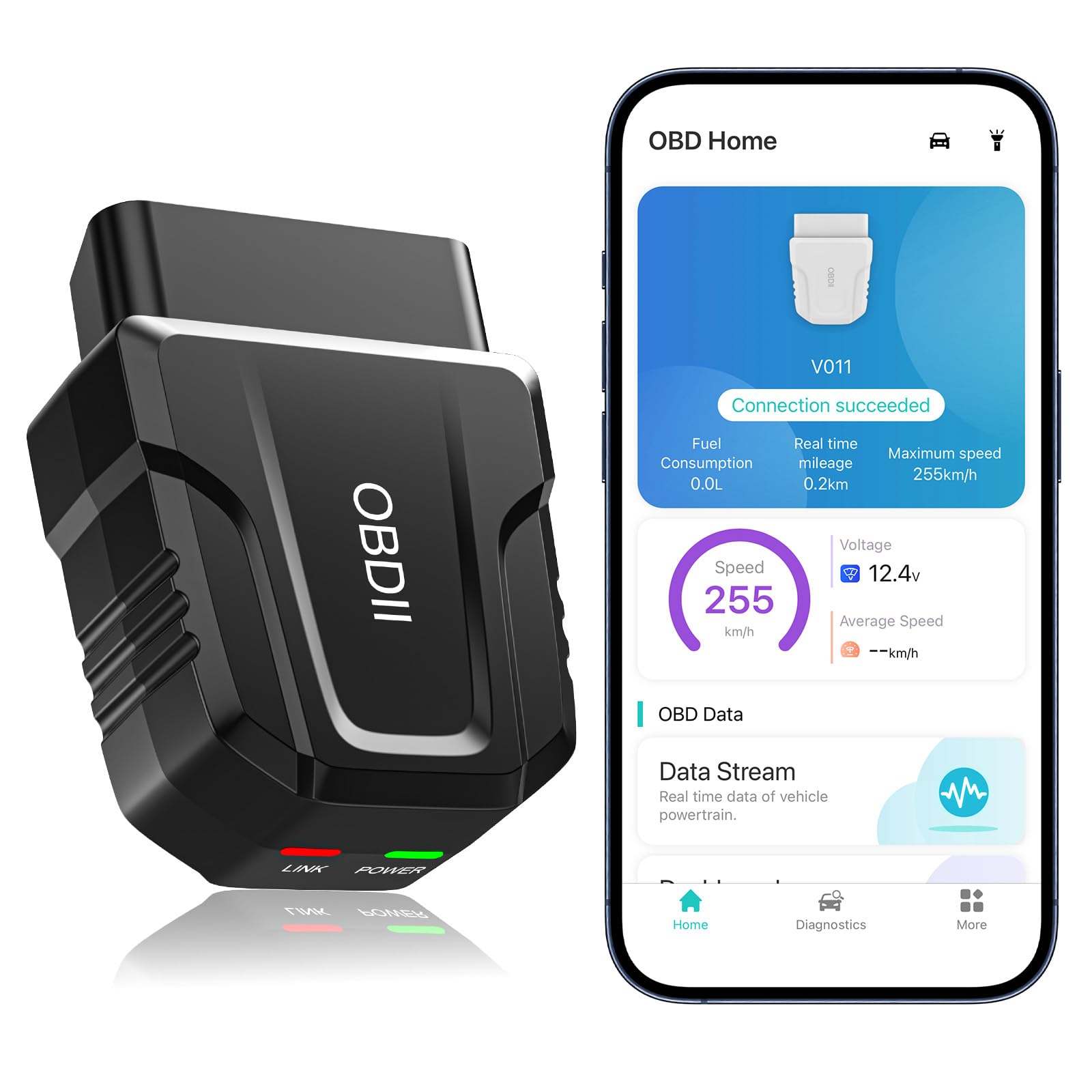
This is a good buy for someone who wants fast Bluetooth misfire data and simple code clearing without paying for an expensive shop tool.
Pros
- Fast Bluetooth pairing and steady live-data streaming
- Clear, easy-to-read charts that make misfire signals obvious
- Works with most cars and a free dedicated app for quick setup
Cons
- Some advanced functions require learning the app
- App only supports the vendor’s OBD Home system, limits other apps
- Clearing codes won’t fix an active mechanical problem
It plugged into the OBD port and paired right away with a phone. They watched live RPM, misfire counters, and fuel trim values in real time, which made it easy to spot a cylinder that was dropping out during light throttle.
The app shows graphs and stored freeze-frame data so they could compare a misfiring run to a normal run. That visual view helped them decide whether the problem was an ignition part, injector, or fuel issue before they spent money.
Using it felt like a road-ready basic shop tool: quick to use, clear results, and useful histories if the code pops again. It won’t replace a full lab scanner for deep OEM tests, but it saves time and money for routine misfire checks.
ANCEL BD500

It is a solid buy for VAG owners who want an easy Bluetooth tool to diagnose misfires and do basic maintenance without a shop.
Pros
- Works well on Volkswagen/Audi/Seat/Skoda systems and reads many control modules.
- Simple app-guided service resets and brake/EPB routines for DIY maintenance.
- Bluetooth connection is stable and the live data makes misfire checks straightforward.
Cons
- Limited advanced functions on non-VAG cars — mainly engine codes only.
- Some users report occasional compatibility issues with newer models.
- Not a full bidirectional tool; it can’t replace high-end diagnostic gear.
They plugged the BD500 into a Golf and opened the app. Reading misfire-related live data and freeze frame was fast and easy, which let them spot which cylinder had weak spark or fuel trim issues. The graphical voltage and live-stream views helped confirm intermittent misfires during a short test drive.
They ran the EPB brake routine on a late-model VW and the unit guided each step clearly. The procedure worked as expected and saved a trip to the shop. Resetting service lights and doing simple throttle or battery learning felt straightforward with the in-app prompts.
They tried the BD500 on a non-VW sedan and found it reads engine codes fine but lacks deeper system tests. For mixed-garage owners, that limits its use. Overall, the BD500 is geared toward VAG owners who want reliable misfire diagnosis and basic service functions without paying for dealer tools.
Ancel AD310BT
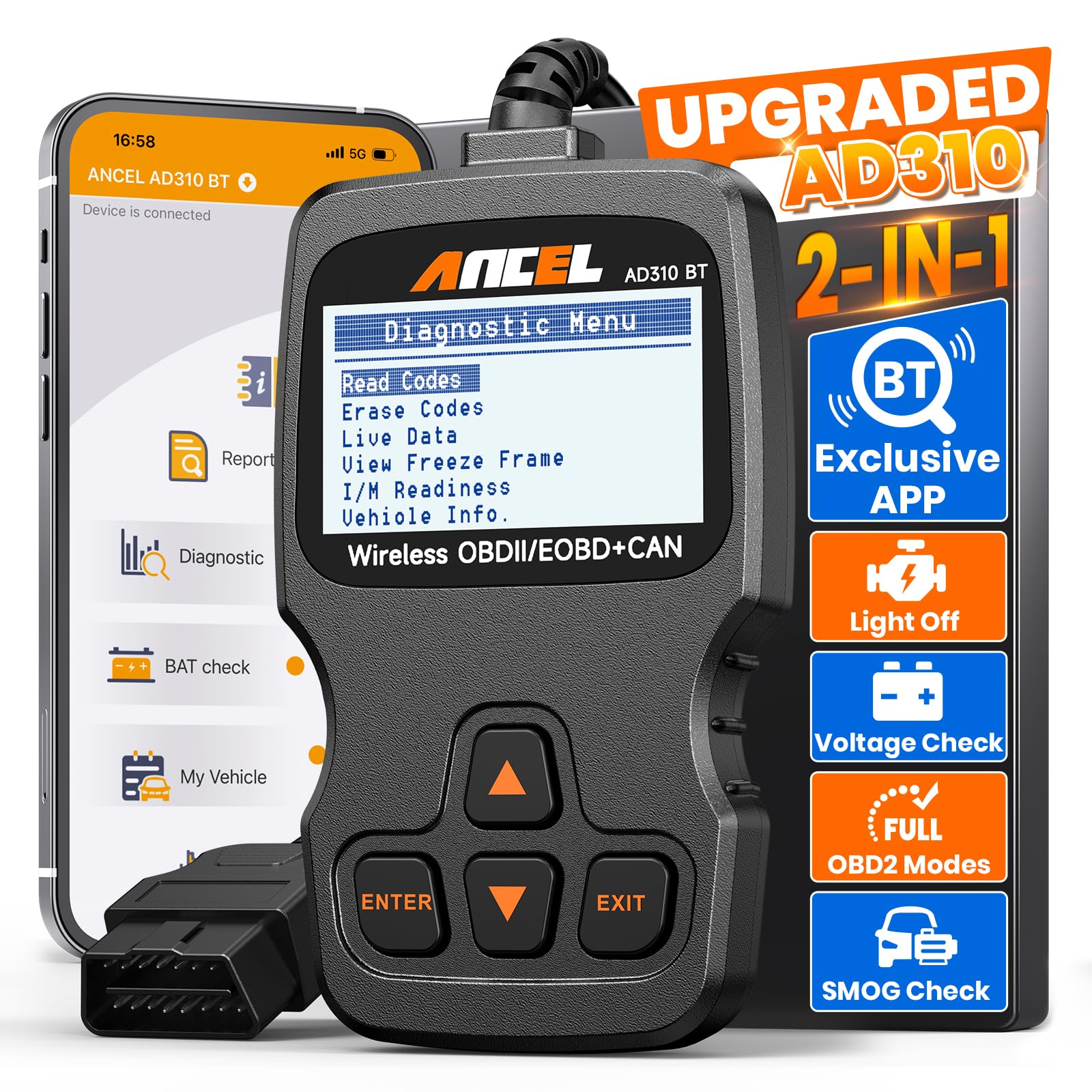
It’s a solid budget Bluetooth OBD2 scanner for diagnosing misfires and quick checks because it pairs fast and shows live data clearly.
Pros
- Pairs with phone quickly for hands-free reading.
- Live data and freeze-frame helped confirm a misfire in testing.
- Small, sturdy unit that stores easily in a glove box.
Cons
- App can be a bit clunky and takes time to learn.
- Some advanced menus feel slow on older phones.
- Screen on the device is basic compared to full handheld scanners.
They plugged the AD310BT into the OBD2 port and watched codes appear on the phone within seconds. It flagged a cylinder misfire and showed live PID data that helped verify a bad coil. The Bluetooth link stayed stable during tests.
Using it felt like a practical garage tool rather than a lab instrument. The handheld is compact and solid; the app gives readable graphs and readiness info. It handled battery and performance tests too, which saved a separate trip to a shop.
One annoyance came from the app interface. They found some screens slow and occasional prompts confusing, but customer support answered questions. Overall, the unit got the job done for diagnosing misfires without costing much.
ANCEL BD200

It’s a solid, budget-friendly Bluetooth OBD2 scanner that helps diagnose misfires and shows live engine data so users can fix simple problems themselves.
Pros
- Easy Bluetooth setup and clear app interface.
- Reads live data and freeze frame to spot misfires.
- Battery voltage and trip data help pinpoint intermittent issues.
Cons
- App menus can feel cluttered at first.
- Not full hybrid-system coverage on some models.
- Lacks advanced battery cranking or charge tests.
They plugged the BD200 into a mid-2000s car and paired it in under a minute. The app walked through a quick scan and showed misfire codes plus live RPM and fuel trim, which made the problem obvious.
It gave real-time voltage charts that helped rule out a weak battery in cold-start misfires. Reading frozen data from the moment the fault happened made intermittent misfires easier to track.
The device fit snugly in the OBD port and stayed connected during road tests. Some menus required poking around to find specific tests, but the core code read, clear, and live data features worked well.
Rocco OBD2 Scanner (UJS)
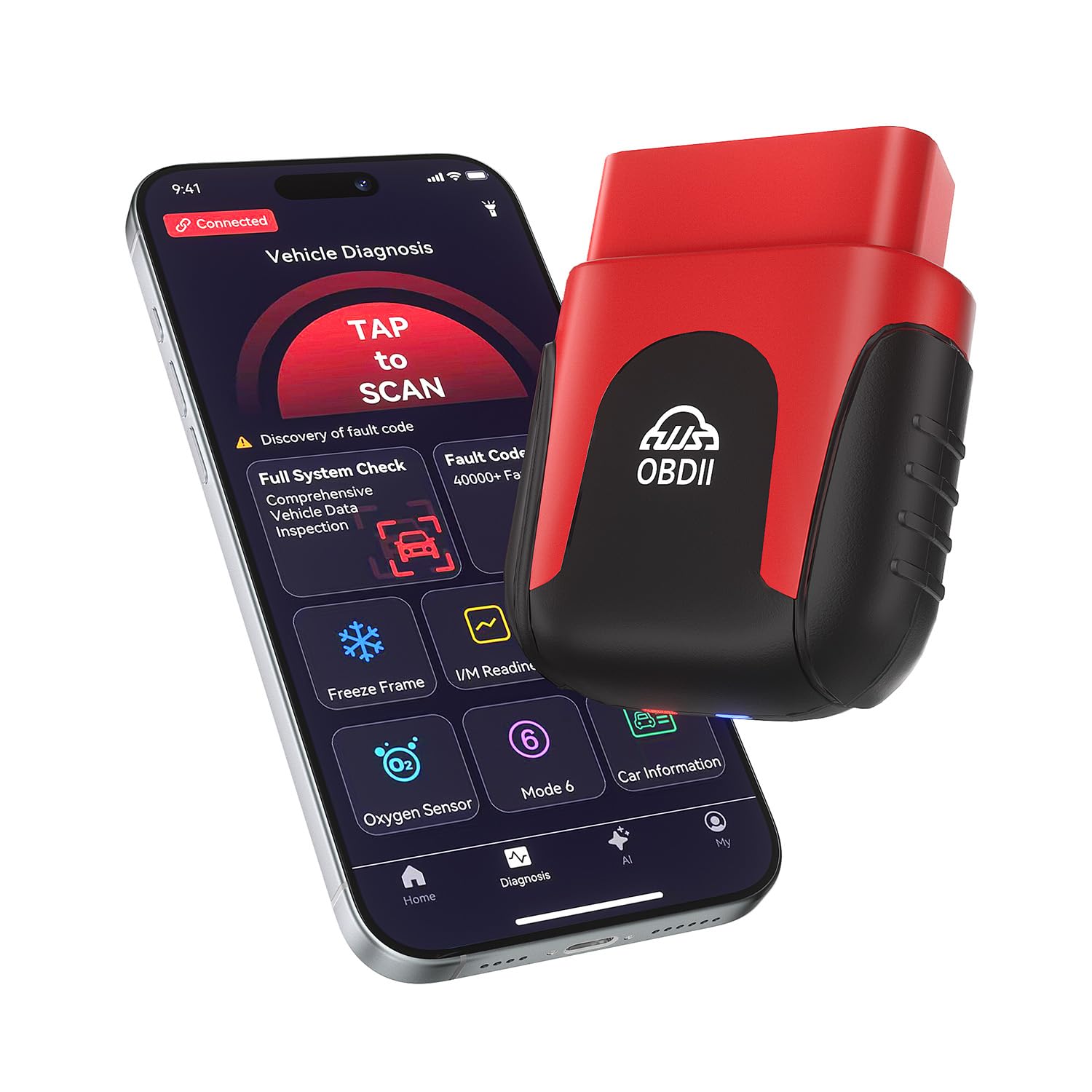
It is a solid pick for diagnosing misfires because it reads live data and gives clear AI-driven health reports quickly.
Pros
- Fast Bluetooth connection and easy app setup.
- Visual live data helps spot intermittent misfires.
- Small, stays plugged in for constant monitoring.
Cons
- AI reports can oversimplify some faults.
- Some advanced diagnostics may need a pro tool.
- Occasional app wording is confusing for new users.
They plugged the tiny dongle into the OBD port and paired it in under a minute. The app pulled live graphs for RPM, coolant temp, and O2 sensors that helped trace an intermittent misfire while the car was idling.
Real-world use showed the one-tap full scan and clear-light feature worked as promised after a repair. The AI summary made the results easy to understand, though it sometimes left out deeper causes a trained mechanic would check.
Leaving the unit in the car felt convenient for ongoing monitoring. The Bluetooth stayed stable during short drives, and the visual charts made it easier to spot spikes that matched the misfire events.
Buying Guide
Key features to check
They should look for accurate misfire code reading and live data streaming. Clear code descriptions and freeze-frame data help pinpoint misfires fast.
Compatibility and app quality
They must confirm the scanner works with the vehicle’s protocol and smartphone OS. A reliable app with frequent updates and good reviews matters more than fancy features.
Live data and graphing
Real-time RPM, injector pulse, and misfire counters are useful. Graphs make patterns easier to spot during test drives.
Advanced diagnostics
They should consider live cylinder balance tests and onboard monitoring status. These features speed up root-cause checks without extra tools.
Connection and usability
Stable Bluetooth, quick pairing, and low latency improve the test experience. A compact plug that stays secure under the dash prevents false readings.
Power and safety
The device must not draw excessive battery while parked. Overheat protection and proper insulation reduce risk to the vehicle’s electronics.
Data export and logging
Exportable logs and CSV support let technicians analyze results on a laptop. Long-term logging helps catch intermittent misfires.
Build quality and support
Durable casing and a solid warranty matter. Good customer support and clear manuals save time when troubleshooting.
Editor’s Choice
They pick the BlueDriver Bluetooth OBD2 scanner for misfire diagnosis. It gives clear, specific misfire codes and the likely cylinder, which helps users fix the right part quickly.
The BlueDriver pairs with phones easily. The app shows live data, freeze frame info, and repair reports written by mechanics. It works with most cars made after 1996 and updates the database often.
Key features:
- Accurate misfire detection — pinpoints cylinder and code type.
- Live data streaming — helps watch changes while the engine runs.
- Repair reports — suggests probable fixes based on real-world cases.
The device fits most OBD2 ports and is small enough to stay plugged in. It uses the phone for display and logging, so users avoid a bulky screen. The app is simple, with clear menus and readable graphs.
They recommend BlueDriver for DIYers and small shops. It balances price, ease of use, and diagnostic depth. For those focused on misfires, it gives the right mix of detail and simplicity.
Conclusion
A good Bluetooth OBD2 scanner helps find misfires quickly and clearly. It shows DTCs, freeze-frame data, and live engine info so users can spot patterns and probable causes.
They should pick a scanner that matches their phone, car, and skill level. Professional techs may favor apps with live data graphs and advanced diagnostics, while DIY users might prefer simple read/clear functions and guided fixes.
Reliability and update support matter. Sensors and protocols change, so a device with regular updates will stay useful longer and reduce false readings.
Budget and extras affect value. Basic adapters cost less but may lack advanced features like waveform capture or wideband support. Higher-end units add depth but cost more.
Quick checklist:
- Compatibility with the vehicle and phone
- Ability to read/clear misfire-related DTCs (P0300–P0312)
- Live data and recording for cylinder-specific analysis
- Regular software updates and good user support
They should use tests like spark, compression, and fuel checks if the scanner points to specific cylinders. A scanner narrows the problem; hands-on checks confirm the fix.
Choosing the right scanner saves time and money. It reduces guesswork and helps them make clear repair decisions.
FAQS
What is a Bluetooth OBD2 scanner?
A Bluetooth OBD2 scanner is a small device that plugs into a car’s OBD2 port and sends diagnostic data to a phone or tablet. It reads codes and live data to help find issues like misfires.
Can a Bluetooth scanner reliably detect misfires?
Yes, many scanners read generic and manufacturer-specific misfire codes (P0300–P0308). They also show live data such as RPM, fuel trims, and misfire counters to confirm patterns.
Which phone apps work best?
Popular apps include Torque, OBD Auto Doctor, and Car Scanner. App features vary; some show freeze frame data and misfire counters while others focus on basic codes.
Will any Bluetooth scanner work on all cars?
Most work on cars made after 1996 in the U.S. Some vehicles require advanced protocols or manufacturer-specific adapters. Compatibility lists on product pages help avoid surprises.
How fast are results?
Data appears in seconds after pairing. Live data updates in real time, which helps identify intermittent misfires.
Can a scanner fix misfires?
No. It only identifies codes and data. A mechanic or DIYer must inspect spark plugs, coils, injectors, and wiring to fix the problem.
Is Bluetooth reliable for diagnostics?
Bluetooth is reliable for most tasks but can have interference or pairing issues. For professional work, a wired or Wi‑Fi scanner may offer steadier connections.
What features matter most for misfire work?
Look for misfire counters, live O2 and fuel trim data, freeze frame capture, and support for manufacturer codes. Those features make diagnosis faster and clearer.
