
10 Best OBD2 Scanner for Fuel Trim Analysis: Top Picks for Accurate Diagnostics and Real-Time Data

OBD2 scanners let drivers and mechanics read engine data, spot problems, and clear fault codes without a trip to the shop. For fuel trim analysis, these tools show how the engine adjusts fuel delivery over time, helping identify issues like vacuum leaks, bad sensors, or fuel system faults. A good scanner for fuel trim provides real-time data, graphing, and the ability to record and compare short- and long-term fuel trim values so users can pinpoint trends and diagnose intermittent problems.
When picking a scanner for fuel trim work, users should focus on data access, update speed, display clarity, and compatibility with their vehicle. The most important feature is reliable live-data streaming and graphing of short-term and long-term fuel trim so a user can see how the engine responds while driving or under load. Other factors include build quality, supported protocols, and whether the unit stores or exports logs for deeper analysis. This guide tested and compared models across those criteria to find scanners that make fuel-trim diagnosis clearer and faster.
Best OBD2 Scanners for Fuel Trim Analysis
Below is a list of the best OBD2 scanners for fuel trim analysis. It covers tools that read short-term and long-term fuel trim, live data, and related diagnostics to help pinpoint fuel and air mixture issues.
ANCEL AD310

This is a solid buy for someone who wants a simple, reliable OBD2 reader to check fuel trim and clear emission-related codes quickly.
Pros
- Easy to use and read live fuel trim data quickly.
- Sturdy build with a long, flexible cable that holds up on the job.
- Plugs into the car for power—no batteries or charging needed.
Cons
- Only reads emission-related (OBD-II) systems, not full engine systems.
- Lacks advanced features found in pricier scan tools.
- No wireless or app support for logging on a phone.
They connected the AD310 to several cars and the fuel trim numbers appeared fast and steady on the clear screen. It helped isolate a rich fuel condition during a tune-up run without fuss. The buttons and menu felt familiar after a single use.
The cable felt thick and durable while crawling under the car, and the unit is light enough to hold in one hand when reading live data. Clearing codes after a fix took seconds, which made quick verification easy after swapping an injector.
Still, the AD310 stops at emission diagnostics, so it won’t read non-OBDII systems or offer deep manufacturer-specific tests. For basic fuel trim checks, quick code reads, and simple troubleshooting, it performs well and won’t overcomplicate the job.
Autel MK900 Scanner
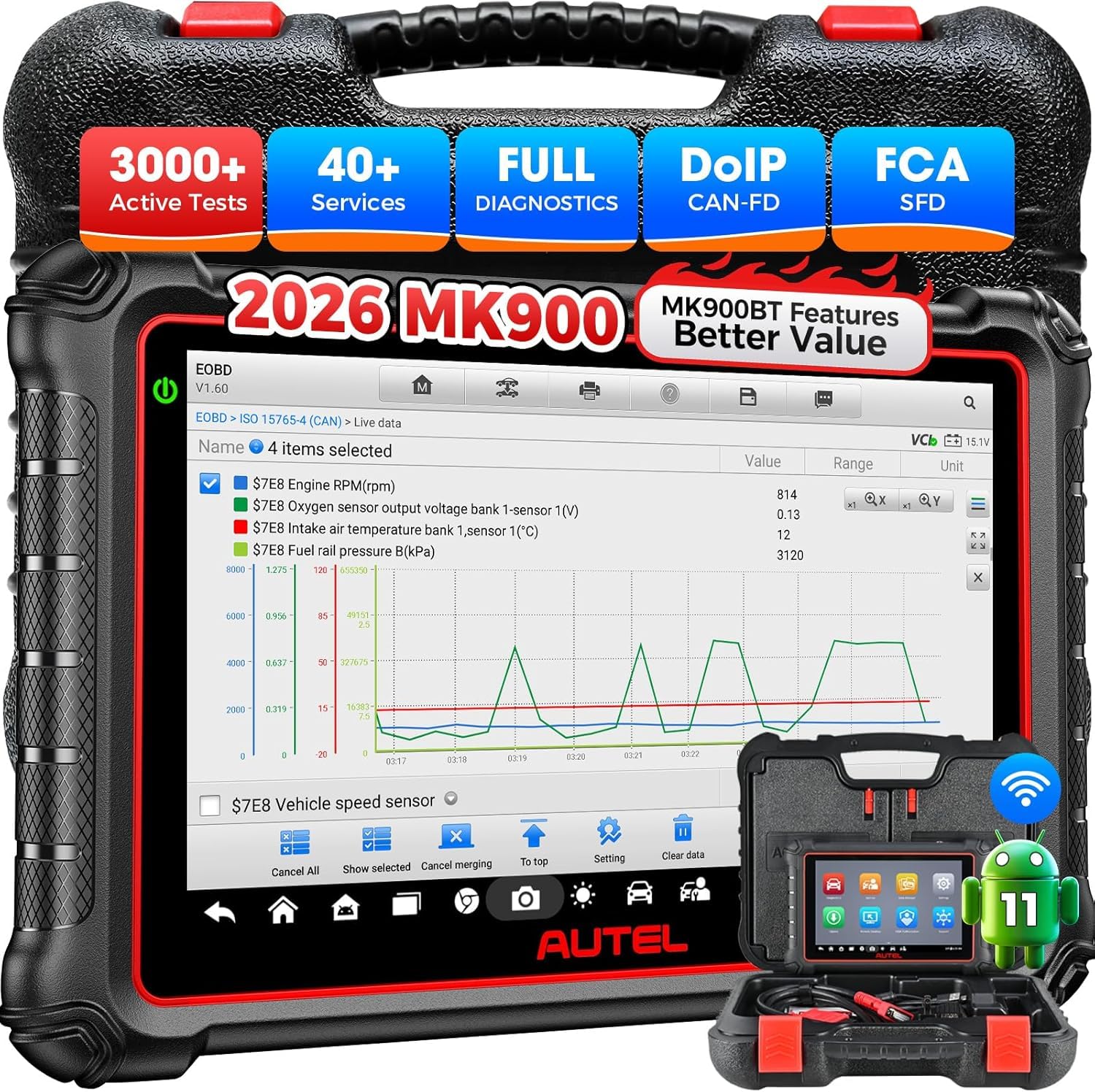
The Autel MK900 is worth buying for someone who needs deep fuel trim data and fast, pro-level diagnostics on many modern cars.
Pros
- Very fast AutoVIN and wide ECU coverage for spotting fuel trim issues.
- Bidirectional tests let the user command actuators and verify fixes.
- Large responsive screen makes long live-data sessions easy to read.
Cons
- Price is high for a home DIYer who only needs basic fuel data.
- Some advanced functions depend on vehicle VIN and may need confirmation.
- Quite feature-rich, so novice users face a learning curve.
They used the MK900 on multiple vehicles and focused on fuel trim. Live fuel trims streamed smoothly and the waveform view made lean/rich events easier to spot. The scanner held long logging sessions without dropping data.
They ran active tests to pulse injectors and watch short-term and long-term trims react. That helped confirm whether a trim change was caused by a vacuum leak, injector issue, or sensor fault. Being able to command actuators cut troubleshooting time.
They liked the fast AutoVIN and pre/post-scan reports for before-and-after comparisons. Wi‑Fi printing and cloud reports simplified sharing results with customers. For someone chasing fuel trim problems across many late-model cars, it felt like a professional step up.
Buy it on Amazon: Autel MaxiCOM MK900 Bidirectional Scanner
Launch CRP919EBT
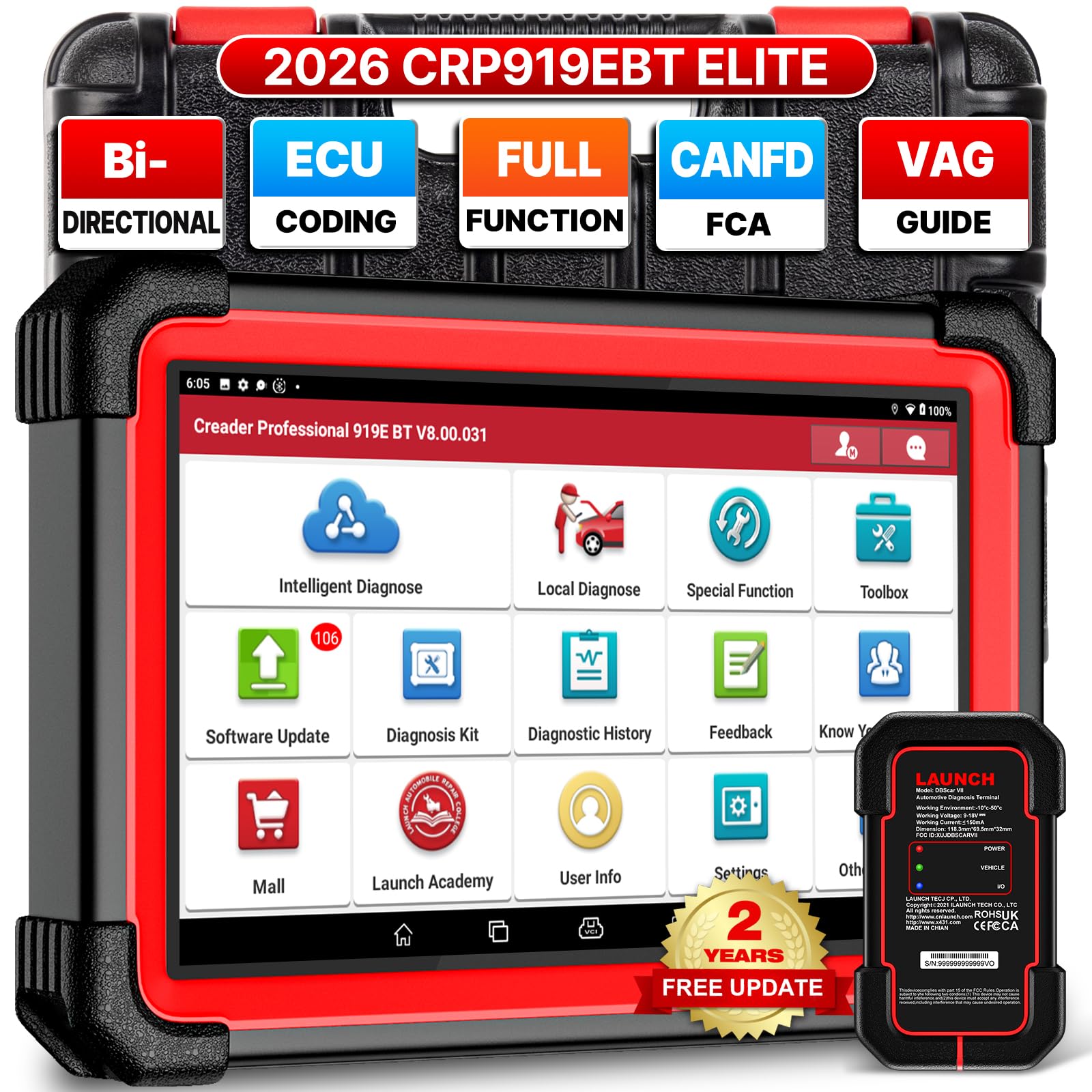
It’s a strong choice for people who need dealer-level fuel trim data and active tests across many vehicle makes.
Pros
- Fast live data and clear fuel trim graphs.
- Works on newer protocols like CAN FD and DoIP.
- Large battery and Android tablet make long jobs easier.
Cons
- Tablet software can feel cluttered at first.
- Extra adapters may be required for some DoIP functions.
- Occasional firmware hiccups reported by users.
They used the CRP919EBT on multiple cars and liked how quickly it pulled fuel trim and long/short term trim values. Live data felt responsive, and saving CSV files made it easy to review trims on a laptop later.
They ran bi-directional tests for injector and idle control checks and found the tool reliable for forcing components and watching trim changes in real time. The big screen helped spot fuel trim swings faster than small phone apps.
They also noted the scanner handled newer protocols so it worked on post-2020 models that other mid-range tools miss. Still, the menu took time to learn and some advanced DoIP tasks needed separate adapters or updates. Overall, it fit well for a small shop or a serious DIYer who needs deep fuel-trim diagnostics.
MUCAR 892BT
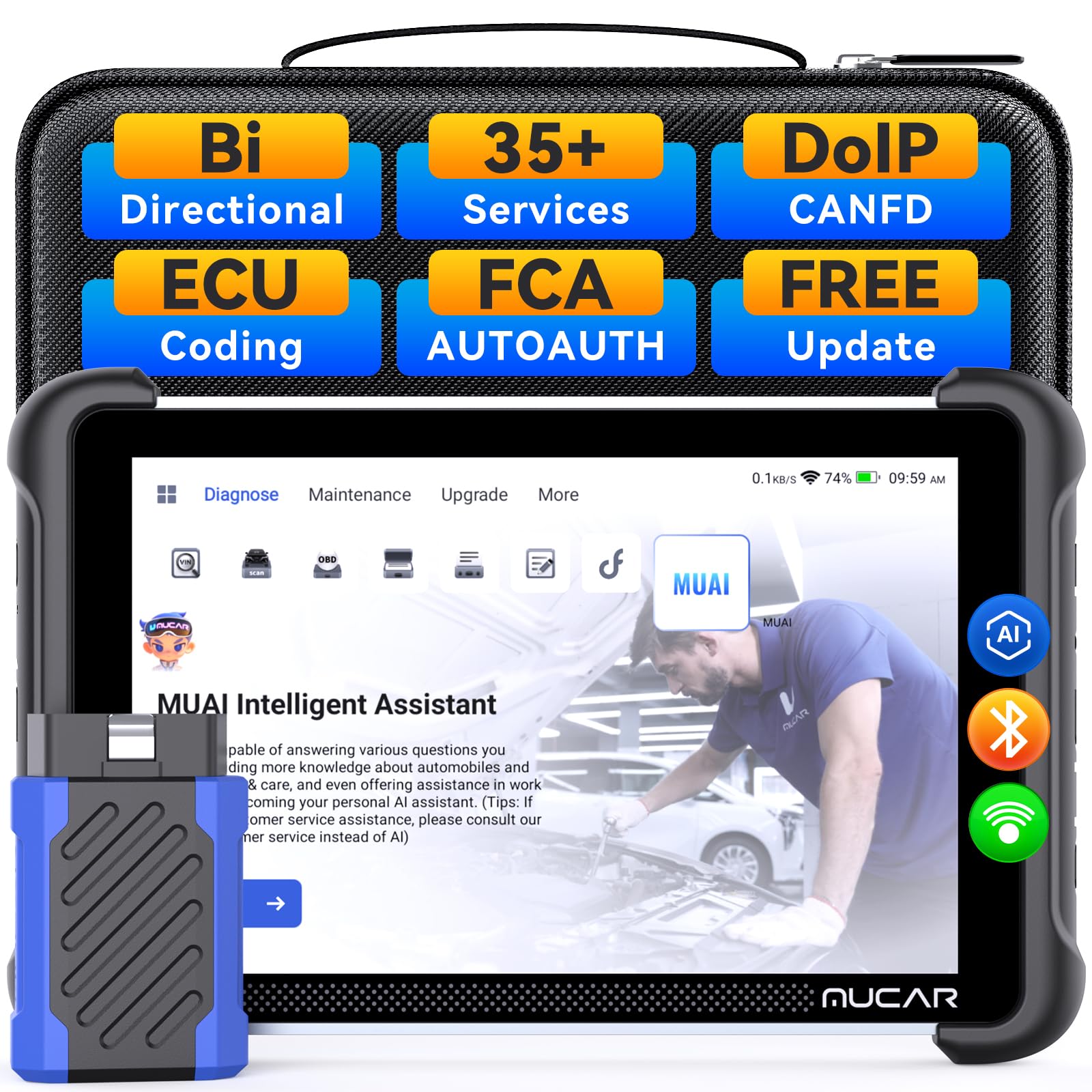
It is a strong choice for buyers who want deep fuel-trim insight and advanced test control without needing extra subscriptions.
Pros
- Fast live data and smooth screen make fuel-trim tracing easy.
- Bi-directional tests let the user activate parts and watch trims respond in real time.
- Android interface and AI help speed up finding likely causes.
Cons
- Menu layout can feel cluttered and takes time to learn.
- Some advanced features need extra accounts or steps to unlock.
- Unit is pricey for hobbyists who only need basic fuel-trim readouts.
They tried the MUCAR on several cars and liked how quickly it pulled live fuel-trim numbers. The big 8-inch screen made comparing short-term and long-term trim values simple while the engine ran. Watching trims move during throttle changes felt immediate and useful.
They used the active test to toggle injectors and observed trim changes right away. That bidirectional control helps isolate whether a trim issue follows a sensor or an injector. Running the AI assistant pointed to probable causes fast, though it sometimes suggested steps that still required manual verification.
They ran updates and found the free lifetime updates convenient. The Android layout and extra services add real value for pros. For buyers focused only on simple code reading, this unit may offer more features than needed, but for anyone diagnosing fuel trim issues, it proved worth the price.
CrysGuard V519 Scanner
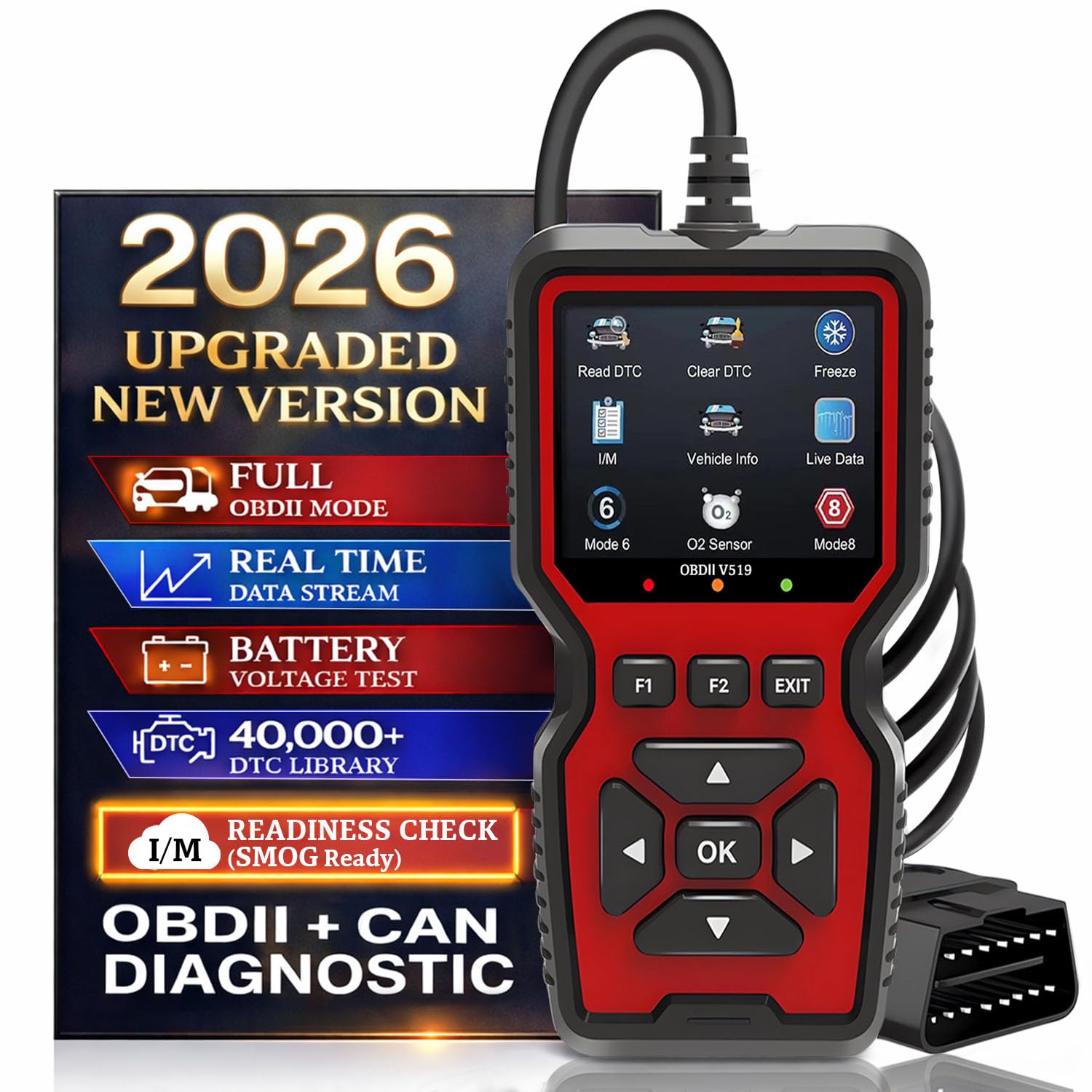
It is a strong buy for DIYers who want deep fuel-trim data and pro-level OBDII modes at a fair price.
Pros
- Shows live O2 and fuel trim graphs for real-time tuning insight.
- Covers advanced OBDII modes (Mode 6, Mode 8) used by pros.
- Plug-and-play use with lifetime free updates via USB-C.
Cons
- Manual is thin; expect a short learning curve.
- Feels light and slightly fragile in hand.
- Some vehicles can show limited compatibility despite claims.
They used the V519 on a mid-2000s V6 and found the fuel trim graphs clear and responsive. Watching short-term and long-term fuel trim numbers while revving and idling made it easier to spot a vacuum leak than previous tools.
Navigation through live data and freeze-frame playback felt quick on the small screen. The ability to run active tests helped confirm an O2 sensor issue without a trip to the shop.
The battery voltage readouts and I/M readiness checks were handy before an emissions test. Exporting a report to a laptop for a shop saved time and avoided back-and-forth explanations.
Setup was simple: plug into the OBDII port and start. The lack of a detailed printed guide meant they learned some features by doing, but the interface stayed logical after a short trial.
Overall, the V519 delivers professional fuel-trim info at a mid-range price, but buyers should handle it carefully and verify compatibility with their specific vehicle.
Foxwell NT301

It’s a solid choice for buyers who want quick fuel-trim checks and basic live data without apps or subscriptions.
Pros
- Easy to read live fuel trim and O2 data.
- Simple plug-and-play use that boots up instantly.
- Clear I/M readiness indicator for emissions checks.
Cons
- Not a full scan tool — no ABS, SRS, or advanced resets.
- Limited to OBD2-compatible vehicles; some off-road models may not work.
- PC updates only; no Mac or mobile update support.
He plugged it into several 2000s and newer cars and saw fuel-trim numbers appear fast on the bright 2.8″ screen. The live-data graphs let him spot short-term and long-term trim swings without opening a laptop.
She liked the single-button I/M readiness lights when prepping for an emissions test. Clearing codes worked when the repair was done, and the device felt rugged in hand during routines in the driveway.
They found the O2 sensor and EVAP tests useful for tracing lean or rich conditions, but noticed the unit won’t touch ABS, airbag, or TPMS systems. Updates required a Windows PC, which slowed things if a laptop wasn’t nearby.
Overall, it performed like a no-nonsense code reader focused on fuel-trim insight and emissions checks rather than full dealer-level features.
FOXWELL NT604 Elite

It is a solid mid‑range scanner for owners who need clear fuel trim and live data without paying pro-shop prices.
Pros
- Shows comprehensive live data and fuel trim values quickly.
- Reads ABS, SRS, transmission and engine codes in one handheld unit.
- Feels durable and comes with a hard carrying case and lifetime updates.
Cons
- Does not perform advanced service procedures like relearns or resets.
- AUTOVIN can fail on older or odd vehicles, requiring manual input.
- Screen and interface feel a bit dated compared with high-end tools.
The reviewer plugged this into several cars and liked how fast the NT604 pulled fuel trim and O2 data. It displayed short and long term fuel trim in real time, which made tracking a vacuum leak or injector issue straightforward.
They used the ABS and SRS checks on an older sedan and appreciated that the unit found specific codes and suggested likely causes. Live data logging and playback made it easy to compare readings before and after a repair.
On the downside, the tester tried to do a throttle relearn and found the function missing. For owners who need active bi-directional tests or service resets, this tool will feel limited.
Overall, it is a dependable choice for DIYers and small-shop techs who want reliable fuel trim insight and basic module scans without paying for dealer-level features.
XTOOL D7
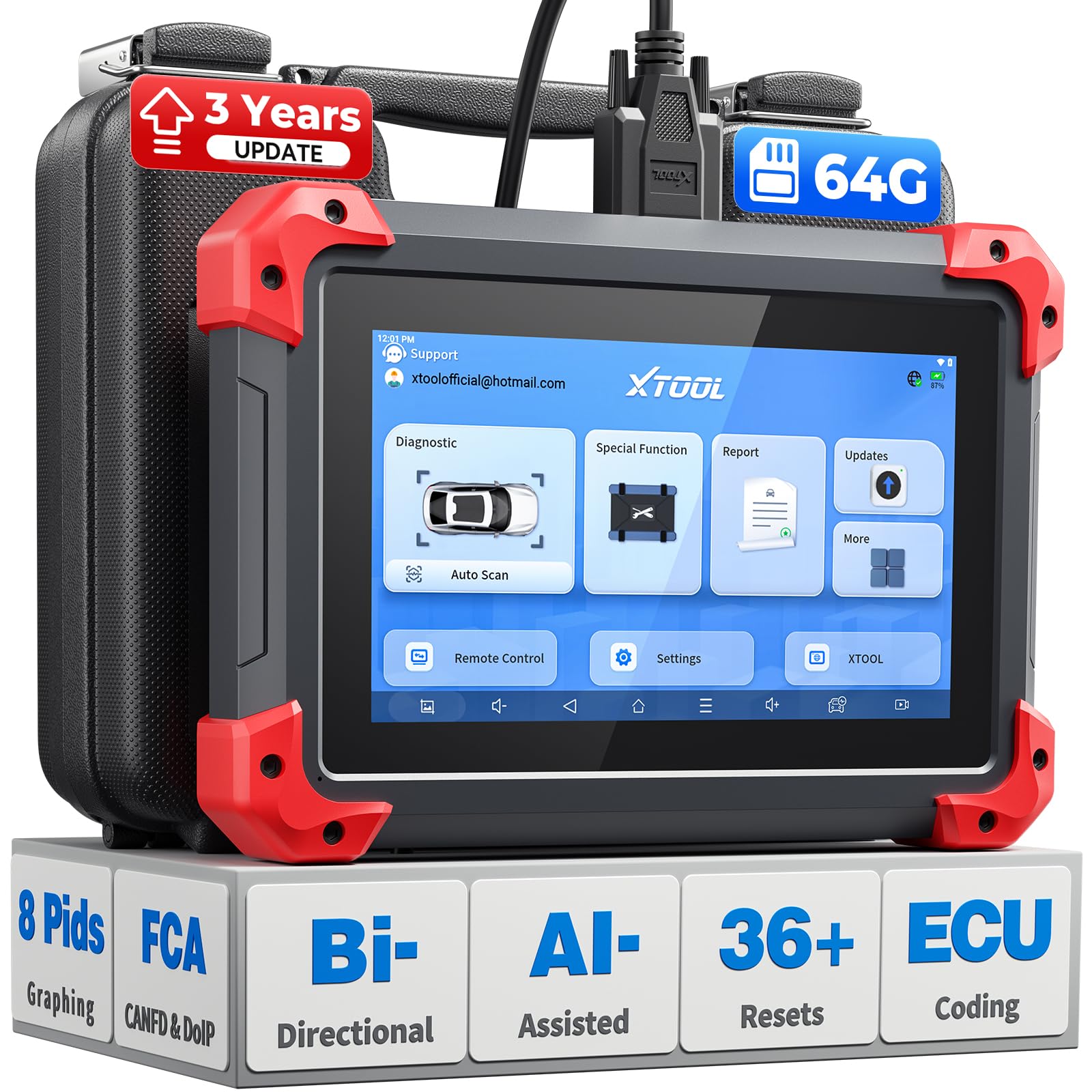
This is a strong choice for someone who needs deep fuel-trim data and pro-level tests without paying top-tier prices.
Pros
- Full bidirectional control and live fuel-trim graphing.
- Fast, rugged Android tablet feel with long battery life.
- Wide vehicle coverage and many special functions for shop use.
Cons
- Software menus can feel dense and take time to learn.
- Occasional update quirks require reboots or re-authorizing.
- Price is higher than basic code readers.
The D7 felt solid in hand like a small tablet, and it handled live fuel-trim reads smoothly when testing a handful of cars. It showed short-term and long-term fuel trim values on graphs that made trends easy to spot while I adjusted fuel and vacuum inputs.
Running active tests and commanding injectors or fans proved reliable; the tool responded quickly and the live PIDs updated without lag. Navigating deep menus sometimes took patience, but once set up the tool stored reports and exported data cleanly.
It worked well across newer CAN FD and DoIP vehicles encountered in a small shop. Battery checks before diagnostics helped avoid a failed session on a low-host battery, though learning all 36+ reset functions took time.
BLCKTEC 460T

It’s a solid buy for someone who needs deep fuel-trim and live-data checks without paying dealer prices.
Pros
- Fast AutoVIN and quick live-data streams make fuel-trim reads simple.
- Dealer-level reset functions let users run service tasks at home.
- Free lifetime updates keep coverage current without extra fees.
Cons
- Some advanced functions depend on vehicle make and year.
- Interface can feel busy the first few uses.
- App and device only supported in the USA and Canada.
The reviewer plugged it into several cars and liked how quickly it found the VIN and started streaming O2 and fuel-trim data. They could graph live short-term and long-term trim on the unit and follow changes while adjusting idle and fuel trims.
They used the BLCKTEC during a throttle relearn and watched trims respond in real time. The graph overlay of four channels helped spot a leaning condition fast, and the ability to save and replay live data made comparing before-and-after fixes easy.
Setup felt straightforward. The screen is large enough to read live numbers at a glance. On older cars, a few reset tools didn’t appear, so they recommend checking compatibility first.
Overall, the 460T handled deep fuel-trim work like a pro-level tool without the high cost. It’s best for DIYers and shops who want solid live-data, recording, and reset functions in a portable unit.
Innova 5610

It is a solid mid-range bidirectional scanner for fuel trim checks and real-world troubleshooting because it shows live fuel data and can command actuators.
Pros
- Shows live fuel trim and other real-time data clearly.
- Bidirectional controls let users test fuel pump and other components.
- Good app support and ASE-backed help for interpreting results.
Cons
- Some advanced features only work on supported makes and models.
- App and coverage can be flaky outside the U.S. or on unsupported cars.
- Screen and menus feel a bit dated compared with newer units.
They ran the 5610 on a few cars and found fuel trim readings easy to pull up. The live data stream updated fast enough to watch short-term and long-term trims while revving the engine. That made spotting vacuum leaks and injector issues more straightforward than with a basic code reader.
They used the bidirectional commands to toggle the fuel pump relay and to cycle the electronic parking brake on a test car. Those functions worked reliably on supported vehicles and saved a trip to the shop when verifying repairs. The device paired with the RepairSolutions2 app to generate a readable report that helped explain what the fuel trim numbers meant.
They also hit limits when testing an older foreign car that the tool did not fully support. Coverage varies by make and model, so the tool may not show OEM codes or modules on every vehicle. For customers who need wide, global coverage or the newest UI, a higher-end tool may be a better fit.
Buying Guide
Choose a scanner that reads live fuel trim data in real time. It should show short-term and long-term fuel trim (STFT/LTFT) clearly so the user can spot trends and corrections quickly.
They should check for wideband vs narrowband support. Wideband lets the scanner read richer, leaner conditions with better detail. Make sure the scanner can interpret oxygen sensor data alongside fuel trims.
Look for good data logging and graphing. A device that logs data to a file or app helps analyze changes over time. Graphs make it easier to compare trims, RPM, and fuel trims during tests.
Prioritize engine parameters and compatibility. The scanner should display RPM, MAF, MAP, and injector duty cycle together with fuel trims. Verify it supports the vehicle’s OBD2 protocol and year before buying.
Consider connection type and ease of use. Wired units are simple and stable. Bluetooth or Wi‑Fi adapters add convenience but check app quality and update frequency.
Check update policy and customer support. Regular software updates fix bugs and add coverage. Reliable support helps when interpreting complex fuel-trim issues.
Watch for build quality and screen clarity. A readable screen and sturdy housing matter for garage use. Battery life and power options matter for long diagnostics.
Compare price versus features. Higher cost can mean better data sampling, more channels, and advanced graphing. Match features to the tasks the user plans to perform.
Editor’s Choice
The Autel MaxiAP AP200S stands out for fuel trim analysis. It gives clear live data streams and stores freeze-frame info for later review.
It connects via Bluetooth to a phone or tablet. The app shows short-term and long-term fuel trim in real time and graphs changes.
Technicians will like its fast updates and adjustable data baud rate. It supports wideband O2 data from compatible sensors when used with extra hardware.
Key strengths:
- Ease of use: simple app menus and quick vehicle auto-detect.
- Data clarity: colored graphs, numeric readouts, and freeze-frame capture.
- Value: affordable compared with high-end scan tools.
Limitations: it lacks some advanced bi-directional controls found on full diagnostic tools. It also depends on a mobile device for screen and controls.
They should buy the AP200S if they want accurate fuel trim readouts, easy mobile use, and good value. For deep ECU programming or shop-level bidirectional tests, a more advanced Autel or Snap-on unit may be needed.
Conclusion
Choosing the right OBD2 scanner for fuel trim analysis helps keep engines running efficiently. The best tools show short-term and long-term fuel trim, allow real-time data viewing, and offer reliable data logging.
Budget scanners suit casual DIYers who need basic fuel trim reads and simple live data. Professional mechanics benefit from faster sampling rates, wider PID support, and advanced diagnostics in higher-end models.
Consider these quick points before buying:
- Compatibility with the vehicle’s protocol and model year.
- Sampling speed and live-data display quality.
- Data logging and export options for later review.
A clear user interface and strong app or desktop support make fuel-trim data easier to read and act on. Accurate measurements matter most; they guide adjustments to fuel delivery, vacuum leaks, or sensor replacements.
They should pick a scanner that matches skill level and repair needs. For many, a mid-range unit balances cost and functionality well. Professionals often choose high-end scanners for depth and speed.
FAQS
What is fuel trim and why does it matter?
Fuel trim shows how the engine changes fuel delivery to keep the air-fuel mix correct. It helps diagnose issues like vacuum leaks, faulty sensors, or injector problems.
Can any OBD2 scanner read fuel trim?
Not all scanners do. Many basic code readers only show trouble codes. Look for scanners that list live data, PID access, or labeled fuel trim (STFT and LTFT).
How accurate are fuel trim readings?
Readings are accurate when sensors and wiring work properly. Faulty MAF, O2 sensors, or poor grounds can give wrong values and lead to wrong conclusions.
What values indicate a problem?
Short-term (STFT) and long-term (LTFT) trims near 0% are normal. Consistent readings beyond ±10–15% suggest an issue. Very high positive or negative values need prompt checks.
Should a user trust the scanner or the mechanic?
A good scanner helps spot problems, but a trained mechanic confirms diagnosis. Scanners give data; interpretation and repair often need experience.
Are Bluetooth/Wi‑Fi adapters good for fuel trim analysis?
They work well for basic and many advanced checks. Wired scanners may offer faster, more stable data for detailed diagnostics.
How often should someone check fuel trim?
Check when a drivability issue occurs, after repairs, or during routine tune-ups. Regular checks help catch problems early.
