
Are Aftermarket Key Fobs Any Good? What to Know Before Buying

Aftermarket key fobs can be good value, but quality varies widely. The best picks are genuine OEM fobs bought online, quality aftermarket fobs from reputable key suppliers, and OEM fobs refurbished into new shells. Cheap no-name clones often have weaker range, flimsy buttons and higher failure rates, and some never program at all.
An aftermarket fob can cost a fifth of a dealer key. That saving is real, but so are the stories of fobs that would not pair, died in three months, or only worked from a few feet away.
Here is what separates a good aftermarket fob from a bad one, how the main options compare, and how to buy without wasting money on programming fees.
Aftermarket vs OEM Key Fobs Compared
| Type | Build quality | Programming success | Range | Lifespan |
|---|---|---|---|---|
| New OEM (dealer or online) | Excellent | Highest | Factory spec | Many years |
| OEM refurbished / re-shelled | Good electronics, new case | High if not locked to another car | Factory spec | Good |
| Quality aftermarket (key supplier brands) | Good | High on supported models | Close to OEM | Good |
| Budget no-name clone | Variable | Hit or miss | Often shorter | Variable |
The Options, With Pros and Cons
New OEM Fob Bought Online
- Pros: same part the dealer sells, often for less; best compatibility.
- Cons: costs more than aftermarket; counterfeits are sold as “OEM.”
- Who it suits: anyone keeping the car for years, and smart key owners.
Refurbished OEM Fob
- Pros: genuine electronics at a lower price, usually in a fresh shell.
- Cons: some smart keys lock to the first car they are programmed to and cannot be reused unless the seller has unlocked or rewritten them.
- Who it suits: buyers who confirm with the seller that the fob is “virgin” or unlocked for their model.
Quality Aftermarket Fob
- Pros: low cost, good fit, made by companies that supply locksmiths.
- Cons: button feel and plastics usually a step below OEM.
- Who it suits: owners of older or mainstream cars who want a reliable spare.
Budget Clone
- Pros: the lowest price.
- Cons: mislabeled FCC IDs, weak transmitters, poor battery contacts, and a real chance of paying a locksmith to program a fob that fails.
- Who it suits: only older cars with free DIY programming, where a failed fob costs you nothing but time.
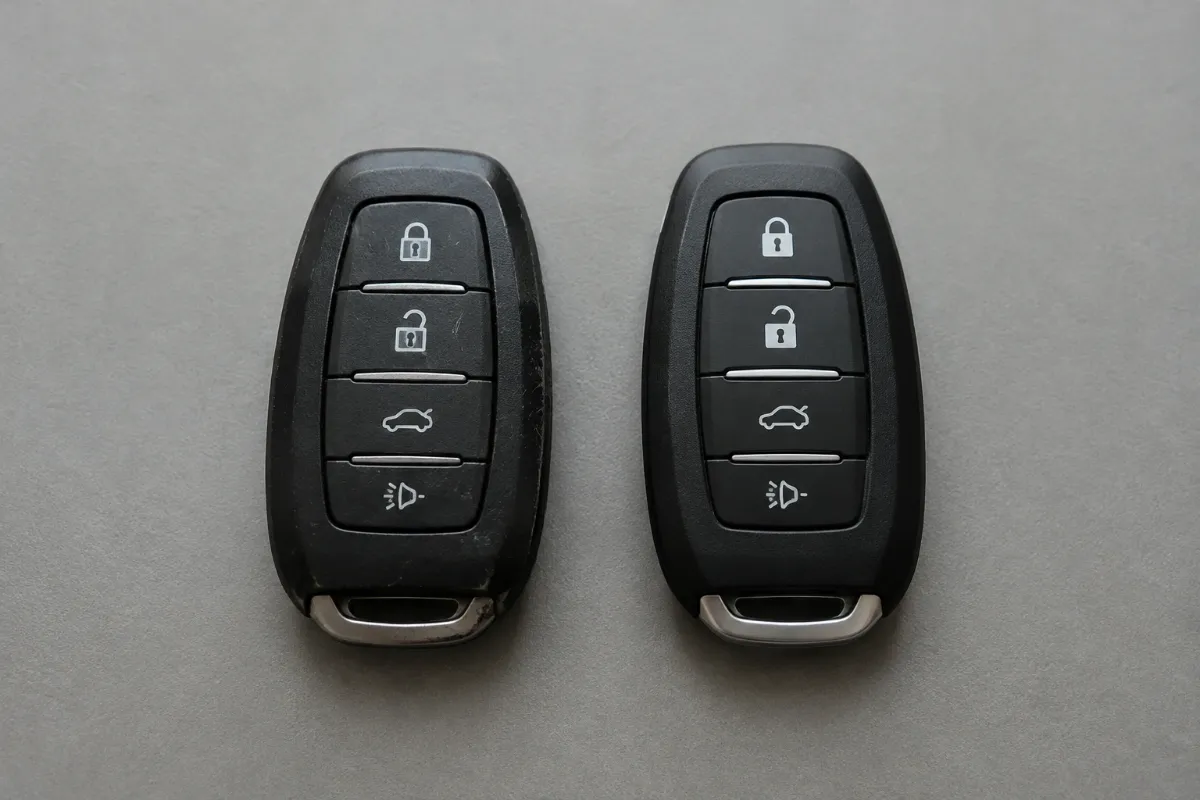
Are Aftermarket Key Fobs Any Good for Your Car?
The answer depends on the key system.
- Separate keyless entry remotes (older cars): aftermarket usually works well, and many cars allow free onboard programming.
- Remote head and flip keys: generally fine if the chip type matches. A locksmith or OBD2 tool programs the transponder.
- Smart keys (push-button start): the most hit or miss. Quality aftermarket smart keys work on many popular models, but some systems are fussy and some luxury brands accept only OEM keys through dealer software.
Not sure how programming works for your fob? Read how to program an aftermarket key fob.
Where Aftermarket Fobs Fall Short
When aftermarket fobs fail, it is usually for one of a handful of reasons. Knowing them helps you judge reviews and listings.
- Wrong electronics behind the right label. Some sellers reuse one listing for several fobs. The case matches, but the board inside uses a different frequency or chip.
- Weak transmitter. Budget boards may use cheaper crystals and antennas, so range drops from a typical 30 to 50 feet down to a few car lengths.
- Poor battery contacts. Thin metal clips lose tension, causing intermittent operation that looks like a dead battery.
- Soft plastics and button pads. Rubber pads tear and cases crack sooner than OEM, especially on flip keys.
- Unsupported software versions. Some newer immobilizer systems reject keys that do not carry the exact data the car expects.
When OEM Is Worth the Extra Money
Pay for OEM if your car is new enough that aftermarket keys are not yet available, if it is a luxury brand with dealer-only programming, or if you rely on features like remote start, memory seat recall, or phone-key integration that aftermarket keys may not fully support. OEM also makes sense when the programming fee is high, because a failed aftermarket attempt costs you that fee twice.
A good middle ground for many drivers is to buy an OEM fob from an online parts seller, then have a locksmith cut and program it. You get genuine electronics without paying dealer markup on both the part and labor.
How to Buy a Good Aftermarket Fob
Aftermarket Key Fob for Your Model
Choose a listing that states the FCC ID, part number and frequency for your exact year and model, with recent reviews from owners of the same car.
As an Amazon Associate, ReplaceKeyFob earns from qualifying purchases.
- Start with your FCC ID and part number. See how to find the FCC ID on a key fob.
- Filter reviews by your vehicle. Look for owners of the same model confirming it programmed.
- Prefer sellers that state frequency and chip. Vague listings are a warning sign.
- Ask your locksmith first. Some will recommend or supply a brand they trust and stand behind.
- Price the whole job. A $25 fob plus a $120 programming fee is not always cheaper than a locksmith-supplied key. Compare with typical key fob programming costs.
- Consider a shell instead. If your OEM fob works but the case is broken, a key fob shell replacement keeps the genuine electronics.
What the Savings Look Like
Typical 2026 totals for one remote head key on a mainstream sedan, including cutting and programming, show why aftermarket is tempting and where the risk sits.
| Route | Typical total | Main risk |
|---|---|---|
| Dealer, OEM key | $200 to $400 | Cost |
| Locksmith, their key | $130 to $250 | Varies by shop |
| Online OEM + locksmith programming | $110 to $220 | Counterfeit “OEM” listings |
| Quality aftermarket + locksmith programming | $90 to $180 | Shorter lifespan |
| Budget clone + locksmith programming | $80 to $160 | Paying the fee for a fob that fails |
The gap between a quality aftermarket fob and a budget clone is often only $10 to $20, which is small compared with a wasted programming fee.
Red Flags in Aftermarket Listings
- Lists dozens of unrelated models for one fob.
- No FCC ID or frequency shown.
- Photos that do not match your button layout.
- Reviews mention “would not program” for your model.
- “OEM” claims at a price far below every other OEM listing.
When in doubt, pay a little more for a listing with detailed compatibility data and a seller who answers questions. That small premium is cheaper than a second locksmith visit.
Checklist
- FCC ID and part number match.
- Buttons and key style match.
- Seller states it is new or unlocked if refurbished.
- Programming method and cost confirmed before ordering.
- Return window long enough to get it programmed.
For the full cost comparison of dealer, locksmith and online options, see how much is a new key fob.
Frequently Asked Questions
Quality aftermarket fobs come close in function, but OEM fobs usually have better buttons, range and durability. Budget clones are the most likely to disappoint.
Some do. Cheaper transmitters and antennas can reduce range. A fresh, good-quality battery helps, but it cannot fully fix a weak design.
It is very unlikely to damage anything. The usual risk is that it fails to program or stops working early, costing you the programming fee.
Most will, but many do not guarantee customer-supplied parts. Ask about their policy and fee before you buy.
Often yes, if it is confirmed unlocked or compatible with your model. Genuine electronics usually outlast budget aftermarket boards.