
10 Best OBD2 Scanner for Transmission Codes: Top Picks and Buying Guide

OBD2 scanners help drivers and mechanics read fault codes from a vehicle’s computer. Transmission trouble codes point to shifting problems, slipping, or torque-converter issues that can leave a car undrivable. Scanners that focus on transmission codes can save time and prevent unnecessary repairs by showing specific codes and live data for speed, RPM, and pressure.
Buyers should look for a scanner that reads manufacturer-specific transmission codes, shows live data streams, and can perform basic actuation tests or gearbox resets when needed. Ease of use, clear code definitions, and phone or tablet app support matter for quick diagnosis. A good transmission-focused OBD2 scanner gives clear transmission codes, real-time data, and simple instructions so users can find and fix shift problems faster.
This article compares top models, explains key features, and recommends the best picks for different budgets and skill levels to help readers choose the right scanner.
Best OBD2 Scanners for Transmission Codes
Below is a curated list of the best OBD2 scanners for reading and diagnosing transmission codes. Each scanner listed offers reliable code reading, live data, and features useful for pinpointing transmission faults.
FOXWELL NT604 Elite

It is a solid mid-range scanner worth buying for DIYers who need reliable transmission and ABS/SRS diagnostics without dealership costs.
Pros
- Clear transmission, ABS, SRS, and engine codes quickly.
- Built-in live data and AUTOVIN speeds up identification.
- Sturdy carrying case and lifetime updates.
Cons
- No advanced service or bi-directional functions.
- AUTOVIN can fail on older or obscure models.
- Cannot clear crash-related SRS data or perform resets.
They plugged the NT604 Elite into several cars and it found transmission codes fast. The screen shows live data and the built-in DTC library helped explain code meanings without reaching for a laptop.
Using AUTOVIN saved time on newer cars, but the tester had to pick the vehicle manually for a few older models. Updates arrived easily when online and the unit felt solid in hand thanks to the protective case.
It handled ABS and SRS faults well and pinpointed issues like low battery-triggered airbag lights. The lack of maintenance resets and advanced relearn tools meant they still had to visit a shop for some repairs.
Overall, it gives clear, practical diagnostics for transmission and related systems at a reasonable price for homeowners and DIY mechanics.
BlueDriver Pro
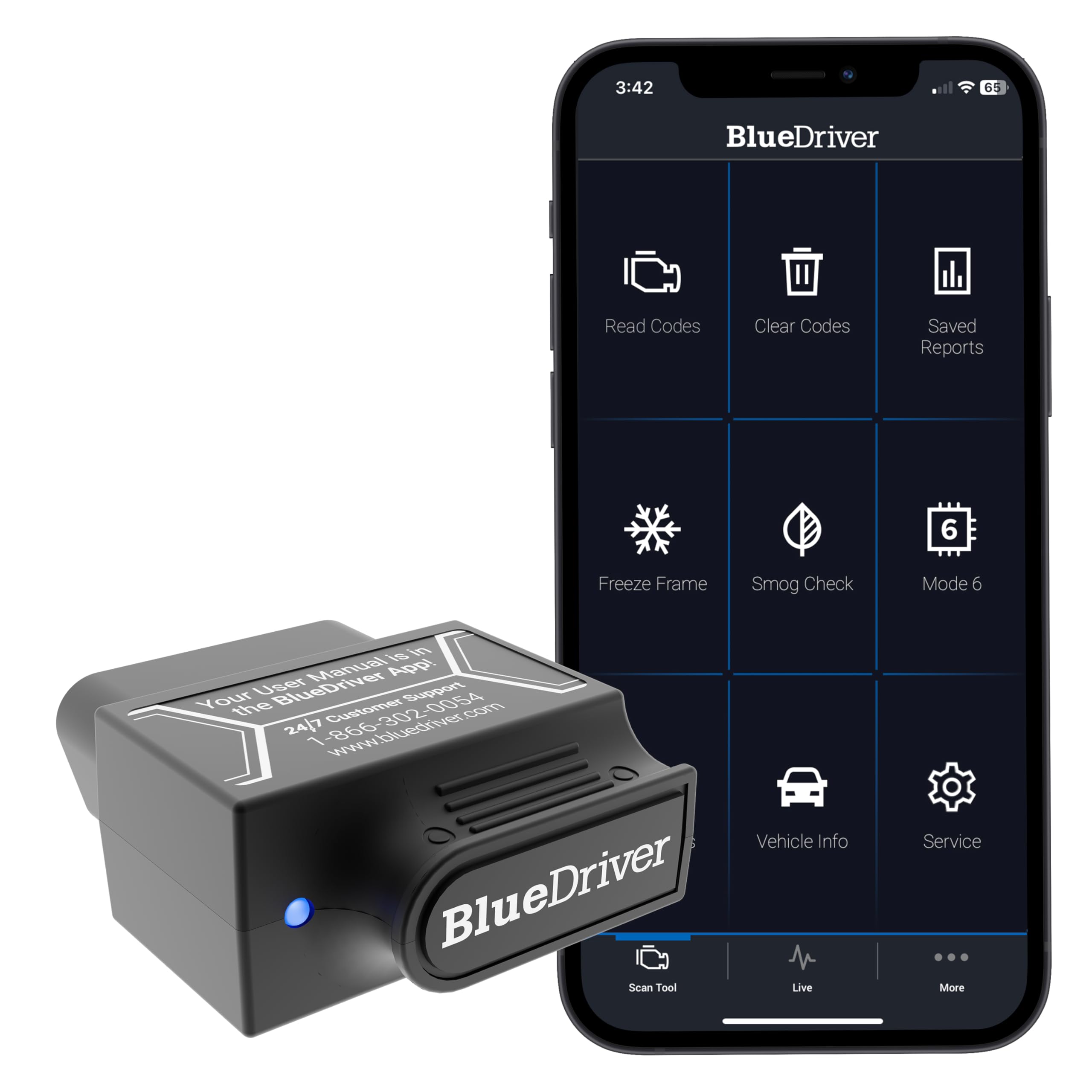
BlueDriver is worth buying for someone who wants near-professional transmission diagnostics without paying shop prices.
Pros
- Gives detailed codes and repair reports like a shop scanner.
- Easy Bluetooth pairing and a clear mobile app.
- No subscription fees for advanced features.
Cons
- Some advanced vehicle brands may show limited transmission data.
- Depends on phone battery and Bluetooth connection.
- Live data can be dense for first-time users.
It read my transmission codes quickly and showed likely causes in plain language. The app’s repair reports saved time by pointing to parts to check first.
They cleared codes without fuss and watched live data while revving the engine. That helped confirm a slipping feeling came from a sensor issue, not the gearbox itself.
Setup felt simple; plug it in, connect the phone, and start scanning. Support answered a pairing question fast when a phone hiccup interrupted my first try.
Overall, it gives real mechanic-level info in a pocket tool, with the trade-offs of Bluetooth reliance and some limits on certain makes.
BLCKTEC 460T

This scanner is worth buying for someone who wants dealer-style transmission diagnostics and reset tools without a shop visit.
Pros
- Reads transmission and ECU live data quickly.
- Includes many reset services useful after repairs.
- AutoVIN and fast scanning save time.
Cons
- Some advanced functions may not work on every vehicle.
- App and features only supported in USA and Canada.
- A few users reported setup or compatibility hiccups.
They plugged the 460T into several cars and found it fast to wake up and pull VIN and codes. The live-data graphs helped pinpoint transmission issues without guessing. It felt solid in hand, with a clear screen that made reading parameters easy while driving.
The reset services worked well for common post-repair tasks like transmission and maintenance resets. AutoScan and AutoReLink meant fewer button presses and quicker checks. Occasionally a feature was locked out on older or non-supported models, so they checked compatibility first.
Pairing it with the RepairSolutions2 app added repair steps and parts info that matched the fault codes. Updates are free, which kept newer vehicle support current during testing. Support is U.S.-based, which made reaching customer service straightforward when they needed help.
ANCEL AD310

This is a solid buy for someone who wants a simple, reliable reader to find and clear transmission-related codes tied to the engine/emissions system.
Pros
- Easy to use with clear on-screen results.
- Sturdy build and long, flexible cable for garage work.
- Plugs into the car for power — no batteries needed.
Cons
- Only reads emission-related OBD-II codes, not full transmission-only systems.
- Lacks advanced features for pros or newer vehicle protocols.
- No wireless app or phone integration.
The ANCEL AD310 felt straightforward in use. It connected quickly to the OBD-II port and showed codes and live data without hunting through menus. The screen stayed legible under garage lights and the buttons responded well while crouched by the wheel.
It handled common transmission-related codes that tie into the engine control system, so it helped diagnose shift problems that trigger the check engine light. Reading freeze-frame data and I/M readiness made it easy to see recent events and confirm fixes.
Durability stood out. The thick cable and compact unit survived a few drops while working under the hood. Still, technicians who need ABS, airbag, or deep transmission module access should look at more advanced scanners.
OBDMATE OM901 Scanner
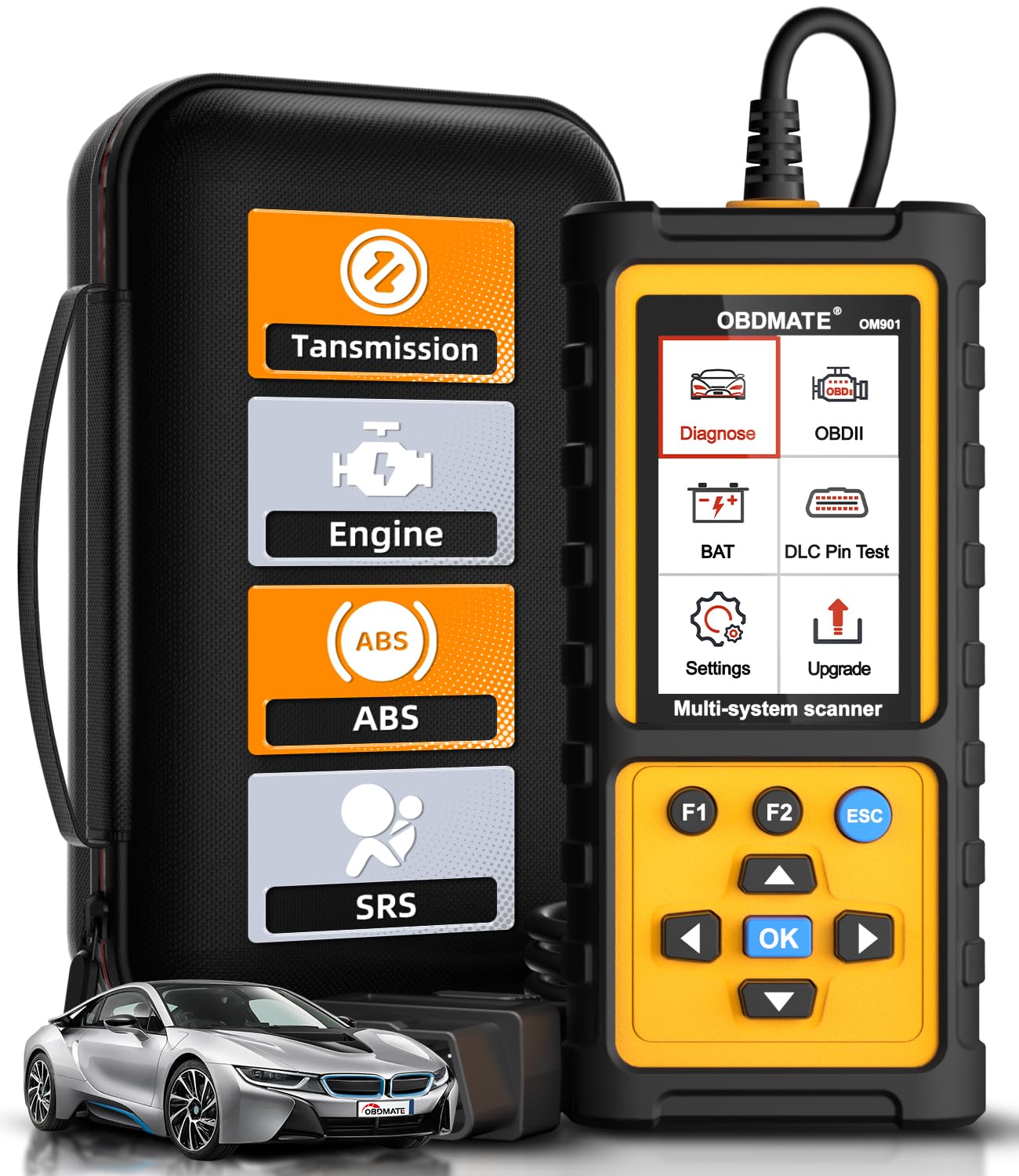
It is a solid buy for someone who wants a rugged, easy-to-use scanner that reads and clears transmission, ABS, SRS, and engine codes.
Pros
- Reads transmission data and live stream clearly for spotting temp and sensor issues.
- Big 3.5″ screen makes graphs and codes easy to see at the car.
- Plug-and-play with a tough case — ready to use without batteries or fuss.
Cons
- Manual is thin, so expect a short learning curve exploring menus.
- Menus feel basic compared with pro-level tools.
- Windows/Mac updates take a few minutes and need a computer.
They hooked the OM901 to a mid-2000s car and it found transmission codes and live temps fast. The large screen made it easy to watch trans temperature while revving the engine. It cleared warning lights quickly after repairs.
They liked the firm feel and the included hard case. The unit boots immediately when plugged in and the menu flows logically. Live data graphing helped spot a failing speed sensor that other simple readers missed.
They noted the manual did not cover everything and some functions took trial and error. Updating the software was straightforward but required a PC and a brief download. For the price, it handled nearly everything a DIYer needs to diagnose transmission faults.
AVAPOW AV-D600
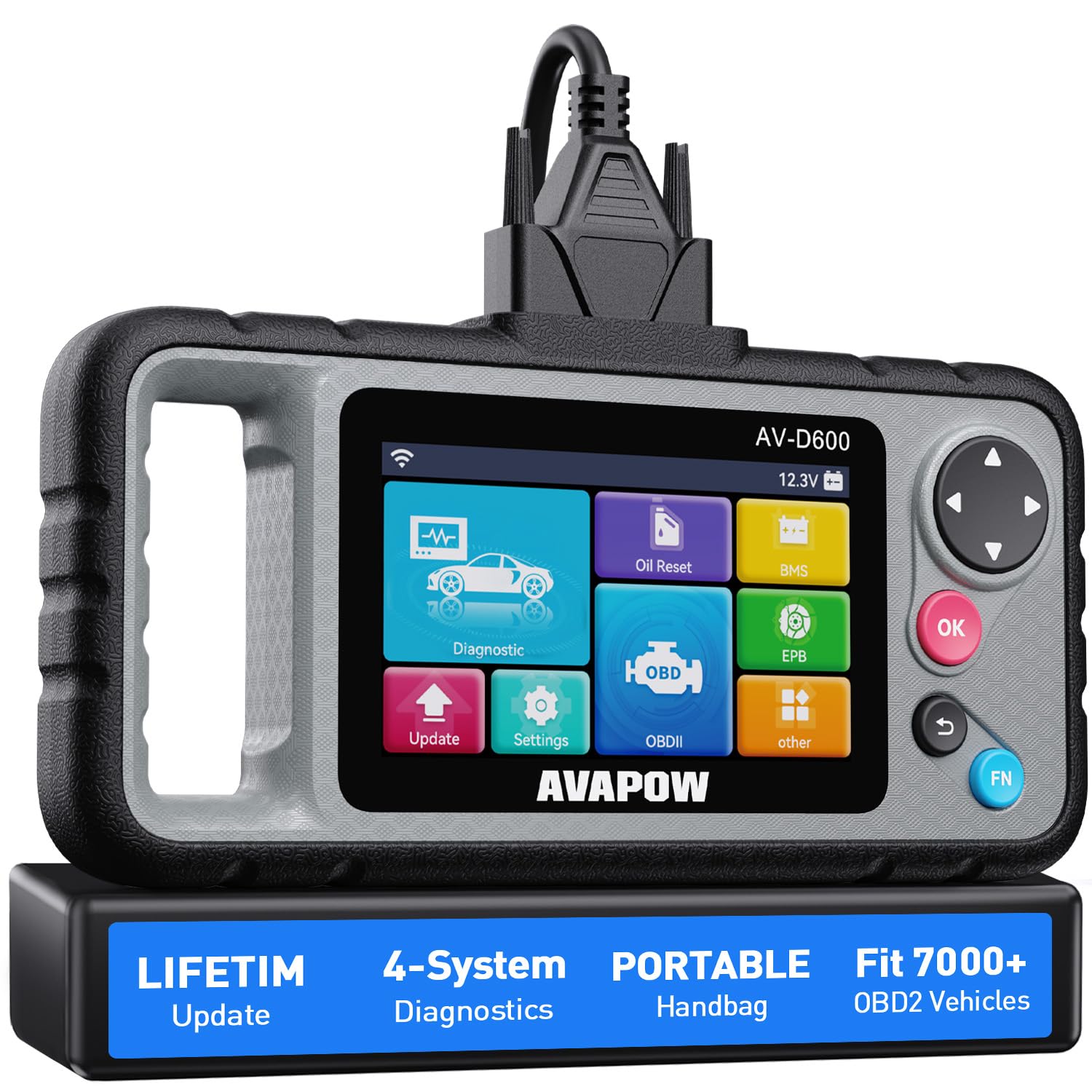
It is a solid buy for DIYers who want reliable transmission and multi-system diagnostics without dealer fees.
Pros
- Reads transmission, ABS, SRS and engine codes in one pass.
- Lifetime WiFi updates keep it current without extra fees.
- Comfortable, grippy handle makes it easy to hold during tests.
Cons
- Some advanced or brand-specific transmission data may be limited.
- Screen reliability has a few negative reports from users.
- Not as deep as high-end shop scanners for complex repairs.
They connected it to a handful of cars and it found transmission codes fast. The Auto VIN detection saved time and avoided guessing the vehicle protocol.
Live data graphs helped spot transmission issues while driving slowly. It felt solid in hand and the non-slip grip made one-handed use easy during road tests.
Reset functions for oil, EPB and battery match worked as promised on routine maintenance. For tougher transmission diagnosis it pointed to faults but sometimes required a dealer-level tool to read every parameter.
WiFi updates installed quickly at home and kept the code library fresh. Overall, it served well as a first-line scanner for transmission trouble and basic repairs.
Foxwell NT301

The Foxwell NT301 is a solid, easy-to-use OBD2 reader for transmission-related engine codes and live data, best for DIYers who need fast code checks without advanced system scans.
Pros
- Simple to use and reads/clears engine codes quickly.
- Live data graphing makes spotting transmission-related sensor trends easy.
- Sturdy build and daylight-readable screen for garage use.
Cons
- Does not scan ABS, SRS, or other specialty modules.
- No Bluetooth app or mobile support for modern workflows.
- Some vehicles or non-standard models may not be compatible.
They plugged the NT301 into several cars and it woke up instantly with clear menus. It showed live RPM, coolant temp, fuel trims, and oxygen sensor data that helped trace issues that could affect shifting behavior.
Running readiness tests and EVAP checks was fast, and the red-yellow-green LED for emissions status removed guesswork before a test. The tool logged data and displayed simple graphs that made spotting odd transmission sensor trends straightforward.
Clearing the check engine light worked every time, but the light came back if the underlying fault wasn’t fixed. It performed like a reliable basic code reader—handy for transmission code checks but not a substitute for a full professional scanner when ABS or TCM-level work is needed.
ANCEL AD410
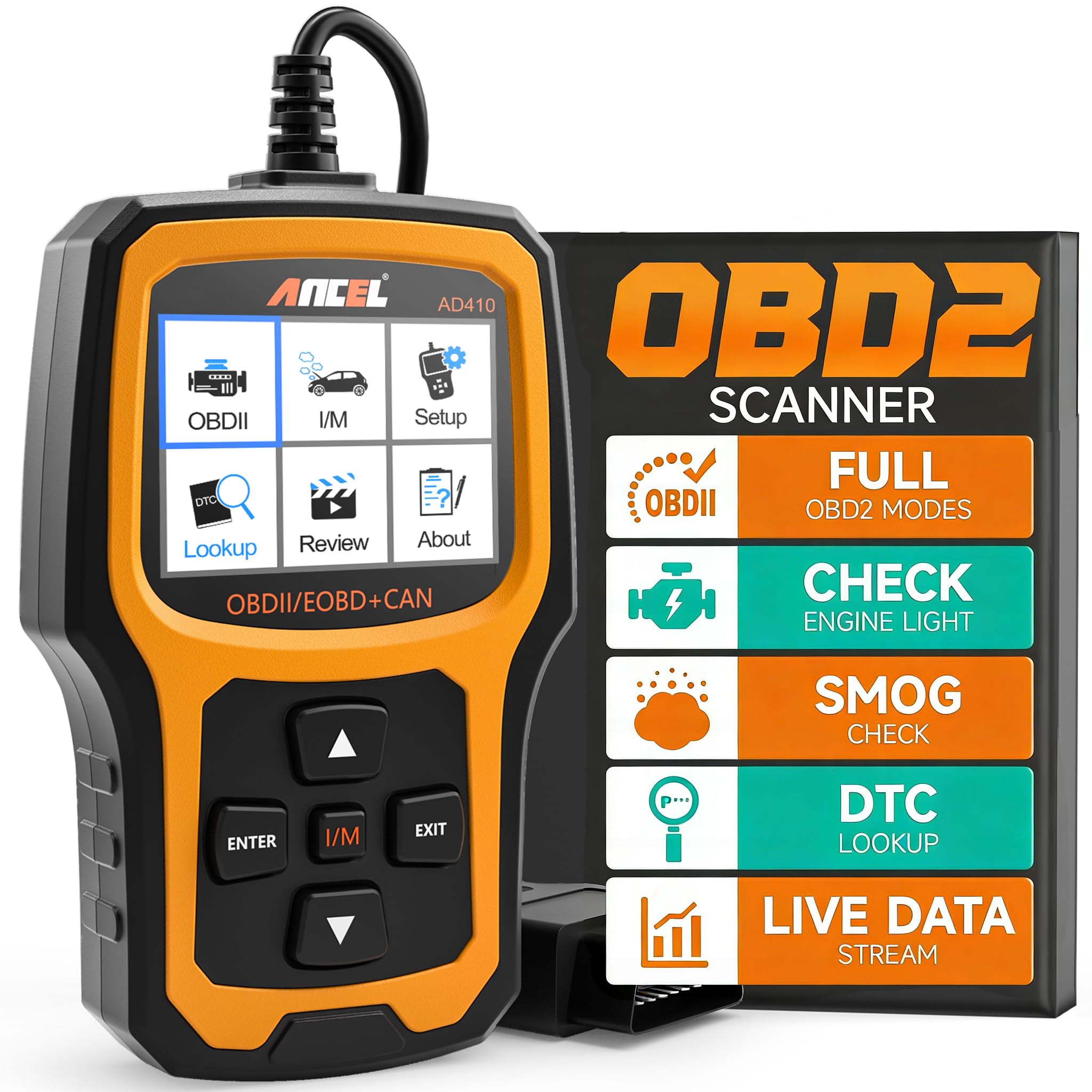
It is a good budget OBD2 reader for quickly finding and clearing engine codes, but it does not read transmission or ABS systems.
Pros
- Easy to use right from the car’s OBD-II port.
- Built-in code definitions reduce web searches.
- Clear screen and simple menus for quick checks.
Cons
- Doesn’t support transmission, ABS, or SRS diagnostics.
- USB update process can be confusing.
- Some manuals and on-screen help feel basic.
They connected the AD410 to a few cars and it started right away with no batteries or setup. The screen showed codes and short descriptions fast. It made it simple to see if the check engine light had an emissions code.
They liked the quick I/M readiness checks before a smog test. Running an O2 sensor or EVAP leak test felt straightforward on the device. Clearing codes worked as expected after they fixed the underlying issue.
They noticed limits when they needed a transmission fault code. The unit simply won’t read that system, so they had to use a different scanner for deeper work. Updating with the included USB cable required a Windows PC and a little patience.
Overall, the AD410 fits someone who wants a reliable, low-cost engine code reader for home use and pre-smog checks, but it’s not the tool for transmission diagnosis.
TOPDON AD500
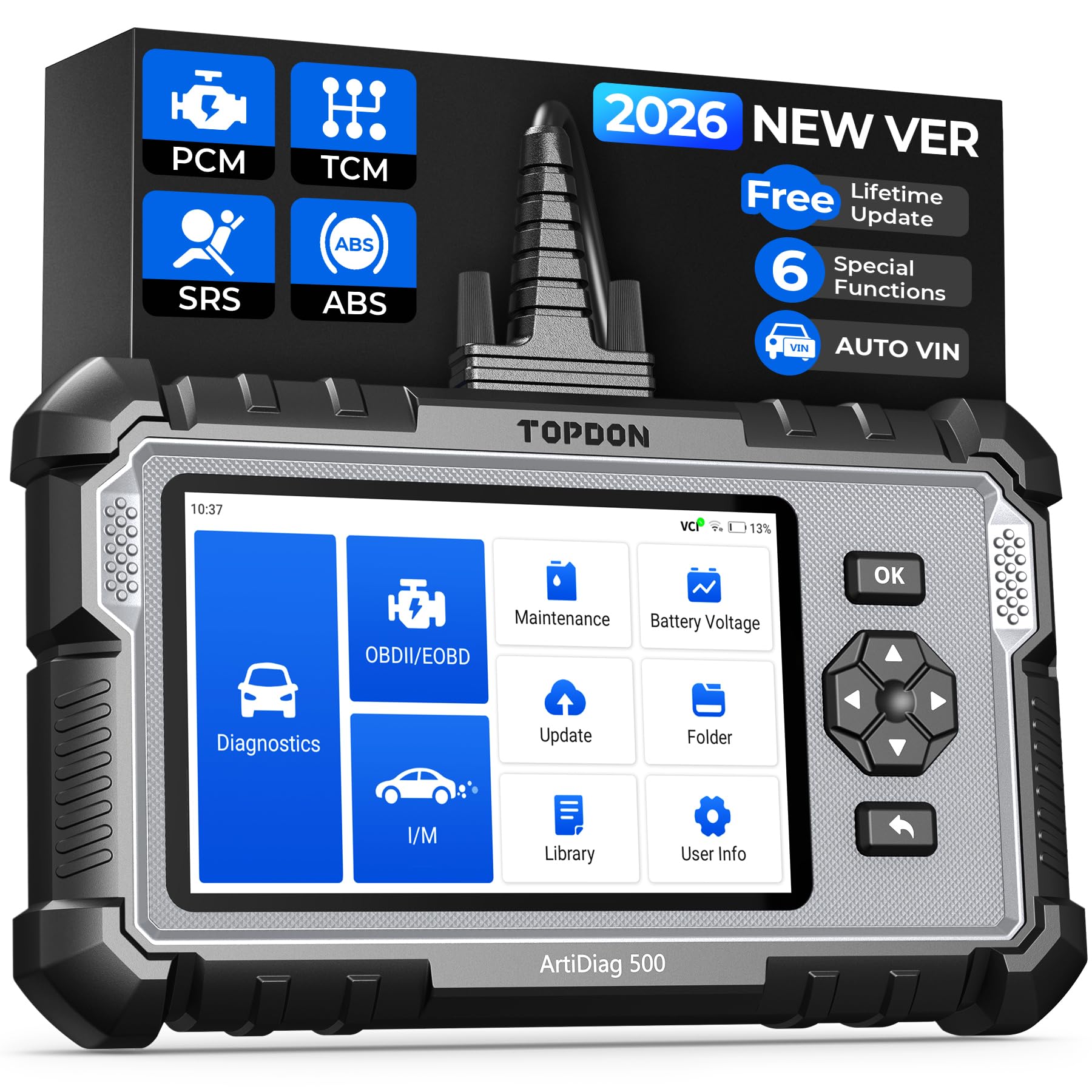
It is a solid mid-range scanner for someone who needs transmission and other system codes without paying pro-shop prices.
Pros
- Reads transmission, ABS, SRS and engine codes, not just basic OBD2.
- Easy AutoVIN and clear live-data charts that help spot problems fast.
- Handy reset functions (oil, SAS, TPMS, BMS, EPB) for DIY maintenance.
Cons
- Initial update and setup can take extra time and needs Wi‑Fi.
- Some advanced manufacturer features may still be limited on certain models.
- Annual software choices and return shipping policies frustrate a few users.
They handed the AD500 an OBD port and it woke up with a bright 5-inch screen and quick AutoVIN pickup. It pulled transmission codes cleanly and showed live RPM and temp data in easy charts, which made tracing an intermittent shift problem much faster than a basic reader.
They liked the reset tools when relearning throttle and resetting the battery after a replacement. The touchscreen plus buttons felt solid in hand, and battery life lasted through several checks without charging.
They ran into slow first-time updates and had to connect to Wi‑Fi and an account to finish setup. On a couple of rare vehicle-specific items the tool asked for online help, but customer support and lifetime Wi‑Fi updates helped clear most issues.
Overall, it worked like a capable shop helper for home mechanics who want transmission diagnostics and useful service resets without full professional cost.
Autel MK900
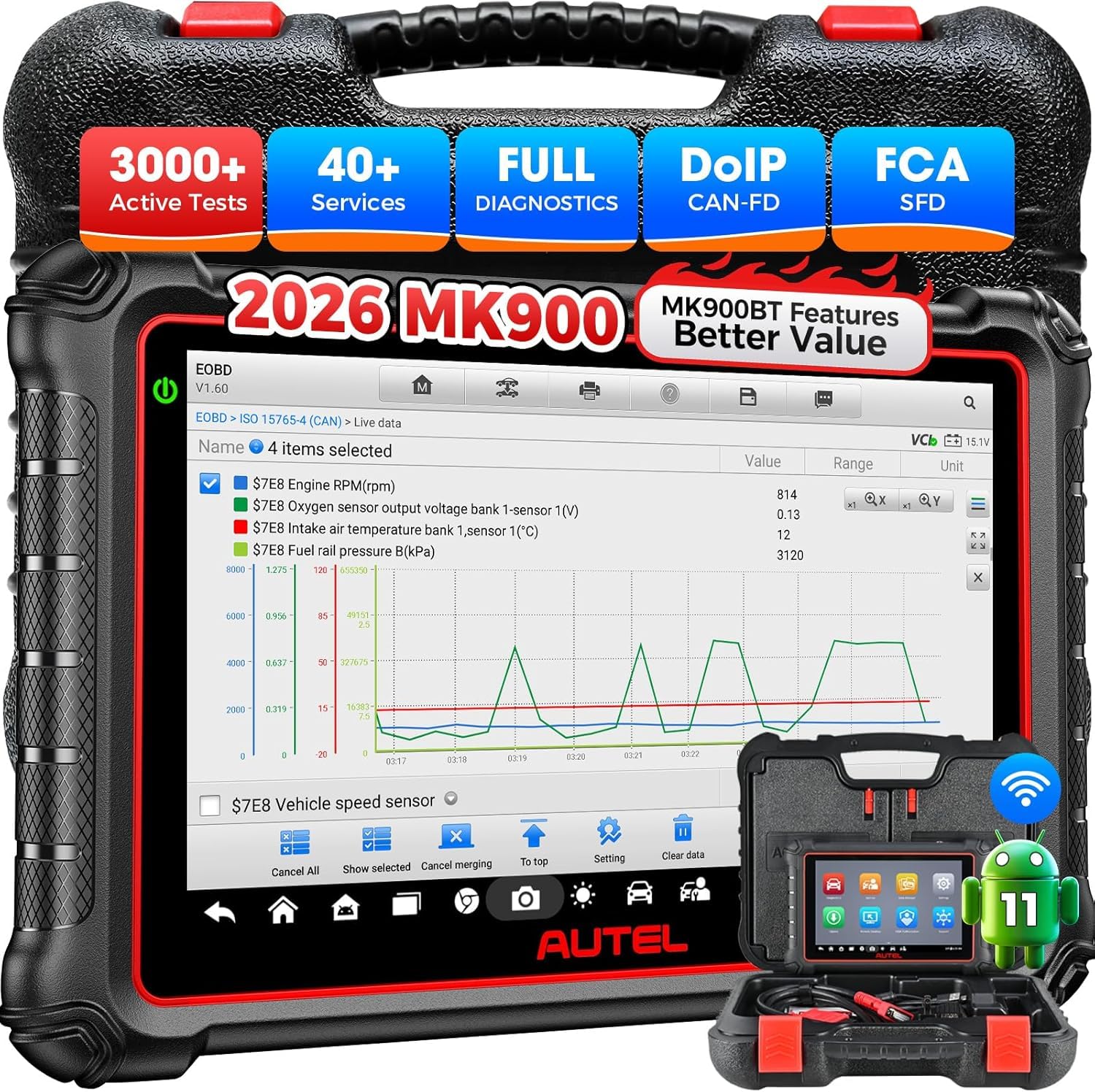
This scanner is worth buying if someone needs fast, pro-level transmission diagnostics and wide vehicle coverage.
Pros
- Fast AutoVIN and quick scans that save time.
- Deep bidirectional tests that move actuators for clear transmission checks.
- Stable connections and many service functions for modern cars.
Cons
- Higher price than basic code readers.
- Learning curve to use advanced active tests.
- Large unit may feel bulky for casual users.
They used the MK900 on several cars and liked how quickly it identified transmission fault codes and showed live data. The bidirectional controls let them command solenoids and watch responses, which helped pinpoint a sticky shift solenoid fast.
Setup felt smooth with AutoVIN and the tablet-like screen made data easy to read while working under the hood. Printing pre- and post-repair reports from Wi‑Fi proved handy to show what changed after a repair.
Advanced features like CAN‑FD/DoIP and 3,000+ active tests meant coverage for newer vehicles they work on, but it took time to learn some menus. For a home mechanic who wants workshop-level transmission diagnostics, it performed like a pro tool.
Buying Guide
Choosing the right OBD2 scanner for transmission codes starts with knowing the needed features. Look for a tool that reads and clears transmission trouble codes and shows live data for shift solenoids, torque converter, and gear ratios.
They should check compatibility with the car’s protocol and model year. A scanner that supports multiple protocols and covers most domestic and import vehicles reduces the chance of connection issues.
Prioritize ease of use. A clear display, simple menus, and responsive controls save time. Wireless options add convenience but make sure the app is stable and updates are available.
Accuracy and diagnostic depth matter. The scanner should show freeze-frame data, pending codes, and real-time sensor readings. Bi-directional control and advanced tests help in troubleshooting, but not every user needs those features.
Consider data logging and export options. Being able to record sessions and export CSV or PDF files helps track intermittent faults and share results with a mechanic.
Pay attention to software updates and support. Regular updates add coverage for new vehicles and fix bugs. Good tech support makes a difference when setup or interpretation issues arise.
Finally, weigh durability and warranty. A rugged casing and a reliable warranty protect the investment. Balance the feature set against the budget to pick the best fit.
Quick feature checklist
| Feature | Why it matters |
|---|---|
| Transmission code reading | Core function for diagnosis |
| Live data & freeze-frame | Shows conditions when fault occurred |
| Protocol compatibility | Ensures the scanner connects to the vehicle |
| Bi-directional control | Allows active tests (optional) |
| Wireless/app stability | Convenience and usability |
| Data logging/export | For record-keeping and sharing |
| Software updates/support | Keeps device current and reliable |
| Build quality/warranty | Protects the purchase |
Editor’s Choice
They picked the Autel MaxDiag MD808 Pro as the Editor’s Choice for transmission codes. It reads and clears transmission trouble codes and shows live data for shifting and solenoid performance. The interface is simple and the results are reliable.
It connects to most 1996 and newer vehicles and supports many transmission-specific systems. Technicians and DIYers use it because it saves time and explains generic and manufacturer codes. It also runs key diagnostic tests like O2 and EVAP.
Key features:
- Wide vehicle coverage — Works on most domestic and import cars.
- Transmission-specific codes — Reads TCM codes and related data.
- Live data & graphing — Helps spot shifting issues in real time.
- Built-in repair tips — Gives code definitions and possible fixes.
The unit is handheld and rugged, which suits the shop environment. Firmware updates keep it current, and customer support is available for setup questions.
Conclusion
A good OBD2 scanner for transmission codes helps diagnose issues faster and saves time at the shop. It reads transmission-specific codes, shows live data, and can guide repairs with clearer info than a simple check engine light.
They should pick a scanner that supports their vehicle’s make and year. Look for transmission code coverage, live data refresh rate, freeze-frame capture, and bi-directional controls if advanced tests are needed.
Budget models work for basic code reading and clearing. Midrange units add live data graphs and better code definitions. Professional tools provide deep diagnostics, adaptations, and automated tests for complex transmission faults.
Consider portability and app support for wireless scanners. Wired handhelds give quick, reliable results without smartphone dependence. Battery life, update policies, and customer support matter too.
A short comparison table helps choose:
- Best budget: reads/troubleshoots basic transmission codes.
- Best midrange: adds live data and stronger code explanations.
- Best pro: includes adaptations, active tests, and wide vehicle coverage.
They should match the scanner to their needs: occasional DIY fixes, regular home mechanics, or professional work. Proper tool choice leads to faster diagnosis, fewer unnecessary repairs, and clearer next steps for transmission problems.
FAQS
What is an OBD2 scanner for transmission codes?
An OBD2 scanner reads trouble codes from a vehicle’s computer. It shows transmission-related codes like shift solenoid faults or torque converter issues.
Which features matter most?
They should read transmission-specific codes, show live data, and provide freeze-frame info. Bi-directional control and OEM code support help with advanced diagnosis.
Can a basic scanner clear transmission codes?
Yes, many basic scanners can clear codes. Clearing does not fix the underlying problem; it only resets the code.
Will the scanner tell the exact repair?
Scanners point to symptoms, not always the exact cause. Mechanics use codes plus tests to find the true fault.
Are Bluetooth apps as good as handheld units?
Bluetooth apps can be powerful and cheaper. Handheld units often offer faster setup and more durable builds for shop use.
How to choose the right scanner?
Match the scanner to the vehicle make, needed features, and budget. Look for good live-data speed, transmission code support, and clear reports.
Is professional-level equipment necessary?
Not always. DIYers can use mid-range scanners for many transmission issues. Shops benefit from advanced, bi-directional tools.
How often should one scan the vehicle?
Scan when the check engine light or transmission warning appears. Run checks after repairs and during regular maintenance if problems recur.
