
Is Dealership Key Fob Battery Service Worth the Cost?

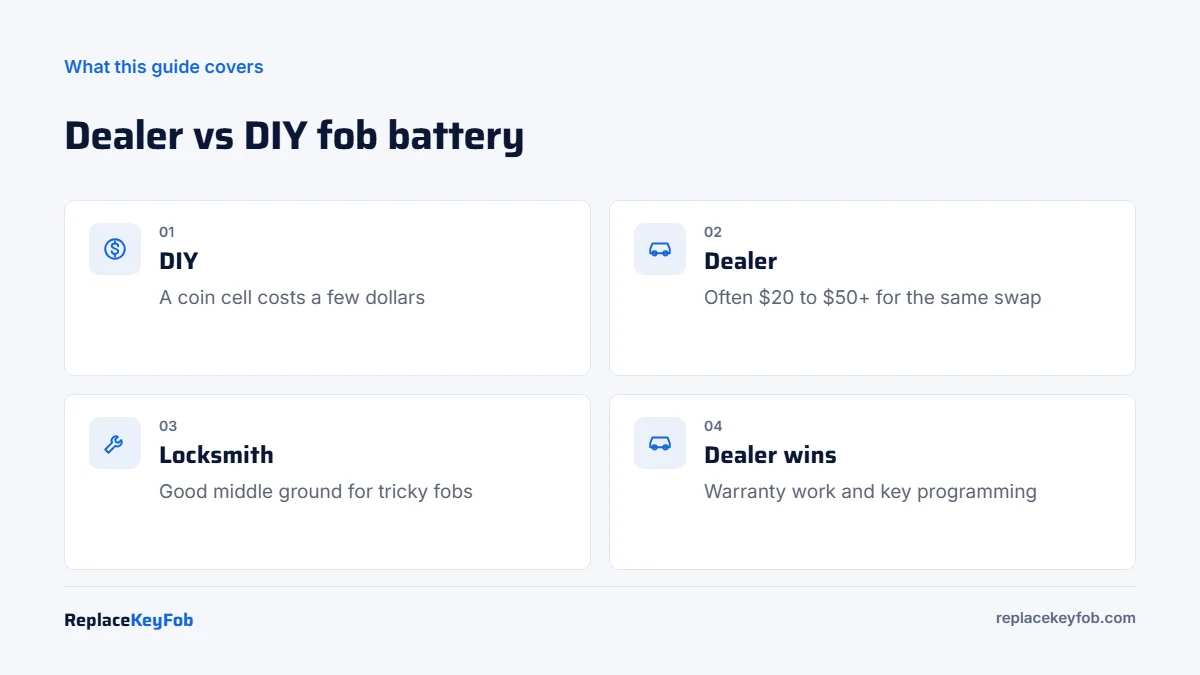
Dealership service provides peace of mind but often carries a significant markup for a simple task. For most vehicle owners, a DIY battery replacement is a straightforward and cost-effective alternative.
When your key fob stops responding, the immediate instinct is often to head straight to the dealership. While professional service offers peace of mind, many vehicle owners wonder if the premium price tag for a simple battery swap is truly justified. Understanding the balance between convenience, cost, and the technical reality of your keyless entry system can save you both time and money.
- Cost Savings: DIY battery replacements cost only the price of a standard coin-cell battery.
- Convenience: You can perform most battery swaps at home in under five minutes.
- Professional Help: Use dealerships for complex programming or if your vehicle remains under warranty.
- Safety First: Use plastic tools to open fobs to prevent casing damage and internal shorts.
Understanding the Mechanics: Why Key Fob Batteries Fail
The Role of the Internal Circuit Board and FCC ID
Your key fob is a sophisticated miniature transmitter. Inside the plastic casing lies a printed circuit board (PCB) powered by a small coin-cell battery. This board contains a unique FCC ID, which identifies the specific radio frequency and signal protocol your vehicle uses to communicate with the key.
Over time, the battery’s chemical composition degrades. As voltage drops, the transmitter struggles to send a strong enough signal to the vehicle’s receiver, leading to intermittent performance or complete failure.
Signs Your Battery is Near End-of-Life
Recognizing the battery symptoms early can prevent you from being locked out of your car. Common indicators include a reduced operating range, the need to press buttons multiple times, or a dashboard warning light.
Reduced range response
Low voltage output
Test with new battery
The Dealership Key Fob Battery Service Experience
What You Are Actually Paying For
When you opt for dealership service, you aren’t just paying for the coin battery. You are paying for the convenience of a technician handling the device, the assurance of OEM-approved parts, and the potential for a quick diagnostic check if the battery isn’t the only culprit.
The Reality of “Premium” Service vs. DIY Convenience
For many, the dealership experience is seamless, but it often involves appointment wait times and labor premiums that far exceed the cost of the hardware. If you replace battery myself, you can often perform the task in under five minutes for a fraction of the cost.
Comparative Breakdown: Dealership vs. DIY vs. Automotive Locksmith
Cost Analysis: Labor Rates and Markup on Coin Batteries
Dealerships often charge a flat “service fee” that includes labor. While a battery might cost $5 at a local hardware store, a dealership service visit can range from $20 to over $50 depending on the brand and region.
Time Efficiency: Appointment Scheduling vs. Instant Replacement
DIY methods offer instant results. Locksmiths provide a middle ground, often offering mobile service that is faster than a dealer appointment but more expensive than a DIY approach.
| Option | Best For | Watch Out For |
|---|---|---|
| Dealership | Warranty/Security | High labor costs |
| DIY | Budget/Speed | Careless handling |
| Locksmith | Complex issues | Service call fees |
How to Identify Your Specific Key Fob Requirements
Verifying Your Year, Make, and Model
Always verify your vehicle’s specific requirements. You can check your owner’s manual or use a battery chart to confirm the correct size for your fob.
Locating the Battery Type (CR2032, CR2025, etc.)
Most modern fobs use standard lithium coin cells. Understanding the difference between cr2032 cr2025 battery types is essential, as using the wrong thickness can damage the casing or cause poor contact.
Matching FCC IDs for Compatibility
If you need to replace the entire fob, matching the FCC ID is non-negotiable. Using a fob with an incorrect frequency will result in the vehicle failing to recognize the key.
Step-by-Step Guide: Safely Replacing Your Battery at Home
Tools Required and Avoiding Damage to the Plastic Casing
- Plastic pry tool
- Correct coin-cell battery
- Small screwdriver if required
Handling Sensitive Electronics and Button Layouts
Use a plastic tool rather than a metal knife to pry the case open to avoid scratching the plastic or damaging the internal rubber seals. Once open, note the orientation of the battery—usually, the positive side faces up, but this varies by model.
Avoiding Common Mistakes: Orientation and Static Discharge
Always ensure the battery is seated firmly in its cradle. Static electricity can damage delicate circuit boards, so touch a grounded metal object before handling the internal components.
When You Actually Need a Professional (Beyond the Battery)
Programming Limits and Resynchronization Issues
Sometimes, a new battery doesn’t solve the issue. If the fob has lost its sync with the vehicle’s immobilizer, you may need professional programming equipment.
Programming a transponder or smart key may require professional equipment and proof of ownership.
The Role of the Dealership in Transponder Chip Failures
If the internal chip is damaged, no amount of battery changing will fix it. Dealerships are necessary when the vehicle’s onboard computer needs to be flashed to accept a new key.
Security Considerations and Best Practices for Keyless Entry
Maintaining Signal Integrity and Battery Life
Keep your key fob away from high-EMF sources like routers or large magnets, which can drain the battery faster than normal usage.
Protecting Against Unauthorized Signal Relays
Consider using a Faraday pouch to block signal relay attacks, which prevent thieves from amplifying your key’s signal while it is inside your home.
Final Verdict: Is Dealership Service Worth the Premium?
Summary of Cost-Benefit Analysis
If your vehicle is under warranty or you are uncomfortable handling small electronics, the dealership service is worth the cost for the peace of mind. However, for the average owner, the DIY approach is cost-effective and straightforward.
Empowering Vehicle Owners to Make the Right Choice
By understanding your replace battery options, you take control of your vehicle maintenance. Whether you choose to visit the dealer or handle it yourself, always prioritize the correct battery type and proper handling to ensure your keyless entry system remains reliable.
For simple battery swaps, DIY is highly recommended; reserve dealership services for complex programming or warranty-covered hardware failures.
7/10
Frequently Asked Questions
Common signs include a weak signal, having to press buttons multiple times, or a low-battery warning message on your vehicle’s dashboard. If the fob works intermittently, the battery is likely near its end-of-life.
While possible, it is unlikely if you use a plastic pry tool and follow your vehicle’s specific instructions. Avoid using metal screwdrivers to pry the case, as this can easily crack the plastic or scratch the circuit board.
First, verify that the battery is installed with the correct polarity. If it still doesn’t work, the fob may need to be re-synchronized with the vehicle or may have a hardware failure requiring professional attention.
Not always, but some advanced smart keys require specialized diagnostic equipment found only at dealerships or professional locksmiths. Always check your owner’s manual to see if a DIY programming procedure is available for your specific model.
Check your owner’s manual or open the current fob and look for a model number (such as CR2032 or CR2025) printed on the old battery. You can also use online databases by searching your vehicle’s year, make, and model.
The FCC ID is a unique identifier required for radio frequency devices in the US. It ensures the key fob is compatible with your car’s specific receiver frequency and security protocol.