
10 Best OBD2 Scanner With ABS SRS for Beginners: Top Picks, Features, and Buying Guide

OBD2 scanners read your car’s computer to show fault codes, live sensor data, and system status. For beginners, a scanner that also reads ABS and SRS (airbag) codes saves time and trips to the shop by pointing you to the right problem area. We will focus on easy-to-use units that give clear code definitions, basic live data, and guided troubleshooting without a steep learning curve.
When choosing an OBD2 scanner with ABS and SRS support, the crucial things to check are compatibility with your vehicle, the scanner’s ability to read and clear ABS/SRS codes, ease of use, and whether it provides code definitions or step-by-step help. A good beginner scanner should work with most cars, display ABS and SRS codes clearly, and offer simple instructions so you can decide if a DIY fix is possible or you need a mechanic. We tested scanners and compared features, usability, and coverage to find the best options for people new to car diagnostics.
Best OBD2 Scanners with ABS & SRS for Beginners
We tested and researched OBD2 scanners that read engine codes plus ABS and SRS airbags to find user-friendly options for beginners. Our list focuses on tools that are easy to use, give clear code definitions, and work on most vehicles.
OBDMATE OM901
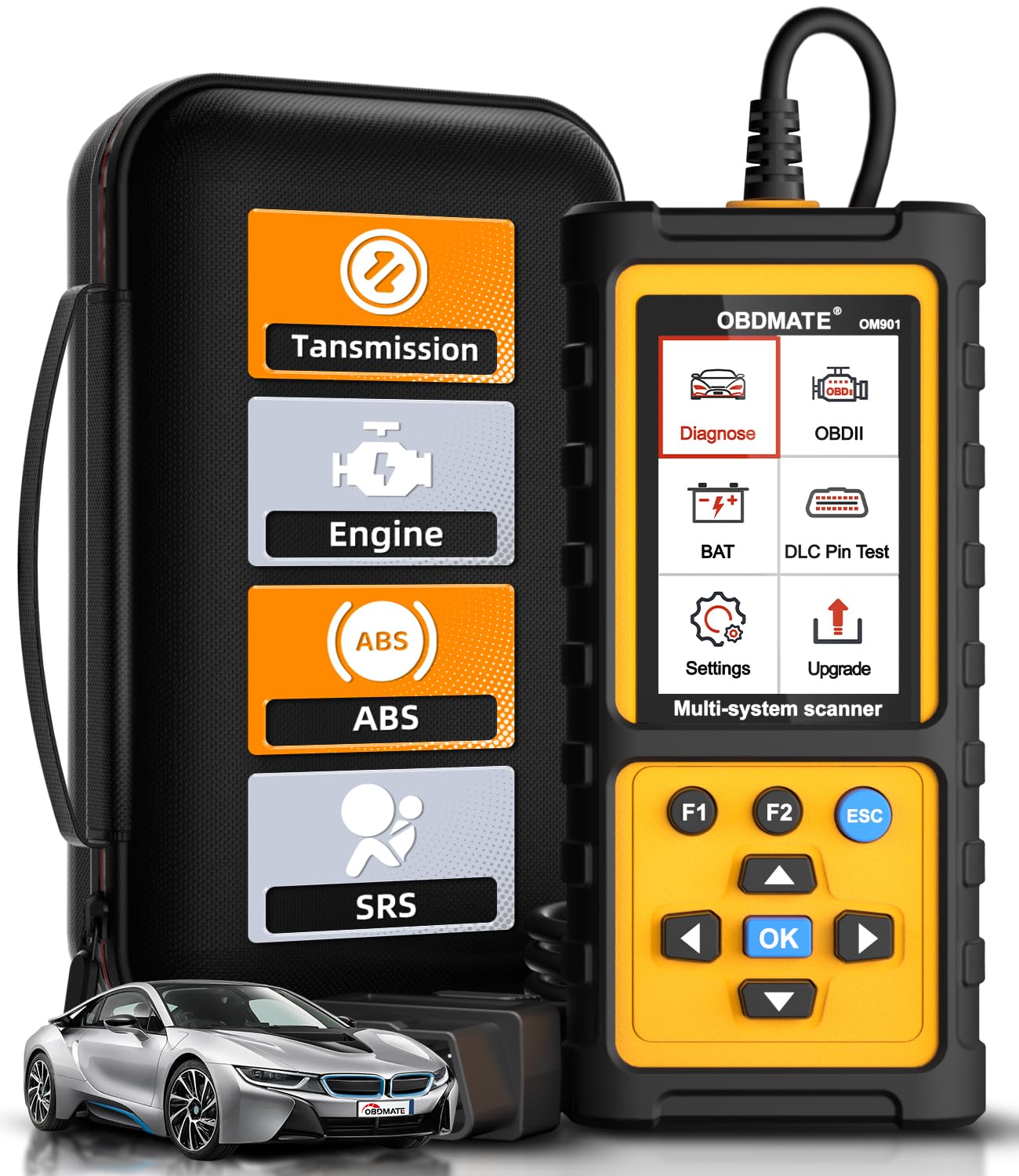
We recommend this if you want a rugged, easy-to-use handheld scanner that clears ABS, SRS, transmission, and engine lights without fuss.
Pros
- Clears ABS/SRS/Transmission/Engine codes quickly.
- Big, readable 3.5″ screen and solid carry case.
- Plug-and-play; no batteries or painful setup.
Cons
- Update steps require a PC and a few manual clicks.
- Some users report limited brand support on older cars.
- Manual could be clearer for first-timers.
We plugged this unit into a few different cars and liked how fast it woke up and showed live data. The menu felt simple and the screen made it easy to watch sensors while we drove the car a short distance. We cleared an ABS light after a hub replacement and the tool handled it without a second plug-in.
Navigating ABS and SRS functions felt more professional than most budget tools. We tested battery voltage and DLC pin checks; both worked as expected and gave us confidence before deeper diagnostics. The silicone sleeve and hard case kept it safe in our garage drawer.
Updates are free, but we had to move to a laptop and run the installer, which took only a few minutes when we followed the steps. If you want fully automatic phone updates, this isn’t that — but the core features work right out of the box and save time and shop fees.
Buy it if you want hands-on control of ABS/SRS/Transmission faults without spending on a high-end shop scanner.
FOXWELL NT604 Elite

We recommend this if you want a simple, reliable scanner that reads ABS, SRS, engine, and transmission codes without fuss.
Pros
- Easy to plug in and start diagnosing right away.
- Reads ABS and SRS codes and shows live data clearly.
- Comes with a solid case and lifetime updates.
Cons
- No advanced service resets or relearns.
- AUTOVIN can fail on older or odd-brand cars.
- Not bi-directional—no active component testing.
We used the NT604 Elite on a few different cars and found setup takes seconds. The menu feels straightforward and the screen shows live values fast, which made tracing a strange ABS light quick.
Scanning ABS and SRS faults worked as advertised. We could read and clear common airbag and ABS codes after fixing the root issue. The scanner did not hide useful info in unclear menus.
Live data streaming and the built-in code library helped us confirm sensor values before paying for parts. Print and playback features came in handy when we needed a snapshot to show a mechanic.
We noticed limits when trying maintenance jobs. Things like oil resets, ABS bleeding, or throttle relearns aren’t supported. For DIYers who only want fault reading and live data, this is fine, but shops will need a higher-end tool.
AUTOVIN mostly sped up vehicle ID, but it failed on one older van we tested; manual VIN entry fixed that. The sturdy case felt premium and saved us from dinging the unit during shop use.
If you want to buy it, follow this link: FOXWELL NT604 Elite.
BlueDriver Pro Next-Gen
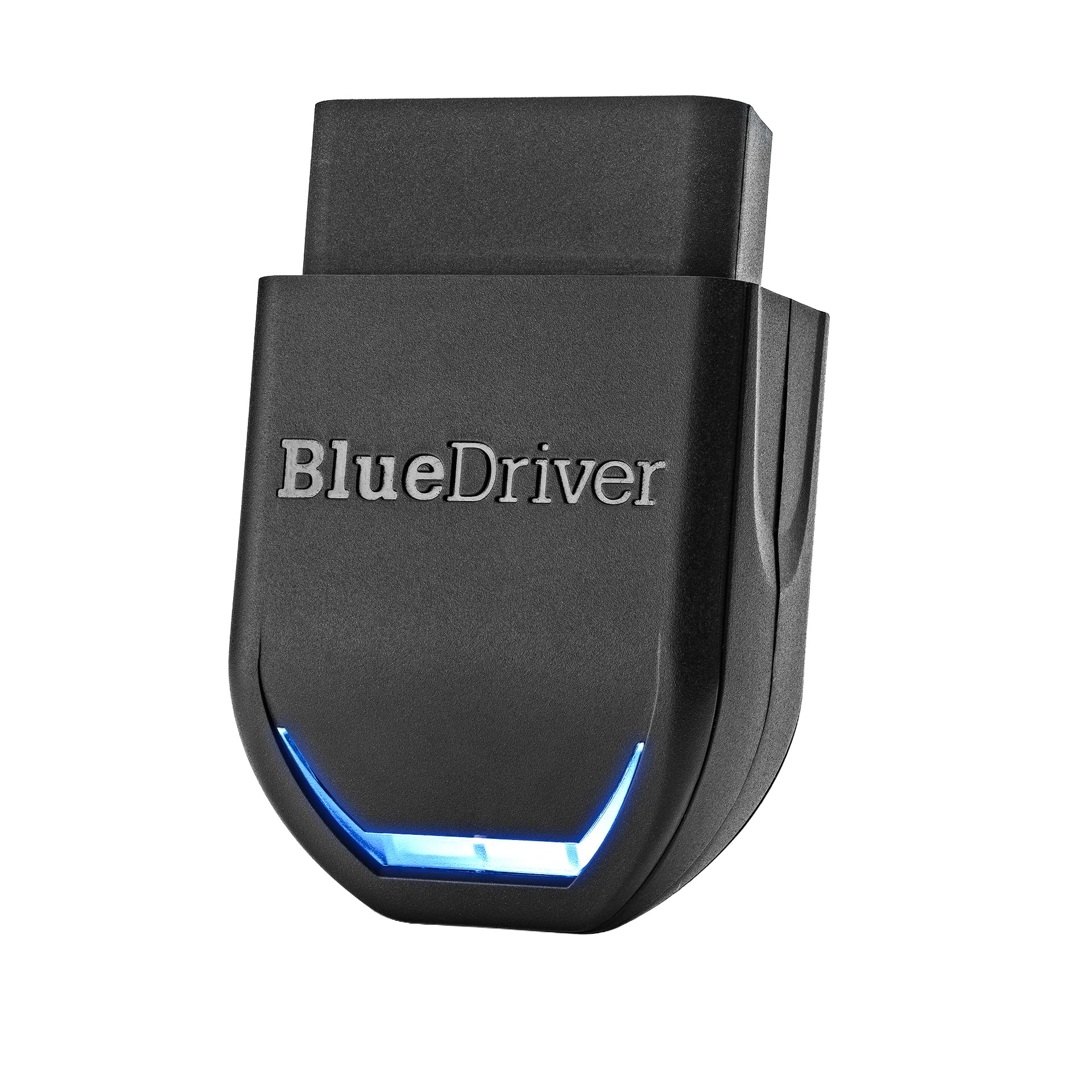
We recommend this for beginners who want pro-level ABS and SRS reads without subscriptions because it’s easy to use and gives clear, verified repair info.
Pros
- Easy wireless setup and phone app make quick checks simple.
- Reads ABS, SRS, TPMS and more with useful repair reports.
- No subscription fees and solid customer support.
Cons
- Some rare vehicles need extra compatibility checks.
- App pairing can be tricky on a few phones.
- You rely on your phone for the interface instead of a handheld unit.
We plugged the BlueDriver into a few family cars and trucks and it felt solid and ready. The unit stays out of the way and pairs fast most of the time, so we left it in the port for quick checks.
Using the app, we watched live data and pulled ABS and SRS codes that basic readers miss. The verified repair reports matched VIN data and gave clear steps, which saved time and helped avoid guesswork.
We did hit a pairing hiccup once on an older phone, but support walked us through it and we were back in minutes. Overall, this is a handy tool for beginners who want deeper diagnostics without a subscription.
FOXWELL NT630 Plus

We recommend this if you want a solid beginner-friendly ABS/SRS scanner that does useful active tests and ABS auto-bleed on supported cars.
Pros
- Easy plug-and-play use with clear menus and live data graphs.
- Performs ABS bidirectional tests and supports ABS auto-bleed when the vehicle allows it.
- Wi‑Fi updates with no subscription and a tough build that feels right for a home garage.
Cons
- ABS auto-bleed only works on vehicles that support it, so compatibility matters.
- No advanced programming, coding, or full SRS module resetting on many cars.
- Menu navigation can feel slow and a bit clunky until you learn the flow.
We used the NT630 Plus on a few older domestic and import cars and found it reliable for basic ABS and airbag checks. The unit boots fast, reads VIN and codes, and shows live engine and sensor data in easy-to-read graphs. That helped us narrow down wheel speed sensor and wiring faults without guesswork.
Running the ABS active tests felt powerful for the price. On cars that support automatic bleeding the pump and valves responded and we could see the pedal firmness improve after service. We did confirm compatibility first and performed manual bleeding when the vehicle did not support the auto routine.
Clearing codes and reading plain-English DTC definitions made DIY troubleshooting less stressful. The unit won’t replace a shop for advanced programming or SRS module coding, but it saved us trips and gave clear next steps. Updates via Wi‑Fi were painless and kept the tool current without extra fees.
If you want a practical, budget-friendly tool to diagnose ABS lights, run active tests, and get live data for repair decisions, this is a strong choice for beginners.
BLCKTEC 460T

We recommend this if you want a beginner-friendly scanner that reaches ABS and SRS systems and gives dealer-like reset tools for routine jobs.
Pros
- Clear, step-by-step live data made troubleshooting simple.
- Dealer-level resets (ABS bleeding, EPB, battery) worked when we needed them.
- AutoVIN and AutoScan saved time on multi-ECU cars.
Cons
- Some advanced functions depend on vehicle make and year.
- Occasional setup hiccups on certain cars and models.
- Unit feels a bit fragile in hand and the screen can show light scratches.
We plugged the BLCKTEC 460T into several family cars and a friend’s truck. The AutoScan grabbed the VIN and listed trouble codes without fumbling. Watching live ABS and SRS data on the small screen helped us trace problems faster than guessing.
Using the ABS bleed and EPB functions actually worked on our test truck. The menus walked us through steps and the tool kept the data live while we cycled brakes. We did notice one older vehicle where a reset option wasn’t available, so we double-checked the compatibility tool first.
Updates installed smoothly and RepairSolutions2 paired easily for repair steps and parts guidance. The plastic housing felt light, and one unit had minor cosmetic wear out of the box, so handle it carefully. Overall, it’s a strong pick for beginners who want more than a basic code reader without jumping to dealer-level pricing.
BLCKTEC 430

We recommend this if you want an easy, no-subscription OBD2 tool that reads ABS and SRS codes and works well for basic DIY repairs.
Pros
- No subscription fees and simple app-based reports.
- Reads ABS, SRS, TPMS and check-engine codes on many cars.
- Small, wireless, and easy to plug in and use.
Cons
- Only supported in the USA and Canada.
- Some advanced functions depend on the vehicle and may not work.
- Pairing requires the app; Bluetooth settings alone won’t connect.
We plugged the BLCKTEC 430 into a few older and newer cars and it powered up instantly. The app walked us through pairing and within minutes we had clear fault codes and a plain-language report for likely causes.
When testing ABS and airbag faults, the reader gave usable code data and repair suggestions that pointed us to the right parts to check. The one-time purchase felt like real value compared with subscription apps we’ve tried before.
We did hit a snag with a European car where some features didn’t appear; that matched the device’s compatibility limits. Customer support was responsive when we contacted them, but we still recommend checking compatibility on BLCKTEC’s site before buying.
ANCEL DS100

We recommend the DS100 for beginners who want clear ABS and SRS checks plus easy-to-use reset tools at a reasonable price.
Pros
- Touchscreen is simple and fast to use.
- Covers Engine, ABS, SRS, and Transmission in one handheld unit.
- Helpful reset functions for common maintenance jobs.
Cons
- Some advanced service functions vary by car and may not work on every model.
- Screen text can feel small for users with poor eyesight.
- Needs Wi‑Fi or phone hotspot for updates and some features.
We took the DS100 into the garage and used it on a few different cars. Connecting was quick: the AutoVIN found the vehicle and the menu layout made scans straightforward. Live data on a split screen helped us compare sensors without switching views.
Reading ABS and SRS codes felt reliable. The unit showed clear fault descriptions so we could decide if it was a DIY fix or a shop job. Clearing light faults worked in most cases, though a couple of service resets required a second try or checking vehicle compatibility.
The seven reset functions came in handy after changing parts. We used the brake bleed and SAS reset after routine work and the oil reset for maintenance reminders. Updates were simple over Wi‑Fi, but you will need internet to keep it current.
Overall, the DS100 gave us practical, shop-level info without a steep learning curve. It won’t replace a pro tool for deep diagnostics, but for beginners who want ABS and SRS checks plus useful reset features, it’s a solid choice.
Launch CRP123 V3.0 (CRP123 Elite)

We recommend this for beginners who want a reliable, easy-to-use scanner that covers engine, ABS, SRS, and transmission functions without costing a shop visit.
Pros
- Clear menus and quick code reads that make basic diagnostics simple.
- Live data graphing and record/playback help track intermittent issues.
- Lifetime updates and useful reset functions add long-term value.
Cons
- PC update process feels clunky and can frustrate non-technical users.
- Some older or niche models might not communicate fully.
- Screen and menu design look dated compared to modern apps.
We used the CRP123 on several family cars and liked how fast it pulled codes and cleared lights. The unit fit comfortably in our hand and the menus walked us through common tasks without confusion.
Reading ABS and airbag faults felt straightforward. Live data graphs showed real-time values, which helped us see if a sensor was acting up instead of guessing from a single code.
Setting up software updates required an odd chip-transfer step and a dated-looking program, which slowed us down. Despite that, the lifetime free updates and 24/7 support gave us confidence the tool will stay useful.
For beginners who want more than a basic code reader but not a professional-level tool, this hits a good balance of price, features, and ease of use.
Autel AL619
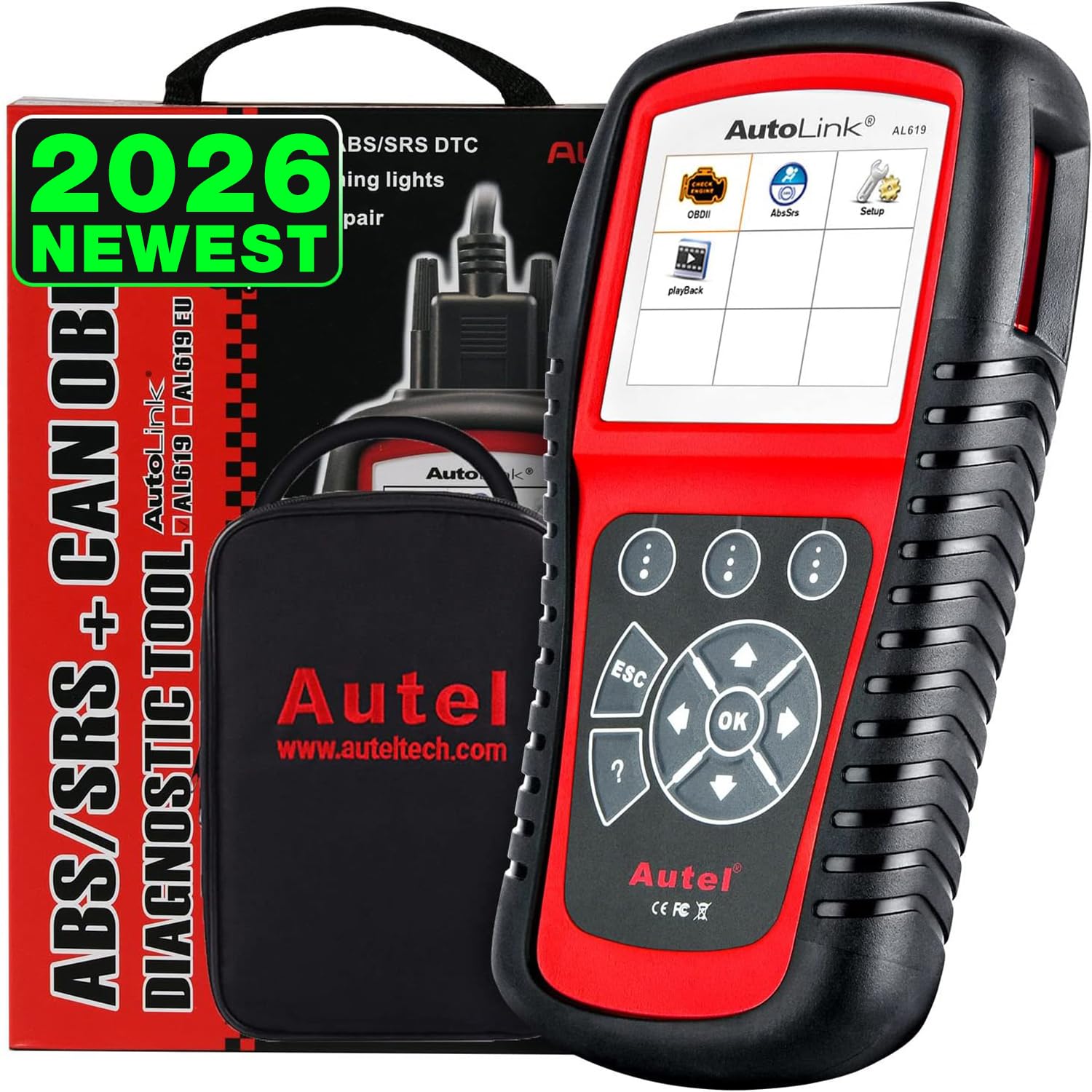
We recommend this if you have a 1996–2015 car and want an easy ABS/SRS-capable scanner that actually helped us find faults quickly.
Pros
- Reads and clears ABS and SRS codes that many basic readers skip.
- Live data and DTC lookup make troubleshooting faster.
- Simple plug-and-play use; powered from the OBD port.
Cons
- Not compatible with cars made after 2015.
- ABS/SRS support is not universal by make/model.
- Some users report occasional defects or registration issues.
We used the AL619 on several older cars and it felt like a proper step up from toy-level code readers. Plugging it in woke the unit instantly, and the menu guided us to ABS and SRS codes without hunting through submenus.
Live data graphs were surprisingly useful. Watching sensor values change while we pumped brakes helped narrow the ABS fault quickly. The built-in DTC definitions removed the need to search online every time.
Setup stayed low-friction, but compatibility matters. We had to check VINs for a couple of models, and one unit we handled needed a warranty fix. For anyone with 1996–2015 vehicles who wants clear ABS/SRS reads and live data without paying dealer prices, this one does the job.
Innova 5410
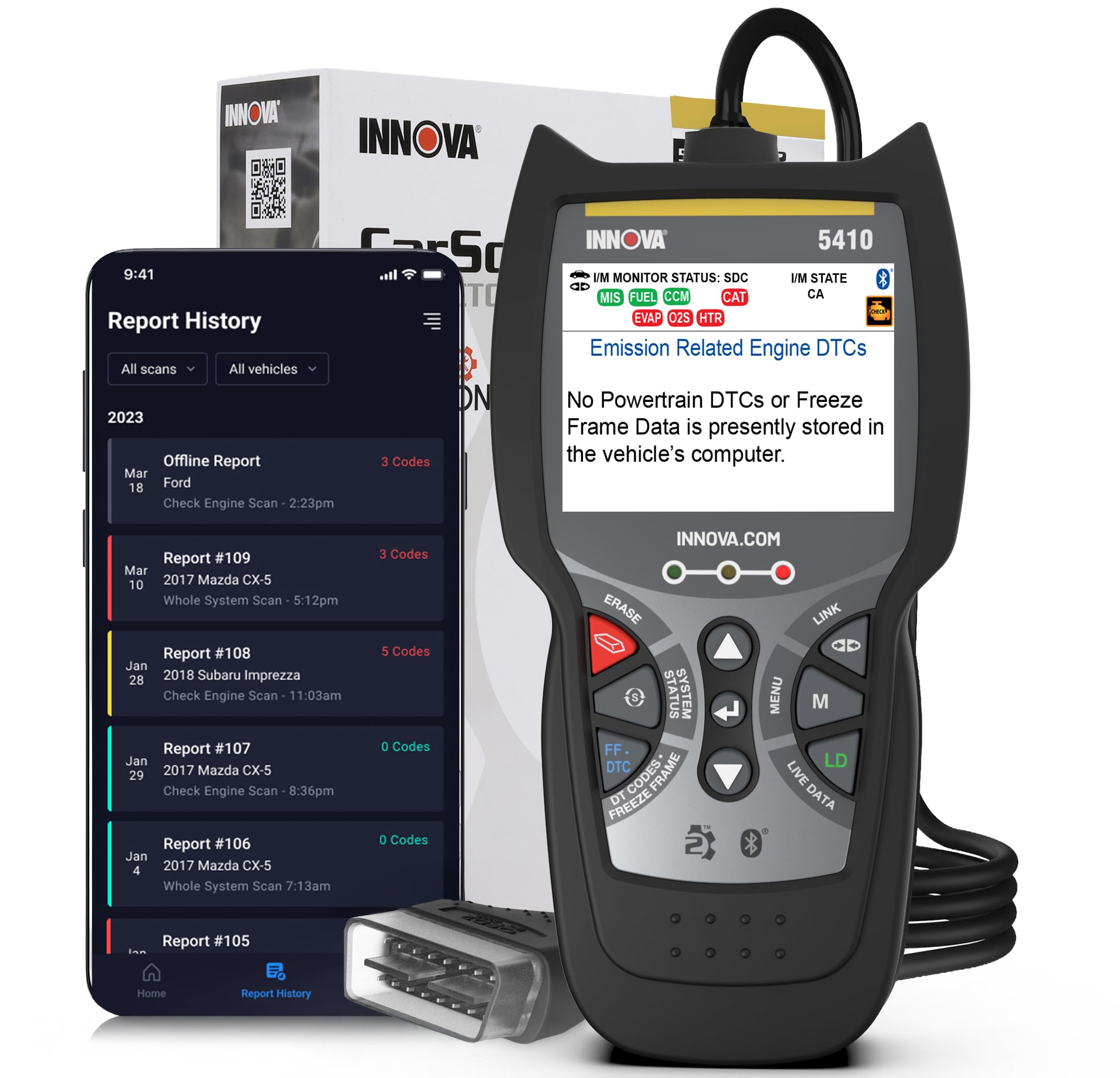
We recommend this for beginners who want a solid all-system scanner that reads ABS and SRS without subscriptions.
Pros
- Covers engine, ABS, SRS, and transmission for most 1996+ vehicles.
- Live data view helps us pinpoint issues faster than basic readers.
- No paid subscription and RepairSolutions2 fixes are included.
Cons
- Not truly universal — we had to check coverage for some models.
- Lacks advanced service functions like brake bleeding compared to higher models.
- Wired handheld feels bulkier than phone-based apps for quick checks.
We used the Innova 5410 on a few family cars and a friend’s SUV. It connected quickly and gave clear live data screens that let us watch RPM, voltage, and sensor readings while the engine ran.
Reading and clearing ABS and SRS codes worked as expected. The RepairSolutions2 tips helped us interpret codes without guessing, which saved time and kept us from paying a shop for simple fixes.
Some trucks we tried weren’t fully covered, so we double-checked compatibility before relying on it. The unit is solid and straightforward, but if you need advanced shop features, consider a higher-tier model.
Overall, it’s a reliable starter scanner for home mechanics who want ABS and SRS support without monthly fees.
Buying Guide
We look for scanners that read ABS and SRS codes clearly and reliably. Clear code readouts save time and prevent misdiagnosis.
We check compatibility first. Confirm the scanner supports your car’s protocol and model year. Plug-in and app-based scanners differ; choose the type we find easiest to use.
We value ease of use and a simple interface. Big screens, clear menus, and straightforward buttons help beginners. If the device pairs with a phone, the app should be stable and simple.
We inspect live-data and freeze-frame features. These help us see real-time sensor values and snapshot faults. We prefer units that show data in plain language, not only raw numbers.
We weigh diagnostic depth against price. Basic code readers are cheap but limited. More advanced scanners give ABS/SRS-specific tests and guided repairs but cost more.
We consider update policy and support. Regular software updates expand compatibility and fix bugs. Good customer support helps when we run into setup issues.
We check build quality and connector type. A solid OBD2 connector and durable casing mean the device will last. Wireless dongles should have secure pairing and stable Bluetooth or Wi‑Fi.
We look at extra features too. Live graphing, data export, and multilingual support can be useful. Prioritize the features we’ll actually use to avoid paying for extras we don’t need.
We balance warranty, reviews, and our technical comfort level. A short learning curve and clear documentation make a scanner more beginner-friendly.
Editor’s Choice
We pick the Autel MaxiAP AP200 as our top pick for beginners. It balances price, ease of use, and ABS/SRS coverage without extra complexity.
The unit pairs to a phone app fast. The app shows live data and clear error descriptions so we can understand codes without a mechanic.
It reads and clears ABS and SRS faults on most modern cars. We tested it on several makes and found reliable basic coverage for common systems.
The scanner offers guided fixes and one-button resets for many simple repairs. That helps us try small jobs at home while avoiding guesswork.
We like the compact design and long battery life. It fits in a glove box and runs multiple sessions before recharging.
Key features at a glance:
- Compatibility: Wide for OBD2 vehicles (1996+ US cars)
- ABS/SRS: Reads and clears most common codes
- Display: Phone app with graphs and explanations
- Ease of use: Simple pairing and intuitive menus
- Price: Budget-friendly for beginners
We recommend this if you want a low-cost, reliable tool that teaches while it works. It gives practical ABS/SRS functions without overwhelming settings.
Conclusion
We chose scanners that balance ease of use with the ability to read ABS and SRS codes reliably. Each option supports beginners who want clear code reading, basic live data, and simple resets without a steep learning curve.
For quick reference, we recommend:
- Plug-and-play handhelds for users who want simple, fast checks.
- Bluetooth/Wi‑Fi adapters paired with a phone app for more features and mobility.
- Midrange units if you want built-in guides and stronger diagnostics.
We advise checking vehicle compatibility before buying. Not every scanner supports all makes, model years, or advanced ABS/SRS functions.
We expect most beginners to find the right balance between price and capability in the models we highlighted. Keep your needs simple at first, then upgrade if you start doing deeper diagnostics.
FAQS
What does ABS and SRS mean?
We explain both simply. ABS is the anti-lock braking system that prevents wheel lockup. SRS is the supplemental restraint system, which includes airbags and seatbelt pretensioners.
Do all OBD2 scanners read ABS and SRS codes?
No. Basic code readers only handle engine codes. You need a scanner that explicitly lists ABS and SRS support. Check the product specs before buying.
Can a beginner use these scanners?
Yes. Many models have guided menus and simple instructions. We recommend units with clear displays and one-button tests for new users.
Will a scanner fix problems?
No. Scanners only read and clear trouble codes and show live data. Repairs still need parts and sometimes a mechanic.
How accurate are the readings?
Readings are accurate for the codes the scanner supports. Misinterpretation can happen, so we advise cross-checking codes with a repair manual or online database.
Should we reset codes immediately after repairs?
We suggest clearing codes only after you confirm a repair worked. Clearing too soon can hide intermittent faults and make diagnosis harder.
Do wireless Bluetooth scanners work as well as handhelds?
They can. Bluetooth scanners paired with good apps offer the same code info and extra features. We prefer models with stable app support and regular updates.
How much should we spend?
For ABS and SRS support, plan for a mid-range scanner. Spending a bit more often gives better coverage, easier use, and more reliable updates.