
How to Fix P0335: Crankshaft Position Sensor A Circuit

Quick Answer
To fix P0335, confirm that the engine computer is losing or receiving an invalid crankshaft-position signal before replacing the sensor. Start by scanning all stored codes, checking engine-speed data while cranking, inspecting the sensor connector and wiring, and testing the circuit using vehicle-specific service information; an OBD2 code scan identifies the fault area but does not prove the sensor itself has failed.
What to check first
- Save the scan data: Record P0335, related codes, pending codes, and freeze-frame information before clearing anything.
- Watch cranking speed: Check whether your scan tool shows an engine-speed signal while the starter turns the engine.
- Inspect the wiring: Look for damaged insulation, loose pins, oil contamination, corrosion, or wiring touching hot and moving parts.
- Test the circuit: Verify the crankshaft-position sensor and its circuit according to the wiring diagram for your exact vehicle.
- Check mechanical triggers: A damaged reluctor or tone wheel can create P0335 even when the sensor itself works.
- Repair the confirmed fault: Replace the sensor only after testing points to it, then complete any required relearn procedure.
Important
- If the engine stalls, will not restart, or loses power unexpectedly, avoid continuing to drive until the fault is diagnosed.
Learning how to fix P0335 starts with understanding what the code can and cannot tell you. P0335 points toward the crankshaft-position-sensor circuit, but it does not automatically mean you need a new sensor.
I see this distinction matter when a no-start vehicle first looks like a key, immobilizer, or security problem. If a scan shows P0335, I want the crankshaft signal checked before anyone starts guessing at unrelated parts.
In This Guide
What Does P0335 Mean?
P0335 means the engine computer detected a problem with the crankshaft position sensor “A” circuit. The problem may involve the sensor, wiring, connector, signal target, or another part of the circuit.
Definition: A crankshaft position sensor monitors crankshaft position and rotational speed so the engine computer can manage ignition, fuel injection, and engine timing calculations.
The crankshaft rotates whenever the starter cranks or the engine runs. The sensor creates an electrical signal that lets the computer determine how fast the crankshaft is turning and where it is in its rotation.
Why can P0335 cause a no-start?
An engine computer needs reliable position information before it can control spark and fuel correctly. A completely missing crank signal can therefore cause extended cranking, stalling, or a no-start condition on many vehicles.
- Hard starting: The engine may crank longer than normal before starting.
- No-start: The starter may turn normally while the engine never fires.
- Stalling: The engine may suddenly shut off when the signal disappears.
- Rough running: An unstable signal may contribute to hesitation or poor running.
- Check engine light: P0335 may appear alone or with related crankshaft and camshaft codes.
P0335 is not an immobilizer or key-fob trouble code. However, both crank-signal failures and security-system faults can produce a vehicle that cranks but will not start.
Section Takeaway: P0335 identifies a crankshaft-position circuit problem, not a guaranteed failed sensor. Diagnose the signal and circuit before buying parts.
What Causes a P0335 Code?
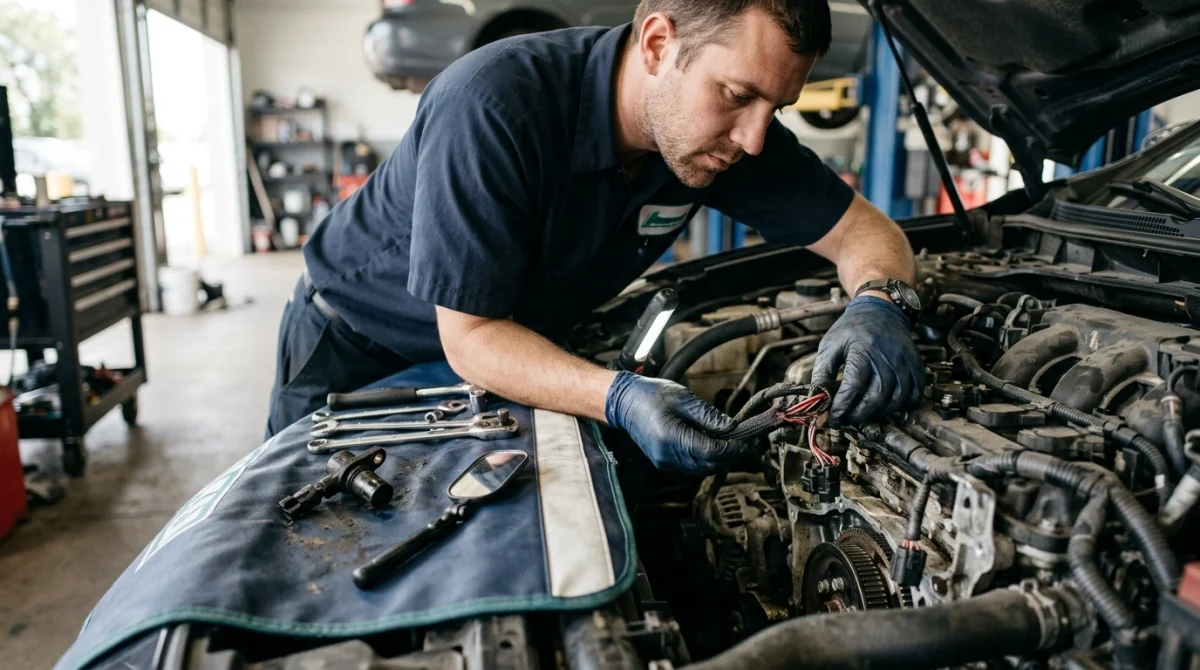
The most common P0335 causes involve a missing or unreliable crankshaft-position signal. Sensor failure is one possibility, but damaged wiring and mechanical trigger problems can create the same code.
Common causes to investigate
- Failed crankshaft position sensor: Internal electrical or magnetic failure can prevent a usable signal.
- Broken or shorted wiring: Heat, vibration, road debris, oil, or previous repairs can damage the harness.
- Loose connector terminals: A pin may spread, back out, corrode, or lose contact intermittently.
- Damaged reluctor or tone wheel: Missing, bent, or damaged teeth can distort the sensor signal.
- Incorrect sensor gap: An installation or mechanical problem may place the sensor too far from its trigger.
- Timing-system problem: Mechanical timing damage can sometimes affect crank and cam correlation.
- Engine-computer issue: Computer failure is possible but should remain low on the list until the circuit is properly tested.
Do all crankshaft sensors work the same way?
No. Vehicles can use different crankshaft sensor designs, so blindly applying one voltage or resistance specification can lead you in the wrong direction.
- Magnetic-style sensors: These commonly generate their own changing signal as the trigger wheel passes the sensor.
- Hall-effect sensors: These generally use a supplied voltage, ground, and signal circuit.
Check the wiring diagram and service specifications for your exact year, engine, and model. Never assume every three-wire sensor uses the same voltage or pin arrangement.
Section Takeaway: Wiring, connector, trigger-wheel, and mechanical faults can all imitate a bad crankshaft sensor. Testing prevents an unnecessary sensor replacement.
How Do You Diagnose P0335 Before Replacing Parts?
Diagnose P0335 from the scan data outward. Confirm what the engine computer sees, then inspect the electrical and mechanical parts capable of creating that signal.
1. Scan every stored and pending code
Save P0335 and any accompanying codes before clearing the computer. Related crankshaft, camshaft, voltage, or communication codes can change your diagnostic direction.
Record freeze-frame information when your scanner provides it. Battery voltage, engine speed, temperature, and operating conditions can reveal whether the code appeared during starting or while driving.
2. Check engine-speed data while cranking
Watch engine-speed data while someone safely cranks the engine. A zero or implausible reading can support the theory that the computer is not receiving a usable crank signal.
Do not use that observation as final proof of a failed sensor. Wiring, connectors, trigger-wheel damage, or vehicle-specific data behavior can produce a similar result.
3. Inspect the sensor and harness closely
- Check for oil-soaked or brittle wiring.
- Look for harness sections rubbing against brackets or the engine.
- Inspect terminals for corrosion, bending, or poor tension.
- Check whether a connector lock is broken or loose.
- Look for signs of previous splices or collision repairs.
- Inspect accessible sensor mounting points for damage or looseness.
4. Test the circuit using vehicle-specific information
Use the correct wiring diagram to identify each circuit before probing anything. Depending on sensor design, you may need to test power, ground, continuity, resistance, or the actual signal waveform.
Pro tip: don’t apply generic voltage numbers to an unknown crankshaft sensor design. Check manufacturer service data before back-probing a connector or condemning the engine computer.
| Diagnostic check | What a problem may suggest | Next step |
|---|---|---|
| No sensible engine-speed data while cranking | Missing crank signal | Inspect and test the sensor circuit |
| Visible harness damage | Open, short, or intermittent circuit | Repair wiring correctly, then retest |
| Power or ground missing where required | Circuit or supply problem | Trace the circuit before replacing the sensor |
| Sensor signal fails specification | Sensor or mechanical trigger problem | Inspect the sensor and trigger wheel |
| Good sensor signal but code remains | Harness, terminal, correlation, or computer-side issue | Continue circuit testing with service information |
5. Inspect the reluctor or tone wheel when needed
The crankshaft sensor reads a rotating target often called a reluctor or tone wheel. Physical damage, excessive movement, debris, or incorrect alignment can create a bad signal from a perfectly functional sensor.
Access varies dramatically between engines. Stop before major disassembly unless you have the proper repair information, tools, and experience.
It is also worth checking your vehicle identification number for applicable NHTSA safety recalls before paying for an unexpected repair. A recall search does not diagnose P0335, but it can identify open manufacturer campaigns affecting your specific vehicle.
Section Takeaway: A scan tool narrows the problem, but the best P0335 diagnosis combines live data, visual inspection, circuit testing, and mechanical inspection.
How Do You Fix P0335?
The correct P0335 repair depends on what failed during testing. Do not clear the code and call the vehicle fixed until the crankshaft signal remains reliable under the conditions that originally triggered the fault.
Fix damaged crankshaft-sensor wiring
Repair broken, rubbed-through, shorted, or corroded wiring when testing confirms a harness problem. Protect the repaired section from heat, sharp edges, exhaust components, and moving engine parts.
Connector terminals deserve equal attention. Replacing a sensor while leaving a loose terminal behind can bring the same P0335 code straight back.
Replace the crankshaft position sensor when it fails testing
Install a replacement sensor only after your tests support sensor failure. Match the replacement to the exact year, engine, model, and manufacturer requirements.
- Disconnect components only as directed by the vehicle’s repair procedure.
- Remove the sensor without damaging its connector or surrounding harness.
- Inspect the mounting area and accessible trigger surface.
- Install the correct replacement using the required seal and tightening specification.
- Reconnect the harness and verify the connector lock is fully engaged.
Pro tip: sensor location and replacement difficulty vary sharply between engines. Verify the procedure for your exact vehicle before removing covers, mounts, exhaust parts, or timing components.
Repair a damaged reluctor or timing component
A damaged trigger wheel requires a mechanical repair rather than another sensor. Depending on engine design, accessing that component can require substantially more disassembly.
Timing faults also need proper diagnosis. Do not assume P0335 alone proves the timing chain or belt has failed.
Complete a relearn if the manufacturer requires one
Some vehicles require a crankshaft-position variation or related relearn after sensor replacement or certain engine repairs. The procedure may require a capable scan tool and vehicle-specific conditions.
Never substitute a generic button sequence or guessed procedure. Follow the service information for the exact make, model, engine, and year.
Clear the code and verify the repair
- Clear P0335 after completing the confirmed repair.
- Start the engine and watch crankshaft-related scan data.
- Check for immediate stored or pending codes.
- Road-test the vehicle only when it is safe and operating normally.
- Scan again after the test to confirm P0335 has not returned.
When I encounter a no-start during a mobile key-service call, this verification step matters. A car can have a perfectly recognized key while a missing crank signal still prevents the engine from starting.
Section Takeaway: Fix the tested cause, not the code description. P0335 disappears permanently only when the crankshaft-position signal and its circuit work correctly again.
Can You Drive With a P0335 Code?
Driving with P0335 is not a good idea when the vehicle stalls, runs poorly, loses power, or becomes difficult to restart. A crankshaft-position signal can be important enough that losing it may stop the engine.
If the engine currently runs normally, arrange diagnosis promptly rather than treating the code as harmless. An intermittent connection can work during one trip and fail during the next.
Stop driving when these symptoms appear
- The engine stalls repeatedly.
- The vehicle loses significant power.
- The engine cranks but will not restart.
- The check engine light flashes.
- You notice severe shaking, smoke, unusual odors, or other abnormal behavior.
AAA’s check engine light guidance recommends prompt attention and advises stopping safely when the warning flashes or the vehicle behaves abnormally.
Section Takeaway: P0335 can become a reliability and roadside-safety problem because the engine may stall or fail to restart. Diagnose it promptly.
How Much Does It Cost to Fix P0335?
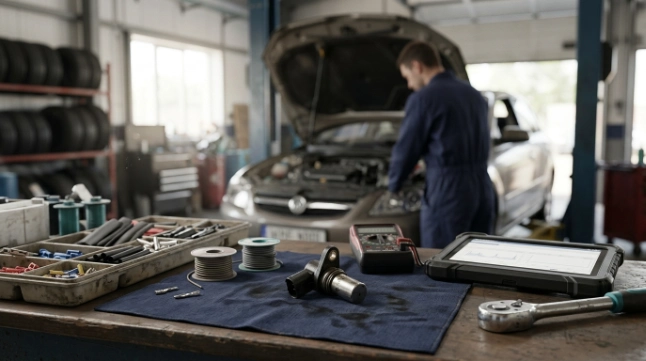
P0335 repair cost depends on the diagnosed cause rather than the code itself. A sensor replacement can be relatively straightforward, while damaged wiring or an internal trigger-wheel problem may require far more labor.
As of 2026, current vehicle-specific estimates show crankshaft-position-sensor replacement commonly landing in the low hundreds of dollars, with examples ranging from roughly $150 to $500 on many models. Your actual price can fall outside that range because access, parts, engine layout, labor rates, taxes, and related repairs vary.
What changes the final repair bill?
- Sensor accessibility: An exposed sensor usually takes less labor than one hidden behind other components.
- Part quality: Original-equipment and aftermarket sensor pricing differs by vehicle.
- Harness damage: Finding an intermittent open or short may require more diagnostic time.
- Mechanical damage: A reluctor, timing, or internal-engine repair can cost far more than the sensor itself.
- Relearn requirements: Some vehicles need scan-tool procedures after the repair.
- Location: Labor rates and parts pricing differ by region.
Pro tip: ask for the diagnostic result before approving a crankshaft sensor. A written explanation of the failed test is more useful than an estimate based only on the P0335 description.
Replacing a sensor without testing may appear cheaper at first. If the real problem is a broken wire or damaged trigger wheel, you pay for a part that never addressed the fault.
Section Takeaway: Budget for diagnosis first. The cheapest P0335 repair is the one that fixes the confirmed fault once instead of replacing parts by guesswork.
P0335 Frequently Asked Questions
Can a bad crankshaft position sensor cause P0335?
Yes. A failed crankshaft position sensor is a common possible cause of P0335, but the code does not prove the sensor has failed. Damaged wiring, poor connector contact, or a damaged reluctor can produce the same circuit fault.
Can P0335 cause the engine not to start?
Yes. If the engine computer cannot detect a usable crankshaft-position signal, some vehicles may crank without starting. Hard starting, intermittent stalling, or an engine that starts after cooling down can also occur with certain sensor and wiring failures.
Will replacing the crankshaft sensor automatically fix P0335?
No. Sensor replacement fixes P0335 only when the sensor is the confirmed cause. If the fault comes from a broken wire, damaged connector, trigger wheel, power supply, ground, or another circuit problem, a new sensor may change nothing.
Can a weak battery trigger P0335?
Low system voltage or unusually slow cranking can complicate engine-starting diagnostics and may affect sensor data. Test the battery and starting system when cranking speed or voltage looks abnormal, especially when several low-voltage or communication codes appear together.
Can a bad key fob cause P0335?
A key fob or immobilizer problem does not normally create P0335 because P0335 concerns the crankshaft-position circuit. However, both problems can create a no-start situation, so scan all vehicle systems before assuming the key or engine sensor is responsible.
Do I need a special scan tool after replacing the sensor?
Possibly. Some vehicles require a crankshaft-related relearn after sensor replacement or certain engine repairs, while others do not. Check manufacturer service information because the required tool and procedure vary by make, model, engine, and year.
Should I clear P0335 before diagnosing it?
Not immediately. Save stored and pending codes plus freeze-frame data first because clearing the computer may erase useful clues. After repairing the confirmed fault, clear the code and verify that it does not return.
Final takeaway: The best way to fix P0335 is to diagnose the crankshaft-position circuit before replacing anything. Scan the vehicle, inspect the wiring, verify the sensor signal, check the mechanical trigger when necessary, and repair only the fault you can confirm.
If the engine is stalling, will not restart, or the required electrical tests are beyond your tools or experience, have a qualified technician diagnose it. A proper test now can prevent repeated parts replacement and another roadside no-start later.
