
P0306 Repair Cost: 2026 Prices, Causes & Fixes

Quick Answer
P0306 means your vehicle’s computer detected a misfire in cylinder 6. P0306 repair cost can range from a few hundred dollars for common ignition repairs to several thousand dollars if internal engine damage is responsible. A flashing check-engine light needs urgent attention under AAA’s check-engine-light guidance.
Typical P0306 Repair Possibilities
- Spark plugs: A worn or fouled plug can create a cylinder-specific misfire and is among the simpler possible repairs.
- Ignition coil: A weak coil can fail to provide enough spark, especially during acceleration or heavy engine load.
- Fuel injector: A restricted, leaking, or electrically faulty injector can prevent cylinder 6 from receiving the correct fuel amount.
- Vacuum leak: Unmetered air near the affected cylinder can create a mixture too lean for stable combustion.
- Low compression: Valve, piston, head-gasket, or other mechanical problems can make the repair much more expensive.
Before You Pay for Parts
- Read all stored and pending codes, save freeze-frame data, and confirm the actual cause before approving a repair.
P0306 can look simple on an OBD2 scanner because it identifies one cylinder. The expensive mistake is assuming the code also identifies the failed part.
I’ve seen drivers start buying coils, plugs, and injectors before anyone tested cylinder 6. This guide explains what P0306 can cost in 2026, what changes the price, and how to avoid paying for the wrong repair.
In This Guide
What Does P0306 Mean, and Why Does the Cost Vary?
P0306 is an OBD-II diagnostic trouble code for a cylinder 6 misfire detected. The powertrain control module has detected that cylinder 6 isn’t contributing to engine operation as expected.
Definition: A misfire occurs when a cylinder fails to burn its air-fuel mixture correctly, resulting in weak, incomplete, mistimed, or missing combustion.
The code identifies the affected cylinder. It does not tell you whether a spark plug, ignition coil, injector, air leak, wiring fault, or mechanical engine problem caused the misfire.
Why one P0306 code can have several repair prices
Two cars displaying P0306 can need completely different repairs. One might have a failed coil, while another has low compression from an internal engine problem.
The final cost depends on several factors:
- Failed component: Ignition repairs generally cost less than major internal engine work.
- Engine layout: Cylinder 6 may be easy to reach or buried under an intake manifold and other components.
- Labor rate: Shop rates vary by region and repair facility.
- Vehicle design: Parts prices and required disassembly vary by make, model, engine, and year.
- Diagnostic time: Intermittent misfires can take longer to reproduce and confirm.
- Related damage: Continued driving with a severe misfire can create additional repair needs.
A common mistake is treating the word “misfire” as proof that the spark plug is bad. Spark problems are common, but P0306 still requires diagnosis.
Pro tip: Never approve several replacement parts simply because they appear on a generic P0306 causes list. Ask which test confirmed the failed component.
Section Takeaway: P0306 tells you where the misfire was detected, not which part needs replacement. That distinction explains the wide repair-cost range.
How Much Does P0306 Repair Cost in 2026?
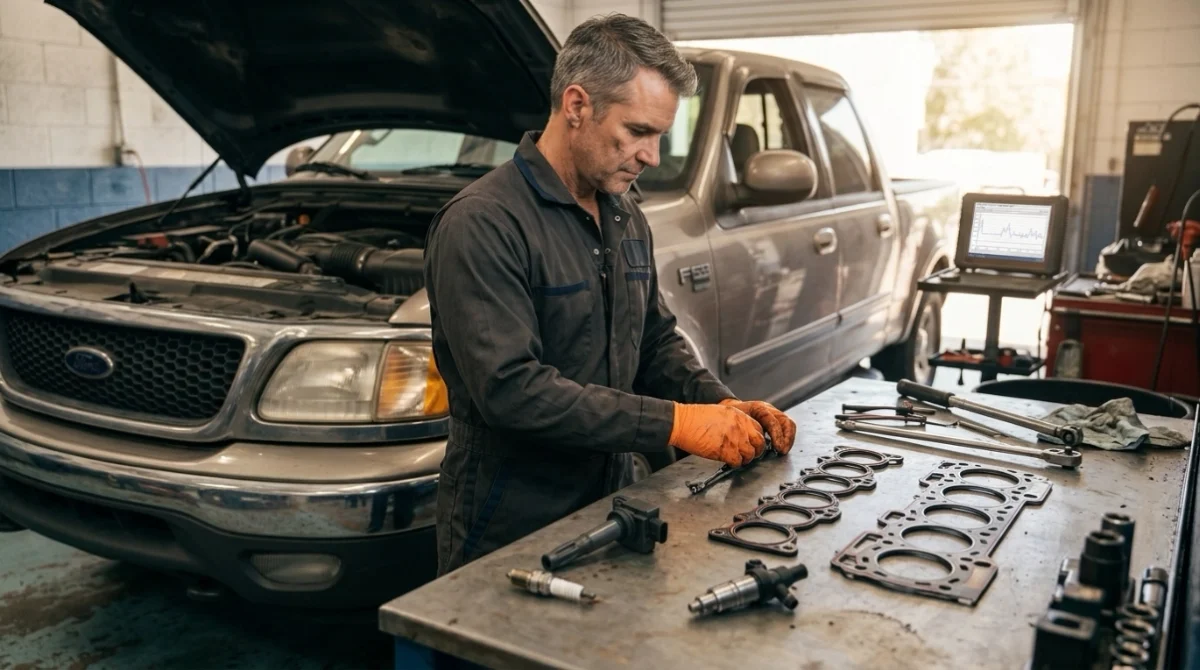
P0306 repair cost commonly falls in the hundreds of dollars when an ignition component causes the problem. Fuel-system, intake, or internal engine repairs can increase the bill substantially.
Published U.S. repair estimates from August 2026 illustrate how different root causes change the budget. These are general averages, not quotes for your specific vehicle.
| Possible P0306 Repair | 2026 Published Average | Cost Level | When It May Apply |
|---|---|---|---|
| Spark plug replacement | About $284–$397 | Lower | Worn, fouled, damaged, or failing plugs |
| Ignition coil replacement | About $236–$319 | Lower | Confirmed weak or failed coil |
| Intake manifold gasket | About $682–$832 | Moderate | Confirmed intake or vacuum leak |
| Fuel injector replacement | About $764–$949 | Moderate to high | Restricted, leaking, or electrically faulty injector |
| Head gasket replacement | About $2,538–$3,337 | High | Confirmed internal sealing failure |
These numbers shouldn’t be added together. A correct diagnosis should identify which repair the vehicle needs rather than replacing every possible cause.
Why your estimate may be higher or lower
Accessibility can change labor dramatically. On some engines, a coil or plug is visible as soon as the hood opens.
On others, reaching cylinder 6 may require removing intake components. That extra labor raises the estimate even if the replacement part itself isn’t expensive.
- Luxury and performance vehicles: Specialized parts and tighter packaging may increase costs.
- Trucks and larger engines: Cylinder location and intake design can add labor.
- Dealer pricing: Dealer labor and original-equipment parts may cost more in some markets.
- Independent shop pricing: Labor rates may be lower, but diagnostic capability still matters.
- Taxes and fees: Published national estimates often exclude local taxes and related charges.
For a vehicle-specific estimate, use the AAA repair cost estimator or request a written estimate based on your exact year, make, model, engine, and location.
Locksmith’s note: Just as I verify a key or vehicle-electronics component before ordering it, engine parts should be matched to the exact vehicle. Don’t buy a coil, injector, or sensor based on the code alone.
Section Takeaway: A realistic P0306 budget ranges from a few hundred dollars for common ignition repairs to several thousand dollars when internal engine work is required.
What Causes P0306, and Which Repairs Cost the Most?
The most common P0306 causes fall into ignition, fuel, air, electrical, and mechanical categories. Testing should narrow these categories before anyone starts replacing parts.
Ignition problems
Ignition faults are a logical early check because a cylinder needs a strong, correctly timed spark. A weak spark often becomes more noticeable under acceleration.
- Worn or fouled spark plug
- Cracked or contaminated spark-plug boot
- Failed ignition coil
- Damaged plug wire on vehicles that use them
- Loose or corroded ignition connector
- Oil or moisture inside the plug well
If a single coil-on-plug unit is suspected, a technician can test it instead of replacing an entire set. Manufacturer diagnostic guidance also cautions against replacing multiple components for one misfiring cylinder without evidence.
Fuel-delivery problems
Cylinder 6 also needs the correct amount of fuel. A restricted or electrically failed injector can create a cylinder-specific misfire that feels similar to a bad coil.
- Restricted injector
- Leaking injector
- Injector wiring problem
- Low or unstable fuel pressure
- Fuel contamination
Injector replacement can cost substantially more than a single ignition component. Testing injector operation first can therefore prevent an expensive guess.
Vacuum and intake leaks
Unmetered air can make the air-fuel mixture too lean for stable combustion. A leak positioned near cylinder 6 may affect that cylinder more strongly than the others.
A smoke test can help locate leaks in intake gaskets, hoses, and related connections. Repair cost depends heavily on where the leak occurs.
Mechanical engine problems
Mechanical causes often sit at the expensive end of the P0306 repair range. Low compression means the cylinder cannot seal and produce normal pressure.
- Burned or leaking valve
- Damaged valve spring or valvetrain component
- Worn piston rings
- Piston or cylinder damage
- Head-gasket leakage
- Incorrect valve timing
A compression or leak-down test helps separate mechanical trouble from ignition and fuel faults. That test becomes especially important when swapping or testing ignition parts doesn’t move the misfire.
Pro tip: If cylinder 6 keeps misfiring after the ignition and injector systems test correctly, ask for compression results before authorizing more parts.
Section Takeaway: Ignition faults are often less costly, while injector, intake, and internal engine problems can push P0306 repair costs much higher.
How Is P0306 Diagnosed Before Parts Are Replaced?
A good P0306 diagnosis starts with evidence from the vehicle, not a shopping list. An OBD2 scanner provides the starting clues, while physical testing confirms the cause.
1. Read all codes before clearing anything
Record stored, pending, and permanent codes. A second code can change the diagnostic direction.
For example, a lean-condition, injector-circuit, camshaft, or random-misfire code can provide context that P0306 alone doesn’t show.
AAA’s OBD diagnostic code resource also emphasizes that trouble codes provide clues rather than automatically identifying a part that must be replaced.
2. Save freeze-frame information
Freeze-frame data records operating conditions when the fault was stored. Depending on the vehicle, this can include engine speed, coolant temperature, load, speed, and fuel-trim information.
A cold-start misfire may require a different test path from one appearing only during hard acceleration. Don’t erase that evidence too early.
3. Check misfire data and live readings
A more capable scan tool may show cylinder misfire counters or manufacturer-enhanced data. These readings help confirm whether cylinder 6 is currently misfiring or whether the fault was intermittent.
- Misfire counters
- Short-term fuel trim
- Long-term fuel trim
- Airflow readings
- Oxygen or air-fuel sensor behavior
- Engine coolant temperature
- Engine load and RPM
A basic code reader may not expose every manufacturer-specific parameter. That doesn’t make it useless, but advanced diagnosis may require a professional scan tool.
4. Inspect cylinder 6 components
A visual inspection can uncover simple faults before deeper testing begins. Look for obvious damage without working around hot, moving, or high-voltage components.
- Loose electrical connectors
- Damaged wiring
- Cracked vacuum hoses
- Oil in the spark-plug well
- Water or corrosion around ignition parts
- Recent repair work that may have disturbed a connector or hose
5. Perform targeted component tests
The next test depends on what the scanner and inspection reveal. A technician may check spark quality, coil operation, injector performance, fuel pressure, intake leaks, or cylinder compression.
This is where diagnosis saves money. The goal is to prove the fault before paying for a part.
6. Check recalls and manufacturer information
Vehicle-specific service information matters because one model may have a known issue that doesn’t apply to another. You can also use NHTSA vehicle safety resources to check recalls and related vehicle information.
Pro tip: Take a photo of the code screen and freeze-frame readings before anyone clears the computer. That information can help when an intermittent misfire disappears at the shop.
Section Takeaway: The cheapest P0306 diagnostic strategy is usually the one that confirms the failed system before you start buying replacement parts.
Can You Drive With a P0306 Code?
You shouldn’t ignore P0306. A steady check-engine light with normal engine operation requires prompt diagnosis, while a flashing light makes the situation much more urgent.
A severe misfire can send unburned fuel into the exhaust. That can overheat and damage the catalytic converter.
Stop driving when you notice these warning signs
- Flashing check-engine light: Treat this as an active, potentially damaging misfire.
- Strong shaking: The cylinder may be misfiring continuously.
- Major power loss: The vehicle may not accelerate safely in traffic.
- Stalling: Losing engine power at an intersection creates an additional safety risk.
- Fuel smell: Shut the vehicle down and avoid ignition sources.
- Overheating: Stop safely and arrange professional assistance.
AAA advises drivers to pull over when a flashing check-engine light is accompanied by abnormal operation such as shaking, power loss, or unusual odors. Continuing to drive can turn one repair into a more expensive problem.
If the light stays steady and the engine runs normally, a short trip for diagnosis may be reasonable. Your owner’s manual and vehicle-specific manufacturer guidance should take priority.
Safety note: An OBD2 scanner can identify P0306, but it cannot certify that the vehicle is safe to drive.
Section Takeaway: A flashing check-engine light, strong shaking, stalling, or major power loss means P0306 should be treated as a stop-driving problem.
Can You Fix P0306 Yourself?
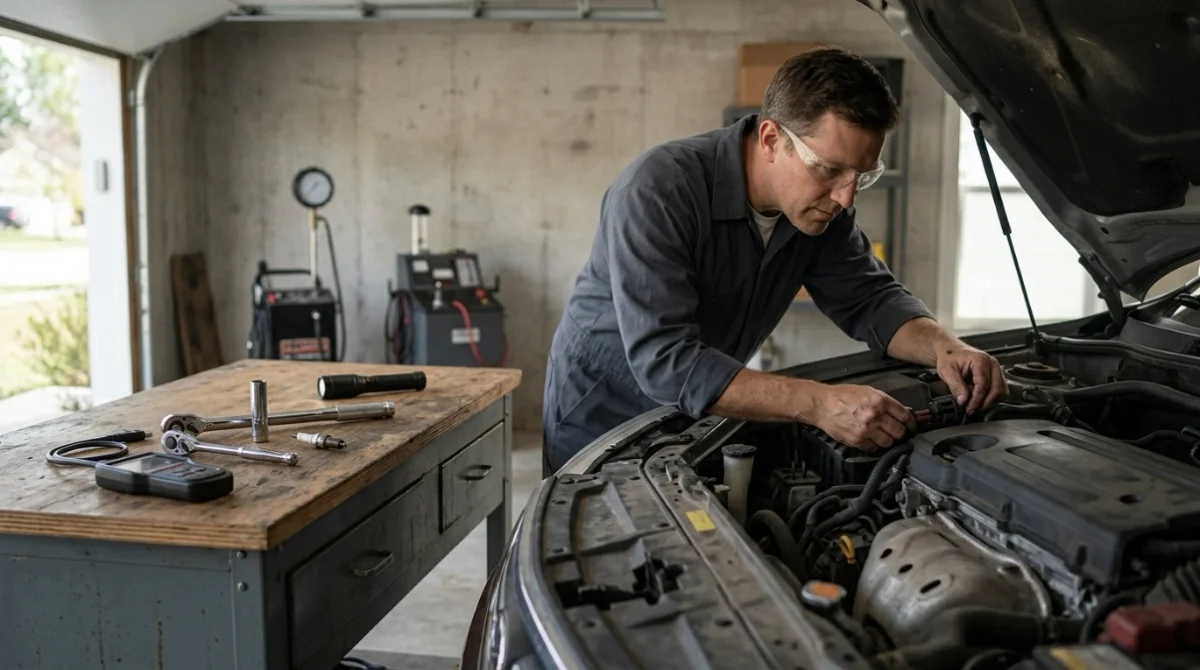
Some P0306 repairs are DIY-friendly for experienced owners, but diagnosis matters more than how easy a part looks to replace. Replacing a convenient part isn’t useful if it isn’t faulty.
Checks a careful DIYer may perform
- Read and record OBD-II codes
- Save available freeze-frame data
- Inspect accessible wiring and connectors
- Check visible intake and vacuum hoses
- Review maintenance history
- Inspect accessible spark plugs when proper procedures are known
Use the exact spark-plug specification and torque procedure from the manufacturer. Incorrect installation can create new problems.
When professional diagnosis makes more sense
Fuel-system testing, compression problems, internal engine repairs, and difficult-access components generally justify professional equipment and experience. Some tests also involve pressurized fuel, high ignition voltage, or hot engine components.
- The check-engine light is flashing.
- The vehicle shakes or stalls badly.
- The misfire returns after basic maintenance.
- Cylinder 6 has low compression.
- The injector requires electrical or flow testing.
- The intake system requires smoke testing.
- Several codes appear together.
Ask the shop for the diagnostic findings and an itemized estimate before authorizing work. The estimate should distinguish diagnosis, parts, labor, taxes, and related recommended repairs.
Pro tip: Ask, “What test confirmed this part caused the cylinder 6 misfire?” A clear answer can save you from replacing several good components.
Frequently Asked Questions
How much does it usually cost to fix P0306?
P0306 repair cost depends on the cause. Common ignition repairs may cost a few hundred dollars, while injector or intake repairs can cost more and internal engine problems may reach several thousand dollars.
What is the cheapest possible cause of P0306?
A loose connection, damaged hose, worn spark plug, or other accessible ignition issue may be relatively inexpensive. However, don’t assume the cheapest cause applies until the vehicle has been tested.
Can a bad ignition coil cause P0306?
Yes. A weak or failed ignition coil can cause a cylinder 6 misfire, especially under load. The coil should still be tested because spark plugs, injectors, wiring, vacuum leaks, and mechanical faults can create similar symptoms.
Can a bad fuel injector cause P0306?
Yes. A restricted, leaking, or electrically faulty cylinder 6 injector can cause P0306. Injector testing is important because replacement can be considerably more expensive than many basic ignition repairs.
Can P0306 be caused by low compression?
Yes. Valve leakage, piston-ring wear, head-gasket failure, or other mechanical damage can reduce compression in cylinder 6. A compression and possibly leak-down test can help confirm this type of problem.
Will P0306 clear itself?
The warning light may eventually turn off if the misfire stops and the vehicle completes enough successful monitoring cycles. That does not mean an intermittent underlying fault has been permanently repaired.
Should I replace all spark plugs or just cylinder 6?
That depends on the plugs’ age, condition, manufacturer maintenance schedule, and diagnosis. If the full set is due for scheduled replacement, replacing all may make sense, but don’t replace parts solely because P0306 appeared.
What Should You Do Next?
Start by checking the warning light and how the engine behaves. If the light flashes or the vehicle shakes badly, stop safely and arrange professional assistance.
If the vehicle runs normally with a steady light, scan it promptly. Save every code and freeze-frame reading before clearing anything.
Then confirm whether the fault comes from ignition, fuel delivery, an intake leak, wiring, or low compression. Only approve the repair once the failed system has been identified.
P0306 is a diagnostic starting point, not a parts order. Testing first is the best way to control both the repair cost and the risk of repeat repairs.
