
P0402 Symptoms: What Your Car Is Trying to Tell You

Quick Answer
P0402 means the engine computer has detected more exhaust gas recirculation, or EGR flow, than expected. Common P0402 symptoms include a Check Engine Light, rough idle, stalling, hesitation, weak acceleration, misfires, and reduced fuel economy, although some vehicles show no obvious driving symptoms beyond the warning light. Treat the warning seriously and follow reliable Check Engine Light guidance rather than clearing the code and ignoring it.
Most Common P0402 Symptoms
- Check Engine Light: P0402 is stored when the computer believes EGR flow is excessive.
- Rough idle: Too much exhaust gas at idle can make combustion unstable.
- Stalling: An EGR valve stuck open may cause the engine to die when stopping.
- Hesitation: The engine may stumble or respond slowly when you press the accelerator.
- Loss of power: Excessive EGR flow can reduce combustion quality and acceleration.
- Poor fuel economy: Inefficient combustion can increase fuel use.
Best First Check
- Read all stored and pending codes, save the freeze-frame data, and diagnose the EGR system before replacing parts.
If your scanner shows P0402, the symptoms can tell you where to look next. I pay special attention to how the engine behaves at idle, during light acceleration, and when coming to a stop.
The code alone doesn’t prove the EGR valve needs replacement. This guide explains what each symptom means, the common causes, and how to diagnose the problem without guessing.
In This Guide
What Does P0402 Mean?
P0402 means “Exhaust Gas Recirculation Flow Excessive Detected.” It is a generic OBD-II powertrain diagnostic trouble code related to the vehicle’s EGR emissions system.
Definition: The exhaust gas recirculation system routes a controlled amount of exhaust back into the intake. P0402 appears when the engine control module detects more EGR flow than it expects under the current operating conditions.
Normally, the EGR valve opens only when the engine computer wants exhaust gas recirculated. The amount varies with engine load, temperature, speed, and vehicle design.
At idle, many engines need little or no EGR flow. A valve that remains partly open can therefore cause obvious drivability problems.
Why does excessive EGR flow affect the engine?
Exhaust gas doesn’t support combustion like fresh air does. When too much enters the cylinders at the wrong time, combustion can become unstable.
The result may feel like an ignition or fuel problem. That’s why P0402 can sometimes be mistaken for bad spark plugs, injectors, or an intake problem.
- At idle: the engine may shake, surge, or stall.
- During acceleration: it may hesitate or feel weak.
- During steady driving: you may notice little or no change.
- At the dashboard: the Check Engine Light may be the only symptom.
A scan tool helps separate an EGR fault from other problems. Freeze-frame information is especially useful because it records conditions present when the fault was detected.
What Are the Most Common P0402 Symptoms?
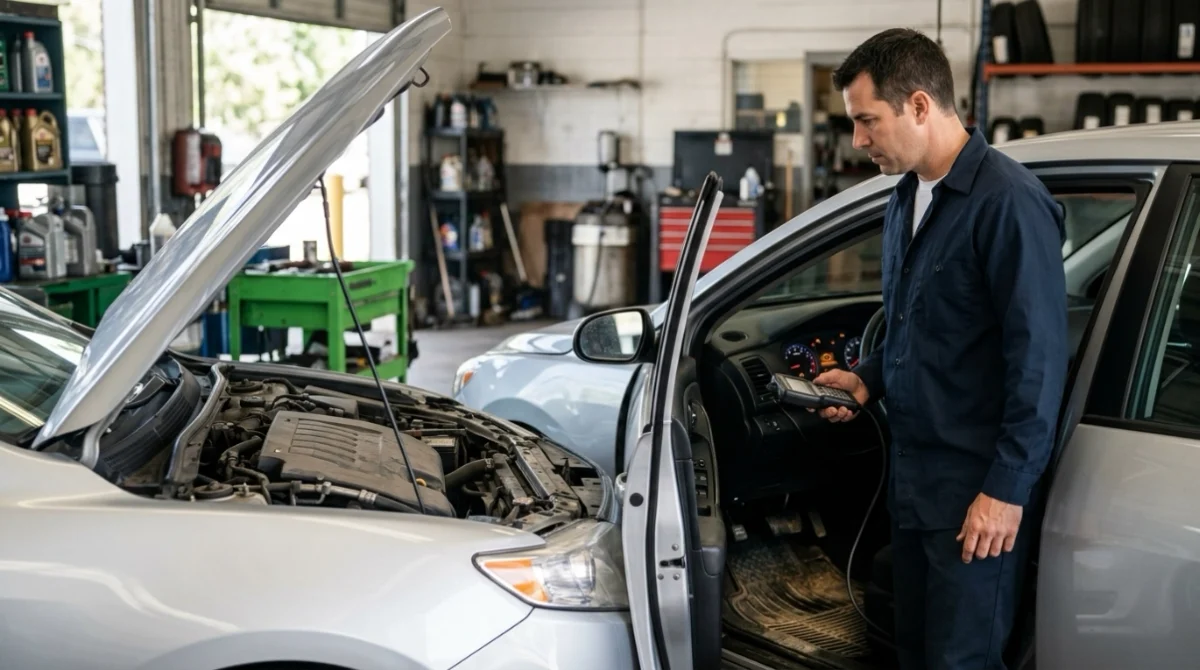
The most recognizable P0402 symptoms are a Check Engine Light, rough idle, stalling, hesitation, and reduced power. However, symptom severity depends heavily on how far the EGR valve is open and when excessive flow occurs.
1. Check Engine Light
The Check Engine Light is often the first sign. Your scanner may show P0402 alone or alongside other EGR, airflow, fuel-trim, or misfire codes.
Don’t erase everything immediately. Record stored, pending, and permanent codes first.
2. Rough or unstable idle
Rough idle is one of the stronger clues that an EGR valve may be flowing when it should be closed. The engine may shake or sound uneven while sitting at a stop.
A slightly stuck valve may produce only a mild stumble. A valve held farther open can make the idle much worse.
3. Engine stalling at stops
Some vehicles with excessive EGR flow stall as engine speed falls toward idle. Drivers often notice this when approaching a traffic light or shifting into gear.
If the engine repeatedly stalls in traffic, don’t treat P0402 as a minor inconvenience. Have the vehicle diagnosed promptly.
4. Hesitation or weak acceleration
Too much recirculated exhaust can reduce the amount of fresh intake charge available for combustion. The car may stumble when you press the accelerator or feel slower than usual.
The symptom can come and go. That makes live-data testing more useful than replacing parts from the code description.
5. Misfire-like shaking or surging
Excessive EGR flow can make combustion uneven enough to feel like a misfire. Depending on the vehicle, actual misfire codes may also appear.
If P0300 or cylinder-specific misfire codes are present, diagnose them together with P0402. Don’t assume every symptom comes from one component.
6. Reduced fuel economy
Fuel economy may decline when the engine runs inefficiently. However, a mileage change alone isn’t strong enough to diagnose an EGR fault.
Use it as supporting evidence. Scanner data and physical testing matter more.
| Symptom | What It May Suggest | Useful Next Check |
|---|---|---|
| Check Engine Light only | Intermittent excessive-flow detection or sensor feedback problem | Read freeze-frame and pending codes |
| Rough idle | EGR valve may not be closing fully | Compare commanded EGR with actual feedback |
| Stalling at stops | Significant EGR flow at low engine speed | Inspect valve operation and control system |
| Hesitation | Incorrect EGR flow during load changes | Watch live data during acceleration |
| P0402 plus misfire codes | Combustion instability or a separate misfire fault | Diagnose both code families before replacing parts |
Section Takeaway: P0402 can range from a warning light with no noticeable symptoms to severe rough idle and stalling. The symptom pattern helps narrow the diagnosis, but it doesn’t identify a failed part by itself.
What Causes P0402?
A P0402 code usually comes from excessive real EGR flow or a sensor signal that makes the computer believe flow is excessive. The EGR valve is important, but it isn’t the only possible cause.
Common causes include:
- EGR valve stuck open: deposits or mechanical wear may prevent the valve from sealing correctly.
- Carbon around the valve seat: buildup can hold the valve slightly open.
- Faulty EGR position sensor: incorrect position feedback can confuse the engine computer.
- DPFE sensor problem: some systems use a differential-pressure sensor to estimate EGR flow.
- Faulty control solenoid: a vacuum or electrical control fault may command flow at the wrong time.
- Damaged vacuum lines: older vacuum-operated EGR systems depend on correct vacuum control.
- Wiring or connector problems: damaged circuits can affect valve control or sensor feedback.
- Airflow or manifold-pressure sensor errors: some vehicles infer EGR flow using MAF or MAP data.
- Calibration or software issues: less commonly, manufacturer-specific programming may contribute to incorrect monitoring.
Does carbon buildup always cause P0402?
No. Carbon is common around EGR components, but deposits don’t automatically prove they caused the code.
Interestingly, carbon can create opposite problems. It may restrict passages and reduce flow, or lodge around the valve seat and prevent the valve from closing.
I’ve seen people buy an EGR valve as soon as they read “P0402.” That’s the expensive shortcut I try to avoid.
First determine whether the valve is physically open, being commanded open, or simply being reported incorrectly. Those are three different faults.
Pro tip: Never order an EGR valve or sensor from the code alone. Verify the vehicle’s year, engine, emissions package, and VIN-based application before buying parts.
How Do You Diagnose P0402 Correctly?
The best P0402 diagnosis starts with scan data and ends with confirmation after the repair. Replacing the EGR valve first can waste money when the real problem is a sensor, circuit, solenoid, or control issue.
Step 1: Scan all modules and save the data
- Read stored, pending, and permanent diagnostic trouble codes.
- Save the P0402 freeze-frame data.
- Record engine speed, load, temperature, vehicle speed, and relevant airflow data.
- Look for EGR, MAP, MAF, fuel-trim, or misfire codes that may change the diagnosis.
Freeze-frame data gives you a snapshot of when P0402 appeared. That can reveal whether the fault happened at idle, cruise, or another operating condition.
Step 2: Perform a careful visual inspection
- Inspect accessible EGR wiring and connectors.
- Check vacuum hoses on vacuum-operated systems.
- Look for loose connections or heat-damaged wiring.
- Inspect accessible EGR tubes and fittings.
- Check for signs that previous repairs disturbed the system.
Don’t work around hot exhaust components until the engine has cooled. EGR pipes and valves can become hot enough to cause burns.
Step 3: Compare commanded and actual EGR operation
A more capable scan tool may display commanded EGR position, actual valve position, EGR feedback, MAP, MAF, or related data. Available parameters differ by manufacturer.
If the computer commands the valve closed but feedback still indicates significant flow, investigate why. The valve could be stuck, the feedback sensor could be wrong, or another input may be misleading the computer.
Step 4: Check manufacturer-specific information
Generic OBD-II codes share a base definition, but diagnostic procedures aren’t universal. Sensor values, test methods, and EGR designs differ between engines.
Use the service information for your exact vehicle. For example, Toyota Owners resources provide vehicle-specific manuals and ownership information rather than relying on a generic button sequence or guessed specification.
You can also check NHTSA vehicle safety resources for recalls and manufacturer information before paying for a major repair.
Locksmith’s note: I treat scan data as evidence, not a verdict. If the data and the engine’s behavior don’t agree, I verify the sensor inputs before condemning the mechanical part.
Step 5: Confirm the repair
- Repair or service the confirmed fault.
- Clear codes only after recording the original diagnostic information.
- Start the engine and verify that idle quality has improved.
- Watch relevant EGR and airflow data during a suitable road test.
- Rescan for pending or returning codes.
A cleared Check Engine Light doesn’t prove the repair worked. The monitor may need to run again before the computer can judge the system.
Section Takeaway: Diagnose the system, not the code description. P0402 tells you excessive EGR flow was detected; testing tells you why.
Can You Drive With P0402, and What Fixes It?
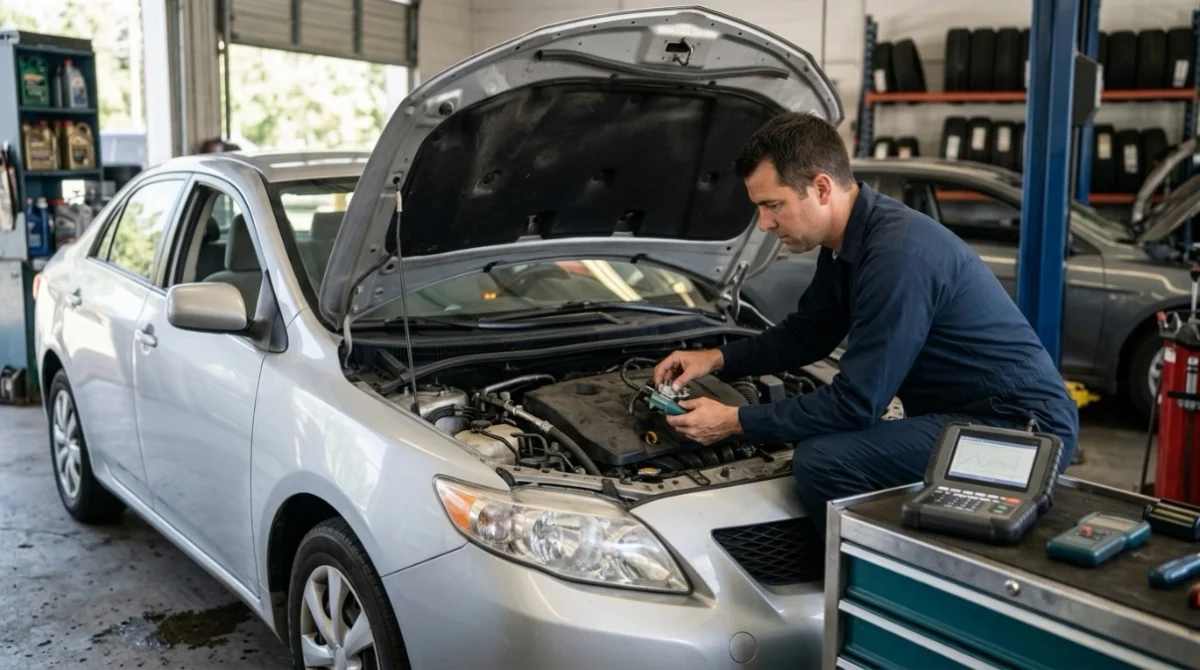
A vehicle with P0402 may remain drivable when the only symptom is a steady Check Engine Light. Driving becomes more concerning when the engine stalls, loses significant power, misfires badly, or runs unpredictably.
When should you stop driving?
- Repeated stalling: unexpected engine shutdown can create a traffic hazard.
- Severe loss of power: don’t continue normal driving if acceleration becomes unsafe.
- Heavy shaking or misfiring: diagnose the problem before continued use.
- Flashing Check Engine Light: treat this as more urgent than a steady warning light.
- Other red warning lights: stop safely and address those warnings immediately.
If the car runs normally with a steady Check Engine Light, arrange diagnosis soon rather than ignoring it. An emissions-related fault can also prevent the vehicle from passing an OBD-based inspection.
What repairs can fix P0402?
The correct repair depends on the confirmed cause. Cleaning a dirty component may solve one vehicle, while another needs electrical or sensor work.
- Clean a sticking EGR valve when deposits are preventing proper movement and the component remains serviceable.
- Replace an EGR valve that fails mechanical or electrical testing.
- Repair damaged vacuum hoses on systems that use vacuum control.
- Replace a failed EGR control solenoid after testing confirms the fault.
- Repair damaged wiring, terminals, or connectors.
- Replace a faulty EGR feedback or differential-pressure sensor when its readings fail specification.
- Address relevant MAF or MAP faults if those inputs are affecting EGR monitoring.
- Perform an approved software update when manufacturer service information specifically calls for one.
How much does P0402 cost to fix?
There isn’t one reliable P0402 repair price because the code can have several causes. A basic cleaning or hose repair can cost far less than replacing an inaccessible EGR valve or diagnosing an electrical fault.
EGR valve replacement alone commonly runs into several hundred dollars once parts and labor are combined. Vehicle design, engine layout, labor rate, region, and the actual failed component can move the total considerably.
Pro tip: Pay for diagnosis before approving an expensive EGR repair. A correct test can cost less than replacing a good valve because the code sounded component-specific.
P0402 Symptoms FAQ
Can P0402 cause a rough idle?
Yes. Excessive EGR flow at idle can dilute the fresh intake charge and make combustion unstable. The engine may shake, surge, stumble, or sound uneven, especially when an EGR valve remains partly open when the computer expects it to be closed.
Can P0402 cause the engine to stall?
Yes. A valve that allows too much exhaust gas into the intake at low engine speed can make the engine stall when stopping or idling. Repeated stalling deserves prompt diagnosis because it can make the vehicle unpredictable in traffic.
Can P0402 cause poor acceleration?
It can. Excessive EGR flow may make the engine hesitate or feel weak because the cylinders receive the wrong mixture of fresh intake air and recirculated exhaust. However, fuel, ignition, and airflow faults can create similar symptoms.
Does P0402 always mean the EGR valve is bad?
No. A stuck EGR valve is one possibility, but P0402 can also result from control-solenoid faults, sensor problems, damaged wiring, vacuum-control issues, or incorrect feedback. Test the system before ordering a replacement valve.
Can I clear P0402 with an OBD2 scanner?
Most standard OBD-II scanners can clear an emissions-related powertrain code after you’ve recorded the diagnostic information. Clearing it doesn’t repair the cause, and the code may return once the engine computer reruns its EGR monitor.
Will P0402 fail an emissions test?
A stored emissions-related trouble code and illuminated Check Engine Light can prevent a vehicle from passing many OBD-based inspection programs. Clearing the code immediately before testing can also leave readiness monitors incomplete, so repair the fault and allow the required monitors to run.
What should I check first with P0402?
Start by reading every stored and pending code and saving the freeze-frame data. Then inspect the EGR valve controls, wiring, connectors, vacuum lines where applicable, and live EGR feedback before replacing components.
The main takeaway: P0402 symptoms often point toward excessive EGR flow, but they don’t prove which component failed. Scan the data, inspect the system, test the controls, and confirm the repair before spending money on parts.
If the engine stalls, runs severely rough, or you don’t have the equipment to test the EGR system safely, have a qualified repair professional diagnose it. A methodical diagnosis is usually cheaper than changing parts until the light disappears.
