
How to Fix P0402: EGR Flow Excessive Detected

Quick Answer
To fix P0402, first confirm the code and save the freeze-frame data with an OBD2 scanner. Then inspect the EGR valve, its wiring, vacuum controls, and EGR flow or position sensors before replacing anything. P0402 means the computer detects more exhaust gas recirculation than expected, so the repair depends on whether the flow is genuinely excessive or a sensor is reporting it incorrectly. An OBD2 code reader and live-data check can help separate those possibilities.
Start With These Checks
- Confirm P0402: Scan for all stored and pending codes before clearing anything.
- Save freeze frame: Note engine speed, load, temperature, MAP or MAF data, and EGR information when available.
- Inspect the valve: Look for carbon or mechanical damage that prevents the EGR valve from fully closing.
- Check controls: Inspect vacuum hoses, control solenoids, electrical connectors, and wiring.
- Verify sensors: Compare commanded EGR operation with actual position or flow data when your scanner supports it.
- Retest the system: Clear the code only after the repair, then complete a proper drive cycle and rescan.
Important
- Do not replace the EGR valve simply because P0402 appears. A faulty feedback sensor or control circuit can create the same code.
If your scanner shows P0402, the quickest repair is not always a new EGR valve. I prefer to prove whether the valve is actually flowing too much before ordering parts.
This guide walks through the same logical process: confirm the code, inspect the system, analyze live data, test likely causes, make the repair, and verify that the fault stays gone.
In This Guide
What Does the P0402 Code Mean?
P0402 means “Exhaust Gas Recirculation Flow Excessive Detected.” The powertrain control module, or PCM, believes more exhaust gas is entering the intake than the engine operating conditions call for.
The exhaust gas recirculation system is usually shortened to EGR. Its job is to route a controlled amount of exhaust back into the engine under selected operating conditions.
Definition: An EGR system is an emissions-control system that meters exhaust gas back into the intake so combustion temperature and nitrogen-oxide formation can be controlled.
The key word in P0402 is excessive. This code is different from P0401, which means the computer detected insufficient EGR flow.
How does the computer detect excessive EGR flow?
The exact strategy varies by make, model, engine, and model year. Some vehicles watch EGR valve position, while others infer flow from changes in intake pressure or airflow.
Depending on the vehicle, useful inputs can include:
- EGR position: Shows where an electronic EGR valve reports its position.
- DPFE data: A differential pressure feedback EGR sensor measures pressure differences used to estimate EGR flow on certain systems.
- MAP data: Manifold absolute pressure can change when EGR flow changes.
- MAF data: Mass airflow readings may change as exhaust gas replaces some incoming fresh air.
- Commanded EGR: A capable scanner may show what the PCM is requesting.
This matters because P0402 does not automatically prove that the EGR valve itself has failed. The PCM can also set the code when a sensor or circuit makes normal flow look excessive.
Pro tip: always use the service information for your exact VIN and engine when checking EGR specifications. Generic scanner values are useful for direction, but manufacturer test limits control the final diagnosis.
What Causes a P0402 Code?
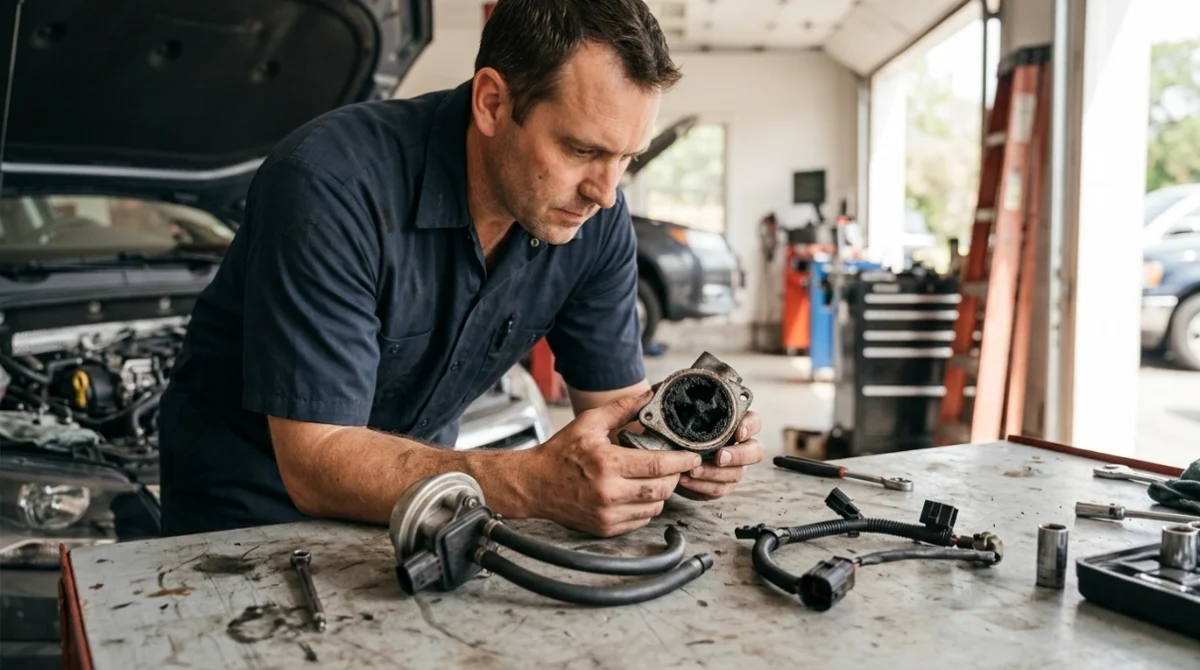
The most common P0402 causes involve an EGR valve that cannot close correctly or a feedback system that reports excessive flow. Control solenoids, vacuum systems, and wiring can cause the same result.
I treat P0402 as a system fault until testing proves one component is responsible. That approach prevents an expensive parts-swapping cycle.
Common causes of excessive EGR flow
- EGR valve stuck open: Carbon can interfere with the pintle or valve seat and prevent complete closing.
- Internally damaged EGR valve: A worn mechanism, actuator, return spring, or position system may hold the valve open.
- Faulty EGR flow sensor: A pressure or flow sensor can report more EGR movement than is actually occurring.
- DPFE sensor problem: Vehicles using differential pressure feedback can set P0402 when the sensor or its hoses provide incorrect information.
- Vacuum control problem: A vacuum-operated valve may stay open if a control solenoid or hose arrangement applies vacuum at the wrong time.
- Electrical fault: Damaged connectors, melted insulation, shorts, corrosion, or poor grounds can interfere with electronic EGR operation.
- Carbon contamination: Heavy deposits can affect the valve, passages, sensors, or pressure ports used to calculate EGR flow.
- PCM calibration or control issue: Software or module problems are possible but should remain low on the list until normal components are tested.
Which cause is most likely?
Rough idle or stalling can point toward genuine unwanted EGR flow because exhaust gas is entering when stable combustion needs more fresh air. Smooth engine operation with suspicious flow data may shift attention toward a sensor or electrical problem.
| Possible Cause | Useful Clue | Best Next Check |
|---|---|---|
| EGR valve stuck open | Rough idle, stumble, or stalling | Inspect valve seating and commanded versus actual position |
| Flow/pressure sensor fault | Code returns despite normal valve behavior | Compare sensor data with manufacturer specifications |
| Vacuum solenoid problem | Vacuum reaches EGR when it should not | Test hoses and solenoid operation |
| Wiring or connector fault | Intermittent data or related circuit codes | Inspect harness and perform circuit tests |
Can You Drive With a P0402 Code?
You may be able to drive a vehicle with P0402 for a short distance if it runs normally. However, rough idle, hesitation, repeated stalling, major power loss, or a flashing check engine light justify stopping and getting the vehicle inspected.
AAA advises drivers to take check-engine warnings seriously and seek diagnosis rather than ignoring them. Its check engine light guidance also distinguishes ordinary warning conditions from more urgent symptoms.
Common P0402 symptoms
- Illuminated check engine light
- Rough or unstable idle
- Engine stalling when slowing or stopping
- Hesitation during acceleration
- Reduced engine performance
- Other EGR or misfire codes stored alongside P0402
- Failed emissions inspection where readiness and fault codes are checked
A steady check engine light with no drivability symptoms gives you more diagnostic flexibility. A vehicle that keeps stalling deserves faster attention because losing engine power in traffic creates a practical safety concern.
Before paying for a major emissions repair, I also recommend checking for outstanding manufacturer campaigns or safety recalls. You can search the vehicle’s VIN through the official NHTSA recall lookup.
Locksmith’s note: VIN-specific information matters with modern vehicle electronics. Use the VIN when checking recalls, service information, software updates, and exact component configuration.
How Do You Diagnose P0402 Step by Step?
Diagnose P0402 by starting with scanner data and then testing the EGR system that your vehicle actually uses. Do not clear the code before recording the evidence that tells you when the fault occurred.
1. Scan every control-module code
Connect an OBD2 scanner and record stored, pending, and permanent codes where supported. Related EGR, airflow, MAP, MAF, or circuit codes can change the diagnostic path.
2. Save the freeze-frame data
Freeze-frame information captures operating conditions around the fault event. Look for engine speed, coolant temperature, calculated load, throttle position, MAP, MAF, and any EGR values your scanner provides.
3. Inspect the EGR system visually
With the engine off and cool, inspect accessible wiring, connectors, hoses, and EGR components. Heat-damaged wiring and cracked vacuum hoses can save hours of unnecessary testing when found early.
- Check plugs for bent pins, corrosion, or loose locks.
- Look for wiring touching hot exhaust components.
- Inspect vacuum lines for cracks or incorrect routing.
- Check accessible pressure-sensor hoses for damage or blockage.
- Look for obvious carbon contamination around removed EGR components.
4. Compare commanded and actual EGR operation
A bidirectional scan tool may let you command an electronic EGR valve while monitoring actual position or engine response. If commanded and actual readings disagree, investigate the valve, actuator, position sensor, wiring, and power supply.
If your scanner cannot perform active tests, you can still learn from live data. Watch how EGR-related values change between idle and the operating conditions specified by the manufacturer.
5. Check whether the valve closes mechanically
A carbon-covered EGR pintle can remain slightly open even when the PCM requests zero flow. If removal is practical, inspect the valve seat and movement according to the vehicle service procedure.
Do not force an electronic valve by hand unless the manufacturer says that method is safe. Some geared actuators can be damaged by manual movement.
6. Test sensors and circuits before replacing parts
A false flow signal can mimic a stuck-open valve. Check sensor reference voltage, ground, signal behavior, connectors, and related hoses according to the correct wiring diagram and test specifications.
Manufacturer information is especially important here because the EGR design differs across engines. Toyota owners can access model-specific resources through Toyota Owners resources, while Honda provides service and maintenance resources through its Honda Owners service portal.
Section Takeaway: Good P0402 diagnosis proves whether excessive flow is real before a valve or sensor gets replaced.
How Do You Fix P0402?
The correct P0402 fix is the repair that stops unwanted EGR flow or restores accurate EGR feedback. Cleaning may solve carbon-related sticking, while electrical, sensor, or actuator faults require different repairs.
Fix 1: Clean a carbon-stuck EGR valve
If inspection confirms deposits are keeping the valve from seating, remove and clean it using the procedure and cleaner approved for that vehicle. Clean the sealing area and relevant passages without damaging electrical components.
Cleaning is worthwhile when the valve is mechanically sound. A damaged seat, failed actuator, worn mechanism, or defective position sensor usually requires replacement instead.
Fix 2: Replace a failed EGR valve
Replace the valve when testing confirms it cannot close, move, or report position correctly and the fault is internal to the assembly. Use the vehicle’s VIN, engine code, and manufacturer catalog to verify the correct part.
Pro tip: do not order an EGR valve from the trouble code alone. Two vehicles with P0402 can need completely different repairs.
Fix 3: Repair the EGR vacuum control system
Older vacuum-operated systems may use hoses and an electrically controlled vacuum solenoid. A failed control solenoid or incorrect vacuum application can hold the EGR valve open.
- Repair cracked or disconnected hoses.
- Correct improperly routed vacuum lines.
- Replace a solenoid only after verifying it does not control vacuum correctly.
- Confirm the EGR valve itself holds or releases vacuum as specified.
Fix 4: Repair a sensor or wiring problem
If the valve operates normally but flow feedback remains wrong, test the sensor system. Repair damaged wiring, poor terminals, sensor hoses, grounds, or failed sensors as confirmed by the test results.
Fix 5: Check for manufacturer software or service information
PCM software problems are less common than valve, sensor, or wiring faults. However, manufacturer technical information may identify a calibration update or a known diagnostic pattern for a specific engine.
Do not replace a PCM as an early P0402 repair. Module replacement should come after power, grounds, wiring, components, and applicable programming information have been checked.
After the repair
- Reconnect every hose and electrical connector.
- Clear diagnostic trouble codes with the scanner.
- Start the engine and confirm a stable idle.
- Check EGR live data for sensible operation.
- Drive the vehicle under varied normal conditions.
- Rescan for pending and stored codes.
- Verify readiness monitors when emissions testing is relevant.
Section Takeaway: Repair what testing identifies, then verify the fix with live data and a post-repair drive cycle.
How Much Does It Cost to Fix P0402?
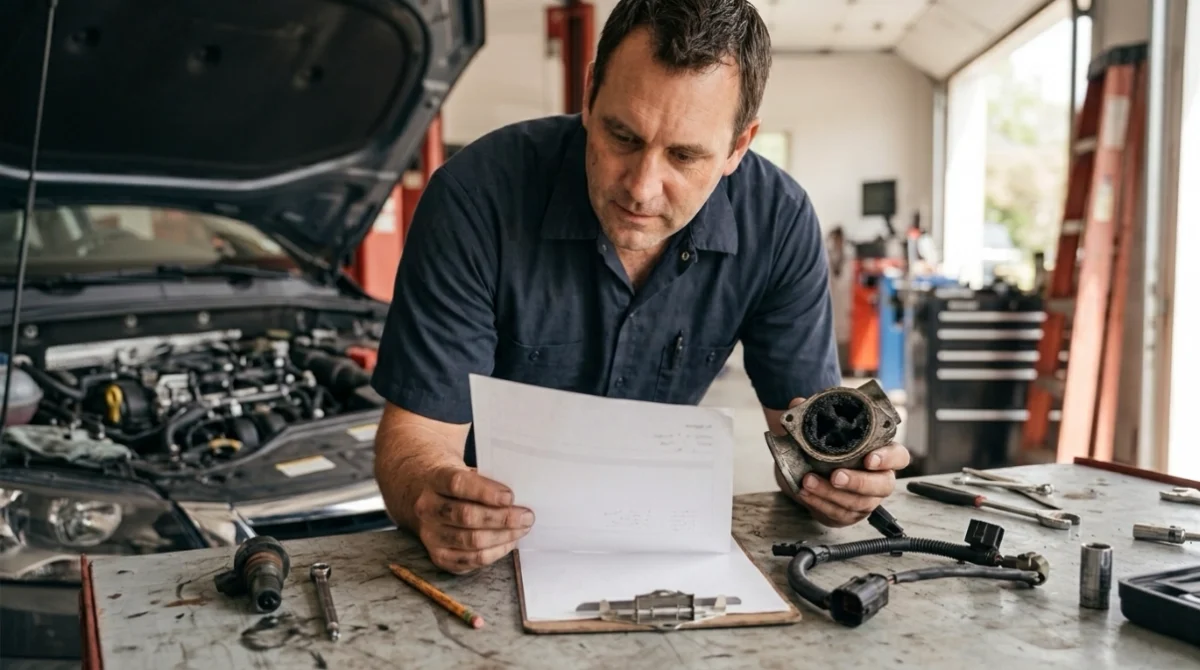
P0402 repair cost depends on the actual cause, vehicle, labor rate, component access, and whether cleaning is enough. A diagnosis should come before any meaningful estimate.
As of August 2026, RepairPal lists an average U.S. EGR valve replacement estimate of roughly $486 to $627. That figure is only a reference for EGR valve replacement, not a guaranteed P0402 repair price.
| Repair Path | Relative Cost | What Changes the Price |
|---|---|---|
| Clean accessible EGR valve | Usually lower | Access, carbon level, gasket needs, labor time |
| Sensor or solenoid repair | Low to moderate | Sensor type, location, diagnostic time |
| EGR valve replacement | Moderate | Part price, valve accessibility, engine design |
| Harness or circuit repair | Highly variable | Fault location and time needed to trace wiring |
| Advanced control diagnosis | Potentially higher | Programming, module testing, specialist labor |
A simple carbon-cleaning job and a difficult EGR replacement on a tightly packaged engine are not comparable. Diesel EGR systems can also involve more components and more labor than a simple gasoline-engine valve.
Pro tip: ask for the diagnostic finding before approving a replacement. “P0402 was stored” is not the same as “the EGR valve failed our test.”
P0402 FAQ
Can a dirty EGR valve cause P0402?
Yes. Carbon deposits can prevent the EGR valve from closing completely, which can allow exhaust gas into the intake when the PCM expects little or no flow.
Can a bad EGR sensor cause P0402?
Yes. A faulty pressure, flow, or position sensor can make the PCM believe EGR flow is excessive even when the valve itself is operating correctly.
Will cleaning the EGR valve fix P0402?
Cleaning can fix P0402 when carbon buildup is the confirmed reason the valve cannot seat properly. It will not repair a failed actuator, damaged valve seat, faulty sensor, broken wiring, or defective control solenoid.
Can I clear P0402 and keep driving?
Clearing the code does not repair the fault. If the condition remains, the code can return after the PCM reruns its EGR monitor.
Is P0402 the same as P0401?
No. P0402 indicates excessive EGR flow, while P0401 indicates insufficient EGR flow. Some components overlap, but the diagnostic direction is different.
Can a vacuum leak cause P0402?
A fault in a vacuum-controlled EGR system can contribute to incorrect valve operation. Diagnose the hose routing, control solenoid, vacuum supply, and valve rather than assuming every vacuum leak will set P0402.
Do I need an expensive scan tool to diagnose P0402?
A basic OBD2 scanner can confirm P0402 and may display freeze-frame data. A more capable scanner becomes useful when you need EGR live data, commanded-versus-actual information, or bidirectional actuator tests.
Final takeaway: Fixing P0402 starts with proving why the PCM sees excessive EGR flow. Check scanner data, the valve, sensors, vacuum controls, and wiring before spending money on parts.
If the vehicle stalls, has major drivability problems, or the required tests exceed your tools, have a qualified technician diagnose the EGR system using the manufacturer procedure. A measured diagnosis is almost always cheaper than guessing.
