
P0411 Repair Cost: What You’ll Pay to Fix Secondary Air Injection Flow

Quick Answer
The typical P0411 repair cost can range from about $50 for a simple hose, fuse, or relay problem to $1,000 or more when the secondary air pump, valves, or clogged air passages require substantial work. Current 2026 estimates show why diagnosis matters: P0411 can have several different causes, so the trouble code alone does not tell you which part to replace.
Typical P0411 Cost Range
- Diagnostic testing: Often about $100–$200, depending on shop rates and required testing.
- Fuse or relay: A relatively inexpensive repair if electrical testing confirms the fault.
- Damaged hose: Often one of the lower-cost mechanical fixes.
- Check or control valve: Often several hundred dollars once parts and labor are included.
- Secondary air pump: Commonly several hundred dollars and sometimes substantially more on difficult vehicles.
- Blocked air passages: Labor-intensive cleaning can become one of the most expensive repairs.
Before You Approve a Repair
- Ask which component failed its test instead of approving an air pump based only on the P0411 code.
If your scanner shows P0411, the cost question usually comes first. I understand why, because secondary air injection repairs range from a cheap hose problem to a much more involved pump or carbon-cleaning job.
The key is avoiding parts swapping. In my experience with vehicle diagnostics, P0411 is a perfect example of a code that tells you which system has a problem, not which component you should buy.
In This Guide
What Does the P0411 Code Mean?
P0411 means “Secondary Air Injection System Incorrect Flow Detected.” Your engine computer commanded the secondary air system to operate but did not see the airflow response it expected.
Definition: The secondary air injection system pumps fresh outside air into the exhaust during certain cold-start conditions. That added oxygen helps reduce emissions while the engine and catalytic converter are warming up.
The system usually operates for only a short period after a cold start. Depending on the vehicle, it can include an electric air pump, hoses, pipes, one-way check valves, switching valves, vacuum controls, relays, wiring, and air passages in the engine or exhaust system.
The powertrain control module, or PCM, checks whether the commanded airflow creates the expected change in exhaust oxygen readings. If that response is missing or outside the programmed range, P0411 may be stored.
- Code: P0411
- System: Secondary air injection
- Main concern: Incorrect or insufficient airflow
- Common warning: Check Engine Light
- Typical impact: Emissions rather than immediate drivability
The EPA explains that OBD systems monitor emission-related components and store diagnostic trouble codes when a malfunction is detected. You can review its OBD-II inspection information for additional background.
Many drivers notice no change in how the vehicle runs. That does not mean the code should be ignored, especially where emissions inspections include OBD readiness and malfunction-indicator checks.
Section Takeaway: P0411 identifies an airflow problem in the secondary air injection system. It does not automatically mean the air pump has failed.
How Much Does P0411 Cost to Fix?
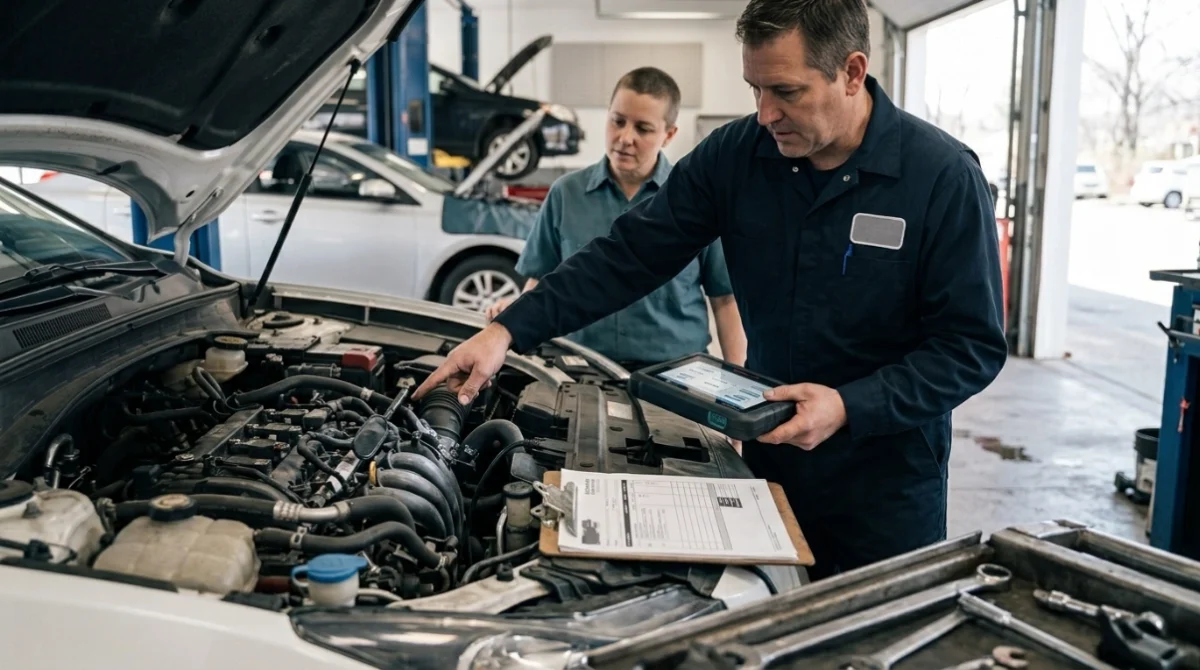
A realistic P0411 repair cost can range from under $100 for a simple connection or hose issue to well above $1,000 for difficult component replacement or clogged-passage work. Vehicle design, parts pricing, labor rates, and the actual failure determine the final bill.
As of August 2026, RepairPal lists an average air pump replacement around $572–$700. Its average secondary air injection check-valve replacement estimate is around $460–$534.
| Possible Repair | Typical U.S. Ballpark | Why Cost Varies |
|---|---|---|
| Diagnosis | $100–$200 | Shop labor rate and testing required |
| Fuse, relay, or minor wiring repair | $50–$250 | Electrical access and wiring damage |
| Air hose or vacuum line repair | $50–$300 | Hose location and replacement availability |
| Secondary air check/control valve | $200–$750+ | Vehicle-specific valve price and access |
| Secondary air injection pump | $450–$1,000+ | OEM versus aftermarket parts and labor time |
| Clean blocked air passages | $400–$1,500+ | Manifold or cylinder-head access can require major labor |
These are budgeting ranges, not quotes for a particular car. A Toyota, Volkswagen, BMW, Chevrolet, or Mercedes-Benz may use a completely different layout and parts combination.
For example, RepairPal’s current air pump replacement estimates vary significantly by vehicle. That variation is why I would never price a P0411 repair from the trouble code alone.
Does the diagnostic fee count toward the repair?
That depends on the shop. Some repair facilities charge diagnosis separately, while others apply some or all of that fee toward an approved repair.
Ask before authorizing testing. A proper diagnosis can still save money if it prevents a $600 pump from being replaced when the actual failure is a relay or damaged hose.
Why can the same P0411 code cost $100 on one car and $1,000 on another?
The P0411 code describes system performance, not a universal failed part. Manufacturers place pumps, valves, hoses, and exhaust passages in different locations.
- Parts prices differ: OEM pumps and valves can cost far more on some models.
- Labor access differs: One valve may take minutes to reach, while another sits behind several components.
- More than one part may fail: A bad check valve can contribute to moisture or exhaust reaching the pump.
- Carbon blockage adds labor: Cleaning internal passages can require extensive disassembly.
- Regional rates vary: Labor charges differ between cities and independent shops.
Technician note: ask for the diagnostic results before approving an expensive secondary air pump. The shop should be able to explain why the pump, valve, hose, or passage failed its test.
Section Takeaway: Budget several hundred dollars for many P0411 repairs, but do not assume the highest-cost component is bad until the system is tested.
What Causes P0411?
The most common P0411 causes involve an air pump that cannot move air, a valve that will not route air correctly, leaking hoses, electrical faults, or restrictions in the air passages. The best diagnostic path starts with the easiest items to verify.
1. Failed secondary air injection pump
The electric pump may wear out, seize, lose power, or suffer internal damage. A failed pump can leave the system with little or no airflow during the commanded cold-start period.
A pump can also be damaged by moisture intrusion. If that happens, replacing only the pump without finding why moisture reached it can lead to another failure.
2. Faulty check valve or control valve
A one-way check valve allows air toward the exhaust while helping prevent hot exhaust gases from flowing backward. A sticking or restricted valve can trigger incorrect-flow faults even when the pump itself works.
Current check-valve replacement estimates also show major vehicle-to-vehicle differences. That makes VIN-specific pricing more useful than a universal estimate.
3. Cracked, loose, or restricted air hose
Rubber hoses live in a hot engine compartment. Age, heat, oil contamination, damaged fittings, or previous repairs can create cracks and loose connections.
A pump may run normally while much of its airflow escapes before reaching the exhaust. That is one reason listening for the pump is useful but not enough to confirm the system works.
4. Bad relay, fuse, wiring, or connector
The pump cannot work without a sound power and ground circuit. Burned relay contacts, damaged wiring, poor grounds, blown fuses, or heat-damaged connectors can stop the system.
- Check the relevant fuse.
- Verify relay operation.
- Inspect connectors for heat or corrosion.
- Test power and ground under load.
- Repair damaged wiring before condemning the pump.
5. Carbon-clogged secondary air passages
Carbon deposits can restrict the passages that deliver air into the exhaust stream. In severe cases, the pump and valves test correctly but airflow still cannot reach its destination.
This failure becomes expensive because cleaning may require removing intake or exhaust components. Some engines require far more disassembly than others.
6. Vacuum-control problem
Some vehicles use vacuum-operated valves or solenoids to control secondary airflow. A cracked vacuum line, failed solenoid, or leaking diaphragm can stop a valve from opening.
Section Takeaway: P0411 has several possible causes, so diagnosis should move from electrical supply and hoses to valves, pump operation, and restricted passages.
How Is P0411 Diagnosed Before Repairs?
A good P0411 diagnosis verifies whether the pump runs and whether its air actually reaches the exhaust. Reading the trouble code is only the starting point.
I prefer a test sequence that rules out inexpensive failures before expensive parts. That approach reduces the chance of buying a pump you did not need.
Step 1: Scan all stored and pending codes
Start with an OBD2 scanner and record P0411 before clearing anything. Save freeze-frame data and note any related secondary air, oxygen-sensor, relay, or circuit codes.
Multiple codes can reveal a direction that P0411 alone cannot. Clearing everything immediately can erase useful clues.
Step 2: Inspect the system visually
- Look for disconnected or split hoses.
- Inspect electrical connectors.
- Check visible vacuum lines.
- Look for signs of moisture around the pump.
- Inspect pipes and fittings for damage or restrictions.
A simple visual problem can save an hour of electrical testing. Do this with the engine cool because secondary air components may sit close to hot exhaust parts.
Step 3: Check pump operation during a cold start
The secondary air system commonly operates during cold-start conditions. A technician may listen for pump operation while watching commanded system status with a scan tool.
No pump noise does not prove the pump motor is bad. The pump may simply lack voltage because of a fuse, relay, wiring, or control problem.
Step 4: Verify power and ground
A multimeter or suitable electrical test equipment can confirm whether the pump receives proper power and ground when commanded. Load testing is more useful than assuming a circuit is healthy because it shows battery voltage with no load.
Technician note: electric secondary air pumps can draw substantial current. Use manufacturer-specific wiring information and proper testing methods before jumping terminals or powering components directly.
Step 5: Check valves and actual airflow
If the pump runs, verify that air leaves the pump and reaches the exhaust side of the system. A blocked valve, split hose, clogged pipe, or restricted passage can make a good pump look guilty.
A professional scan tool may also show the oxygen-sensor response while the secondary air system operates. The expected response and test method vary by vehicle.
Step 6: Verify the repair
- Clear the code after completing the repair.
- Perform the appropriate cold-start check.
- Rescan for pending or stored faults.
- Confirm the system monitor can run normally.
- Do not assume one code-free start proves the repair.
Section Takeaway: the cheapest P0411 repair is the correct repair. Testing airflow, electrical supply, valves, and passages before replacing parts is usually money well spent.
Can You Drive With a P0411 Code?
In many cases, a vehicle with P0411 remains drivable because the secondary air injection system mainly affects cold-start emissions. You should still diagnose the problem rather than ignoring the Check Engine Light indefinitely.
A solid Check Engine Light is different from a flashing light. If the light flashes, the engine runs badly, or you notice burning smells or unusual electrical symptoms, stop treating it as a routine P0411 situation.
Will P0411 cause an emissions-test failure?
It can. P0411 is an emissions-related diagnostic trouble code, and an illuminated malfunction indicator lamp or incomplete readiness monitors can matter during OBD-based inspections.
Exact inspection requirements vary by state and jurisdiction. Check your local program before scheduling a test.
Can P0411 damage the catalytic converter?
The code itself does not prove catalytic-converter damage. Its main meaning is that the secondary air system is not delivering the airflow the computer expects.
However, you should repair underlying problems instead of allowing an emissions fault to remain unresolved. Related exhaust, fueling, or misfire problems deserve prompt attention if other codes appear.
Will clearing P0411 fix it?
No. Clearing a code erases diagnostic information but does not repair a failed pump, blocked valve, leaking hose, or wiring problem.
The light may stay off temporarily until the secondary air monitor runs again. If the original fault remains, the code can return.
- Short local drive: Often possible when the car runs normally.
- Upcoming emissions test: Diagnose the fault first.
- Flashing Check Engine Light: Treat it as a more urgent problem.
- Burning smell or electrical overheating: Stop driving and inspect the vehicle.
Section Takeaway: P0411 often does not make the car undrivable, but it is an emissions fault that should be diagnosed and repaired within a reasonable time.
P0411 Repair Cost FAQ
How much does it cost to fix code P0411?
A P0411 repair may cost roughly $50 for a minor hose or electrical problem or exceed $1,000 when the pump, difficult valves, or blocked passages need extensive work. Diagnosis is essential because P0411 identifies incorrect system airflow rather than one guaranteed failed component.
What is the most expensive P0411 repair?
Major secondary air pump replacement and cleaning carbon-blocked passages can be among the more expensive repairs. Costs become especially high when intake, exhaust, or cylinder-head components must be removed for access.
Can a bad secondary air pump cause P0411?
Yes. A failed secondary air injection pump can cause P0411 because the exhaust receives too little commanded airflow. However, a bad relay, leaking hose, faulty valve, wiring problem, or blocked passage can create the same code.
Can a bad oxygen sensor cause a P0411 code?
Oxygen-sensor data can be part of how some vehicles verify secondary air operation. A sensor or related circuit problem can therefore complicate diagnosis, but technicians should test the complete system instead of replacing an oxygen sensor solely because P0411 is stored.
Can I fix P0411 myself?
A DIY owner may safely inspect accessible hoses, connectors, and fuses with the correct service information. Pump electrical testing, valve diagnosis, and carbon-blockage repairs can require professional tools and work near hot exhaust components.
Does P0411 always mean I need a new air pump?
No. This is one of the most important things to understand about P0411. The pump may be fine while a relay, check valve, air hose, vacuum circuit, electrical connector, or blocked passage prevents the expected airflow.
How long does a P0411 repair take?
A simple hose, fuse, or relay repair may be completed quickly, while pump or valve access can take several hours. Carbon-clogged passage repairs can take considerably longer if major components must be removed.
What Should You Do Next?
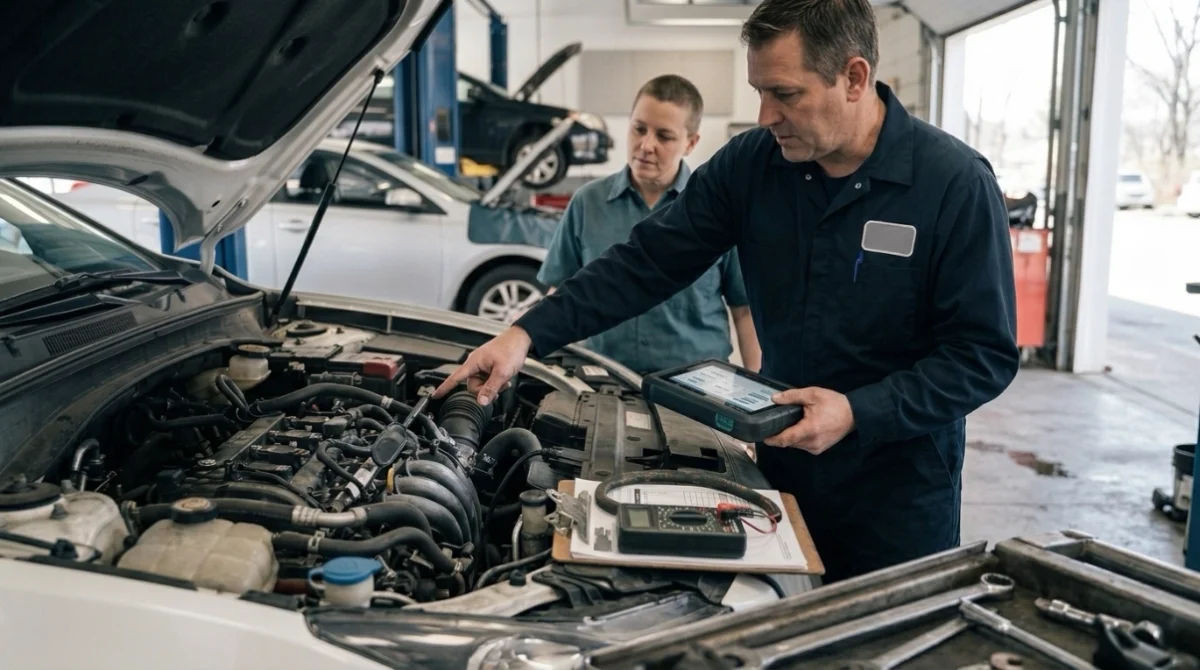
If P0411 has just appeared, scan the vehicle for all stored and pending codes before buying anything. Keep the freeze-frame information and look for related secondary air or electrical faults.
Then get a diagnosis that confirms whether the problem lies with the pump, power supply, hoses, valves, vacuum controls, or internal air passages. That one step can make the difference between a small repair and an expensive wrong part.
- First: Record the code and freeze-frame data.
- Second: Inspect hoses, fuses, wiring, and connectors.
- Third: Confirm pump command and electrical supply.
- Fourth: Test valves and actual airflow.
- Last: Approve the repair only after the failed component is identified.
As of 2026, the average cost of replacing some secondary air components already runs into several hundred dollars. Accurate diagnosis is therefore part of the repair, not an unnecessary extra expense.
Bottom line: expect a typical P0411 repair cost to fall somewhere between a low-cost hose or electrical repair and a several-hundred-dollar pump or valve job. Get the system tested first, then spend money on the part that actually failed.
