
How to Fix P0411: Diagnose the Secondary Air Injection Problem

Quick Answer
To fix P0411, confirm the code first, inspect the secondary air injection hoses and wiring, check the pump and fuse, test the control or check valve, and look for blocked air passages. Do not replace the air pump just because P0411 appears; an OBD2 trouble code is a diagnostic clue, not proof that one specific part has failed.
Quick P0411 Fixing Order
- Confirm the code: Record P0411, related codes, and freeze-frame data before clearing anything.
- Inspect the airflow path: Look for split hoses, disconnected pipes, loose clamps, moisture, and obvious restrictions.
- Check electrical power: Inspect the air-pump fuse, relay, connector, wiring, power supply, and ground.
- Test the pump: Verify that the pump operates when the vehicle commands secondary-air injection.
- Test the valve: Check the control valve, check valve, solenoid, or vacuum controls used on your vehicle.
- Check for blockage: Carbon-restricted cylinder-head or exhaust air passages can cause P0411 even when the pump works.
P0411 can tempt you into replacing an expensive secondary air pump immediately. I would not start there.
When I use an OBD2 scanner during vehicle-electronics troubleshooting, I treat the code as a direction for testing. This guide shows you how to follow that same evidence-first approach without turning P0411 into a parts-swapping project.
In This Guide
What Does P0411 Mean?
P0411 means the engine computer detected incorrect airflow from the secondary air injection system. The system normally adds fresh air to the exhaust during specific operating conditions, often around a cold start.
The extra oxygen helps the emissions system reach effective operating conditions faster. The exact system design and monitoring strategy vary by manufacturer.
Secondary air injection is an emissions system that uses a pump, valves, hoses or pipes, and control components to move outside air into the exhaust stream. Some vehicles use an electric pump, while others may use different control arrangements.
- P0411: Secondary Air Injection System Incorrect Flow Detected.
- P0410: A broader secondary air injection system malfunction code.
- P0491/P0492: Often identify insufficient secondary-air flow by bank on applicable engines.
P0411 does not tell you which component failed. It only tells you that the computer did not see the airflow response it expected.
You may notice only a steady Check Engine Light. In other cases, you could hear an unusually loud pump during a cold start or notice no pump operation at all.
What Causes Code P0411?
The most common P0411 causes involve lost airflow, a pump that cannot operate correctly, a valve problem, or restricted secondary-air passages. Start with the simple possibilities before blaming the pump.
- Cracked or disconnected hose: Air escapes before reaching the exhaust system.
- Failed secondary air pump: The pump may seize, wear out, or stop electrically.
- Blown fuse or bad relay: A power-supply problem can prevent pump operation.
- Damaged wiring: Corrosion, broken wires, or poor terminals can interrupt the circuit.
- Stuck check valve: The valve may prevent proper airflow or allow damaging exhaust moisture backward.
- Failed control solenoid: Vacuum-operated systems can lose valve control.
- Water or ice: Moisture inside the system can restrict airflow or damage components.
- Carbon deposits: Air passages in the cylinder head or exhaust path can become restricted.
Can moisture or ice cause P0411?
Yes. Some manufacturer-specific cases have linked P0411 with moisture or ice inside secondary-air components.
For example, a confirmed General Motors service bulletin covering certain Equinox and Terrain applications describes moisture or ice buildup in the secondary air injection system as one possible cause. That does not mean the same repair applies to every vehicle.
Can carbon buildup trigger P0411?
Yes. A pump can run normally while the airflow still fails to reach the exhaust because the passages themselves are restricted.
Another confirmed GM bulletin documents restricted secondary-air passages associated with P0411 on specific engines. This is why testing airflow matters before installing a new pump.
Pro tip: manufacturer bulletins are vehicle-specific. Always match service information to the exact year, engine, and configuration before using a bulletin as a repair procedure.
How Do You Diagnose P0411 Correctly?
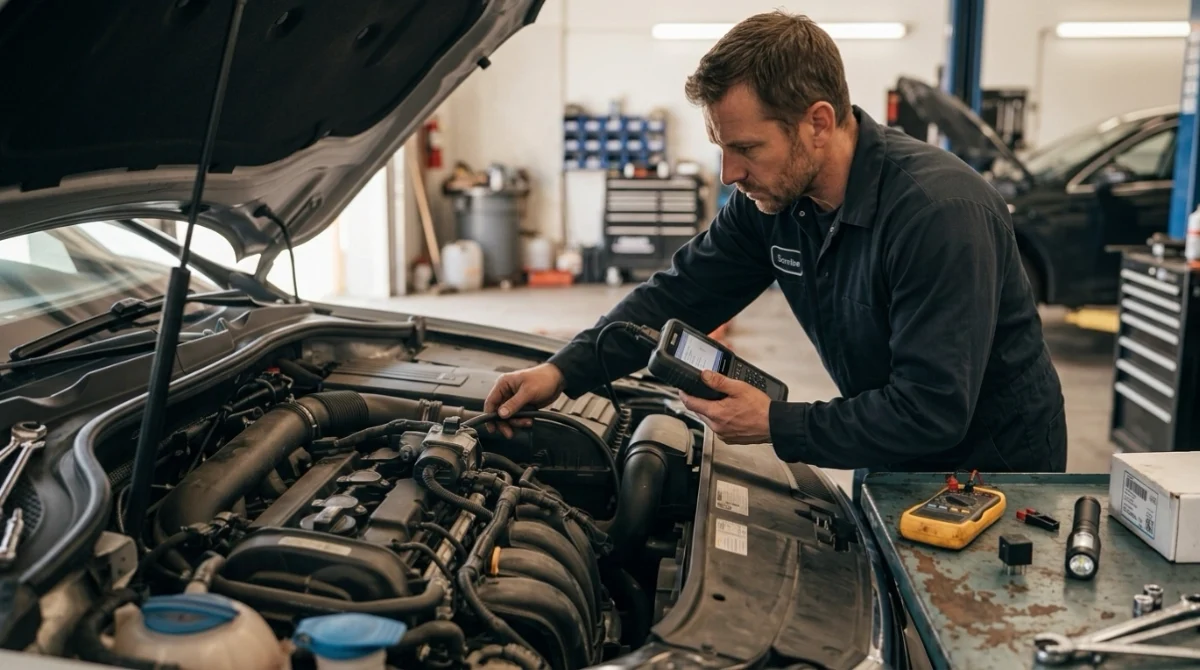
Diagnose P0411 by proving where secondary airflow stops. A scan tool gets you started, but physical inspection and electrical testing usually identify the real failure.
1. Scan all codes before clearing them
Connect your OBD2 scanner and record stored, pending, and permanent codes. Save freeze-frame information when available.
- Engine coolant temperature
- Engine speed
- Vehicle speed
- Engine load
- Battery or charging voltage, if available
- Related oxygen-sensor or air-injection codes
A cold-engine freeze frame can be especially useful because many secondary-air systems perform their main monitor during cold-start conditions.
2. Perform a visual inspection
With the engine off and cool, inspect the pump, hoses, air pipes, connectors, and nearby wiring. A disconnected hose can cause the same code as a much more expensive component failure.
- Look for cracked rubber hoses.
- Check loose clamps and disconnected fittings.
- Inspect connectors for water or green corrosion.
- Look for rubbed-through wiring.
- Check for damaged plastic air pipes.
- Inspect accessible components for water contamination.
3. Check the fuse and relay
Find the correct secondary-air circuit information for your vehicle. Do not assume the fuse location or rating from another model.
If the fuse is blown, replacing it is only a test. A seized pump, damaged wiring, or water intrusion may cause the replacement fuse to fail again.
Technician referral: secondary-air pumps can use high-current circuits. If you are not comfortable testing automotive power and ground safely, have the electrical checks performed professionally.
4. Check whether the pump actually runs
Many electric secondary-air pumps operate shortly after a cold start. The timing and duration are controlled by the manufacturer, so do not rely on a universal number of seconds.
A capable bidirectional scan tool may let a technician command the pump or valve directly. That is often easier than repeatedly waiting for the correct cold-start conditions.
5. Separate an electrical failure from an airflow failure
If the pump does not run, test whether it receives the required power, ground, and control command. A silent pump with proper electrical supply becomes much more suspicious.
If the pump runs but P0411 returns, move downstream. Check the valve, hoses, pipes, and passages instead of assuming the new pump must be stronger.
6. Check the valve and actual airflow
A stuck check valve can block fresh air even with a working pump. Some systems also use vacuum lines or control solenoids that must operate before the valve opens.
- Pump works but little airflow reaches the valve: inspect hoses and pump output.
- Air reaches the valve but not the exhaust: test the valve and passages.
- Vacuum-controlled valve stays shut: inspect the solenoid and vacuum supply.
- Water appears inside the pump or pipes: investigate valve sealing and manufacturer guidance.
7. Check manufacturer information before major repairs
If the basic checks pass, search for vehicle-specific technical information. Carbon-restricted cylinder-head passages can require substantially more work than replacing an external hose.
You can also use the NHTSA vehicle and manufacturer-communication search to see whether relevant safety recalls or manufacturer communications exist for your year, make, and model.
Section Takeaway: P0411 diagnosis should follow the airflow path from power supply to pump, valve, hoses, and finally the exhaust passages. Prove which stage failed before buying parts.
How Do You Fix P0411?
The correct P0411 fix depends on what failed during diagnosis. Repair the confirmed problem, clear the fault only after the repair, and then allow the vehicle to rerun its monitor.
Fix 1: Repair damaged hoses or air pipes
Replace cracked, collapsed, burned, or disconnected air hoses with the correct vehicle-specific part. Secure every connection so pumped air cannot escape.
This is one of the simplest repairs, so it deserves inspection before electrical components are replaced.
Fix 2: Repair a fuse, relay, wiring, or connector problem
Replace a failed relay only after confirming its circuit problem. Repair damaged wiring or corroded terminals using proper automotive electrical methods.
Never install a higher-rated fuse to stop repeated blowing. That can overheat wiring and create a fire risk.
Fix 3: Replace a failed secondary air pump
Replace the pump when testing confirms it has correct electrical supply but cannot operate as designed. Check for moisture before fitting the replacement.
A new pump can fail again if a leaking check valve lets exhaust condensation or water travel backward into it.
Fix 4: Repair the check valve or control system
Replace or service the failed valve when testing shows it is stuck, leaking, or not responding correctly. On vacuum-operated systems, check the vacuum hose and control solenoid too.
Do not assume an electrical pump means the entire system is electrically controlled. System layouts differ.
Fix 5: Clean restricted secondary-air passages
Carbon-blocked ports require vehicle-specific procedures. The amount of disassembly can range from accessible cleaning to significant cylinder-head or exhaust-side work.
This is not a good place to improvise with chemicals or drilling tools. Follow the manufacturer’s service procedure to avoid damaging the engine or emissions components.
Pro tip: if the pump and valve both test correctly but airflow remains weak, stop replacing external parts and investigate restrictions deeper in the system.
Fix 6: Clear the code and verify the repair
After repairing the confirmed failure, clear stored codes if appropriate. Then run the vehicle under the conditions required for the secondary-air monitor.
A permanent emissions code may remain visible until the vehicle completes its own successful monitoring cycle. Clearing memory does not force a permanent code to disappear.
Section Takeaway: The best P0411 repair replaces or cleans only the component proven faulty. Pump replacement is one possible repair, not the automatic answer.
How Much Can P0411 Cost to Repair?
P0411 repair cost varies widely because a loose hose and a carbon-blocked cylinder-head passage are completely different jobs. Vehicle design, labor rates, parts availability, and diagnostic time all affect the total.
The following figures are rough planning ranges only. Get a vehicle-specific estimate before approving repairs.
| Possible Fault | Typical Repair | DIY Level | Rough Planning Range |
|---|---|---|---|
| Loose or damaged hose | Reconnect or replace hose | Beginner to moderate | About $50–$250 |
| Fuse, relay, connector, or wiring | Circuit diagnosis and repair | Moderate | About $100–$400+ |
| Failed air pump | Pump replacement | Moderate to advanced | About $300–$900+ |
| Control or check valve | Valve diagnosis and replacement | Moderate to advanced | About $250–$700+ |
| Restricted internal passages | Vehicle-specific cleaning or disassembly | Professional recommended | About $400–$1,500+ depending on access |
Those figures are not quotes. A specific model can fall outside them, especially when components sit under the intake or near difficult exhaust passages.
Cost note: ask the shop what testing confirmed the failed component. A diagnosis such as “P0411 means it needs a pump” is not enough evidence by itself.
How Do You Know P0411 Is Fixed?
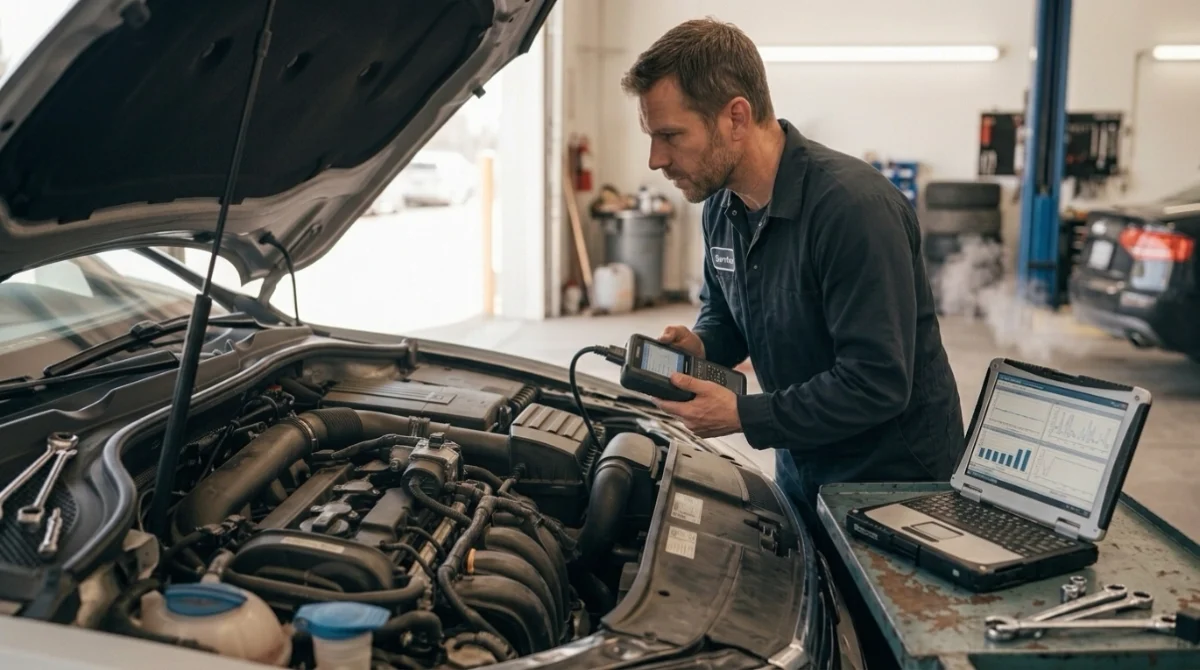
P0411 is fixed when the secondary-air system completes its monitor successfully and the fault does not return. Turning off the Check Engine Light alone does not prove anything.
- Rescan the vehicle: Check stored, pending, and permanent codes.
- Cold-start the engine: Observe the system when its normal operating conditions occur.
- Check pump operation: Confirm that abnormal noises or non-operation are gone.
- Review live data: Use applicable oxygen-sensor or manufacturer-specific data when supported.
- Complete drive cycles: Allow the vehicle to run its emissions self-tests.
- Rescan again: Confirm P0411 does not return as a pending or stored fault.
If P0411 comes back quickly, return to diagnosis. Do not keep clearing it and hoping the monitor eventually passes.
P0411 Frequently Asked Questions
Can I drive with code P0411?
A vehicle with only P0411 may still drive normally because the fault usually concerns the emissions system. However, diagnose it soon. If the Check Engine Light flashes, the engine runs badly, or other serious codes appear, stop treating it as a simple P0411 problem.
Does P0411 mean the secondary air pump is bad?
No. P0411 reports incorrect secondary-air flow, not a confirmed pump failure. A cracked hose, blown fuse, stuck valve, electrical fault, moisture, ice, or carbon restriction can create the same code. Test the pump before replacing it.
Can a blown fuse cause P0411?
Yes. If the fuse supplying the air pump or control circuit opens, the system may produce too little or no airflow. Find out why the fuse failed before installing another one, especially if the replacement blows again.
Can a bad oxygen sensor cause P0411?
It can affect diagnosis on vehicles that use oxygen-sensor response to monitor secondary airflow, but do not replace the sensor without testing it. The computer may simply be reporting that expected exhaust oxygen changes did not occur because the air system itself failed.
Why does P0411 return after replacing the air pump?
The pump may never have been the root cause. Check the valve, hoses, wiring, water intrusion, and restricted passages. A leaking check valve can also expose a replacement pump to moisture and create another failure.
Will disconnecting the battery clear P0411?
Disconnecting power may erase some stored information on certain vehicles, but it does not repair the airflow problem. Permanent emissions codes also cannot simply be erased on demand. The vehicle must confirm that the fault no longer exists.
Do I need a professional scan tool to diagnose P0411?
A basic OBD2 reader can confirm P0411 and may show freeze-frame data. A bidirectional scanner is more useful because it may command the air pump or control valve. Vehicle coverage varies, so confirm those functions before relying on a tool.
Final takeaway: Start with the scan data, hoses, fuse, relay, wiring, and pump operation. Then test the valve and check for blocked passages before replacing expensive components.
If the system requires exhaust-side disassembly, internal passage cleaning, or high-current electrical diagnosis, use the manufacturer procedure or have a qualified repair technician perform that part of the job.
