
P0430 Causes: What Triggers This Bank 2 Catalyst Code?

Quick Answer
The most common P0430 causes are a worn or contaminated Bank 2 catalytic converter, a faulty oxygen sensor, an exhaust leak, misfires, incorrect fuel mixture, oil or coolant contamination, wiring faults, or vehicle-specific PCM software issues. P0430 means catalyst efficiency has dropped below the computer’s expected threshold on Bank 2, but the code alone does not prove the converter needs replacement. An OBD2 trouble code should be used as a diagnostic clue before replacing parts.
Most Likely P0430 Causes
- Worn catalyst: The Bank 2 converter can lose its ability to store oxygen and process exhaust gases.
- O2 sensor problem: A slow, biased, or damaged sensor can make a healthy converter appear inefficient.
- Exhaust leak: Outside air entering near the Bank 2 sensors can distort oxygen readings.
- Engine misfire: Unburned fuel entering the exhaust can overheat and damage the converter.
- Fuel mixture fault: Persistent rich or lean operation can reduce catalyst life or confuse monitoring.
- Software or wiring: Sensor circuits or vehicle-specific PCM calibration can occasionally trigger P0430.
Best First Check
- Read all stored and pending codes, save freeze-frame data, then check Bank 2 for misfires, exhaust leaks, and abnormal oxygen-sensor data before buying a converter.
If your scanner just displayed P0430, don’t order a catalytic converter yet. This code tells you what the engine computer detected, not which component has failed.
My diagnostic approach starts with the causes that can imitate catalyst failure. That order can prevent an expensive parts-replacement mistake.
In This Guide
What Does P0430 Mean?
P0430 means Catalyst System Efficiency Below Threshold, Bank 2. The powertrain control module, or PCM, has determined that the Bank 2 catalytic converter is not performing as efficiently as expected.
Bank 2 is the engine bank that does not contain cylinder 1. Always verify cylinder numbering for your exact engine before identifying the converter or sensors.
How the vehicle detects low catalyst efficiency
A catalytic converter changes harmful exhaust compounds into less harmful emissions. The engine computer evaluates sensor data before and after the converter to judge whether that process is working correctly.
The upstream oxygen or air/fuel sensor helps the PCM monitor combustion. The downstream oxygen sensor provides information about exhaust leaving the converter.
- Healthy converter: Downstream sensor behavior should show that the catalyst is storing and processing oxygen effectively.
- Inefficient converter: Downstream behavior may begin resembling changes seen before the converter.
- False indication: A sensor problem, exhaust leak, or abnormal combustion can distort the comparison.
This is why P0430 should be treated as the beginning of the diagnosis rather than a replacement instruction.
Locksmith’s note: Scanner data is useful, but catalyst diagnosis often requires live-data interpretation and exhaust testing. If you’re unsure what the graphs mean, get the system tested before replacing an expensive component.
What Are the Most Common P0430 Causes?
The converter itself is an important suspect, but it is not the only one. A proper P0430 diagnosis should consider the entire Bank 2 combustion, exhaust, sensor, and control system.
| Possible Cause | Typical Clue | What to Verify |
|---|---|---|
| Degraded catalytic converter | Bank 2 catalyst monitor repeatedly fails | Sensor patterns, exhaust condition, contamination, applicable service information |
| Downstream O2 sensor fault | Slow, biased, stuck, or implausible sensor signal | Live data, wiring, connector condition, manufacturer specifications |
| Exhaust leak | Ticking, hissing, soot, damaged flange or gasket | Manifold, joints, flex sections, converter connections |
| Misfire | P0300 or cylinder-specific P030x codes | Ignition, fuel delivery, air leaks, compression |
| Rich or lean mixture | Fuel-trim codes or unusual fuel-trim data | Fuel trims, MAF data, injectors, intake leaks |
| PCM calibration or wiring | Normal hardware with recurring code | Technical service bulletins, sensor circuits, software updates |
1. A worn or damaged Bank 2 catalytic converter
A deteriorated converter is a major P0430 cause. Its internal catalyst material can lose efficiency with age, heat exposure, contamination, or previous engine problems.
Physical damage can also matter. An internally damaged converter may rattle, while a restricted exhaust can cause noticeable performance problems.
2. A faulty downstream oxygen sensor
The downstream sensor sits after the converter and plays an important role in catalyst monitoring. A sensor that responds incorrectly can give the PCM misleading information.
Don’t replace it merely because P0430 appeared. Sensor wiring, connectors, and live data should support the diagnosis first.
3. An exhaust leak on Bank 2
Leaks can allow outside air into the exhaust stream. That additional oxygen can change sensor readings enough to interfere with catalyst monitoring.
Check for cracks, loose connections, damaged gaskets, rust, and soot marks around the Bank 2 exhaust path.
4. PCM software or calibration
This cause is less universal, but it matters. Vehicle-specific service bulletins sometimes change the correct diagnostic path for P0430.
For example, an Acura service bulletin filed with NHTSA described certain vehicles where PCM software could interpret sensor inputs as catalyst deterioration.
A separate Volkswagen technical service bulletin documented P0420/P0430-related hardware and ECM software changes on affected vehicles.
Pro tip: Check technical service information using your exact year, make, model, engine, and VIN. A bulletin for another vehicle is not evidence that your car has the same problem.
Is P0430 a Bad Catalytic Converter or O2 Sensor?
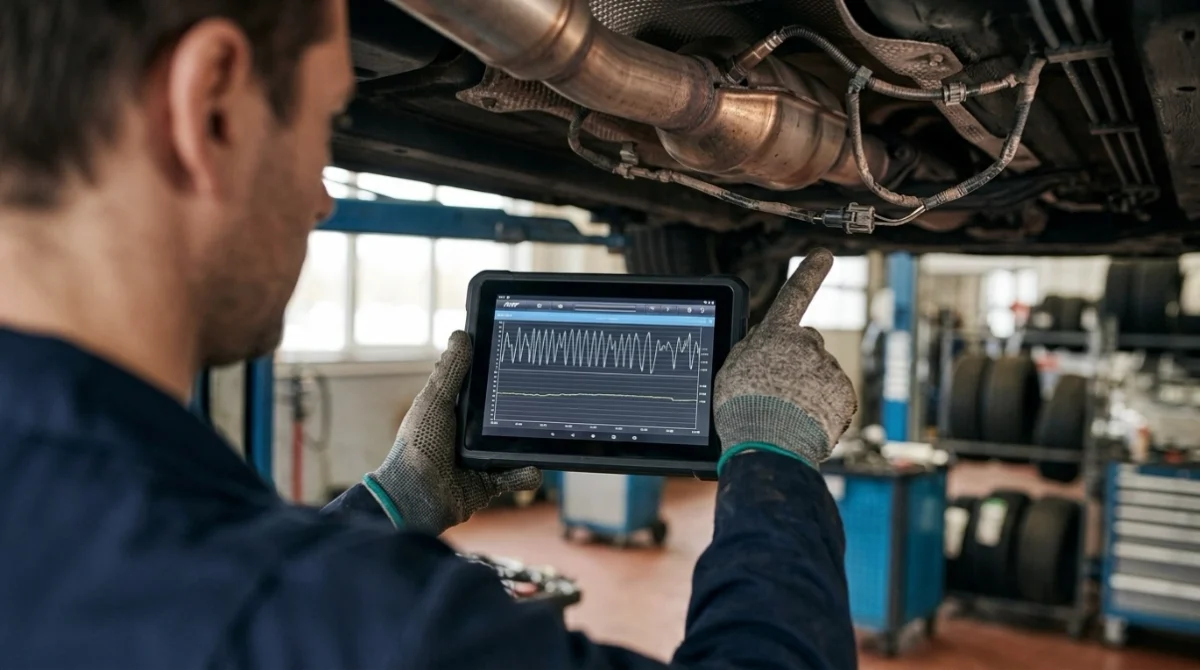
It can be either, but the code does not identify which component failed. You need evidence from sensor data, exhaust inspection, related codes, and vehicle-specific service information.
This distinction matters because converter replacement can be expensive. As of 2026, published national estimates for catalytic-converter replacement can exceed $2,000 on many vehicles, while the actual cost varies widely by model, region, converter design, and parts choice.
Clues that point toward the converter
- The engine has no unresolved misfire or fuel-mixture faults.
- Bank 2 has no exhaust leak affecting sensor readings.
- Sensor circuits test correctly.
- Live data consistently supports poor catalyst oxygen-storage performance.
- The converter has known contamination, heat damage, or physical deterioration.
Clues that point toward an O2 sensor or circuit
- The downstream reading is implausibly fixed or erratic.
- A sensor-specific code appears with P0430.
- The connector shows corrosion, heat damage, or loose terminals.
- Wiring has contacted hot exhaust components.
- Testing shows the sensor response does not meet manufacturer specifications.
A new converter will not repair a damaged sensor circuit. A new oxygen sensor will not restore a chemically exhausted converter.
Testing separates those situations.
Locksmith’s note: Don’t choose a catalytic converter from a generic code description alone. Emissions parts and sensor specifications can vary by VIN, engine family, and market.
Can Engine Problems Cause P0430?
Yes. Problems occurring before the catalytic converter can damage it or make its efficiency monitor fail.
This is one of the most important parts of diagnosing recurring P0430.
Misfires
A misfire means one or more cylinders are not burning the air-fuel mixture correctly. Unburned fuel can then enter the exhaust system.
That extra fuel can create extreme heat inside the catalytic converter. Persistent misfires should therefore be diagnosed before condemning or replacing the catalyst.
- P0300 indicates random or multiple-cylinder misfires.
- P0301 through P0308 can identify a specific cylinder on applicable engines.
- Ignition, injector, air, or mechanical problems can all cause misfires.
Rich fuel mixture
A rich condition means the engine receives more fuel than it can burn efficiently. Excess fuel can increase converter temperature and shorten catalyst life.
Potential underlying problems include leaking injectors, incorrect sensor information, excessive fuel pressure, or other fuel-control faults.
Lean operation and air-metering faults
A lean condition means combustion has too much air relative to fuel. Vacuum leaks, incorrect mass-airflow readings, fuel-delivery problems, or sensor faults can contribute.
Check fuel-trim information rather than guessing from P0430 alone.
Oil or coolant entering the combustion chamber
Engine oil or coolant that reaches the exhaust can contaminate the catalyst. Replacing the converter without correcting the source can lead to another failure.
Watch for excessive oil consumption, unusual exhaust smoke, coolant loss, or other supporting symptoms.
Section Takeaway: A failed converter may be the result, not the original problem. Fix misfires, mixture faults, or fluid contamination before installing another converter.
How Do You Find the Actual Cause of P0430?
The safest diagnostic order starts with scanner evidence and simple inspections. Only move toward expensive parts after cheaper or upstream causes have been ruled out.
- Confirm P0430. Read stored, pending, and permanent codes with an OBD2 scanner.
- Save freeze-frame data. Note engine load, temperature, RPM, speed, and other available values from when the fault was recorded.
- Check related codes. Misfire, fuel-trim, oxygen-sensor, and air-metering codes can change the diagnosis.
- Confirm Bank 2. Use reliable service information to locate cylinder 1 and identify the opposite bank.
- Inspect for exhaust leaks. Look around the manifold, flanges, gaskets, converter joints, and nearby pipes.
- Inspect sensor wiring. Check Bank 2 sensor connectors and harnesses for heat, corrosion, rubbing, or broken insulation.
- Review live data. Compare upstream and downstream sensor behavior when the engine and catalyst are at the required operating conditions.
- Check manufacturer information. Look for applicable technical service bulletins or calibration updates before replacing expensive hardware.
- Confirm catalyst failure. Use the manufacturer’s diagnostic procedure or qualified professional testing before ordering the converter.
Don’t clear the code too early
Freeze-frame and pending-code information can help explain why the PCM set P0430. Clearing everything immediately can erase useful clues.
Save the information first.
Don’t diagnose from one oxygen-sensor number
Sensor designs differ between vehicles. Some use conventional narrow-band oxygen sensors, while others use wide-range air/fuel sensors before the converter.
Follow specifications for your exact engine rather than applying a universal voltage rule.
Check for manufacturer-specific guidance
P0430 is a generic OBD-II code, but the correct repair path can still be vehicle-specific. The NHTSA vehicle information system can help owners research recalls and manufacturer communications associated with their vehicle.
The existence of a service bulletin does not automatically mean it applies to your VIN. Confirm applicability before following its repair instructions.
Pro tip: Exhaust components become extremely hot. Leave hands-on exhaust inspection or sensor removal to a qualified technician if you lack the correct equipment and safe working conditions.
Section Takeaway: Diagnose P0430 in order: codes, freeze-frame data, related engine faults, Bank 2 location, leaks, wiring, sensor data, service information, then the converter.
P0430 Causes FAQ
What is the most common cause of P0430?
A degraded Bank 2 catalytic converter is a major cause, but P0430 alone cannot confirm converter failure. Exhaust leaks, oxygen-sensor faults, wiring problems, misfires, fuel-mixture issues, contamination, and vehicle-specific software should be ruled out before replacement.
Can a bad O2 sensor cause P0430?
Yes. A faulty Bank 2 oxygen sensor or its wiring can provide misleading information that affects catalyst monitoring. Verify the sensor with live data and manufacturer specifications instead of replacing it solely because P0430 is stored.
Can an exhaust leak cause a P0430 code?
Yes. A leak around the Bank 2 exhaust manifold, joints, flanges, or sensor area can introduce outside air and distort oxygen readings. Look for soot, ticking noises, corrosion, damaged gaskets, and loose connections.
Can spark plugs cause P0430?
Worn spark plugs do not normally trigger P0430 directly. However, a plug that causes persistent misfires can send unburned fuel into the exhaust, overheat the catalytic converter, and eventually contribute to catalyst failure.
Can a rich fuel mixture cause P0430?
Yes. Persistent rich operation can increase unburned fuel entering the exhaust and expose the converter to excessive heat. Diagnose fuel-trim problems, injectors, air-metering faults, and related trouble codes before replacing the Bank 2 converter.
Can you drive with P0430?
A vehicle with only a steady check-engine light may still appear to drive normally, but the fault should be diagnosed soon. If the check-engine light begins flashing, AAA advises reaching a safe location because the vehicle requires immediate service.
Will clearing P0430 fix the problem?
No. Clearing the code only removes stored diagnostic information. If the underlying condition remains, the PCM can set P0430 again after the required catalyst-monitoring conditions occur.
P0430 does not mean you should automatically buy a catalytic converter. Start by confirming what Bank 2 is doing and why the PCM thinks catalyst efficiency has dropped.
Read the full scan, repair any upstream engine problems, inspect the exhaust, and test the sensor system first. That evidence gives you a much better chance of fixing the actual cause instead of the most expensive suspect.
