
P0440 Repair Cost: What You’ll Pay to Fix It in 2026

Quick Answer
P0440 repair cost can range from almost nothing for a loose gas cap to several hundred dollars when an EVAP valve, vapor line, charcoal canister, or another component needs repair. P0440 only tells you that the evaporative emissions system failed a self-check, so use the code as a diagnostic starting point rather than a reason to replace parts. You can learn how diagnostic trouble codes work with the AAA OBD code translator.
Typical P0440 Cost Possibilities
- Loose fuel cap: Tightening it may solve the problem without buying a part.
- Replacement gas cap: Usually one of the least expensive possible repairs.
- EVAP hose leak: Cost depends heavily on where the damaged vapor line is located.
- Purge or vent valve: Parts and labor can move the repair into the low hundreds.
- Charcoal canister: This can be substantially more expensive than a simple cap or hose repair.
- Professional diagnosis: A smoke test or system test may add diagnostic labor before repairs begin.
Before Paying for Parts
- Check the fuel cap and visible EVAP hoses first, then diagnose the system before approving expensive component replacement.
A P0440 code often creates more worry than the actual repair deserves. I’ve seen drivers expect a major engine bill when the real problem was an EVAP leak or a fuel cap that simply wasn’t sealing.
The difficult part is that P0440 doesn’t name the failed component. This guide explains realistic 2026 P0440 repair costs, what changes the price, and how to avoid paying for unnecessary parts.
In This Guide
How Much Does P0440 Cost to Fix?
A P0440 repair can cost very little or several hundred dollars because the code describes an EVAP system malfunction rather than one failed component. The final bill depends on what testing finds.
As of 2026, a reasonable budgeting approach is to think in repair categories instead of expecting one universal P0440 price.
| Possible Repair | Typical Cost Range | Why Cost Varies |
|---|---|---|
| Tighten fuel cap | $0 | No parts are needed if the cap was simply loose. |
| Replace fuel cap | About $15–$60 | OEM and aftermarket cap pricing differs by vehicle. |
| Repair EVAP hose or vapor line | About $50–$200+ | Access and the amount of damaged line affect labor. |
| Replace purge or vent valve | About $80–$300+ | Valve price and installation difficulty differ by model. |
| Replace charcoal canister | About $200–$600+ | Canister assemblies and labor vary considerably. |
| Professional EVAP diagnosis | Often $75–$200+ | Shop labor rates and testing procedures vary by region. |
These figures are budgeting ranges, not quotes. Your make, model, year, location, labor rate, and actual failure can move the number higher or lower.
Diagnostic charges also deserve attention. Some repair facilities apply their testing fee toward the repair, while others bill diagnosis separately.
Locksmith’s note: ask for the confirmed failure before approving EVAP parts. P0440 alone isn’t proof that a specific valve, canister, sensor, or gas cap has failed.
Section Takeaway: The P0440 code itself doesn’t determine your repair bill. The actual leak or failed EVAP component does.
What Does the P0440 Code Mean?
P0440 generally means the vehicle’s computer detected a malfunction in the evaporative emission control system. It is a broad OBD-II powertrain code.
The EVAP system captures gasoline vapors instead of allowing them to escape directly into the atmosphere. The system stores and later routes those vapors into the engine under controlled conditions.
What parts make up the EVAP system?
The exact design changes between vehicles, but common EVAP components include:
- Fuel cap: Seals the fuel filler opening on vehicles that use a conventional cap.
- Vapor hoses: Carry fuel vapors through the sealed system.
- Charcoal canister: Stores fuel vapors until the engine can consume them.
- Purge valve: Controls vapor flow toward the engine.
- Vent valve: Helps control airflow and system sealing during testing.
- Fuel-tank pressure sensor: On equipped vehicles, reports pressure or vacuum changes to the control module.
A diagnostic trouble code is a clue rather than an automatic parts order. AAA likewise explains that OBD codes help technicians identify possible causes rather than proving which component failed.
You can review general OBD guidance through AAA’s automotive repair resources.
Is P0440 the same as P0442 or P0455?
No. P0440 is generally broader than codes that describe a particular EVAP leak condition.
Your scanner may also find companion codes. Record every stored and pending code before clearing anything because those codes can narrow the diagnostic path.
Pro tip: save the freeze-frame information and all related codes before clearing the check engine light. That information can make later diagnosis easier.
What Causes P0440 and How Does Each Cause Affect Cost?
The most cost-effective P0440 diagnosis starts with simple sealing problems and moves toward harder-to-test components. Replacing expensive parts first is usually poor troubleshooting.
1. Loose or damaged fuel cap
A loose cap is one of the first things worth checking because it can prevent the EVAP system from sealing correctly. A damaged gasket can create the same problem.
- Remove the cap.
- Check its seal for obvious cracks or damage.
- Inspect the filler-neck sealing surface.
- Reinstall the cap correctly.
- Replace it only when damage or poor sealing justifies replacement.
AAA also identifies tightening or replacing a gas cap as a possible minor response to a check engine light related to the emissions system.
2. Cracked or disconnected EVAP hose
Vapor lines can crack, rub through, loosen, or become damaged with age. Location matters because some hoses are much easier to reach than others.
A small accessible hose repair may stay inexpensive. A line routed above the fuel tank can require much more labor.
3. Faulty purge valve
The purge valve controls when stored fuel vapor enters the engine. A valve that sticks or fails electrically can interfere with an EVAP self-test.
Don’t replace it just because P0440 appears. A technician can evaluate its electrical operation and whether it seals or flows as intended.
4. Faulty vent valve
The EVAP vent valve is another common diagnostic target. Depending on the design, it may sit near the canister where dirt, moisture, and road debris can affect it.
Testing should confirm whether the valve is mechanically stuck, leaking, electrically faulty, or working normally.
5. Damaged charcoal canister
The charcoal canister stores gasoline vapor. Physical damage, contamination, or another confirmed failure can make replacement necessary.
This is where guessing becomes expensive. A canister can cost substantially more than a gas cap or simple vapor-line repair.
6. Pressure-sensor, wiring, or less common system faults
Some vehicles use a fuel-tank pressure sensor to help monitor EVAP operation. Sensor readings, connectors, wiring, and vehicle-specific leak-detection hardware can also require testing.
That is one reason P0440 repair estimates vary so widely. Two vehicles displaying the same code can need completely different repairs.
Pro tip: don’t approve a charcoal canister, pressure sensor, purge valve, or vent valve based only on the code description. Ask what test confirmed the part failed.
Section Takeaway: Start with the inexpensive sealing checks, but don’t assume the fuel cap is always responsible. Confirm the leak or failed component before spending money.
How Is P0440 Diagnosed Before Repair?
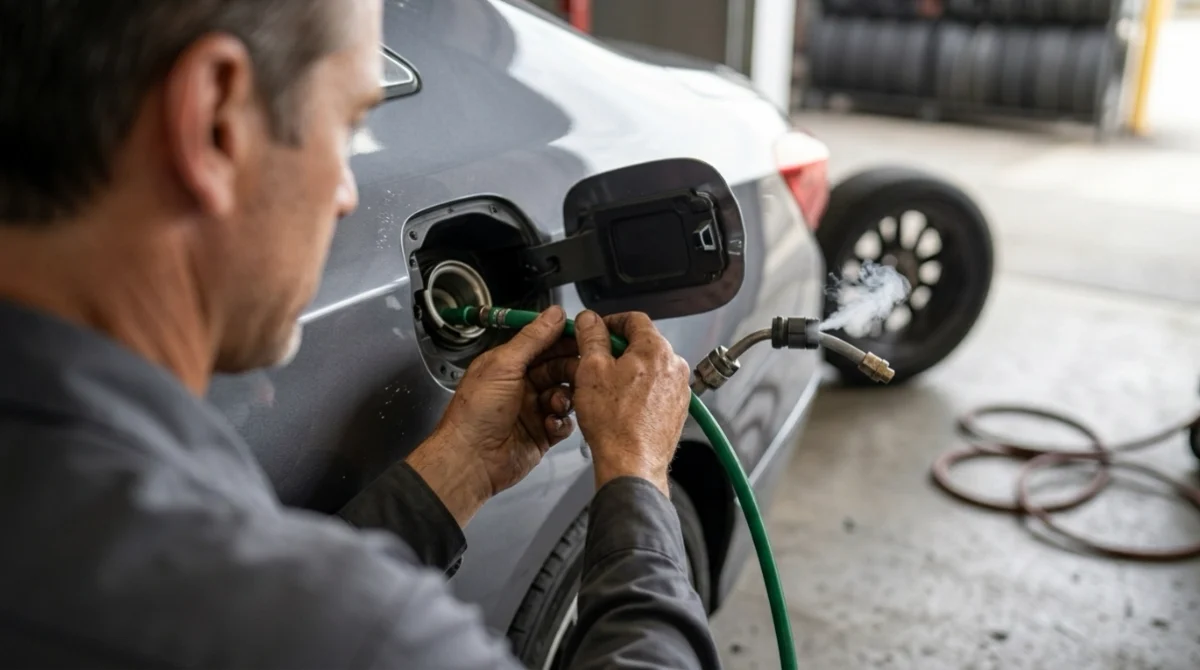
A good P0440 diagnosis confirms the code, checks simple causes, and then tests the EVAP system for leaks or component faults. This keeps the repair bill focused on the actual problem.
Step 1: Scan all stored and pending codes
Connect an OBD2 scanner and record P0440 plus any companion trouble codes. Don’t erase the information immediately.
A basic reader can retrieve diagnostic trouble codes. More capable scanners may display useful data depending on the vehicle and tool.
Step 2: Inspect the fuel cap and filler area
Look for an improperly installed cap, damaged seal, dirt, corrosion, or obvious filler-neck problems. This check is quick and costs nothing.
Step 3: Inspect accessible EVAP lines
Look for disconnected fittings, cracked rubber, damaged plastic lines, and obvious physical damage. Avoid damaging brittle hoses while checking them.
Step 4: Test purge and vent operation
This is where vehicle-specific service information matters. Electrical tests and valve checks should follow the manufacturer’s procedure.
A generic P0440 description cannot tell you the correct terminal values, commands, or procedures for every vehicle.
Step 5: Perform an EVAP smoke or leak test when needed
A professional smoke test can introduce diagnostic vapor into the EVAP system under controlled conditions. Escaping smoke can reveal leaks that aren’t visible during a basic inspection.
Shops may also use a bidirectional scan tool or other vehicle-specific equipment to command valves during testing.
Step 6: Verify the repair
After correcting the confirmed problem, codes can be cleared according to proper diagnostic practice. The vehicle must then complete its required monitoring conditions.
Don’t assume success only because the light stays off for five minutes. EVAP monitors often need specific operating conditions before the computer runs its self-test again.
For broader guidance on warning lights, AAA recommends diagnosing the root cause rather than simply replacing a part associated with a code. See its check engine light guidance.
Locksmith’s note: EVAP diagnosis deals with fuel vapors. If you’re unsure how to test the system safely, use a qualified repair facility instead of improvising a pressure or smoke test.
Section Takeaway: Proper diagnosis can cost money, but it can save far more than replacing a purge valve, vent valve, and canister on guesses.
Can You Fix P0440 Yourself?
You may be able to handle the first P0440 checks yourself. Deeper EVAP diagnosis usually needs more knowledge and equipment.
Reasonable DIY checks
- Read and record the diagnostic codes.
- Check whether the fuel cap is installed correctly.
- Inspect the cap seal for obvious damage.
- Look at accessible EVAP hoses for visible cracks or disconnections.
- Check for damaged electrical connectors you can safely see.
Those checks can identify obvious faults without committing you to expensive parts.
When should you use a repair shop?
Professional diagnosis makes sense when the code returns and no simple defect is visible. It is also wise when components require removal or the fuel tank area must be accessed.
A shop may be the better choice when you need:
- An EVAP smoke test.
- Bidirectional control of purge or vent valves.
- Electrical circuit testing.
- Fuel-tank pressure data interpretation.
- Access to vehicle-specific service information.
- Removal of difficult canister, valve, or tank-area components.
If you’re choosing a shop, the AAA Approved Auto Repair locator is one established resource for finding repair facilities.
Should you buy parts based on the scanner description?
No. An OBD2 scanner identifying P0440 doesn’t mean it has diagnosed a specific part.
This distinction matters. I’ve seen customers arrive after replacing the most obvious EVAP component, only to discover that a small leak elsewhere caused the original code.
A scanner tells you what system complained. Testing tells you why.
Pro tip: put your first dollars into diagnosis when the simple visual checks don’t reveal anything. Parts-swapping can quickly cost more than professional testing.
Can You Drive With a P0440 Code?
A vehicle with P0440 often continues to drive normally because the fault concerns the evaporative emissions system. However, you shouldn’t automatically assume every check engine light is harmless.
Confirm which codes are present and pay attention to how the vehicle behaves.
Get prompt help if something feels different
Seek professional attention sooner when you notice more than an isolated P0440 code.
- A strong or persistent fuel smell.
- Visible fuel leakage.
- Difficult starting or unusual running behavior.
- Several additional diagnostic trouble codes.
- A flashing rather than steadily illuminated check engine light.
AAA advises drivers to treat a flashing check engine light as a more urgent condition than a steady light. Don’t assume P0440 is responsible for every warning or symptom present.
The National Highway Traffic Safety Administration also documents that onboard diagnostics monitor emission-related systems, including evaporative-system leaks. You can review federal vehicle information through NHTSA.
Will P0440 cause an emissions inspection failure?
A stored emissions-related fault or incomplete readiness monitor can create inspection problems in areas using OBD-based emissions testing. Requirements vary by state and jurisdiction.
Fix the underlying problem before an inspection instead of clearing the code immediately beforehand. Clearing codes can also reset readiness monitors.
Locksmith’s note: if you smell raw fuel, don’t treat it as just an emissions-light inconvenience. Have the vehicle inspected for a possible fuel or vapor leak.
P0440 Repair Cost FAQ
What is the average P0440 repair cost?
There isn’t one dependable average because P0440 can result from several different EVAP faults. A loose gas cap may cost nothing to correct, while valve, hose, canister, sensor, or difficult leak repairs can cost hundreds of dollars.
Can a loose gas cap cause P0440?
Yes. An improperly sealing fuel cap can prevent the EVAP system from holding the conditions required for its self-test. Check the cap and its sealing surface before assuming a more expensive component has failed.
How much does an EVAP smoke test cost?
Shop pricing varies by location and diagnostic labor rate. A professional EVAP diagnosis commonly falls around the high double digits to low hundreds, although complicated testing can cost more. Ask whether the diagnostic charge applies toward the final repair.
Can I clear P0440 with an OBD2 scanner?
Many OBD2 scanners can clear the code, but clearing P0440 doesn’t repair the fault. If the EVAP problem remains, the code can return after the vehicle completes another applicable system test.
Will replacing the gas cap always fix P0440?
No. A gas cap is only one possible source. Leaking vapor lines, purge or vent valves, charcoal canisters, sensors, wiring, filler-neck problems, or other vehicle-specific EVAP faults can also trigger the code.
Is P0440 expensive to fix?
Not necessarily. Some P0440 repairs are inexpensive, especially when the problem is a loose cap or simple hose issue. Costs rise when diagnosis is difficult or an expensive component requires replacement.
Should I replace the purge valve when I get P0440?
Not without testing it first. P0440 doesn’t prove that the purge valve failed. Confirm the valve’s operation and inspect the rest of the EVAP system before buying a replacement.
What Should You Do Next?
Start with the cheapest P0440 checks: record every code, inspect the fuel cap, and look for obvious EVAP hose damage. If nothing stands out, have the system properly diagnosed rather than guessing at parts.
The difference between a small repair and an expensive P0440 bill often comes down to finding the actual leak first. Diagnose it, verify it, then repair only what failed.
