
10 Best OBD2 Scanners With ECU Coding in 2026

Modern engine control units store far more than fuel maps and ignition timing. They manage adaptive settings, module configurations, and factory options that used to require a trip to the dealer. A scanner with real ECU coding lets you activate hidden features, match replacement parts to the vehicle’s computer, and calibrate systems after repairs, work that generic code readers simply can’t touch.
Bidirectional control separates a serious diagnostic tool from a basic code reader. Instead of just reading fault codes, these scanners let you command components directly: fire an injector, cycle a cooling fan, trigger an ABS pump. That active testing confirms whether a part has actually failed before you spend money replacing it. Combine that with topology mapping (a visual layout of every module and how they communicate) and you get a genuine shortcut to finding wiring faults and dead modules.
Not every “ECU coding” scanner does the same job, and matching capability to your vehicle and repair goals matters more than chasing the highest spec sheet. A BMW owner needs different coding depth than a fleet manager running mixed-brand trucks. Compatibility, update costs, and gateway access requirements should drive the decision as much as the feature list.
Best overall bidirectional scanner: LAUNCH X431 CRP919EBT
Best AI-assisted diagnostics with topology mapping: XTOOL D8S
Best dedicated BMW/Mini coding tool: XTOOL IP500 for BMW
Best for J2534 pass-thru and VAG coding: TOPDON ONE Plus
Best value full-system scanner with lifetime updates: FOXWELL NT919BT
Best budget bidirectional scanner for DIYers: XTOOL D7
Best pocket-sized smartphone-based scanner: Thinkdiag2
Best simple BimmerCode adapter for BMW coding: OBDLink CX
Best affordable all-system scanner with lifetime updates: ANCEL DS200
Best for diesel and heavy-duty truck diagnostics: ANCEL X7HD PRO
LAUNCH X431 CRP919EBT
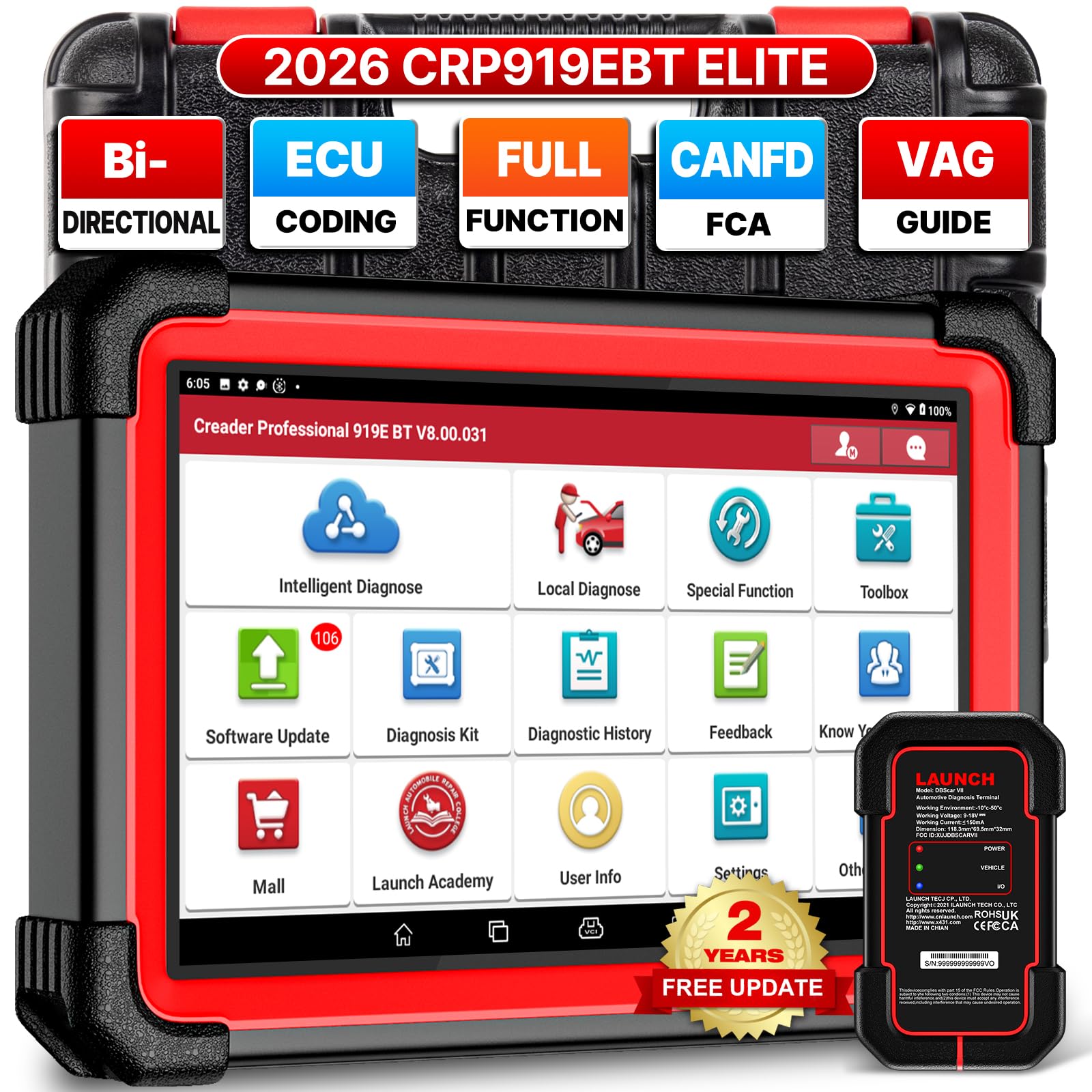
Buy this if you want a wireless, dealer-style tablet that handles ECU coding, calibration, and bidirectional control across 160+ makes without tethering to the car.
Pros
- CAN FD and DoIP support for late-model GM and BMW E/F chassis
- Bidirectional control across ABS, windows, wipers, and more with 4,000+ active tests
- Fast Android 10 hardware with a 7-inch display and long battery life
Cons
- Some owners report costly annual subscription renewal after the free update period
- DoIP requires a separate adapter purchase
- Occasional registration issues reported by early buyers
The DBSCAR VII connector runs Bluetooth and USB, giving techs freedom to walk the vehicle during active tests. ECU coding and adaptation functions reach dealer-level depth for common resets like steering angle calibration and injector coding. The 4GB/64GB Android platform keeps multitasking smooth, and the built-in browser and CSV export make report-sharing simple for shop use.
XTOOL D8S
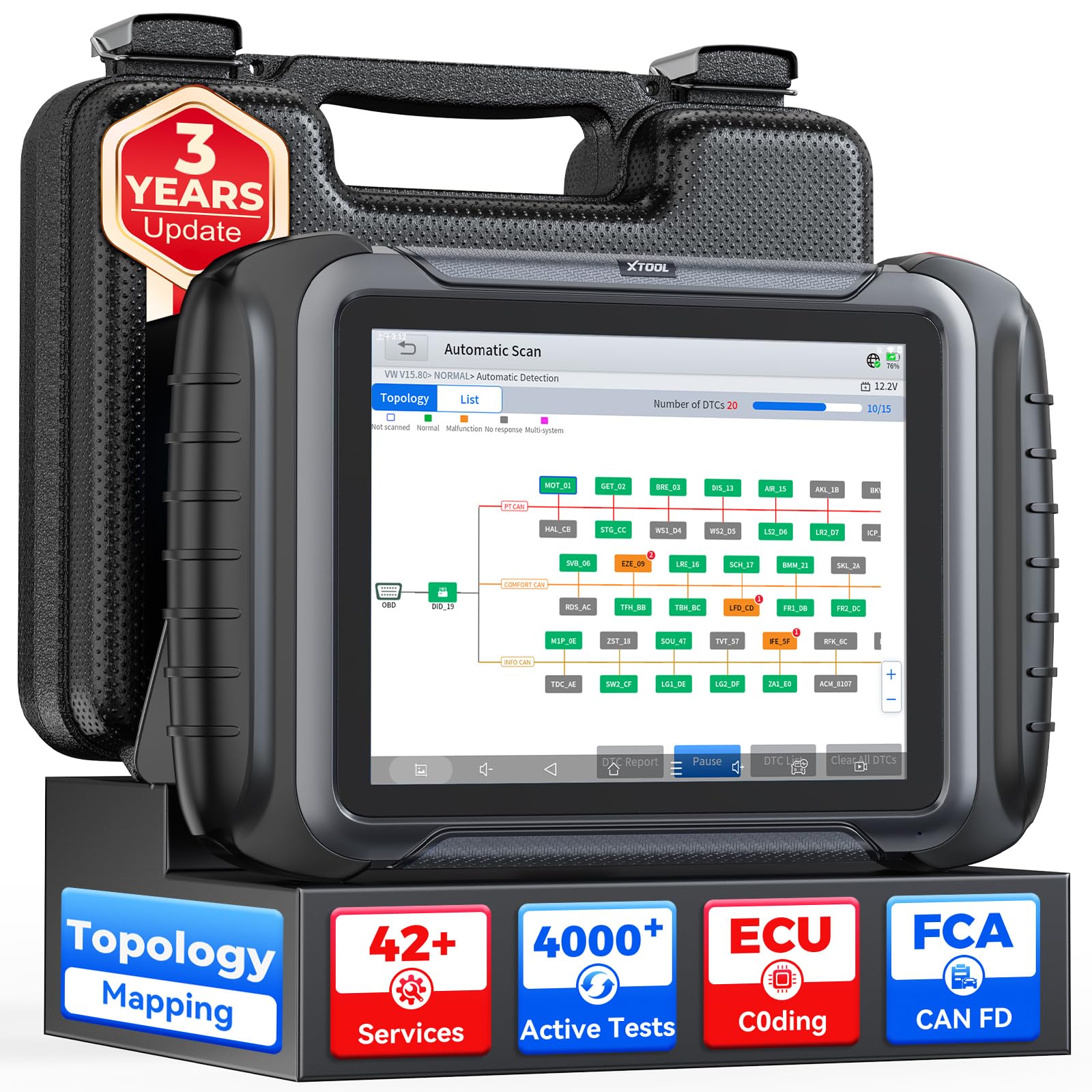
Buy this if topology mapping and AI-assisted fault analysis matter more to your workflow than pure ECU coding depth.
Pros
- Topology map shows which modules are online, saving time on network faults
- AI diagnosis suggests likely repairs directly from fault codes
- PMI support for Ford/Lincoln and Mazda restores ECU data after component swaps
Cons
- ECU coding limited mainly to BMW, Mercedes, and select brands with hidden feature activation
- Wired VCI connection instead of fully wireless
- Advertised RAM has drawn scrutiny in some user reports
The D8S earns its reputation as a diagnostic workhorse rather than a coding specialist. Topology mapping is genuinely rare at this price and saves real diagnostic time chasing CAN network faults across multiple modules. Active tests cover a wide range of components, and the 8-inch screen with 5,000mAh battery holds up through full shop days.
XTOOL IP500 for BMW
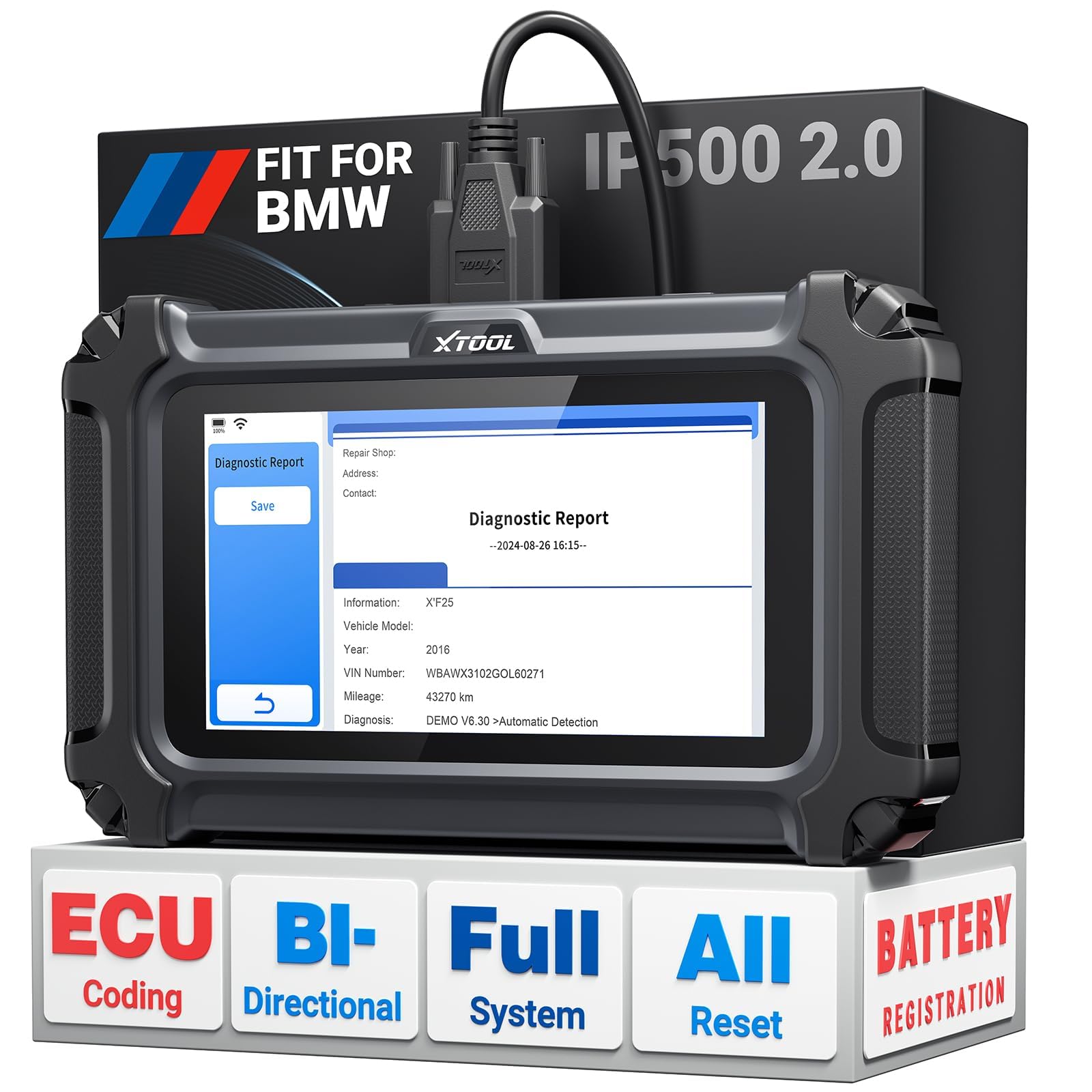
Buy this if you work exclusively on BMW, Mini, or Rolls-Royce and want deep offline coding without paying for multi-brand coverage you’ll never use.
Pros
- Offline ECU coding activates hidden factory features like folding mirrors and ambient lighting
- Battery registration handles F/G-chassis AGM and lithium swaps correctly
- Lifetime free WiFi updates with no subscription
Cons
- Vehicle-specific: no value for non-BMW-group vehicles
- Some owners report inconsistent results on relearn functions like crankshaft sensor procedures
- Wired connection only, smaller 5.45-inch screen
This is a specialist tool, and that focus is its strength. Coding functions dig into DSC, FRM, and CAS modules that generic multi-brand scanners often can’t reach on BMW platforms. For shops running mixed fleets, it works best as a second unit alongside a broader scanner, not a replacement.
TOPDON ONE Plus

Buy this if you need J2534 pass-thru programming or VAG-specific guided coding alongside standard bidirectional diagnostics.
Pros
- J2534 Pass-Thru support enables true ECU programming for BMW and VW across four core systems
- VAG guidance function walks through VW/Audi/Skoda procedures step by step
- Includes bonus TopScan Master and BTMobile ProS battery tester apps
Cons
- Free updates run 2 years, then software locks without renewal per user reports
- Large 10.1-inch tablet adds bulk for mobile techs
- Coding depth varies significantly by brand and model year
ECU programming through J2534 pass-thru is a genuine step beyond coding: it can flash blank control units and restore lost software, tasks normally reserved for dealer-level tools. The TopFix AI assistant pulls wiring diagrams alongside code explanations, which speeds up unfamiliar repairs. Reviewers note a learning curve worth budgeting time for.
FOXWELL NT919BT
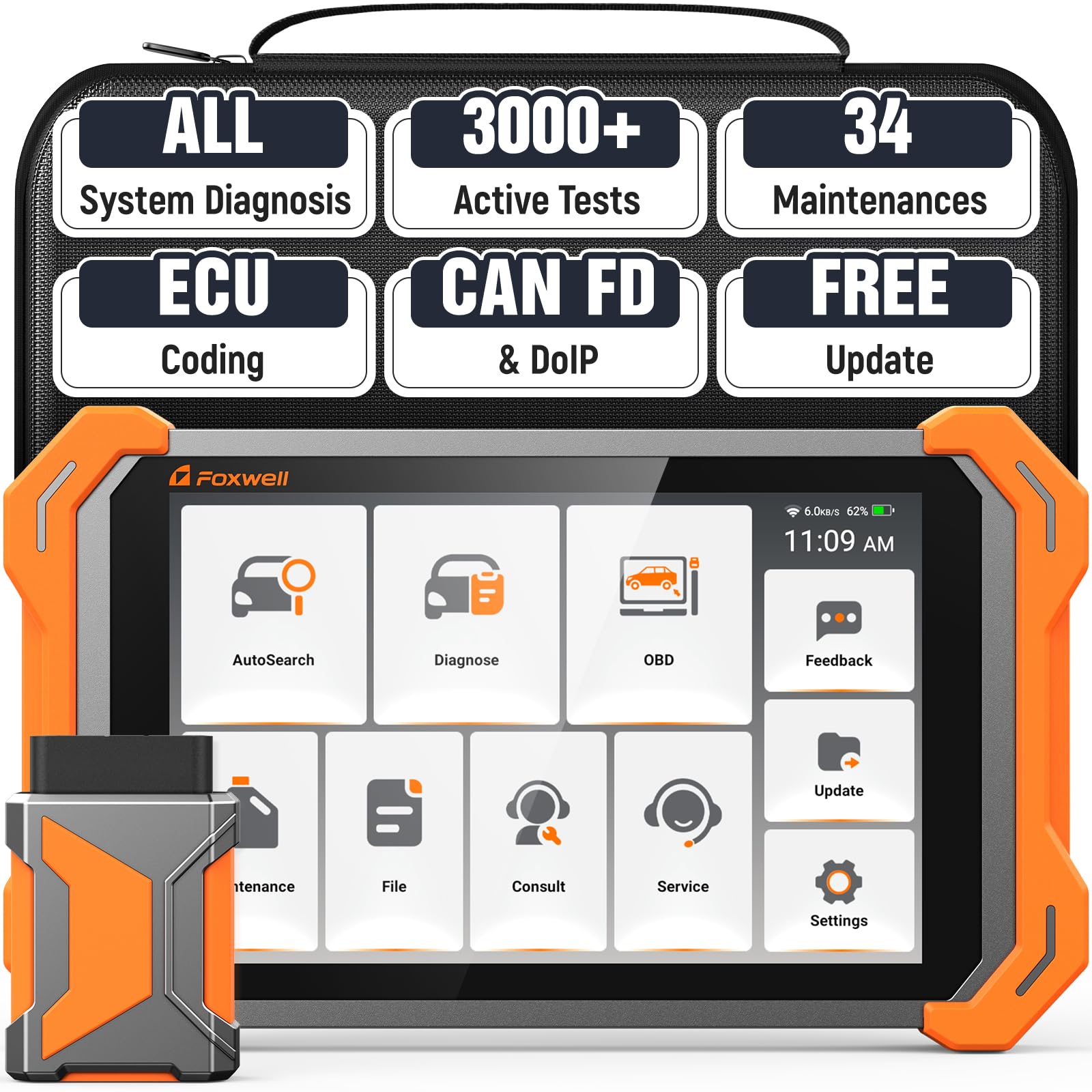
Buy this if lifetime free updates and strong build quality matter more than chasing the newest feature checklist.
Pros
- Lifetime free software updates with zero subscription cost
- Offline ECU coding works without an internet connection
- 3,000+ active tests and 34 maintenance resets across 140+ brands
Cons
- FCA gateway access requires a separate paid in-app registration
- Coding depth varies by model and isn’t dealer-equivalent on every vehicle
- Only a 12-month manufacturer warranty
Build quality stands out here: metal casing, protective bumpers, and a responsive 8-inch screen that feels closer to a professional tool than its price suggests. Offline coding covers common comfort feature toggles and module matching. For owners tired of recurring software fees, the lifetime update policy alone justifies a look.
XTOOL D7
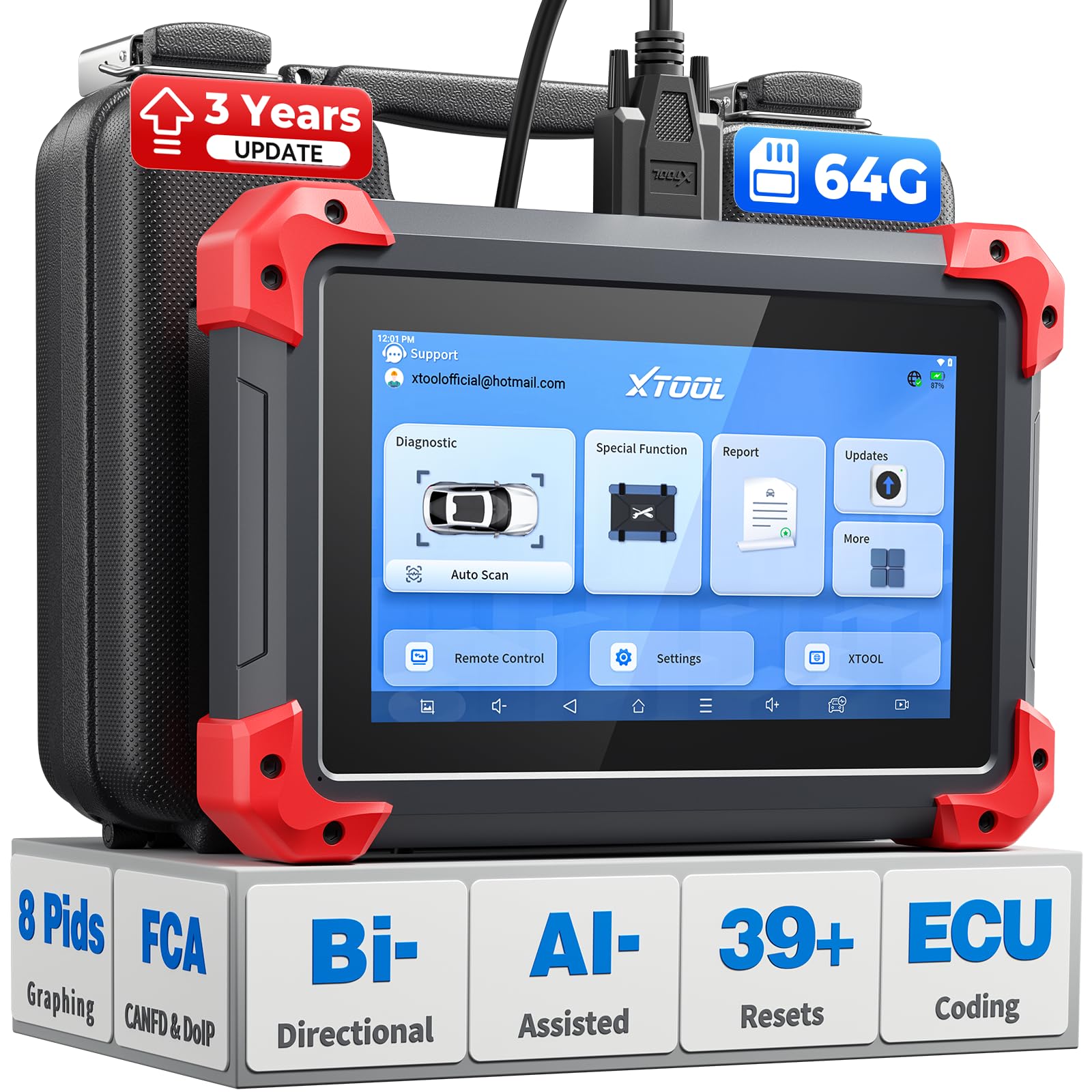
Buy this if you want a proven bidirectional scanner at a lower entry price without the topology mapping or coding depth of pricier siblings.
Pros
- True bidirectional control with 4,000+ active tests and bidirectional PIDs
- 39+ special functions including crank sensor relearn and VIN write
- 3 years of free updates, then continued use of last installed software
Cons
- No topology mapping or advanced ECU coding found on the D8S
- Coverage gaps reported for some Indian and select Toyota/Lexus models
- Update renewal after year three runs $99/year for new coverage
The D7 has built a large user base for good reason: it delivers genuine bidirectional testing, not just resets, at a price that undercuts most full-featured competitors. Battery voltage readouts before testing help prevent low-voltage diagnostic errors. It’s a strong first serious scanner for DIYers stepping up from basic code readers.
Thinkdiag2

Buy this if you want a pocketable Bluetooth dongle that runs full diagnostics through your own phone instead of carrying a dedicated tablet.
Pros
- Compact Bluetooth device pairs with your existing iOS or Android phone
- CAN-FD protocol support at a price point where competitors omit it
- All-system diagnostics with 15+ resets and FCA AutoAuth access
Cons
- 1-year included update period, renewal costs vary by promotion
- App-based interface isn’t ideal on tablets per manufacturer guidance
- Coding functions are more limited than dedicated tablet-based tools
Several long-time scanner owners describe this as competitive with units costing several times more, particularly for active tests and special functions. The tradeoff is screen real estate: everything runs through your phone’s display and battery. For techs who already carry a phone mount in the shop, that’s rarely a problem.
OBDLink CX

Buy this if you own a BMW or Mini and want the most reliable adapter for coding through the BimmerCode app.
Pros
- Purpose-built and recommended for full BimmerCode compatibility
- Overvoltage protection and sleep mode allow permanent installation
- Strong, stable Bluetooth 5.1 connection that avoids dropped coding sessions
Cons
- Requires purchasing BimmerCode (or similar app) separately
- No standalone screen; entirely app-dependent
- Limited to what BimmerCode/BimmerLink support on each chassis
This is the adapter enthusiast BMW forums point to first, and the review pattern backs that up: consistent praise for connection stability during coding, which matters because a dropped connection mid-code can cause real problems. It won’t run bidirectional active tests like a full scan tool. For BMW-specific coding on a budget, it’s the most focused option available.
ANCEL DS200
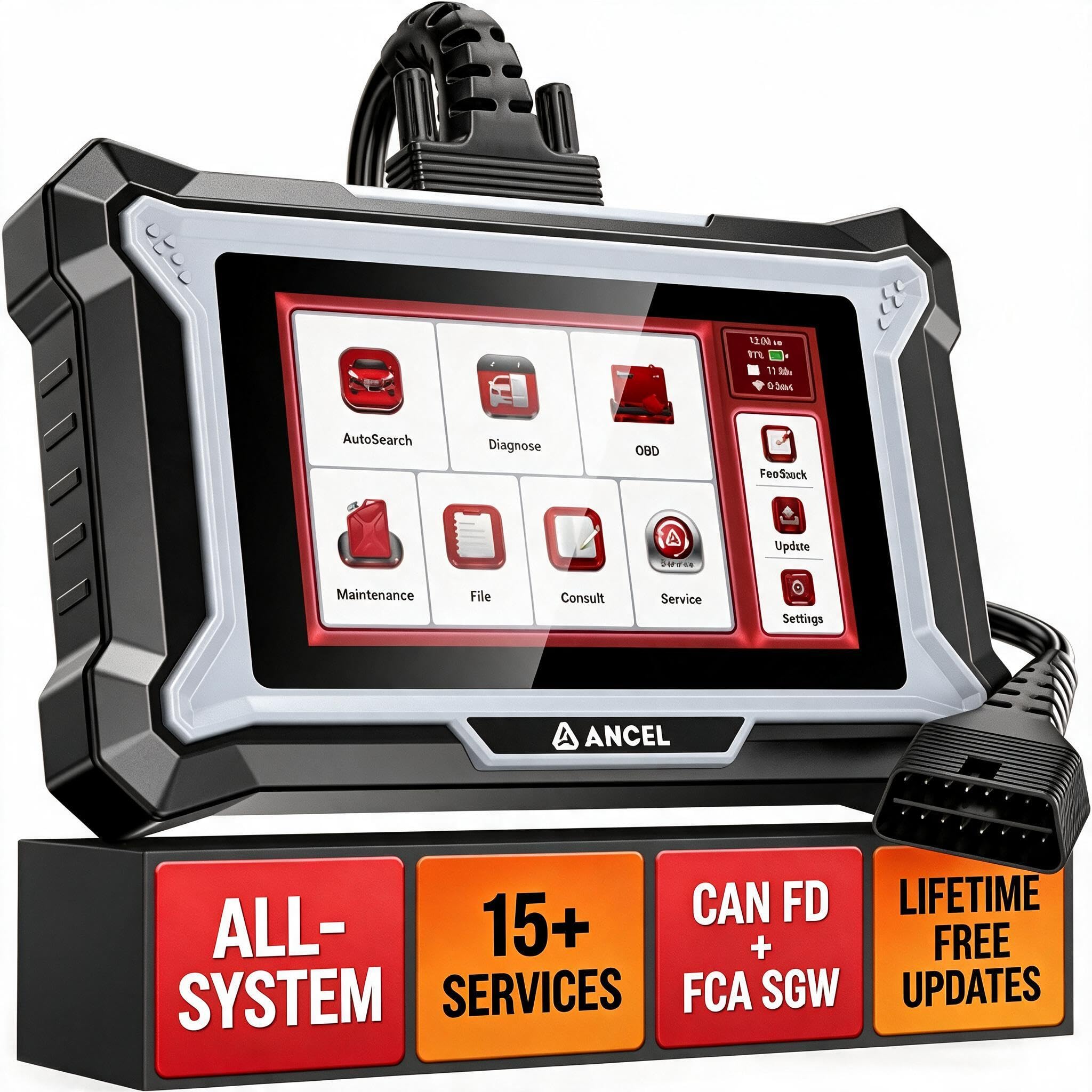
Buy this if you want full-system scanning and common resets in a simple, affordable package without deep ECU coding ambitions.
Pros
- Lifetime free updates over dual-band WiFi, no computer required
- CAN FD support plus FCA SGW access via AutoAuth
- Built-in live chat support directly from the device
Cons
- Smaller 5-inch screen compared to tablet-style competitors
- Some users report menu navigation feels sluggish or hard to locate functions
- Coding capability is minimal; this is primarily a reset and diagnostic tool
The DS200 covers the resets that account for most shop visits: ABS bleeding, oil resets, EPB, battery matching, and TPMS. It’s built for owners who want dealer-adjacent maintenance capability without wading into full ECU programming. Reviewers consistently point to the responsive support chat as a differentiator at this price.
ANCEL X7HD PRO
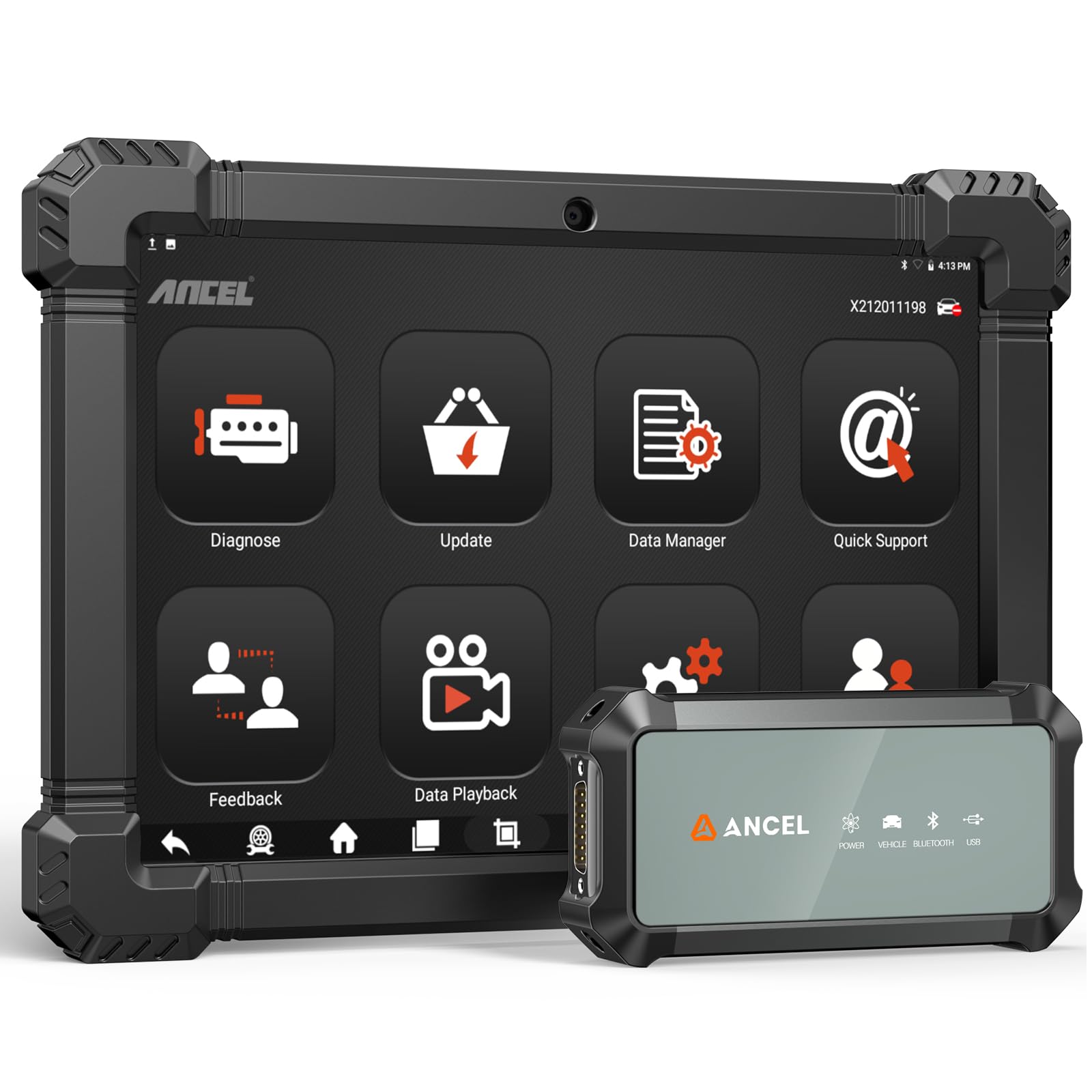
Buy this if you service diesel trucks and need HDOBD coverage across Freightliner, Kenworth, Volvo, Mack, and major diesel engine brands.
Pros
- Full-system HDOBD/OBD2 coverage for major heavy-duty truck makes and engines
- Bi-directional control and ECU coding for post-repair module matching
- Large 10.1-inch screen with front/rear cameras for visual documentation
Cons
- Mixed reviews on consistency of some special functions across vehicle types
- Bulkier hardware than passenger-vehicle scanners, less suited to quick roadside checks
- 1-year manufacturer warranty is shorter than several competitors
DPF forced regeneration and injector coding are the standout functions here, both frequently cited by reviewers as saving real dealership diagnostic fees on diesel trucks. The cable and adapter kit covers Cummins, Caterpillar, Detroit, Paccar, and Navistar engines alongside standard OBD2 vehicles. This is a fleet and shop tool first, built for trucks rather than quick passenger-car errands.
Buying Guide
Choosing between these scanners comes down to matching real capability, not marketing copy, to the vehicles you actually work on.
ECU Coding vs. Basic Resets
Coding and resets get lumped together in product listings, but they solve different problems.
| Function | What It Does | Example |
|---|---|---|
| Reset | Clears a learned value or service reminder | Oil light reset, TPMS relearn |
| Adaptation/Calibration | Realigns a sensor or system to current conditions | Steering angle sensor calibration, throttle relearn |
| ECU Coding | Changes stored configuration or activates features | Enabling auto-fold mirrors, matching a replacement module |
| ECU Programming | Writes or restores firmware to a control unit | J2534 flashing, PMI data restoration |
A scanner advertising “35+ resets” is not necessarily capable of true coding. Check whether coding functions are brand-specific (common for BMW, VW/Audi, Ford) before assuming broad support.
Protocol Support: CAN FD, DoIP, and Gateway Access
Newer vehicles increasingly require specific protocols that older scanners can’t handle.
- CAN FD: Needed for GM vehicles from around 2020 onward. Without it, some modules won’t communicate at all.
- DoIP: Required for late-model BMW (E/F/G chassis), Jaguar, and Land Rover. Often needs a separate adapter even on scanners that “support” it.
- FCA AutoAuth/SGW: Chrysler, Dodge, Jeep, and Ram vehicles from around 2018 onward lock diagnostic access behind a security gateway. Most scanners require a separate paid registration through AutoAuth’s own portal, not the scanner manufacturer.
Bidirectional Control and Active Tests
Bidirectional control lets the scanner send a command to a component and confirm the response, rather than just reading whether a code is stored. This is the feature that actually replaces guesswork: firing an ABS pump, cycling a cooling fan, or testing an injector before replacing an expensive part. Higher active test counts generally indicate broader component coverage, though real-world usefulness depends on whether your specific vehicle is supported.
Topology Mapping
A topology map displays every module in the vehicle’s network as a visual diagram, flagging which ones are online, offline, or reporting faults. This shortcuts the process of chasing wiring problems across multiple modules and is especially valuable on vehicles with complex CAN networks.
Update Costs and Long-Term Value
Free update periods run from one to three years across these tools, and renewal costs vary widely afterward.
- Confirm whether the tool keeps working after updates lapse, or locks entirely.
- Ask whether renewal unlocks new vehicle coverage or just keeps existing functions alive.
- Factor renewal fees into total cost of ownership, especially for shop tools used across many vehicle types.
Matching the Tool to the Vehicle
- Single-brand specialists (BMW/Mini adapters, for instance) reach deeper into brand-specific modules than general scanners.
- Multi-brand professional tablets suit shops and owners working across makes.
- Heavy-duty scanners need dedicated HDOBD protocols and cabling that passenger-car tools don’t include.
Editor’s Choice
The LAUNCH X431 CRP919EBT stands out as the strongest all-around pick for owners and independent shops who need genuine bidirectional control, ECU coding, and broad protocol support without buying a dealer-level system. It balances wireless convenience, a fast Android platform, and coding depth that rivals tools costing significantly more.
For BMW-specific work, the XTOOL IP500 delivers coding precision the general scanners can’t match on that platform, while the OBDLink CX remains the simplest, most reliable entry point for BimmerCode users who don’t need a standalone screen.
Shops running diesel fleets should look to the ANCEL X7HD PRO, the only scanner here built specifically around HDOBD protocols and forced DPF regeneration for heavy trucks. DIYers on a tighter budget get real bidirectional capability from the XTOOL D7 without paying for topology mapping or advanced coding they may never use.
Conclusion
Picking the right scanner starts with an honest look at what repairs you actually perform. A DIYer doing resets and occasional active tests gets full value from the XTOOL D7 or ANCEL DS200, while a shop coding modules across brands needs the depth of the LAUNCH CRP919EBT or TOPDON ONE Plus.
Brand-specific owners, especially BMW and diesel truck operators, gain more from a specialized tool than a generalist one. Check protocol support (CAN FD, DoIP, FCA gateway access) against your specific vehicle year before buying, and factor update renewal costs into the real price of ownership. The right scanner pays for itself the first time it replaces a diagnostic trip to the dealer.
FAQS
What’s the difference between ECU coding and a basic reset?
A reset clears a stored value or reminder, like an oil service light. ECU coding changes how the module is configured, enabling features or matching a replacement part to the vehicle’s computer.
Do I need a J2534 pass-thru scanner?
Only if you need to flash or reprogram a blank control unit, restore lost ECU data, or work with OEM software packages. Standard coding and resets don’t require J2534.
Why does my scanner need a separate adapter for DoIP or FCA gateway access?
Automakers built these security layers to restrict unauthorized diagnostic access. Some scanners include the hardware but still require a paid registration (FCA AutoAuth) or a separate physical adapter (DoIP) to unlock full access.
Are lifetime free updates really free forever?
Lifetime typically refers to the life of the product’s supported software cycle, not an unlimited guarantee. Read the manufacturer’s specific update policy, since some tools lock functions entirely once a free period ends while others keep working with the last installed version.
Can one scanner handle both my BMW and my diesel truck?
General multi-brand scanners cover both to varying degrees, but dedicated tools (a BMW-specific coder, a heavy-duty truck scanner) reach deeper into brand-specific or HDOBD-only functions that generalist tools often can’t access.
