
10 Best OBD2 Scanner for Fixing P0420 Code in 2026

A P0420 code means the catalytic converter isn’t cleaning exhaust as efficiently as the engine control module expects, but that’s rarely the whole story. Bad oxygen sensors, exhaust leaks, worn spark plugs, and even a failing fuel injector can trigger the same code and send someone shopping for a $200 converter they didn’t need. The right OBD2 scanner won’t diagnose the problem for you, but it will show you the fuel trim data, O2 sensor voltages, and freeze-frame snapshots that separate a genuine catalyst failure from an upstream issue mimicking one.
Not every code reader is built for that kind of digging. Basic readers pull the code and clear it, which tells you nothing about why it happened. Tools with live-data graphing, dual O2 sensor monitoring, and freeze-frame capture let you watch how the engine was behaving the moment the code set, which is the only way to build a confident diagnosis before buying parts.
We looked at ten OBD2 scanners ranging from simple $30 code readers to bidirectional diagnostic tools, evaluating each one on how much diagnostic evidence it can actually give a P0420 investigation.
Best for beginners on a budget: ANCEL AD310
Best phone-connected scanner: BlueDriver OBD2 Scanner
Best for confirming a repair before smog testing: FOXWELL NT301
Best advanced diagnostic tool: Innova 5610
Best for app-based live data on multiple devices: OBDLink MX+
FOXWELL NT301

Buy this if you want live-data graphing and O2 sensor testing without stepping up to a phone-based or bidirectional tool.
Pros
- Graphs O2 sensor, fuel trim, and coolant data in real time
- Dedicated EVAP leak test and O2 sensor test modes
- One-click I/M readiness check with clear LED status
Cons
- No bidirectional controls for active testing
- Screen resolution is modest compared to app-based tools
- Windows-only for updates, no Mac or iOS support
The NT301 earns its spot here because it graphs the exact data a P0420 diagnosis depends on: upstream and downstream O2 sensor activity, short and long-term fuel trims, and coolant temperature. Watching those values while driving shows whether the rear O2 sensor is tracking the front one too closely, a classic sign of catalyst inefficiency rather than a sensor fault.
The built-in O2 sensor test and EVAP leak check add context generic readers skip entirely. It won’t run active tests on the catalyst itself, but for the price, it delivers more diagnostic depth than most scanners in its class.
ANCEL AD310

Buy this if you just need to confirm the P0420 code and check basic freeze-frame data before deciding on next steps.
Pros
- Reads and clears codes with freeze frame and live data
- Compact, well-built, easy to navigate
- Reliable across a wide range of OBD2 protocols
Cons
- Live data is basic text, not graphed
- Emission-related codes only, no ABS or SRS access
- Small monochrome screen limits data review
The AD310 confirms the code and shows freeze-frame conditions (RPM, load, coolant temp) at the moment P0420 set, which is useful context. Live data updates in plain text rather than graphs, so spotting a sluggish rear O2 sensor takes more attention than it would on a graphing scanner.
For a first pass to see whether P0420 is a one-time fluke or a repeat offender, this handles the job. Anyone chasing sensor behavior over time will want to graduate to a tool with graphing.
BlueDriver OBD2 Scanner
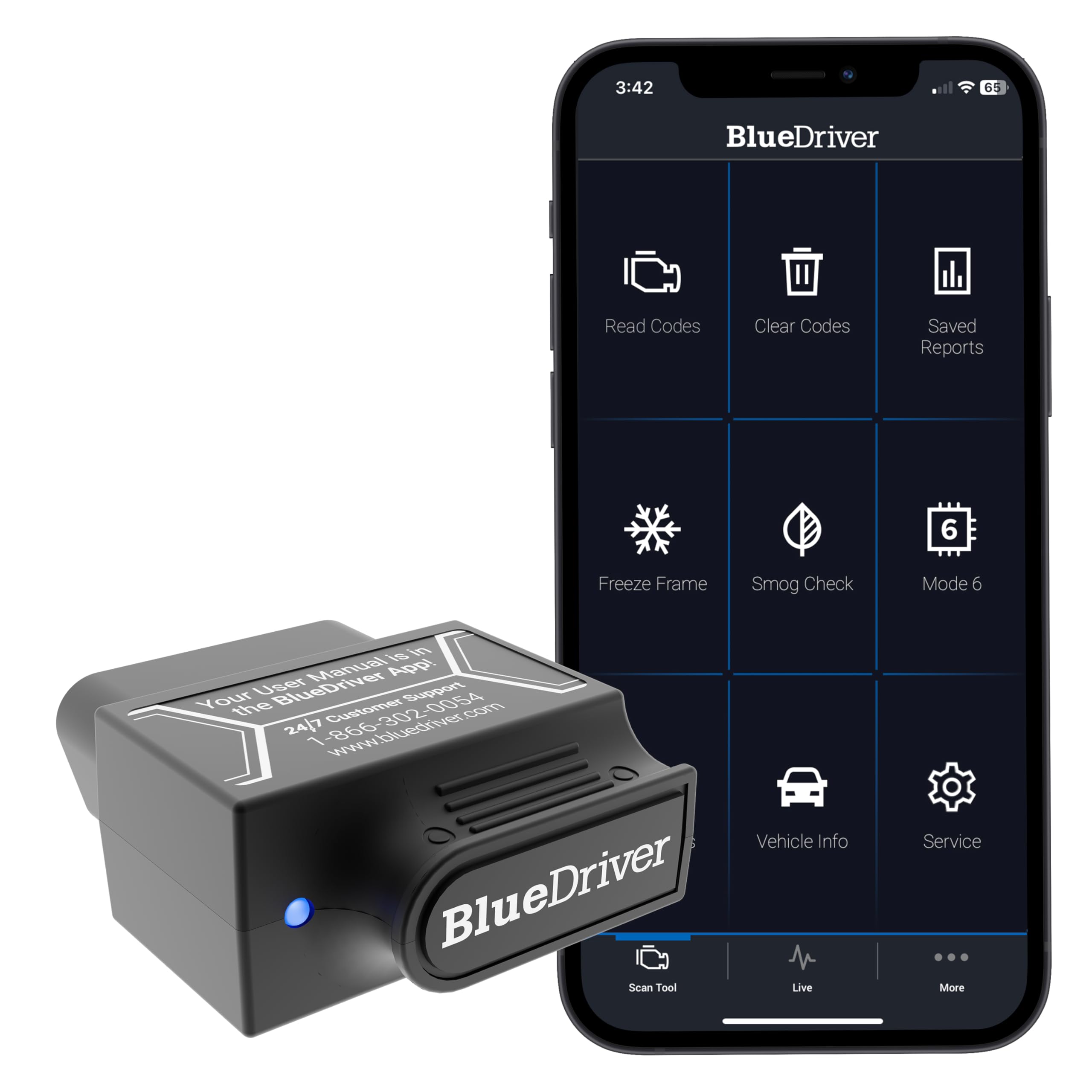
Buy this if you want technician-style repair reports that explain what typically causes P0420 on your specific make and model.
Pros
- VIN-matched repair reports with likely causes and fixes
- Live data, freeze frame, and Mode 6 test results in-app
- No subscription fees after the initial purchase
Cons
- Requires a phone or tablet to operate
- Bluetooth sensor adds a pairing step versus plug-in readers
- Deeper live-data analysis takes some interface learning
BlueDriver’s repair reports pull from a database of confirmed fixes tied to your VIN, so a P0420 on a Honda Civic returns different likely causes than the same code on a Ford F-150. That context matters, since catalyst codes have wildly different common causes across makes.
Mode 6 test results let you check individual monitor pass/fail thresholds, useful for seeing exactly how far out of spec the catalyst monitor is running. It’s a phone-dependent tool, so a dead battery or forgotten charger means no diagnosis that day.
Innova 5610

Buy this if you want bidirectional testing and enhanced live data on select vehicles for a deeper look at catalyst-related systems.
Pros
- Bidirectional controls for active component tests
- Enhanced live data across ABS, SRS, transmission, and engine
- RepairSolutions2 app generates diagnostic reports
Cons
- Bidirectional and enhanced data support vary by vehicle
- Not universal, check coverage before buying
- Some reset functions won’t apply to a P0420 diagnosis
The 5610’s bidirectional controls let you command specific outputs and watch how sensors respond, which can help isolate whether an O2 sensor is reporting real exhaust conditions or a stuck value. That capability depends heavily on the vehicle; coverage isn’t universal, so checking Innova’s compatibility tool before buying matters here.
For a P0420 case, the enhanced live data and RepairSolutions2 reports do more diagnostic heavy lifting than the reset functions, which mostly serve unrelated maintenance jobs like oil resets or ABS bleeds.
OBDLink MX+

Buy this if you want to pair professional-grade live data with third-party apps for close monitoring of fuel trims and O2 sensor behavior over time.
Pros
- Enhanced OEM-level data for many major brands
- Works with FORScan, Torque, Carista, and similar apps
- Battery drain and over-voltage protection built in
Cons
- Requires a compatible app to unlock full functionality
- No standalone screen, phone or laptop required
- Setup and PID configuration take some initial effort
The MX+ pairs with apps like Torque Pro to log and graph fuel trims and O2 sensor voltage over an extended drive cycle, which is more informative for a P0420 investigation than a quick snapshot. Watching trim data across a full warm-up cycle can reveal whether a lean condition upstream is stressing the catalyst.
Configuring which parameters to log takes a little patience the first time. Once set up, it becomes a dependable way to monitor the exact readings a catalyst-efficiency code depends on.
Autel MS309

Buy this if you want a no-frills reader to confirm the P0420 code and check readiness monitors before an emissions retest.
Pros
- On-screen DTC definitions save a lookup step
- I/M readiness check flags monitor status before smog testing
- Compact and simple to operate
Cons
- No live data streaming
- Basic code reader only, no bidirectional or enhanced systems
- Can’t clear codes on many post-2017 FCA vehicles due to SGW lockout
The MS309 reads the code, shows a plain-language definition, and pulls freeze-frame data, enough to confirm P0420 exists and see the conditions when it triggered. It has no live-data streaming, so watching real-time O2 sensor behavior isn’t possible here.
Its I/M readiness function is genuinely useful after a repair, showing whether the catalyst monitor has completed and reset to “ready” before heading to an emissions test.
ANCEL AD410
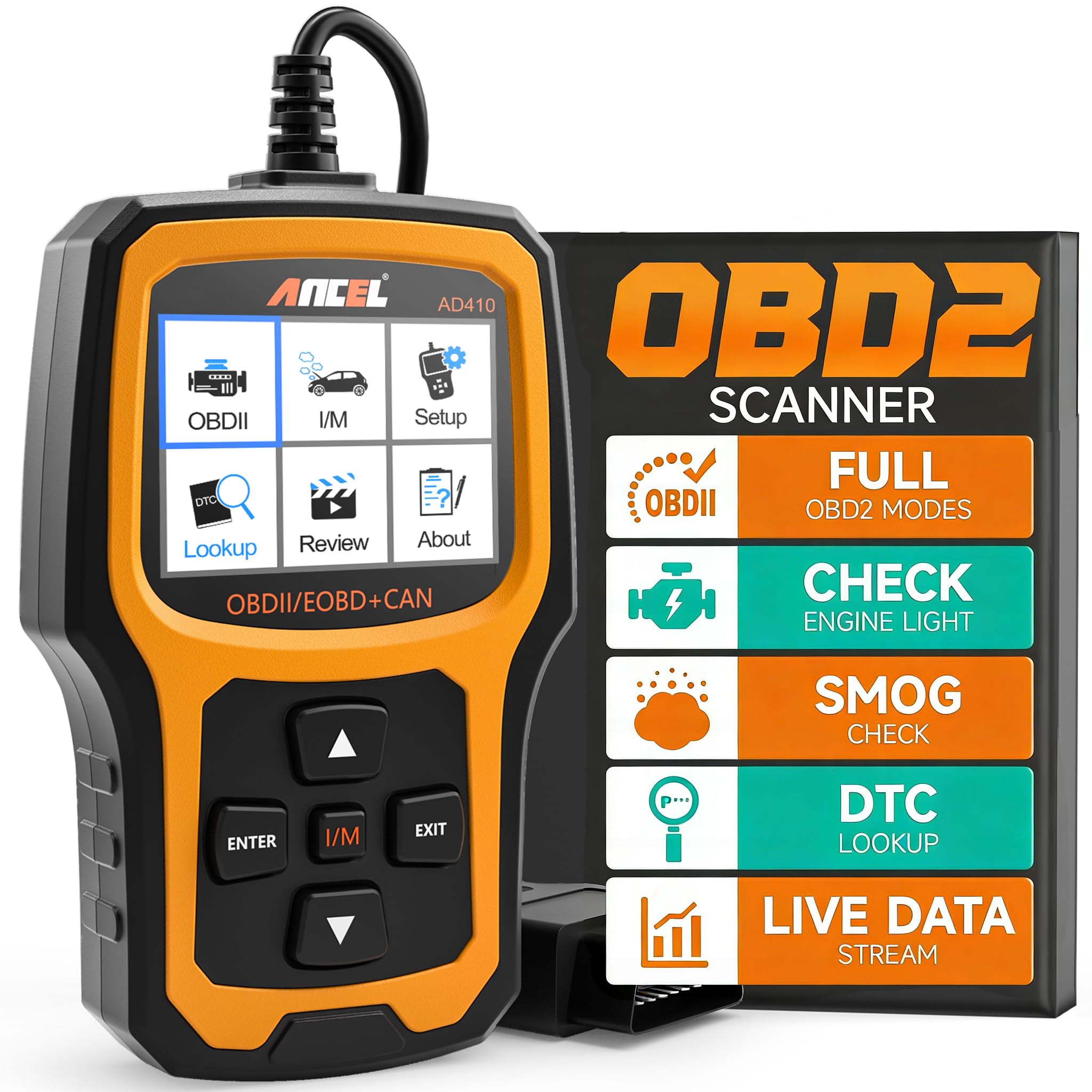
Buy this if you want a step up from basic code reading with live O2 sensor and fuel trim data on a budget.
Pros
- Live data includes fuel trim, RPM, and O2 sensor readings
- Built-in O2 sensor test and EVAP test modes
- Large color screen for easy reading
Cons
- No bidirectional testing
- Engine and emissions codes only
- Live data is text-based, not graphed
The AD410 covers more diagnostic ground than a basic reader by adding live O2 sensor and fuel trim readouts alongside the standard code and freeze-frame data. That’s enough to spot an obviously lazy rear sensor or a fuel trim running noticeably rich or lean.
Data displays as scrolling numbers rather than graphs, so trends are harder to catch at a glance. It’s a reasonable middle step between a basic reader and a graphing scanner like the NT301.
Launch CRP123X V3.0
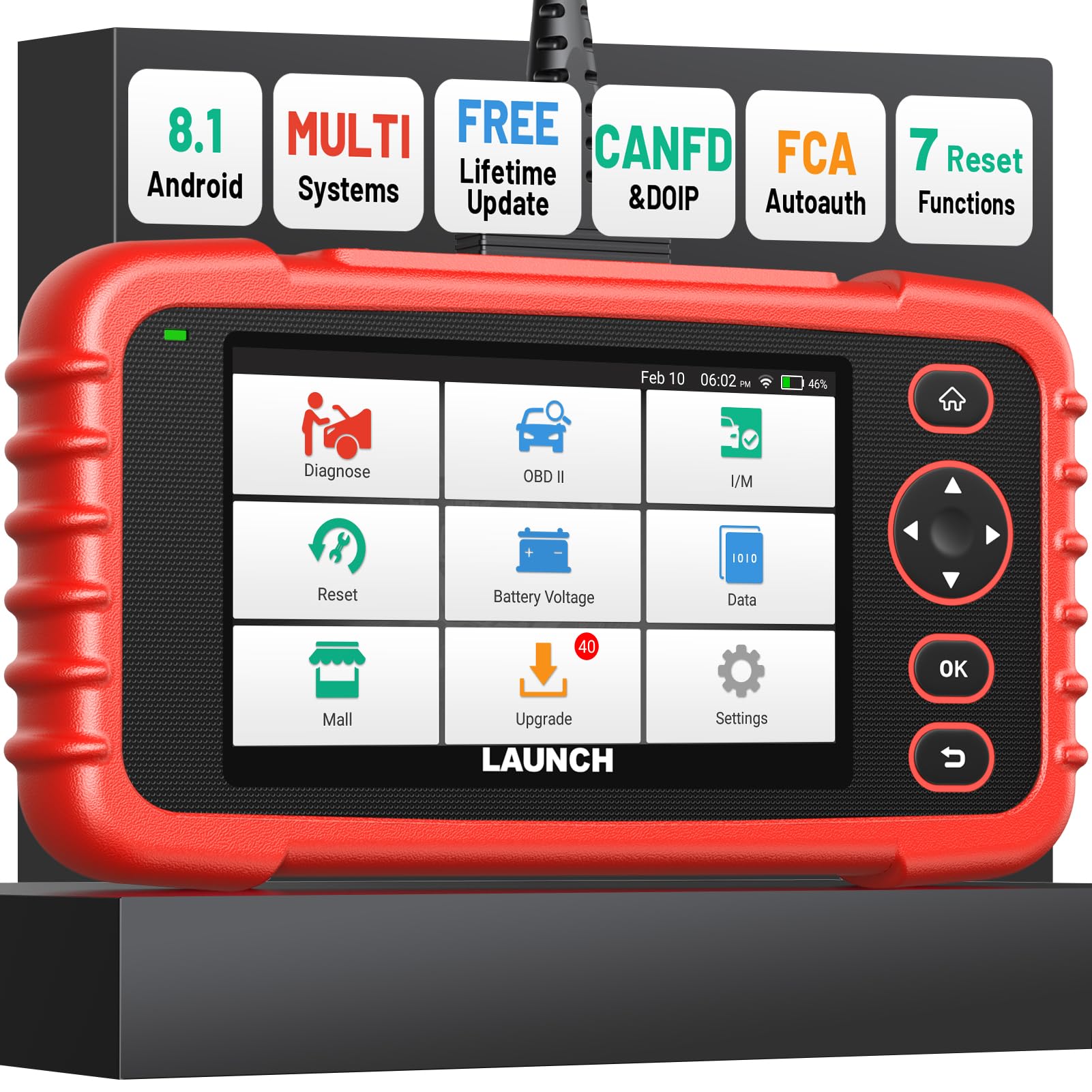
Buy this if you want graphic live data across engine, transmission, ABS, and SRS systems on a touchscreen tablet-style tool.
Pros
- Graphic live data with waveform view and playback
- Deep 4-system diagnostics beyond engine and emissions
- Built-in DTC lookup and shareable diagnostic reports
Cons
- Larger and less pocketable than handheld readers
- Some advanced features are paid add-ons
- Steeper learning curve than a basic code reader
The CRP123X’s waveform live-data view makes catching an oxygen sensor that’s too slow to switch or a fuel trim drifting out of range easier than scrolling through numbers. Store-and-playback lets you review a drive cycle after the fact instead of watching the screen in traffic.
Its reset functions (oil, ABS bleed, throttle relearn) don’t apply to a catalyst diagnosis directly, but the engine-system live data and DTC library make it a capable tool for anyone comfortable with a larger, more feature-dense scanner.
MOTOPOWER MP69033

Buy this if you want an affordable reader with a real-time curve display for basic sensor monitoring.
Pros
- Real-time curve display for select live parameters
- Reads freeze frame, I/M readiness, and vehicle info
- Wide OBD2 protocol support
Cons
- No ABS, SRS, or bidirectional access
- Curve display covers fewer parameters than dedicated graphing tools
- Basic screen resolution
The MP69033’s real-time curve feature is a step above plain-text live data, letting you visually track engine speed or coolant temperature as it changes. It won’t graph every O2 sensor and fuel trim parameter a thorough P0420 check calls for, but it catches obvious anomalies.
At this price, it works well as a first-response tool to confirm the code and rule out an unrelated freeze-frame condition, like an overheating engine, before deciding whether to dig deeper with a more capable scanner.
TOPDON AL400

Buy this if you want live-data graphing and emissions-focused tests without the added cost of an app-based scanner.
Pros
- Live streaming data shown in graph form
- Covers I/M readiness, EVAP, O2 sensor, and catalyst monitor tests
- Color-coded LED indicator for quick DTC status
Cons
- Feature availability varies by vehicle
- No bidirectional controls
- Smaller company with less established track record than bigger brands
The AL400’s catalyst monitor test and graphed live data give it a genuine edge for P0420 work, since watching upstream versus downstream O2 sensor traces side by side is exactly how a catalyst efficiency problem gets confirmed. Feature depth varies by vehicle, so results on an older or less common model may be more limited.
For the price, getting graphed data and dedicated emissions test modes together is uncommon, making this a solid pick for anyone who wants more than a basic reader without paying for bidirectional controls they won’t use.
Buying Guide
Live Data and Graphing Matter More Than Code Count
A scanner that displays thousands of generic codes doesn’t help if it can’t show how the engine behaves in real time. Look for tools that graph oxygen sensor voltage, short and long-term fuel trim, and engine load simultaneously. Catalyst efficiency problems show up as patterns over time, not single snapshots.
Freeze Frame Data Tells You the Story Behind the Code
Freeze frame captures the exact operating conditions (RPM, coolant temp, load) at the moment a code set. This context helps separate a catalyst code triggered by a genuine converter failure from one triggered by an unrelated misfire or vacuum leak that stressed the exhaust system.
Readiness Monitors Confirm a Repair Worked
After any catalyst-related repair, the vehicle needs to complete its drive cycle and reset the catalyst monitor to “ready” before an emissions test will pass. A scanner with a dedicated I/M readiness check saves a wasted trip to the test center.
Bidirectional Testing Is a Bonus, Not a Requirement
Bidirectional tools can command components to activate and watch how sensors respond, which helps on some systems. For a P0420 diagnosis specifically, this capability matters less than solid live-data logging, since there’s no direct bidirectional test for catalyst efficiency itself.
Vehicle Coverage Varies by Brand and Year
| Feature | Why It Matters for P0420 |
|---|---|
| Dual O2 sensor live data | Confirms whether the catalyst is actually converting exhaust gases |
| Fuel trim readings | Rules out a lean or rich condition mimicking catalyst failure |
| Freeze frame | Shows conditions present when the code triggered |
| I/M readiness | Confirms monitor status before a smog retest |
| Bidirectional control | Useful for some systems, not essential for catalyst diagnosis |
Check a manufacturer’s coverage tool before buying, especially for enhanced data or bidirectional features, since support often depends on the specific make, model, and year.
Connectivity: Standalone vs. App-Based
Standalone handheld scanners work without a phone and won’t be affected by dead batteries or software updates on your device. App-based tools depend on Bluetooth pairing and a charged phone but often deliver richer data logging and shareable reports.
Editor’s Choice
The FOXWELL NT301 stands out as the strongest all-around pick for diagnosing P0420 without stepping up to a phone-based system. Its graphing of O2 sensor voltage and fuel trims side by side is exactly the data needed to confirm a genuine catalyst efficiency problem versus a sensor or fuel-delivery issue mimicking one.
For readers who want repair guidance tied to their specific vehicle, the BlueDriver earns a close second. Its VIN-matched repair reports and Mode 6 test access add a layer of interpretation that handheld readers can’t match, at the cost of needing a phone to run it.
Anyone working on multiple vehicles or wanting deeper bidirectional access should look at the Innova 5610, keeping in mind that coverage for its advanced features depends on the specific make and model.
Conclusion
A P0420 code points toward the catalytic converter, but confirming that diagnosis takes more than reading and clearing the code. Live fuel trim data, O2 sensor voltage graphs, and freeze-frame conditions build the evidence needed before replacing an expensive part that might not be the actual problem.
Budget readers like the ANCEL AD310 or Autel MS309 confirm the code exists and check readiness monitors, which covers the basics. Scanners with live-data graphing, such as the FOXWELL NT301, TOPDON AL400, or ANCEL AD410, go further by showing sensor behavior over time. App-based tools like BlueDriver and OBDLink MX+ add repair-report context and extended logging for the most thorough home diagnosis.
Match the tool to how deep the investigation needs to go, confirm the readiness monitor resets after any repair, and drive the vehicle through a full warm-up cycle before assuming the code is gone for good.
FAQS
Can an OBD2 scanner tell me for certain that my catalytic converter is bad? No. A scanner shows supporting evidence, oxygen sensor readings, fuel trims, and freeze-frame data, but confirming a failed catalytic converter usually requires ruling out sensor faults, exhaust leaks, and fuel delivery issues first.
Will clearing the P0420 code fix the underlying problem? Clearing the code only turns off the check engine light. If the catalyst efficiency issue or its root cause remains, the code returns after enough drive cycles.
What live data should I watch for a P0420 diagnosis? Focus on upstream and downstream oxygen sensor voltage, short and long-term fuel trim, and engine load. A downstream sensor that mirrors the upstream sensor’s activity too closely often points to reduced catalyst efficiency.
Do I need a bidirectional scanner to diagnose P0420? No. Bidirectional controls help with certain active tests on other systems, but catalyst efficiency diagnosis relies more on live-data monitoring and freeze-frame review than on commanding components directly.
How long should I drive after a repair before checking if the code returns? Complete a full drive cycle that includes city and highway speeds with the engine reaching normal operating temperature. Readiness monitors, including the catalyst monitor, need this cycle to reset and report accurate status.
