
10 Best Code Reader for Checking P0420 in 2026

A P0420 code means your engine computer flagged the catalytic converter for running below its expected efficiency, based on comparing the upstream and downstream oxygen sensor readings. That doesn’t automatically mean the converter is bad. Loose gas caps, worn spark plugs, exhaust leaks, and failing oxygen sensors all trigger the same code, and converters are expensive enough that confirming the actual cause before replacing one is worth the extra ten minutes.
A basic code reader tells you the code exists. A scanner with live data lets you watch the upstream and downstream O2 sensor voltages while the engine runs, which is what actually separates a lazy sensor from a genuinely worn-out catalyst. The right choice depends on whether you just want confirmation of the code or need to watch sensor behavior to rule out cheaper fixes first.
Buyers should weigh live data streaming, EVAP/O2 monitor support, vehicle coverage across protocols (CAN, ISO9141, KWP2000), and whether the tool needs an app or subscription. Battery testing, ABS/SRS coverage, and reset functions matter more for shops or owners juggling multiple issues at once, not for isolating a single P0420.
Best for basic confirmation: ANCEL AD310
Best for live-data diagnosis: FOXWELL NT301
Best compact reader: Autel AL319
Best value scanner: MOTOPOWER MP69033
Best for multi-system checks: FOXWELL NT604 Elite
Best app-guided diagnostics: Innova 5210
Best for battery-related misfires: ANCEL AD410 PRO
Best for full system resets: LAUNCH CRP123 V3.0
Best Bluetooth reader: BLCKTEC 420
Best for smartphone-first users: FIXD Bluetooth Scanner
ANCEL AD310

Buy this if all you need is confirmation that P0420 is really the code your car is throwing, without paying for features you won’t use on a single-code diagnosis.
Pros
- Reads and clears codes in seconds, no batteries needed
- Wide OBD2 protocol support across older and newer vehicles
- Compact, well-built for the price
Cons
- No live data streaming for O2 sensor voltage
- Emission-only codes, nothing beyond OBD2 basics
- Screen resolution is basic
The AD310 pulls the P0420 code and gives freeze frame data showing conditions when the fault triggered, but it stops there. It won’t show you real-time upstream and downstream oxygen sensor voltage, so it can’t help you distinguish a lazy sensor from an actual failing catalyst. For a first opinion before deciding whether to dig deeper, it’s a reasonable starting point at a low cost.
FOXWELL NT301

Buy this if you want to actually watch oxygen sensor behavior in real time instead of just reading the stored code.
Pros
- Live data graphing for O2 sensors and fuel trims
- Built-in EVAP leak test and O2 sensor test modes
- One-click I/M readiness with LED pass/fail indicator
Cons
- Larger footprint than pocket-sized readers
- Some buyers note thin printed instructions
- Mac and iOS not supported for updates
This is where P0420 diagnosis gets real. Watching upstream and downstream O2 sensor voltage while driving tells you whether the rear sensor is switching in sync with the front (bad converter) or barely moving at all (possible sensor fault). Fuel trim data adds another clue, since a rich or lean condition can mimic converter inefficiency without the catalyst being at fault. This scanner earns its keep for anyone serious about ruling out cheaper causes first.
Autel AL319

Buy this if you want a compact, no-frills reader from a trusted brand for quick code checks across multiple vehicles.
Pros
- Small, pocketable design with a clear color display
- DTC Look Up feature explains what the code means
- Broad language support for households with multiple drivers
Cons
- Live data available but limited compared to enhanced scanners
- No EVAP-specific test mode
- Screen size is modest for reading graphs
The AL319 covers the basics of a P0420 pull: read, clear, freeze frame, and I/M readiness. Its live data mode shows some sensor values, but it isn’t built around graphing trends the way a dedicated live-data tool is. Good for owners who mainly want a fast second opinion or a way to confirm a repair shop’s diagnosis without paying another diagnostic fee.
MOTOPOWER MP69033

Buy this if budget is the top priority and you just need to confirm and clear a code after a repair.
Pros
- Large 2.8-inch screen for the price point
- Real-time curve view for basic parameters like RPM and coolant temp
- Nine protocols supported for wide compatibility
Cons
- No dedicated O2 sensor or EVAP test
- ABS and airbag systems not supported
- 30-day warranty is shorter than competitors
The MP69033 offers a real-time curve feature, which sounds like live data but covers general engine parameters more than the granular O2 sensor switching detail needed to evaluate catalyst efficiency. It’s a solid choice for verifying a fix after replacing a sensor or plugging an exhaust leak, less so for diagnosing the root cause from scratch.
FOXWELL NT604 Elite

Buy this if P0420 showed up alongside other warning lights and you want one tool covering engine, ABS, SRS, and transmission systems.
Pros
- Scans four major systems, not just the engine
- AUTOVIN feature pulls vehicle info automatically
- Comes with a protective hard case
Cons
- No maintenance resets like oil or throttle relearn
- Larger and pricier than single-purpose code readers
- Overkill if P0420 is the only fault present
If your dash shows a check engine light plus an ABS or airbag warning, this scanner avoids buying separate tools for each system. Its live data stream still supports the O2 sensor comparison needed for P0420 work, and the built-in DTC library explains what you’re looking at. For a single isolated P0420 with no other lights on, it’s more scanner than most owners need.
Innova 5210
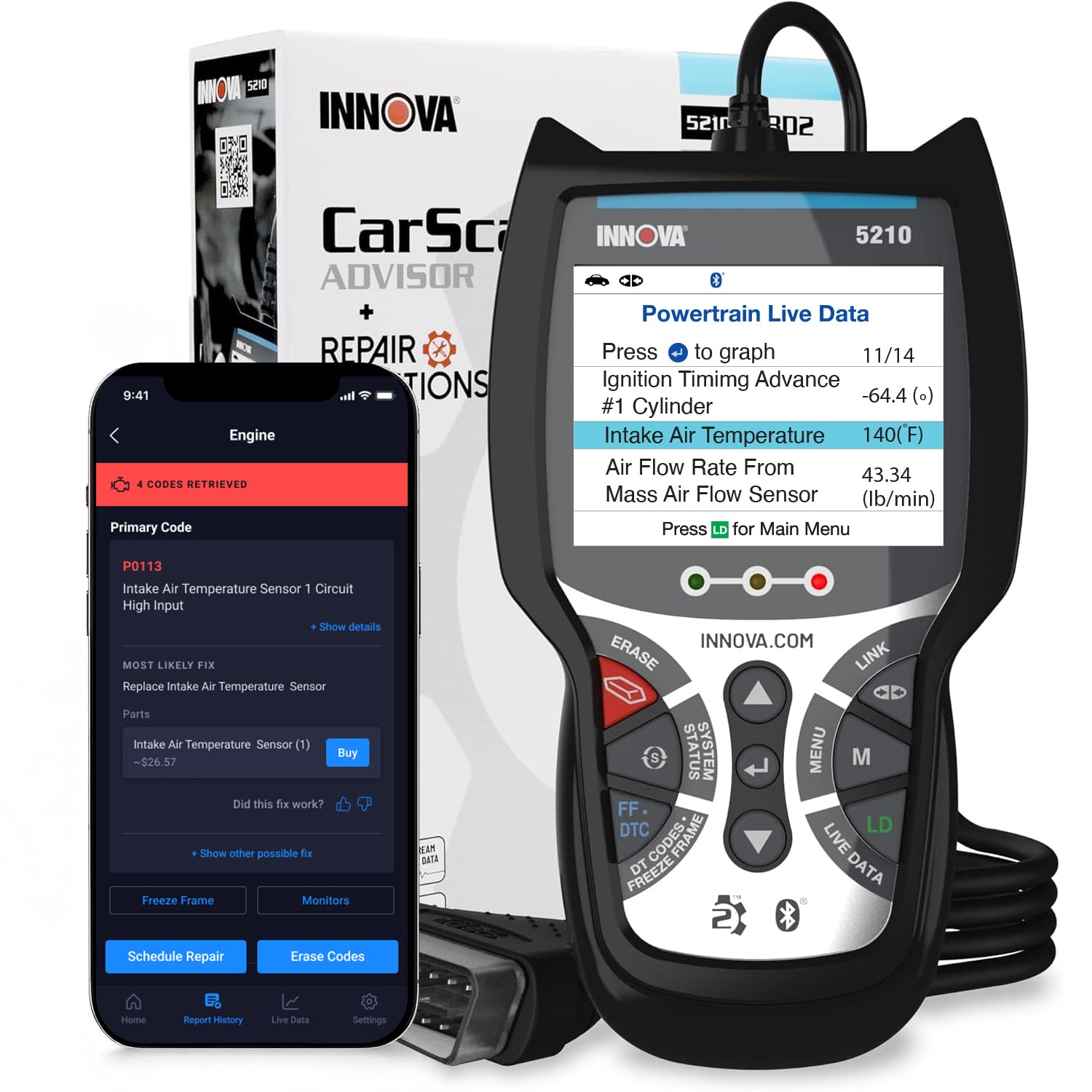
Buy this if you want app-guided repair suggestions layered on top of live data and a battery test.
Pros
- RepairSolutions2 app gives verified fixes from ASE-certified mechanics
- Combines OBD2 scanning with battery and alternator testing
- Drive cycle readiness helps confirm the fix stuck before an emissions retest
Cons
- Bluetooth pairing has given some users trouble
- No standalone battery power for viewing codes offline
- ABS coverage varies by vehicle
Battery and alternator problems can cause voltage fluctuations that throw off sensor readings and, indirectly, trigger unrelated codes, so having a battery tester built in has practical value beyond P0420 specifically. The app’s verified-fix database is useful for cross-checking whether other owners with the same code and vehicle found a sensor, exhaust leak, or converter at fault, which helps set realistic expectations before spending on parts.
ANCEL AD410 PRO
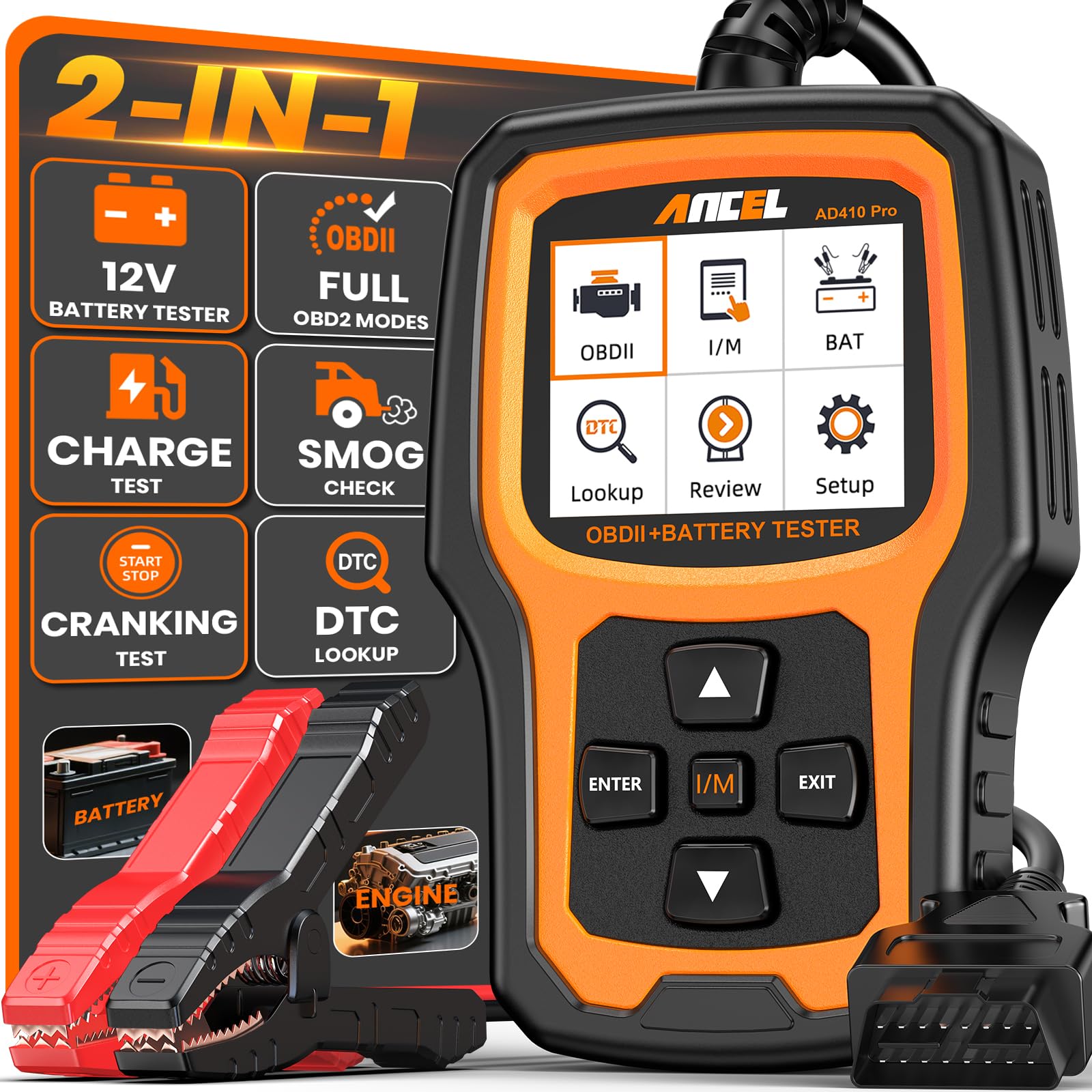
Buy this if you want engine diagnostics and a genuine cranking/charging system test in one unit.
Pros
- Decodes over 42,000 SAE DTCs with plain-language explanations
- Battery health, cranking, and charging tests beyond simple voltage checks
- Freeze frame plus 50+ live data parameters with waveform graphs
Cons
- No ABS, SRS, or transmission coverage
- Not for EVs
- Battery testing menu takes some learning
The waveform graphs matter here: watching downstream O2 voltage stay flat while upstream swings actively is the clearest real-world evidence of reduced catalyst efficiency. Pairing that with a charging system test is smart, since a weak alternator can produce erratic sensor voltage that mimics converter trouble. This is a well-rounded pick for anyone chasing P0420 who also wants peace of mind about starting and charging health.
LAUNCH CRP123 V3.0

Buy this if you want engine, ABS, SRS, and transmission coverage plus reset functions like oil service and throttle relearn.
Pros
- Four-system diagnosis plus three maintenance reset functions
- Mode 6 and Mode 8 support for advanced monitoring and EVAP testing
- Lifetime free updates with a long manufacturer warranty
Cons
- Software interface feels dated to some users
- Initial registration process has a learning curve
- Larger unit, less pocket-friendly
Mode 6 data is worth calling out for P0420 work specifically: it shows the actual test results and thresholds the catalyst monitor uses to pass or fail, which is more detailed than a simple pass/fail readiness flag. Between that and EVAP testing, this scanner gives serious DIYers more diagnostic depth than a basic reader, provided you’re comfortable with a slightly clunkier interface.
BLCKTEC 420

Buy this if you want Bluetooth convenience and a code-severity rating without carrying a separate handheld unit.
Pros
- Wireless connection to a phone app with live data
- Code severity levels help prioritize what needs attention now
- Battery and alternator test included
Cons
- Requires a smartphone for full functionality
- App-dependent features vary by update cadence
- Less detailed than dedicated handheld live-data scanners
Code severity ratings help newer DIYers understand that P0420 usually isn’t an emergency, unlike a misfire code that risks damaging the converter further. The app’s live data view covers the sensor readings needed to evaluate catalyst performance, though the small handheld footprint means you’re relying on phone screen space rather than a dedicated display.
FIXD Bluetooth Scanner
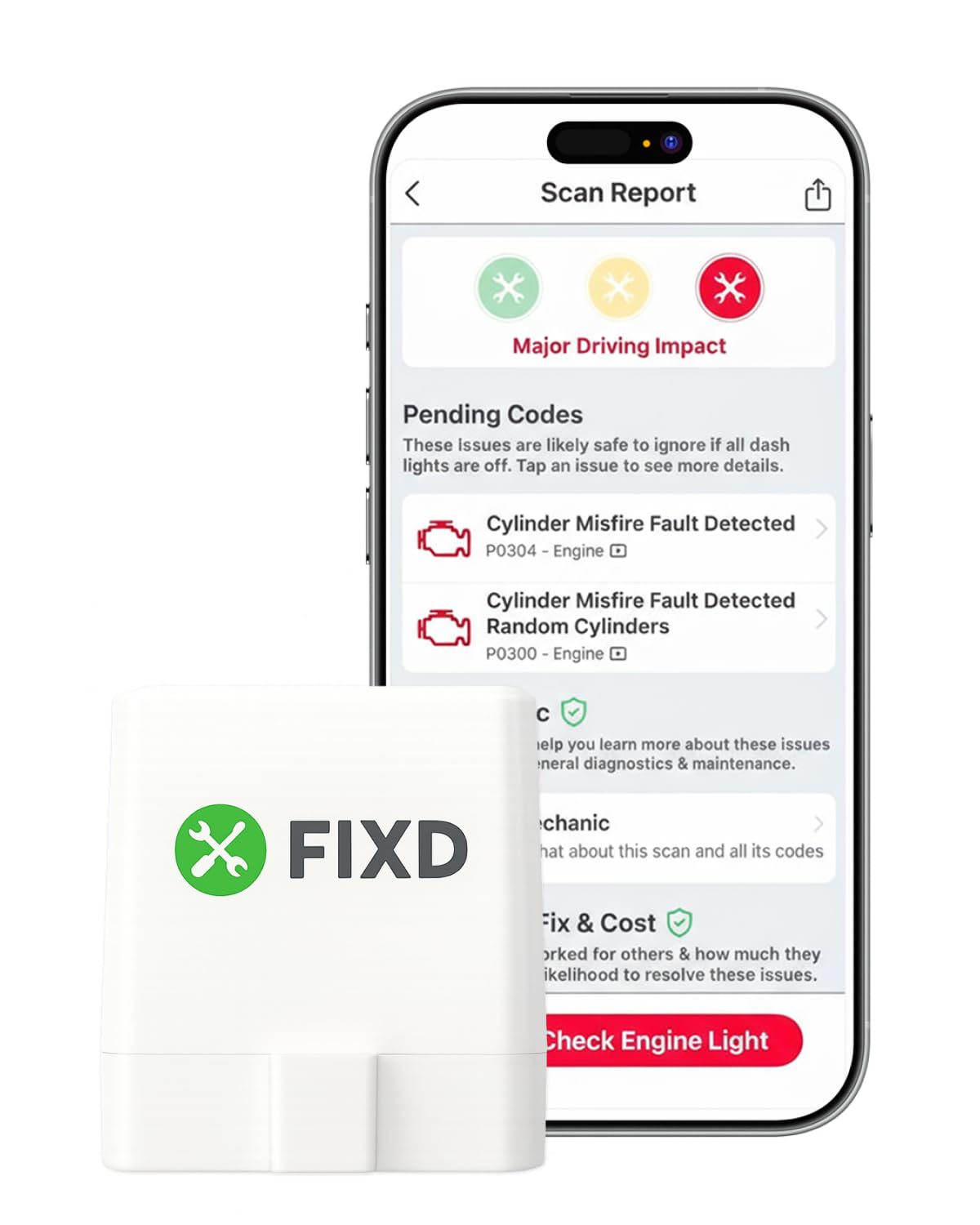
Buy this if you want a permanently installed sensor that scans your car automatically and explains codes in plain English through an app.
Pros
- Small sensor stays plugged in and ready at all times
- Plain-language explanations instead of raw code numbers
- Manages multiple vehicles in one account
Cons
- Full feature set pushes toward a paid subscription
- Less live-data depth than dedicated handheld scanners
- Some users report codes reappearing after being cleared
FIXD is built for convenience over depth. It’ll confirm P0420 and explain it in plain terms, and the free tier covers basic scanning without a subscription. For genuinely diagnosing whether the catalyst or a sensor is at fault, its live data isn’t as granular as a scan tool built specifically for that job, so treat it as a monitoring and alerting tool rather than a diagnostic one.
Buying Guide
Live Data Support
The single most useful feature for a P0420 diagnosis is live data, specifically the ability to graph upstream and downstream oxygen sensor voltage side by side. A healthy catalyst dampens the downstream sensor’s voltage swings compared to the upstream sensor. If both sensors show similar switching patterns, the catalyst likely isn’t doing its job, though a lazy or failing sensor can produce the same appearance. Scanners without live data can only confirm the code exists, not why.
EVAP and O2 Sensor Test Modes
Some scanners include dedicated EVAP leak test and O2 sensor test menus (OBD2 Mode 8 and Mode 5/9 depending on protocol). These run structured tests rather than passive monitoring, which speeds up ruling out an evaporative leak or a sensor that’s out of spec.
Freeze Frame and Mode 6 Data
Freeze frame data captures the exact conditions (RPM, load, coolant temp) present the moment P0420 triggered. Mode 6 data goes further, showing the actual measured values against the pass/fail thresholds the catalyst monitor uses. Not every basic reader supports Mode 6; it’s worth checking before assuming a scanner offers this depth.
Vehicle Coverage and Protocols
| Protocol | Common On |
|---|---|
| CAN | 2008+ vehicles (mandatory) |
| ISO9141 | Many Asian and European imports, pre-2008 |
| KWP2000 | Various 2000s-era vehicles |
| J1850 VPW/PWM | Older GM and Ford models |
Confirm a scanner lists support for the protocol used by your specific vehicle year and make before buying, since coverage claims of “1996 and newer” don’t guarantee every make and model is included.
App Dependency and Update Policy
Bluetooth scanners that rely on a phone app add convenience but introduce a dependency on continued app support and, in some cases, subscription paywalls for full features. Corded handheld units function independently of any app, which matters if you want a tool that still works the same way five years from now. Lifetime free updates are common among corded scanners; confirm this before buying if long-term vehicle coverage matters to you.
Extra Systems and Reset Functions
ABS, SRS, transmission coverage, and reset functions (oil service, throttle relearn, SAS reset) add real value if multiple warning lights are present or you’re doing your own maintenance resets. For an isolated P0420, these features are nice extras, not requirements.
Editor’s Choice
For most owners troubleshooting a P0420 code, the FOXWELL NT301 stands out as the strongest choice. Its live data graphing lets you actually watch upstream and downstream oxygen sensor voltage side by side, which is the closest a scanner gets to confirming whether the catalyst itself is underperforming versus a sensor or fuel trim issue. The built-in O2 sensor test and EVAP leak check add structured diagnostics that a basic reader simply can’t offer.
Owners who only need to confirm the code exists before deciding next steps do fine with the ANCEL AD310 or Autel AL319, both of which handle that job reliably at a lower cost. Anyone dealing with multiple warning lights or wanting battery and charging system insight alongside engine diagnostics should look at the ANCEL AD410 PRO or FOXWELL NT604 Elite instead.
Conclusion
Confirming a P0420 code starts with a scanner, but proving what caused it takes live data. A basic reader tells you the code is real and lets you clear it after a repair; a scanner with O2 sensor graphing tells you whether the fix should target a sensor, an exhaust leak, or the catalyst itself. Matching the tool to that distinction saves both money and guesswork.
Replacing a catalytic converter based on a code alone, without checking sensor voltage, fuel trims, or exhaust integrity first, risks throwing parts at a problem that a fifteen-dollar spark plug or a re-seated gas cap could have solved. Pick a scanner that matches how deep you’re willing to dig, then use the data it gives you before opening your wallet for a new converter.
FAQS
Does clearing a P0420 code fix the problem? No. Clearing the code only turns off the check engine light temporarily. If the underlying cause, whether a converter, sensor, or exhaust leak, isn’t addressed, the code returns after the monitor reruns.
Can a code reader alone confirm a bad catalytic converter? Not reliably. A basic reader shows the code exists; live data showing synchronized upstream and downstream O2 sensor voltage adds strong supporting evidence, but a mechanic’s exhaust gas analysis or backpressure test provides the most definitive confirmation.
What else can trigger a P0420 besides a failing converter? Common culprits include a failing downstream oxygen sensor, exhaust leaks upstream of the sensors, worn spark plugs causing misfires, and rich or lean fuel trim conditions from a vacuum leak or failing fuel injector.
Do I need a scanner with live data for a P0420 diagnosis? Live data isn’t required to read the code, but it’s the practical way to distinguish a sensor problem from an actual converter efficiency issue without guessing.
Will any of these scanners work on my specific car? Coverage varies by protocol and vehicle year. Check the scanner’s supported protocols against your vehicle’s specifications, especially for vehicles older than 2008 or imported models outside the US market.
