
P0507 Causes: Why Idle RPM Is Higher Than Expected

Quick Answer
P0507 means the engine computer has detected an idle speed higher than it expects. Common P0507 causes include vacuum or intake leaks, throttle-body problems, an idle relearn issue, a faulty idle air control valve on applicable vehicles, PCV or purge-system faults, and less commonly electrical problems. Use your OBD2 scanner alongside vehicle-specific information and NHTSA vehicle resources before replacing parts.
Most Common P0507 Causes
- Vacuum leak: Unmetered air can raise engine speed beyond the computer’s target.
- Throttle-body issue: Deposits or an electronic throttle problem can affect idle airflow.
- Relearn required: Some vehicles need an idle or throttle relearn after service.
- IAC valve fault: Older systems may use a separate idle air control valve.
- PCV or purge fault: Either system can introduce unwanted intake airflow.
Before Replacing Anything
- Check all stored codes, live idle data, hoses, intake connections, and recent repair history first.
P0507 can look simple on an OBD2 scanner, but the code doesn’t identify one failed part. It tells you the idle-control system cannot bring engine speed down to its expected target.
I approach this code as an airflow-control problem first. That mindset helps prevent unnecessary throttle bodies, sensors, or valves from being replaced.
In This Guide
What Does P0507 Mean?
P0507 is a generic powertrain diagnostic trouble code indicating that idle speed is higher than the engine computer expects. The computer may be called the ECM or PCM, depending on the vehicle.
P0507 definition: The control module is trying to manage idle speed, but actual engine RPM remains above its intended range.
That doesn’t automatically mean the idle air control valve is bad. Many modern engines control idle through an electronic throttle body instead of a separate IAC valve.
How is P0507 different from related idle codes?
| Code | General Meaning | What It Points Toward |
|---|---|---|
| P0505 | Idle control system malfunction | A general idle-control problem |
| P0506 | Idle RPM lower than expected | Engine idling too slowly |
| P0507 | Idle RPM higher than expected | Engine idling too quickly |
As of 2026, the P0507 description remains useful across many OBD2-equipped vehicles. The actual idle-control hardware still varies substantially by make, model, year, and engine.
What Are the Most Common P0507 Causes?
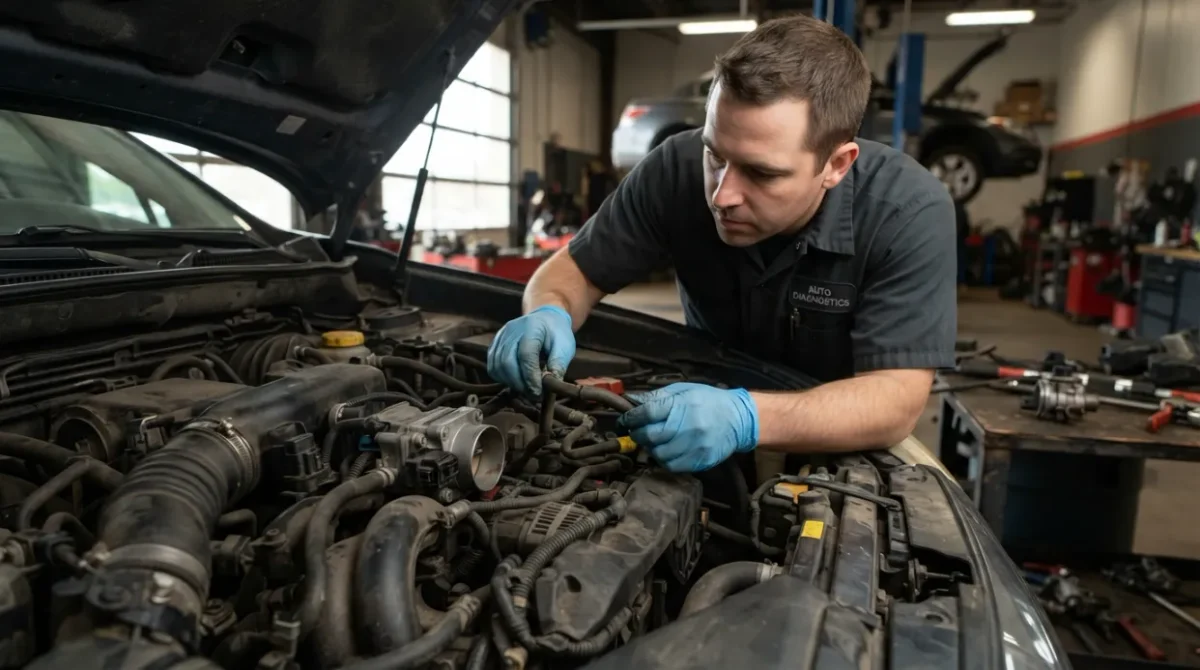
The most common P0507 causes involve unwanted airflow or a system that cannot correctly regulate idle speed. Recent repairs can also matter.
I wouldn’t order a part until checking what happened immediately before the code appeared. A throttle cleaning, battery disconnection, intake repair, or hose removal can provide an important clue.
1. Vacuum or intake air leak
A vacuum leak lets air enter the engine through a path the control system isn’t expecting. That extra airflow can raise idle speed.
- Cracked or disconnected vacuum hoses
- Loose intake connections
- Intake-manifold gasket leaks
- Brake-booster vacuum leaks
- Incorrectly routed hoses after engine work
Vacuum problems deserve extra attention when P0507 starts after maintenance. Even one hose installed incorrectly can change idle behavior.
2. Dirty or sticking throttle body
The throttle body controls how much air enters the engine. Deposits around the throttle plate can interfere with its normal resting position or airflow characteristics.
Electronic throttle systems add another layer. The PCM may rely on learned values that no longer match the throttle body’s physical position after cleaning or replacement.
3. Idle or throttle relearn issue
Some vehicles require an electronic idle or throttle relearn after certain repairs. Skipping that process can leave the engine idling higher or differently than expected.
This is especially worth investigating if P0507 appeared immediately after throttle-body servicing. Never assume one universal relearn sequence works for every vehicle.
Pro tip: use manufacturer-specific service information before performing an electronic throttle or idle relearn.
4. Faulty idle air control valve
Older vehicles may use an idle air control valve, or IAC valve. It meters bypass air around the throttle plate while the throttle is closed.
If the valve sticks open or responds incorrectly, excessive air can enter at idle. Wiring or connector problems can produce similar symptoms.
5. PCV system problem
The positive crankcase ventilation system routes crankcase vapors back into the intake. A failed PCV valve, damaged hose, or leak can alter intake airflow.
Don’t replace the PCV valve solely because P0507 is present. Inspect the entire related airflow path first.
6. EVAP purge valve or hose problem
The evaporative-emissions system can affect intake airflow through its purge circuit. A purge valve stuck open can allow airflow or vapor into the engine when the computer doesn’t expect it.
Incorrect hose routing can also matter after repairs. Check related codes before deciding the purge system is responsible.
7. Electrical or control-system fault
Wiring, connectors, throttle-position data, and other electronic problems can interfere with idle control. These possibilities should normally come after basic airflow checks.
- Damaged throttle-body wiring
- Loose or corroded electrical connectors
- IAC circuit faults on applicable vehicles
- Incorrect sensor information affecting idle strategy
- Control-module problems in uncommon cases
Section Takeaway: P0507 usually means the engine is receiving more idle airflow than the computer can properly control, or the system’s learned idle settings no longer match actual conditions.
What Symptoms Can P0507 Cause?
The check engine light may be the only obvious symptom. Other vehicles develop noticeable high or unstable idle behavior.
- High idle: Engine speed stays above its normal settled idle.
- Hanging RPM: Engine speed takes longer than expected to fall after releasing the accelerator.
- Fluctuating idle: RPM may rise and fall while stopped.
- Harsh engagement: Selecting Drive or Reverse can feel more abrupt if idle speed is unusually high.
- Other trouble codes: Intake, throttle, EVAP, or airflow-related codes may appear with P0507.
- Check engine light: The PCM stores the fault when its diagnostic conditions are met.
Symptoms vary because the code describes the result, not the exact failed component. A small vacuum leak can behave differently from a sticking throttle body.
If the vehicle surges or becomes difficult to control, don’t treat it as a routine warning-light issue. Have the drivability problem diagnosed promptly.
How Do You Diagnose P0507?
Diagnose P0507 by confirming the code, checking related faults, comparing actual idle behavior with scan data, and inspecting systems that can introduce unwanted airflow. Avoid clearing evidence before recording it.
1. Scan every module and record the codes
Start with an OBD2 scanner and record stored, pending, and related codes. Freeze-frame information can show the conditions present when the fault was detected.
- Engine RPM
- Coolant temperature
- Throttle position
- Fuel-trim information when supported
- Related intake, EVAP, or throttle codes
A second code can completely change your diagnostic direction. Don’t focus on P0507 in isolation.
2. Check recent service history
Ask what changed before the problem started. Recent throttle cleaning, battery work, intake repairs, or hose removal deserve attention.
This is one of my first checks because timing matters. A code appearing immediately after service can point toward a disturbed connection or required adaptation.
3. Inspect for unmetered air
Look closely at vacuum hoses, intake boots, clamps, PCV plumbing, purge lines, and other connections. Small splits may hide underneath a hose.
A professional smoke test can help locate intake leaks that aren’t obvious visually. Use the correct procedure for the specific vehicle.
4. Inspect the throttle system
Check for deposits, binding, damaged wiring, or an obviously disturbed throttle connection. Don’t force an electronic throttle plate unless the manufacturer permits it.
Locksmith’s diagnostic note: electronic throttle systems can require scan-tool functions or manufacturer procedures after service, so avoid guessing at button sequences or relearn steps.
5. Test the IAC system when equipped
If the engine uses a separate IAC valve, verify its operation using the manufacturer’s diagnostic procedure. Don’t assume every vehicle with P0507 has one.
Newer electronic throttle vehicles often control idle without a standalone IAC valve. Confirm the system design before buying parts.
6. Verify the repair
After correcting the confirmed cause, clear the code and perform the appropriate verification procedure. Recheck live data and confirm the idle remains stable.
The AAA also emphasizes proper diagnosis instead of assuming a diagnostic code automatically identifies the defective component.
Section Takeaway: diagnose P0507 with evidence. Scan data, recent repair history, an air-leak inspection, and vehicle-specific service information are more useful than replacing the first part named online.
How Do You Fix P0507?
The correct P0507 repair depends on the cause you confirm. There is no single repair that applies to every vehicle.
- Repair vacuum leaks: Replace damaged hoses, seals, or connections after locating the actual leak.
- Correct hose routing: Restore vacuum, PCV, or EVAP plumbing to the vehicle’s specified layout.
- Service the throttle body: Clean or repair it only when inspection and service information support that action.
- Perform a relearn: Use the manufacturer-required procedure if learned throttle or idle values need resetting.
- Repair the IAC system: On applicable vehicles, correct valve, wiring, or connector faults found through testing.
- Repair PCV or purge faults: Replace failed components only after confirming their operation.
- Repair electrical faults: Fix damaged wiring, poor terminals, or connector problems identified during diagnosis.
Manufacturer information contains real examples of P0507 appearing after throttle-body service or incorrect vacuum-hose routing. Those examples show why repair history can matter as much as the code itself.
Pro tip: repair and relearn procedures can vary by engine, model year, and control system. Confirm the procedure for your VIN before starting hands-on work.
Can You Drive With P0507?

A vehicle with a mild P0507 condition may still run, but that doesn’t mean the problem should be ignored. High or unstable idle can affect drivability when shifting into gear or maneuvering at low speeds.
Stop driving and seek professional help if the engine races, surges, stalls, or becomes difficult to control. Unexpected engine behavior deserves prompt attention.
- Watch for unusually high idle after startup.
- Notice whether RPM hangs after releasing the accelerator.
- Check whether Drive or Reverse engages harshly.
- Pay attention to additional warning lights or new codes.
For broader vehicle-safety information, the Insurance Institute for Highway Safety publishes independent safety resources. Your vehicle manufacturer remains the best source for model-specific operating warnings.
Locksmith’s note: if high idle creates unpredictable vehicle movement, arrange professional diagnosis instead of continuing to clear the code and drive.
P0507 Frequently Asked Questions
Can a vacuum leak cause P0507?
Yes. A vacuum or intake leak can let extra air enter the engine, increasing idle speed beyond the PCM’s expected target. Inspect vacuum hoses, intake connections, PCV plumbing, and other possible leak paths before replacing electronic components.
Can a dirty throttle body cause P0507?
It can on some vehicles. Deposits around the throttle plate may affect airflow or its resting position, while electronic throttle systems can also develop learned-value issues. Confirm the manufacturer’s cleaning and relearn requirements before servicing the throttle body.
Why did P0507 appear after cleaning the throttle body?
Some vehicles need the PCM or ECM to relearn throttle or idle values after throttle-body service. Cleaning can change the airflow at the learned closed-throttle position, so a vehicle-specific adaptation or relearn procedure may be required.
Can a bad idle air control valve cause P0507?
Yes, if your vehicle uses a separate idle air control valve. A sticking valve or electrical fault can allow excessive bypass air. Many newer vehicles use electronic throttle control instead, so confirm your engine’s design before replacing an IAC valve.
Will clearing P0507 with an OBD2 scanner fix it?
No. Clearing the code only removes the stored diagnostic information and warning light temporarily. If the underlying airflow, throttle, relearn, PCV, purge, or electrical problem remains, the PCM can detect the condition again and reset P0507.
Is P0507 the same as P0505?
No. P0505 describes a general idle-control system malfunction, while P0507 specifically indicates idle speed is higher than expected. P0506 is the related code for idle speed lower than expected.
Is P0507 expensive to repair?
Repair cost varies widely because the cause might be a loose hose, a required relearn, a failed valve, throttle-system repair, or an electrical problem. Make, model, year, labor rates, and diagnostic time all affect the final price.
Final Takeaway: P0507 tells you the engine is idling faster than the control system expects, but it doesn’t identify one bad component.
Start with a complete scan, recent service history, intake and vacuum checks, throttle-system inspection, and vehicle-specific information. Confirm the cause before buying parts, then verify the repair with your scanner.
