
P0606 Causes: What Triggers This PCM Processor Fault?

Quick Answer
P0606 means the engine control module or powertrain control module detected a processor-related fault during its internal monitoring. Common P0606 causes include unstable electrical power, poor module grounds, damaged connectors, moisture, corrupted software, and an internal ECM/PCM failure. Before replacing an expensive control module, check your vehicle for applicable recalls and manufacturer information.
Common Causes to Check
- Unstable voltage: A weak battery, charging problem, or electrical voltage drop can disrupt the control module.
- Poor power or ground: Loose, corroded, or high-resistance connections can make a healthy PCM behave like a failed one.
- Connector damage: Bent terminals, corrosion, damaged wiring, or moisture can interrupt module operation.
- Software problem: Corrupted programming or an interrupted module update can sometimes trigger P0606.
- Internal PCM failure: The processor or another internal electronic component may genuinely be damaged.
- External circuit fault: On some vehicles, a shorted sensor or related circuit can interfere with module operation.
What Should You Do First?
- Record every stored code and freeze-frame data, then test the battery, charging system, PCM power feeds, grounds, and connectors before condemning the computer.
If your OBD2 scanner shows P0606, the wording usually looks serious: ECM/PCM processor fault or a similar control-module warning. It deserves attention, but it does not automatically prove that the engine computer needs replacement.
I treat P0606 as a diagnosis problem rather than a parts-replacement instruction. The goal is to find out whether the processor failed internally or whether something outside the module made it fail its self-check.
In This Guide
What Does the P0606 Code Mean?
P0606 is a generic powertrain diagnostic trouble code associated with an internal control-module processor fault. Depending on the vehicle, the responsible computer may be called the ECM, PCM, or ECU.
Definition: The ECM or PCM is the vehicle computer that processes sensor information and controls important engine functions. A P0606 code appears when the module detects a problem involving its own processor operation or internal monitoring.
That makes P0606 different from a code that directly identifies one oxygen sensor, ignition coil, or other external component. The computer is essentially reporting that something affected its ability to operate correctly.
Does P0606 Always Mean the PCM Is Bad?
No. An internal module failure is one possible cause, but it should not be assumed until the module’s electrical supply has been checked.
A processor depends on clean, stable voltage and reliable ground connections. If either disappears briefly, internal monitoring may detect abnormal processor behavior.
- Battery voltage may drop excessively during starting.
- A ground connection may have excessive resistance even though it looks connected.
- A module connector may contain corrosion or moisture.
- Software may be damaged or incomplete after programming work.
This is why replacing the PCM from the code alone can become an expensive mistake. Diagnose the electrical environment around the module first.
What Are the Most Common P0606 Causes?
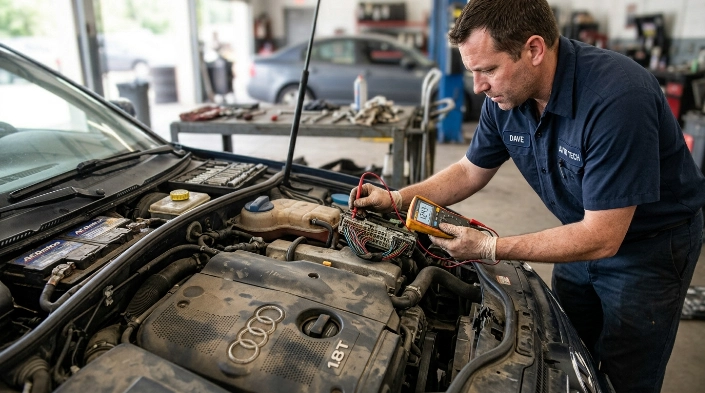
The main P0606 causes fall into two groups: problems outside the control module and faults inside the module itself. Checking the external causes first can prevent unnecessary PCM replacement.
1. Weak Battery or Unstable System Voltage
A control module needs dependable electrical power. Low voltage, sudden voltage drops, or an unstable charging system can interfere with processor operation.
Pay extra attention if P0606 appeared after a dead battery, difficult starting, battery replacement, jump-start, or charging-system problem. Other low-voltage or communication codes can strengthen that suspicion.
2. Poor PCM Power or Ground Connections
A bad ground is one of the first things I want ruled out before anyone orders a computer. Corrosion, a loose fastener, damaged wiring, or resistance inside a connection can interrupt current flow.
A visual inspection alone isn’t always enough. A connection can look acceptable but fail when electrical load is applied.
Technician’s note: use the manufacturer’s wiring information and proper electrical testing procedures when checking module power and ground circuits.
3. Corroded, Loose, or Damaged ECM/PCM Connectors
Control-module connectors contain many terminals packed into a small area. Water, corrosion, bent pins, pushed-back terminals, and harness damage can all create intermittent faults.
- Look for moisture around the module housing.
- Check for green or white corrosion on terminals.
- Inspect for bent or recessed connector pins.
- Look for rubbed, crushed, or heat-damaged wiring.
- Check nearby harnesses for previous repairs or modifications.
Never force probes into delicate terminals. Spreading a terminal can create a new intermittent problem that wasn’t there before.
4. Water or Moisture Intrusion
Moisture can damage terminals and electronic components. The leak source may also need repair, or the same problem can return after the module is serviced.
Possible entry points differ by vehicle. Cowl drains, damaged seals, wiring grommets, and previous body repairs are examples worth inspecting when moisture is present.
5. Corrupted PCM Software or a Failed Reflash
Some P0606 cases involve software rather than a physically damaged processor. A failed or interrupted programming event deserves special attention.
Manufacturer service information matters here because software updates and programming requirements are vehicle-specific. NHTSA also provides access to manufacturer communications and vehicle-manufacturer resources that can help identify applicable technical information.
Programming note: do not attempt random reflashing or module coding procedures. Incorrect programming can leave a vehicle unable to start or communicate normally.
6. Internal ECM or PCM Failure
Sometimes the computer itself has failed. Heat, vibration, moisture, electrical damage, or component aging can affect the circuit board or internal electronics.
The important part is proving the basics first. Stable power, good grounds, intact wiring, clean connectors, and appropriate software should be confirmed before the module is condemned.
7. An External Circuit Pulling the System Down
On some vehicles, a shorted sensor, reference-voltage circuit, wiring fault, or related electrical problem can disturb the control module. The diagnostic path depends heavily on the accompanying trouble codes.
| Possible Cause | Clues You May See | First Diagnostic Check |
|---|---|---|
| Battery or charging issue | Recent dead battery, slow crank, multiple voltage-related codes | Battery and charging-system test |
| Power or ground fault | Intermittent stalling, communication problems, code returns unpredictably | Power-feed and voltage-drop testing |
| Connector or moisture problem | Visible corrosion, water traces, intermittent operation | Connector and harness inspection |
| Software issue | Problem began after programming, battery interruption, or module work | Check manufacturer service information |
| Internal PCM failure | P0606 returns after external circuits test correctly | Module-specific diagnosis and programming assessment |
Section Takeaway: P0606 can indicate a failed PCM, but power, grounds, wiring, connectors, moisture, and software should be checked before replacing the module.
What Symptoms Can P0606 Cause?
P0606 symptoms vary widely because the ECM or PCM manages many engine functions. One vehicle may only display a warning light, while another may stall or refuse to start.
- Check engine light: The malfunction indicator lamp may remain illuminated.
- Hard starting: The engine may crank longer than normal.
- No-start condition: A severe control-module problem can prevent normal engine operation.
- Unexpected stalling: Processor or power interruptions may cause the engine to stop.
- Reduced-power mode: Some vehicles may limit performance when the fault is present.
- Rough or erratic operation: Engine behavior can become unpredictable.
- Multiple trouble codes: Voltage or module problems can sometimes produce several seemingly unrelated codes.
- Scan-tool communication problems: A badly affected module may communicate intermittently or not at all.
The symptoms accompanying P0606 often provide more useful diagnostic direction than the code by itself. Record them before clearing anything.
How Do You Diagnose P0606 Before Replacing the PCM?
The safest diagnostic approach starts with evidence. Don’t erase the code immediately, because stored information may show what was happening when the fault appeared.
- Scan every available module. Record P0606 plus all accompanying diagnostic trouble codes.
- Save freeze-frame data. Note system voltage and operating conditions recorded when the code set, if your scanner provides them.
- Check the battery and charging system. Compare results with the vehicle and battery manufacturer’s specifications.
- Inspect PCM fuses and power feeds. Don’t assume a fuse is good based only on appearance.
- Test module grounds. Check for unwanted voltage drop under appropriate load.
- Inspect connectors and wiring. Look for moisture, corrosion, terminal damage, and harness problems.
- Investigate related codes first. Low-voltage, reference-voltage, and communication codes may expose the underlying issue.
- Check manufacturer information. Look for applicable software updates, service communications, or known diagnostic procedures.
- Clear and retest only after recording data. See whether P0606 returns under controlled conditions.
- Consider PCM repair or replacement last. Do this only after the external electrical system checks correctly.
Why Accompanying Codes Matter
Suppose P0606 appears beside a low-voltage code. That combination changes my diagnostic direction compared with an isolated P0606 that immediately returns with stable electrical power.
The same applies to network communication or sensor-reference codes. They can reveal an external electrical fault that deserves investigation before the PCM gets blamed.
Check Vehicle-Specific Information
Generic OBD2 descriptions can only take diagnosis so far. Manufacturers may use different test criteria, wiring arrangements, software versions, and control-module configurations.
Confirm the exact year, make, model, engine, and VIN before ordering electronic parts. NHTSA’s VIN Decoder can help verify basic vehicle-identification information reported by manufacturers.
Diagnostic note: hands-on PCM circuit testing should follow verified wiring diagrams and manufacturer procedures. Incorrect back-probing or programming can damage electronics.
Section Takeaway: record the evidence, verify electrical power and grounds, inspect wiring and connectors, and check manufacturer information before deciding the PCM has failed.
How Is P0606 Different From Other P060x Codes?
P0606 belongs to a family of internal control-module codes. Nearby codes may point toward memory, programming, or other internal monitoring problems rather than the exact same fault.
| Code | General Area |
|---|---|
| P0601 | Internal control-module memory/checksum-related fault |
| P0602 | Control-module programming-related fault |
| P0603 | Keep-alive memory-related fault |
| P0604 | Internal RAM-related fault |
| P0605 | Internal ROM-related fault |
| P0606 | Internal processor-related fault |
Don’t diagnose these codes solely from a generic description. Vehicle-specific service information should determine the final testing procedure.
Can You Drive With P0606, and What Repairs May Be Needed?
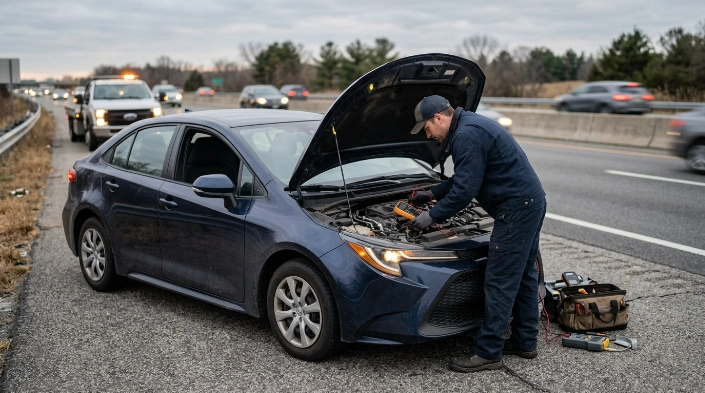
You should treat P0606 seriously because a control-module problem can affect engine operation. A vehicle that stalls, loses power, runs unpredictably, or has trouble starting should not be relied on for normal driving.
If the vehicle is behaving abnormally, arranging professional diagnosis or towing is safer than assuming the warning will remain harmless. The potential consequences depend on the exact failure and vehicle.
Possible P0606 Repairs
The correct repair depends entirely on what testing finds. There is no single universal P0606 fix.
- Charge or replace a failing battery when testing confirms the battery is at fault.
- Repair a charging-system problem that causes unstable electrical supply.
- Clean or repair corroded power and ground connections.
- Repair damaged wiring or connector terminals.
- Correct water intrusion and repair resulting corrosion.
- Restore appropriate factory software when a verified programming problem exists.
- Repair, replace, and program the ECM/PCM if internal failure is confirmed.
Costs vary substantially by vehicle, region, diagnostic time, programming requirements, and the failed component. A wiring or battery problem is a very different repair from replacing and configuring a control module.
If you need professional electrical diagnosis, the AAA Approved Auto Repair locator is one place to search for qualified repair facilities.
Repair note: many replacement control modules require vehicle-specific programming, VIN configuration, immobilizer synchronization, or other setup. Confirm requirements before buying a used, remanufactured, or new module.
As of 2026, electronic module diagnosis is increasingly dependent on vehicle-specific scan tools and service information. Generic code reading is useful, but it doesn’t replace proper circuit testing.
P0606 Causes FAQ
What is the most common cause of a P0606 code?
There isn’t one cause that applies to every vehicle. P0606 may result from unstable voltage, bad power or ground connections, wiring or connector problems, software issues, moisture damage, or an internally failed ECM/PCM.
Can a weak battery cause P0606?
Yes, unstable or inadequate electrical power can contribute to control-module faults. If P0606 appeared after a weak battery, jump-start, or starting problem, battery and charging-system testing should be part of the diagnosis.
Can a bad ground cause code P0606?
Yes. A high-resistance or intermittent PCM ground can interfere with the stable electrical supply the processor needs. Proper voltage-drop testing is more useful than relying only on a visual inspection.
Will clearing P0606 fix the problem?
Clearing the code only removes stored diagnostic information. It does not repair the underlying cause. Record codes and freeze-frame data first, then diagnose the fault and see whether P0606 returns.
Does P0606 mean I need a new PCM?
Not automatically. PCM replacement should generally come after battery, charging-system, power, ground, connector, wiring, moisture, and applicable software checks have been completed.
Can bad PCM software trigger P0606?
Software or programming problems can contribute to P0606 on some vehicles. This is especially worth investigating when the fault began after module programming, battery interruption during programming, or other electronic work.
Can I diagnose P0606 with a basic OBD2 scanner?
A basic scanner can confirm the code and may show freeze-frame data, but complete diagnosis often requires electrical testing and vehicle-specific information. An advanced scan tool may also be needed to check other modules and programming status.
Final Takeaway: Don’t treat P0606 as permission to immediately replace the engine computer. Start with stored data, battery condition, charging performance, PCM power and grounds, connectors, wiring, moisture, and manufacturer information.
If those checks pass and P0606 consistently returns, professional module testing, reprogramming, repair, or replacement may be the next step.
