
P0606 Repair Cost: What You’ll Pay to Diagnose and Fix It in 2026

Quick Answer
P0606 repair cost can range from roughly $120 for diagnosis to $1,500 or more if the powertrain control module needs replacement and programming. A typical PCM replacement often lands around $1,000–$1,300, but your vehicle, local labor rate, programming requirements, and the real cause of the code can change the bill substantially. Before approving a PCM, compare the estimate with an independent repair cost estimate.
Typical P0606 Cost Breakdown
- Initial diagnosis: Budget roughly $120–$300 depending on diagnostic time and local labor rates.
- Wiring or grounds: A connection, ground, or harness repair may cost far less than replacing the PCM.
- Software update: Reflashing or updating the existing module can sometimes solve an internal processor fault.
- PCM replacement: A programmed replacement commonly pushes the total toward $1,000 or more.
- High-cost vehicles: Some applications can exceed $2,000 because of expensive modules or specialized programming.
Before You Pay for a PCM
- Ask the shop to verify battery voltage, module power, grounds, connectors, related codes, software updates, and vehicle-specific service information first.
P0606 is an OBD-II trouble code that usually points to an internal processor problem in the PCM or ECM, the computer that controls major powertrain functions. Your OBD2 scanner may show the code, but seeing P0606 doesn’t automatically prove that the computer itself must be replaced.
That’s the expensive mistake I want you to avoid. Control-module, immobilizer, and key-related faults can overlap, so proper electrical diagnosis matters before anyone starts replacing modules or trying programming procedures.
In This Guide
How Much Does It Cost to Fix P0606?
The final P0606 repair cost depends on what caused the processor fault. In 2026, I would budget anywhere from a diagnostic charge to well over $1,000 when PCM replacement and programming are required.
RepairPal’s September 2026 national estimate puts average PCM replacement around $1,122–$1,192. Individual vehicles can sit hundreds of dollars below that figure or climb beyond $2,000.
| Possible Repair | Budgeting Range | When It Applies |
|---|---|---|
| Diagnostic testing | About $120–$300 | Scan testing, electrical checks, freeze-frame review, and module communication testing |
| Power, ground, connector, or wiring repair | About $100–$500+ | Corrosion, damaged wiring, poor grounds, or connector problems are found |
| PCM software update or reflash | Often a few hundred dollars | Manufacturer information identifies a software or calibration solution |
| Remanufactured or replacement PCM | Roughly $600–$1,500+ | Testing confirms the original module has failed |
| High-cost OEM module replacement | $1,500–$2,000+ | Certain luxury, newer, specialty, or heavy-duty applications |
Those figures are budgeting ranges rather than quotes. Parts availability, vehicle year, regional labor costs, programming, taxes, and related repairs can move the price in either direction.
Why can the diagnostic bill be expensive?
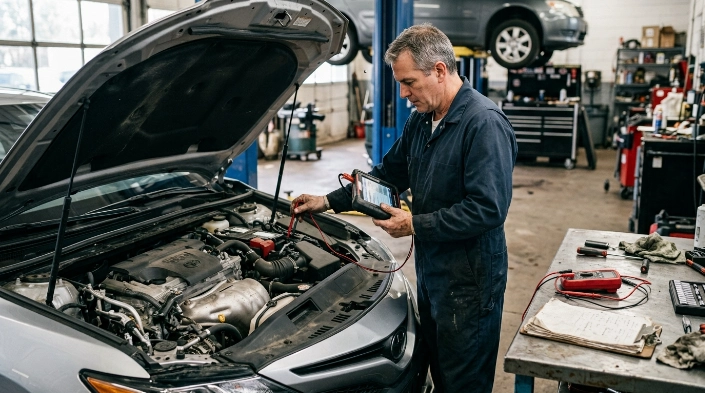
P0606 belongs to the group of codes where good diagnosis matters more than quickly swapping a part. A technician may need to verify voltage, grounds, communication networks, PCM connectors, stored codes, and manufacturer service information.
AAA notes that many repair shops charge roughly $120–$159 per labor hour, although rates can fall below $100 or rise above $200 in some markets. You can review AAA’s explanation of current mechanic labor rates before comparing estimates.
Pro tip: Don’t authorize a $1,000-plus computer solely because a basic scanner displays P0606. Ask what electrical and software checks were performed first.
Does programming add to the P0606 repair cost?
It often can. A replacement PCM may need vehicle-specific calibration before it operates correctly.
Depending on the vehicle, programming may also interact with the immobilizer or anti-theft system. A replacement computer therefore isn’t always a simple unplug-and-install job.
- VIN-specific configuration may be required.
- Manufacturer calibration software may be required.
- Immobilizer synchronization may be necessary on some models.
- Existing keys or smart keys may need to remain available during service.
- Additional module setup can vary by model year and trim.
Never assume a programming sequence found online applies to your vehicle. Procedures can change even between two model years of the same car.
Section Takeaway: P0606 can be a relatively small electrical or software repair, but a confirmed PCM failure commonly turns it into a four-figure job. Pay for proper diagnosis before paying for the module.
What Does the P0606 Code Mean?
P0606 generally means the PCM or ECM detected a problem with its internal processor or internal self-check. It is a generic OBD-II powertrain diagnostic trouble code.
A PCM, or powertrain control module, is one of the vehicle’s primary computers. Depending on the vehicle design, it may control or coordinate engine, emissions, transmission, and other powertrain functions.
An ECM, or engine control module, is a similar term commonly used for the computer managing engine functions. Manufacturers don’t always use these names in exactly the same way.
Does P0606 mean the PCM is definitely bad?
No. An internal module failure is an important possibility, but the code needs diagnosis before replacement.
The PCM depends on stable battery voltage, clean grounds, reliable connectors, correct software, and communication with other modules. Problems around those systems can affect what the module sees.
- Weak or unstable system voltage
- Poor PCM power or ground connection
- Corroded or damaged connectors
- Harness damage
- Software or calibration problems
- Water or heat damage
- Internal PCM processor failure
Locksmith’s note: If P0606 appears together with a no-start or security warning, don’t immediately blame the key fob. PCM and immobilizer communication problems can produce symptoms that look like a key problem.
What Causes a P0606 Code?
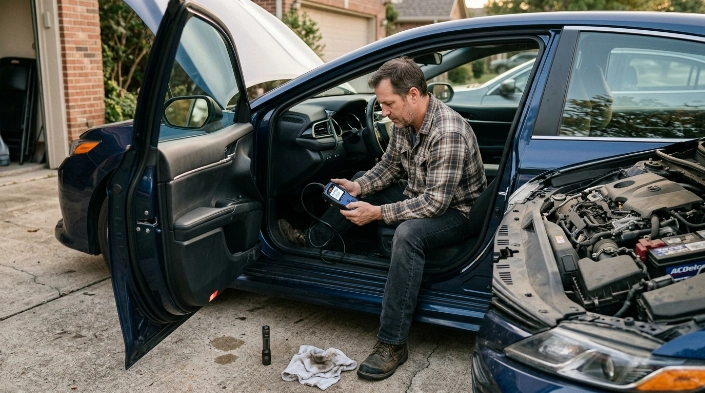
The most serious cause is an internal PCM processor failure. However, a technician should look for supporting evidence instead of using the code as a one-part diagnosis.
1. Internal PCM or ECM failure
Electronic components inside the module can fail from age, heat, electrical damage, moisture, or another internal defect. If power, grounds, wiring, and software all test correctly, module replacement becomes more likely.
2. Low or unstable voltage
Modern vehicle computers need consistent voltage. A weak battery, charging-system problem, poor terminal connection, or voltage drop can create unusual module behavior.
That’s why battery and charging checks often belong near the beginning of diagnosis. Replacing an expensive PCM before checking its power supply is backwards.
3. Damaged power or ground circuits
A computer can’t work correctly without clean power and ground paths. High resistance, looseness, corrosion, or damaged wiring can interfere with those circuits.
4. Connector or harness problems
A loose terminal can be enough to cause an intermittent problem. Water intrusion and corrosion around module connectors deserve particular attention.
5. PCM software or calibration issue
Some problems may be addressed through an updated manufacturer calibration instead of hardware replacement. The technician should check applicable service information for your exact year, make, model, engine, and VIN.
You can also search NHTSA’s manufacturer communications and recall resources for information connected with your vehicle.
Pro tip: A software update is vehicle-specific. Don’t install files, firmware, or programming instructions from an unverified source.
How Should a Mechanic Diagnose P0606?
A good P0606 diagnosis should confirm why the code returned rather than simply clearing it. A basic OBD2 scanner is useful for discovering the code, but deeper testing often needs professional equipment.
- Scan all modules: Check P0606 plus communication, voltage, immobilizer, and other stored codes.
- Review freeze-frame data: Look at conditions present when the fault was recorded.
- Check the battery and charging system: Confirm the module is receiving stable voltage.
- Inspect power and grounds: Test the PCM’s actual power and ground circuits.
- Inspect wiring and connectors: Look for corrosion, water, damaged terminals, and harness problems.
- Check manufacturer service information: Look for relevant calibration updates or technical guidance.
- Confirm module failure: Replace the PCM only after reasonable external causes have been ruled out.
Can an OBD2 scanner diagnose P0606?
A basic scanner can usually read and clear the trouble code. That doesn’t mean it can prove that the PCM itself has failed.
Professional diagnosis may require an advanced scan tool capable of viewing multiple modules, live data, freeze-frame information, and communication faults. Module programming usually needs manufacturer-compatible software or equipment.
Clearing P0606 and seeing whether it returns can provide information, but it isn’t a repair. Don’t repeatedly erase the code while ignoring drivability or electrical problems.
Diagnostic note: If the vehicle stalls, loses throttle response, won’t start, or develops serious electrical behavior, avoid treating it as an OBD2-scanner-only problem. Have the vehicle professionally evaluated.
Can You Fix P0606 Yourself?
You can perform basic checks, but PCM replacement and programming are usually not beginner-friendly repairs. The risk rises further when the computer is tied to the vehicle’s anti-theft system.
Safe checks you can make first
- Read and record every diagnostic trouble code before clearing anything.
- Save freeze-frame information if your scanner supports it.
- Check whether the battery is obviously weak or discharged.
- Inspect accessible battery connections for looseness or corrosion.
- Look for obvious water damage or disconnected wiring.
- Check your owner’s information for warning-light guidance.
- Search for open recalls using your VIN.
NHTSA allows owners to check a vehicle for open recalls by VIN or license plate. If a related defect is covered by a recall, the manufacturer normally provides the recall remedy without charging the owner.
What shouldn’t you do?
- Don’t order a PCM based only on P0606.
- Don’t assume a cheap used PCM will plug in and work.
- Don’t follow random model-specific key or security programming sequences.
- Don’t disconnect modules while circuits are powered.
- Don’t guess at PCM pin tests without correct wiring information.
- Don’t assume clearing the check-engine light fixed the fault.
One issue I watch closely with module-related work is anti-theft compatibility. Installing the wrong computer can leave you with a vehicle that still won’t start, even if the replacement module itself works.
Locksmith’s note: Before buying a replacement module, verify compatibility using the vehicle’s VIN and manufacturer information. Key, immobilizer, and control-module synchronization requirements differ by vehicle.
Dealership vs Independent Shop for P0606 Repair
Either can be a good choice. The important question is whether the facility has the correct diagnostic and programming equipment for your vehicle.
| Option | Advantages | Possible Drawbacks | Best Fit |
|---|---|---|---|
| Dealership | Factory information, OEM programming access, brand-specific experience | Labor and OEM parts can cost more | Newer vehicles or difficult programming cases |
| Independent specialist | Potentially lower labor rate and flexible repair options | Not every shop can program every module | Vehicles supported by the shop’s diagnostic equipment |
| Automotive electronics specialist | Strong module, network, and electrical troubleshooting experience | Availability varies by area | Complex or intermittent electrical faults |
Questions to ask before approving the repair
- What tests confirmed the PCM is bad?
- Were power and ground circuits load-tested?
- Were battery and charging voltage checked?
- Were relevant software updates checked?
- Does the quoted price include programming?
- Will immobilizer or key relearning cost extra?
- Is the replacement PCM new, remanufactured, or used?
- What warranty covers the part and programming?
A good estimate should explain more than the final dollar amount. You should understand whether you’re paying for diagnosis, module hardware, installation, programming, or all four.
Cost tip: Get a written estimate before authorizing a PCM. Programming and anti-theft setup should be clearly identified if they’re required for your vehicle.
P0606 Repair Cost FAQ
How much does P0606 usually cost to fix?
A simple electrical or connection problem may cost a few hundred dollars or less. If testing confirms a failed PCM, the total can commonly reach roughly $1,000–$1,500, while some vehicles can cost $2,000 or more after parts, labor, and programming.
Can I drive with a P0606 code?
I wouldn’t assume the vehicle is safe to keep driving simply because it still runs. P0606 involves a major control module, and symptoms can vary. If the engine stalls, loses power, runs poorly, or shows additional warnings, have the vehicle inspected before continued driving.
Will disconnecting the battery fix P0606?
Disconnecting the battery may temporarily clear certain learned values or warnings, but it doesn’t repair an internal processor, wiring, or software fault. It can also create additional initialization issues on some vehicles. Diagnose the underlying cause instead of using battery disconnection as a repair.
Can a weak battery cause P0606?
Low or unstable voltage can interfere with vehicle electronics, so checking battery condition and charging voltage is sensible during diagnosis. However, finding P0606 doesn’t prove the battery is responsible. The PCM’s power, grounds, wiring, and internal condition still need evaluation.
Can an OBD2 scanner clear P0606?
Many OBD2 scanners can erase P0606 after reading it. Clearing a diagnostic trouble code only removes stored information and turns off the warning temporarily. If the underlying fault remains, the PCM can detect it again and reset the code.
Does a replacement PCM need programming?
Many replacement PCMs require calibration or configuration for the specific vehicle. Some vehicles also require anti-theft or immobilizer synchronization. Requirements vary by year, make, model, engine, and trim, so confirm them using the VIN before ordering a replacement.
Should I replace the PCM as soon as I see P0606?
No. Record all codes and have the vehicle’s battery, module power, grounds, wiring, connectors, communication network, and applicable software information checked first. A PCM is expensive enough that replacement should follow a confirmed diagnosis rather than a single scanner result.
For most owners, the smartest approach to P0606 is simple: diagnose first and price the PCM second. A $100–$300 diagnostic bill can be money well spent if it prevents an unnecessary four-figure computer replacement.
If testing does confirm an internal PCM failure, ask for a written quote covering the module, labor, programming, anti-theft setup if applicable, taxes, and warranty. That gives you a meaningful P0606 repair cost instead of an incomplete parts price.
