
How to Fix P0700: Transmission Control System Malfunction

Quick Answer
P0700 means the transmission control system has detected a fault and requested the check engine light. You normally do not fix P0700 by replacing one specific part; first scan the transmission control module for its companion codes, then diagnose the fluid, wiring, sensors, solenoids, or mechanical problem those codes identify. Before paying for a major repair, it is also worth checking your VIN through the NHTSA recall lookup.
Best order for fixing P0700
- Scan the TCM: Use a scanner that can communicate directly with the transmission control module.
- Record companion codes: The additional transmission code usually gives you the useful diagnostic direction.
- Check the fluid: Verify the correct level, condition, and manufacturer-specified fluid type.
- Inspect wiring: Look for damaged connectors, corrosion, poor grounds, or wiring problems.
- Test before replacing: Confirm a suspected sensor, solenoid, or circuit before buying parts.
- Clear and verify: After the repair, clear the codes, road-test the vehicle when appropriate, and scan it again.
Stop driving if:
- The transmission is slipping, losing drive, overheating, making severe noises, or entering limp mode.
P0700 can look frightening on an OBD2 scanner because the description sounds like a complete transmission failure. In practice, the code is usually a starting point rather than the final diagnosis.
In my work around vehicle electronics, scanners, immobilizers, and control modules, I see the same mistake often: someone reads P0700 with a basic scanner and immediately starts pricing a transmission. The smarter approach is to find the transmission code sitting behind P0700 first.
In This Guide
What Does the P0700 Code Mean?
P0700 is a generic OBD-II transmission-control trouble code. It usually means the transmission control module, or TCM, detected a fault and requested that the engine or powertrain control module turn on the malfunction indicator lamp.
Definition: A P0700 code is best understood as a transmission warning flag. It tells you to investigate the transmission controller for more detailed diagnostic trouble codes.
The TCM is the computer that monitors and controls many automatic-transmission functions. Depending on the vehicle, it watches sensors, commands shift solenoids, manages hydraulic pressure, and communicates with other modules.
- TCM: Transmission control module.
- ECM: Engine control module.
- PCM: Powertrain control module, which may combine engine and transmission-related functions.
- MIL: Malfunction indicator lamp, commonly called the check engine light.
- DTC: Diagnostic trouble code stored when a control module detects a fault.
The important point is that P0700 does not identify a failed transmission component by itself. A sensor, solenoid, electrical circuit, hydraulic problem, fluid issue, or internal mechanical fault can all lead to a transmission code that accompanies it.
Why does my scanner only show P0700?
A basic OBD2 reader may communicate mainly with the engine or powertrain module. It can display P0700 without having enough module access to retrieve the more useful transmission code.
I have seen this situation create unnecessary panic. The owner assumes the scanner found a bad transmission when the tool has only displayed the request from the transmission controller.
- Basic scanner result: P0700 may be the only visible code.
- Enhanced scanner result: The tool may enter the transmission module and retrieve additional codes.
- Professional diagnosis: A technician may also review live data, electrical values, service information, and commanded transmission functions.
That distinction matters. Replacing parts based on P0700 alone is guessing.
Section Takeaway: P0700 tells you that the transmission control system needs further diagnosis. The companion TCM code is normally more useful than P0700 itself.
How Do You Fix P0700 Step by Step?
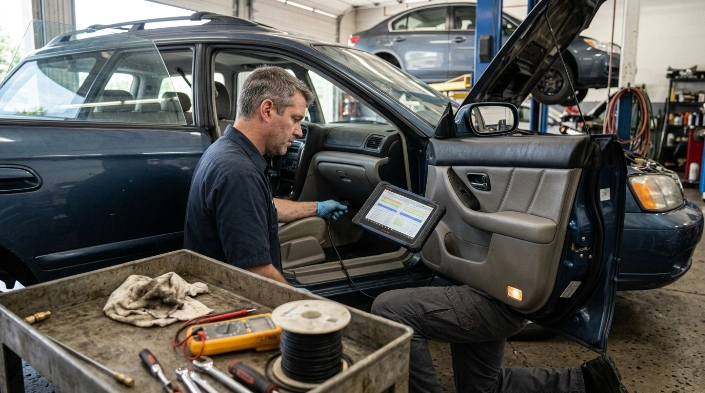
To fix P0700 correctly, diagnose the fault stored in the transmission controller instead of treating P0700 as the failed component. The repair sequence below keeps you from jumping directly to expensive parts.
1. Scan every relevant module
Start with a complete scan before clearing anything. Record P0700 plus every transmission, communication, voltage, engine, and ABS-related code the scanner can access.
Freeze-frame information can also help when the vehicle provides it. That data may show operating conditions present when a code was stored.
Technician’s note: Do not erase codes before recording them. Clearing memory can remove useful clues and make an intermittent problem harder to reproduce.
2. Access the transmission control module
If your current reader only displays P0700, use a scanner that specifically supports the TCM on your year, make, model, and transmission. Vehicle coverage matters more than the words printed on the scanner box.
Once connected, record the specific TCM codes. These codes should decide your next tests.
- Enter the transmission or TCM menu.
- Read stored, pending, and history codes when supported.
- Save or photograph the results.
- Check relevant live data.
- Follow the diagnostic path for the companion code.
3. Check the transmission fluid correctly
Low, degraded, overheated, contaminated, or incorrect transmission fluid can contribute to shifting and hydraulic-control problems. However, never assume every P0700 needs a fluid change.
Fluid-check procedures vary widely. Some transmissions use a dipstick, while others require a specific fluid temperature and inspection plug procedure.
- Verify the specification: Use only the fluid type listed for the vehicle and transmission.
- Check the level correctly: Follow the manufacturer’s temperature and vehicle-position procedure.
- Inspect condition: Look for obvious contamination, discoloration, or a burnt smell.
- Look for leaks: Inspect the transmission case, cooler lines, pan area, and nearby connections.
Do not overfill the transmission to cure a code. Incorrect fluid level can create its own problems.
4. Inspect power, grounds, wiring, and connectors
Electrical faults can imitate expensive transmission problems. Before condemning a control module or internal transmission component, inspect the circuits involved in the companion code.
- Loose or corroded electrical connectors
- Damaged harness insulation
- Fluid intrusion into connectors
- Broken or backed-out terminals
- Poor module grounds
- Low system voltage or charging problems when other voltage-related codes are present
Never substitute visual inspection for electrical testing when the diagnostic procedure calls for voltage, resistance, continuity, or signal measurements. A wire can look fine and still fail under load.
5. Test the component named by the companion code
The companion code may direct you toward a speed sensor, shift solenoid, pressure-control circuit, torque-converter clutch system, gear-ratio problem, or another transmission function. Test that circuit before replacing the part.
This is where service information for the exact vehicle becomes important. Connector pinouts, resistance specifications, hydraulic tests, and access procedures differ between transmissions.
6. Repair the confirmed fault
The correct repair depends entirely on the test results. It might involve repairing a wire, correcting fluid level, replacing a sensor or solenoid, servicing a valve body, updating a module, or repairing internal transmission damage.
A P0700 code by itself does not justify replacing the TCM or transmission. Confirm the failure first.
Pro tip: Module replacement may require vehicle-specific setup or programming. Confirm the procedure before installing any electronic control module.
7. Clear the codes and verify the repair
After the fault is repaired, clear the applicable codes and operate the vehicle according to the manufacturer’s verification procedure. Then scan every relevant module again.
- Confirm P0700 does not return.
- Confirm the companion transmission code stays cleared.
- Check transmission operation.
- Review live data if the original diagnosis involved sensor or shift information.
- Recheck for leaks or electrical problems after the repair.
If P0700 returns, do not repeatedly erase it. Return to the TCM and check which underlying code has returned with it.
Section Takeaway: The proper P0700 repair process is scan, identify the underlying TCM code, test the relevant system, repair the confirmed fault, and verify the result. Parts swapping is not a diagnostic strategy.
What Causes a P0700 Code?
P0700 can be triggered by many transmission-related faults because it is an umbrella warning rather than a component-specific code. The exact cause depends on the additional codes, symptoms, and vehicle design.
Common areas to investigate
- Transmission fluid problem: Low level, leaks, incorrect fluid, overheating, or degraded fluid can interfere with hydraulic operation.
- Shift solenoid fault: Electrical or mechanical solenoid problems can affect gear changes.
- Speed sensor problem: Input or output speed signals help the controller determine transmission operation and gear ratio.
- Pressure-control problem: Hydraulic pressure faults can produce slipping, harsh shifts, or incorrect gear operation.
- Torque-converter clutch fault: Electrical, hydraulic, or mechanical problems can prevent normal converter clutch operation.
- Wiring or connector damage: Opens, shorts, corrosion, poor terminals, and damaged harnesses can interrupt control circuits.
- Valve-body problem: Worn or sticking hydraulic components can affect pressure and shift timing.
- Internal transmission wear: Clutches, seals, bearings, or other components can eventually create ratio or pressure problems.
- Control-module issue: A TCM fault is possible, but it should be confirmed before replacement.
What companion codes might appear with P0700?
The exact code set differs by vehicle, but several generic transmission codes illustrate why reading the TCM matters. These examples describe different diagnostic directions rather than automatic part replacements.
| Example Code | General Area | What You Investigate |
|---|---|---|
| P0715 | Input/turbine speed sensor circuit | Sensor signal, wiring, connector, related mechanical input |
| P0720 | Output speed sensor circuit | Output-speed signal and its circuit |
| P0730 | Incorrect gear ratio | Fluid pressure, slipping, sensor data, hydraulic or internal problems |
| P0740 | Torque-converter clutch circuit | Circuit, solenoid operation, valve body, converter-related faults |
| P0750 | Shift solenoid A malfunction | Solenoid, wiring, hydraulic operation, control commands |
Do not order a component just because its name appears in a code description. A circuit code can be caused by the part, its wiring, its connector, its power supply, or another condition affecting the system.
Section Takeaway: P0700 has many possible causes. The additional transmission codes and proper electrical or hydraulic testing narrow the list.
Can You Drive With a P0700 Code?
Whether you should drive with P0700 depends on how the transmission is behaving. Because the code does not reveal the underlying failure, you should not assume the vehicle is safe simply because it still moves.
Stop driving and consider a tow when the transmission shows severe symptoms. Continuing to drive a slipping or overheating transmission can turn a smaller fault into more extensive damage.
- Transmission slipping: Engine speed rises without matching vehicle acceleration.
- Loss of drive: The vehicle struggles or fails to move in drive or reverse.
- Limp mode: The transmission remains in a limited gear or severely restricts performance.
- Severe delayed engagement: Drive or reverse engages after a long delay or with a hard impact.
- Overheating warning: Stop if the vehicle indicates transmission overheating.
- Burning smell: Heat or fluid-related damage may be occurring.
- Abnormal mechanical noise: Grinding, heavy banging, or similar symptoms deserve immediate attention.
If the only symptom is a check engine light and the transmission feels normal, arrange diagnosis promptly instead of ignoring it. Avoid towing heavy loads, hard acceleration, or a long trip until you understand the fault.
A recurring transmission behavior that you believe may represent a broader vehicle safety defect can also be submitted through the NHTSA vehicle safety problem reporting system. That process is separate from diagnosing your individual vehicle.
P0700 is also not a crash-safety rating. If you are researching a vehicle’s broader crashworthiness and safety performance, the Insurance Institute for Highway Safety maintains separate vehicle ratings and safety research.
Section Takeaway: Mild symptoms still deserve prompt diagnosis. Slipping, overheating, loss of drive, severe shifting, or limp mode are good reasons to stop driving and arrange professional help.
How Much Does It Cost to Fix P0700?
There is no single P0700 repair price because the code does not identify the failed component. Published repair estimates can range from roughly a hundred dollars for a relatively minor issue to several thousand dollars when major transmission work is required.
Your actual cost depends on the underlying TCM code, vehicle, transmission design, parts availability, labor rate, and location. Diagnosis should come before the repair quote.
| Finding | Possible Work | Relative Cost |
|---|---|---|
| Connector or minor wiring fault | Terminal, connector, or harness repair | Usually lower than major mechanical repair |
| Fluid-related problem | Leak repair, level correction, or appropriate service | Varies greatly with the source of the problem |
| Sensor or solenoid fault | Testing and component replacement | Moderate in many applications, but access matters |
| Valve-body or control problem | Hydraulic or electronic repair and possible programming | Can become substantial |
| Internal mechanical damage | Transmission repair, rebuild, or replacement | Usually the highest-cost outcome |
The worst budgeting mistake is accepting a major repair solely because a generic reader showed P0700. Ask which transmission-specific codes were retrieved and what tests confirmed the recommended repair.
For another repair-cost reference or help finding a qualified facility, AAA Automotive Services provides repair information, cost-estimation tools, and approved-shop resources.
Pro tip: Ask for the companion codes and diagnostic findings in writing before approving expensive transmission work. A code description alone is not the same as a confirmed failed part.
What Scan Tool Do You Need for P0700?
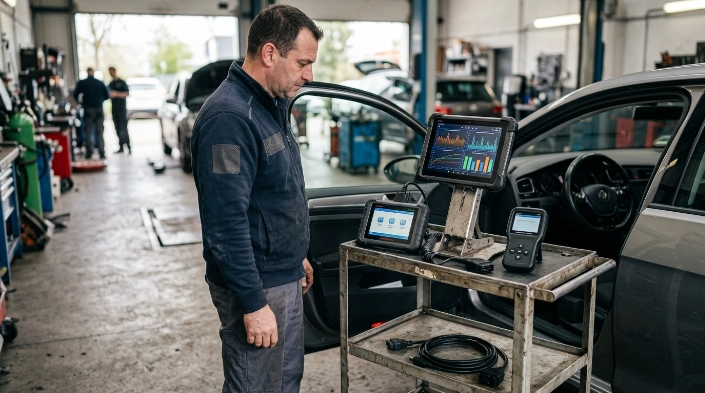
The most useful scanner for P0700 is one that can access the transmission control module on your specific vehicle. A tool that only reads generic engine codes may stop at P0700 and leave you without the code that matters most.
| Capability | Basic OBD2 Reader | Enhanced All-System Scanner | Professional Scan Platform |
|---|---|---|---|
| Read generic P0700 | Usually | Yes | Yes |
| Access TCM codes | Often limited or unavailable | Often, when vehicle coverage supports it | Generally broad coverage |
| Transmission live data | Usually limited | Common on supported vehicles | Usually extensive |
| Bidirectional testing | No | Available on some tools and vehicles | Common when supported by the vehicle |
| Best use | Basic code checks | Serious DIY diagnosis | Advanced diagnosis and repair verification |
Check coverage before buying a scanner
Do not assume an “all-system” label guarantees every function on every vehicle. Confirm that the tool supports transmission-module access for your exact year, make, model, engine, and transmission.
- TCM code reading and clearing
- Transmission live-data support
- Vehicle-specific module coverage
- Software-update policy
- Bidirectional tests if you need them
- CAN-FD or newer network support when required by your vehicle
For most owners, retrieving the companion code is the critical upgrade over a basic reader. Advanced active tests are useful, but they should be performed only when you understand what the command does.
Section Takeaway: A cheap scanner can confirm P0700, but a compatible TCM-capable scanner is normally required to move from warning code to useful diagnosis.
P0700 Frequently Asked Questions
Will clearing P0700 fix the problem?
No. Clearing P0700 only erases the stored warning until the control modules detect the fault again. Diagnose and repair the companion transmission code before treating the problem as solved.
Can low transmission fluid cause P0700?
Low fluid can contribute to pressure, slipping, ratio, or shift-related faults that cause the transmission controller to store codes. P0700 may then appear as the general transmission warning, but you still need the companion code to confirm the diagnostic direction.
Does P0700 mean my transmission control module is bad?
No. P0700 means the transmission control system detected a problem; it does not prove the TCM itself failed. Wiring, sensors, solenoids, fluid problems, hydraulic faults, and internal transmission issues may also be responsible.
Can a bad battery cause P0700?
Low voltage can interfere with vehicle electronics and may contribute to module or circuit faults, especially when several voltage or communication codes appear together. Test the battery and charging system when the code pattern suggests a power-supply problem rather than assuming the battery caused every P0700.
Will changing the transmission fluid fix P0700?
It can help only when the underlying diagnosis identifies a fluid-related problem that proper service can correct. A fluid change will not repair a broken wire, failed sensor, damaged solenoid circuit, or worn internal component.
Why does P0700 come back immediately after I clear it?
An active transmission fault may still be present. Scan the TCM again and note which specific code returns, then diagnose that circuit or system before clearing anything else.
Can I diagnose P0700 with a basic OBD2 scanner?
A basic reader may identify P0700 but may not access the transmission controller. If it cannot display TCM codes, use a compatible enhanced scanner or have a qualified repair facility perform a full module scan.
Final takeaway: Do not try to “fix P0700” by guessing at parts. Read the TCM, find the companion code, test the affected system, repair the confirmed cause, and scan the vehicle again before calling the job complete.
