
P0715 Repair Cost: What You’ll Pay to Fix It in 2026

Quick Answer
P0715 repair cost depends on why the transmission computer lost a reliable input/turbine speed-sensor signal. As of September 2026, a useful U.S. benchmark is about $395–$506 for an average vehicle speed sensor replacement, but a P0715 repair may cost less for a connector issue or considerably more when wiring, mechanical transmission parts, or deeper diagnosis is required. An OBD2 code is a diagnostic clue, not proof that the speed sensor itself has failed.
What affects the final P0715 bill?
- Diagnostic time: The shop must confirm whether the sensor, connector, wiring, or another transmission component caused the code.
- Sensor access: An easily reached sensor costs less in labor than one hidden behind other components.
- Electrical damage: Corroded terminals, broken wires, and intermittent faults can require additional testing.
- Mechanical problems: A damaged reluctor, shaft, torque converter, or internal transmission fault can turn P0715 into a larger job.
- Vehicle differences: Make, model, year, transmission design, parts choice, and local labor rates all change the price.
Best money-saving move
- Ask what test confirmed the failed component before authorizing a replacement sensor.
Seeing P0715 on an OBD2 scanner can make a transmission problem sound more expensive than it may be. The code identifies a signal-circuit problem, but it does not hand you a guaranteed failed-part diagnosis.
I approach this type of code by proving the fault before pricing the repair. That matters because replacing a good sensor won’t repair a broken wire, damaged connector, or mechanical transmission problem.
In This Guide
What Does P0715 Mean?
P0715 is a generic OBD-II powertrain trouble code describing a problem with the input/turbine speed sensor “A” circuit. The vehicle computer has detected a missing, unreliable, or otherwise abnormal signal from that circuit.
Definition: An input or turbine speed sensor measures how fast the transmission’s input shaft is rotating. The transmission control module, or TCM, uses that information with other data to manage shifting and confirm that the transmission is behaving as expected.
Many sensors create an electrical signal as a shaft or reluctor passes the sensor. The computer interprets that changing signal as rotational speed.
The exact design varies by transmission. That’s why the word “A” matters on vehicles using more than one transmission speed sensor.
Does P0715 automatically mean the sensor is bad?
No. A failed input speed sensor is one possible cause, but P0715 can also appear when the sensor itself is working.
- Open wiring: A broken wire interrupts the signal.
- Shorted wiring: Damaged insulation can alter or eliminate the expected voltage.
- Connector trouble: Corrosion, fluid contamination, or loose terminals can create an intermittent signal.
- Reluctor damage: A damaged mechanical trigger can keep a good sensor from producing a normal pattern.
- Transmission problems: Internal mechanical issues can sometimes produce speed readings the computer considers implausible.
- Control-system faults: Less common PCM or TCM problems remain possible after basic circuit checks pass.
This distinction is important when discussing cost. The scanner identifies where the computer noticed trouble, not which replacement part you should buy.
Technician’s note: Always identify the transmission and the manufacturer’s designated sensor “A” before ordering parts. Location, electrical specifications, and testing procedures vary by vehicle.
Section Takeaway: P0715 means the computer detected a problem with the transmission input/turbine speed-sensor circuit. It does not prove the sensor itself needs replacement.
How Much Does P0715 Cost to Fix?
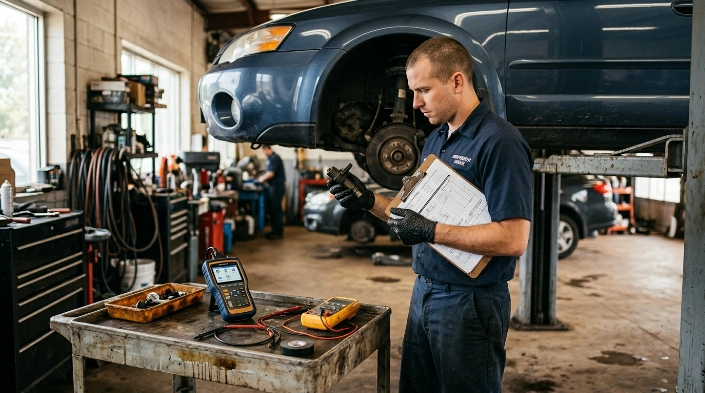
There is no responsible single P0715 repair price. A damaged terminal and an internal transmission problem can store the same code while requiring completely different repairs.
For budgeting, a current September 2026 RepairPal estimate places an average U.S. vehicle speed sensor replacement at about $395–$506, including estimated parts and labor. That is a related speed-sensor benchmark, not a guaranteed price for an input/turbine sensor on your vehicle.
| Confirmed Repair | Typical Cost Level | What Changes the Bill |
|---|---|---|
| Connector cleaning or terminal repair | Usually lower | Damage, corrosion, access, and diagnostic time |
| Harness or wiring repair | Low to high | Location of the fault and time needed to trace an intermittent circuit |
| Speed sensor replacement | Moderate | Current related U.S. speed-sensor benchmark is about $395–$506; the exact P0715 sensor may differ |
| Reluctor or shaft-related repair | Moderate to high | Transmission design and required disassembly |
| Internal transmission or torque-converter work | Potentially high | Vehicle, transmission type, confirmed damage, parts, and labor |
| PCM/TCM diagnosis or repair | Variable | Programming, module cost, and manufacturer-specific procedures |
Why can two P0715 quotes be so different?
Labor access makes a major difference. One transmission may place the sensor where a technician can reach it quickly, while another design requires removing surrounding parts.
- Vehicle make and model: Sensor design and service procedure vary.
- Transmission type: Different units place sensors in different locations.
- OEM versus aftermarket parts: Parts prices can differ substantially.
- Local labor rates: Shop pricing varies by region.
- Diagnostic difficulty: Intermittent electrical problems may take longer to find than a completely dead sensor.
- Related codes: Multiple transmission codes can broaden the testing process.
Cost tip: Ask for a written estimate that separates diagnostic labor, parts, repair labor, fluids, programming, taxes, and any recommended additional work.
I would not treat the $395–$506 speed-sensor benchmark as a quote. Use it as a starting reference only after testing points toward a replaceable sensor.
Section Takeaway: A straightforward sensor repair may land in the several-hundred-dollar range, but the true P0715 repair cost follows the confirmed cause.
What Causes P0715 and Which Repairs Change the Cost?
The most common P0715 causes involve the sensor circuit, but the signal depends on both electrical and mechanical components. That is why diagnosis should come before the parts order.
1. Failed input/turbine speed sensor
The sensor may stop producing a usable signal or become erratic. When testing confirms this failure, replacement is usually more predictable than chasing an intermittent harness problem.
2. Damaged wiring or connector
Heat, vibration, moisture, road debris, previous repairs, and fluid contamination can damage a transmission sensor circuit. A tiny terminal problem may produce an intermittent P0715 that appears only during certain driving conditions.
- Broken insulation
- Corroded terminals
- Loose connector locks
- Pulled or stretched wires
- Shorts to power or ground
- Damaged previous splices
Electrical repairs can be inexpensive once the fault is visible. Finding a hidden break inside a harness can take far more labor.
3. Metal debris at a magnetic sensor
Some transmission speed sensors can collect metallic debris. Heavy contamination may interfere with the signal or point toward wear elsewhere in the transmission.
Cleaning should never become a substitute for finding the source of abnormal debris. Repeated contamination deserves closer inspection.
4. Reluctor, shaft, or mechanical damage
The sensor needs a usable mechanical target to generate reliable information. Damage to the reluctor or related rotating components can make a good sensor look faulty.
This is where repair cost can rise quickly. Access may require substantially more transmission disassembly than an external sensor replacement.
5. Internal transmission or torque-converter fault
P0715 can appear alongside abnormal shifting or other transmission codes when the problem reaches beyond the electrical sensor circuit. A qualified transmission diagnosis becomes important before approving major work.
Transmission specialist’s note: Don’t authorize internal transmission work solely because P0715 is stored. Ask what mechanical or live-data test supports the diagnosis.
6. PCM or TCM problem
A control-module fault is possible, but it should not be the first assumption. Power, ground, wiring, connectors, sensor operation, and manufacturer guidance should be checked first.
Section Takeaway: P0715 can come from a cheap connection problem or a much larger transmission fault. The code alone cannot tell you where your repair falls on that range.
How Is P0715 Diagnosed Before Repair?
A proper P0715 diagnosis starts with the scan tool, but it should not end there. Reading the code is only the first step.
- Scan every relevant module: Record P0715 plus transmission, engine, ABS, communication, and related speed-sensor codes.
- Save freeze-frame data: Note vehicle speed, engine RPM, load, and other conditions present when the code was stored.
- Inspect the circuit: Check the sensor connector, wiring harness, terminals, fluid contamination, chafing, and heat damage.
- Compare live data: Watch the input/turbine speed reading and compare it with other relevant transmission and engine data.
- Test to manufacturer specifications: Verify the required power, ground, resistance, waveform, or signal procedure for that exact vehicle.
- Check mechanical components when needed: Inspect the reluctor, shaft, sensor mounting, and transmission condition if electrical testing passes.
- Repair and verify: Clear the code after the confirmed repair, perform the appropriate road test, and rescan the vehicle.
Why freeze-frame and live data matter
An intermittent sensor may look normal while the vehicle sits in the shop. Freeze-frame data gives the technician a snapshot of operating conditions when the fault occurred.
Live data can also expose a speed reading that suddenly drops out, jumps, or fails to match expected transmission behavior. That evidence is far more useful than guessing from the code description.
Check for vehicle-specific information
Before expensive work, I also recommend checking your VIN for applicable NHTSA recalls and manufacturer communications. A vehicle-specific technical bulletin can sometimes change the diagnostic path.
The manufacturer’s service information should remain the authority for sensor location and electrical specifications. Generic diagrams are not a substitute for the exact year, engine, and transmission.
Diagnostic note: Never copy resistance values, wire colors, pin locations, or testing procedures from another model simply because both vehicles store P0715.
Section Takeaway: A good P0715 diagnosis proves whether the signal problem comes from the sensor, circuit, mechanical trigger, or transmission before parts are replaced.
Can You Drive With a P0715 Code?
Whether you should continue driving depends on the vehicle’s behavior. P0715 can cause harsh or erratic shifting, fail-safe operation, reduced performance, or other transmission symptoms.
A steady check-engine light with otherwise normal operation is different from a vehicle that suddenly will not shift correctly. Treat the symptoms as seriously as the code.
Stop driving and arrange help when:
- Shifting becomes severe: The transmission bangs into gear, slips, or fails to select expected gears.
- The vehicle loses normal power: Fail-safe or limp behavior makes normal traffic operation difficult.
- You smell burning fluid: Heat or transmission-fluid problems need immediate attention.
- The vehicle stalls: Unexpected stalling creates a driving risk.
- Several warning lights appear: Multiple faults may indicate a broader electrical or drivetrain problem.
- Anything feels unsafe: Pull over rather than testing the vehicle in traffic.
AAA advises drivers to address a check-engine warning promptly and to stop when a vehicle is running abnormally. That is sensible guidance here because P0715 can affect automatic transmission operation.
If the car shifts normally, a short trip for professional diagnosis may be reasonable in some cases. I still would not ignore the code for weeks while waiting for symptoms to get worse.
Safety note: If you’re unsure whether the vehicle can be driven safely, have it inspected or transported instead of attempting a diagnostic road test yourself.
Section Takeaway: P0715 is not automatically a tow-only code, but harsh shifting, stalling, slipping, loss of drive, overheating, or other abnormal behavior are reasons to stop driving.
Can You Fix P0715 Yourself or Do You Need a Mechanic?
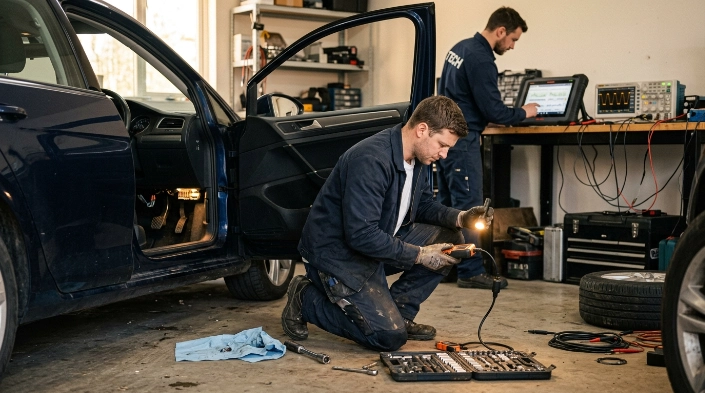
A basic visual inspection is realistic for many DIY owners. Accurate diagnosis gets harder when the problem requires electrical waveform testing, transmission access, or manufacturer-level service information.
DIY checks that make sense
- Confirm the code: Use an OBD2 scanner and record every stored or pending code.
- Save information first: Record freeze-frame data before clearing anything.
- Inspect accessible wiring: Look for broken insulation, loose plugs, corrosion, and obvious damage.
- Check fluid concerns: Note visible leaks or abnormal fluid condition without assuming they caused P0715.
- Research the exact vehicle: Use service information for your year, engine, and transmission.
When professional diagnosis is worth paying for
Professional help makes sense when the sensor is difficult to reach, the code returns after a basic repair, or live data needs deeper interpretation. It is also smart when transmission symptoms are severe.
- P0715 returns immediately after clearing.
- Several transmission codes are present.
- Wiring damage is not visible.
- The speed-sensor signal is intermittent.
- The transmission slips or shifts harshly.
- Testing requires an oscilloscope or advanced scan tool.
- Internal transmission damage is suspected.
You are not limited to a dealership for many diagnostic repairs. The Alliance for Automotive Innovation’s right-to-repair information describes access to diagnostic and repair information for independent repair facilities.
If you want another shop option, the AAA Approved Auto Repair locator can help you find participating facilities. Whatever shop you choose, ask for diagnostic findings before approving expensive transmission components.
Questions to ask before approving a P0715 repair
- What test showed the sensor or circuit failed?
- Did you inspect the wiring and connector first?
- Was input-speed live data checked?
- Are there other transmission codes?
- Does the estimate include diagnostic labor?
- Is the proposed part OEM or aftermarket?
- How will the repair be verified afterward?
Repair tip: The best quote isn’t automatically the lowest initial number. Compare what each shop tested and what the estimate actually includes.
Section Takeaway: DIY inspection can uncover obvious problems, but signal testing and transmission diagnosis often justify professional equipment and vehicle-specific service information.
P0715 Repair Cost FAQ
How much does it usually cost to fix P0715?
There is no universal P0715 price because the code can come from a sensor, wiring, connector, mechanical trigger, or transmission problem. As a September 2026 planning reference, an average vehicle speed sensor replacement is about $395–$506, but your input/turbine sensor repair can differ significantly.
Does P0715 mean I need a new transmission?
No. P0715 identifies a problem with the input/turbine speed-sensor circuit and can be caused by a failed sensor or electrical fault. Internal transmission problems are possible, but they should be confirmed through additional testing before a transmission replacement or overhaul is approved.
Can a bad speed sensor cause P0715?
Yes. A failed input/turbine speed sensor is one recognized cause of P0715. However, damaged wiring, poor connections, reluctor damage, and other faults can interrupt the same signal, so the sensor should be tested rather than replaced solely because the code appeared.
Can bad wiring cause P0715?
Yes. An open wire, short circuit, corroded connector, loose terminal, or damaged harness can prevent the transmission computer from receiving a reliable speed signal. Electrical testing is especially important when the code appears intermittently.
Can I clear P0715 with an OBD2 scanner?
Most suitable OBD2 scanners can clear stored powertrain codes, but clearing P0715 does not repair the problem. If the sensor circuit remains faulty, the vehicle will usually detect the condition again and store the code after the required monitoring conditions occur.
Is an aftermarket input speed sensor okay?
A reputable aftermarket sensor may be suitable when its application is correctly verified, but quality and compatibility vary. Match the part to the exact vehicle and transmission, and use the manufacturer’s part information rather than assuming two similar-looking sensors are interchangeable.
What is the cheapest way to fix P0715?
The cheapest reliable approach is to diagnose the circuit before buying parts. Inspect the connector and wiring, review live data, and verify the sensor against manufacturer specifications so you do not spend money replacing a component that was working correctly.
Final Takeaway: P0715 repair cost depends far more on the confirmed failure than on the code itself. A current speed-sensor replacement benchmark is several hundred dollars, but wiring, connector, mechanical, and internal transmission problems can move the final bill in either direction.
Start with a complete scan and proper diagnosis. Once you know why the input/turbine speed signal is failing, you can compare repair quotes with a much clearer idea of what you’re paying for.
