
P0730 Repair Cost: What You Might Pay in 2026

Quick Answer
A P0730 repair can cost roughly $150 to $500 for a fluid-related service, while a solenoid, sensor, or wiring repair may run several hundred dollars. Internal transmission work can reach about $2,500 to $7,000 or more, depending on the vehicle and damage. Before approving an expensive repair, get a written diagnosis and compare it with an AAA repair cost estimate for your specific vehicle.
Typical P0730 Cost Levels
- Diagnostic testing: Often about $80-$200 before any repair is approved.
- Fluid or filter service: Roughly $150-$500 depending on fluid type and transmission design.
- Sensor or wiring repair: Often around $150-$600 when an electrical fault causes incorrect readings.
- Shift solenoid repair: Commonly about $250-$1,100 depending on access and whether a complete solenoid pack is required.
- Valve body work: A repair or replacement may reach roughly $800-$2,500.
- Internal transmission damage: Rebuilding or replacing the transmission can cost about $2,500-$7,000 or more.
Before Spending Money
- Have the fluid, related trouble codes, speed-sensor data, and transmission operation checked before assuming the transmission needs replacement.
P0730 sounds expensive because it involves the transmission. However, the code itself does not tell you which component has failed.
When I’m working through a transmission-ratio fault, I want the diagnosis before the parts quote. This guide explains the likely P0730 repair cost, what can trigger the code, and when a major transmission repair is justified.
In This Guide
What Does P0730 Mean?
P0730 means “Incorrect Gear Ratio.” The transmission control system has detected that the actual transmission ratio does not match the ratio it expected.
This is a generic OBD-II powertrain trouble code. You may see it after scanning a check engine light with an OBD2 scanner.
Definition: A gear ratio describes the relationship between transmission input speed and output speed. The control module can compare those speeds to determine whether the transmission is operating in the expected gear.
Does P0730 mean the transmission is bad?
No. P0730 does not automatically mean you need a rebuilt or replacement transmission.
The ratio can be wrong because the transmission is slipping. It can also appear when a speed sensor, solenoid, fluid-pressure problem, wiring fault, or control issue affects operation.
- Mechanical slip: Internal clutches or other components may not hold the commanded gear.
- Low fluid pressure: Low fluid, leaks, or hydraulic faults can prevent proper clutch engagement.
- Sensor problems: Incorrect input or output speed data can make the calculated ratio appear wrong.
- Shift-control problems: A sticking or failed solenoid may prevent the requested gear from engaging.
- Control issues: Certain vehicles can have manufacturer-specific software or calibration concerns.
That final point matters. A Chrysler technical bulletin archived by NHTSA documented P0730 on certain 2012 vehicles where a transmission control module software update was part of the repair procedure.
That does not mean software causes every P0730. It shows why vehicle-specific service information matters before replacing expensive hardware.
Technician’s note: never order a transmission, valve body, or solenoid pack from the generic code alone. Check the year, make, model, transmission, and manufacturer service information first.
How Much Does P0730 Cost to Repair?
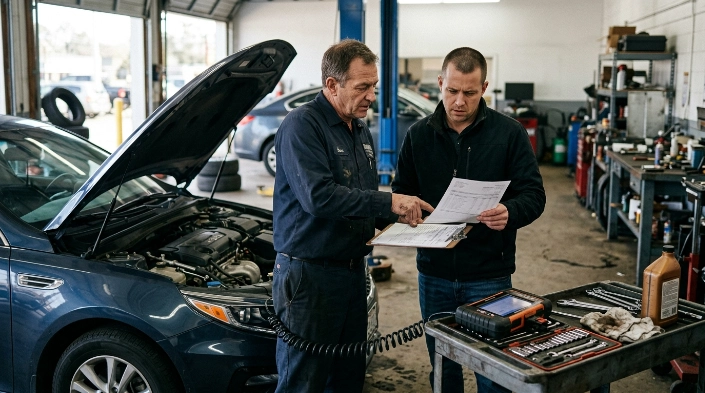
A realistic P0730 repair cost can range from a few hundred dollars to several thousand. The actual bill depends on what caused the incorrect gear ratio.
As of 2026, the ranges below are useful budgeting figures for U.S. repair shops. They are not quotes for a specific vehicle.
| Possible Repair | Typical Broad Range | Why Cost Varies |
|---|---|---|
| Transmission diagnosis | $80-$200 | Shop labor rate and testing required |
| Fluid and filter service | $150-$500 | Fluid specification, capacity, filter access |
| Speed sensor or wiring repair | $150-$600 | Sensor location and wiring damage |
| Shift solenoid or solenoid pack | $250-$1,100 | Individual solenoid versus complete assembly |
| Valve body repair or replacement | $800-$2,500 | Parts design, calibration, and labor |
| Transmission rebuild or replacement | $2,500-$7,000+ | Vehicle, transmission type, parts, labor, and unit choice |
A luxury vehicle, truck, hybrid, specialty transmission, or difficult-to-source unit can fall outside these ranges. Local labor rates also make a large difference.
Why is the P0730 cost range so wide?
P0730 describes a result rather than a failed component. A $200 repair and a $5,000 repair can sometimes begin with the same trouble code.
- Vehicle design: Some sensors and solenoids are easy to access, while others require major disassembly.
- Fluid requirements: Transmission fluid type and capacity vary significantly.
- Parts choice: New, rebuilt, remanufactured, and used assemblies carry different prices.
- Labor rates: Shop rates vary by region and facility.
- Damage level: A control problem costs far less than worn internal clutch packs.
- Diagnostic time: Intermittent slipping may require more testing than a constant fault.
AAA also notes that repair estimates vary with labor rates, parts prices, vehicle details, and the vehicle’s condition. That is why I treat online figures as budgeting numbers rather than final prices.
Cost tip: ask for a written estimate that separates diagnostic charges, parts, labor, fluid, taxes, and additional fees.
Section Takeaway: A P0730 code can mean anything from a relatively modest fluid or electrical repair to major internal transmission work. Diagnosis determines the price, not the code number.
What Causes a P0730 Code?
The common causes fall into fluid, electrical, hydraulic, control, and mechanical categories. The exact probability changes with the vehicle and transmission.
1. Low or incorrect transmission fluid
Automatic transmissions depend on fluid pressure to apply clutches and control shifts. A low fluid level can reduce pressure and contribute to slipping.
Using the wrong fluid can also affect shift quality. Always follow the manufacturer’s fluid specification.
2. Old, contaminated, or overheated fluid
Fluid condition can reveal useful clues. Dark fluid, burnt odor, or visible contamination can point toward overheating or internal wear.
Fluid condition alone does not prove the transmission needs rebuilding. It should be considered with scan data and operating symptoms.
3. Input or output speed sensor problems
The control module relies on speed information to calculate transmission ratio. A faulty sensor or damaged circuit can provide inaccurate data.
That is one reason I would not condemn the gearbox until the speed signals have been checked.
4. Shift solenoid problems
Shift solenoids help control hydraulic circuits inside many automatic transmissions. A failed or sticking solenoid can prevent the commanded gear from applying correctly.
Some transmissions allow an individual solenoid repair. Others use integrated assemblies that cost more.
5. Valve body or hydraulic pressure problems
The valve body routes transmission fluid through specific hydraulic passages. Wear, sticking valves, or pressure-control problems can interfere with gear engagement.
This category often requires more advanced testing. Throwing parts at it can become expensive quickly.
6. Internal transmission wear
Worn clutches, bands, seals, gears, bearings, or other internal components can cause true mechanical slip. This is where P0730 repair costs become much higher.
Symptoms such as severe slipping, burnt fluid, debris in the pan, or repeated ratio errors can increase concern. They still need proper confirmation.
7. Vehicle-specific software or service issues
Do not overlook technical service information. Manufacturers sometimes publish diagnostic updates for specific combinations of model, year, and transmission.
You can also use the NHTSA recall and vehicle safety search to check your VIN and review available safety information.
Diagnostic tip: a generic OBD2 scanner is useful for identifying P0730, but advanced transmission diagnosis may require manufacturer-level data and bidirectional testing.
Section Takeaway: P0730 can be caused by something outside the transmission’s hard parts. Fluid, sensors, wiring, solenoids, software, and hydraulic controls deserve attention before major repairs are authorized.
Can You Drive With P0730?
Extended driving with an active P0730 is not a good idea, especially if the transmission is slipping. Slip creates heat and may increase internal wear.
How urgent it is depends on the symptoms. A stored code with normal operation is different from a vehicle that barely moves.
Stop driving and arrange professional help if you notice:
- Severe slipping: Engine speed rises without a matching increase in vehicle speed.
- Loss of drive: The vehicle struggles to move in Drive or Reverse.
- Harsh engagement: Shifts produce strong bangs or jolts.
- Limp mode: The transmission stays locked in a limited gear.
- Overheating: A transmission-temperature warning appears.
- Fluid leakage: A substantial transmission-fluid leak is visible.
- Burning smell: You notice a strong burnt-fluid odor.
If the car operates normally, avoid assuming it is safe for a long trip. Get the code diagnosed soon because an intermittent problem can become worse.
Clearing the code is not a repair. If the underlying fault remains, the control module can detect the ratio error again.
Safety note: if shifting becomes unpredictable or the vehicle cannot maintain normal road speed, towing is safer than trying to drive it to a shop.
How Is P0730 Diagnosed?
A good P0730 diagnosis moves from basic checks toward expensive internal testing. The goal is to prove the cause before replacing components.
When I approach a ratio fault, I want the complete scan report first. P0730 may be only one piece of the puzzle.
A sensible diagnostic sequence
- Scan every available module. Record P0730 and any related transmission, speed-sensor, electrical, or communication codes.
- Save freeze-frame data. This can show the operating conditions present when the fault was detected.
- Check transmission fluid correctly. Follow the manufacturer procedure because fluid-level checks vary between vehicles.
- Inspect the fluid condition. Look for contamination, unusual odor, or evidence of excessive wear.
- Inspect leaks and wiring. Check connectors, harness damage, corrosion, and obvious fluid loss.
- Review live speed data. Compare input and output speed signals while confirming they behave plausibly.
- Evaluate shift operation. A capable scan tool may provide transmission data that a basic code reader cannot access.
- Test hydraulic or internal components. Move to pressure tests or internal inspection only when earlier checks justify them.
Should you replace the transmission immediately?
Not from P0730 alone. A major transmission quote should be supported by test results, symptoms, and inspection findings.
AAA recommends getting a detailed written repair estimate and considering a second opinion for expensive repairs. Their guidance on written auto repair estimates is useful when a transmission quote reaches thousands of dollars.
Ask the shop what specifically failed. “It has P0730” is not a complete explanation for a rebuild.
- What test confirmed the failed component?
- Were other transmission codes stored?
- Was the fluid level checked using the correct procedure?
- Were input and output speed signals tested?
- Was line pressure checked if appropriate?
- Were manufacturer bulletins reviewed?
- Is the quoted unit new, rebuilt, remanufactured, or used?
- What warranty applies to parts and labor?
Shop tip: for a high-cost repair, ask the technician to show you the diagnostic findings that led to the recommendation.
Section Takeaway: The best P0730 diagnosis starts with scan data and basic checks, then advances toward hydraulic and internal testing. Expensive parts should follow evidence.
Which P0730 Repair Should You Approve?

Approve the repair that matches a confirmed fault. Do not choose a repair only because it is the cheapest or because it sounds most comprehensive.
Fluid service versus transmission repair
A fluid or filter service makes sense when the diagnosis shows a correctable fluid issue and the manufacturer allows the service. It is not a guaranteed cure for mechanical damage.
If the transmission already slips severely or contains internal debris, changing fluid cannot restore worn friction components.
Sensor or wiring repair
This can be one of the less expensive outcomes. It should be supported by abnormal sensor data, circuit testing, or visible wiring damage.
Ask whether the faulty signal was confirmed before the sensor was ordered.
Shift solenoid repair
A solenoid repair makes sense when electrical testing, scan data, or hydraulic behavior points toward the solenoid circuit. Accessibility has a large effect on labor cost.
Some units require removal of a pan or valve-body components. Others package several solenoids together.
Valve body repair
A valve-body problem can produce pressure and shift-control faults without requiring a complete transmission replacement. Diagnosis often requires transmission-specific knowledge.
Ask whether the shop repairs the original valve body or installs a replacement. Warranty terms can differ.
Rebuild versus replacement
If internal damage is proven, the conversation changes. A rebuild repairs the existing transmission, while replacement installs another complete unit.
| Option | Main Advantage | Main Question to Ask |
|---|---|---|
| Repair specific component | Keeps cost focused on the confirmed fault | What test proved this component failed? |
| Rebuild original transmission | Existing unit is disassembled and repaired | Which internal parts and updates are included? |
| Remanufactured transmission | Complete unit with defined rebuild process | What are the parts and labor warranty terms? |
| Used transmission | May reduce initial parts cost | What mileage, history, compatibility, and warranty are documented? |
For a major repair, compare at least the diagnosis, total installed price, warranty, and expected turnaround. AAA also provides guidance on choosing an auto repair shop and recommends clear estimates for costly work.
Do not forget recalls and service information either. If a manufacturer-covered defect applies to your specific VIN, the repair situation can be different.
Cost note: confirm whether the quote includes programming, adaptation procedures, fluid, cooler flushing, seals, taxes, and diagnostic labor before comparing two prices.
Section Takeaway: Match the repair to documented test results. For expensive P0730 repairs, compare the full installed price and warranty rather than the transmission price alone.
P0730 Repair Cost FAQ
How much does it usually cost to fix P0730?
P0730 can cost roughly $150-$500 when the cause is a serviceable fluid issue. Sensor, wiring, or solenoid repairs often cost several hundred dollars, while valve-body or internal transmission work can run from about $800 to $7,000 or more.
Can low transmission fluid cause P0730?
Yes. Low fluid can reduce hydraulic pressure and contribute to clutch slip or improper gear engagement.
You should also find the reason for the low level. Adding fluid without repairing a leak may only provide a temporary result.
Will changing the transmission fluid fix P0730?
It can help when incorrect fluid level or condition is the actual cause. A fluid change cannot repair worn clutches, damaged mechanical parts, a failed sensor, or a defective solenoid.
Can a bad shift solenoid cause P0730?
Yes. A shift-control fault can prevent the transmission from applying the gear commanded by the control module.
Testing should confirm the solenoid or circuit before replacement because several faults can create similar symptoms.
Can I diagnose P0730 with a basic OBD2 scanner?
A basic scanner can usually identify the stored powertrain code. Complete diagnosis may require transmission-specific live data, freeze-frame information, electrical testing, hydraulic tests, and manufacturer service information.
Does P0730 mean I need a new transmission?
No. P0730 only reports an incorrect gear-ratio condition and does not identify one failed part.
Fluid, electrical, sensor, solenoid, valve-body, software, or internal mechanical issues may cause it. Confirm the failure before approving transmission replacement.
Should I get a second opinion on a P0730 repair?
A second opinion is reasonable when the first recommendation involves a costly rebuild or transmission replacement. Ask both shops for the diagnostic findings, installed price, parts source, and written warranty so you can compare equivalent repairs.
Final takeaway: Don’t judge P0730 by the code name alone. Start with proper diagnosis, verify the fluid and scan data, then approve the repair supported by the evidence.
The difference between a sensor problem and internal transmission damage can be thousands of dollars. Spending money on a careful diagnosis first is usually the smartest place to start.
