
P0740 Causes: What Triggers a Torque Converter Clutch Code?

Quick Answer
P0740 usually means the vehicle detected a problem with the torque converter clutch circuit or its expected lockup operation. Common causes include a faulty torque converter clutch solenoid, damaged wiring, connector problems, low or incorrect transmission fluid, hydraulic faults, valve-body problems, or internal torque converter wear. Treat the code as a diagnostic clue rather than proof that one part has failed; AAA automotive guidance also emphasizes diagnosing the underlying problem instead of relying on a trouble code alone.
Most Likely Areas to Check
- TCC solenoid: The lockup solenoid may be electrically open, shorted, sticking, or unable to control fluid correctly.
- Wiring and connectors: Corrosion, damaged insulation, loose terminals, or transmission-fluid intrusion can interrupt the circuit.
- Transmission fluid: Incorrect level, wrong fluid specification, or degraded fluid can interfere with hydraulic clutch operation.
- Valve body: Hydraulic leakage or sticking valves can prevent proper torque converter clutch application.
- Torque converter: A worn lockup clutch can slip even when the control circuit is operating correctly.
- Internal transmission fault: Wear, pressure loss, or another transmission problem may contribute on some vehicles.
Best First Move
- Save all stored and pending codes, inspect the fluid using the vehicle-specific procedure, and check TCC wiring and live data before replacing the torque converter.
P0740 can be frustrating because an OBD2 scanner gives you a transmission-related code without identifying the failed component. In my experience with vehicle electronics and scan-tool troubleshooting, that is exactly where unnecessary parts replacement starts.
The better approach is to separate electrical, hydraulic, and mechanical possibilities. This guide explains the main P0740 causes, symptoms, diagnostic order, and repair directions to consider in 2026.
In This Guide
What Does the P0740 Code Mean?
P0740 is a generic powertrain diagnostic trouble code commonly described as a torque converter clutch circuit malfunction. It relates to the system that controls or monitors torque converter clutch lockup in an automatic transmission.
Definition: A torque converter clutch, often shortened to TCC, creates a more direct connection inside the torque converter at certain speeds and loads. Locking the converter reduces unnecessary slip and can lower engine RPM during cruising.
The transmission or powertrain control module commands this clutch through an electrical and hydraulic control system. If the computer detects an electrical fault or the expected lockup response does not occur, P0740 may be stored.
The exact detection strategy varies by make, model, year, and transmission. That is why the factory diagnostic information for your vehicle matters more than a generic code description.
- The code does not automatically condemn the torque converter.
- It does not prove the TCC solenoid is bad.
- It does tell you the lockup system needs testing.
What Are the Most Common P0740 Causes?
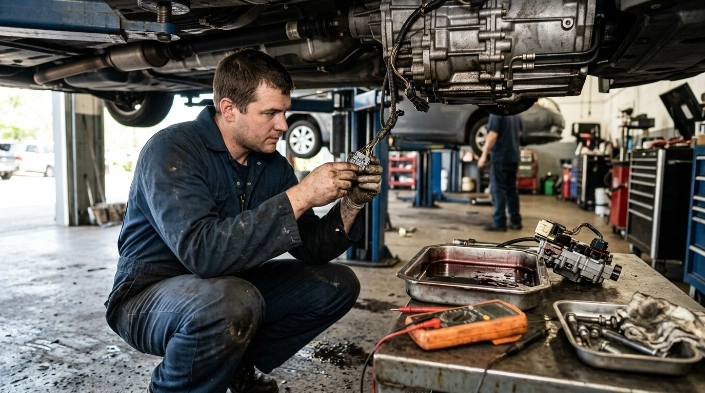
P0740 can have electrical, hydraulic, fluid-related, or mechanical causes. Start with the simpler external checks before assuming the transmission needs major internal work.
1. Faulty Torque Converter Clutch Solenoid
The TCC solenoid controls hydraulic fluid used to apply or release the converter clutch. A failed coil, internal sticking, or another solenoid fault can keep lockup from operating as commanded.
Do not replace the solenoid just because P0740 appears. Verify the circuit and follow the manufacturer test procedure first.
2. Damaged Wiring or Poor Electrical Connections
Transmission harnesses operate near heat, moisture, vibration, and road debris. Broken wiring, corroded terminals, loose pins, or fluid-contaminated connectors can create an intermittent or permanent TCC circuit problem.
- Inspect connector locks: A connector that is not fully seated may lose contact during vibration.
- Check terminal condition: Look for corrosion, bent pins, heat damage, or looseness.
- Inspect the harness: Pay attention to sections rubbing against brackets, exhaust components, or the transmission case.
3. Low, Incorrect, or Degraded Transmission Fluid
Automatic transmission fluid does more than lubricate parts. It also acts as the hydraulic medium that applies clutches and operates many transmission controls.
A low fluid level can reduce hydraulic pressure, while incorrect fluid can change clutch and shift behavior. Burnt or heavily contaminated fluid may also indicate overheating or internal wear.
Technician’s note: always use the fluid specification and level-checking procedure listed for your exact vehicle. Some newer transmissions require a temperature-specific service procedure and do not have a conventional dipstick.
4. Valve-Body or Hydraulic Pressure Problems
The valve body routes transmission fluid through internal passages. Wear, debris, sticking valves, or pressure leakage can prevent the torque converter clutch from receiving the hydraulic pressure it needs.
5. Worn Torque Converter Clutch
The clutch inside the torque converter can wear or slip. When the computer commands lockup but sees continued speed difference, the vehicle may store a torque-converter-related fault.
6. Internal Transmission or Control-System Problems
Less commonly, broader hydraulic wear, internal leakage, control-module issues, or vehicle-specific software concerns may contribute. These possibilities should be evaluated with the factory diagnostic procedure instead of guessed from the code alone.
| Possible Cause | Clue You May See | Useful Next Check |
|---|---|---|
| TCC solenoid fault | No commanded lockup or related electrical code | Circuit and solenoid testing to factory specifications |
| Harness or connector fault | Intermittent code or visibly damaged wiring | Connector inspection and circuit testing |
| Fluid or hydraulic issue | Slipping, abnormal shifts, low or degraded fluid | Correct fluid-level check and hydraulic diagnosis |
| Torque converter wear | Lockup slip or RPM remaining higher than expected | Live-data analysis and professional transmission testing |
Section Takeaway: P0740 does not identify one guaranteed failed component. Separate electrical faults from hydraulic and mechanical problems before approving expensive transmission work.
What Symptoms Can P0740 Cause?
Some vehicles show only a check-engine light, while others develop noticeable transmission symptoms. The difference depends on why the torque converter clutch system is malfunctioning.
- Check-engine light: P0740 may appear alone or alongside other transmission codes.
- Higher cruising RPM: Engine speed may stay above normal when the torque converter fails to lock.
- Transmission shudder: You may feel vibration or repeated engagement and release during attempted lockup.
- Reduced fuel economy: Continued converter slip can increase engine speed during steady driving.
- Unusual shifting: Some vehicles may develop harsh, delayed, or inconsistent transmission behavior.
- Overheating: Excessive converter slip can generate additional transmission heat.
A steady warning light with otherwise normal shifting requires a different level of urgency from severe slipping or loss of drive. Always judge the vehicle’s behavior as well as the code.
How Should You Diagnose P0740?
Diagnose P0740 by confirming the code, saving related scan data, checking the transmission fluid correctly, inspecting the electrical circuit, and then evaluating torque converter clutch operation. Do not start with the most expensive part.
- Scan every available code. Record stored, pending, transmission, voltage, speed-sensor, and solenoid-related faults before clearing anything.
- Save freeze-frame data. Record RPM, speed, temperature, load, and other available information captured when the code set.
- Check the transmission fluid. Follow the manufacturer procedure for level, temperature, condition, and fluid specification.
- Inspect wiring and connectors. Look for corrosion, loose terminals, heat damage, rubbed wiring, and fluid intrusion.
- Watch transmission live data. A capable scanner may show commanded TCC status, input speed, output speed, engine RPM, gear command, and transmission temperature.
- Follow vehicle-specific tests. Use the correct wiring diagram, resistance specifications, pressure tests, and service information for your exact transmission.
What Can an OBD2 Scanner Tell You?
A basic code reader can identify P0740 and may show freeze-frame information. A transmission-capable scan tool can provide much more useful data about clutch commands and transmission speeds.
For example, compare the command to engage the torque converter clutch with engine and transmission speed behavior. A command without the expected response helps narrow the problem, but it still does not prove which component failed.
- P0740 plus solenoid circuit codes: Prioritize electrical testing.
- P0740 plus speed-sensor codes: Verify the speed data used by the control module.
- P0740 with slipping and burnt fluid: Mechanical or hydraulic wear becomes more concerning.
- P0740 with normal operation: Look carefully for intermittent wiring, vehicle-specific logic, or an early-stage fault.
Technician’s note: transmission electrical testing and hydraulic diagnosis can require manufacturer wiring information, a professional scan tool, meters, and pressure-testing equipment. Refer the vehicle to a qualified transmission technician when testing moves beyond accessible external checks.
Section Takeaway: save the scan data before clearing P0740, then diagnose in an evidence-based order. The code is the beginning of the test process, not a parts list.
Can You Drive With a P0740 Code?
A vehicle with P0740 may remain drivable when the only symptom is a steady warning light, but continued driving is not automatically safe. Converter slip can increase transmission heat, and the underlying fault may worsen.
Avoid treating a code reader’s description as permission to continue a long trip. Check NHTSA vehicle safety information for recalls or manufacturer communications that may apply to your vehicle.
For broader vehicle-safety research, the Insurance Institute for Highway Safety is another useful independent resource.
- Stop driving if: the transmission slips badly or repeatedly loses drive.
- Arrange inspection if: shifting becomes harsh, delayed, or unpredictable.
- Avoid heavy loads if: the transmission temperature is high or the converter is clearly slipping.
- Consider towing if: you smell burnt fluid, see a major leak, or cannot maintain predictable vehicle speed.
What Repairs Can Fix P0740?
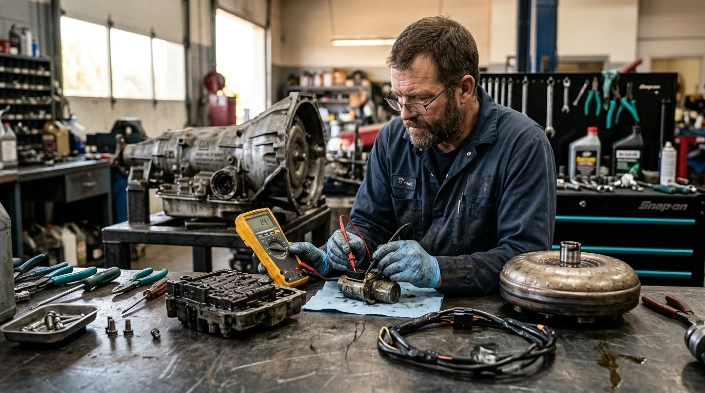
The correct P0740 repair depends entirely on what testing proves faulty. Replacing a torque converter, valve body, or transmission without diagnosis can turn a smaller electrical problem into an unnecessary major bill.
| Confirmed Finding | Typical Repair Direction |
|---|---|
| Damaged connector or harness | Repair the circuit or connector and verify operation |
| Failed TCC solenoid | Replace the confirmed faulty solenoid or applicable solenoid assembly |
| Incorrect fluid level or specification | Correct the cause and service fluid according to manufacturer requirements |
| Valve-body hydraulic fault | Repair or replace the confirmed valve-body component as appropriate |
| Worn converter clutch | Torque converter replacement and inspection for related transmission damage |
| Severe internal transmission wear | Internal repair, rebuild, or replacement based on inspection results |
Technician’s note: repair pricing varies widely by vehicle, transmission design, labor rate, diagnostic time, and whether the failed component is externally accessible. Get the confirmed diagnosis before comparing repair quotes.
P0740 FAQ
What is the most common cause of P0740?
There is no single most common cause across every make and transmission. TCC solenoid faults, wiring problems, fluid or hydraulic issues, valve-body faults, and torque converter clutch wear can all trigger P0740.
Can low transmission fluid cause P0740?
It can contribute on vehicles where low fluid reduces hydraulic pressure or prevents proper torque converter clutch application. Always determine why the fluid is low instead of simply topping it off.
Can a bad TCC solenoid cause P0740?
Yes. A failed, sticking, open, or shorted torque converter clutch solenoid can interfere with clutch operation, but the solenoid should be tested before replacement because wiring and hydraulic faults can produce similar symptoms.
Does P0740 mean the torque converter is bad?
No. A worn torque converter clutch is one possible cause, but P0740 can also result from wiring, connectors, solenoid problems, fluid issues, or hydraulic faults.
Can I clear P0740 with an OBD2 scanner?
A compatible scanner can usually clear the stored code, but clearing it does not repair the underlying problem. Save the original codes and freeze-frame data first because that information can help diagnose the fault.
Can changing the transmission fluid fix P0740?
Only when fluid condition, level, or specification is part of the actual problem. A fluid service will not repair broken wiring, an electrically failed solenoid, a worn converter clutch, or significant internal transmission damage.
Should I replace the transmission for P0740?
Not based on the code alone. A transmission rebuild or replacement should follow testing that confirms serious internal wear or damage after electrical, fluid, hydraulic, and control-system causes have been evaluated.
Final takeaway: P0740 tells you the torque converter clutch system is not operating or being monitored as expected. Start with complete scan data, correct fluid inspection, wiring checks, and vehicle-specific testing before replacing expensive transmission parts.
If the transmission is slipping severely, overheating, losing drive, or shifting unpredictably, arrange professional diagnosis rather than continuing to drive. A careful diagnosis can separate a repairable electrical or hydraulic fault from genuine internal transmission damage.
