
Can a Key Fob Cause a Car Security System Problem? Here’s How to Tell

Yes — a key fob can absolutely cause a car security system problem, but not every security-related symptom points to the fob itself. In many vehicles, the fob does two different jobs: it handles remote functions like lock and unlock, and it also helps the car’s immobilizer or anti-theft system decide whether the engine is allowed to start.
That distinction matters. A fob can unlock the doors normally and still fail to send a valid start authorization signal. In other cases, the fob battery is weak, the fob is damaged, or the car battery is low enough that the vehicle stops recognizing the key. The result can look like a security system fault even when the real issue is much smaller.
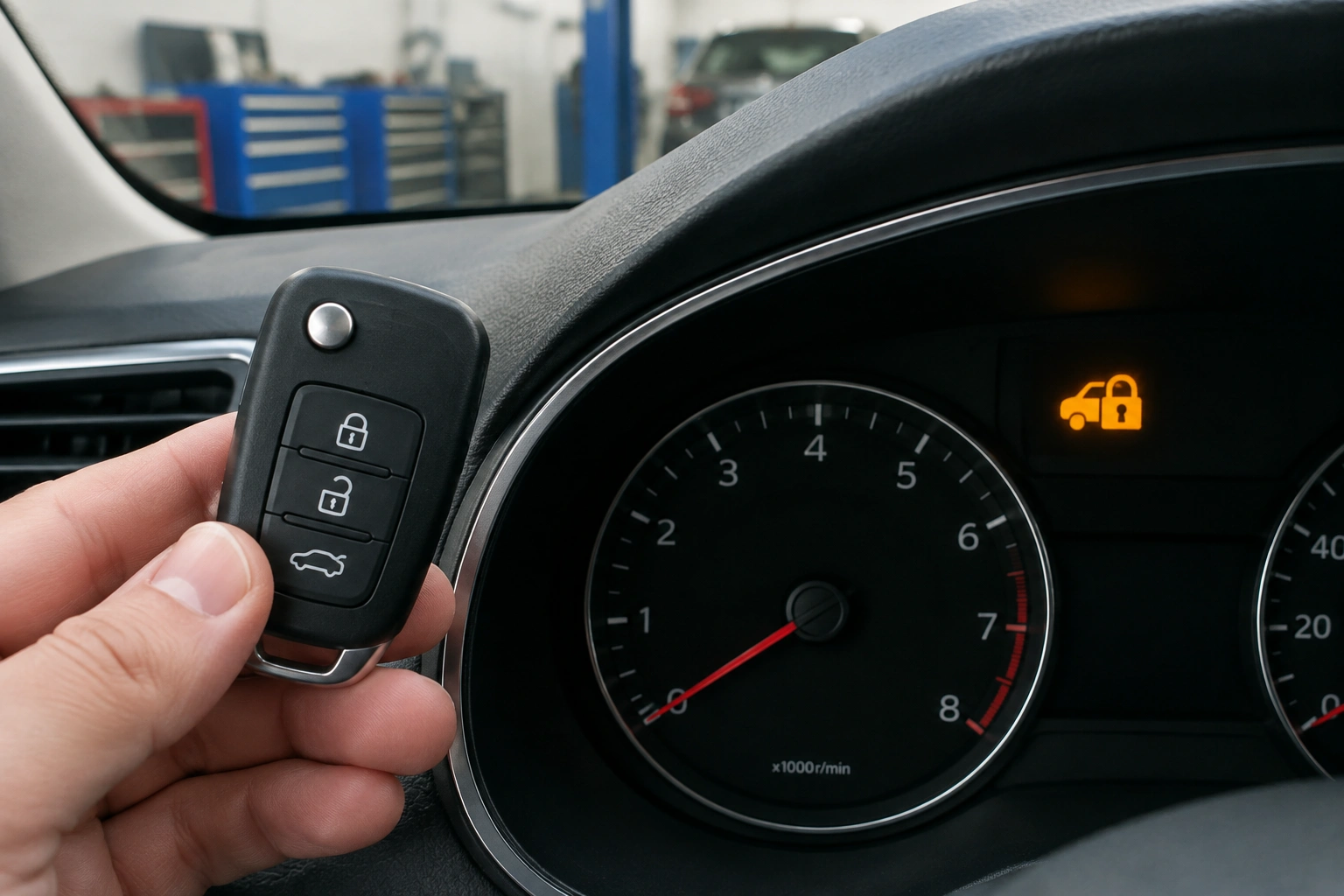
If your car is acting like the alarm or immobilizer is confused, the fastest path is to separate three possibilities: the key fob, the car battery, or the vehicle’s security system. That keeps you from replacing the wrong part first.
How the Key Fob and Security System Work Together
A modern key fob is more than a remote clicker. It usually contains a transponder chip or smart-key electronics that communicate with the vehicle’s anti-theft system. In plain language, the car is checking two things: “Can this fob control the locks?” and “Is this the right key to allow starting?” When that communication works, the car allows the engine to start. When it doesn’t, the car may crank and refuse to fire, flash a security light, or show a “key not detected” message.
Here’s the useful part: remote locking and starting are related, but they are not always the same circuit. So a fob can still lock the doors while failing the immobilizer check. That’s why people often assume the fob is “fine” until the car refuses to start.
The immobilizer is the part that prevents unauthorized starting. The transponder is the chip or signal inside the key/fob that the immobilizer checks. If the transponder signal isn’t accepted, the doors may still respond to remote entry, but the engine may not start.
For a deeper look at warning lights and no-start behavior, see our guide on security light flashing and the car won’t start.
Symptoms That Point to a Key Fob-Related Security Issue
The symptoms usually tell you more than the dashboard message does. These are the patterns I watch for first:
The car unlocks, but won’t start
This often means the remote function is working, but the transponder or smart-key authorization is not. A weak fob battery can do this, but so can a damaged chip inside the fob.
“Key not detected” or “no key present”
That message usually points to a communication problem between the fob and the vehicle. The fob battery may be weak, the fob may be too far from the receiver, or the car may have a vehicle-side issue.
The alarm goes off when you unlock or start the car
If the alarm reacts as though the car is being entered without permission, the system may not be recognizing the fob correctly. It can also happen after a car battery issue or a synchronization problem.
Intermittent locking or short range
When you have to stand right next to the car for the fob to work, the battery is a prime suspect. Physical damage, water exposure, or radio interference can create the same symptom.
One fob works, the other doesn’t
That is one of the best diagnostic clues you can get. If the spare fob works normally, the problem is usually with the original fob, not the car.
Most Likely Causes, in Order of Probability
When a key fob causes a car security system problem, the cause is usually one of these:
1. Weak or dead key fob battery
This is the first thing to check because it is common and easy to fix. A dead or weak battery can reduce signal strength enough that the car won’t recognize the fob reliably. The fob may still work at close range, which makes the problem misleading.
2. Damaged fob electronics or chip
If the casing is cracked, the buttons feel mushy, or the fob has been dropped in water, internal damage can interrupt the signal. A faulty transponder chip can prevent the anti-theft system from recognizing the key even if the buttons still work.
3. Signal interference or obstructions
Nearby electronics, metal objects, or even certain parking locations can interfere with the signal. This is more likely when the problem is intermittent and the fob works fine in another place.
4. Reprogramming or resynchronization needed
Some vehicles can lose synchronization after a battery replacement, a dead vehicle battery, or an electrical glitch. In that case, the fob may be healthy but no longer matched correctly to the car.
5. Car battery or immobilizer fault
A weak car battery can create false security symptoms. In some cases, the immobilizer system may also forget the transponder code after a dead car battery, a replacement fob, or an electrical issue.
AA1Car notes that if a smart key or smart fob is not being recognized, the fault may be in the key/fob chip itself, and dealer diagnosis with a factory scan tool may be needed to pinpoint the cause: anti-theft system troubleshooting.
Quick Checks You Can Do First
Before you buy anything, do these checks in order.
First: try the spare key fob
This is the fastest way to isolate the problem. If the spare works normally, you’ve narrowed it down to the original fob or its battery. If both fobs fail, the issue is more likely vehicle-side.
Second: replace the fob battery
If the fob has weak range, intermittent response, or only works very close to the car, replace the battery next. This is simple, inexpensive, and often the most sensible next step after testing the spare.
Third: check the car battery
If the dashboard is dim, the starter sounds weak, the car has been sitting, or other electrical systems are acting oddly, check the vehicle battery. A weak car battery can cause the alarm or immobilizer to behave erratically, or it can simply prevent cranking altogether. Those are different symptoms, but both can look like a fob problem at first.
Then: consider resync or professional diagnosis
If the spare fob does not help, the battery checks out, and the problem started after a battery event or electrical glitch, resynchronization or a deeper diagnosis becomes more likely.
Move away from possible interference
If the car works in one location but not another, try it in a different spot. Keep the fob away from phones, other key fobs, and metal objects while testing.
Test both lock/unlock and starting
Don’t stop at the door locks. A fob can unlock the car and still fail to authorize starting. That difference tells you whether you’re dealing with remote-entry failure or immobilizer/start-authentication failure.
Look for a weak-range pattern
If the fob only works when held right next to the door handle or start button, the battery is a strong suspect. That is one of the clearest signs that the signal is getting too weak.
Key Fob Battery vs Faulty Fob vs Car Battery
This comparison helps separate the most common lookalike problems.
| Symptom | Likely cause | What to try next |
|---|---|---|
| Fob works only at very close range | Weak key fob battery | Replace the fob battery first |
| Buttons work, but car says key not detected | Fob chip issue, weak battery, or sync problem | Try spare fob, then resync if supported |
| Both fobs fail after car battery died | Vehicle lost key recognition | Check vehicle battery and resynchronization procedure |
| Alarm triggers when unlocking | Fob not recognized or system mismatch | Test spare fob and check for vehicle battery issues |
| Remote works, but engine won’t start | Immobilizer or transponder issue | Try spare fob; if both fail, seek diagnosis |
A dead key fob battery is usually the cheapest thing to rule out. A car battery problem is more likely if the vehicle has been sitting, cranks slowly, or has other electrical oddities. If the dashboard lights are dim or the starter sounds weak, don’t blame the fob too quickly.
Step-by-Step Fixes for the Key Fob
Replace the key fob battery
If the battery is old, low, or you’re seeing weak range, replace it first. This is the simplest fix and often the most sensible starting point. Just match the battery type exactly and make sure it sits firmly in place.
Inspect the fob for damage
Check for cracks, loose buttons, corrosion, or signs of water exposure. If the casing is damaged, the internal board may be flexing or shorting. A fob that was washed, dropped, or stepped on can become unreliable even if it still works sometimes.
Try the fob in the backup/start position
Some vehicles have a specific spot near the steering column or start button where the fob can be read even when the battery is weak. If your owner’s manual shows an emergency start procedure, use that first. It can get the car started long enough to confirm the issue is signal-related, even if the fob battery is low.
Attempt resynchronization if your vehicle supports it
Some cars need the fob to be resynced after a battery loss or electrical glitch. The exact steps are vehicle-specific, so use the owner’s manual or the manufacturer’s procedure. That should be treated as general guidance, not a universal rule for every vehicle, because the wrong sequence can waste time or create more confusion.
Recheck with the spare after each step
If the spare works after you replace the battery or resync the original, that tells you the fix was effective. If nothing changes, the problem may be vehicle-side rather than in the fob.
For vehicles that show a specific key-system warning, our article on Nissan key system error walks through the battery-versus-car-side decision path in more detail.
When Reprogramming or Resynchronizing Is Needed
Reprogramming becomes a serious possibility when the fob battery is fine, the buttons still work, and the car suddenly stops recognizing the key after a battery change or electrical event. That’s often true if both lock/unlock and start authorization became unreliable around the same time.
What reprogramming usually does, in general terms, is restore communication between the fob and the car. What it won’t do is repair broken buttons, a cracked circuit board, or a dead car battery. So if the fob has physical damage, reprogramming may not solve anything.
If your car recognizes the fob sometimes but not always, resynchronization is worth considering. If both fobs fail completely, that points more strongly to the vehicle than to the individual fobs. If the vehicle requires factory-level registration for new keys or replacement smart fobs, dealer programming is more likely than a simple user reset.
When the Problem Is Not the Key Fob
Sometimes the fob gets blamed for a problem it didn’t create.
The car battery is weak
A weak vehicle battery can trigger security warnings, odd dashboard behavior, and no-start symptoms that look like fob failure. If the starter is sluggish or the electronics are acting strangely, check the car battery before assuming the fob is dead.
The immobilizer is the real issue
If the security light stays on, the engine cranks but won’t start, and both fobs fail, the immobilizer may not be recognizing the key at all. That is a vehicle-side diagnosis, not a simple battery swap.
The fob battery is fine, but the car still doesn’t see it
That often means the problem is in the car’s receiver, the immobilizer logic, or the synchronization between the two. At that point, guesswork gets expensive.
When to Replace the Battery, Repair the Fob, or Replace It Entirely
Replace the battery first if the fob has weak range, intermittent response, or slow recognition but no obvious physical damage.
Repair the fob if the casing is cracked, buttons are failing, or there’s corrosion that can be cleaned and the board is still intact.
Replace the entire fob if the internal electronics are damaged, the case is badly broken, or the fob has been water-damaged and behaves unpredictably. That’s often the most practical choice when the fob is already unreliable and repair would be temporary.
When to Consult a Locksmith, Dealer, or Mechanic
A locksmith is usually the best first call if the fob is lost, broken, or physically damaged and you need a replacement or cutting/programming help for a standard key or many remote fobs. They may also help when you have a spare but the original fob needs repair or duplication.
A dealer is often the better choice when the vehicle needs factory-level programming, when a smart key must be registered to the car, or when the brand’s security system requires proprietary tools. If both fobs fail and the vehicle may need a new immobilizer or factory scan-tool diagnosis, the dealer is often the most direct path.
A mechanic is usually the right choice when the symptoms point to the car itself — for example, a weak car battery, charging-system trouble, electrical faults, or an immobilizer problem that may be tied to the vehicle rather than the fob. If the security light, no-start issue, or erratic behavior continues after basic fob checks, a mechanic can help separate battery, charging, and anti-theft faults.
If you’re not sure which route fits your situation, start with the spare-fob test and battery checks first. That makes it much easier to know whether you need a locksmith, dealer, or mechanic next.
Preventing Future Key Fob Security Problems
A little prevention goes a long way here. Replace the fob battery before it gets completely weak, keep the fob dry, and avoid dropping it on hard surfaces. If you have a spare fob, keep it working and accessible. That spare can save you from a roadside diagnosis later and makes troubleshooting much easier the next time the car acts up.
If you want a broader troubleshooting path for a no-start condition, our guide on key fob not recognized by car is a good next step.
FAQs
Can a key fob really cause a car security system problem?
Yes. A weak battery, damaged chip, or lost synchronization can stop the car from recognizing the fob and trigger security-related symptoms.
Why does my car alarm go off when I use the key fob?
That usually means the car is not recognizing the fob correctly, or the system has a synchronization or vehicle battery issue.
Why won’t my car start even though the key fob unlocks the doors?
Remote unlocking and start authorization are different functions. The remote may work while the transponder or smart-key signal fails.
Do I need to reprogram the key fob?
Only if the battery is good and the car stopped recognizing the fob after a dead battery, replacement, or electrical glitch. Some vehicles allow a simple resync, while others need dealer-level programming.
Could the car battery be causing the issue instead?
Yes. A weak vehicle battery can create security warnings and no-start symptoms that look like a fob failure.
When should I stop troubleshooting and get help?
If both fobs fail, the security light stays on, or the car still won’t start after battery checks and a spare-fob test, it’s time for professional diagnosis.
