
Lost Key Fob? How to Start Your Car and Get Back on the Road

If you lost your key fob and need to start the car, the answer depends on what you actually lost.
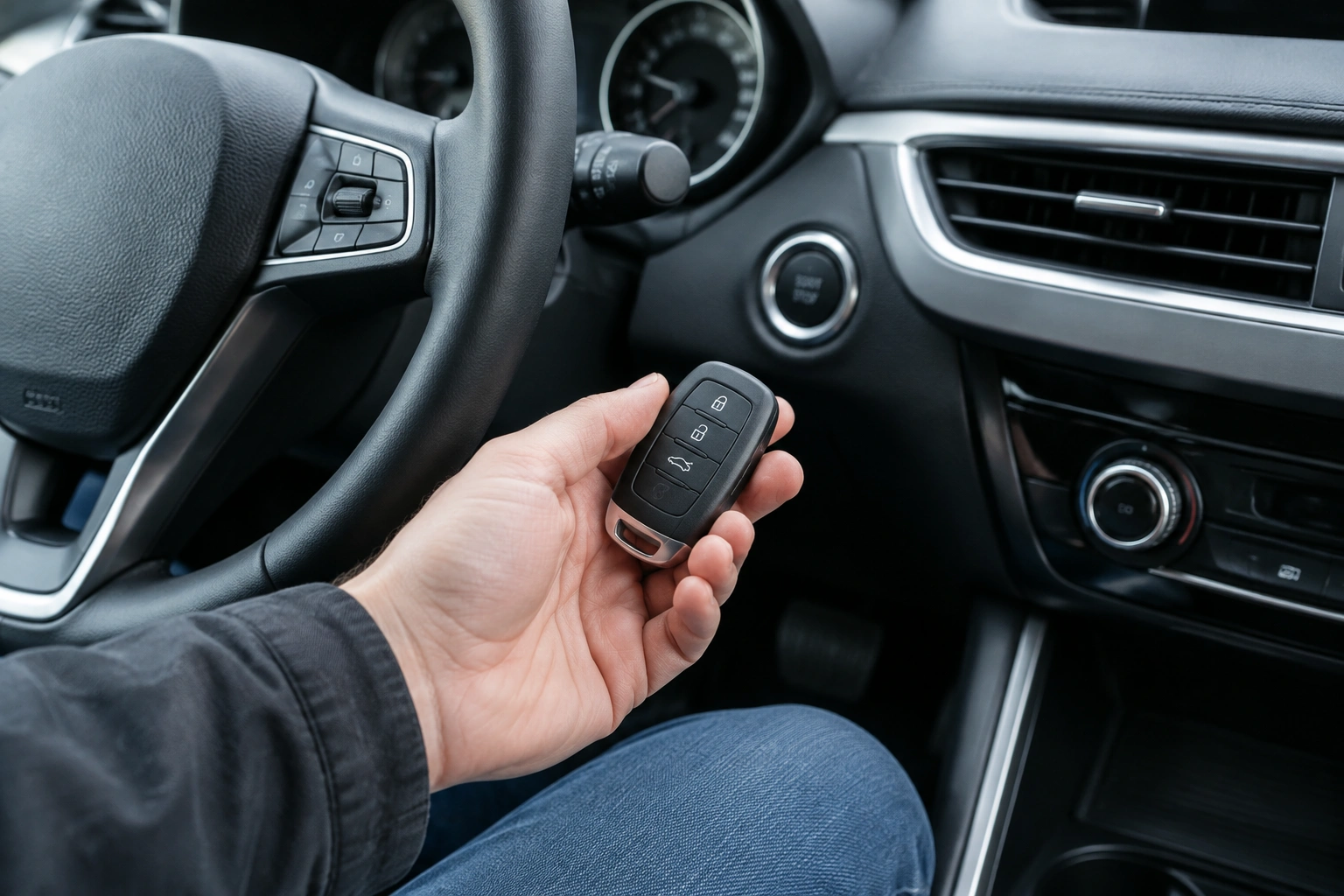
- If the fob is completely missing: most cars will not start normally, because the immobilizer needs the correct key data.
- If the fob is in your hand but the battery is dead: many vehicles can still be started using the fob’s backup detection method, if your owner’s manual supports it.
- If you have a spare key, valet key, or hidden mechanical key: you may be able to unlock the car and drive right away, depending on the vehicle.
Quick decision tree
- Lost fob: look for a spare first, then plan on replacement.
- Dead fob battery: try the vehicle’s emergency start procedure from the owner’s manual.
- Spare available: use it now, then replace the missing or weak fob later.
That distinction matters because a dead battery and a lost fob are not the same problem. A dead battery can be a quick fix. A missing fob usually means you need a replacement before the car will accept a start command.
What You Need Before You Try Anything
Before you spend time testing the wrong solution, gather the basics:
- Proof of ownership: registration, title, insurance card, or other documents a locksmith or dealer may request
- VIN: usually on the dashboard near the windshield, the driver’s door sticker, or your insurance paperwork
- Any spare key or valet key
- The owner’s manual if you have it
- A phone number for roadside assistance, a dealer, or an automotive locksmith
If you already know the fob is gone, don’t waste time repeatedly pressing the start button. That rarely solves a missing-key problem and can drain the car battery if you keep the ignition electronics awake.
Check What Kind of Key System Your Car Uses
The recovery path changes based on the key system.
Traditional metal key
A basic key turns a mechanical ignition. If you lost it, the car may still be easy to unlock or tow, but you’ll need a cut replacement key to drive again.
Transponder key
This looks like a regular key, but it contains a chip that talks to the immobilizer. The car may crank or unlock, but it usually will not start without the correct chip signal.
Remote key fob
This type usually unlocks doors and may include a hidden mechanical key. Some vehicles still use a separate key blade to start the ignition, while others rely on electronic authorization.
Smart key or push-button start
These systems usually require the fob to be present and recognized by the vehicle. If the fob is missing, the car often will not start at all until a replacement is programmed.
A useful rule: if the car needs electronic permission to start, losing the fob is more than a lockout problem — it’s a key authorization problem.
Step 1: Look for a Spare Key or Valet Key
This is the fastest legitimate way back on the road.
If you have a working spare, use it immediately. If someone in your household has the spare, that may solve the problem in minutes instead of hours.
A valet key is more limited. It may unlock and start the car, but not open the trunk or glove box on some vehicles. That limitation is intentional. It gives you emergency driving access without full access to every storage area.
If you’re not sure whether you have a spare, check:
- a key hook or bowl at home
- a desk drawer or kitchen counter
- a wallet, purse, or jacket pocket
- with family members who may have taken the spare
If the spare works, you can drive now and replace the lost fob later. That is usually the best trade-off: immediate mobility first, replacement second.
Step 2: Check for a Hidden Mechanical Backup Key
Many fobs contain a removable mechanical key inside the shell. That key can often unlock the driver’s door even if the fob battery is dead.
That said, unlocking the door and starting the engine are different tasks.
A hidden key may:
- open the door
- get you into the cabin
- let you access the glove box or center console on some cars
But on many vehicles, it will not start the engine by itself. The engine still needs the correct transponder or smart-key authorization.
Some vehicles also have a specific emergency reader location or backup recognition point for a dead fob, but that varies by make and model. Check the owner’s manual before assuming the fob will work in the same way across different cars.
If you find the hidden key, use it to get inside, then check the manual for the correct backup-start location. Do not guess if the car is a newer smart-key system; the recognition point varies by make and model.
Step 3: Decide Whether the Fob Is Lost or Just Has a Dead Battery
This is where many drivers lose time.
A dead battery means the fob is still with you, but it may not be transmitting normally. In that case, some vehicles can still read the fob at close range, often near the Start button or another designated area.
A lost fob means there is no fob present for the car to detect. In that case, no battery trick will help.
Use this quick test:
- If you can physically hold the fob, the battery may be the issue.
- If you cannot find the fob anywhere, treat it as lost.
- If the fob unlocks the door but the car still will not start, the problem may be battery-related, immobilizer-related, or both.
This matters because people often assume the battery is the only issue and keep trying the same steps. If the fob is missing entirely, the real fix is replacement, not more button presses.
Step 4: Try the Correct Emergency Start Method for Your Vehicle
If your fob is present but weak, some vehicles still allow a backup start procedure.
Common legitimate patterns include:
- placing the fob very close to the Start button
- holding it in a specific spot near the steering column or center console
- pressing the brake and Start button in the order listed in the owner’s manual
The exact method varies by make and model, so the owner’s manual is the safest source. If your vehicle supports this backup behavior, it may work even with a dead fob battery.
If your car has a push-button start and the fob is dead, the emergency start point may still work. If the fob is gone, that same procedure usually will not help.
What Will Not Work Without the Correct Key Data
A lot of frustration comes from assuming the door and engine use the same security logic. They do not.
On many cars, the door can be unlocked mechanically, but the engine still will not start unless the immobilizer sees the correct key data. That is why a hidden mechanical key can get you inside without solving the whole problem.
Here is what usually will not work:
- forcing the ignition
- trying random fobs from another car
- assuming a door unlock means the car should start
- repeatedly pressing Start with no recognized key present
- attempting to bypass the immobilizer
The immobilizer is there to prevent unauthorized starting. If the system does not recognize the key, the car may stay silent, crank without firing, or show a warning on the dash depending on the vehicle.
Fastest Ways to Get a Replacement Key or Fob
Once you know the key is truly lost, the next decision is who should replace it.
| Option | Best for | Trade-off |
|---|---|---|
| Spare key | Immediate driving if one exists | Only helps if you already have one |
| Automotive locksmith | Fast on-site service, many makes/models | Not every vehicle is supported |
| Dealer | OEM-specific replacement and programming | Often slower and may require towing |
| Roadside assistance | Unlocking, towing, basic help | Usually cannot replace or program the key |
Which is usually fastest and cheapest?
- Fastest overall: a working spare key, if you already have one.
- Fastest replacement service: often a mobile automotive locksmith, if your vehicle is supported on-site.
- Usually cheapest: a spare key you already own; after that, roadside assistance may be the lowest-cost way to get help getting the car unlocked or moved, but it usually does not solve the key itself.
- Most expensive or slowest: often the dealer, especially if parts must be ordered or the vehicle has to be brought in.
Locksmith versus dealer
A locksmith can be the better choice when you need the car handled where it sits and the vehicle is supported by that provider. A dealer may be the right choice when the key system is model-specific, when the correct fob has to come from the manufacturer, or when the vehicle’s programming process requires dealer service.
Roadside assistance versus towing
Roadside assistance helps most when you need help getting into the car or moving it. If the car cannot be started and a mobile locksmith cannot service it, towing may be the next step.
The quickest path is usually the one that matches your vehicle type and where the car is parked.
What You’ll Need to Replace and Program a New Key
Replacement is usually not as simple as buying a blank fob and pressing a button.
Expect to provide:
- VIN
- proof of ownership such as registration, title, or insurance paperwork
- photo ID
- vehicle year, make, and model
- sometimes the trim level, key type, or frequency details
Programming is often required before the car will start again. That is especially true with transponder keys and smart keys, because the vehicle has to accept the new key as authorized.
Some vehicles support onboard programming, but many do not. If the wrong fob is ordered, or the wrong frequency is chosen, the replacement may not work even if the shell looks identical.
Common Mistakes That Waste Time
These are the errors I see most often:
Assuming the battery is the whole problem
If the fob is missing, a battery change won’t help.
Skipping the spare-key search
A working spare is the fastest fix. People often call for replacement before checking the one key that could solve the issue immediately.
Confusing unlocking with starting
A hidden key may get you into the car, but the immobilizer may still block the engine.
Ordering a random replacement online
Fobs are not universal. Model year, frequency, and immobilizer compatibility all matter.
Trying to force a start
That can create a second problem: a dead car battery or damaged ignition components.
Troubleshooting by Situation
If you have a push-button start vehicle
Check whether the fob is actually present. If it is, try the manual’s backup recognition point. If it is not present, plan on replacement.
If you have a traditional ignition
A spare or cut replacement key may be enough, but a transponder chip still matters on many cars. If the car turns but won’t start, the chip may be the issue.
If you have no spare
This usually means you need a replacement key or fob before the car will run again. A mobile locksmith may be the fastest option if the vehicle can be serviced on-site.
If the car unlocks but will not start
That usually points to a key authorization issue, not a door-lock issue. Check whether the fob is dead, whether the immobilizer is reading it, and whether the car requires a backup recognition point.
If the dealer says towing is required
That can happen with certain smart-key systems or when the dealer wants the car present for programming. Before towing, ask whether a mobile automotive locksmith can handle the vehicle more quickly.
Cost and Time Expectations
I’m careful here because prices vary a lot by vehicle, location, and key type.
In general:
- a working spare key is usually the cheapest and fastest fix if you already have one
- a mobile locksmith is often the quickest paid replacement option when on-site service is available
- a dealer replacement may take longer, especially if parts must be ordered or the car must be brought in
- roadside assistance is often the lowest-cost way to get help with access or towing, but it usually does not replace the key
Programming and documentation can add time, especially on transponder and smart-key systems.
When to Call an Automotive Locksmith
Call a locksmith when:
- you have no working spare
- the car is locked and you need access now
- the vehicle needs on-site key cutting or programming
- the car is parked somewhere that makes towing inconvenient
- you want to compare a mobile option before committing to dealer service
Call the dealer when:
- the vehicle uses a system the locksmith cannot service
- the dealer is the only source for the correct fob or programming method
- you are already planning a tow and want OEM-only service
Call roadside assistance when:
- you need help getting into the car
- the vehicle needs a tow
- you are not sure whether the issue is access, battery, or key authorization
Real-World Examples
A driver with a push-button start car loses the fob at home. They find the spare in a kitchen drawer and drive immediately, then order a replacement for the missing one. That is the best-case scenario.
Another driver thinks the fob battery is dead, but the fob is actually lost. The hidden-key trick gets them into the car, but the engine still will not start. That person needs replacement, not a battery.
A third driver finds the mechanical backup key inside the fob and unlocks the door. Once inside, they realize the fob is still missing and call a locksmith for a replacement instead of trying to force the ignition.
A fourth driver has a transponder key with no spare. The car unlocks, but the immobilizer will not let it start. A mobile locksmith is the practical next move because the vehicle needs a new programmed key.
FAQ
Can a hidden backup key start the car by itself?
Usually no. It often unlocks the door, but the engine still needs the correct transponder or smart-key authorization.
Can a dead key fob still start the car?
Sometimes. Many vehicles have an emergency start method that works when the fob battery is dead, but the exact process depends on the make and model.
What is the fastest way to get moving again?
A working spare key is usually the fastest. If you do not have one, a mobile automotive locksmith is often the quickest replacement option when your vehicle is supported.
Is a dealer always required for a new fob?
No. Some vehicles can be serviced by a locksmith or have limited owner-programming steps, but others do require dealer service. It depends on the vehicle and key system.
The Bottom Line
If you lost your key fob, first separate a dead battery from a truly missing fob. A dead fob may still work with a vehicle-specific emergency start method, but a missing fob usually means replacement is the real fix.
Start with the spare, use the hidden mechanical key only to get into the car, and then choose the fastest supported replacement path for your vehicle.
