
What Does Permanent Code Mean on an OBD2 Scanner?

Quick Answer
A permanent code on an OBD2 scanner is a stored diagnostic trouble code (DTC) that the vehicle’s onboard computer cannot erase through a scan tool or battery disconnection. It records an emissions-related fault that previously triggered the check engine light. The code clears automatically only after the vehicle’s diagnostic system verifies that the underlying problem has been corrected and the relevant monitor passes.
What a Permanent Code Tells You
- Fault history: The vehicle previously detected an emissions-related problem serious enough to trigger a diagnostic code.
- Light status: The check engine light may be on or off while the permanent code remains stored.
- No manual erasing: A basic OBD2 scanner cannot directly delete a permanent code.
- Repair verification: The vehicle must run the relevant self-test and confirm the fault is no longer present.
- Inspection concern: A permanent code may affect an emissions inspection, depending on local rules.
What Should You Do Next?
- Read the exact trouble code, check for current or pending codes, and diagnose the original fault before replacing parts.
- After the repair, drive under appropriate conditions so the relevant onboard diagnostic monitor can run. Follow the manufacturer’s guidance rather than trying to force the code to disappear.
When you connect an OBD2 scanner to your car, seeing a permanent code can be confusing, especially if the check engine light has already turned off. The important thing is to understand what the code records, why it stays in memory, and how to confirm that the original problem is resolved.
In this guide, I’ll explain how permanent codes differ from stored and pending codes, what to do when one remains after a repair, and how it can affect emissions testing in 2026.
In This Guide
- What Is a Permanent Code on an OBD2 Scanner?
- How Is a Permanent Code Different From a Stored or Pending Code?
- Why Won’t a Permanent Code Clear?
- How Do You Clear a Permanent Code Correctly?
- Can You Pass Emissions With a Permanent Code?
- When Should You Get Professional Diagnostic Help?
- Permanent Code FAQs
What Is a Permanent Code on an OBD2 Scanner?
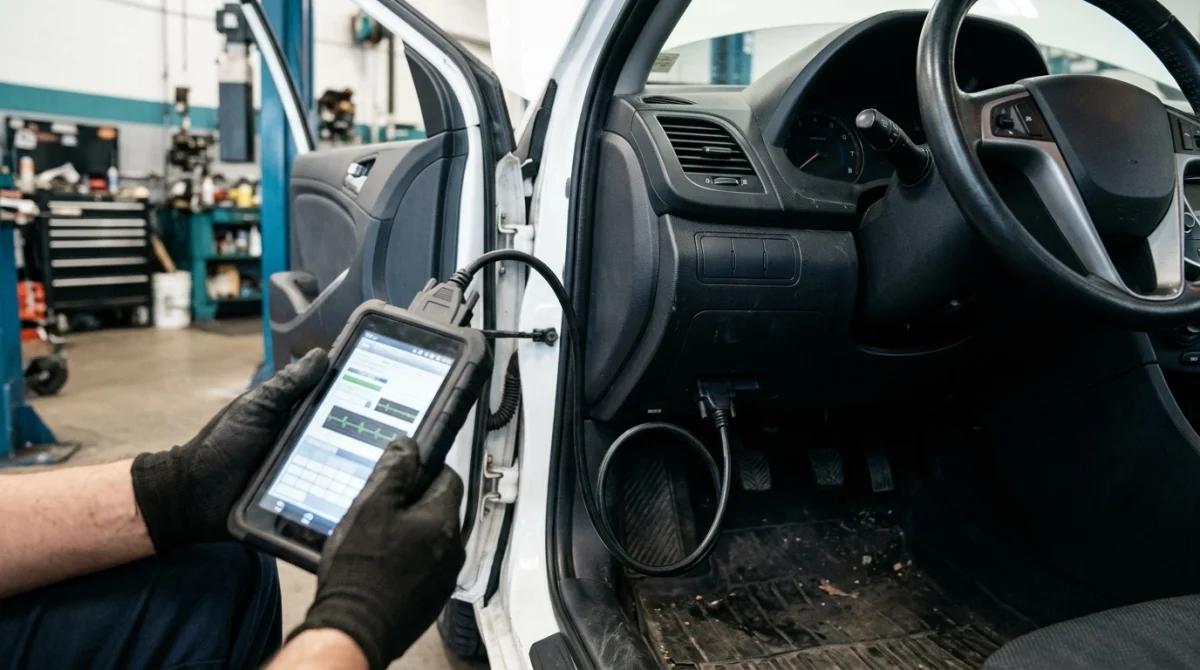
A permanent code is an emissions-related diagnostic trouble code stored in your vehicle’s onboard diagnostic system that cannot be erased using an ordinary scan tool. The vehicle’s computer removes it only after its own diagnostic checks confirm that the associated fault has been resolved.
OBD2 stands for On-Board Diagnostics, Generation Two. It’s the vehicle’s electronic monitoring system that checks emissions-related components and identifies certain problems by recording diagnostic trouble codes.
What does the word “permanent” actually mean?
Permanent doesn’t necessarily mean your car has suffered permanent damage or needs an expensive repair. It describes how the code is stored and managed by the vehicle’s diagnostic system.
For example, suppose a vehicle detects a problem with its catalytic converter efficiency and records a code such as P0420. After a proper repair, the check engine light may turn off, but the permanent version of that code can remain until the onboard computer completes its required verification.
The distinction matters. A code that remains visible after a repair doesn’t automatically prove that the repair failed.
Why does the computer keep this record?
The system retains permanent codes to help prevent drivers from simply deleting emissions fault records before the vehicle verifies that the problem has been corrected. This makes the code useful during diagnosis and certain emissions inspections.
According to the California Bureau of Automotive Repair’s OBD test reference, permanent diagnostic trouble codes cannot be removed by clearing codes with a scan tool or disconnecting the battery.
Not every vehicle supports permanent codes in the same way. Their availability and applicable inspection requirements depend on the vehicle’s diagnostic system, model year, and jurisdiction.
Does a permanent code mean something is still broken?
Not necessarily. The code may remain after a successful repair because the relevant diagnostic monitor hasn’t completed its test yet.
However, don’t assume the fault is fixed just because the check engine light is off. Review the exact code, examine any current or pending faults, and confirm that the relevant monitor has passed.
Section takeaway: A permanent code is a record awaiting verification, not a guarantee of ongoing failure or proof of a successful repair.
How Is a Permanent Code Different From a Stored or Pending Code?
Permanent, stored, and pending codes describe different diagnostic states. Knowing which type your OBD2 scanner displays helps you decide whether to investigate a new fault, verify a repair, or monitor an intermittent problem.
Many scanners also display terms such as confirmed, history, or active. The precise labels vary by scanner and vehicle, so check the device manual when a status is unclear.
| Code type | What it means | Can a scanner erase it? |
|---|---|---|
| Pending | The system has detected a possible fault that may need further monitoring before confirmation. | It may be cleared by an appropriate reset, but the fault can return if the condition remains. |
| Stored or confirmed | The system has confirmed a fault and recorded the corresponding diagnostic trouble code. | Often yes, using a compatible scanner after diagnosis or repair, although vehicle-specific rules apply. |
| Permanent | A qualifying emissions-related fault remains recorded until the onboard system verifies that it has been corrected. | No. The vehicle’s onboard diagnostic system must clear it after successful verification. |
Can the same fault appear in more than one category?
Yes. A qualifying emissions fault can appear as both a regular confirmed code and a permanent code. The scanner may list the same alphanumeric fault under separate status categories.
A pending code can also appear while the system evaluates a possible problem. Whether a particular fault receives each status depends on the diagnostic conditions and the vehicle’s control software.
What if the check engine light is off but the permanent code remains?
This can happen when the original problem no longer triggers the warning light, but the required verification test hasn’t yet cleared the permanent record. The light and code status don’t always change at the same time.
Read all available code categories and monitor readiness information rather than relying on the dashboard light alone. A more capable scanner may provide additional status details, but it still cannot force the vehicle to erase a permanent code.
Section takeaway: A pending code suggests a fault under evaluation, a stored code records a detected problem, and a permanent code awaits the vehicle’s own verification.
Why Won’t a Permanent Code Clear?
A permanent code usually stays because the onboard computer hasn’t completed the required verification, or because the original fault still exists. The code alone doesn’t tell you which explanation applies.
In my diagnostic approach, I separate two questions: has the underlying fault been repaired, and has the vehicle completed the test needed to confirm that repair? Both matter.
1. The original problem hasn’t been fixed
If the fault remains, the vehicle may continue detecting it during its diagnostic checks. Depending on the problem, the check engine light can return, and a regular trouble code may remain active.
Common examples of emissions-related problems include:
- Catalytic converter efficiency: The system detects performance below its expected threshold, potentially producing P0420 or a related code.
- Oxygen sensor performance: A sensor or its circuit may provide readings outside the expected range.
- Evaporative emissions leaks: A loose fuel cap, damaged seal, or leak elsewhere in the system may trigger a fault.
- Misfires: Combustion problems can affect emissions and may generate engine-related diagnostic codes.
These are examples, not a diagnosis of your vehicle. A code points toward a system or condition that needs investigation; it doesn’t automatically identify the exact failed component.
2. The repair is complete, but the monitor hasn’t run
After a repair, the computer may need suitable operating conditions before it can test the affected system. These self-checks are called readiness monitors, and some require specific temperatures, speeds, or driving conditions.
For example, repairing an evaporative emissions leak doesn’t mean the vehicle can immediately verify the repair. The fuel system monitor may need suitable conditions before it can complete its test.
That delay can be frustrating. It doesn’t necessarily mean you need another repair.
3. Recent code clearing or battery disconnection interrupted verification
Clearing ordinary trouble codes or disconnecting the battery can reset some diagnostic information and readiness monitors. Neither action directly removes a permanent code.
If someone cleared the codes before you scanned the vehicle, you may find that some monitors show “not ready” or “incomplete.” That means the relevant self-tests haven’t finished, not necessarily that the vehicle has failed those tests.
4. The scanner displays incomplete information
Basic scanners differ in their ability to display permanent codes, readiness states, manufacturer-specific faults, and supporting diagnostic data. A limited display can make a repaired vehicle look more confusing than it is.
Check that your device supports permanent DTC reading and review its instructions. If the results conflict with the dashboard warning or the repair history, another compatible scanner or professional diagnostic tool may help.
Section takeaway: Before replacing parts, determine whether the fault remains, the monitor hasn’t run, or the scanner is showing incomplete information.
How Do You Clear a Permanent Code Correctly?
You cannot directly erase a permanent OBD2 code with a standard scan tool. The correct approach is to diagnose the fault, repair the cause, and allow the onboard computer to verify the repair.
As of 2026, this basic principle remains central to permanent-code handling in supported OBD2 vehicles. The exact test conditions vary by vehicle and diagnostic system.
Follow this diagnostic sequence
- Record the code. Write down the complete code, its status, and any available freeze-frame information before clearing anything.
- Check for related faults. Review current, confirmed, and pending codes to understand whether other problems may be contributing.
- Diagnose the underlying cause. Use the code description, vehicle-specific service information, and appropriate tests to identify the actual fault.
- Complete the repair. Repair or replace the confirmed faulty component, wiring, connection, or other affected part as required.
- Run the vehicle’s verification checks. Drive under appropriate conditions or follow the manufacturer’s prescribed test procedure so the relevant monitor can run.
- Rescan the vehicle. Check whether the original fault has returned, whether the monitor has completed, and whether the permanent code has cleared.
Don’t treat this sequence as a universal repair procedure. The appropriate tests and operating conditions depend on the fault and vehicle.
How long does it take for a permanent code to disappear?
There isn’t one guaranteed timeline for every permanent code. Some monitors may complete during suitable trips, while others require particular operating conditions or repeated successful checks.
The number of trips alone doesn’t guarantee that the code will clear. A vehicle that never reaches the conditions required to run a monitor may retain the code longer.
For example, a driver who only makes short journeys may not provide the conditions needed for certain emissions monitors to finish. The vehicle’s service information can help identify the appropriate conditions.
Should you disconnect the battery or keep clearing codes?
No. Battery disconnection won’t erase a permanent code, and repeatedly clearing regular codes can remove useful diagnostic information or reset readiness monitors.
If you need to preserve evidence of an intermittent fault, record the codes and freeze-frame data before making changes. This gives a technician a better starting point for diagnosis.
Expert tip: If the vehicle needs a specific drive cycle, use the manufacturer’s instructions for your exact model and year rather than relying on a generic online driving sequence.
Section takeaway: Fix the cause first, then let the vehicle complete its own diagnostic verification; a scanner reset cannot substitute for that process.
Can You Pass Emissions With a Permanent Code?
A permanent code can affect an emissions inspection, even when the check engine light is off. Whether the vehicle passes depends on the applicable inspection rules, vehicle eligibility, readiness status, and the codes recorded.
Don’t assume that an extinguished warning light guarantees a pass. The inspection equipment may read diagnostic information that isn’t visible on the dashboard.
Why do inspection rules matter?
Inspection programs don’t all use the same criteria. Some check permanent codes explicitly, while others apply different requirements based on vehicle age, model year, and local regulations.
For example, California’s Bureau of Automotive Repair explains that its OBD inspection program checks permanent diagnostic trouble codes on applicable vehicles. Its guidance also describes circumstances in which code history and driving or warm-up cycles affect how the results are handled.
You can review the official California OBD inspection reference for those jurisdiction-specific requirements. Don’t automatically apply California’s rules to another state or country.
What should you check before an inspection?
- Permanent codes: Find out whether any permanent DTCs remain stored.
- Check engine light: Confirm whether the malfunction indicator lamp is illuminated or flashing.
- Readiness monitors: Check whether the required emissions self-tests are complete.
- Repair verification: Make sure the original problem has been corrected and the relevant monitor has passed.
- Local requirements: Check the inspection authority’s rules for your vehicle and location.
Readiness and permanent-code status are related but different. A monitor marked incomplete means the system hasn’t finished a particular self-test; it isn’t the same as a confirmed failure.
Similarly, a permanent code remaining in memory doesn’t establish the vehicle’s overall roadworthiness. Other warning lights, drivability symptoms, and safety problems need separate attention.
Section takeaway: Before an emissions test, verify both the permanent-code status and the readiness monitors, then check your local inspection rules.
When Should You Get Professional Diagnostic Help?

Get professional help when a permanent code persists despite a verified repair, the check engine light returns, or the scanner doesn’t provide enough information to identify the cause. A qualified automotive technician can use vehicle-specific diagnostic information and tests to narrow down the problem.
Which symptoms deserve immediate attention?
- Flashing check engine light: This can indicate an active misfire that may damage the catalytic converter. Reduce driving and follow the owner’s manual’s instructions; stop safely if the engine runs poorly or the vehicle seems unsafe.
- Severe engine problems: Stalling, major power loss, overheating, or unusual mechanical noises warrant prompt assessment.
- Recurring codes: If a code returns after a repair, the original diagnosis may need review, or another related fault may exist.
- Unclear scan results: Seek help if code descriptions, readiness states, and vehicle symptoms don’t agree.
A steady check engine light with no noticeable symptoms still deserves attention. Check the owner’s manual and arrange diagnosis instead of assuming the problem is harmless.
Can an automotive locksmith fix a permanent OBD2 code?
An automotive locksmith is the right specialist for many key-related issues, including transponder chip faults, immobilizer problems, key fob programming, and smart key recognition. However, a permanent emissions code generally requires engine or emissions-system diagnosis rather than key programming.
If your scanner shows a permanent code alongside a key or immobilizer warning, the two issues may be separate. A qualified technician can determine whether they share a cause or require different diagnostic paths.
For general vehicle safety information, the National Highway Traffic Safety Administration provides vehicle safety resources and recall information. For emissions-related faults, use manufacturer service information or a qualified repair professional who can access the necessary diagnostic data.
Section takeaway: Match the problem to the right specialist. Persistent emissions codes need diagnostic testing, while key recognition and immobilizer faults may require automotive locksmith expertise.
Permanent Code FAQs
Can I drive with a permanent code on my OBD2 scanner?
It depends on the underlying fault and the vehicle’s symptoms. A permanent code alone doesn’t tell you whether the car is safe to drive, so check the warning lights, consult the owner’s manual, and seek prompt help for severe symptoms or a flashing check engine light.
Does a permanent code mean my car has failed emissions?
Not automatically. Some inspection programs check permanent codes as part of their pass-or-fail criteria, while others apply different rules. Check your local inspection requirements and confirm that the relevant repair and diagnostic checks are complete before testing.
Will a permanent code disappear on its own?
Yes, it can clear automatically after the onboard diagnostic system verifies that the underlying fault has been corrected. The required monitor must complete successfully under suitable operating conditions, so the timing varies by vehicle and fault.
Why is my permanent code still there after replacing a sensor?
Replacing a sensor doesn’t guarantee that the original fault has been corrected. The wiring, connector, related components, or underlying system may still have a problem, or the relevant monitor may not have completed its verification test.
Can a cheap OBD2 scanner clear permanent codes?
No standard OBD2 scanner can directly erase a permanent diagnostic trouble code. A scanner may clear eligible ordinary codes and display diagnostic information, but the vehicle’s onboard system must verify the repair before removing the permanent record.
Is a permanent code the same as a pending code?
No. A pending code indicates a potential fault that may need further evaluation, while a permanent code records a qualifying emissions-related fault that cannot be manually erased. The same underlying problem may appear in more than one diagnostic status.
Should I replace parts just to remove a permanent code?
No. Diagnose the exact trouble code and test the suspected system before buying parts. Replacing a catalytic converter, oxygen sensor, or another component without confirming the cause can waste money and leave the original problem unresolved.
Final Takeaway: Understand the Code Before Clearing Anything
A permanent code on an OBD2 scanner means the vehicle has retained a record of a qualifying emissions-related fault until its onboard diagnostic system verifies the repair. It doesn’t necessarily mean the fault is still active, but you shouldn’t assume it’s fixed without checking.
Start by recording the exact code, checking for other faults, and reviewing readiness status. Then address the underlying problem and allow the relevant monitor to complete before deciding whether further repairs are needed.
If the code persists or the diagnosis remains unclear, have the vehicle checked by a qualified automotive technician. The goal isn’t simply to make the code disappear; it’s to confirm that the system works correctly.
