
10 Best OBD2 Scanner With ABS SRS For SRS Airbag Codes: Top Picks and Buyer Guide

OBD2 scanners that read ABS and SRS airbag codes let you find safety-system faults without guessing. These tools plug into your car’s OBD2 port and show trouble codes for the engine, ABS brakes, and SRS/airbag systems, so you can see whether a problem is sensor-related, wiring, or module-based. They range from simple code readers to advanced scanners with live data, ABS bleeding functions, and guided repairs.
When buying one, look for reliable ABS and SRS coverage, live-data capability, and clear code descriptions. A scanner that fully reads ABS and SRS codes and shows live sensor data will save you time and help you decide whether a repair is a DIY job or needs a shop. We tested and compared models to find the best options for different budgets and needs, and the next section lays out what we recommend.
Best OBD2 Scanners with ABS & SRS
We tested and researched OBD2 scanners that read ABS and SRS airbag codes to help you find reliable tools. Our list focuses on scanners that give clear code readings, live data, and easy-guided fixes for both ABS and SRS systems.
Foxwell NT604 Elite

We recommend this scanner if you want a solid, easy-to-use tool to read and clear ABS and SRS airbag codes without paying dealer prices.
Pros
- Easy plug-and-play setup; it worked right out of the box for us.
- Reads ABS, SRS, engine, and transmission codes plus live data.
- Comes with a sturdy case and lifetime updates.
Cons
- No advanced service functions like ABS bleed or relearn.
- AUTOVIN can fail on some older or oddball models.
- Can’t clear crash-recorded SRS data.
We used the NT604 Elite on several cars and trucks and it handled common ABS and airbag faults quickly. The menu is simple and the screen is clear, so we navigated to SRS codes and live data without fuss. Plugging it in felt familiar compared with phone-app scanners that need extra setup.
When we ran scans, the scanner found stored and pending codes and let us clear non-crash SRS faults after we fixed the issues. Live data streaming helped us confirm sensor values, which saved time compared with guessing the problem. The AUTOVIN often grabbed vehicle info for us, but on a couple older vans we had to enter the VIN manually.
Updates arrived free and the rugged case kept the unit safe during our shop use. The limits showed up when we needed bi-directional tests or service resets—this unit won’t replace a professional-level tool for those jobs. For DIYers and independent techs who want reliable ABS/SRS reads and basic clearing, we found it a very practical buy.
BlueDriver Pro Next-Gen
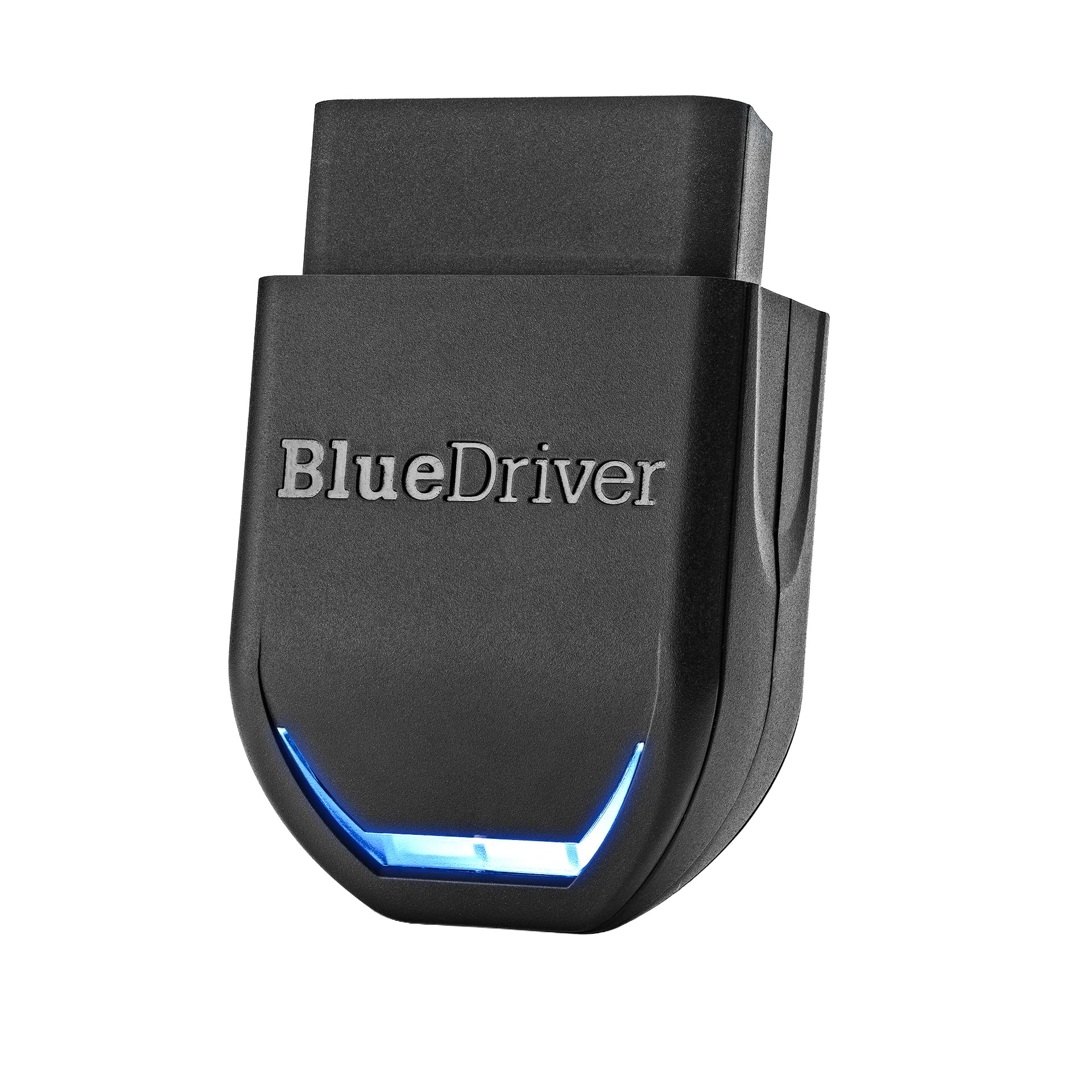
We recommend this if you want a Bluetooth OBD2 tool that reads ABS and SRS airbags easily and gives clear repair guidance.
Pros
- Reads ABS and SRS codes reliably on many vehicles.
- Simple wireless setup and easy phone app interface.
- Technician-verified repair reports tied to VIN.
Cons
- Occasional pairing hiccups with some phones.
- Not every exotic or very new model is fully covered.
- Requires a phone or tablet to use.
We plugged this into several of our cars and trucks and found it fast to start. The app scanned and showed SRS and ABS codes clearly, which saved time compared with guessing the problem.
Live data streaming helped us watch sensors while we drove a short test route. Seeing freeze-frame and mode data made troubleshooting more direct than with basic code readers.
Support helped us once during a tricky Bluetooth pairing and they responded with clear steps. Overall, the unit felt solid and useful for DIYers and small shops who want airbag code detail without a big handheld scanner.
BLCKTEC 430

We recommend the BLCKTEC 430 if you want a wireless, no-subscription OBD2 tool that reads ABS and SRS airbag codes for many 1996+ cars.
Pros
- Works wirelessly with phone apps and reads ABS, SRS, and other system codes.
- No recurring fees — one purchase unlocks full app features.
- Small, plugs into the OBD2 port and powers on instantly.
Cons
- App and device only support the USA and Canada.
- Some features depend on vehicle make, year, and model.
- Pairing must follow the app steps — Bluetooth menu pairing will fail.
We used the BLCKTEC 430 on a few late-model cars and found it quick to set up when we followed the app pairing steps. The device felt solid and tiny in the OBD2 port, and the green LED reassured us it had power. Reading ABS and SRS codes took under a minute on compatible vehicles.
The app gave readable code descriptions and suggested fixes that matched what we saw on the cars. That made DIY troubleshooting faster and less guesswork. We liked the repair videos and targeted tips for specific models; they saved time when we dug into airbag and ABS issues.
On the downside, one of our test cars showed limited ABS data that other pro tools provided. We also ran into connectivity confusion when someone tried pairing through phone Bluetooth settings instead of the app. Customer support answered our questions, but you should check compatibility on BLCKTEC’s site before buying.
If you want a compact, affordable OBD2 scanner that handles SRS/airbag and ABS codes without subscriptions and you live in the US or Canada, the BLCKTEC 430 is worth trying.
FOXWELL NT630 Plus
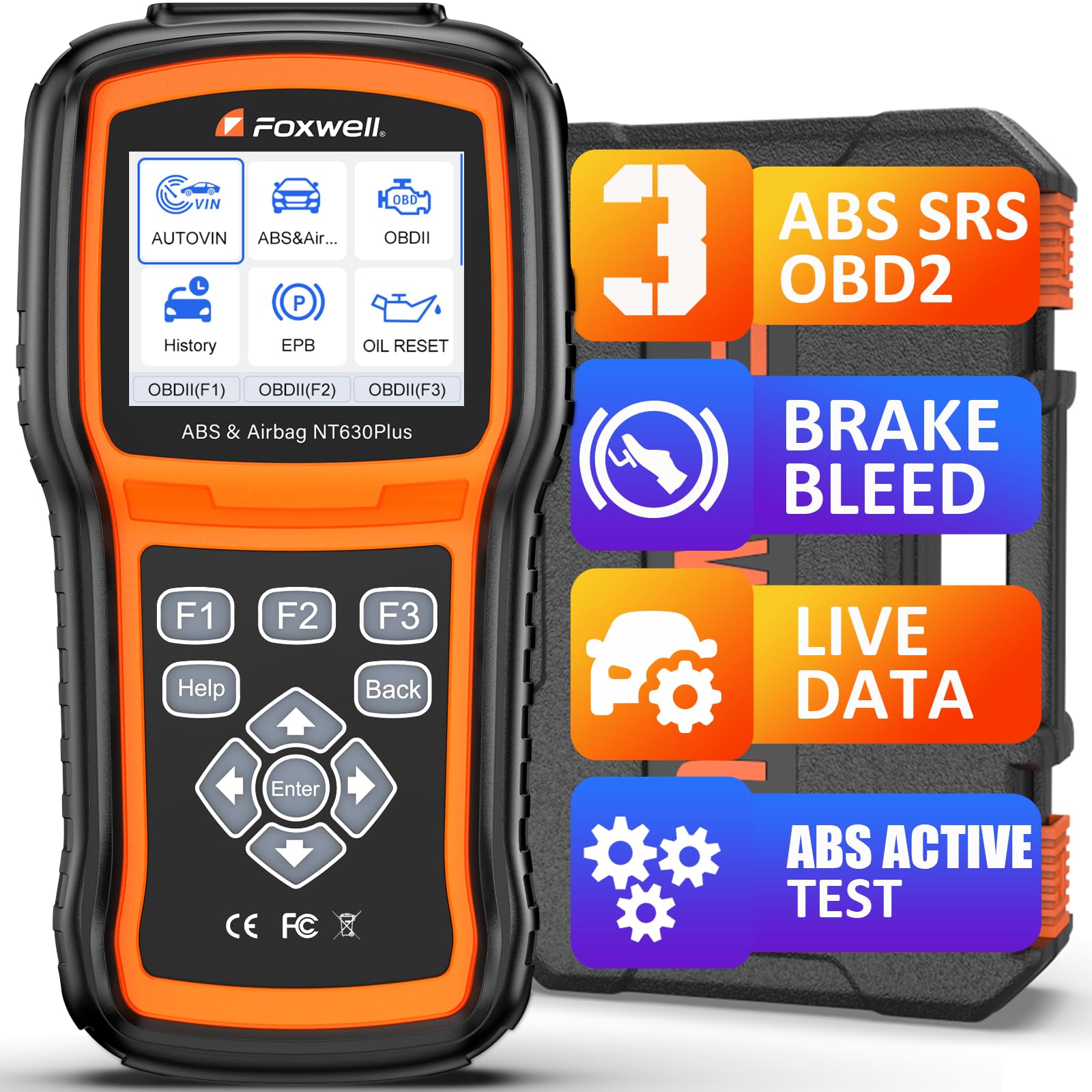
We would buy this for DIY ABS and SRS checks because it combines ABS bidirectional tests and auto-bleed features with easy Wi‑Fi updates and solid basic OBD2 functions.
Pros
- Good ABS troubleshooting and active tests for many cars.
- Easy plug-and-play use with clear menus and Wi‑Fi updates.
- Sturdy build and handy for DIY garage work.
Cons
- ABS auto-bleed and some functions only work on supported vehicles.
- No SRS crash data clearing or programming — limited for airbag work.
- Menu can be clunky until you get used to it.
We used the NT630 Plus on a couple of older domestic and import cars and it felt like a shop tool in a compact package. It read ABS codes quickly, showed live data graphs, and let us run a few module tests that pointed to wheel sensor faults.
When we tried the ABS auto-bleed on a supported vehicle, the unit cycled the pump and valves as expected and helped firm the pedal after a brake job. We confirmed ahead of time that the car supported automated bleeding; on one vehicle that didn’t support it we reverted to manual bleeding.
For SRS and airbag work, the scanner reads SRS codes and explains them in plain language, which helped us find wiring and sensor issues. It does not reset crash data or program airbag modules, so we still needed a dealer or advanced tool for that final step.
Overall, we found the NT630 Plus best for home mechanics who want stronger ABS diagnostics than a basic reader, clearer live data, and occasional active tests — but not for full SRS reprogramming or every brand’s bleeding features.
OBDMATE OM901 Scanner
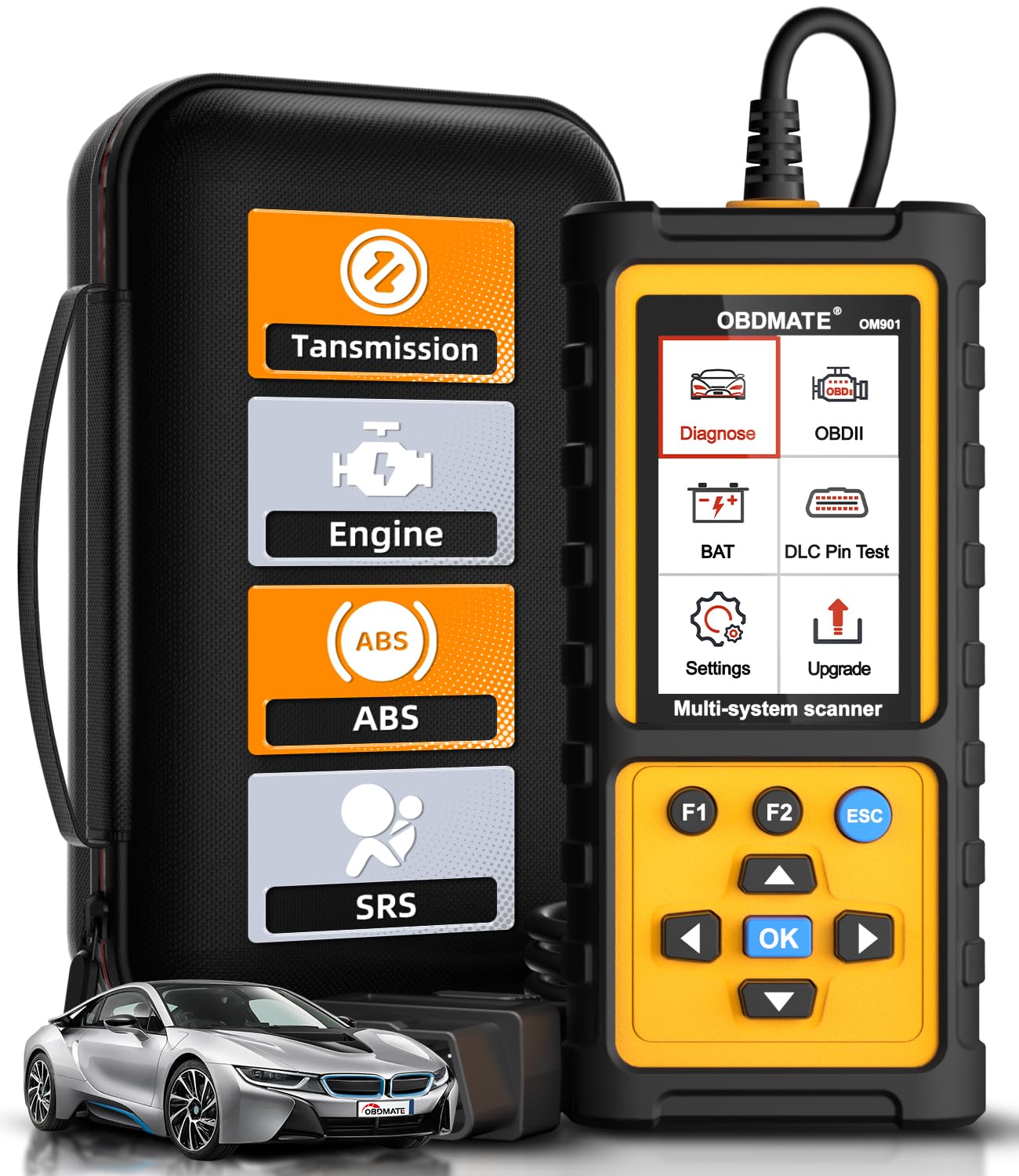
We recommend this if you want a solid, budget-friendly scanner that reads and clears ABS, SRS, engine, and transmission codes.
Pros
- Reads and clears ABS and SRS codes reliably.
- Large 3.5″ screen makes live data and graphs easy to read.
- Sturdy case and plug-and-play setup — no batteries needed.
Cons
- Update process is clunky on some computers.
- Interface feels basic compared with high-end tools.
- Occasional vehicle coverage limits on older or obscure models.
We plugged the OM901 into several family cars and jumped straight into diagnostics. It found ABS and airbag (SRS) codes quickly and let us clear them after repairs. The color screen made live data easy to follow while we monitored sensor values.
We liked the build quality and the protective silicone sleeve. The unit felt rugged and the hard case kept everything tidy in the trunk. Battery voltage and DLC pin checks proved useful when troubleshooting connector and power issues.
We did run into one annoyance updating the tool on a laptop; the installer worked but took longer than advertised on one PC. Coverage was broad across modern cars, but one older model didn’t fully communicate. Overall, the OM901 gave us pro-level reads for a fraction of the cost of dealer tools.
Buy the OBDMATE OM901 on Amazon
BLCKTEC 460T

We recommend this if you want dealer-level ABS and SRS functions at a DIY price because it reads/clears airbag codes and runs workshop resets for many cars.
Pros
- Reads and clears ABS and SRS codes reliably on cars it supports.
- Fast AutoVIN and AutoScan get you to results quickly.
- Useful live-data graphs help us trace intermittent SRS or ABS faults.
Cons
- Some advanced functions depend on vehicle compatibility.
- Occasional used-looking packaging reported by buyers.
- Support and full features only for USA/Canada models.
We plugged the 460T into several late-model cars and it found ABS and SRS codes that my old reader missed. The AutoVIN and AutoScan saved time by pulling all modules automatically, so we didn’t need to hunt through menus. Viewing live data in real time helped us spot when an airbag circuit only faulted under certain conditions.
Reset and service functions worked when the vehicle allowed them. We performed ABS bleeding and SRS code clears on a few test vehicles without trips to the shop. On one car a required function wasn’t available, so we had to confirm compatibility first — the company’s checker matters.
The unit feels solid and the screen is clear for reading freeze-frame data and plotting four live streams. If you want broad coverage for engine, ABS, transmission, and airbag diagnosis and you operate in the US or Canada, this tool delivers strong value.
Autel AL619
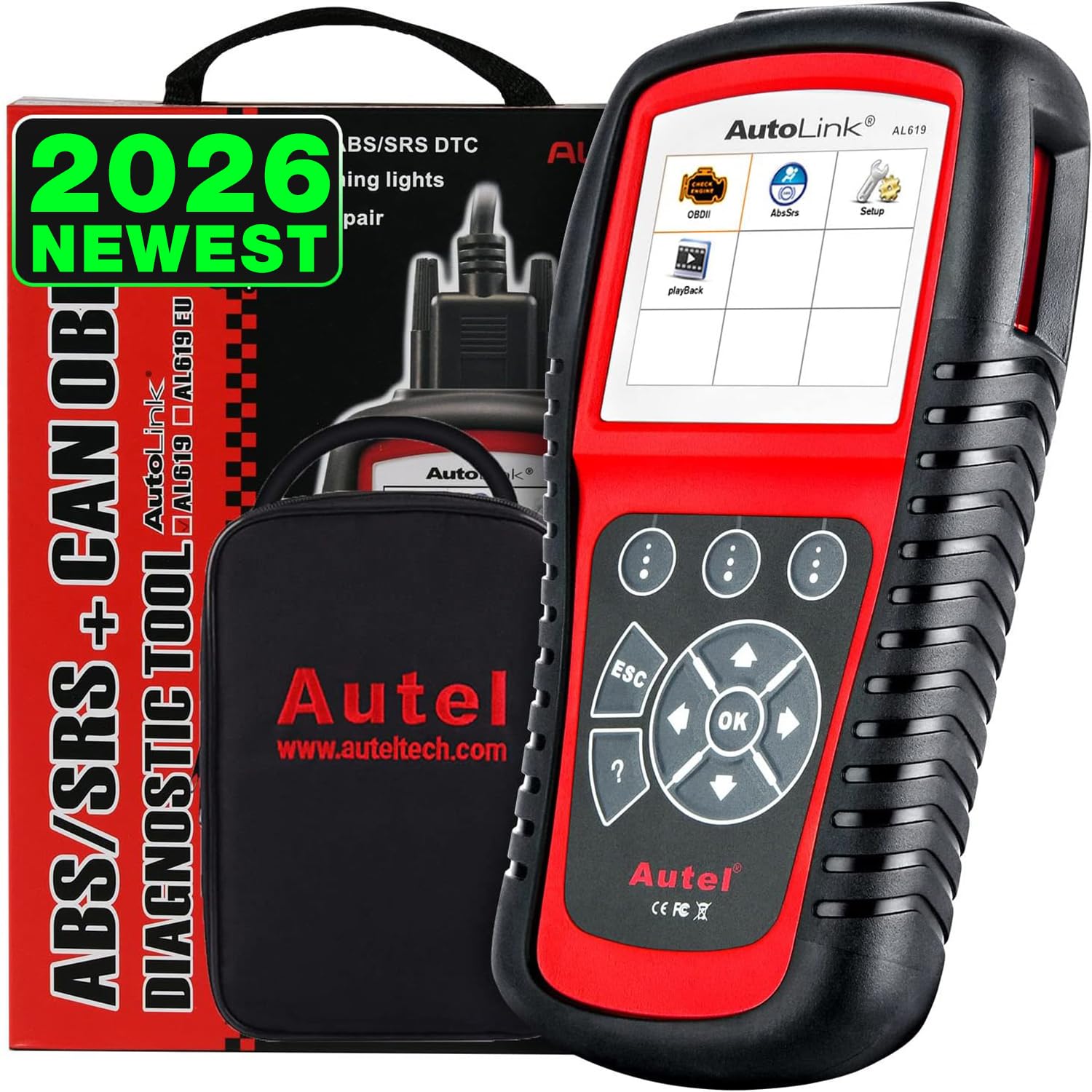
We recommend this if you need a simple handheld tool that reads and clears ABS and SRS airbag codes on pre-2016 cars.
Pros
- Reads and clears ABS and SRS fault codes reliably on compatible cars
- Shows live data and freeze-frame helpfully for quick diagnosis
- Easy to use out of the box with clear code definitions
Cons
- Only supports vehicles from 1996–2015, so newer cars won’t work
- ABS/SRS coverage is not universal — compatibility check required
- Occasional reports of defective units, so watch warranty and returns
We used the AL619 on several older cars and found it straightforward. Plugging it in powered the unit immediately, and the menus let us pull ABS and airbag codes fast. The DTC lookup saved time by showing clear definitions right on screen.
Live data graphs helped us watch sensor values change while we tested components. The freeze-frame and PID display made tracing intermittent SRS faults easier than eyeballing parts alone. We could clear warning lights after fixes and verify they stayed off.
Trying it on a newer vehicle showed the main limitation: it refused to access ABS/SRS on post-2015 models. When a model was supported, it worked predictably; when not, the tool simply offered no useful data. Overall, this feels like a solid budget scanner for DIYers who work on older cars and want genuine ABS and airbag diagnostics.
Launch CRP123 V3.0 Elite

We recommend this if you want a mid-priced scanner that reads and clears Engine, ABS, SRS (airbag) and Transmission codes and gives useful live data for home or shop use.
Pros
- Covers Engine/ABS/SRS/Transmission and shows live data graphs.
- Lifetime software updates and easy resets for oil, throttle, and SAS.
- Fast code reads and simple menus that feel polished in use.
Cons
- Software update process can be awkward; PC/Wi‑Fi steps felt clunky to us.
- Some vehicle models may not fully communicate, especially certain Nissans.
- Screen and menus are basic compared with higher-end tools.
We plugged the CRP123 into several cars and liked how quickly it found codes and cleared warning lights after fixes. The live data graphing helped us spot intermittent faults faster than reading numbers alone.
Reset features saved us a trip to a shop for routine service tasks. Oil life and SAS resets worked on most cars we tested, and throttle relearn was handy after simple repairs.
Updating the unit took extra time and felt less smooth than using the scanner itself. When a model didn’t respond, we double-checked connections and still hit limits on a few vehicles.
Overall, the CRP123 gave reliable diagnostic info for DIYers and small shops without a high price. It handled SRS airbag codes well in most cases and proved worth trying if you work on your own cars.
FOXWELL NT630 Plus
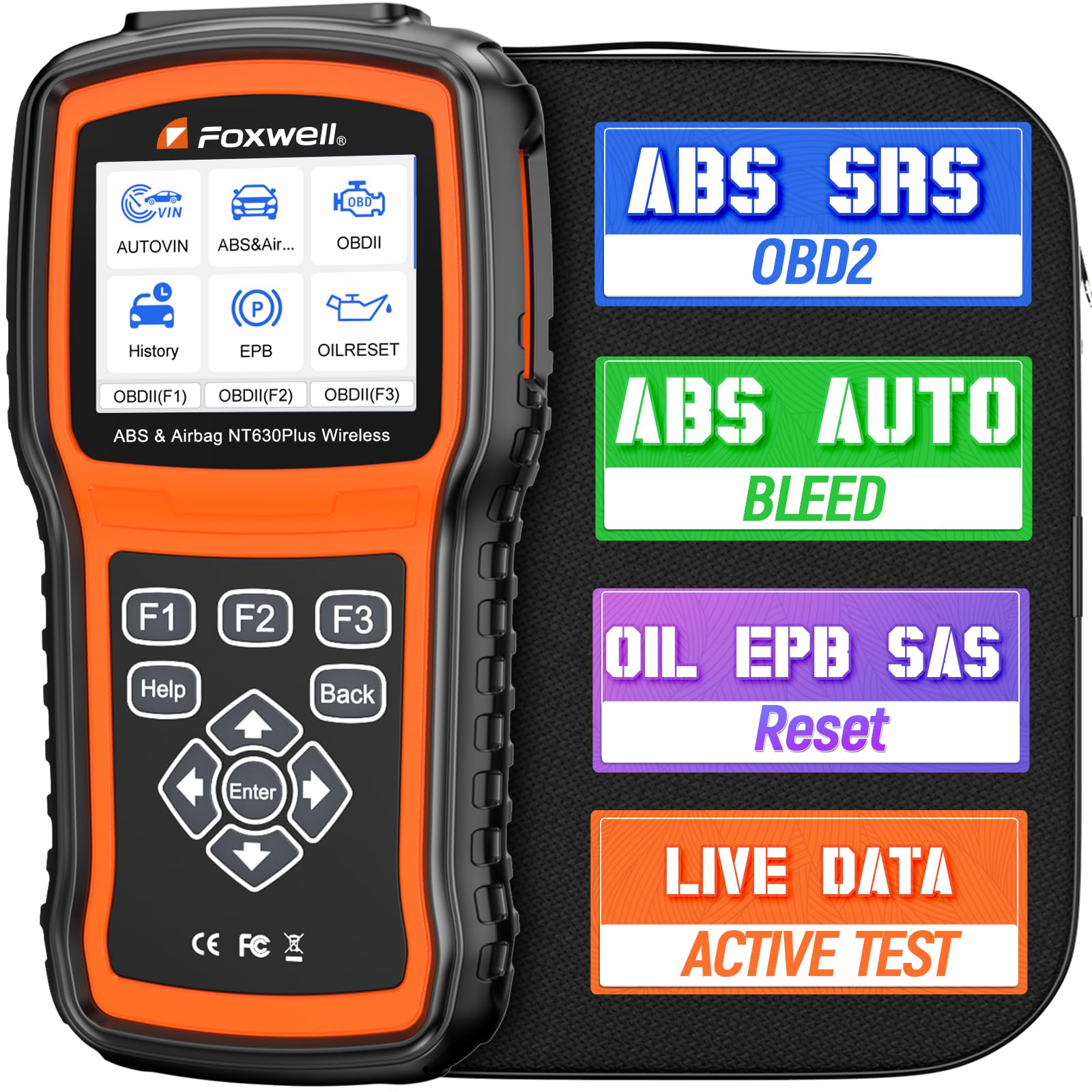
We recommend this if you want dealer-level ABS and SRS code reading at home without a huge learning curve.
Pros
- Reads ABS and SRS DTCs and shows live data clearly.
- Useful ABS tools like auto-bleed and bi-directional tests on many cars.
- Lifetime Wi‑Fi updates and a simple handheld design.
Cons
- It reads SRS codes but cannot erase crash-related airbag faults.
- Some advanced functions vary by vehicle and need VIN checks.
- Updates or registration can be annoying for a few users.
We used this unit on a few late-model cars and found the menus intuitive. Pulling ABS wheel speed data and watching live graphs helped us spot a faulty wheel sensor fast. The oil reset and SAS features also saved time during basic service.
When testing SRS, the scanner picked up airbag DTCs reliably but did not clear crash-set airbag faults, which matched the manual. For non-crash SRS codes it read and cleared fine, so plan to confirm code type before assuming a reset will work.
The auto-bleed and ABS active tests worked on some trucks we tried and helped purge air from brake lines after a fluid change. Compatibility varied, so we checked VIN support before running the routines. Overall, it felt like a pro tool without a pro price.
OBDMATE OM970
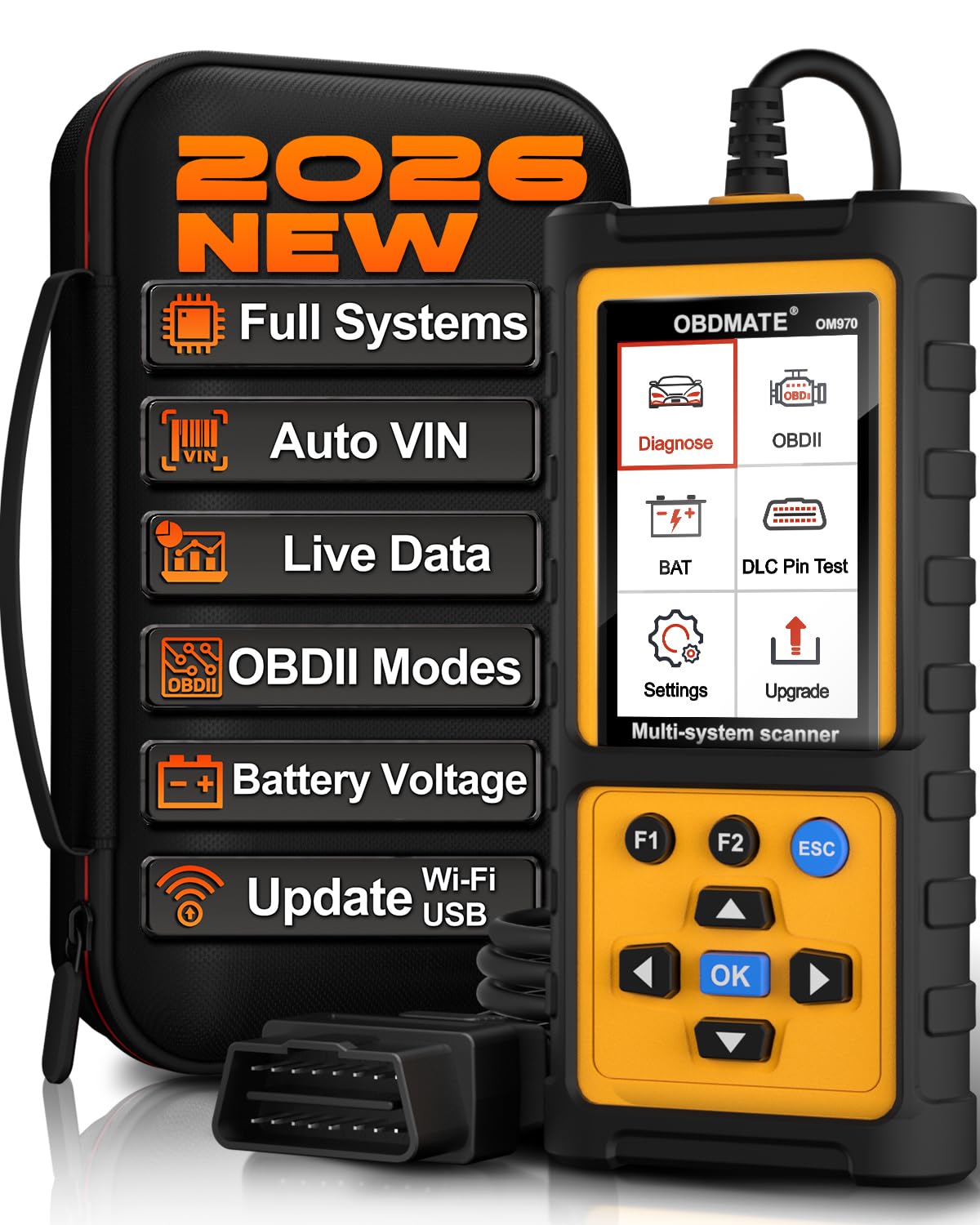
We recommend this scanner if you want a solid, budget-friendly tool that reads ABS and SRS airbag codes and shows live data quickly.
Pros
- Reads ABS, SRS and other modules so we catch more than just engine faults.
- Clear live data and 4-in-1 graphs helped us spot intermittent sensor issues fast.
- No subscriptions or pairing headaches — plug and play with free updates.
Cons
- Screen is small, so long sessions can feel cramped.
- Wired-only design limits convenience compared with Bluetooth tools.
- Deep bi-directional functions are limited compared to pro-level units.
We plugged the OM970 into several cars and trucks and it found airbag and ABS codes right away. The Auto-VIN feature saved time by identifying the vehicle automatically, which felt like a helpful shortcut in the garage.
Live datastreams were sharp and easy to read. The 4-in-1 graph let us watch sensor trends while we tested brake and suspension parts, which made troubleshooting clearer than reading raw numbers alone.
Navigating menus felt simple and straightforward. We liked the protective silicone sleeve and the hard case; the unit handled being moved around a busy shop without worry.
For owners who want to diagnose SRS airbag lights and ABS faults without dealership fees, this tool gives the key functions at a low cost. If you need wireless convenience or advanced bi-directional controls, a higher-end scanner may serve better.
Buying Guide
We look for scanners that read OBD2 plus ABS and SRS codes. That lets us find engine, brake, and airbag faults without guessing. Make sure the tool lists all three systems.
We check compatibility with our car before buying. Confirm the scanner supports the car’s model year and protocols. Some older or newer vehicles need specific support.
We value clear display and simple menus. A bright screen and easy navigation save time in the garage. Backlit screens help if lighting is poor.
We want strong diagnostics and reset functions. Live data streaming, freeze frame, and the ability to clear codes for engine, ABS, and SRS matter. Look for live sensor data to spot intermittent faults.
We consider connectivity and updates. Bluetooth or USB lets us pair with phones or laptops. Regular software updates keep the scanner current with new codes.
We weigh build quality and battery life. A rugged case and reliable battery extend real-world use. Corded power is fine if we mostly work in a shop.
We compare price against features and support. Higher cost can mean more functions and better help. Check warranty and customer service before we decide.
We use this quick checklist to compare options:
| Feature | Why it matters |
|---|---|
| OBD2 + ABS + SRS support | Covers engine, brakes, airbags |
| Vehicle compatibility | Works with our car’s year and protocol |
| Live data & freeze frame | Helps diagnose intermittent problems |
| Screen & usability | Faster, less frustrating use |
| Connectivity & updates | Keeps tool current and versatile |
| Build quality & battery | Lasts longer in real use |
Editor’s Choice
We pick the Autel AP200M as our top choice for scanning ABS and SRS airbag codes. It balances professional features with an easy app interface, so both DIYers and techs can use it without a steep learning curve.
The AP200M reads and clears ABS, SRS, and engine codes reliably. It also shows live data and offers guided fixes for common issues, which helps us diagnose problems faster.
We like its wireless Bluetooth connection and compact tablet-style design. The battery lasts through most jobs, and the touchscreen is responsive even with gloves on.
Key points we value:
- Full SRS & ABS coverage for most major makes and models.
- Live data and playback to track intermittent faults.
- Guided diagnostics that explain common fixes.
- Wireless convenience with a durable build.
We tested real-world scans and found the AP200M consistent at pulling manufacturer-specific SRS codes. It matched more expensive shop tools on code detail, though it lacks some advanced bi-directional controls found on pro-level scanners.
If you want a strong mix of portability, accuracy, and helpful software without buying a shop-level tool, the AP200M is a smart pick for SRS/airbag work.
Conclusion
We picked tools that give reliable ABS and SRS coverage and clear code definitions. Our choices balance accuracy, ease of use, and price so you can diagnose airbag and ABS faults without guesswork.
We recommend models that read, clear, and log ABS/SRS codes and show live data. Chargers or adapters can matter for some vehicles, so check compatibility before you buy.
We suggest keeping one scanner for basic jobs and considering a more advanced unit if you work on many makes. Apps and updates matter; pick a scanner with regular software support to stay current.
Key points to remember:
- Compatibility: Confirm vehicle support for ABS and SRS functions.
- Features: Live data, code definitions, and freeze-frame help diagnose issues.
- Support: Regular firmware updates and clear manuals save time.
We stand by practical, well-supported tools that reduce trips to the shop. Choose the scanner that fits your vehicle mix and skill level, and you’ll handle most SRS and ABS codes with confidence.
FAQS
What does ABS and SRS coverage mean on an OBD2 scanner?
We mean the scanner can read and clear fault codes from the Anti-lock Brake System (ABS) and Supplemental Restraint System (SRS, or airbags). This helps diagnose why warning lights for brakes or airbags are on.
Can one scanner handle both generic and manufacturer-specific SRS codes?
Some scanners read only generic SRS codes, while others include manufacturer-specific codes. We recommend models that list OEM SRS support if you need deeper diagnostics.
Will clearing an SRS code reset my airbag light permanently?
Clearing a code may turn off the light temporarily, but it will return if the root cause is not fixed. We always advise repairing the underlying issue before clearing codes.
Do we need special training to use an ABS/SRS-capable scanner?
Basic scanning and code reading require little training. However, diagnosing and repairing ABS or airbag faults can be complex and may need professional skills and tools.
Are these scanners safe to use around airbags?
Yes, when used according to the instructions. We stress disconnecting the battery and following safety steps in the vehicle manual to avoid accidental airbag deployment.
How do we choose the right scanner for our car?
Check vehicle compatibility, SRS/ABS coverage, update options, and user reviews. Price and ease of use matter, too; balance features with your experience level.
