
10 Best OBD2 Scanners With Mode 6 Data in 2026

Mode 6 is the OBD2 test that shows what your car’s onboard monitors actually measured against their pass/fail thresholds, things like catalyst efficiency, misfire counts, and oxygen sensor response. Most cheap code readers skip it entirely or bury it in raw hex that only means something if you’re cross-referencing manufacturer specs. That gap matters most when you’re chasing an intermittent misfire, prepping for emissions testing, or trying to confirm a repair actually fixed the underlying problem instead of just clearing the light.
A scanner that exposes Mode 6 clearly (with named tests, measured values, and pass/fail limits) turns guesswork into an actual diagnosis. The difference between a $30 code reader and a Mode 6-capable scanner often comes down to whether you’re throwing parts at a problem or verifying the fix before you spend a dime. We looked at ten popular OBD2 scanners ranging from basic handhelds to Android-based bidirectional tools to see which ones deliver usable Mode 6 data versus which ones just check the box on the spec sheet.
Best overall Mode 6 value: FOXWELL NT301
Best enhanced Mode 6 reporting: Autel AutoLink AL519
Best for readable Mode 6 without a handheld unit: BlueDriver Bluetooth Scanner
Best budget code reader: ANCEL AD310
Best for bidirectional service work: Innova 5610
Best multi-system Android scanner: LAUNCH CRP123I V3.0
Best for reset functions plus diagnostics: TOPDON AD600S
Best for app-based flexibility: OBDLink MX+
Best no-frills code reader: MOTOPOWER MP69033
Best for battery and DTC lookup combo: WEJOWE OBD2 Scanner
FOXWELL NT301

Buy this if you want a handheld reader that pairs solid Mode 6 access with live-data graphing at a price that doesn’t sting.
Pros
- O2 sensor and EVAP tests built in
- Live data graphing for spotting trends in real time
- One-click I/M readiness with clear pass/fail indicators
Cons
- Windows-only for firmware updates, no Mac or iOS
- 2.8-inch screen is functional but small for graph review
- Limited to generic OBD2 PIDs, no manufacturer-enhanced data
The NT301 handles the two jobs most DIYers actually need: telling you why the check engine light is on and confirming the fix held. Its readiness hotkeys with the red-yellow-green indicator make pre-inspection checks fast, and the live graphing helps catch a lazy oxygen sensor or erratic fuel trim while driving. Mode 6 data here is generic OBD2 only, so don’t expect manufacturer-specific thresholds, but for the price it’s a strong diagnostic starting point.
Autel AutoLink AL519

Buy this if you want one of the more capable handheld scanners for enhanced Mode 6 review without stepping up to a tablet-style tool.
Pros
- Full 10-mode OBD2 support including enhanced Mode 6
- Freeze frame and vehicle info retrieval for used-car checks
- Straightforward text and graph display for live data
Cons
- Blocked by Secure Gateway on 2017+ FCA vehicles (Chrysler, Dodge, Jeep)
- No advanced parameter display or full engine-system diagnostics
- Language updates require a Windows PC and manual file downloads
The AL519 is a genuine step up from basic code readers because it exposes all ten OBD2 modes, not just codes and freeze frame. That means Mode 6 test IDs and values show up in a readable format instead of raw hex, useful for confirming catalyst or misfire monitor results before a smog check. The FCA Secure Gateway lockout is a real limitation worth knowing about before buying for a newer Jeep or Ram.
BlueDriver Bluetooth Scanner
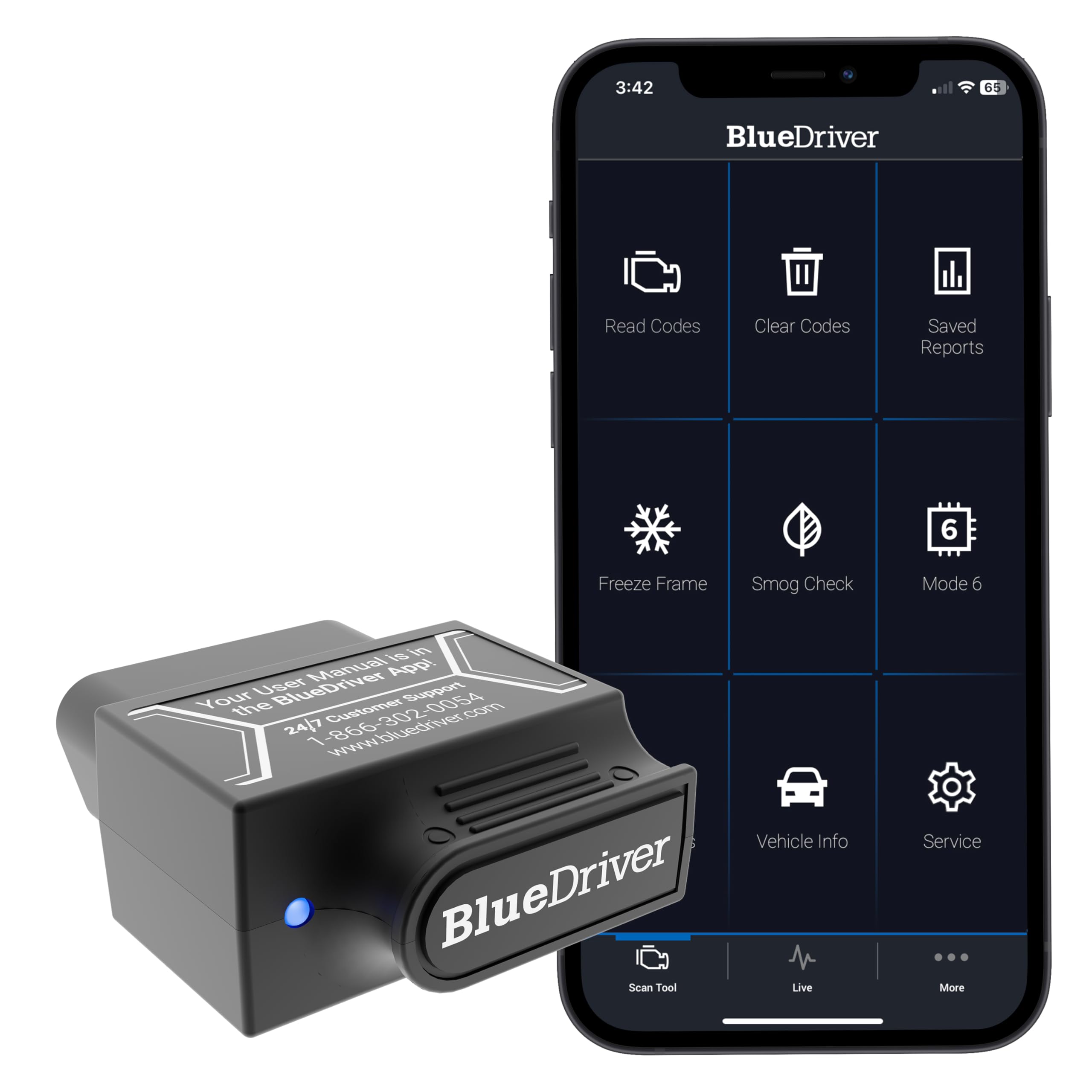
Buy this if you want Mode 6 results translated into plain language alongside technician-verified repair suggestions.
Pros
- Mode 6 test results explained, not just listed as raw values
- Repair reports matched to your VIN with likely fixes
- No subscription fees, one-time purchase for lifetime app access
Cons
- Requires a phone or tablet, no standalone screen
- Bluetooth dongle depends on app updates for new features
- Enhanced ABS/SRS coverage varies by make
BlueDriver is built around making sense of what a scanner pulls, and that shows in how it handles Mode 6. Instead of a table of monitor IDs, it shows readiness status and test results with context, which shortens the gap between “here’s a number” and “here’s what’s actually wrong.” The repair report feature, pulling from a database of confirmed fixes tied to your specific code and VIN, adds real diagnostic value beyond the raw data pull.
ANCEL AD310

Buy this if your priority is fast code reading and clearing on a tight budget, not deep Mode 6 analysis.
Pros
- Reads and clears codes quickly with minimal setup
- Broad OBD2 protocol support across older and newer vehicles
- Compact, durable build with a long cable
Cons
- Emissions-related codes only, no ABS or airbag diagnostics
- Small 128×64 display makes data review cramped
- Mode 6 output is basic and not well suited to detailed trend analysis
The AD310 earns its popularity by doing the fundamentals well: reading codes, clearing them after a repair, and checking I/M readiness before an inspection. Mode 6 data is present but limited to generic values without much context, so it works better as a quick readiness check than a tool for chasing an intermittent fault. For straightforward check-engine-light diagnosis, it’s hard to beat for the price.
Innova 5610

Buy this if you need bidirectional controls and enhanced live data across ABS, SRS, and transmission systems, not just the engine.
Pros
- Bidirectional commands for component testing (fuel pump, EPB, etc.)
- Enhanced data stream across multiple vehicle systems
- Pairs with RepairSolutions2 app for guided repair suggestions
Cons
- Bidirectional and special reset functions are vehicle-specific, not universal
- App dependency for full reporting features
- Coverage checker recommended before buying for less common vehicles
The 5610 is built for owners who want to go past reading codes into actually testing components. Bidirectional control lets you command the fuel pump or a parking brake motor directly, which is how a shop verifies an actuator instead of just guessing from a code. Mode 6 access is there, but the real selling point is the enhanced data stream across ABS, SRS, and transmission, systems most basic scanners never touch.
LAUNCH CRP123I V3.0
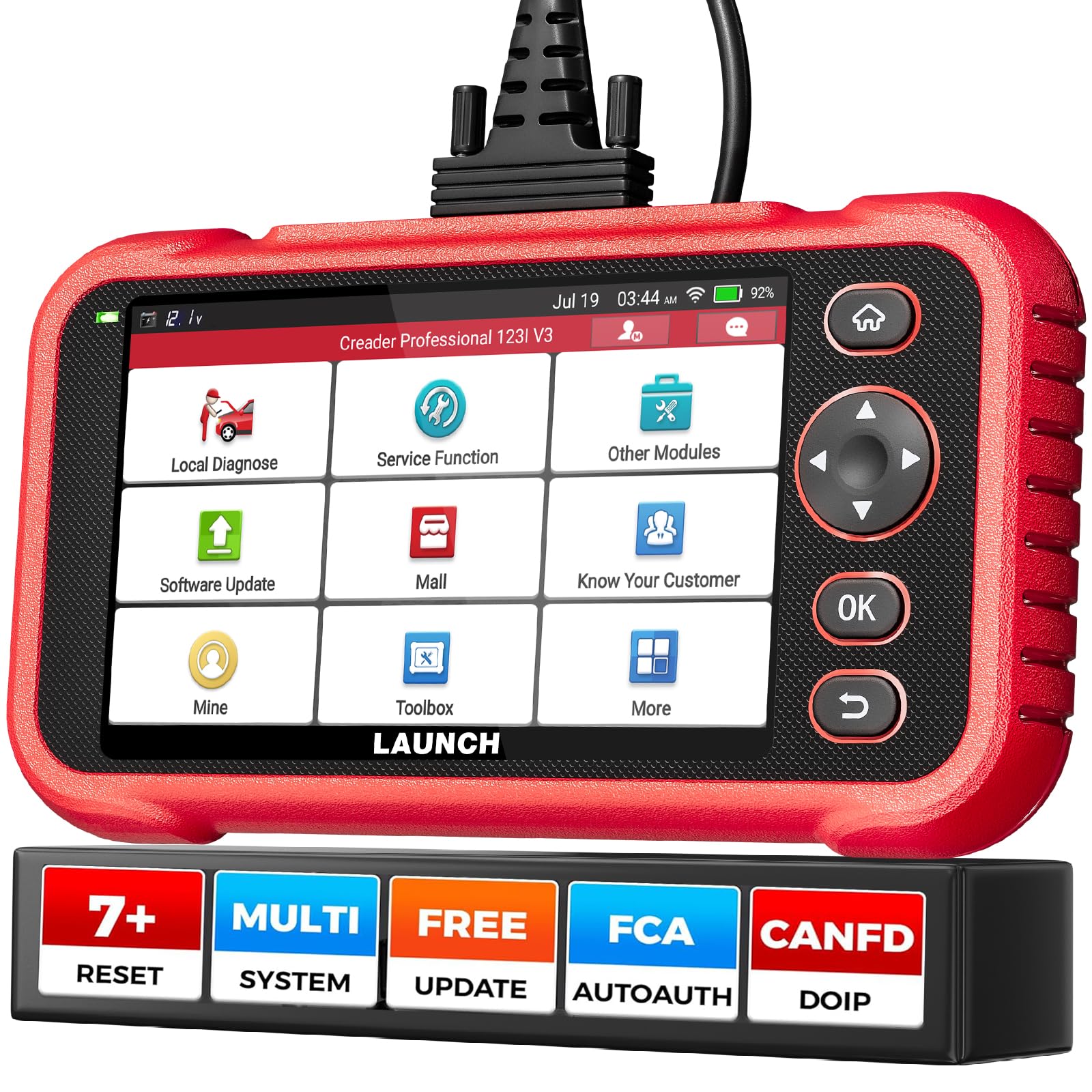
Buy this if you want an Android touchscreen scanner with service resets alongside multi-system diagnostics.
Pros
- Touchscreen interface with 4-in-1 live data graphing
- Seven reset functions including oil, SAS, and BMS
- Broad vehicle brand coverage with lifetime Wi-Fi updates
Cons
- FCA Secure Gateway vehicles need an extra AutoAuth subscription
- Some CAN FD/DoIP features require separate adapters
- Bulkier than handheld readers, needs regular charging
The CRP123I brings tablet-style diagnostics to a mid-range price point, and the seven service resets (oil, SAS, BMS, EPB, DPF, throttle adaptation, ABS bleeding) mean fewer trips to a shop for routine maintenance resets. Mode 6 data is accessible through its OBD2 mode menu, though it’s not the tool’s headline feature. The catch worth flagging: newer FCA vehicles need a paid AutoAuth account to get past the Secure Gateway, an extra cost some buyers don’t expect.
TOPDON AD600S

Buy this if you want four-system diagnostics (engine, ABS, transmission, SRS) plus nine service functions in one touchscreen unit.
Pros
- Diagnoses engine, ABS, transmission, and SRS systems
- Nine included service functions like SAS reset and TPMS reset
- Responsive 5-inch touchscreen with AutoVIN detection
Cons
- 30-day trial of extra special services reverts to nine free ones after
- Heavier and larger than pocket-style code readers
- Needs regular charging to avoid deep battery discharge issues
The AD600S targets the DIYer who’s outgrown a basic code reader but doesn’t need a full professional-grade tool. Four-system coverage means a single scanner can pull ABS wheel-speed codes and SRS airbag faults alongside engine data, a real time-saver when a dash shows multiple warning lights at once. Mode 6 review is functional here, but the nine built-in service resets (brake bleeding, throttle relearn, injector coding) are the stronger selling point for anyone doing their own maintenance.
OBDLink MX+

Buy this if you want a compact Bluetooth adapter that works with multiple diagnostic apps instead of being locked to one ecosystem.
Pros
- Compatible with FORScan, Torque, Carista, BimmerCode, and more
- Enhanced OEM-level support for several major brands
- Small, durable, with over-voltage and battery-drain protection
Cons
- Requires a third-party app for most functionality, no bundled repair reports
- Enhanced PID access depends on which app you pair it with
- Setup has a learning curve for choosing the right app and PIDs
The MX+ is less a scanner and more a diagnostic platform: plug it in, then choose the app that fits your needs, whether that’s Torque for live PID logging or FORScan for Ford-specific module access. That flexibility is the appeal for enthusiasts who already know which manufacturer-specific data they’re after. Mode 6 access depends on the paired app, so this isn’t the easiest option for someone who wants results without picking software first.
MOTOPOWER MP69033

Buy this as an entry-level reader for basic code reading and live data, not for in-depth Mode 6 diagnosis.
Pros
- Wide protocol support across older and newer OBD2 vehicles
- Clear 2.8-inch LCD with adjustable contrast
- Multiple language options built in
Cons
- No ABS, airbag, or transmission diagnostics
- Mode 6 support is minimal and generic only
- 30-day warranty is short compared to competitors
The MP69033 covers the essentials: reading and clearing check-engine codes, viewing freeze frame data, and pulling basic live parameters like coolant temp and engine speed. It’s a dependable choice for someone who just wants to know why the light is on. Mode 6 is present in name, but the data returned is generic and thin, so this isn’t the tool for verifying a borderline catalyst monitor.
WEJOWE OBD2 Scanner
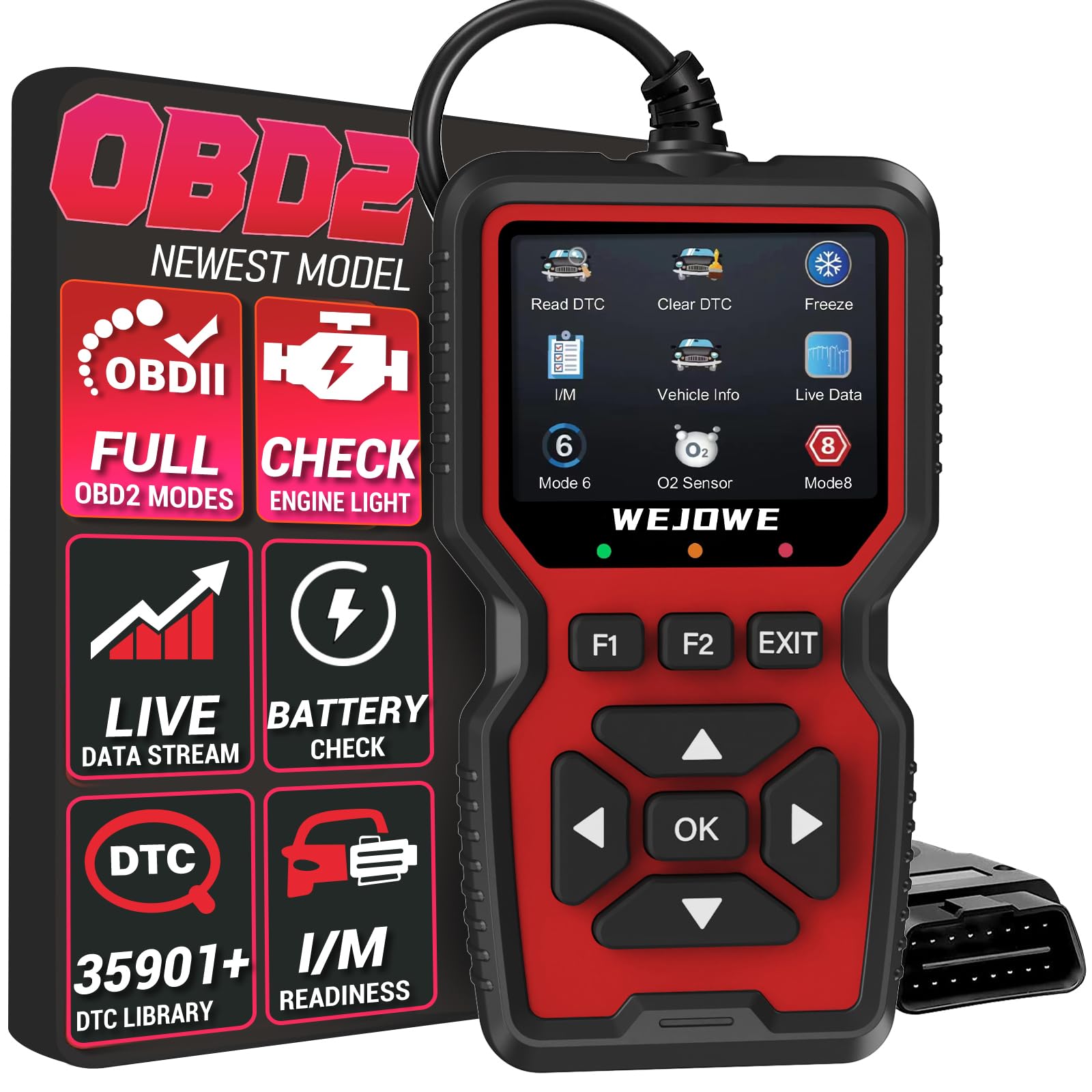
Buy this if you want a budget scanner with a built-in battery health test alongside standard Mode 6/8 code reading.
Pros
- Battery voltage test tracks real-time fluctuations
- Large 50,000-code DTC lookup library built in
- Data printing support via computer connection
Cons
- Engine system only, no ABS, SRS, or transmission diagnostics
- Some owners report inconsistent results on European makes
- Cable connection reported as a minor durability weak point
WEJOWE’s scanner stands out for pairing basic Mode 6/8 access with a battery test mode, useful for catching a weak battery before it strands you. The DTC library is larger than most budget competitors, which cuts down on needing to look up code meanings separately. It’s engine-focused only, so don’t expect ABS or airbag coverage, and a few owners note it struggles with certain European vehicles.
Buying Guide
What Mode 6 Actually Tells You
Mode 6 reports the results of onboard diagnostic monitors, tests the ECU runs continuously or during specific drive cycles to check components like catalytic converters, oxygen sensors, and EVAP systems. A scanner that reads Mode 6 well shows the measured value, the pass/fail threshold, and ideally a plain-language description of what’s being tested. Many budget readers technically “support” Mode 6 but display it as raw hexadecimal test IDs with no context, which is nearly useless without a lookup table.
Generic vs. Enhanced Mode 6 Data
| Data Type | What It Shows | Best For |
|---|---|---|
| Generic OBD2 Mode 6 | Standardized test IDs across all makes | Basic pass/fail checks, emissions readiness |
| Enhanced/manufacturer Mode 6 | Named tests with OEM-specific thresholds | Diagnosing borderline or intermittent monitor failures |
Enhanced Mode 6 data requires the scanner to have manufacturer-specific lookup tables built in, something only mid-range and professional-grade tools typically include.
Vehicle Coverage and Protocol Support
Confirm the scanner supports your vehicle’s OBD2 protocol (CAN, ISO9141, KWP2000, J1850) and model year before buying. Coverage claims like “10,000+ vehicles” sound impressive but function availability still varies by make, model, and year. Newer FCA vehicles (Chrysler, Dodge, Jeep, Ram) built after 2017 often require bypassing a Secure Gateway module, which some scanners can’t do without a paid subscription add-on.
Live Data, Graphing, and Repair Reports
Live data graphing lets you watch PIDs like RPM, fuel trim, and coolant temperature in real time, which is how you catch an intermittent sensor glitch a static code won’t show. Repair reports (matching a code to a likely fix based on other owners’ confirmed repairs) save diagnostic time but vary in depth between brands.
Bidirectional Controls and Service Resets
Bidirectional tools send commands back to the vehicle (cycling a fuel pump, retracting an electronic parking brake) instead of just reading data. Service reset functions like oil life reset, SAS calibration, and BMS registration handle routine maintenance tasks that would otherwise need a dealership visit. These features tend to be vehicle-specific, so check compatibility for your exact make before assuming full support.
Ownership Costs to Watch
| Cost Factor | What to Check |
|---|---|
| Software updates | Free lifetime updates vs. paid subscription |
| Special functions | Some resets/services locked behind a trial or paid tier |
| Gateway access | FCA AutoAuth and similar can add recurring fees |
| App dependency | Bluetooth tools may require a specific paid app for full function |
Editor’s Choice
For most DIY owners chasing a check-engine light or prepping for an emissions test, the FOXWELL NT301 hits the best balance of Mode 6 access, live data graphing, and price. It won’t show manufacturer-enhanced thresholds, but its readiness checks and O2/EVAP tests cover what most home garages actually need.
Owners who want that data explained rather than just displayed should look at the BlueDriver Bluetooth Scanner. Its repair reports turn a Mode 6 result into an actual next step, which shortens the diagnostic process considerably.
For anyone doing regular service work (oil resets, brake bleeding, battery registration) alongside diagnostics, the TOPDON AD600S or LAUNCH CRP123I V3.0 justify their higher price with four-system coverage and built-in reset functions a basic code reader simply can’t touch.
Conclusion
Mode 6 support ranges from a checkbox feature on cheap readers to a genuinely useful diagnostic layer on tools built around it. Matching the scanner to the diagnosis matters more than chasing the longest feature list. A budget reader clears a stubborn check-engine light and confirms readiness before inspection.
Chasing an intermittent misfire or verifying a catalyst repair calls for a tool that shows enhanced Mode 6 values with real context, like the AL519 or BlueDriver. Bidirectional testing and service resets round out the picture for owners handling their own maintenance beyond code reading. Match the tool to the depth of diagnosis you actually need, and confirm vehicle-specific coverage before buying rather than after.
FAQS
Does every OBD2 scanner support Mode 6?
Most scanners built after 2010 technically support Mode 6, but the quality of that data varies widely. Budget readers often display raw test IDs without context, while enhanced scanners show named tests with pass/fail thresholds.
Can Mode 6 data confirm a repair actually fixed the problem?
Mode 6 shows whether an onboard monitor’s test result falls within its pass/fail threshold, which helps confirm a repair before clearing codes. It doesn’t replace a full drive cycle or a physical inspection of the repaired component.
Do I need a bidirectional scanner for basic Mode 6 checks?
No. Bidirectional control (sending commands to test components) is a separate feature from Mode 6 data reading. A basic enhanced scanner can show Mode 6 results without any bidirectional capability.
Why can’t some scanners clear codes on my Jeep or Ram?
Vehicles built after 2017 with FCA’s Secure Gateway module block direct OBD2 access without an AutoAuth subscription, a security measure some scanners haven’t integrated support for.
Is a Bluetooth scanner as reliable as a handheld unit for Mode 6 review?
Bluetooth scanners paired with a strong app can match or exceed handheld units for Mode 6 clarity, since the phone screen and app interface often display data more clearly than a small onboard display.
