
When Your Car Remote Won’t Unlock the Doors: A Practical Troubleshooting Guide

A car remote that suddenly won’t unlock the doors can be frustrating, but the symptom usually gives you useful clues. In many cases, the problem is not the whole fob failing at once. It may be one weak button, a tired battery, a vehicle power issue, or a door lock problem on the car side.
The fastest way to avoid guesswork is to narrow down what still works. If the remote still locks the car but won’t unlock it, that points somewhere different than a fob that does nothing at all. If the spare remote works normally, you’ve already ruled out a lot. And if only one door refuses to open, that’s usually a different repair path than a central locking issue.
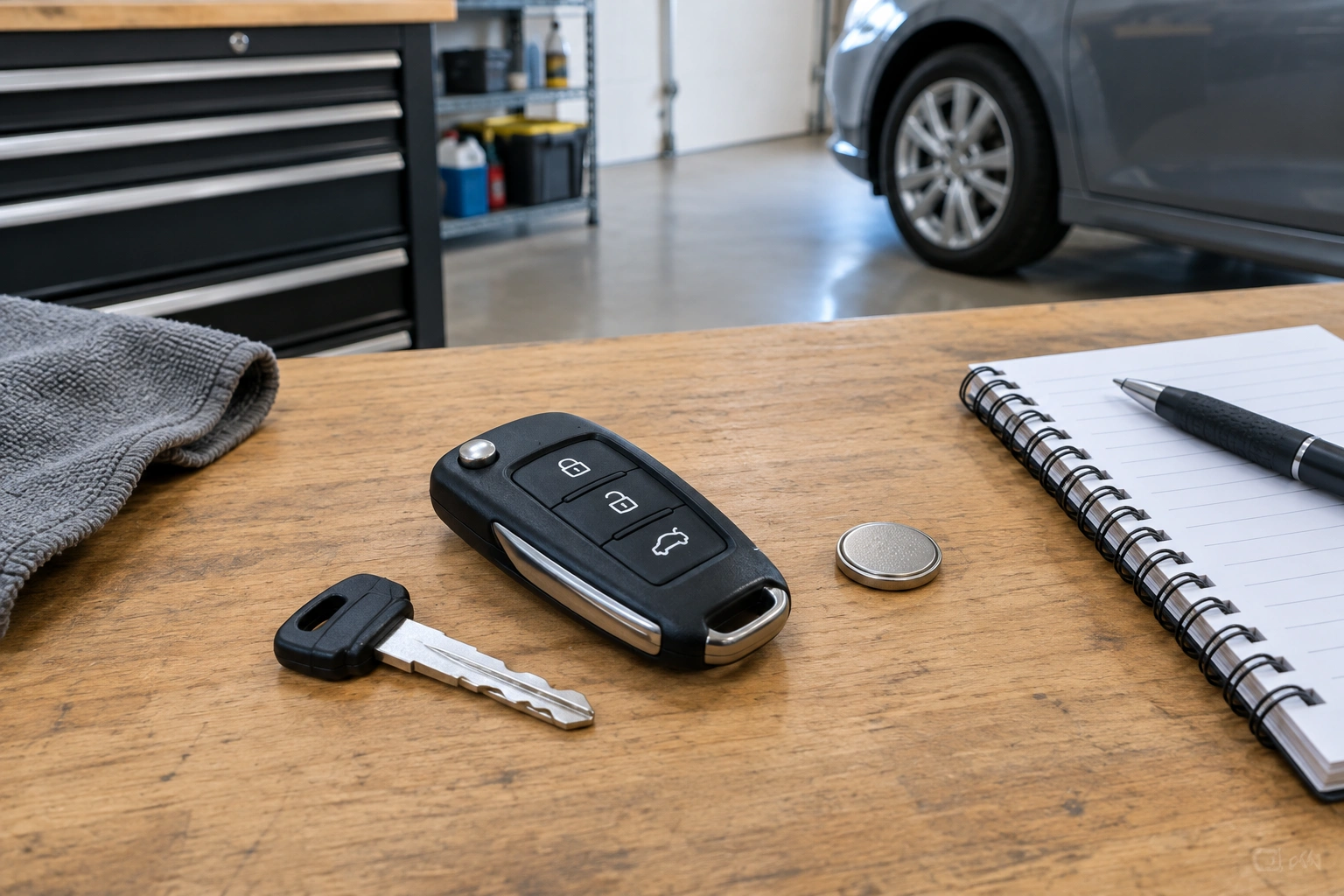
Quick decision tree: what to check first
- Does the spare work?
- Yes: the original fob is the likely problem.
-
No: look at the car, vehicle battery, receiver, or central locking system.
-
Does one door fail or all doors?
- One door only: suspect that door’s actuator, latch, or lock mechanism.
-
All doors: suspect the fob, receiver, fuse, or vehicle power.
-
Does lock work but unlock not work?
- Yes: suspect a weak fob battery, worn unlock button/contact, or an unlock-side vehicle fault.
-
No: if nothing works, the issue is more likely broader than one button.
-
Did the problem start after battery replacement or a jump-start?
- Yes: try resyncing the fob and check vehicle battery condition.
- No: focus first on the fob battery, button wear, and the spare remote.
What the symptom is really telling you
When a remote won’t unlock the doors, the first question is whether the failure is total or partial.
A total failure means the remote doesn’t lock, unlock, or trigger anything. That can suggest a dead fob battery, a damaged fob, a dead vehicle battery, or a pairing problem.
A partial failure is more interesting. If the remote still locks the car but won’t unlock it, or unlock works only when you stand very close, the fob may still be transmitting some signal. That often points to a weak battery, worn button contacts, or a signal issue rather than a completely dead remote.
There’s also a third pattern: the remote seems fine, but the car does not respond correctly. In that case, the problem may be in the central locking system, a door actuator, or the vehicle’s receiver.
Symptom checklist: weak battery, worn button, or car-side failure
- Weak fob battery: reduced range, intermittent response, or the remote works only very close to the car.
- Worn unlock button/contact: lock works, unlock does not, especially if the button feels mushy, inconsistent, or needs extra pressure.
- Car-side lock failure: the spare remote behaves the same way, one door won’t unlock, or the car responds unevenly even though the fob seems fine.
First checks: spare remote, backup key, and manual entry
Before buying parts, test the easiest things first.
Try the spare remote
If you have a second fob, use it immediately. A spare that unlocks the doors normally is the cleanest way to separate a bad remote from a car-side problem. If both remotes fail the same way, the vehicle is more likely at fault.
Use the mechanical key or backup entry method
Many fobs contain a hidden mechanical key. If the remote won’t unlock the car, use the backup key or the manufacturer’s manual entry method to get in safely. That lets you avoid being stranded while you troubleshoot.
If the key cylinder feels stiff, do not force it. A stuck lock can turn a simple access problem into a broken key or damaged cylinder.
Check whether the problem is one door or all doors
If every door stays locked, think about the remote, receiver, central locking system, or vehicle power. If only one door won’t unlock, the issue is often local to that door’s actuator, latch, or linkage.
The most likely causes, from common to less common
Here’s the practical ranking I’d use in the shop.
| Symptom pattern | Likely cause | Best next step |
|---|---|---|
| Unlock button weak or intermittent, lock still works | Weak key fob battery, worn button, dirty contacts | Replace the fob battery and test again |
| Spare remote works, original does not | Original fob damage or battery/contact issue | Inspect the original fob for wear or water damage |
| All remote functions fail after jump-start or battery drain | Vehicle battery or syncing issue | Check vehicle battery condition and try resyncing |
| One door will not unlock | Door actuator, latch, or mechanical lock fault | Test the door manually and plan a door-side repair |
| Remote works only at very close range | Weak fob battery or signal problem | Replace battery and check for interference |
| Nothing works and the fob is visibly damaged | Internal fob failure | Replace or reprogram the fob |
How to tell whether it’s the key fob or the car
The easiest diagnosis comes from comparing symptoms.
Signs the fob is the likely problem
A weak key fob battery often shows up as reduced range, intermittent response, or one button working better than another. If the lock button works but unlock does not, the unlock button contacts may be worn even if the battery is still usable.
Physical damage matters too. A fob that has been dropped, cracked, or exposed to water may fail in a way that looks electrical at first. If the unlock function died first after moisture exposure, I’d suspect internal damage before I blamed the car.
Signs the vehicle is the likely problem
If both the spare and original remote act the same way, the car is more suspicious. That includes a weak vehicle battery, a receiver issue, a blown fuse, or a central locking fault.
A weak car battery can create odd behavior even when the fob battery is fine. The remote may work inconsistently, or the car may respond to one command but not another. If the vehicle was recently jump-started, discharged, or sitting for a while, keep that in mind.
Signs of a single-door issue
If the remote unlocks three doors but not one, that usually is not a fob problem. It often points to a bad actuator, a jammed latch, or a mechanical lock problem in that door. In that case, replacing the fob battery won’t fix the bad door.
Fixes you can try yourself, in the right order
1) Replace the fob battery
This is the first repair I’d try if the remote is weak or inconsistent. A weak battery can still let the fob send just enough signal for some functions but not others.
Use the correct battery type for your fob and make sure it sits firmly in the contacts. If the battery is loose or the contacts are dirty, the fob may act dead even with a fresh cell.
2) Inspect the battery contacts and button pads
Open the fob carefully and look for corrosion, bent contacts, or dirt around the buttons. A worn unlock button may not press the internal contact properly, even though the lock button still feels normal.
If the contact area is dirty, clean it gently with a dry, soft cloth or a little electronics-safe cleaner applied sparingly. Avoid soaking the board.
3) Test the remote at close range
Stand next to the door and try again. If the unlock button works only when you are very close, that suggests a weak battery, poor contact, or signal issue rather than a fully failed fob.
4) Try a resync or reprogram step from the owner’s manual
Some vehicles need the remote to be resynced after battery changes or power loss. The exact procedure varies by make and model, so use the owner’s manual or the automaker’s support guidance rather than guessing.
For general keyless-entry behavior, manufacturers use systems that depend on the fob being within range and properly recognized by the car. If the code sync is off, the doors may not respond the way you expect. For model-specific guidance, the owner’s manual is the safest source.
5) Check whether the vehicle battery is weak
If the car battery is low, the remote system may behave oddly. Look for slow crank, dim interior lights, or other electrical symptoms. If those are present, the vehicle battery deserves attention before you assume the fob is bad.
Why the car may lock but not unlock
This is one of the most common patterns people ask about, and it can be misleading.
A lock command and an unlock command do not always fail for the same reason. The unlock button may have worn contacts, the fob may be slightly damaged, or the vehicle may have a problem on the unlock side of the central locking circuit.
If the lock function still works reliably, I would not assume the entire fob is dead. I’d look hard at the unlock button, battery contacts, and whether the problem is really on the car side.
When the car battery or vehicle power is the real problem
A weak car battery can confuse the diagnosis because the fob may still seem “alive.” The car’s receiver, lock module, or door actuators may not have enough clean power to respond properly.
This is especially worth checking if the problem started after the vehicle sat unused, after a jump-start, or after a battery replacement. In those cases, the fob may need to be resynced, or the car may simply need a healthy battery before the locks behave normally.
If the remote works in some situations but not others, that can also point to power or interference issues rather than a bad fob alone.
For broader vehicle safety guidance, NHTSA’s consumer information is a good place to start when electrical or safety-related symptoms appear alongside locking problems.
When only one door won’t unlock
If one door stays locked while the others open, stop focusing on the fob.
That pattern usually means the central locking system is sending the unlock request, but one door actuator or latch is not responding. Sometimes the mechanical lock cylinder is also part of the problem. Either way, the repair is usually door-specific.
A useful test is to unlock the door manually and see whether it moves smoothly. If it binds, sticks, or feels disconnected, the issue is likely in that door rather than in the remote.
When reprogramming or replacement is needed
If battery replacement, spare-fob testing, and basic checks do not help, reprogramming may be the next step.
A resync is more likely when:
– the fob stopped working after a battery change
– the vehicle battery was disconnected or went dead
– both remotes behave strangely in the same way
– the remote still seems to transmit, but the car does not recognize it consistently
Replacement becomes more likely when:
– the fob is cracked, water-damaged, or dropped hard
– the unlock button is physically worn out
– the spare remote works but the original never recovers after battery replacement
– the fob has visible internal damage or no response at all after fresh batteries and resync attempts
For some vehicles, the issue is not the battery at all but the fob’s internal electronics. In that case, replacing the shell won’t help if the circuit board is damaged.
If you’re comparing repair paths, a locksmith can often be faster for diagnosis and reprogramming, while a dealer may be the better route for certain brand-specific systems or when you need OEM parts and official programming support.
When to consult a locksmith
Call a locksmith, dealer, or mechanic when the simple checks don’t settle the question.
A locksmith is often the best first call if:
– you need access and the backup key is unavailable or stuck
– the fob likely needs reprogramming
– the spare works but the original does not
– you want a faster diagnosis than a dealership visit
A dealer makes more sense when:
– the vehicle uses a brand-specific programming procedure
– you need an OEM replacement fob
– the car has an integrated security system that requires official tools
A mechanic is the better choice when:
– the issue looks car-side, not fob-side
– one door won’t unlock
– the vehicle battery or electrical system seems weak
For general vehicle purchase and ownership advice, Edmunds has useful consumer-facing guidance, and Car and Driver often covers modern keyless-entry features and car technology in plain language.
How to keep the problem from coming back
A little prevention goes a long way with key fobs.
Replace the battery before the fob becomes unreliable, especially if the range starts dropping. Keep the fob dry, and avoid tossing it where buttons can be pressed constantly or the shell can crack. If you notice the unlock button feeling mushy or inconsistent, treat that as an early warning instead of waiting for a full failure.
Also pay attention to the car itself. A weak vehicle battery can create lock problems that look like fob trouble. If the battery is aging or the car has been sitting, don’t ignore small electrical oddities.
Quick takeaway
If your car remote won’t unlock the doors, test the spare remote first, then check the fob battery, then separate a fob problem from a vehicle-side issue by looking at the symptom pattern. A remote that locks but won’t unlock often points to a weak battery, worn unlock button, or a car-side lock issue rather than a dead fob overall.
