
Key Fob Replacement Cost When the Buttons Stop Working

If your key fob buttons are failing, the first question is usually the right one: do you need a battery, a repair, or a whole new fob?
Here’s the practical answer. A simple battery swap is often the cheapest fix and usually costs $10 or less for the battery itself. If the problem is worn buttons or a damaged shell, a shell or button-pad repair is often still far cheaper than replacing the entire fob. Full replacement can run from the low hundreds to several hundred dollars once you add programming, especially for smart keys and push-button start systems. Kelley Blue Book’s key fob replacement guide lists examples for some popular models ranging from about $150 to $400, and some dealership quotes can be higher depending on the vehicle and trim level. KBB’s key fob replacement guide is a useful reality check before you spend money.
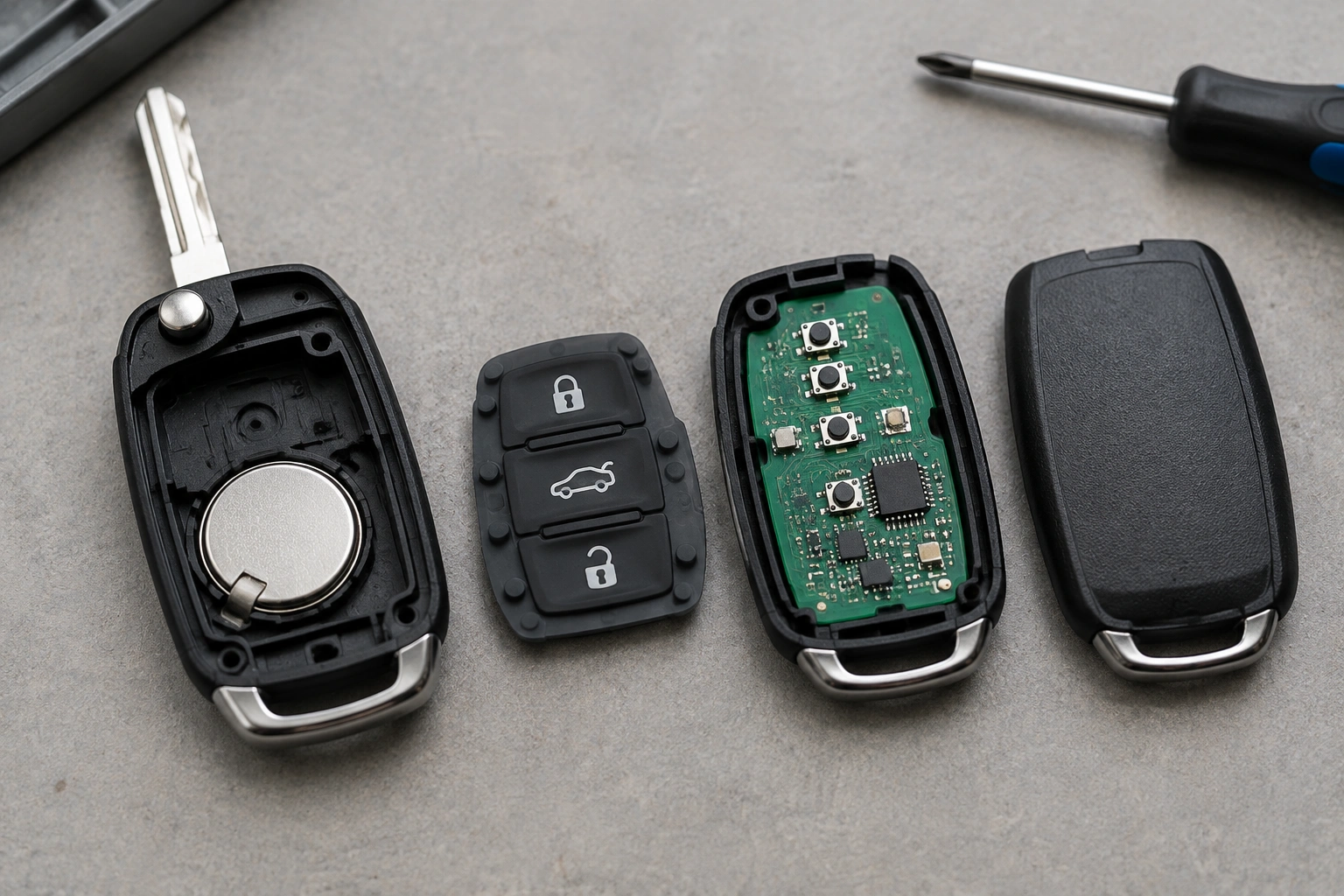
The key is to diagnose the failure before buying parts. A fob that works only when you press hard may have worn rubber buttons or dirty contacts. A fob with weak range and sluggish response may just need a battery. A fob with multiple dead buttons, corrosion, or obvious liquid damage is more likely to need internal repair or replacement.
Quick answer: what it costs when buttons stop working
Here’s the short version for budgeting:
| Fix or replacement path | Typical cost range | Best for |
|---|---|---|
| DIY battery replacement | About $10 or less for the battery | Weak range, intermittent response, no obvious button damage |
| DIY shell/button-pad replacement | Low cost, usually far less than full replacement | Worn or sticky buttons, cracked shell, intact electronics |
| Professional button/shell repair | Varies by vehicle and provider | Fob still recognized by the car, but buttons are worn out |
| Full replacement, aftermarket or OEM | Commonly hundreds once programming is included | Broken circuit board, water damage, missing fob, or failed repair |
| Dealership replacement | Often the highest price | High-security or OEM-only fobs, or when dealer programming is required |
| Locksmith replacement | Often cheaper than dealer | When the fob can be sourced and programmed locally |
| Online replacement total | Often part cost is low, but programming can raise the total | Buyers comparing part price vs final installed cost |
A quick budgeting rule of thumb:
– DIY total: often the lowest if you only need a battery, shell, or button pad
– Locksmith total: often in the middle, especially when programming is needed
– Dealership total: usually highest, but sometimes the only practical option
– Online total: cheapest part price, but not always the cheapest finished cost once programming is added
That table is the big picture. The actual total depends on three things: the fob type, whether it needs programming, and whether the issue is really the buttons or something deeper inside.
How to tell whether the battery, buttons, or circuit board is the problem
A dead battery is the easiest possibility to rule out. If the fob still works sometimes, but only at close range, the battery is the first thing I’d check. Coin-cell batteries are inexpensive, and on many fobs they’re simple to replace. KBB notes that these batteries generally cost $10 or less, though some fobs use two batteries.
Button wear shows up differently. You may need to press harder than usual, rock the button side to side, or hit the button twice before the car responds. That usually points to worn rubber buttons, dirty contacts, or a shell that no longer presses the internal switch cleanly.
Circuit board trouble is more likely when several buttons fail at once, the fob was dropped in water, or you see green corrosion or residue inside. If the board is damaged, replacing the shell won’t solve the real problem.
A simple rule helps:
– Weak range only: battery first
– One sticky or hard button: shell/button repair first
– Multiple dead buttons or corrosion: internal repair or replacement
Most likely causes, in the order I’d check them
1) Weak or dead battery
This is the cheapest and most common place to start. Even if the fob still works occasionally, a weak battery can make the buttons feel unreliable.
2) Worn rubber button pad
The rubber pad can wear out over time. When that happens, the button may no longer press the switch underneath with enough force.
3) Dirty or oxidized contacts
Dust, moisture, and hand oils can interfere with the contact points. Sometimes a careful cleaning is enough to restore normal function.
4) Cracked shell or broken button housing
If the outer case is cracked, the internal parts may shift just enough that the button no longer lands correctly.
5) Failed circuit board
This is the expensive one. If the board is damaged, repair may still be possible in some cases, but full replacement becomes much more likely.
Step-by-step fixes to try first
Replace the battery
Open the fob carefully and replace the battery with the correct coin cell. Avoid prying so hard that you bend the contacts or crack the board.
If the battery compartment looks corroded, clean it gently before reassembling. If the battery is installed backward, the fob may look dead even though nothing is actually wrong with the electronics.
Clean the contacts
If the buttons feel sticky or inconsistent, inspect the rubber pad and the contact points on the board. Use a gentle electronics-safe cleaner if needed, and let everything dry fully before reassembly.
Reseat the internal parts
Sometimes the board or battery shifts inside the shell. Reassembling the case carefully can restore proper button pressure.
Test after each step
Don’t stack repairs all at once. Test the fob after the battery change, then after cleaning, then after reseating. That way you know what actually fixed the issue.
Repairing the buttons vs replacing the whole key fob
If the electronics still work, a shell or button-pad repair is often the smartest move.
A shell-only repair makes sense when:
– The buttons are worn or soft
– The case is cracked
– The board and battery contacts still look good
– The fob still communicates with the vehicle
A full replacement makes more sense when:
– The board is corroded or damaged
– The fob was submerged
– The buttons fail even after a battery and shell swap
– The replacement shell would cost nearly as much as a complete fob
Worn buttons can often be fixed by replacing the rubber button pad or the entire shell. But if the circuit board has failed, replacement is usually the only practical fix. Think of it this way: if the “brains” of the fob are still healthy, don’t pay to replace them. If the board is the problem, a new shell is just cosmetic.
Typical costs by repair type and service provider
DIY is usually cheapest, but it only works if you’re comfortable opening the fob and identifying the correct part.
A locksmith often lands in the middle. They may be able to source the right fob, swap the shell, or program a replacement without dealership pricing.
Dealerships are usually the most expensive option, but they can be the safest choice for certain OEM-only or high-security systems. Programming can sometimes be the largest part of the bill, especially on newer smart keys and push-button start systems.
Here’s a more concrete budgeting snapshot:
| Provider | Typical total cost range | Notes |
|---|---|---|
| DIY | Battery-only cost is usually $10 or less; shell or button-pad repairs are often still low-cost | Cheapest if the electronics are fine and you only need a battery, shell, or button pad |
| Locksmith | Often a few dozen dollars to several hundred dollars total, depending on the fob and programming | Usually cheaper than a dealership, especially when programming is needed |
| Dealership | Often the highest total, commonly in the hundreds once parts and programming are included | May be required for some OEM-only or high-security vehicles |
| Online replacement | Part price may be low, but the finished total can still climb once programming is added | Good for comparison shopping, not always the cheapest final cost |
Because the part price and the programming price can move in opposite directions, a cheap online fob is not always the cheapest total. If you save money on the part but pay more to program it, the final price may end up close to a dealer quote.
OEM vs aftermarket vs used key fobs
This is where buyers often make the wrong comparison. The sticker price matters, but so does compatibility.
OEM key fobs
OEM fobs are the safest fit. They’re made to match the vehicle’s original setup, which reduces compatibility headaches. The downside is price.
Aftermarket key fobs
Aftermarket options are usually cheaper and can be a solid value if the seller clearly lists compatibility and programming requirements. The trade-off is that quality and fit can vary.
Used key fobs
Used fobs can look like a bargain, but they carry risk. Some may be locked, damaged, or incompatible with your vehicle. A low purchase price can disappear fast if programming fails or the unit turns out to be unusable.
My rule: if your vehicle is picky about remote programming, don’t buy a used fob just because it’s cheap.
Will the replacement need programming?
Often, yes — but not always in the same way.
A full replacement key fob usually needs programming if it contains the transponder, remote electronics, or smart-key functions your vehicle has to recognize. That’s especially true when you replace the entire unit or move the internal electronics into a different shell.
But battery swaps, shell swaps, and button-pad repairs usually do not require reprogramming if the original electronics stay in place and the vehicle-specific chip/transponder is not replaced. In other words, if you’re only fixing the outside of the fob and the original board stays intact, the car usually doesn’t need to relearn the key.
Programming is more likely when:
– You replace the entire fob
– You replace the circuit board
– You replace the transponder or vehicle-specific chip
– The vehicle stores the fob’s identity in a way that must be re-registered
Programming is less likely when:
– You only replace the battery
– You only replace the shell
– You only replace the rubber button pad
– The original electronics are transferred unchanged into a new case
Some vehicles allow self-programming, while others require a locksmith or dealership. Before buying anything, confirm:
– Whether your vehicle supports self-programming
– Whether the replacement must be OEM
– Whether the transponder is built into the fob
– Whether the seller includes programming instructions
If you’re unsure, check the owner’s manual or the manufacturer’s service information before ordering. For broader vehicle safety and ownership guidance, NHTSA’s consumer resources are a solid starting point.
When to consult a locksmith
Call a locksmith when the fob has visible damage, the buttons fail even after a battery swap, or you’re not sure whether the replacement needs programming.
A locksmith is especially useful when:
– You want a price below the dealership quote
– You need help identifying the correct fob
– You want the old shell repaired instead of replaced
– You need programming on a vehicle that doesn’t support self-programming
If the board is corroded or the fob was water-damaged, a locksmith can also tell you whether repair is realistic or whether replacement is the better spend.
How to avoid paying for an unnecessary replacement
The easiest money-saving mistake to avoid is replacing the whole fob before checking the simple stuff.
Use this decision path:
1. Try a battery first if the range is weak.
2. Inspect the buttons and shell if one button feels mushy or hard to press.
3. Look for corrosion or liquid damage if multiple buttons fail.
4. Compare the cost of a shell repair against the total cost of a replacement plus programming.
5. Only buy a full replacement when the electronics are actually the problem.
One more practical tip: compare the total cost, not just the part price. A cheap fob with expensive programming can cost more than a better-quality replacement from a locksmith.
Bottom line
When key fob buttons stop working, the cheapest fix is often a battery or shell repair, not a full replacement. If the buttons are worn but the electronics still work, replacing the shell or button pad can save a lot. If the circuit board is damaged, full replacement may be unavoidable, and programming can add a meaningful amount to the final bill.
A simple rule: if the original electronics still work, repair is usually cheaper than replacement; if the board is damaged or the fob must be reprogrammed from scratch, replacement often makes more sense.
The smartest move is to diagnose the symptom first, then buy only the part you actually need.
