
P0101 Code: Mass Air Flow Sensor Range/Performance Problem

The P0101 code means your engine’s Mass Air Flow (MAF) sensor is sending voltage readings outside the expected range. This triggers a check engine light and often causes rough idling, poor acceleration, or reduced fuel economy. The issue usually stems from a dirty sensor, air intake leaks, or wiring faults rather than complete sensor failure.
You see this code because your car’s computer detected inconsistent airflow data. It cannot calculate the correct fuel mixture without accurate readings. Fixing it prevents long-term engine damage and restores performance.
This guide takes about 6 minutes to read. We will cover exact causes, diagnostic steps, and repair costs so you can decide whether to clean the sensor yourself or visit a mechanic.
What Does the P0101 Code Mean?
P0101 stands for “Mass or Volume Air Flow ‘A’ Circuit Range/Performance Problem.” Your engine control module (ECM) monitors the MAF sensor continuously. It expects specific voltage signals based on throttle position and engine speed.
The code triggers when actual readings deviate significantly from calculated values. This does not always mean the sensor is broken. Often, external factors disrupt the signal.
Your ECM uses MAF data to determine fuel injection timing. Incorrect data leads to a rich or lean fuel mixture. This affects emissions, power output, and component longevity.
The ECM compares MAF readings with manifold absolute pressure (MAP) sensor data. A mismatch between these two sources confirms the P0101 fault rather than a temporary glitch.
Common Symptoms of a P0101 Fault
Drivers notice performance issues before checking for codes. Recognizing these signs helps confirm the diagnosis early.
- Check engine light remains illuminated
- Rough or unstable idle at stoplights
- Hesitation during acceleration
- Decreased fuel efficiency
- Engine stalling in heavy traffic
- Black smoke from exhaust (rich mixture)
Symptoms vary by vehicle make and model. Some cars enter limp mode to protect the engine. This limits speed and RPMs until repairs occur.
You might think these symptoms indicate spark plug issues. However, fuel mixture problems from bad airflow data cause similar behavior. Always scan for codes first.
Primary Causes of P0101 Codes
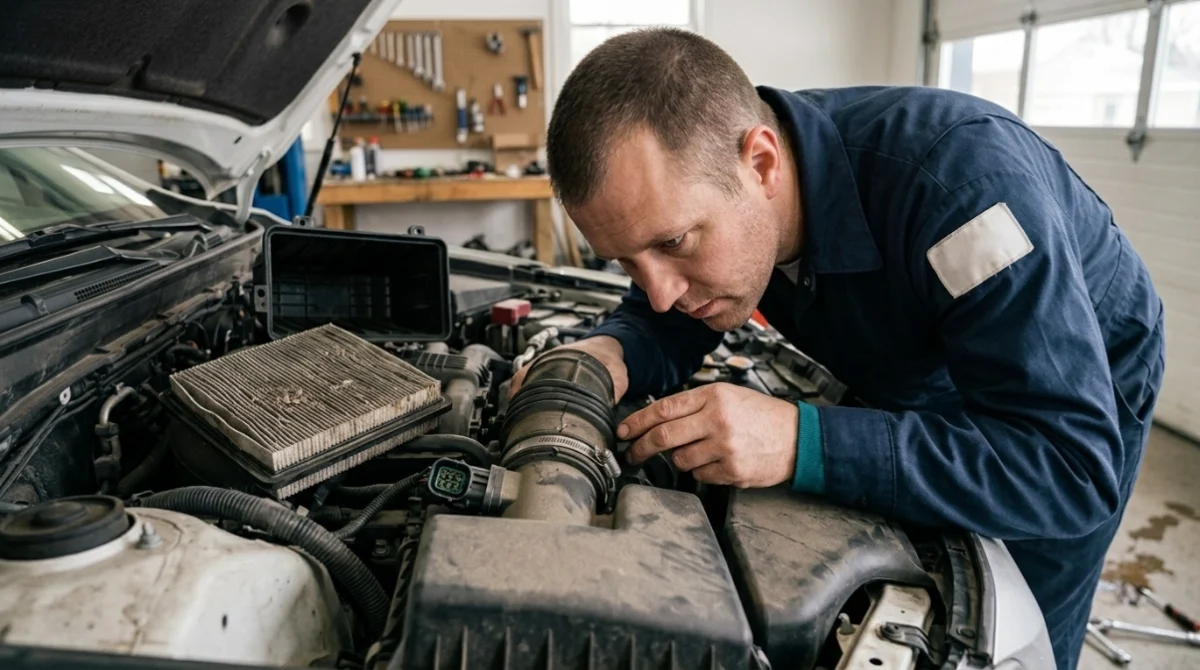
Understanding root causes prevents unnecessary part replacements. Most fixes involve cleaning or sealing rather than buying new components.
Dirty or Contaminated MAF Sensor
Dust, oil, and debris coat the sensor wire over time. This insulation reduces sensitivity to airflow changes. The ECM receives weaker signals than expected.
Cleaning resolves this issue in many cases. Use specialized MAF cleaner only. Regular brake cleaners leave residues that worsen the problem.
Unmetered Air Leaks
Cracks in intake hoses allow air to bypass the sensor. The MAF measures less air than actually enters the engine. This creates a false lean condition.
Inspect all rubber boots and clamps after the air filter box. Listen for hissing sounds while the engine runs. Smoke tests reveal small leaks effectively.
Faulty Wiring or Connections
Corrosion or loose pins disrupt voltage transmission. Rodent damage also cuts wires in older vehicles. Intermittent connections cause sporadic code triggers.
Check the connector harness for green corrosion. Ensure the clip locks securely into place. Wiggle tests help identify loose internal contacts.
Restricted Air Filter
A clogged filter limits airflow volume. The sensor reads lower values than normal operating parameters. This mimics a failing sensor but requires only a filter change.
Replace filters every 15,000 to 30,000 miles. Dirty filters strain the entire intake system. They also reduce horsepower noticeably.
How to Diagnose P0101 Step by Step
Follow this sequence to isolate the problem efficiently. Skipping steps leads to misdiagnosis and wasted money.
Always disconnect the battery before handling electrical connectors. Wait 10 minutes for residual power to drain. This protects sensitive ECM circuits.
- Scan for additional trouble codes. Other faults may cause secondary P0101 triggers.
- Visually inspect the air intake system. Look for disconnected hoses or cracked boots.
- Check the air filter condition. Replace if visibly dirty or older than one year.
- Examine the MAF sensor connector. Clean pins with electrical contact cleaner if corroded.
- Test live data with an OBDII scanner. Compare MAF grams-per-second readings against specifications.
- Clean the MAF sensor element carefully. Allow 20 minutes for complete drying before reinstallation.
- Clear codes and test drive. Monitor if the code returns immediately or after several cycles.
Live data testing provides the most accurate diagnosis. At idle, most engines show 2–7 grams per second. Wide-open throttle should reach 100+ grams per second depending on engine size.
If readings remain erratic after cleaning, the sensor likely needs replacement. Verify voltage supply at the connector using a multimeter. Reference wiring diagrams for your specific vehicle model.
Repair Costs and Options
Costs depend heavily on whether you perform the work yourself. Labor rates vary by region and shop type.
| Repair Action | Parts Cost | Labor Cost | Total Estimate |
|---|---|---|---|
| MAF Sensor Cleaning | $10–$15 | $0 (DIY) | $10–$15 |
| Air Filter Replacement | $15–$40 | $0–$20 | $15–$60 |
| Intake Hose Repair | $20–$60 | $40–$100 | $60–$160 |
| New MAF Sensor | $150–$400 | $50–$150 | $200–$550 |
OEM sensors cost more but offer better longevity. Aftermarket units vary widely in quality. Read reviews specific to your vehicle platform before purchasing.
Some dealerships charge diagnostic fees even if you repair elsewhere. Ask about waiving this fee if you proceed with their recommended service.
Can You Drive With a P0101 Code?
Short trips are generally safe but not recommended for extended periods. The engine runs in open-loop mode without accurate airflow data. This increases fuel consumption and emissions.
Long-term driving risks catalytic converter damage. Unburned fuel from rich mixtures overheats the converter internals. Replacement costs exceed $1,000 in many modern vehicles.
Avoid highway merging or towing while the code is active. Reduced power response creates safety hazards in traffic situations. Schedule repairs within one week of detection.
Prevention Tips for MAF Sensor Issues
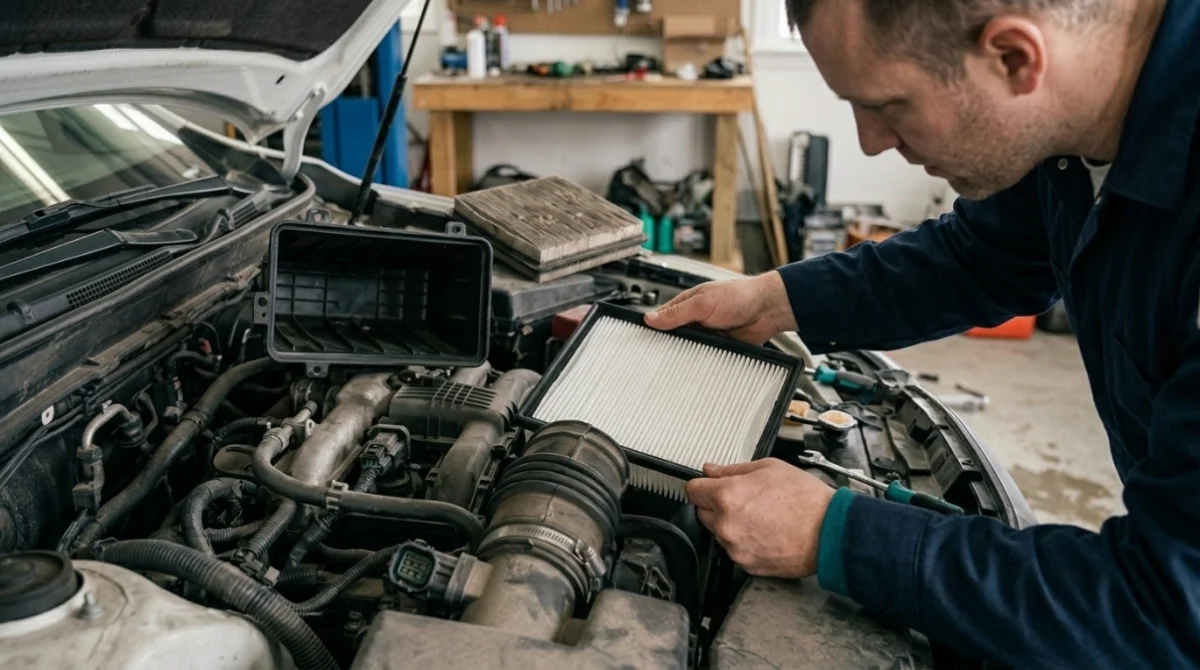
Regular maintenance prevents most P0101 occurrences. Simple habits extend sensor life significantly.
- Change air filters on schedule using high-quality brands
- Fix vacuum leaks promptly when heard or detected
- Avoid aftermarket cold air intakes without proper filtration
- Use fuel system cleaners periodically to reduce carbon buildup
- Keep engine bay clean to prevent debris ingestion
What most people don’t think to ask is whether oil-type air filters cause issues. These oiled filters can deposit residue on MAF sensors over time. Switch to dry paper filters if you experience recurring P0101 codes.
Invest in a quality OBDII scanner with live data capability. Monitoring MAF readings monthly helps detect trends before they trigger fault codes. Early intervention saves hundreds in repair costs.
Frequently Asked Questions
Will resetting the battery clear P0101 permanently?
Resetting clears the code temporarily but does not fix the underlying issue. The code returns once the ECM detects abnormal readings again. Address the root cause like dirt or leaks for permanent resolution.
Can bad gas cause a P0101 code?
Poor fuel quality affects combustion but rarely triggers MAF sensor codes directly. Contaminated fuel impacts oxygen sensors and catalytic converters more often. Focus on intake system components for P0101 diagnostics.
Is it safe to clean a MAF sensor with alcohol?
High-purity isopropyl alcohol works in emergencies but dedicated MAF cleaner is superior. Alcohol evaporates quickly but may not remove oily residues effectively. Specialty cleaners contain solvents designed for sensitive sensor elements.
Does a P0101 code affect transmission shifting?
Yes, modern transmissions use engine load data for shift points. Incorrect airflow readings cause delayed or harsh shifting. Fixing the MAF issue often resolves transmission complaints simultaneously.
How long does a new MAF sensor last?
Quality sensors last 80,000 to 100,000 miles under normal conditions. Harsh environments with dust or moisture reduce lifespan significantly. Regular air filter changes maximize sensor longevity and performance consistency.
P0101 codes usually stem from dirty sensors or intake leaks rather than complete component failure. Cleaning the MAF sensor and sealing air leaks resolves most cases without expensive replacements.
Ignoring this code risks catalytic converter damage and reduced fuel economy over time. Early diagnosis prevents costly downstream repairs and maintains engine efficiency.
Start by inspecting your air filter and cleaning the MAF sensor with specialized cleaner today. This simple maintenance step fixes the majority of P0101 instances within 30 minutes.
