
P0171 Lean Condition Fix — How to Diagnose and Repair System Too Lean

P0171 means the engine is running too lean on Bank 1. This happens when too much air or too little fuel enters the engine. Fix it by checking for vacuum leaks, dirty MAF sensor, low fuel pressure, or failing oxygen sensor.
Start with air leaks first. Then inspect fuel delivery. Finally test sensors.
P0171 is one of the most common OBD-II trouble codes. It signals a “System Too Lean (Bank 1)” condition in your engine management system. This guide takes about 10–12 minutes to read and will help you find the exact cause without guessing.
Most drivers first notice rough idle, weak acceleration, or higher fuel consumption before scanning the code. The good news is P0171 is usually fixable without major engine work.
This article is based on real diagnostic patterns found in OBD-II repair data and lean-condition troubleshooting reports. It also aligns with manufacturer diagnostic steps for fuel trim imbalance. :contentReference[oaicite:0]{index=0}
What P0171 Means in Simple Terms
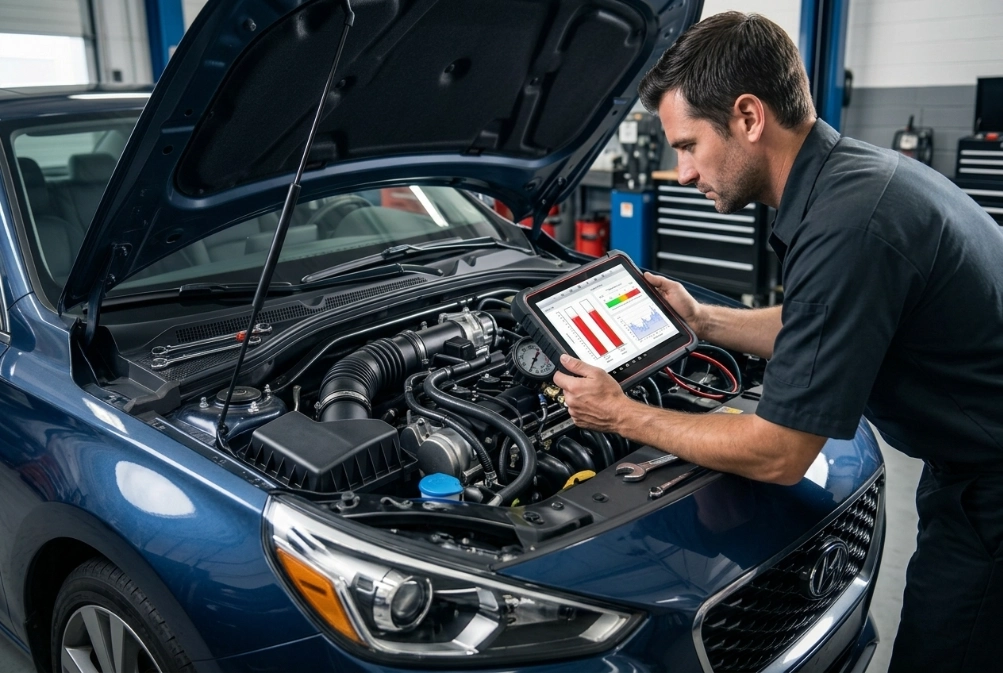
P0171 means the engine control module detects too much oxygen in the exhaust on Bank 1. In short, the engine is running lean.
A lean mixture means air is higher than fuel ratio. The ECU tries to compensate by adding fuel, but reaches its limit.
This code appears when long-term fuel trim exceeds safe thresholds, usually above +25%.
- Bank 1 = side of engine with cylinder 1
- Lean condition = too much air or not enough fuel
- ECU correction limit = fuel trim maxed out
Most cases come from airflow measurement errors or vacuum leaks.
Top Causes of P0171
The P0171 code has a small number of high-probability causes. In most real-world cases, only 4–5 components are responsible.
Vacuum leaks and dirty airflow sensors lead the list. Fuel delivery issues come next.
| Cause | How It Affects Engine | Likelihood |
|---|---|---|
| Vacuum leak | Extra air enters engine | Very High |
| Dirty MAF sensor | Incorrect airflow reading | High |
| Weak fuel pump | Low fuel pressure | Medium |
| Clogged fuel filter | Restricted fuel flow | Medium |
| Faulty O2 sensor | Wrong feedback signal | Low–Medium |
Vacuum leaks alone account for nearly half of P0171 cases.
Symptoms You Will Notice
A lean engine condition affects drivability immediately. The ECU tries to correct it, but symptoms remain visible.
Most drivers notice hesitation, rough idle, or a “hunting” RPM at stoplights.
- Engine hesitation during acceleration
- Rough or unstable idle
- Check engine light ON
- Weak fuel economy
- Possible engine misfire
You might think it is a spark plug issue. In reality, air-fuel imbalance is the root cause.
Step-by-Step Diagnosis Process
Proper diagnosis follows a structured order. Skipping steps leads to wasted parts and money.
Start with air leaks, then move to sensors, then fuel system.
- Check for vacuum leaks first
- Inspect MAF sensor condition
- Test fuel pressure levels
- Scan fuel trim values
- Check oxygen sensor readings
This order matches professional diagnostic workflow used in repair shops.
Fix 1 — Vacuum Leak Inspection
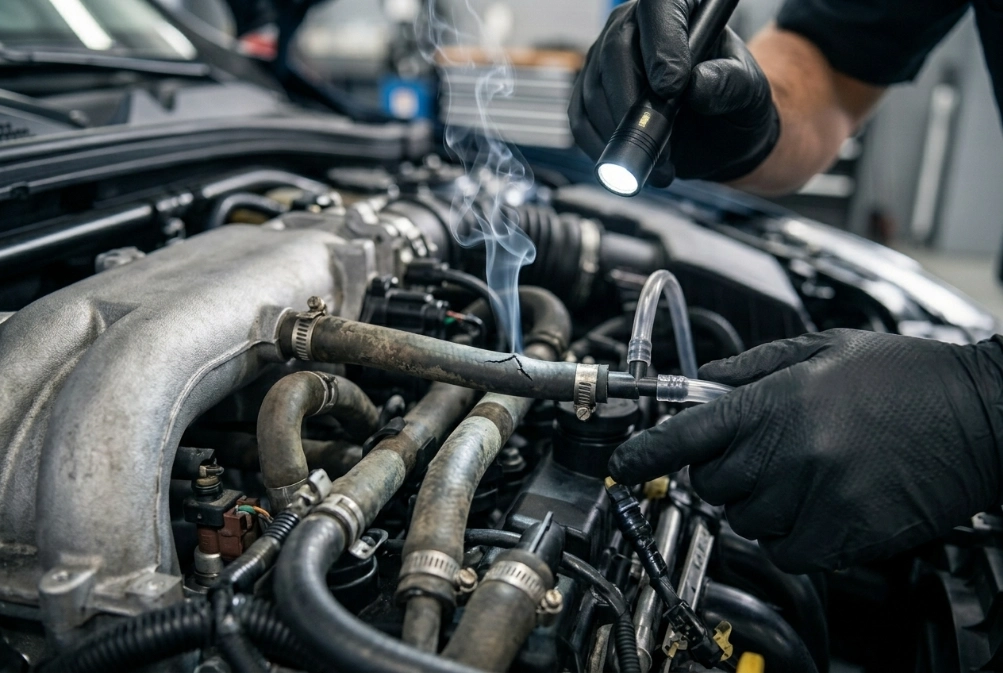
Vacuum leaks are the most common cause of P0171. They allow unmetered air into the intake system.
Cracked hoses, intake manifold leaks, or brake booster leaks are typical sources.
A smoke test is the fastest way to detect leaks.
Listen for hissing sounds around intake hoses.
Even a small crack can trigger a lean condition.
Fix 2 — Clean or Replace MAF Sensor
The Mass Air Flow sensor measures incoming air. If dirty, it underreports airflow.
This causes the ECU to inject less fuel than required.
Cleaning with MAF-safe cleaner often restores normal function.
- Remove sensor carefully
- Spray MAF cleaner only
- Do not touch sensor wire
- Allow full drying time
A failing sensor must be replaced if cleaning fails.
Fix 3 — Fuel Pressure Problems
Low fuel pressure reduces fuel delivery even when air is correct.
Weak fuel pumps or clogged filters are common reasons.
Fuel pressure test confirms system health within minutes.
| Normal Range | Low Pressure Result |
|---|---|
| 35–60 PSI (varies by engine) | Lean mixture detected |
If pressure is low, replace pump or filter.
Fix 4 — Oxygen Sensor Issues
Oxygen sensors provide feedback for fuel correction. Faulty sensors mislead the ECU.
However, they are rarely the root cause of P0171.
They usually fail after long exposure to lean conditions.
Do not replace O2 sensor before checking air and fuel systems.
What Most People Get Wrong About P0171
Many drivers assume P0171 means a bad oxygen sensor. This is incorrect in most cases.
Another mistake is replacing spark plugs first without checking air leaks.
The real issue is imbalance in air-fuel ratio, not ignition failure.
Unasked Question: Why Does P0171 Come Back After Reset?
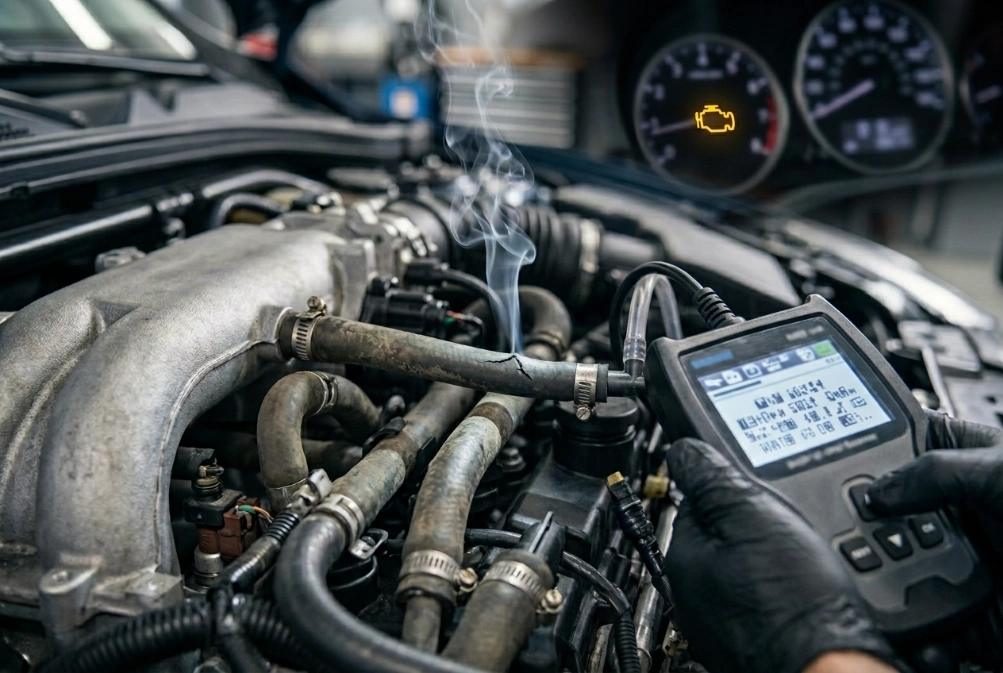
P0171 returns because the root cause is still present. Clearing codes only resets ECU memory.
If vacuum leak or fuel issue remains, the ECU will detect lean condition again.
Fixing the physical issue permanently removes the code.
Best Repair Strategy Based on Situation
Your fix depends on symptoms and vehicle behavior.
- Idle rough → check vacuum leaks first
- High fuel trim → inspect MAF sensor
- Loss of power → test fuel pump
Always start with cheapest diagnostic step first.
Final Diagnosis Flow (Simple Path)
Follow this path for fastest resolution without part replacement guesswork.
- Inspect intake hoses
- Clean MAF sensor
- Check fuel pressure
- Scan fuel trims
- Replace faulty part only if confirmed
This prevents unnecessary repairs and repeated codes.
P0171 almost always comes from unmetered air or weak fuel delivery.
Most repairs succeed by fixing vacuum leaks or cleaning airflow sensors first.
Start with inspection today and clear the code only after fixing the root cause.
Frequently Asked Questions
Can I drive with P0171?
Yes, but not recommended long-term. The engine runs lean, which increases heat and reduces efficiency. Continued driving may damage catalytic converter over time.
Is P0171 expensive to fix?
Most fixes are low cost. Vacuum hose replacement or MAF cleaning is inexpensive. Only fuel pump or sensor replacement increases cost significantly.
Can bad gas cause P0171?
Yes, contaminated or low-quality fuel can affect combustion. However, it is rarely the only cause and usually combines with other issues.
How long does diagnosis take?
Basic diagnosis takes 30–90 minutes. Professional smoke testing and fuel pressure checks speed up identification of root cause.
Will P0171 clear itself?
No. The ECU will keep detecting lean condition until the physical problem is fixed. Resetting only removes the code temporarily.
