
P0201 Symptoms: What Cylinder 1 Injector Circuit Trouble Feels Like

Your check engine light is on, your car is shaking, and an OBD2 scanner shows code P0201. What does that mean, and how serious is it?
The most common P0201 symptoms include rough idling, engine misfires, weak acceleration, difficult starting, stalling, and reduced fuel economy. These problems happen because cylinder 1 may not be receiving the correct amount of fuel.
This guide explains what P0201 means, which warning signs to watch for, whether the car is safe to drive, and how a qualified technician can identify the actual failure without replacing unnecessary parts.
Quick Answer
P0201 symptoms commonly include a check engine light, rough idle, shaking, loss of power, hard starting, stalling, and poor fuel economy. The code means the engine computer has detected an electrical problem in the fuel injector circuit for cylinder 1. The injector, wiring, connector, or engine computer may be responsible.
What Does the P0201 Code Mean?
P0201 is a generic OBD2 diagnostic trouble code. It normally means “Injector Circuit/Open – Cylinder 1.” In simple terms, the engine computer has detected an electrical problem while controlling the fuel injector for the first cylinder.
Official emissions documentation identifies P0201 as a cylinder 1 injector open-circuit or driver-stage fault. (US EPA)
A fuel injector is an electronically controlled valve. It sprays a measured amount of fuel into the engine. The engine control module, commonly called the ECM or PCM, turns the injector on and off through an electrical circuit.
P0201 may be triggered when the computer detects:
- An open electrical circuit
- Unusually high or low resistance
- A short to power or ground
- An injector that is not responding
- A damaged connector or wire
- An internal computer-driver problem
The code does not automatically prove that the fuel injector itself is bad. Testing is needed before parts are replaced.
The vehicle’s onboard diagnostic system stores trouble codes when it identifies certain monitored faults. The EPA’s explanation of onboard diagnostics also explains that a check engine light and stored codes guide technicians toward the affected system rather than identifying every failed part by themselves. (EPA)
Is P0201 Related to the Key Fob?
No. P0201 is not a key fob, remote battery, transponder, or immobilizer code.
A weak key fob battery may prevent remote locking or cause inconsistent push-button recognition, but it will not normally create an injector circuit fault after the engine is running.
If the engine cranks and starts but runs roughly while P0201 is stored, focus first on the fuel injector circuit. If the vehicle does not recognize the key, does not crank, or displays a security warning, you may have a separate key or immobilizer problem.
Most Common P0201 Symptoms
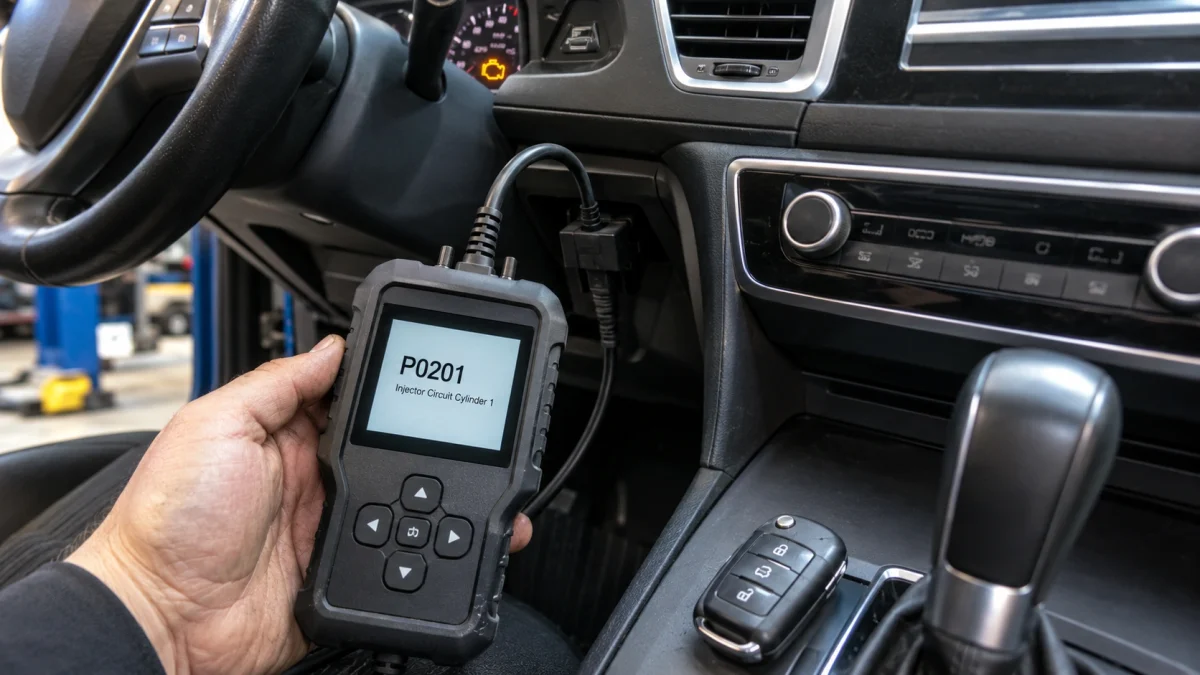
Symptoms can range from a check engine light with almost no noticeable change to severe shaking and stalling. The difference depends on whether the fault is constant, intermittent, or limited to certain temperatures and driving conditions.
| Symptom | What the driver may notice | Urgency |
|---|---|---|
| Check engine light | Solid or flashing warning light | Moderate to urgent |
| Rough idle | Shaking while stopped | Moderate |
| Engine misfire | Jerking, stumbling, or uneven sound | High |
| Loss of power | Weak acceleration or slow response | High |
| Hard starting | Longer cranking before the engine starts | Moderate |
| Stalling | Engine shuts off at idle or low speed | High |
| Poor fuel economy | More fuel used than normal | Moderate |
| Fuel odor | Gasoline smell near the engine or exhaust | Urgent |
1. Check Engine Light
A solid check engine light may be the first and only warning. P0201 can also appear with related codes, such as:
- P0200 for a general injector circuit problem
- P0301 for a cylinder 1 misfire
- Fuel mixture codes
- Manufacturer-specific injector codes
A flashing check engine light usually indicates an active misfire severe enough to risk catalytic converter damage. Reduce speed, avoid heavy acceleration, and arrange an inspection promptly.
2. Rough or Shaking Idle
If cylinder 1 is receiving little or no fuel, it contributes less power than the other cylinders. The engine may shake noticeably while you are stopped at a light.
The vibration may become less noticeable as engine speed increases, but that does not mean the problem has disappeared.
3. Misfiring or Jerking
An injector circuit problem can prevent cylinder 1 from firing consistently. You may feel:
- Repeated stumbling
- A pulsing vibration
- Jerking under acceleration
- An uneven exhaust sound
- Hesitation when climbing a hill
The misfire may happen continuously or only when the engine is hot, cold, or vibrating over rough roads.
4. Weak Acceleration
A four-cylinder engine running effectively on three cylinders can lose a significant amount of usable power. Larger engines may hide the problem more effectively, but acceleration can still feel slower than normal.
The vehicle may struggle during:
- Highway merging
- Passing
- Uphill driving
- Air-conditioner use
- Carrying heavy loads
5. Hard Starting
P0201 may cause longer cranking, especially when the electrical fault is intermittent. The engine might start and then immediately run roughly.
Hard starting can have many causes, so the stored code and supporting test results matter. Do not assume the starter, battery, or key fob is responsible simply because the engine takes longer to start.
6. Stalling
A severe injector problem can make the engine stall at low speed or when coming to a stop. Stalling is especially concerning in traffic because power steering and brake assistance may be reduced after the engine shuts off.
Do not continue driving normally if the vehicle repeatedly stalls.
7. Reduced Fuel Economy
Fuel economy can decline because the engine is no longer operating evenly. The computer may also adjust fuel delivery in response to unusual oxygen-sensor readings.
A noticeable drop in mileage is not unique to P0201, but it supports the diagnosis when combined with rough running and a cylinder 1 misfire.
8. Fuel Smell
A fuel odor is less common with a simple open circuit, but it should never be ignored. A leaking injector, damaged seal, cracked fuel component, or excessively rich cylinder can create a gasoline smell.
Turn off the engine and do not smoke, use a flame, or create sparks near the vehicle. If you see wet fuel or smell strong gasoline under the hood, have the vehicle towed.
Why P0201 Symptoms May Come and Go
Intermittent P0201 symptoms often point toward a loose connector, damaged wiring, corrosion, heat-related injector failure, or poor terminal contact.
For example, the car may run normally when cold but begin shaking after the engine warms up. Internal resistance inside the injector coil can change with temperature.
Symptoms can also appear when:
- The engine moves under acceleration
- A damaged wire touches another component
- Water enters the injector connector
- A terminal loses contact after vibration
- Recent engine work disturbed the wiring harness
An intermittent code still deserves attention. Electrical faults rarely repair themselves permanently.
Common Causes of P0201
The most likely causes include the following.
Failed Cylinder 1 Fuel Injector
The injector contains an internal electromagnetic coil. If that coil becomes open or electrically damaged, the computer may be unable to operate it.
However, an injector can also become clogged mechanically without setting P0201. That is why electrical and fuel-delivery tests must be separated.
Loose or Corroded Injector Connector
Heat, moisture, oil contamination, and repeated handling can damage the connector. A terminal may look connected while making poor electrical contact.
Broken or Chafed Wiring
Injector wiring runs through a hot, vibrating engine compartment. Insulation may rub against brackets, engine covers, or other harnesses.
Damage may occur under the outer protective covering where it is difficult to see.
Short to Power or Ground
A damaged wire can contact another circuit, the engine, or the vehicle body. This can alter the injector control signal and store P0201.
Poor Connection at the Engine Computer
This is less common but possible. Water intrusion, loose terminals, corrosion, or prior electrical repairs may affect the PCM connector.
Failed PCM Injector Driver
The computer uses an internal electronic driver to operate each injector. Driver failure is possible, but it should be considered only after the injector, wiring, power supply, and connectors have been tested.
Replacing the PCM first is usually an expensive diagnostic mistake.
Expert Tip: Save the trouble code and freeze-frame data before clearing anything. Freeze-frame information shows the conditions present when P0201 was recorded and can help a technician reproduce an intermittent fault.
How P0201 Is Diagnosed
An OBD2 scanner identifies the affected circuit, but it cannot see a broken wire or prove that an injector is defective.
A careful diagnosis generally follows these steps:
- Read all stored and pending codes.
Related misfire, voltage, or fuel-system codes may change the diagnostic direction. - Record freeze-frame information.
Note engine temperature, speed, load, and vehicle speed when the code appeared. - Inspect the cylinder 1 connector.
Look for loose locking tabs, bent terminals, corrosion, oil, water, or damaged insulation. - Confirm injector power.
Many systems supply power to multiple injectors through a shared fuse or relay. - Test injector resistance.
The reading should be compared with the manufacturer’s specification and the other injectors. - Test the computer’s control signal.
A technician may use a noid light, oscilloscope, current probe, or bidirectional scan tool. - Check wire continuity and shorts.
The circuit should be tested from the injector connector to the correct PCM terminal. - Verify the repair.
Clear the code only after repairs, then run the engine and confirm that the code does not return.
Do not pierce random wires or apply battery voltage directly to an injector. Incorrect testing can damage the computer, wiring, or injector.
Is It Safe to Drive With P0201?
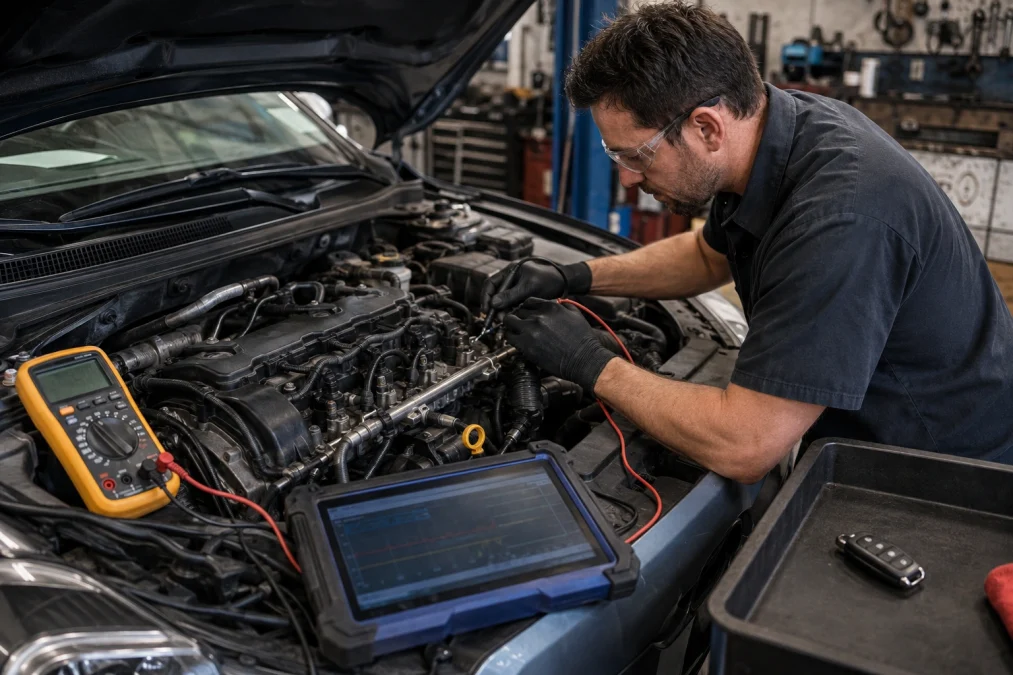
Driving may be possible for a very short distance if the check engine light is solid and the engine is running almost normally. It is still better to arrange diagnosis soon.
| Vehicle condition | Recommended action |
|---|---|
| Solid light with mild symptoms | Drive cautiously to a nearby repair facility |
| Strong shaking or major power loss | Stop driving and arrange a tow |
| Flashing check engine light | Reduce load and stop as soon as safely possible |
| Repeated stalling | Do not continue in traffic |
| Strong fuel smell or visible leak | Shut off the engine and tow the vehicle |
| Engine will not start | Diagnose electrical, fuel, and security systems separately |
Continued misfiring can increase emissions, damage the catalytic converter, and leave you stranded. EPA materials explain that OBD systems use the check engine light to alert drivers when monitored engine or emissions-related faults are detected. (EPA)
Repair Cost, Quality, and Durability Considerations
The final price depends on what testing finds. Replacing a connector or repairing one damaged wire is usually less expensive than replacing an injector, engine harness, or PCM.
| Repair possibility | Relative cost | Important quality consideration |
|---|---|---|
| Connector cleaning or terminal repair | Low | Terminals must fit tightly and resist moisture |
| Localized wiring repair | Low to moderate | Use automotive-grade wire, seals, and heat protection |
| Fuel injector replacement | Moderate | Correct flow rate and electrical resistance are essential |
| Engine harness replacement | Moderate to high | Labor can be extensive |
| PCM repair or replacement | High | Programming or security setup may be required |
A cheap injector with the wrong flow characteristics may create rough running, fuel-trim problems, or another misfire. A professional should verify the replacement part by VIN, engine size, production date, and original part number.
Ask whether the estimate includes:
- Diagnostic labor
- Injector seals or O-rings
- Wiring or connector repair
- Intake removal when required
- Computer programming
- Taxes and shop supplies
- A parts-and-labor warranty
The FTC’s auto repair guidance recommends asking how diagnostic and labor charges are calculated, obtaining a written estimate, and considering a second opinion for complicated or expensive work. (Consumer Advice)
DIY Diagnosis Versus Professional Repair
| Task | DIY suitability | Main limitation |
|---|---|---|
| Reading the code | Good for beginners | Code does not identify the exact failed part |
| Visual connector inspection | Reasonable | Damage may be hidden |
| Checking a fuse | Reasonable with the owner’s manual | A blown fuse may indicate a deeper short |
| Resistance testing | Intermediate | Specifications and safe access are required |
| Noid-light testing | Intermediate | Incorrect connections may mislead diagnosis |
| Oscilloscope or current-ramp testing | Professional | Requires equipment and waveform knowledge |
| PCM replacement | Professional | Programming and security initialization may be required |
Basic visual checks can be worthwhile. Stop when testing requires fuel-system disassembly, PCM connector probing, or unfamiliar electrical procedures.
Fuel rails may remain pressurized after the engine is turned off. Do not loosen an injector or fuel connection without the manufacturer’s depressurization procedure.
When to Call a Professional Locksmith or Dealership
For P0201 itself, an automotive repair technician is usually more appropriate than a locksmith. The fault involves engine fuel-injector electronics rather than the vehicle’s locks or key fob.
Contact an experienced independent repair shop when:
- The engine runs roughly or misfires
- Wiring needs circuit testing
- The injector must be removed
- The code returns after a basic inspection
- You need an objective diagnosis before authorizing parts
The ASE Blue Seal repair-shop locator can help you identify facilities that employ a significant percentage of ASE-certified professionals. Certification is useful, although experience with your specific make and engine also matters. (ASE)
A dealership may be the better choice when:
- The vehicle is under factory warranty
- A recall or manufacturer campaign may apply
- Brand-specific software is required
- The PCM needs replacement or programming
- The injector system uses specialized manufacturer procedures
- An independent shop cannot access required technical information
Before paying for repairs, enter your VIN into the official NHTSA recall lookup. Open safety recalls are generally repaired by the manufacturer at no charge to the owner. (NHTSA)
Call an automotive locksmith only when a separate problem involves:
- A lost or damaged key
- A vehicle lockout
- A key fob that is not recognized
- An immobilizer or security warning
- Key programming after an authorized module replacement
A locksmith should not be expected to repair a fuel injector circuit unless the business also offers qualified engine-diagnostic services.
Common Mistakes Car Owners Should Avoid
- Replacing injector 1 without testing it. The connector or wiring may be the real cause.
- Clearing the code immediately. This can erase useful freeze-frame information.
- Assuming “circuit open” means a clogged injector. A clog is a mechanical restriction; P0201 normally points toward an electrical problem.
- Swapping injectors carelessly. Removing injectors may damage seals or create a dangerous fuel leak.
- Using the cheapest replacement part available. Incorrect flow or resistance can cause new problems.
- Ignoring a flashing check engine light. An active misfire can damage the catalytic converter.
- Blaming the key fob for rough running. A key recognition problem and an injector circuit fault are separate issues.
- Replacing the PCM too early. Computer failure is possible but less common than connector, wire, or injector faults.
- Skipping a recall check. Certain vehicles have had manufacturer campaigns involving injectors or related fuel-system components.
- Approving repairs without a written estimate. Confirm diagnostic charges, parts, labor, and warranty terms first.
How to Reduce the Chance of Another Injector Circuit Problem
Not every electrical failure is preventable, but good repair practices matter.
- Keep engine covers and wiring retainers properly installed.
- Repair oil or coolant leaks that contaminate connectors.
- Avoid pressure-washing electrical connectors.
- Do not pull wiring harnesses by the wires.
- Use sealed, automotive-grade materials for harness repairs.
- Confirm that replacement injectors match the vehicle.
- Address rodent damage promptly.
- Have recurring misfires diagnosed before they damage other components.
After repair, confirm that the connector is locked, the harness is routed away from hot or moving parts, and no fuel is leaking.
FAQs
What are the first P0201 symptoms most drivers notice?
The first signs are usually a check engine light, rough idle, shaking, hesitation, or weak acceleration. Some vehicles may show only the warning light when the circuit fault is intermittent.
Can a bad spark plug cause P0201?
A bad spark plug can cause a cylinder 1 misfire, but it does not normally cause an injector circuit code. The spark plug may explain a P0301 code, while P0201 points toward the injector’s electrical circuit.
Does P0201 always mean injector 1 is bad?
No. A failed injector is one possible cause. Broken wiring, corroded terminals, a loose connector, a blown circuit fuse, or a failed PCM driver can produce the same code.
Can a weak car battery cause P0201?
Low system voltage can sometimes contribute to unusual electrical codes, especially during starting. However, a P0201 code that returns with normal battery and charging voltage needs direct injector-circuit testing.
Can I clear P0201 with an OBD2 scanner?
Yes, most scanners can clear the code, but clearing it does not repair the fault. Save the code and freeze-frame data first. If the problem remains, P0201 will return.
Can a key fob problem cause P0201?
No. A key fob or immobilizer problem may prevent starting, but it does not normally disable only the cylinder 1 fuel injector and set P0201 after the engine is operating.
How quickly should I repair P0201?
Arrange diagnosis as soon as practical. Stop driving sooner if the engine shakes severely, loses major power, stalls, displays a flashing check engine light, or produces a strong fuel smell.
Conclusion
The most recognizable P0201 symptoms are a check engine light, rough idle, engine shaking, misfiring, weak acceleration, hard starting, and possible stalling. The code identifies an electrical fault in the cylinder 1 injector circuit, but it does not prove that the injector itself needs replacement.
Start by saving the scanner data and inspecting the connector. Then have the injector, power supply, control wire, and PCM signal tested before authorizing repairs.
Choose a qualified repair facility, request a written diagnosis, check your VIN for recalls, and keep key fob or immobilizer concerns separate unless the vehicle is also showing a security-related starting problem. Accurate testing is the safest way to restore reliable performance without paying for unnecessary parts.
