
P0302 Causes: Common Reasons for a Cylinder 2 Misfire and How to Fix It

Quick Answer
The P0302 trouble code means your vehicle’s engine computer has detected a misfire on cylinder 2. The most common causes include a worn spark plug, faulty ignition coil, fuel injector problems, vacuum leaks, low compression, or wiring issues.
Common causes to check first:
- Ignition problems: A weak spark plug or failing ignition coil can stop cylinder 2 from burning fuel correctly.
- Fuel delivery issues: A clogged or faulty injector may prevent the cylinder from receiving the right fuel amount.
- Air leaks: Vacuum leaks can create an incorrect air-fuel mixture and trigger a misfire.
- Mechanical faults: Low compression from valve, piston, or gasket problems can cause repeated misfires.
- Electrical faults: Damaged wiring or connectors can interrupt signals to ignition or fuel components.
Quick verification tip:
Use an OBD2 scanner to confirm the code, check freeze-frame data, and inspect cylinder 2 components before replacing parts.
When a check engine light appears, a P0302 code can feel confusing and stressful. I’ve seen many drivers assume the engine needs major repairs when the actual issue is something simple, like a worn spark plug or a loose ignition connector.
A P0302 code specifically points to a misfire on cylinder 2. In this guide, I’ll explain the most common P0302 causes, symptoms, diagnostic steps, and repair options so you can understand what is happening before spending money on unnecessary parts.
What Does P0302 Mean?

P0302 means the engine control module (ECM) has detected a misfire on cylinder number 2. A misfire happens when that cylinder fails to properly ignite the air and fuel mixture.
Every engine cylinder needs three basic things to run correctly: fuel, air, and spark. If any one of these is missing or incorrect, the cylinder may stop producing normal power.
A cylinder misfire can reduce performance, increase emissions, and cause damage if ignored for a long time.
How the engine detects a misfire
Modern vehicles monitor crankshaft speed changes using sensors. When one cylinder fails to contribute power during combustion, the computer detects the unusual movement and stores a misfire code.
The number “2” in P0302 identifies the specific cylinder affected. The exact location of cylinder 2 depends on the engine design and vehicle manufacturer.
What Are the Most Common P0302 Causes?
The most common P0302 causes are related to ignition, fuel, air intake, or engine compression problems. Finding the correct cause requires testing instead of replacing random parts.
- Worn spark plug: A damaged or dirty spark plug may create a weak spark and prevent proper combustion.
- Bad ignition coil: A failing coil can reduce spark strength and cause cylinder 2 to misfire.
- Faulty fuel injector: A clogged injector may deliver too little fuel to the cylinder.
- Vacuum leak: Unmetered air entering the engine can create a lean mixture.
- Low compression: Internal engine problems can prevent proper combustion pressure.
- Wiring problems: Damaged connectors can interrupt ignition or injector operation.
In my experience troubleshooting misfires, ignition problems are often the first area worth checking because spark plugs and coils are common wear items.
Section Takeaway: Most P0302 problems start with simple ignition or fuel issues, but proper diagnosis prevents unnecessary repairs.
What Symptoms Does a P0302 Code Cause?
A P0302 misfire can create noticeable driving problems. Some vehicles show mild symptoms, while others may have severe performance issues.
- Rough idle: The engine may shake or vibrate when stopped.
- Poor acceleration: The vehicle may feel weak when pressing the gas pedal.
- Engine hesitation: The car may stumble during driving.
- Flashing check engine light: This may indicate an active misfire that could damage the catalytic converter.
- Reduced fuel economy: Unburned fuel can reduce efficiency.
- Hard starting: Severe misfires can make starting difficult.
A flashing check engine light should not be ignored. It can indicate that raw fuel is entering the exhaust system and creating excessive heat.
How Do You Diagnose a P0302 Code?
Diagnosing P0302 starts with confirming the code and checking the most likely causes first. A scanner helps identify engine conditions when the problem occurred.
- Scan the vehicle and confirm the P0302 code.
- Check freeze-frame information from the OBD2 scanner.
- Inspect cylinder 2 spark plug condition.
- Test or swap ignition components if appropriate.
- Inspect injector operation and wiring connections.
- Perform compression testing if ignition and fuel systems appear normal.
A common diagnostic method is moving the ignition coil from cylinder 2 to another cylinder. If the misfire moves, the coil may be the problem.
| Possible Cause | Typical Test | Common Repair |
|---|---|---|
| Spark plug | Inspect plug condition | Replace spark plug |
| Ignition coil | Swap coil location | Replace faulty coil |
| Fuel injector | Injector testing | Clean or replace injector |
| Compression issue | Compression test | Engine repair if needed |
Locksmith and diagnostic note: Always confirm the exact vehicle year, engine type, and repair procedure before replacing parts because testing methods vary by manufacturer.
How Do You Fix a P0302 Code?
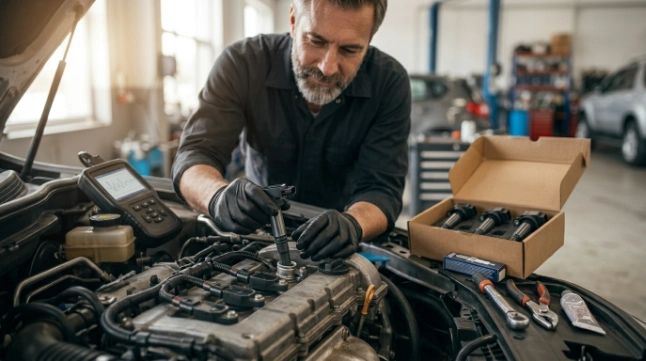
The correct repair depends on what caused the cylinder 2 misfire. There is no single fix for every P0302 code.
- Replace worn spark plugs: Old plugs are a common cause of weak ignition.
- Replace a failed ignition coil: A damaged coil can prevent proper spark delivery.
- Repair wiring: Damaged connectors or wires may need attention.
- Clean or replace injectors: Fuel delivery problems may require injector service.
- Repair vacuum leaks: Intake leaks must be sealed to restore proper air flow.
- Repair engine damage: Compression problems may require advanced repairs.
Avoid replacing expensive components before confirming the failure. A proper diagnosis usually saves money.
Can You Drive With a P0302 Code?
You may be able to drive a short distance with a P0302 code, but continuing to drive with an active misfire can create additional damage.
A severe misfire can send unburned fuel into the exhaust system. This can overheat the catalytic converter and increase repair costs.
- Stop driving if the check engine light is flashing.
- Avoid heavy acceleration until the problem is fixed.
- Schedule diagnosis as soon as possible.
Frequently Asked Questions About P0302
Can a bad spark plug cause P0302?
Yes. A worn, damaged, or incorrectly functioning spark plug can prevent cylinder 2 from igniting properly and trigger a P0302 code.
Is P0302 a serious code?
P0302 can become serious if ignored. A continuing misfire may reduce performance and potentially damage emissions components.
How much does it cost to fix P0302?
Repair costs vary depending on the cause, vehicle model, labor rates, and required parts. Simple ignition repairs usually cost less than internal engine repairs.
Can an injector cause cylinder 2 misfire?
Yes. A clogged, failing, or electrically disconnected injector can prevent cylinder 2 from receiving proper fuel.
Will clearing P0302 fix the problem?
No. Clearing the code only removes the warning temporarily. The underlying cause must be repaired to prevent the code from returning.
Final Thoughts
A P0302 code does not automatically mean your engine needs major work. Many cases come from common issues like spark plugs, ignition coils, or fuel delivery problems.
The best approach is careful diagnosis. Use an OBD2 scanner, inspect the likely causes, and confirm the failed component before replacing parts.
