
P0340 Repair Cost: What You’ll Pay to Fix It in 2026

Quick Answer
P0340 repair cost depends on what failed, because this code identifies a camshaft position sensor circuit problem rather than proving the sensor itself is bad. As a 2026 benchmark, a straightforward camshaft position sensor replacement averages about $222 to $324, while wiring, engine timing, or control-module problems can push the bill much higher. An OBD-II trouble code should be treated as a diagnostic clue, not an automatic instruction to replace a part.
What Can Affect Your P0340 Bill?
- Sensor replacement: A confirmed failed camshaft position sensor is usually one of the less expensive outcomes.
- Wiring damage: A broken wire, loose terminal, oil-contaminated plug, or corroded connector can change labor costs substantially.
- Timing trouble: A worn or slipped timing belt or chain can turn P0340 into a major engine repair.
- Control module: PCM or ECM failure is less common and should be proven before replacement.
- Vehicle design: Make, model, engine, sensor location, local labor rate, and parts choice all affect the final price.
Best Money-Saving Move
- Confirm the circuit fault before buying a sensor. Replacing parts based only on the code can turn a cheap wiring repair into wasted money.
Seeing P0340 on an OBD2 scanner can make a simple sensor problem look more intimidating than it is. The important part is finding out why the engine computer lost the camshaft position signal.
I’d budget for diagnosis first, then price the confirmed repair. That approach gives you a much more useful number than assuming every P0340 needs the same part.
In This Guide
How Much Does It Cost to Fix P0340?
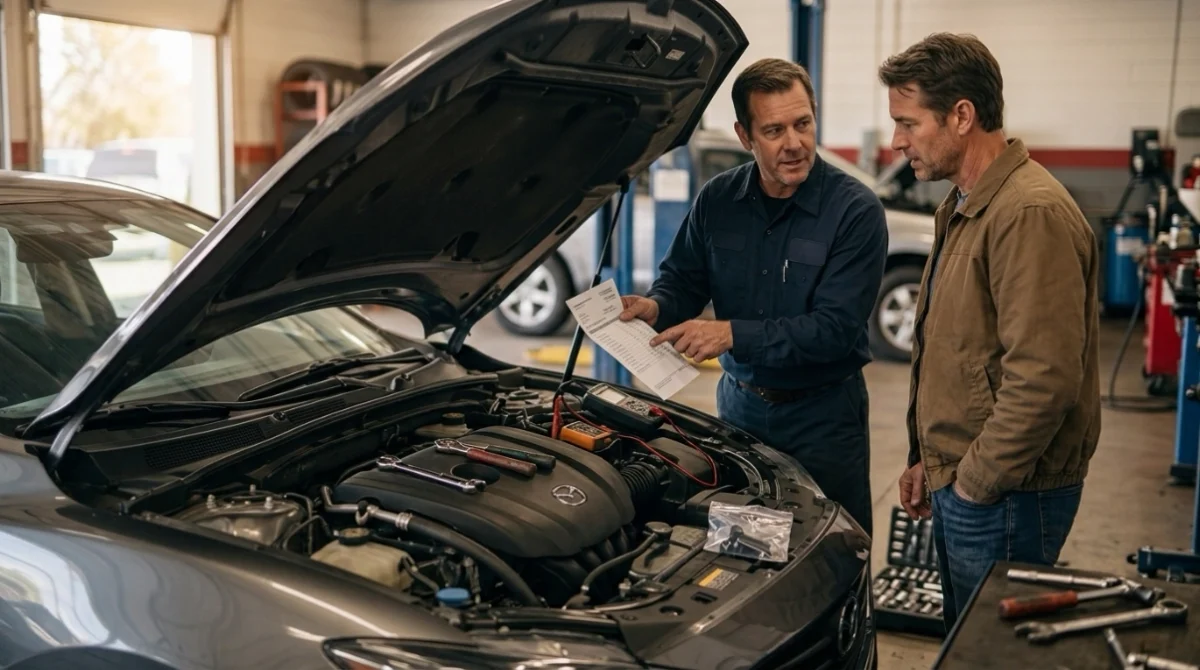
A typical P0340 repair can cost a few hundred dollars when the camshaft position sensor itself has failed. Current August 2026 industry estimates put an average sensor replacement at roughly $222 to $324, before taxes, fees, location differences, or related repairs.
That number is only a useful starting point. P0340 can also come from the connector, wiring harness, engine timing, reluctor or trigger wheel, or the powertrain control module.
Why One P0340 Quote Can Be Much Higher Than Another
Access makes a big difference. A sensor sitting near the top of an engine may be much faster to replace than one hidden behind other components.
The diagnosis can also change the job completely. Common cost factors include:
- Vehicle make and model: Parts prices and labor procedures vary widely.
- Engine configuration: Some engines have multiple camshaft position sensors.
- Sensor access: Removing covers, intake components, or accessories adds labor.
- OEM versus aftermarket: Parts quality and pricing can differ considerably.
- Electrical diagnosis: Intermittent wiring faults may take longer to locate than a failed sensor.
- Mechanical timing: A belt, chain, tensioner, or related timing fault increases both parts and labor costs.
A written estimate should separate diagnosis, parts, labor, taxes, and additional recommended work. AAA also recommends getting repair costs and authorized work clearly documented before service begins.
Pro tip: Ask the shop what test confirmed the failed component. “It has P0340” is not the same as “the sensor tested bad.”
Section Takeaway: Budget a few hundred dollars for a straightforward sensor repair, but do not approve a sensor automatically. The actual P0340 repair cost follows the diagnosis.
What Does P0340 Mean?
P0340 means the engine computer detected a malfunction in the camshaft position sensor circuit. It is a generic OBD-II powertrain diagnostic trouble code used across many vehicle makes.
Definition: A camshaft position sensor monitors camshaft position and speed, then provides that information to the engine control module or powertrain control module. The computer uses that information when managing ignition, fuel injection, and other timing-related functions.
Does P0340 Mean the Camshaft Sensor Is Bad?
No. This is one of the most important points to understand before spending money.
P0340 refers to a circuit malfunction. The problem may involve any part of the signal path rather than only the sensor.
- A failed camshaft position sensor
- A loose electrical connector
- Corroded or damaged terminals
- Broken, shorted, or chafed wiring
- Poor power or ground to the sensor
- A damaged trigger or reluctor wheel
- A camshaft-to-crankshaft timing problem
- A PCM or ECM problem in uncommon cases
This is why replacing the camshaft sensor without testing can fail to clear P0340. The new sensor cannot fix an open wire or mechanical timing problem.
What Symptoms Usually Come With P0340?
Some cars still run with P0340, while others become difficult or impossible to start. Symptoms depend on the engine strategy and how completely the cam signal has failed.
- Check engine light: The warning light is often the first clue.
- Hard starting: The engine may crank longer before starting.
- No-start condition: Some vehicles may crank without firing normally.
- Rough running: Misfires, hesitation, or uneven idle may occur.
- Stalling: An intermittent signal can cause unexpected shutdowns.
- Reduced power: The computer may fall back to a less precise operating strategy.
If several camshaft, crankshaft, or timing-correlation codes appear together, the broader code pattern matters. Diagnosis should consider all stored and pending codes instead of treating P0340 alone.
Technician’s note: vehicle-specific wiring diagrams and manufacturer specifications matter here. Sensor voltage, signal type, location, and testing methods are not identical across every engine.
What Repairs Can Fix P0340?
The correct repair is the one that restores a clean camshaft-position signal to the computer. That may be a sensor, electrical repair, timing repair, or much less commonly a control module.
The table below gives useful 2026 U.S. benchmarks for several repairs that can become relevant during a P0340 diagnosis. They are not guaranteed quotes for a specific vehicle.
| Confirmed Repair | 2026 Cost Benchmark | When It Applies |
|---|---|---|
| Camshaft position sensor replacement | $222–$324 average | Testing confirms the sensor itself has failed. |
| Connector or wiring repair | Varies by damage and diagnostic labor | Open, shorted, corroded, loose, oil-contaminated, or damaged circuit. |
| Timing belt replacement | $889–$1,291 average | A belt-driven engine has a confirmed belt or related timing fault. |
| Timing chain replacement | $2,109–$2,751 average | Testing confirms chain wear, slippage, or another major timing problem. |
| ECM replacement | $1,125–$1,196 average | Only after circuit, sensor, power, ground, and related faults are ruled out. |
Sensor Replacement Is Not Always the Cheapest Diagnosis
A sensor may be inexpensive compared with major engine work, but guessing can still waste money. Installing two or three parts without proving the fault often costs more than proper electrical testing.
I would be especially cautious when the code returns immediately after a sensor replacement. At that point, look closely at the connector, harness, power supply, ground, signal integrity, and related timing codes.
When P0340 Becomes an Expensive Repair
The bill climbs quickly when mechanical timing is involved. Current 2026 national estimates place timing-chain replacement above $2,000 on average, with large differences between vehicles.
A timing belt job is also much more involved than replacing an accessible position sensor. Parts around the belt or chain may be replaced at the same time when the vehicle-specific service procedure calls for them.
Before authorizing major timing work, you can also check your vehicle through the NHTSA recall and manufacturer-communications search. Use your VIN or exact year, make, and model to see whether relevant manufacturer information exists.
Pro tip: expensive timing or module work deserves a confirmed diagnosis and an itemized estimate. A second opinion can make sense when the recommended repair moves into four figures.
Section Takeaway: P0340 may cost a few hundred dollars or several thousand. The difference is whether the root cause is a simple sensor circuit fault or a major timing or control-system problem.
How Is P0340 Diagnosed Before Repair?
A good diagnosis starts with the full code report, not the parts counter. The technician should determine why the PCM cannot use the expected camshaft-position signal.
A sensible diagnostic sequence usually looks like this:
- Scan all modules and codes. Record P0340 plus pending, stored, and related camshaft or crankshaft codes.
- Review freeze-frame information. Note engine speed, temperature, voltage, and conditions when the fault was recorded.
- Inspect the sensor area. Look for damaged wiring, loose connectors, bent terminals, corrosion, oil intrusion, or previous repairs.
- Verify power and ground. Compare measured values with specifications for that exact vehicle.
- Check the signal. A suitable scan tool, multimeter, or oscilloscope may be used depending on the sensor and test procedure.
- Compare cam and crank information. Related codes or abnormal synchronization may point toward mechanical timing.
- Repair the proven fault. Clear applicable codes and verify operation afterward.
The exact electrical values and test points depend on the engine. Avoid using a random voltage, resistance specification, or wiring pinout found for a different model year.
Why an OBD2 Scanner Cannot Tell You the Final Repair
A code reader can tell you that P0340 is stored. It cannot automatically prove whether the problem is a $20 connector issue, a sensor, damaged wiring, or internal timing trouble.
AAA’s diagnostic guidance makes the same distinction: trouble codes provide clues that help identify the affected system. Proper diagnosis determines the underlying failure.
If you want a local price after the fault is identified, an auto-repair cost estimator can give you another benchmark based on the specific vehicle and repair.
Ask These Questions Before Approving the Repair
- What test showed this component failed?
- Were the wiring and connector inspected?
- Are any related camshaft or crankshaft codes stored?
- Does the quote include diagnosis, parts, labor, and fees?
- Is the replacement part OEM or aftermarket?
- Will the shop verify that P0340 stays gone after the repair?
Get major repairs in writing. AAA also advises consumers to request an itemized written repair estimate showing the work and associated costs.
Technician’s note: intermittent P0340 faults often require more diagnostic time than a completely failed circuit. A harness that fails only when hot or vibrating can look normal during a quick visual check.
Can You Drive With a P0340 Code?
You should not ignore P0340, especially if the engine stalls, loses power, starts poorly, or struggles to start. A missing or unstable camshaft-position signal can affect how the engine runs.
If the vehicle runs normally and the warning light is steady, move it only as needed to arrange diagnosis. The safer choice changes when severe symptoms appear.
Stop Driving If You Notice These Symptoms
- Repeated engine stalling
- A crank-but-no-start condition
- Severe misfiring or shaking
- Sudden major power loss
- Unusual timing-chain or engine noise
- A flashing check engine light
A flashing check engine light deserves prompt attention because it can indicate a serious running problem. If the vehicle cannot operate reliably, arrange professional inspection rather than continuing to drive it.
P0340 can also be intermittent. A car that starts normally this morning may still stall or refuse to restart later if a heat-sensitive sensor or damaged connection loses signal again.
Safety note: symptoms matter more than the code number alone. If the engine stalls unpredictably or cannot maintain normal power, avoid normal road use until the cause is diagnosed.
Can You Fix P0340 Yourself?
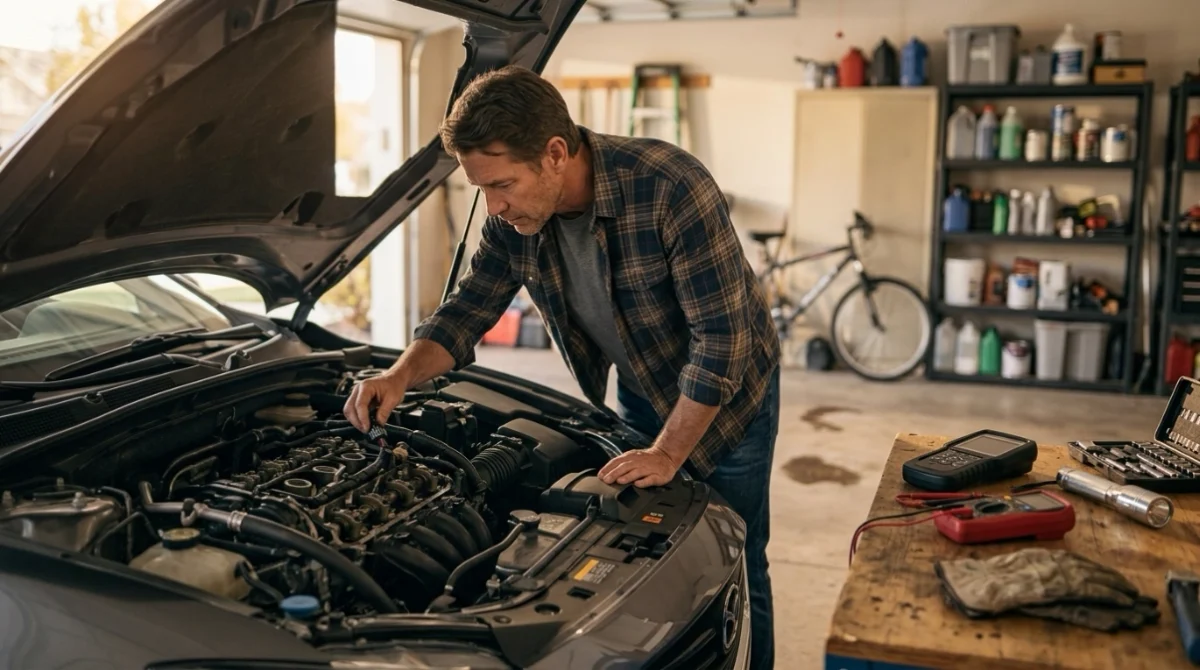
You can perform basic P0340 checks yourself if you are comfortable working around an engine. Replacing parts without electrical testing is where DIY diagnosis often becomes expensive.
DIY Checks That Make Sense
- Scan and record all trouble codes before clearing anything.
- Save freeze-frame data if your scanner provides it.
- Inspect the camshaft sensor connector with the engine off.
- Look for broken locks, damaged insulation, corrosion, or fluid contamination.
- Check whether a recently repaired harness was routed or secured correctly.
- Verify replacement parts against the vehicle’s exact year, engine, and VIN information.
Do not assume generic online pinouts or resistance specifications apply to your engine. Hall-effect and variable-reluctance sensor systems do not all use the same testing method.
When Should a Professional Diagnose P0340?
Professional diagnosis makes sense when basic inspection does not reveal the problem. It is also the better choice when timing-system symptoms or repeated no-start conditions are involved.
Consider shop diagnosis when:
- P0340 returns after replacing the sensor.
- Multiple camshaft or crankshaft codes are present.
- The engine has a timing-related rattle or abnormal noise.
- You cannot verify sensor power, ground, and signal safely.
- The wiring disappears deep into the engine harness.
- A timing belt, timing chain, PCM, or ECM is being recommended.
Replacing a PCM based on P0340 alone should be a last step, not the first. Control modules are expensive and may require vehicle-specific setup or calibration.
Pro tip: if a shop recommends a PCM immediately, ask what circuit tests ruled out the sensor, wiring, connector, power, ground, and mechanical timing first.
Section Takeaway: Basic visual checks are DIY-friendly. Signal diagnosis, intermittent wiring problems, and timing-system repairs require more equipment and vehicle-specific information.
P0340 Repair Cost FAQs
How much is it to fix code P0340?
A straightforward camshaft position sensor replacement averages about $222 to $324 using August 2026 national estimates. Your final P0340 repair cost may be lower or much higher if the actual cause is wiring, a connector, mechanical timing, or the engine control module.
Can I just replace the camshaft position sensor for P0340?
You can replace it if testing confirms it has failed. P0340 is a circuit code, however, so damaged wiring, poor connections, power or ground faults, and timing problems can produce the same code.
Is P0340 expensive to repair?
Not always. A confirmed sensor or minor electrical problem can remain relatively affordable, while timing-chain or control-module problems can exceed $1,000 and sometimes $2,000 depending on the vehicle and required repair.
How serious is a P0340 code?
P0340 deserves prompt diagnosis because the vehicle may become hard to start, stall, misfire, or lose power. Severity depends on the actual failure and how the engine responds when the camshaft signal becomes unavailable.
Will P0340 clear itself after replacing the sensor?
The warning may go away after the computer completes successful monitoring, but that depends on the vehicle and repair. A technician may clear stored codes after repair, then perform the required operating or drive-cycle checks to confirm the fault does not return.
What if P0340 comes back after replacing the sensor?
Stop replacing sensors and diagnose the rest of the circuit. Check the connector, wiring, power, ground, signal integrity, related crankshaft codes, and mechanical timing using specifications for your exact vehicle.
Can a timing chain cause P0340?
It can be involved when camshaft and crankshaft timing no longer agree as expected. Related correlation or timing codes make mechanical timing more suspicious, so a complete scan and proper testing are important before approving an expensive chain repair.
The bottom line: P0340 repair cost is usually manageable when the problem is a confirmed camshaft position sensor, but the code itself does not identify the failed part. Diagnose the complete circuit first, get an itemized quote, and spend money only after the root cause is proven.
