
P0402 Repair Cost: What You’ll Pay and What Fixes It

Quick Answer
P0402 repair cost can range from roughly $125 for a simple EGR control-solenoid repair to $600 or more when the EGR valve needs replacement. The real price depends on what caused the excessive EGR flow, so paying for proper diagnosis before replacing parts can save money. If you need professional help, an qualified auto repair facility can test the system before giving you a final estimate.
Typical P0402 Cost Possibilities
- Control solenoid: A failed EGR vacuum-control solenoid may cost roughly $125 to $150 to replace on many vehicles.
- Pressure sensor: An EGR pressure-feedback sensor repair commonly falls around $155 to $180 before vehicle-specific differences.
- EGR valve: Valve replacement can average roughly $485 to $630, with some vehicles costing substantially more.
- Carbon buildup: Cleaning costs depend heavily on access, labor time, and whether parts must be removed.
- Wiring or hoses: Small electrical, connector, or vacuum-hose problems can be cheaper than replacing the complete valve.
Best Money-Saving Move
- Confirm why the computer detected excessive EGR flow before buying an EGR valve.
P0402 looks like an EGR valve problem at first glance, but that assumption can get expensive. I’ve seen drivers replace the valve first and discover that a sensor, solenoid, hose, or control issue was the real cause.
This guide explains realistic 2026 P0402 repair costs, what changes the price, and how to avoid replacing the wrong part.
In This Guide
How Much Does It Cost to Fix P0402?
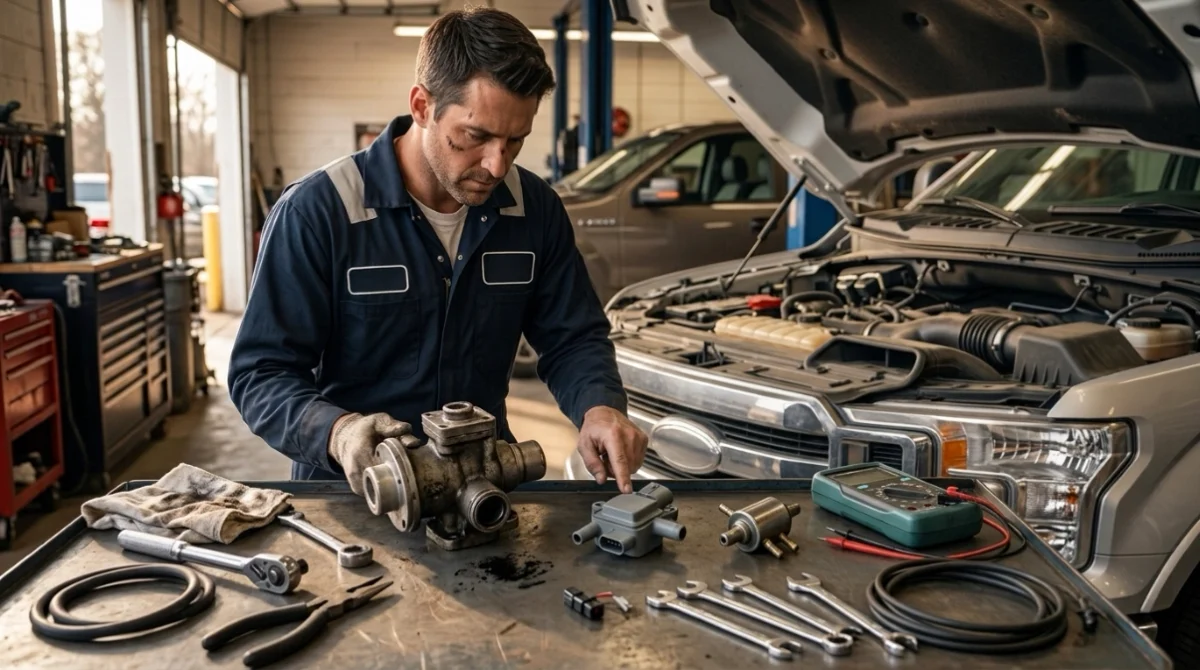
A realistic P0402 repair bill can run from around $125 for a simpler control problem to more than $600 for an EGR valve replacement. Certain vehicles can exceed $1,000 when expensive parts and difficult access are involved.
The trouble code itself does not identify the failed part. It only tells you that the engine computer believes exhaust gas recirculation flow is higher than expected.
Typical P0402 repair cost breakdown
| Possible Repair | Typical 2026 Cost Range | When It Makes Sense |
|---|---|---|
| EGR vacuum-control solenoid | About $125–$150 | Testing shows the solenoid is allowing vacuum or control when it should not. |
| EGR pressure-feedback sensor | About $155–$180 | Sensor readings do not match the actual EGR operating condition. |
| EGR valve replacement | About $485–$630 average | The valve sticks open, moves incorrectly, or fails manufacturer tests. |
| EGR passage or valve cleaning | Vehicle-specific quote | Carbon deposits interfere with valve seating or EGR passages. |
| Vacuum hose, connector, or wiring repair | Depends on fault and labor | Visual inspection or electrical testing finds damaged supporting components. |
These numbers are budgeting ranges rather than guaranteed quotes. Your make, model, engine, labor rate, taxes, and local parts prices can move the total considerably.
For example, EGR valve access is easy on some engines. On others, technicians must remove extra intake or engine components first.
Why diagnosis should come before parts
The expensive mistake is treating P0402 as an instruction to replace the EGR valve. It isn’t.
A scan tool may show excessive flow because the valve is open, but it can also show the condition because the feedback system is reporting incorrectly.
- Stuck valve: The valve may fail to close completely.
- Bad pressure feedback: A sensor may falsely indicate excessive EGR activity.
- Control fault: A solenoid can command vacuum at the wrong time.
- Carbon contamination: Deposits can prevent proper valve seating.
- Electrical trouble: Damaged wiring or poor terminals can distort sensor information.
Pro tip: ask the shop what test confirmed the failed component before approving an expensive EGR valve replacement.
Section Takeaway: P0402 repair cost depends on the failed component, not the code alone. A confirmed $150 sensor or solenoid problem is far cheaper than guessing and installing a $500-plus valve unnecessarily.
What Does the P0402 Code Mean?
P0402 means the vehicle detected excessive exhaust gas recirculation flow. In plain language, the engine computer believes too much exhaust gas is entering the intake system, or entering it when it should not.
The EGR system routes a controlled amount of exhaust back into the engine. That process helps manage combustion temperature and emissions.
What is the EGR system?
The exhaust gas recirculation system uses an EGR valve and supporting controls to regulate exhaust flow. Depending on the vehicle, those controls may include pressure sensors, valve-position sensors, vacuum solenoids, electronic actuators, hoses, and wiring.
The powertrain control module watches these components. When measured EGR flow becomes greater than its expected operating range, it can store P0402.
What symptoms can P0402 cause?
Some vehicles drive almost normally with P0402. Others develop noticeable problems, especially when excessive EGR flow occurs at idle or low engine speed.
- Check Engine Light
- Rough or unstable idle
- Engine hesitation
- Stalling at stops
- Reduced acceleration
- Misfire-like symptoms
- Lower fuel economy
- Failed emissions inspection where applicable
Symptoms vary because vehicle manufacturers use different EGR strategies. The same code can therefore behave differently between two engines.
Does P0402 always mean the EGR valve is bad?
No. A faulty EGR valve is only one possible cause.
This distinction matters because replacing the valve can be one of the most expensive fixes. Testing the valve, control circuit, and feedback sensor first gives you a much better chance of repairing the problem once.
What Repairs Usually Fix P0402?
The correct repair is whichever one restores proper EGR flow and feedback. That might involve cleaning, a sensor, a control component, wiring, or the valve itself.
1. Replacing a sticking EGR valve
An EGR valve can become contaminated or mechanically worn. If it remains partially open when the computer expects it closed, exhaust can continue entering the intake.
National repair-cost data in 2026 puts average EGR valve replacement around $486 to $627. Vehicle-specific examples can fall below or well above that range.
Parts cost often accounts for a large portion of the bill. Labor rises when the valve sits beneath other engine components.
2. Replacing the EGR pressure-feedback sensor
Some systems measure pressure changes to determine how much exhaust is flowing. A failed feedback sensor can give the computer misleading information.
A typical EGR pressure-feedback sensor replacement currently averages about $155 to $179. That makes proper sensor testing important before buying a complete valve assembly.
3. Replacing an EGR vacuum-control solenoid
Older and vacuum-operated EGR systems may use a solenoid to control vacuum reaching the valve. A leaking or incorrectly operating solenoid can open the valve at the wrong time.
Current national estimates place this repair around $125 to $148 on average. Exact prices still vary substantially between models.
4. Cleaning carbon from the valve or passages
Carbon can interfere with EGR movement and sealing. A small deposit in the wrong location can keep a valve from seating correctly.
Cleaning price is harder to generalize because access varies so much. Some systems require simple valve removal, while others involve substantial disassembly.
- Easy access: Labor may stay relatively low.
- Restricted access: Intake components may need removal.
- Heavy deposits: More cleaning time may be required.
- Damaged valve: Cleaning may not restore proper operation.
Cleaning should follow inspection rather than become an automatic repair. Carbon is common around EGR systems, but visible deposits do not prove they caused P0402.
5. Repairing hoses, wiring, or connectors
A cracked vacuum hose or damaged electrical terminal can imitate a component failure. These faults are especially worth checking before expensive parts are ordered.
Connector corrosion, pin tension, damaged insulation, and vacuum routing should match the manufacturer’s service information.
Locksmith’s note: vehicle electronics can produce convincing fault symptoms from one poor connection, so I prefer confirming power, ground, signal, and control conditions before recommending an electronic part.
Section Takeaway: The cheapest P0402 repair is often the one found through testing. Valve replacement may be correct, but sensors, solenoids, deposits, hoses, and wiring deserve attention first.
How Is P0402 Diagnosed Before You Spend Money?
A proper P0402 diagnosis starts with an OBD2 scanner, not a parts catalog. The goal is to determine whether excessive flow is real and identify why it occurs.
Step 1: Confirm the code and check for related faults
A technician should scan all stored and pending trouble codes. Related EGR, airflow, pressure, misfire, or electrical codes can change the diagnostic direction.
Freeze-frame data also matters. It shows operating conditions recorded when the fault was detected.
- Engine speed
- Engine load
- Coolant temperature
- Vehicle speed
- Fuel-trim information when supported
- Other available sensor data
Step 2: Inspect the EGR system
A visual inspection can find problems that a scanner cannot. Technicians should look for damaged hoses, loose connectors, melted wiring, corrosion, and obvious carbon contamination.
The exhaust and EGR system can become extremely hot. Inspection around these components should happen only after they cool enough to work around safely.
Step 3: Compare commanded EGR operation with actual feedback
This is where live data becomes useful. A capable scanner can show what the computer commands and what relevant sensors report.
If the computer commands the valve closed but feedback still suggests substantial flow, the diagnostic path becomes much narrower.
Step 4: Test the suspected component
The exact procedure depends on the vehicle. Manufacturers can use vacuum-operated, electronically controlled, or integrated EGR designs.
Testing may involve these tools:
- OBD2 scanner with live data
- Digital multimeter
- Vacuum pump and gauge
- Manufacturer wiring diagrams
- Vehicle-specific service specifications
I would not copy a voltage specification or actuator procedure from another year or engine. Two vehicles with the same badge can use different components and test values.
For manufacturer-specific instructions, check official resources such as Toyota Owners or the Honda service and maintenance portal.
Step 5: Clear the code and confirm the repair
Replacing a part is not the final diagnostic step. The system should be retested after repair to confirm that EGR operation now matches the commanded condition.
A road test may also be needed because some monitors only run under specific engine loads and temperatures.
Pro tip: clearing P0402 without testing only erases evidence temporarily; record the original codes and freeze-frame data first.
Section Takeaway: Good P0402 diagnosis compares computer commands, actual EGR feedback, physical condition, and vehicle-specific specifications before any major part is replaced.
Can You Drive With a P0402 Code?
You may be able to drive a short distance with P0402 if the vehicle runs normally, but the code should not be ignored. Excessive EGR flow can cause rough running, stalling, hesitation, or other drivability problems.
If the engine is stalling, misfiring badly, or struggling to accelerate, driving becomes a larger concern. Have the vehicle inspected rather than continuing normal use.
Will P0402 make the car fail an emissions test?
A stored emissions-related trouble code and illuminated Check Engine Light can prevent a vehicle from passing an OBD-based emissions inspection. Rules vary by state and inspection program.
Simply clearing the code immediately before inspection is not a reliable solution. Doing so can reset readiness monitors that may need to complete again before testing.
Should you check for recalls?
Yes, particularly before paying for a repair on a vehicle with a known manufacturer campaign. You can enter the VIN through the official NHTSA recall lookup.
A recall is different from an ordinary trouble code repair. If your exact VIN has an applicable open safety recall, follow the remedy instructions from the manufacturer.
Can You Fix P0402 Yourself?
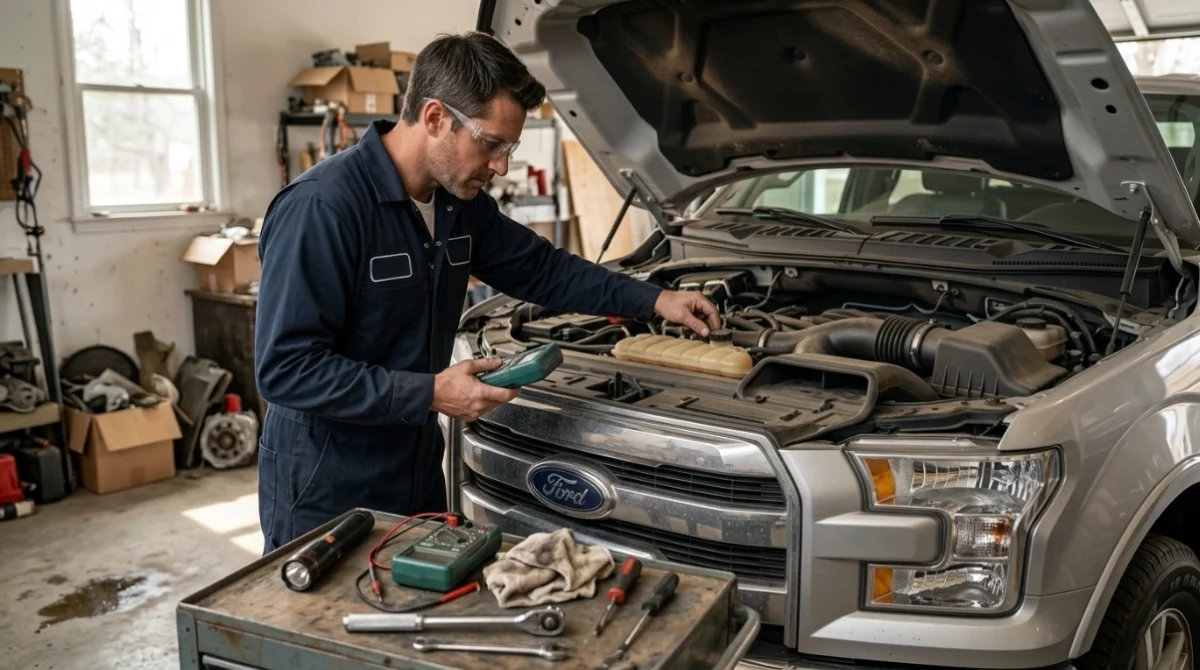
Some P0402 problems are DIY-friendly, but diagnosis matters more than mechanical confidence. Replacing an easy-to-reach part does not help if that part is working correctly.
What can a DIY owner check?
Start with non-invasive checks. Avoid commanding actuators or applying external voltage unless you have the correct service procedure.
- Read and record all trouble codes.
- Save freeze-frame information.
- Inspect visible vacuum hoses.
- Check accessible electrical connectors.
- Look for damaged wiring.
- Inspect the EGR area for obvious contamination.
- Review live data if your scanner supports it.
When should a professional diagnose it?
Professional testing is worthwhile when the cause is unclear or the suspected valve is expensive. Advanced systems may require bi-directional scan-tool commands and manufacturer-specific values.
Get help sooner if the engine stalls, runs poorly, or has several related trouble codes.
How can you avoid overpaying?
Ask for the diagnostic reasoning behind the estimate. A useful explanation should identify what failed and how the technician confirmed it.
- Ask what was tested: A code scan alone is not a complete diagnosis.
- Request parts and labor separately: This makes estimates easier to compare.
- Confirm whether diagnosis is included: Shops handle diagnostic charges differently.
- Check warranty coverage: Emissions-related coverage can vary by vehicle and component.
- Use official vehicle information: Manufacturer service resources can clarify maintenance, recalls, and warranty questions.
For Ford owners, the official Ford Owner Support resources provide access to service, maintenance, warranty, and recall information.
Pro tip: get a diagnosis before buying an EGR valve online. Once an electrical part has been installed, return options may be limited even if it never fixed the code.
Frequently Asked Questions About P0402 Repair Cost
How much does P0402 cost to fix?
P0402 can cost roughly $125 for some control-solenoid repairs, around $155 to $180 for certain pressure-feedback sensor repairs, or roughly $485 to $630 for an average EGR valve replacement. Vehicle design, labor rates, taxes, and the actual cause can change the total.
Is P0402 expensive to repair?
Not always. P0402 becomes expensive when diagnosis confirms a costly EGR valve or when the valve is difficult to access. A sensor, solenoid, hose, connector, or wiring fault may cost considerably less.
Can a dirty EGR valve cause P0402?
Yes. Carbon deposits can interfere with valve movement or prevent the valve from closing fully. However, carbon should be confirmed as part of the problem rather than assumed from the trouble code alone.
Can I clean the EGR valve instead of replacing it?
Sometimes. Cleaning may help when deposits prevent an otherwise functional valve from seating correctly. A valve with an electrical, actuator, position-sensor, or mechanical failure may still need replacement.
Will replacing the EGR valve always fix P0402?
No. P0402 can also involve an EGR pressure sensor, vacuum-control solenoid, wiring, hoses, carbon deposits, or another control problem. Testing before replacement reduces the chance of paying for a valve you did not need.
Can I clear P0402 with an OBD2 scanner?
Most code readers can clear the stored trouble code, but clearing it does not repair the cause. If excessive EGR flow remains, the vehicle can detect the fault again after the monitor reruns.
Should I keep driving if P0402 comes back?
Schedule diagnosis if the code returns. If the vehicle stalls, misfires badly, hesitates severely, or feels unsafe to drive, stop normal driving and have the problem inspected promptly.
P0402 repair cost is manageable when you diagnose the system before buying parts. Start with the code, freeze-frame data, live readings, and a careful inspection, then repair only the component that fails testing.
If you are comparing estimates, ask each shop what caused the excessive EGR flow and how they proved it. That one question can help prevent the most expensive P0402 mistake: replacing a good part.
