
P0440 Symptoms: What Your EVAP Code Is Telling You

Quick Answer
The most common P0440 symptom is a steady check-engine light with little or no noticeable change in how the car drives. You may also notice a fuel smell, difficulty passing an emissions inspection, or symptoms linked to the underlying EVAP fault. If the vehicle has a strong gasoline odor or visible fuel leakage, treat that as a safety issue and follow appropriate vehicle safety guidance.
Common P0440 Symptoms
- Check-engine light: This is often the only symptom the driver notices.
- Normal drivability: The engine may still start, idle, and accelerate normally.
- Fuel odor: Escaping fuel vapor may create a gasoline smell around the vehicle.
- Emissions-test problem: An active EVAP-related fault can prevent the vehicle from completing emissions requirements.
- Other EVAP symptoms: A purge or vent problem may produce extra symptoms depending on the actual failed component.
Best First Check
- Scan for additional codes, save freeze-frame information, and inspect the fuel cap and accessible EVAP hoses before replacing parts.
P0440 can be confusing because the car may feel completely normal. Your OBD2 scanner reports a problem, but it doesn’t identify one failed component.
I’ve learned to treat codes like P0440 as diagnostic clues rather than replacement instructions. This guide explains the symptoms, meaning, likely causes, diagnosis process, repair options, and driving risks you should understand in 2026.
In This Guide
What Does the P0440 Code Mean?
P0440 is a generic OBD2 diagnostic trouble code associated with a malfunction in the evaporative emission control system, commonly called the EVAP system. It does not identify one specific failed valve, hose, sensor, or fuel cap.
The EVAP system keeps gasoline vapors from escaping freely into the atmosphere. It stores those vapors and allows the engine to consume them under controlled conditions.
What is the EVAP system?
The EVAP system is a sealed network connecting the fuel tank with vapor-control components. The exact design varies by vehicle.
Typical components include:
- Fuel tank and filler neck
- Fuel cap or capless sealing system
- Vapor hoses and lines
- Charcoal canister
- Purge valve or purge solenoid
- Vent valve or vent solenoid
- Fuel tank pressure sensor on many vehicles
- Electrical connectors and wiring
The engine computer runs EVAP self-tests under certain driving and operating conditions. If the system cannot complete the expected test, P0440 may be stored.
This is why replacing a gas cap immediately isn’t always the answer. A loose cap can cause an EVAP problem, but so can several other faults.
Diagnostic note: Save every stored, pending, and permanent code before clearing anything. Related EVAP codes can dramatically narrow the search.
What Are the Most Common P0440 Symptoms?
The most common P0440 symptom is simply an illuminated check-engine light. Many vehicles continue driving normally because EVAP primarily controls fuel vapor rather than normal combustion.
That doesn’t mean the code should be ignored. The underlying problem still needs diagnosis.
1. Check-engine light stays on
A steady malfunction indicator lamp is the symptom most drivers notice first. You may scan the vehicle and find P0440 even though nothing else feels wrong.
Don’t erase the code before recording it. Clearing the computer can remove diagnostic information that helps identify when the fault occurred.
2. The vehicle may drive normally
P0440 often causes no obvious hesitation, rough idle, or power loss. A driver may travel for days without noticing a change in engine performance.
This separates it from many misfire, ignition, airflow, and fuel-delivery codes. P0440 primarily tells you that the EVAP monitor has found a system problem.
3. You may notice a gasoline smell
A vapor leak can sometimes create a gasoline odor near the rear of the vehicle or around the engine compartment. However, smell alone cannot identify where the problem is located.
A strong or persistent fuel smell deserves more attention. Don’t assume every gasoline odor is merely an EVAP vapor leak.
Safety note: If you see liquid fuel, experience an intense gasoline odor, or suspect an active fuel leak, avoid attempting casual DIY diagnosis around ignition sources. Professional inspection is the safer choice.
4. The vehicle may fail an emissions inspection
An active check-engine light or incomplete emissions monitors can create inspection problems where OBD-based emissions testing is required. Requirements vary by location.
Simply clearing P0440 before inspection is usually not a solution. Clearing codes also resets readiness information on many vehicles.
5. Other symptoms depend on the actual failure
P0440 is broad, so symptoms beyond the check-engine light often come from the failed component rather than the code itself.
For example, depending on vehicle design and the actual fault, you might experience:
- Unusual behavior after refueling
- Fuel odor around the vehicle
- Difficulty completing an EVAP readiness monitor
- Additional EVAP-related codes
- An EVAP code that returns soon after clearing
If the engine runs poorly, don’t automatically blame P0440. Scan for additional trouble codes that may explain the drivability problem better.
P0440 symptoms compared
| Symptom | How Common With P0440? | What It Suggests |
|---|---|---|
| Steady check-engine light | Very common | The EVAP monitor detected a malfunction |
| Normal engine performance | Common | The fault may be limited to vapor control |
| Fuel-vapor smell | Possible | A leak or sealing problem may be present |
| Poor running | Not a defining P0440 symptom | Look for related codes or a specific EVAP component fault |
| Emissions-test issue | Possible | The MIL or readiness status may prevent passing |
Section Takeaway: A check-engine light with otherwise normal driving is the classic P0440 pattern. Fuel odor or additional symptoms should push the diagnosis beyond the code itself.
What Causes a P0440 Code?
P0440 can result from anything that prevents the EVAP system from sealing, controlling vapor flow, or completing its self-test correctly. That’s why diagnosis matters more than guessing.
Common areas worth checking include:
- Loose or damaged fuel cap: A poor seal may prevent the system from maintaining the expected pressure or vacuum.
- Cracked EVAP hose: Age, heat, abrasion, or previous repairs can damage vapor lines.
- Faulty purge valve: A valve that doesn’t behave as commanded can disrupt the EVAP test.
- Faulty vent valve: A vent valve that sticks open or closed can prevent proper system operation.
- Charcoal canister problem: Physical damage, contamination, or internal failure may affect vapor storage and flow.
- Fuel tank pressure sensor issue: Some systems rely on this sensor to judge changes in pressure during testing.
- Wiring or connector fault: Broken wires, corrosion, loose terminals, or damaged connectors can affect electronically controlled EVAP parts.
Is P0440 always caused by the gas cap?
No. The fuel cap is an easy place to start, but P0440 should never be treated as proof that the cap has failed.
Inspect the sealing surface and verify the cap is installed correctly. If your vehicle uses a capless system, inspect it according to manufacturer guidance.
I’ve seen diagnostic problems become expensive when the easiest part gets replaced repeatedly. A code describes what the computer detected, not necessarily which part caused it.
Can overfilling the fuel tank contribute to EVAP problems?
Drivers should stop fueling when the pump automatically shuts off rather than repeatedly topping off the tank. EVAP components are designed to manage vapor, not intentional liquid-fuel overfilling.
For broader vehicle and emissions-related safety information, drivers can also consult organizations such as the Insurance Institute for Highway Safety and their vehicle manufacturer.
How Do You Diagnose P0440 Correctly?
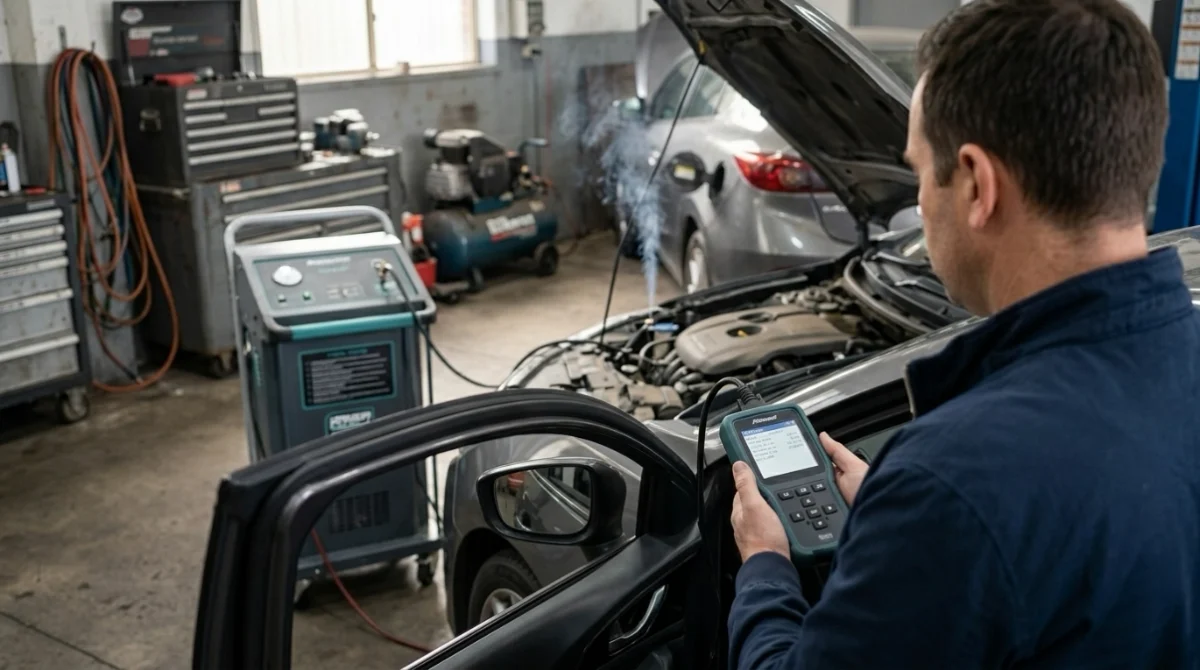
Start with the OBD2 scan, then move from simple visual checks toward controlled EVAP testing. Avoid replacing purge valves, vent valves, or canisters based on P0440 alone.
Step 1: Record every trouble code
Connect an OBD2 scanner and document the vehicle’s stored, pending, and permanent diagnostic codes. Save freeze-frame information when available.
Look especially for other EVAP codes. A more specific companion code can give you a better diagnostic direction than P0440 by itself.
Step 2: Inspect the fuel-cap area
Check the fuel cap or capless filler system for visible problems. Don’t force or modify anything that isn’t designed for adjustment.
Look for:
- A cap that wasn’t fully secured
- A damaged seal
- Debris on the sealing surface
- Physical damage around the filler neck
- Incorrect replacement parts
Step 3: Inspect accessible EVAP hoses and wiring
Look for disconnected hoses, obvious cracks, rubbed-through lines, broken electrical locks, and corrosion. Pay attention to areas exposed to road debris or engine heat.
Don’t assume a hose is good simply because it remains attached. Small leaks may require dedicated testing.
Step 4: Use scanner data when available
A more capable OBD2 scanner may provide EVAP-related data and component-control functions. Available features vary by vehicle and scan tool.
Basic code readers may only retrieve the fault number. Advanced diagnosis can require bidirectional control, wiring information, pressure readings, or manufacturer-specific data.
Step 5: Perform an EVAP smoke test when appropriate
A professional smoke test introduces controlled diagnostic vapor into the EVAP system to help locate leaks. This is one of the most useful tests when a visual inspection finds nothing.
Fuel-vapor systems require proper equipment and procedures. Improvised pressure testing is not a safe substitute.
Pro tip: When EVAP diagnosis moves beyond visual checks and scan data, use vehicle-specific service information or a qualified repair professional. System layouts and test procedures vary significantly by make, model, year, and engine.
Step 6: Repair first, then confirm
After repairing the actual fault, clear the appropriate stored code if your procedure calls for it. The vehicle must then rerun its monitors to confirm the problem has stopped.
Don’t judge a repair only because the dashboard light disappears temporarily. Rescan the vehicle and confirm P0440 does not return.
Section Takeaway: The most efficient P0440 diagnosis moves from code capture to visual inspection, scan data, leak testing, repair, and final verification. Parts replacement should follow evidence.
Can You Drive With a P0440 Code?
A vehicle with only P0440 and no concerning symptoms may continue to drive normally, but the code still deserves diagnosis. An OBD2 scanner cannot certify that your vehicle is safe to drive.
Pay attention to what the car is doing rather than relying on the code number alone.
Arrange diagnosis soon if:
- The check-engine light remains on
- P0440 repeatedly returns after clearing
- You need to complete an emissions inspection
- You notice occasional fuel-vapor odor
- Several EVAP codes appear together
Stop and investigate a possible safety problem if:
- You see liquid fuel leaking
- You smell strong gasoline fumes
- The vehicle develops unrelated severe drivability symptoms
- Another warning indicates a more urgent fault
AAA provides roadside and automotive assistance information for situations where a vehicle shouldn’t be driven normally. You can review its automotive services resources if roadside help or professional repair assistance is needed.
Safety note: A fuel smell should never be dismissed simply because P0440 is an emissions-system code. Confirm whether you’re dealing with vapor leakage or an actual liquid-fuel leak.
How Do You Fix P0440?
The correct P0440 fix depends on what testing finds. There is no universal part that should automatically be replaced whenever this code appears.
Possible repairs include:
- Correctly reinstalling or replacing a confirmed faulty fuel cap
- Repairing a damaged EVAP vapor hose
- Repairing damaged wiring or terminals
- Replacing a tested faulty purge valve
- Replacing a tested faulty vent valve
- Repairing an EVAP leak identified during smoke testing
- Replacing a confirmed damaged charcoal canister
- Diagnosing a pressure-sensor or control-circuit problem
How much does P0440 cost to fix?
P0440 repair cost varies widely because the code can represent anything from a simple sealing problem to a leak requiring professional diagnostic time. Vehicle design, labor rates, location, and the failed component all affect the final bill.
A fuel-cap problem is usually at the inexpensive end. Valve, wiring, canister, sensor, or difficult-to-find leak repairs can cost substantially more.
For that reason, paying for proper diagnosis can be cheaper than replacing several good parts. Ask the shop what testing confirmed the recommended repair.
Repair note: Request vehicle-specific pricing after diagnosis rather than relying on a generic P0440 estimate. Parts and labor vary considerably between vehicles and regions.
Can you fix P0440 yourself?
Basic inspection can be DIY-friendly for a careful owner. You can scan codes, inspect the fuel-cap area, and look for obviously disconnected or damaged accessible hoses.
Stop when diagnosis requires pressurizing the fuel-vapor system, commanding components electronically, or testing circuits without proper service information. Specialized EVAP work is often faster and safer with professional equipment.
Section Takeaway: Fix the confirmed cause of P0440, not the code number. A fuel cap, purge valve, vent valve, hose, wiring fault, or canister should only be replaced when inspection or testing supports that decision.
P0440 Frequently Asked Questions
What is the main symptom of P0440?
The main P0440 symptom is usually a steady check-engine light. Many drivers notice no change in starting, idle quality, acceleration, or normal driving because the fault involves the evaporative emission control system.
Does P0440 mean I have a vacuum leak?
Not necessarily. P0440 indicates a general EVAP system malfunction. A leak is possible, but valve, sensor, electrical, sealing, or control problems can also prevent the EVAP monitor from completing correctly.
Can a loose gas cap cause P0440?
Yes, a loose or poorly sealing fuel cap can contribute to an EVAP fault on vehicles that use a traditional cap. However, P0440 does not prove the cap is responsible, so further diagnosis may be necessary.
Can P0440 cause rough idle?
Rough idle is not the defining symptom of P0440. Certain EVAP component failures may affect how an engine runs, but a rough idle should prompt you to check for additional trouble codes and other engine problems.
Will P0440 clear itself?
The check-engine light may eventually turn off if the fault disappears and the vehicle completes the required self-tests. However, stored or permanent diagnostic information may remain until the computer’s required conditions are satisfied.
Can I clear P0440 with an OBD2 scanner?
A scanner can clear many stored codes, but clearing P0440 does not repair the cause. If the EVAP system still fails its test, the code and check-engine light can return after the monitor runs again.
Should I replace the purge valve for P0440?
Not without testing. A faulty purge valve can contribute to EVAP problems, but P0440 alone does not identify it as the failed component. Inspect and test the system before buying parts.
Final Takeaway
P0440 usually produces a check-engine light with few obvious driving symptoms. The code means the vehicle detected a general EVAP system malfunction, not that one specific component has failed.
Start with a complete OBD2 scan, inspect the fuel-cap area and accessible EVAP components, and use proper leak testing when simple checks don’t reveal the problem. For broader road and vehicle safety information, the National Highway Traffic Safety Administration is a useful authoritative resource.
If P0440 keeps returning, don’t keep clearing it or replacing parts at random. Diagnose the system, repair the confirmed fault, and rescan the vehicle to verify the repair.
