
P0442 Repair Cost: What You’ll Pay to Fix an EVAP Small Leak

Quick Answer
P0442 means your vehicle has detected a small leak in the evaporative emissions system. The P0442 repair cost can range from a low-cost fuel-cap fix to roughly $500–$700 or more when a charcoal canister or harder-to-access component fails. Before buying parts, scan for related codes and check your vehicle for manufacturer-specific information through the NHTSA vehicle lookup.
Typical P0442 Cost Possibilities
- Loose fuel cap: Tightening it may cost nothing if the cap and seal are still good.
- Replacement fuel cap: Usually one of the least expensive P0442 repairs, although OEM caps can cost more.
- Purge valve: Professional replacement commonly lands around the low-to-mid $200 range, depending on the vehicle.
- EVAP hose or seal: Cost depends mainly on leak location, access, and diagnostic labor.
- Charcoal canister: Professional replacement can reach roughly $500–$700 on many vehicles.
Best First Move
- Inspect the fuel cap, read all stored codes with an OBD-II scanner, and diagnose the leak before replacing expensive EVAP parts.
If your scanner shows P0442, don’t assume the repair will be expensive. I’ve seen this code come down to something as simple as a fuel-cap sealing problem.
I’ve also seen owners replace several EVAP parts before anyone tested the system properly. This guide explains what P0442 means, what repairs can cost in 2026, and how to avoid paying for the wrong part.
In This Guide
What Does the P0442 Code Mean?
P0442 means the vehicle’s computer detected a small leak in the evaporative emission control system. The EVAP system keeps gasoline vapors from escaping directly into the atmosphere.
Definition: The EVAP system is a sealed network of hoses, valves, a charcoal canister, fuel-tank components, and related controls that capture and route fuel vapor.
The powertrain control module runs EVAP self-tests when operating conditions are suitable. If the system cannot maintain the expected pressure or vacuum, it can store P0442.
P0442 does not tell you exactly which component failed. It only tells you that the computer detected leakage consistent with its small-leak monitoring strategy.
Is P0442 the same as a loose gas cap?
No. A loose or poorly sealing fuel cap can trigger an EVAP leak code, but it is only one possible cause.
For example, Nissan service guidance for P0442-related EVAP faults starts by confirming that the filler cap is secure before moving into system leak testing. You can see that diagnostic approach in this manufacturer service bulletin hosted by NHTSA.
- Fuel-cap seal: A cracked, hardened, incorrect, or loose cap can prevent the system from sealing.
- EVAP hose: A small split or disconnected vapor line can leak.
- Purge valve: A valve that fails to seal can mimic an external leak.
- Vent valve: Dirt, corrosion, or mechanical failure can stop the system from sealing correctly.
- Charcoal canister: Damage to the canister or its connections can allow vapor leakage.
Locksmith’s note: P0442 isn’t a key-fob or immobilizer fault. If you’re scanning a vehicle for another electronic problem, treat P0442 as a separate emissions-system diagnosis.
How Much Does It Cost to Fix P0442?
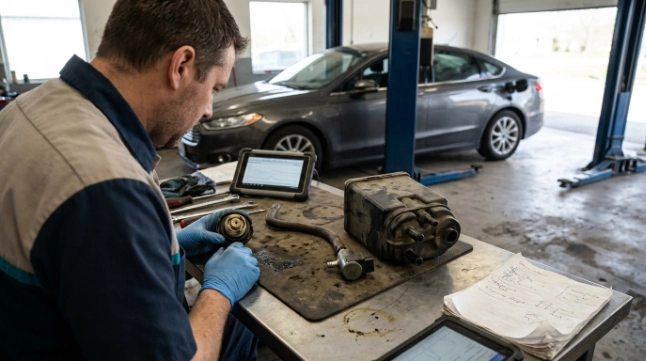
The P0442 repair cost depends almost entirely on where the leak is located. A good cap can make the repair free, while a damaged charcoal canister can push the bill into several hundred dollars.
As of 2026, national repair estimates put professional purge-valve replacement around the low $200s on average. Charcoal-canister replacement commonly averages in the mid-$500s to mid-$600s before taxes, location adjustments, or related repairs.
| Possible Repair | Typical 2026 Cost Range | What Affects the Price |
|---|---|---|
| Tighten existing fuel cap | $0 | Only works if the cap and sealing surface are undamaged |
| Replace fuel cap | About $20–$150+ | OEM versus aftermarket part, cap design, and shop labor |
| Replace purge valve | About $150–$300 | Valve location, part price, and labor access |
| Repair hose, seal, or connection | Varies by leak location | Diagnostic time and whether the damaged line is sold separately |
| Replace charcoal canister | About $500–$700 | Vehicle design, canister cost, location, and access |
| Diagnosis or smoke testing | Shop-specific diagnostic charge | Labor rate, test equipment, and time required to reproduce the leak |
Why can two P0442 repairs cost so differently?
Labor is often the biggest variable. A purge valve near the top of an engine may be simple to access, while a leak near the tank can require far more work.
The vehicle itself matters too. Parts prices, packaging, model year, and local labor rates can change the final estimate significantly.
- Make and model: EVAP layouts vary between manufacturers.
- Vehicle age: Older hoses and connectors may become brittle.
- Leak location: Hard-to-reach leaks increase diagnostic and labor time.
- OEM parts: Original-equipment components may cost more than aftermarket alternatives.
- Multiple failures: One deteriorated hose does not rule out another leak elsewhere.
This is why I don’t recommend approving a canister or valve replacement simply because P0442 is stored. The code identifies the system, not the failed part.
Shop note: ask whether the estimate includes EVAP diagnosis, the replacement part, labor, code clearing, and a post-repair system check. That makes two quotes much easier to compare.
Section Takeaway: A P0442 repair can cost almost nothing or several hundred dollars. Diagnosis determines which end of that range applies to your vehicle.
What Causes a P0442 Code?
The most common P0442 causes involve something that prevents the EVAP system from sealing. Start with simple sealing problems before assuming an expensive component has failed.
1. Loose or damaged fuel cap
A loose cap is worth checking first because it takes seconds. Inspect the rubber seal and the filler-neck sealing surface rather than simply tightening the cap harder.
An incorrect replacement cap can also cause trouble. Use a cap specified for the vehicle rather than choosing one based only on appearance.
2. Cracked EVAP hose or vapor line
EVAP hoses live around heat, dirt, moisture, and road debris. Small cracks can be difficult to see during a basic visual inspection.
Connections near the engine, charcoal canister, and fuel tank deserve particular attention. Plastic fittings can also become brittle with age.
3. Purge valve that does not seal
The purge valve controls when stored fuel vapor enters the engine. A valve that sticks or leaks when it should be closed can interfere with the EVAP leak test.
This is one reason replacing the gas cap without further diagnosis doesn’t always solve P0442.
4. Vent valve problem
The vent side of the system must close during certain EVAP tests. Dirt or component failure can keep the system from becoming sealed.
A technician may command the valve with a capable scan tool while checking whether the system holds pressure or vacuum.
5. Charcoal canister or canister connection leak
The charcoal canister stores fuel vapor until the engine can burn it. Cracked housings, damaged ports, or contaminated components can create an EVAP leak.
Avoid repeatedly topping off the fuel tank after the pump shuts off. Excess liquid fuel entering the vapor-control system can contribute to canister problems.
6. Leak-detection components or seals
Some vehicles use pumps, pressure sensors, valves, and specialized seals to perform EVAP monitoring. The exact arrangement changes by manufacturer and model year.
That variation matters. Don’t order a pump, valve, or sensor solely from a generic P0442 parts list.
Section Takeaway: P0442 has several possible causes, and many produce the same dashboard symptom. Test the system before replacing anything beyond an obviously faulty fuel cap.
How Is P0442 Diagnosed Correctly?
A proper P0442 diagnosis starts with the scan data and basic sealing checks, then moves to controlled leak testing. Randomly replacing EVAP parts is usually slower and more expensive.
Step 1: Read every stored code
Connect an OBD-II scanner and record all stored, pending, and permanent codes. Related EVAP codes can narrow the problem considerably.
Don’t erase everything immediately. Freeze-frame and related data can provide useful clues about when the fault appeared.
Step 2: Inspect the fuel cap
- Confirm the cap is installed correctly.
- Inspect the rubber sealing surface.
- Look for dirt, rust, or damage around the filler neck.
- Confirm the cap is the correct type for the vehicle.
If the cap is clearly damaged, replacement may be reasonable. A good-looking cap should not automatically be blamed for P0442.
Step 3: Inspect accessible EVAP lines
Look for cracked hoses, broken connectors, disconnected lines, and obvious physical damage. Pay attention to areas near hot components and the rear of the vehicle.
Some leaks are too small to locate visually. That is where pressure, vacuum, or smoke testing becomes useful.
Step 4: Perform an EVAP leak test
A technician can seal or command the system as required and introduce approved test vapor or smoke. The escaping smoke can reveal leaks that are almost invisible otherwise.
Professional diagnosis also helps separate an actual line leak from a purge or vent valve that will not seal. That distinction can prevent an unnecessary parts bill.
Tech note: EVAP systems contain fuel vapor. If testing requires powered valves, smoke equipment, or work near the fuel tank, follow manufacturer procedures or use a qualified repair shop.
Step 5: Check manufacturer information
Technical service bulletins can identify known diagnostic patterns for particular vehicles. The Toyota Owners resources, for example, provide access to official manuals and service-related owner information for Toyota vehicles.
You can also use AAA’s car maintenance resources when comparing service options and planning professional vehicle maintenance.
Step 6: Confirm the repair
After fixing the leak, clear the appropriate diagnostic information only when needed. Then allow the EVAP monitor to run again according to the manufacturer’s normal operating conditions.
Don’t assume the repair failed because the monitor isn’t immediately ready. EVAP self-tests often require specific fuel level, temperature, and driving conditions.
Section Takeaway: Good P0442 diagnosis follows evidence. Scan first, inspect simple items, leak-test the system, and replace only the component that testing identifies.
Can You Drive With a P0442 Code?
A vehicle with only P0442 will often continue to drive normally, but the fault should still be repaired. The code concerns the emissions system and may keep the check-engine light illuminated.
The bigger practical problem is that an illuminated light can hide a new fault. You may not notice when another code appears unless you scan the vehicle again.
Will P0442 cause an emissions-test failure?
It can. OBD-based inspection programs may fail a vehicle when an emissions-related malfunction keeps the malfunction indicator light commanded on.
Inspection rules vary by state and locality. Repair the fault before an inspection rather than clearing codes immediately before testing.
Clearing codes resets readiness monitors on many vehicles. An emissions station may reject or delay the test until enough monitors have completed again.
When should you stop driving?
P0442 by itself usually does not indicate the same immediate danger as low oil pressure or engine overheating. However, additional symptoms can change the situation.
- Strong fuel smell: Have the vehicle inspected promptly for a possible fuel or vapor leak.
- Visible liquid fuel: Stop driving and address the leak safely.
- Flashing check-engine light: Treat this as a separate urgent fault, commonly associated with severe misfire conditions.
- Poor running: Scan for additional codes rather than assuming P0442 explains the symptom.
If fuel odor is strong inside or around the vehicle, don’t dismiss it as a normal P0442 symptom. A small EVAP code does not prove that every part of the fuel system is safe.
Can You Fix P0442 Yourself?
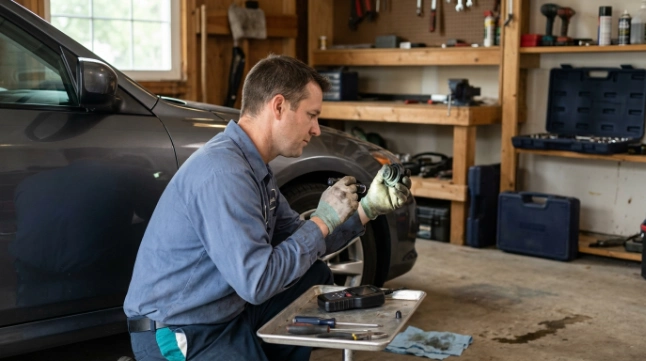
You can perform several safe preliminary checks yourself, but a stubborn P0442 often needs professional leak-testing equipment. The best DIY approach is diagnosis first, not parts swapping.
DIY checks worth doing
- Scan the vehicle. Confirm P0442 and check for related diagnostic trouble codes.
- Check the fuel cap. Reinstall it correctly and inspect its seal for visible damage.
- Inspect accessible hoses. Look for cracks, disconnected fittings, or damaged vapor lines.
- Check recent work. Look around areas where parts were recently removed or serviced.
- Rescan after repairs. Confirm whether the code returns after the EVAP monitor runs again.
What should you avoid replacing blindly?
- Purge valve
- Vent valve
- Leak-detection pump
- Fuel-tank pressure sensor
- Charcoal canister
Each of those components can be expensive enough to make guessing costly. A smoke test may cost less than one incorrect parts purchase.
One customer mistake I see repeatedly is treating a code description as a parts recommendation. P0442 says the system detected a leak; it does not say, “replace the charcoal canister.”
That difference is important. Your scanner starts the diagnosis rather than finishing it.
Shop note: before authorizing a major EVAP repair, ask the technician what test confirmed the failed component. A clear answer should involve more than the presence of P0442 alone.
P0442 Repair Cost FAQ
How much does it usually cost to fix code P0442?
P0442 repair cost varies widely because the code can come from several components. A loose fuel cap may cost nothing to correct, while purge-valve repairs may land around the low $200s and charcoal-canister replacement can reach roughly $500–$700 on many vehicles.
What is the cheapest fix for P0442?
The cheapest possible fix is correctly reinstalling a loose fuel cap. If the cap is damaged, replacing it is generally less expensive than replacing valves, pumps, hoses, or the charcoal canister.
Does P0442 always mean I need a new gas cap?
No. The fuel cap is only one possible leak point. Damaged hoses, purge-valve leakage, vent-valve problems, canister damage, seals, and other EVAP components can also trigger P0442.
Can an OBD-II scanner tell me exactly where the P0442 leak is?
Usually not. A scanner confirms the diagnostic code and may provide related data, but locating a small physical leak often requires inspection, valve testing, or an EVAP smoke test.
Will P0442 clear itself after tightening the gas cap?
It may, if the loose cap was truly the cause. However, the computer must rerun its EVAP monitor successfully, and that can require several trips under specific operating conditions.
Is P0442 expensive to diagnose?
Diagnosis depends on shop labor rates and how difficult the leak is to reproduce. Ask whether the diagnostic charge includes smoke testing and whether any portion of that fee is credited toward the repair.
Can P0442 cause poor gas mileage?
P0442 primarily indicates an EVAP leak, and many vehicles show no noticeable driving symptoms. If fuel economy drops sharply or the engine runs poorly, scan for additional codes instead of assuming P0442 is the only problem.
The main takeaway is simple: don’t judge a P0442 repair by the code alone. Check the cap, scan for related faults, and locate the leak before buying expensive parts.
If you’re comparing repair estimates, ask each shop what failed, how they confirmed it, and whether diagnosis is included. That information will tell you much more than the final price by itself.
