
P0456 Causes: What Triggers This Small EVAP Leak Code?

Quick Answer
P0456 means the vehicle’s computer detected a very small leak in the evaporative emission control system. Common P0456 causes include a loose or damaged gas cap, cracked EVAP hoses, a leaking purge valve, a faulty vent valve, canister sealing problems, or a leak-detection pump issue. An OBD2 trouble code tells you where to start testing, but it does not identify the failed part by itself.
Most Common P0456 Causes
- Loose gas cap: A cap that is not fully tightened can prevent the EVAP system from holding pressure or vacuum.
- Damaged cap seal: A cracked, hardened, or dirty sealing ring can create a tiny vapor leak.
- EVAP hose leak: Small cracks or loose connections can trigger P0456 without causing drivability problems.
- Vent valve leak: The valve or its seal may fail to close tightly during the EVAP self-test.
- Purge valve problem: A purge valve that does not seal correctly can interfere with leak testing.
- Leak-detection fault: Some vehicles use a pump or pressure-monitoring system that can fail or report a false leak.
Best First Check
- Inspect and reseat the gas cap before buying parts. If P0456 returns, test the EVAP system for leaks instead of guessing.
I’ve learned to treat P0456 as a leak-hunting problem, not a parts-replacement instruction. An OBD2 scanner can point you toward the EVAP system, but several different faults can produce the same code.
The good news is that P0456 often appears with few driving symptoms. The harder part is finding a leak that may be too small to see.
In This Guide
What Does P0456 Mean?
P0456 means the powertrain control module detected a very small EVAP system leak. EVAP stands for evaporative emission control.
The EVAP system keeps gasoline vapors from escaping directly into the atmosphere. It stores those vapors and later routes them into the engine to be burned.
Major parts commonly involved include:
- The fuel tank and filler system.
- The gas cap or capless filler seal.
- EVAP vapor hoses and lines.
- The charcoal canister.
- The purge valve.
- The vent valve.
- A leak-detection pump on vehicles that use one.
- A fuel-tank pressure sensor or similar monitoring device.
During certain driving or parking conditions, the vehicle checks whether this system can hold the expected pressure or vacuum. If it detects leakage beyond the allowed threshold, P0456 may be stored.
A manufacturer may describe the code as a “very small leak” or simply a “small leak.” The exact test strategy varies between makes, engines, model years, and emission systems.
That distinction matters. P0456 identifies the result of a failed system test, not the component that caused it.
Does P0456 always mean there is a physical hole?
No. A real vapor leak is common, but a valve that cannot seal can produce the same test failure.
A faulty leak-detection component or software issue may also cause P0456 on certain vehicles. That is why I avoid replacing the gas cap or purge valve solely because a scanner displays this code.
Section Takeaway: P0456 tells you the EVAP system failed a very-small-leak test. It does not prove which EVAP component has failed.
What Are the Most Common P0456 Causes?
The most common P0456 causes are sealing problems somewhere between the fuel tank, vapor lines, valves, and charcoal canister. I start with simple sealing points before moving toward valves and electronic testing.
1. Loose or incorrectly installed gas cap
A loose gas cap is one of the easiest possibilities to check. The EVAP system may not seal correctly if the cap was left loose after refueling.
Remove it and inspect the sealing surface. Then reinstall it according to the vehicle manufacturer’s instructions.
2. Worn or damaged gas-cap seal
A cap can look normal but still leak. Rubber seals can harden, split, deform, or collect dirt around the sealing surface.
Look for visible cracks and damage. Do not replace the cap only because P0456 exists unless inspection or testing points toward it.
3. Cracked or disconnected EVAP hose
EVAP lines carry fuel vapor between the tank, canister, purge system, and vent system. Even a small crack can cause P0456.
I pay close attention to bends, connectors, areas near brackets, and hoses exposed to heat. Small leaks can hide underneath a vehicle where a quick visual inspection misses them.
4. Leaking EVAP vent valve or seal
The vent valve helps seal the system during certain self-tests. If the valve sticks, leaks, or has a damaged seal, the EVAP monitor may detect leakage.
This is not theoretical. Manufacturer service information submitted to NHTSA has documented P0456 caused by vent-control-valve sealing and O-ring problems on certain vehicles.
5. Purge valve that does not seal properly
The purge valve controls vapor flow from the charcoal canister toward the engine. During leak testing, it must behave exactly as the vehicle’s control strategy expects.
A valve that leaks when commanded closed can interfere with testing. Certain manufacturer bulletins have linked P0456 with purge-valve sealing problems on specific vehicles.
6. Charcoal canister leak or damage
The charcoal canister stores fuel vapor until the engine can purge it. Cracks, damaged fittings, or sealing problems can let vapor escape.
Liquid fuel contamination can also damage some EVAP components. Avoid repeatedly forcing extra fuel into the tank after the pump automatically shuts off.
7. Leak-detection pump problem
Some vehicles use a dedicated leak-detection pump to test EVAP integrity. A pump fault can either create a leak or make the computer believe one exists.
OEM service bulletins have documented P0456 associated with leak-detection pump failures on certain applications. Vehicle-specific diagnosis matters here.
8. Fuel-tank or filler-neck sealing problem
A damaged filler neck, filler connection, tank seal, or related fitting can also produce a small leak. These problems are harder to confirm through visual inspection alone.
If I cannot find an obvious hose or cap problem, this is where controlled leak testing becomes much more useful.
| Possible Cause | Typical Clue | Best First Check |
|---|---|---|
| Loose gas cap | Code appeared after refueling | Inspect and reseat cap |
| Damaged cap seal | Cracked, hard, or dirty seal | Inspect sealing ring and filler surface |
| EVAP hose leak | Visible crack or loose connection | Visual inspection and smoke test |
| Vent valve leak | No obvious cap or hose problem | Test valve sealing and related seals |
| Purge valve leak | Other purge-flow symptoms or EVAP codes | Test whether valve seals when commanded closed |
| Canister or tank leak | Leak remains after basic checks | Controlled EVAP smoke test |
| Leak-detection pump | No physical leak found | Follow manufacturer test procedure |
Section Takeaway: Start with the gas cap and visible connections, but don’t stop there. P0456 can come from valves, seals, hoses, the canister, tank connections, or the vehicle’s leak-detection hardware.
Which P0456 Cause Is Most Likely?
There is no single cause that is most likely on every vehicle. Make, model, year, engine, EVAP design, mileage, and recent repair history all change the odds.
I use the circumstances around the code to decide where to start.
- P0456 appeared after refueling: Check the gas cap, capless filler system, and filler-area seals first.
- Recent work near the fuel tank: Inspect hoses, connectors, and lines that may have been disturbed.
- Visible cracked hoses: Repair or test those areas before replacing valves.
- P0456 keeps returning with no visible leak: A smoke test becomes much more useful.
- Other EVAP codes are present: Diagnose them together because they may point toward a purge, vent, pressure, or electrical problem.
- A manufacturer bulletin applies: Follow the vehicle-specific procedure instead of using a generic parts list.
As of 2026, there are many manufacturer communications covering model-specific EVAP faults. I recommend checking your VIN, year, engine, and applicable service information before assuming your vehicle matches a repair you found online.
You can also search NHTSA’s recall and manufacturer communication resources for vehicle-specific information.
Diagnostic note: a repair that fixes P0456 on one model may be completely wrong for another. Always match technical information to the exact vehicle.
How Do You Diagnose P0456 Without Guessing?
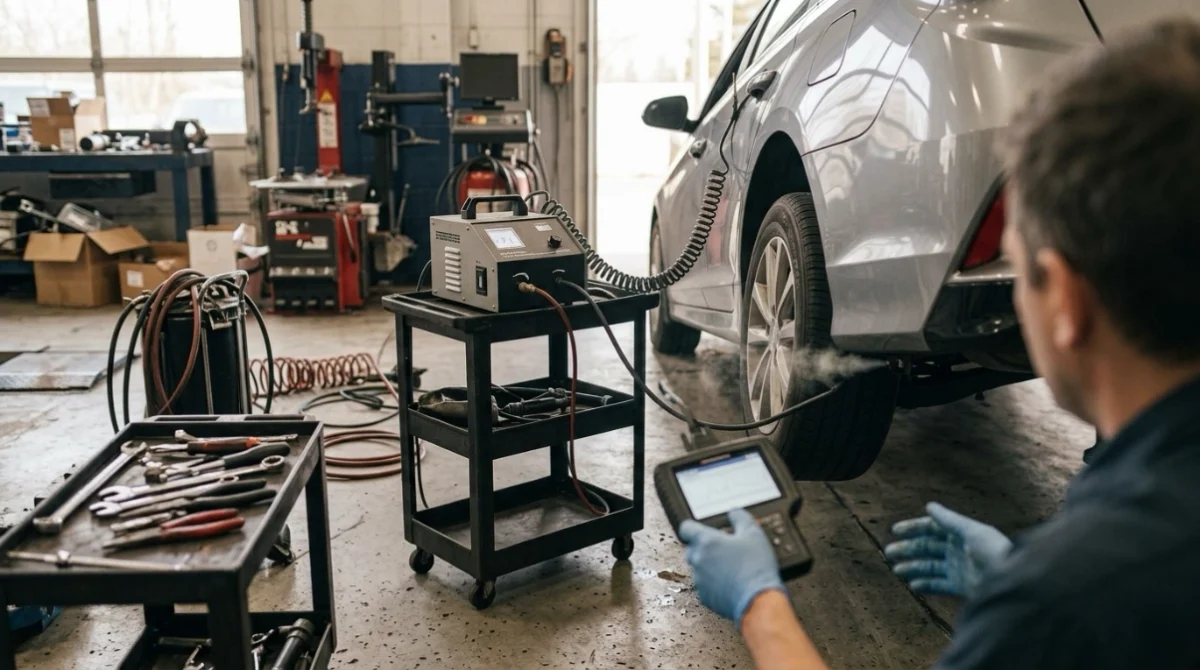
The best P0456 diagnosis moves from simple checks to controlled testing. I would not begin by ordering a purge valve, canister, or gas cap at random.
Step 1: Scan all stored trouble codes
Connect an OBD2 scanner and record every stored, pending, and permanent code available. Do this before clearing anything.
Related EVAP codes may narrow the search. Freeze-frame data can also show the conditions present when the fault was recorded.
Step 2: Inspect the fuel cap or filler system
If your vehicle uses a removable cap, inspect the cap and its seal. Check the filler-neck sealing surface for dirt or damage.
Capless systems use a different sealing design. Follow the vehicle manufacturer’s instructions instead of trying to apply gas-cap advice to a capless filler.
Step 3: Inspect accessible EVAP hoses
Look for damage before reaching for expensive equipment. A disconnected line can make the diagnosis surprisingly simple.
Check for:
- Cracked rubber hose.
- Split plastic vapor lines.
- Loose quick-connect fittings.
- Broken clips or connectors.
- Damage near the charcoal canister.
- Lines rubbed by brackets or road debris.
Step 4: Use a smoke test when needed
A professional EVAP smoke machine introduces a controlled test vapor into the system. Escaping smoke can reveal leaks too small to locate visually.
This is one of the most useful tests for a persistent P0456. The equipment must be used according to its instructions and the vehicle manufacturer’s procedure.
Do not improvise with open flames, homemade heating devices, or unsafe pressure sources around gasoline vapors.
Step 5: Test the purge and vent valves
A valve can look perfect from the outside and still leak internally. Proper testing checks whether it opens, closes, and seals as intended.
Some bidirectional scan tools can command EVAP valves during diagnosis. The available functions depend on the scanner and vehicle.
Step 6: Check vehicle-specific service information
This step often saves the most time. Certain vehicle families have known EVAP failure patterns that may be covered by manufacturer service information.
For factory guidance, owners can use resources such as Toyota customer support or Honda MyGarage when working with those brands.
Step 7: Clear the code only after the repair
Once the confirmed problem is repaired, clear the stored code if appropriate. Then allow the vehicle’s EVAP monitor to run again.
Monitor completion may require specific fuel levels, temperatures, soak periods, speeds, or drive conditions. These conditions vary by manufacturer.
A code that stays away for one short drive does not always prove the repair worked. The EVAP self-test may simply not have run yet.
Pro tip: if you lack smoke-testing equipment or bidirectional controls, paying for diagnosis can cost less than replacing several good EVAP parts.
Section Takeaway: Diagnose P0456 in order. Scan first, check simple seals and hoses, then use smoke testing and component tests to confirm the exact leak.
Can You Keep Driving With P0456?
P0456 by itself often does not cause major drivability symptoms. Many vehicles continue to start, idle, and drive normally.
That does not mean you should ignore it indefinitely. The EVAP system controls fuel vapor, and an illuminated check-engine light can also hide a new fault later.
Get the vehicle checked sooner if you notice:
- A strong gasoline smell.
- Visible liquid fuel.
- Hard starting after refueling.
- Stalling or rough running.
- Several additional trouble codes.
- A flashing check-engine light.
A flashing check-engine light usually indicates a more urgent problem than P0456 alone. AAA also advises drivers to seek prompt professional evaluation when a check-engine warning appears.
If you suspect a vehicle-specific defect, use the NHTSA safety issue database to check manufacturer communications, investigations, and recalls.
Never work around the fuel system while smoking or using open flames. Gasoline vapor is highly flammable.
P0456 Frequently Asked Questions
Can a loose gas cap cause P0456?
Yes. A loose gas cap can prevent the EVAP system from sealing correctly on vehicles that use a removable cap. Inspect and reinstall the cap first, but don’t assume it is the cause if P0456 returns.
Can a bad purge valve cause P0456?
Yes. A purge valve that leaks when it should be closed can interfere with EVAP leak testing. Manufacturer service information has linked purge-valve sealing problems with P0456 on certain vehicles, so the valve should be tested rather than replaced blindly.
Can a bad vent valve cause P0456?
Yes. A vent valve or its seal can leak enough to trigger P0456. OEM technical bulletins have documented vent-control-valve sealing and O-ring leaks as confirmed causes on some vehicle applications.
Will P0456 clear itself after tightening the gas cap?
It may disappear after the vehicle completes enough successful self-tests, but that process is not immediate. The computer must rerun the EVAP monitor under the correct conditions and determine that the leak is gone.
Why does P0456 keep coming back?
A returning P0456 usually means the original leak was never repaired, another EVAP leak exists, or the self-test is still detecting a sealing problem. Smoke testing is often the fastest next step when visual checks reveal nothing.
Can an OBD2 scanner tell me which part caused P0456?
No. A basic scanner can confirm P0456 and may show freeze-frame or readiness data, but the code does not identify a specific failed component. More advanced tools can help operate valves and view system data during diagnosis.
Is P0456 the same as P0455?
No. Both relate to EVAP leakage, but P0455 generally describes a much larger or gross leak. P0456 indicates a very small leak according to the vehicle’s monitoring strategy.
What Should You Do Next?
If your scanner shows P0456, start with the simple checks. Inspect the gas cap or filler system, then look for damaged EVAP hoses and loose connections.
If nothing obvious appears, don’t keep buying parts. A proper smoke test and valve-sealing test can usually narrow the problem much faster.
I also recommend checking vehicle-specific manufacturer information before repairs. P0456 causes vary enough between models that a known fix for one vehicle should never be treated as a universal repair.
The main lesson is simple: find the leak before replacing the part. Your OBD2 scanner gives you the direction; careful testing gives you the answer.
