
P0730 Causes: What Triggers an Incorrect Gear Ratio Code?

Quick Answer
P0730 means the transmission control system detected a gear ratio that did not match the ratio it expected. Common causes include low or incorrect transmission fluid, hydraulic pressure problems, faulty shift solenoids, valve-body faults, incorrect speed-sensor data, wiring problems, internal transmission slip, or vehicle-specific control-module software issues. Before replacing anything, check the fluid correctly and scan for companion codes; AAA’s transmission fluid guidance also stresses using the automaker-specified fluid and avoiding incorrect fluid levels.
Most Likely Areas to Check
- Fluid level: Low or incorrectly filled fluid can reduce hydraulic pressure and allow clutch slip.
- Fluid condition: Burnt or badly contaminated fluid can point toward overheating or internal wear.
- Shift solenoids: A sticking or electrically faulty solenoid can prevent the commanded gear from applying correctly.
- Valve body: Worn valves or pressure-control faults can disturb clutch pressure and gear engagement.
- Speed signals: Bad input or output speed data can make the calculated ratio appear incorrect.
- Internal wear: Worn clutches, belts, pulleys, or other transmission components can cause genuine ratio slip.
Best First Move
- Read every stored and pending code, inspect fluid using the manufacturer’s procedure, and compare commanded gear with live input/output speed data before buying parts.
P0730 can look intimidating because it points toward the transmission, but the code does not tell you which component has failed. It only tells you the calculated ratio was outside the range the control module expected.
I often see drivers focus on the first code their OBD2 scanner displays. With P0730, the companion codes and live data usually matter more than the code by itself.
In This Guide
What Does the P0730 Code Mean?
P0730 is a generic OBD-II diagnostic trouble code for an incorrect gear ratio. The transmission control module, or TCM, compares transmission speeds with the gear it commanded and sets the code when those values do not agree within the programmed limit.
A transmission does not rely only on the position of the shifter. Its controller watches several electrical and hydraulic signals while the vehicle moves.
Definition: An incorrect gear ratio means the transmission’s measured input-to-output speed relationship does not match the ratio expected for the commanded operating condition.
For example, imagine the TCM commands a particular gear but the engine-side transmission speed rises faster than the output speed. That difference can indicate clutch slip, poor hydraulic pressure, or another problem preventing the expected ratio.
The controller can also reach the wrong conclusion when one of the speed signals feeding its calculation is inaccurate. That is why P0730 does not automatically mean the complete transmission has failed.
Is P0730 the same on every vehicle?
No. The basic meaning is similar across OBD-II vehicles, but the manufacturer’s detection logic and repair procedure can differ greatly.
A traditional automatic, continuously variable transmission, and other electronically controlled gearbox designs do not monitor ratios in exactly the same way. Always use service information for the exact year, make, model, engine, and transmission.
Manufacturer communications provide good examples. Some documented applications connect P0730 with hydraulic valve-body problems, while others have required control-module software updates rather than hard-part replacement.
Locksmith’s diagnostic note: I sometimes meet drivers who suspect the immobilizer or key fob because several warning lights appeared together. P0730 itself points toward transmission ratio monitoring, not key-fob programming or the transponder chip.
What Are the Most Common P0730 Causes?
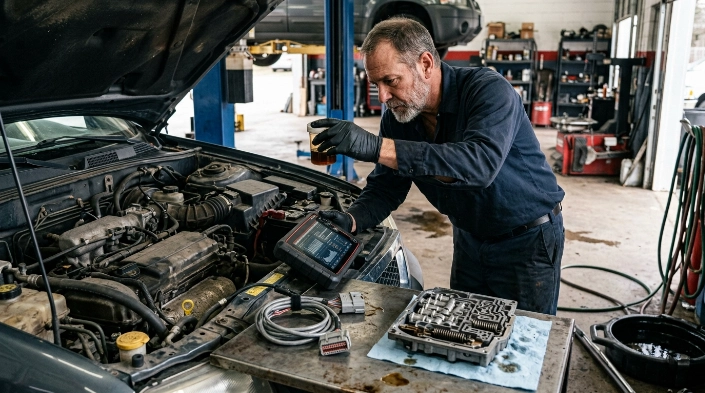
The most common P0730 causes fall into three groups: hydraulic problems, electrical/control problems, and internal mechanical slip. Start with evidence instead of assuming the most expensive failure.
Here are the areas I would want checked before anyone recommends major transmission work.
1. Low or incorrect transmission fluid level
Automatic transmissions depend on fluid pressure to apply clutches and control gear changes. Too little fluid can let the pump draw air or fail to maintain the pressure needed for firm engagement.
Too much fluid can also create problems on some transmissions. Foaming or aeration can interfere with hydraulic control.
- Look for leaks around the pan, cooler lines, axle seals, and transmission case.
- Check the level only with the manufacturer’s specified procedure.
- Use the exact fluid specification listed for the vehicle.
Some newer vehicles do not have a traditional dipstick. Checking them may require a specific fluid temperature and a level plug.
Pro tip: do not add transmission fluid simply because P0730 appeared. Confirm the level using the correct vehicle-specific procedure first.
2. Old, burnt, contaminated, or incorrect fluid
Fluid condition can provide important clues. A strong burnt smell, heavy debris, or obvious contamination may point toward overheating or internal friction-material wear.
Fluid color alone is not a perfect diagnosis. Some healthy fluids darken with normal service, so compare condition with symptoms and manufacturer guidance.
3. Shift solenoid or pressure-control solenoid problems
A shift solenoid is an electrically controlled valve that helps direct transmission fluid through the valve body. If it sticks or fails electrically, the requested clutch circuit may not receive the expected pressure.
Pressure-control solenoids are just as important. Incorrect line pressure can allow a clutch to slip even when the TCM commanded the correct gear.
Do not replace a solenoid because P0730 appeared alone. Look for solenoid-specific codes, electrical test results, and pressure or scan-data evidence.
4. Valve-body or hydraulic pressure faults
The valve body routes pressurized fluid to the correct transmission circuits. Worn bores, sticking valves, debris, or a pressure-regulator problem can prevent those circuits from operating correctly.
This is not just a theoretical cause. A GM service bulletin hosted by NHTSA documents certain vehicles where P0730 could accompany a sticking pressure-regulator valve in the valve body.
5. Input or output speed-sensor problems
The TCM needs accurate speed information to calculate transmission ratio. Depending on design, it may compare turbine, input-shaft, output-shaft, pulley, or vehicle-speed data.
A faulty sensor, damaged reluctor, weak connection, or corrupted signal can therefore make the ratio calculation unreliable. Companion speed-sensor codes make this path more suspicious.
6. Wiring and connector faults
Heat, oil contamination, corrosion, loose terminals, or damaged wiring can interrupt signals between transmission components and the controller. Intermittent faults are especially easy to miss with a basic code reader.
- Inspect transmission connectors for fluid intrusion or corrosion.
- Check harness sections near hot exhaust components and moving parts.
- Test suspect circuits rather than assuming a sensor is bad.
7. Internal clutch, belt, pulley, or mechanical wear
If the transmission is genuinely slipping, the controller may be reporting exactly what is happening. Worn friction clutches, seals, drums, planetary components, a torque-related hydraulic fault, or CVT components can all affect the actual ratio.
The exact failure depends heavily on transmission design. A conventional automatic and a CVT should not be diagnosed from the same generic parts list.
8. TCM software or calibration problems
Hardware is not always the cause. Certain manufacturer bulletins have addressed P0730 through updated transmission-controller software.
For example, an older Chrysler technical bulletin available through NHTSA describes specific applications where updated TCM calibration was part of the repair procedure.
Section Takeaway: P0730 is a ratio-error result, not a failed-part label. Fluid, hydraulic control, sensor data, wiring, software, and internal wear can all create the condition.
What Symptoms Usually Appear With P0730?
A P0730 vehicle may show anything from a warning light with few obvious symptoms to severe slipping or loss of normal gear operation. What you feel depends on the underlying fault.
- Check-engine light: The powertrain controller may illuminate the malfunction indicator after detecting the fault.
- Transmission slipping: Engine speed may rise without a matching increase in road speed.
- Delayed engagement: Drive or Reverse may take longer than normal to engage.
- Harsh shifting: Gear changes may feel unusually firm, abrupt, or inconsistent.
- Gear hunting: The transmission may shift repeatedly because it cannot maintain the expected operating state.
- Limp mode: Some vehicles restrict available gears to protect the transmission.
- Reduced acceleration: The car may feel weak because power is not being transferred efficiently.
- Burning smell: Severe slipping can create heat and damage transmission fluid.
The combination matters. P0730 with clean fluid and no noticeable slipping deserves a different diagnostic path from P0730 with burnt fluid and obvious RPM flare.
Also pay attention to additional codes. Solenoid, fluid-pressure, or speed-sensor codes can narrow the search considerably.
How Should You Diagnose P0730 Without Guessing?
Start with the scan data, not a parts catalog. A proper diagnosis tries to determine whether the incorrect ratio is real or whether faulty data made the controller think it was real.
In 2026, even inexpensive OBD2 scanners can read powertrain codes, but transmission live-data access varies. A professional bidirectional scan tool usually gives a technician much more information.
Step 1: Scan every available module
Record stored, pending, and manufacturer-specific codes before clearing anything. Freeze-frame information can show vehicle speed, load, temperature, and other conditions present when the fault was detected.
- Look for input or output speed-sensor codes.
- Check for shift-solenoid and pressure-control codes.
- Note voltage or communication faults.
- Record transmission-temperature information when available.
Step 2: Check transmission fluid correctly
Confirm level, condition, odor, and the presence of leaks. Follow the service procedure because transmission temperature and engine-running status can change the correct reading.
If the fluid is badly burnt or contains obvious metallic material, simply changing it may not correct the underlying damage. That finding should guide the next inspection.
Step 3: Compare commanded gear with live speed data
A capable scan tool may display commanded gear along with input and output speed. That information helps determine whether the transmission is physically slipping or whether a sensor signal behaves abnormally.
Watch for a speed value that suddenly drops out, spikes, or becomes implausible. A signal fault can mimic a mechanical ratio problem.
Step 4: Check wiring and connectors
Inspect the harness before condemning expensive components. A loose connector or damaged wire can create an intermittent fault that disappears while the car sits in a shop.
Electrical diagnosis may require voltage, resistance, continuity, waveform, or voltage-drop testing according to manufacturer instructions.
Step 5: Follow vehicle-specific service information
This step matters because generic P0730 advice has limits. Manufacturer logic can point technicians toward very different checks on different transmissions.
Before authorizing major work, you can also search your VIN through the NHTSA recall lookup and review applicable manufacturer communications or campaigns.
Step 6: Perform hydraulic or mechanical testing when evidence points there
A transmission specialist may need pressure tests, manufacturer scan-tool commands, or internal inspection. Those procedures go beyond what a basic code reader can prove.
Pro tip: transmission test procedures vary by model. Do not copy pressure specifications, solenoid commands, or drive-cycle instructions from a different vehicle.
One mistake I see often is clearing codes before recording the supporting information. That can erase useful clues and make an intermittent P0730 harder to reproduce.
Section Takeaway: The best P0730 diagnosis separates a true mechanical ratio problem from a hydraulic, sensor, wiring, or software problem before parts are replaced.
Can You Keep Driving With a P0730 Code?
You should treat P0730 as a fault that deserves prompt diagnosis. Whether you can safely move the vehicle a short distance depends on how the transmission is behaving.
Stop driving and arrange professional help if the transmission is slipping badly, losing drive, banging into gear, overheating, or struggling to move normally. Continuing to drive a slipping transmission can generate additional heat and wear.
When limited driving may be less risky
- The vehicle engages Drive and Reverse normally.
- There is no obvious slipping or RPM flare.
- There are no serious fluid leaks.
- The vehicle is not entering severe limp mode.
- There are no abnormal grinding, banging, or overheating symptoms.
Those conditions do not mean the fault is harmless. They only mean the immediate symptoms appear less severe.
Safety note: if you are unsure whether the vehicle can maintain normal acceleration or gear engagement in traffic, towing is the safer choice.
What Repairs Usually Fix P0730, and What Might They Cost?
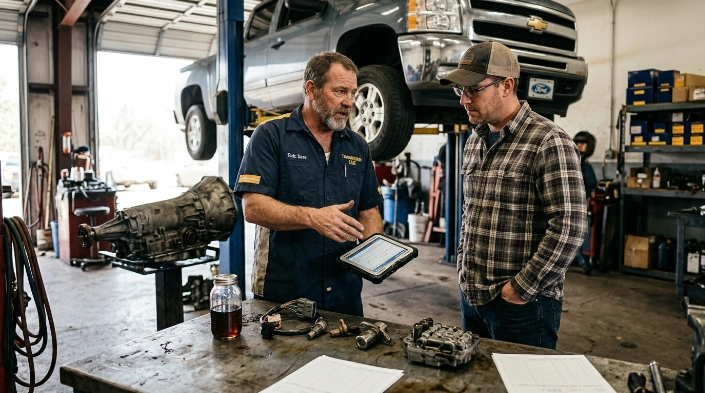
There is no single P0730 repair because the code describes a result rather than one failed component. The correct repair follows the confirmed cause.
The table below shows common diagnostic paths and broad 2026 U.S. budgeting ranges. These are planning figures only; labor rates, transmission design, vehicle brand, parts availability, and region can move the final price substantially.
| Possible Cause | Useful Clues | Typical Repair Path | Broad U.S. Budget Range |
|---|---|---|---|
| Fluid level or service issue | Leak, delayed shifts, poor fluid condition | Correct level, repair leak, service fluid/filter when appropriate | About $150-$400 for a routine service; leak repair may add more |
| Speed sensor or related circuit | Implausible live data or companion sensor code | Circuit diagnosis, sensor or wiring repair | Often a few hundred dollars, depending on access |
| Shift or pressure solenoid | Solenoid code, harsh shift, pressure-related symptoms | Electrical testing, solenoid or solenoid-pack service | Roughly $300-$1,200 depending on design and access |
| Valve-body fault | Pressure-control problems, multiple shift complaints | Valve-body testing, repair, or replacement | Often around $600-$1,800 |
| Software/calibration issue | Applicable manufacturer bulletin and no confirmed mechanical fault | OEM-level diagnosis and approved module update | Varies widely by manufacturer and shop |
| Internal transmission damage | Severe slip, burnt fluid, debris, failed pressure/mechanical tests | Internal repair, rebuild, remanufactured unit, or replacement | Commonly several thousand dollars |
A diagnostic fee can save far more than it costs if it prevents an unnecessary valve body or transmission replacement. Ask the shop to explain which test confirmed the failed part.
The cheapest-looking repair is not always the least expensive long term. Installing a sensor because it appears on an internet cause list wastes money if live data shows the sensor is working correctly.
Can a transmission-fluid change fix P0730?
It can help when fluid level, incorrect fluid, or service condition is genuinely part of the cause. It cannot restore worn friction material or repair a failed hydraulic component.
Aggressive flushing is not a universal cure either. Service method should follow the vehicle manufacturer’s instructions and the condition of the transmission.
Cost note: always request a written estimate after diagnosis. P0730 repair costs vary sharply by make, model, year, transmission type, labor rate, and the actual failed component.
Section Takeaway: Budget for diagnosis first. A P0730 repair can range from fluid or electrical work to major internal transmission repair, and the scan code alone cannot tell you where your vehicle falls.
Frequently Asked Questions About P0730
Can low transmission fluid cause P0730?
Yes. If low fluid prevents the transmission from maintaining the hydraulic pressure needed to apply a clutch or control element, the actual ratio can differ from the commanded ratio. Confirm the level using the vehicle-specific procedure because many transmissions require a particular temperature and checking method.
Can dirty transmission fluid cause P0730?
Degraded or contaminated fluid can contribute to hydraulic-control and wear problems, but fluid appearance alone does not prove the cause. Check for slipping, debris, companion codes, fluid level, and pressure or scan-data evidence before deciding that a fluid service will solve P0730.
Will a bad speed sensor cause P0730?
It can. The transmission controller calculates gear ratio from speed information, so inaccurate input or output speed data may produce an incorrect ratio calculation. A technician should check live data, sensor-specific codes, wiring, and signal quality before replacing the sensor.
Can a bad shift solenoid trigger P0730?
Yes. A sticking or failed shift or pressure-control solenoid can prevent the transmission from applying the commanded gear correctly. However, P0730 by itself does not identify a particular solenoid, so electrical tests and other trouble codes are important.
Does P0730 mean I need a new transmission?
No. P0730 can result from fluid, electrical, hydraulic, software, sensor, or internal mechanical problems. Some causes are repairable without replacing the transmission, while severe internal slip may require a rebuild or replacement after proper testing.
Can I clear P0730 with an OBD2 scanner?
A scanner can clear the stored code on compatible vehicles, but clearing it does not repair the cause. Record all codes and freeze-frame information first, then diagnose the fault. If the ratio problem remains, P0730 will normally return after the monitoring conditions occur again.
Why did P0730 return after a repair?
The original cause may not have been fully identified, or another related problem may still exist. Recheck fluid specification and level, companion codes, wiring, live speed data, and manufacturer service information before replacing additional components.
Final takeaway: Treat P0730 as a request for diagnosis, not permission to replace the transmission. Start with all stored codes, correct fluid inspection, live data, wiring, and vehicle-specific service information, then move into hydraulic or mechanical testing only when the evidence points there.
If your vehicle is slipping badly, losing drive, or showing signs of overheating, avoid continuing to drive it. A qualified transmission technician can confirm whether the cause is a relatively contained control problem or internal transmission damage.
