
10 Best Bluetooth OBD2 Scanner for Check Engine Light: Top Picks and Buying Guide

Bluetooth OBD2 scanners let drivers read and clear check-engine codes, monitor live engine data, and save trips to a phone or tablet. They plug into the car’s OBD2 port and use a Bluetooth link to send information to an app, making basic diagnostics faster and cheaper than a trip to a shop. For many owners, a compact adapter and a clear app are all they need to find out whether a warning light is a loose gas cap or something needing a mechanic.
The key things to check when buying are vehicle compatibility, app reliability, and the scanner’s supported data and code types. Battery-free adapters that draw power from the car are simple and reliable, while models that work with both iOS and Android and support freeze-frame and live-streaming data give more useful information. A good Bluetooth OBD2 scanner should work with the buyer’s car, pair easily with their phone, and show clear, accurate codes and live data in its app. This guide tested a range of adapters and apps to find the best choices and explain how to pick one.
Best Bluetooth OBD2 Scanners for Check Engine Light
Below is a clear list of the best Bluetooth OBD2 scanners for diagnosing check engine lights. The list focuses on reliable scanners that work with many cars and offer easy-to-read codes and live data.
Veepeak OBDCheck BLE

It is a solid, affordable Bluetooth OBD2 adapter for reading and clearing check engine codes with common apps.
Pros
- Connects quickly with Car Scanner and other apps.
- Shows live sensor data that helps diagnose issues.
- Small, portable, and comes with a carrying case.
Cons
- Does not support ABS, SRS, or many manufacturer-specific functions.
- Needs a compatible third-party app; some features cost extra.
- iOS requires in-app Bluetooth LE setup—do not pair in phone settings.
They plugged the adapter into the car and the setup was fast using the Car Scanner app. Live data graphs and code reads appeared right away, which made it easy to spot a misfire and check readiness monitors.
Once connected, the unit felt reliable during short drives. The little case keeps it safe in the glove box, and the build seemed sturdy for the price.
Some cars showed limits: advanced systems like ABS and service resets did not appear, and a few newer models were not fully supported. The reviewer had to try different apps to get the most from hybrids and certain European models.
Overall, it worked well for everyday check engine checks and live sensor monitoring but relies on compatible apps for extra features.
BlueDriver Pro
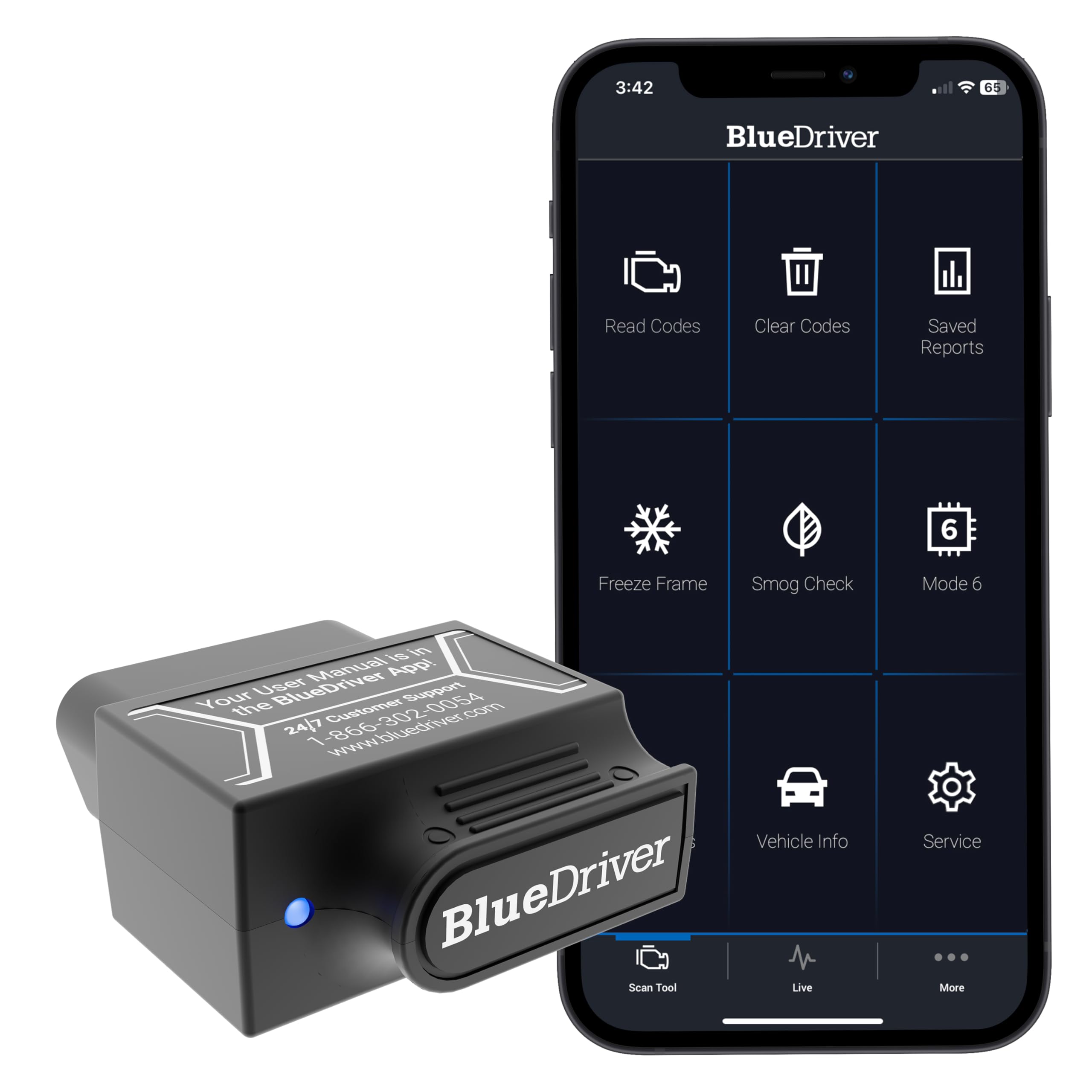
It’s worth buying for DIYers who want mechanic-level code reading, live data, and repair guidance without recurring fees.
Pros
- Easy Bluetooth setup and fast live data on the phone
- Gives detailed repair reports that point to likely fixes
- No subscription fees and wide vehicle support
Cons
- Some advanced OEM functions vary by make and model
- Occasional pairing hiccups on certain phones
- Stays plugged into the car, which some users may find bulky
They made it simple to plug in and open the app. The unit connected quickly and showed trouble codes and live sensor data in real time. Scanning felt faster than cheap code readers and the repair reports were clear.
They appreciated the no-subscription model. The app delivered write-ups and possible causes that helped decide whether to DIY or go to a shop. Keeping it plugged into the OBD2 port turned troubleshooting into a quick check before and after repairs.
They noticed pairing hiccups once but got support quickly. For many modern cars it pulled ABS and SRS codes that simpler readers missed. It won’t replace a full shop tool for some factory-specific functions, but it handled the check engine light and common diagnostics well.
ANCEL AD310

It’s a solid buy for someone who wants a simple, reliable tool to read and clear check engine lights without paying a shop.
Pros
- Fast and clear code reads
- Tough cable and solid build
- No batteries—plugs into the car
Cons
- Only reads emission-related OBD2 codes
- No Bluetooth or app features
- Won’t work on OBDI cars
They plugged the AD310 into the OBD-II port and got codes within seconds. The screen is bright and easy to read while kneeling beside the car. It showed code names and let them clear the light after the fix.
The cord felt thick and durable, so it didn’t kink or feel fragile when moving around the engine bay. Buttons responded well and the menu was simple enough that a beginner could use it right away. Live data and freeze frame were useful for a quick look at engine behavior.
It lacks wireless features and smartphone apps, so someone who wants phone integration should look elsewhere. Still, for basic check engine diagnosis and clearing codes on 1996-or-newer cars, it performed exactly as expected.
UMEIJA V011 OBD2 Scanner
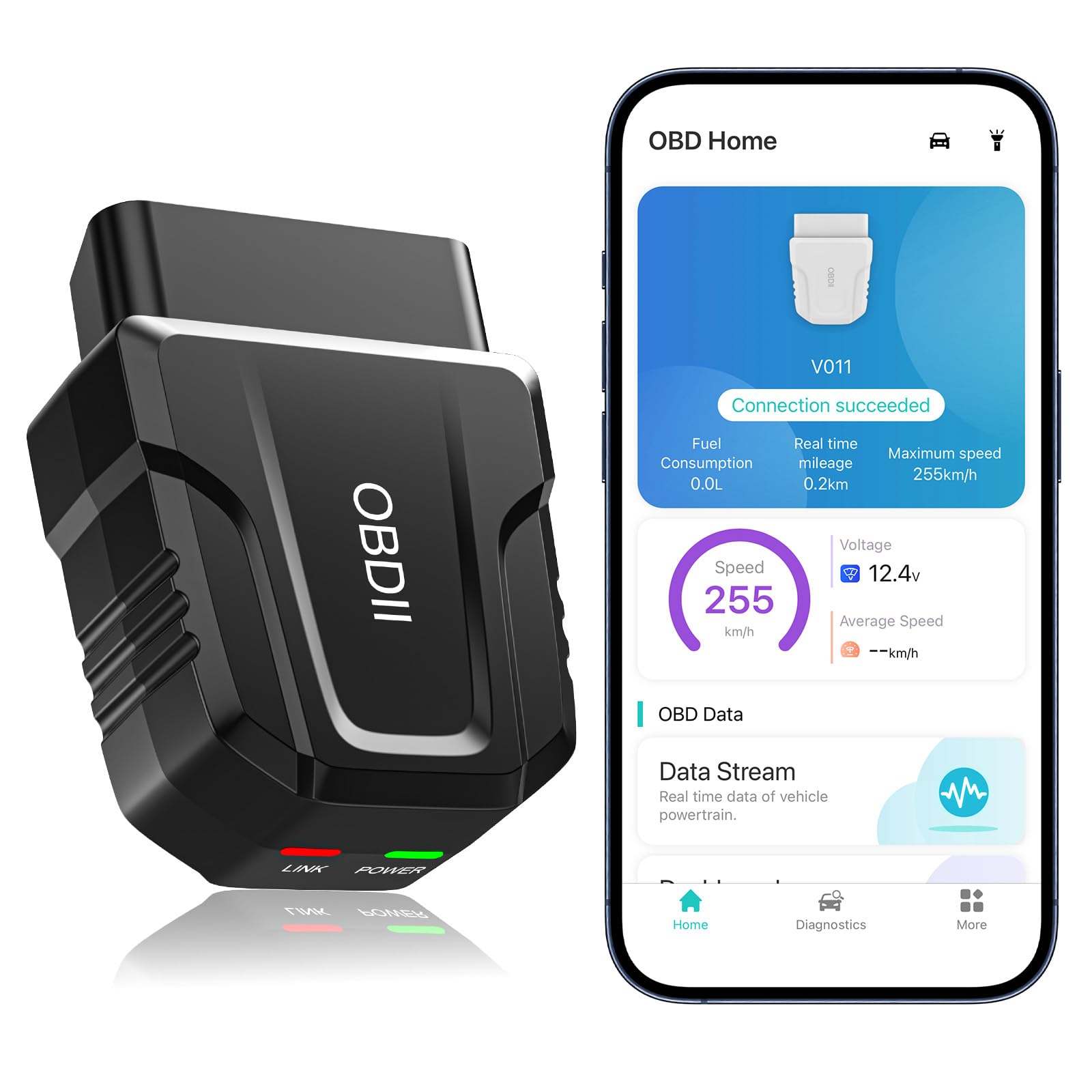
It’s a strong buy for anyone who wants fast, clear check engine diagnostics without paying for a shop visit.
Pros
- Connects quickly and shows live sensor data in easy charts.
- Works with most cars and supports many protocols.
- Affordable for the range of features it offers.
Cons
- App-only workflow can confuse some phones at first.
- Clearing codes doesn’t fix problems; the light may return until repairs are done.
- Limited warranty and short manual can leave novices with questions.
They plugged the V011 into the OBD port and got a near-instant Bluetooth link. The app laid out DTCs and live values in charts that made it simple to spot odd readings while the engine ran.
It read VIN, freeze frame, and data streams exactly as claimed. Real-world use showed quick scans on a Honda and a Camry; the graphs helped compare normal vs. abnormal sensor numbers.
Some phones required following the app’s pairing tips, and Apple users must let the app handle the connection. After clearing codes, the light sometimes came back when the fault wasn’t actually fixed — which the device clearly warns about.
Overall, it handled basic and deeper checks well for the price. People who want a reliable, budget-friendly scanner to diagnose and clear check engine lights will find it useful.
Panlong OBD2 Bluetooth Scanner

This is a good budget pick for Android users who want a simple tool to read and clear check engine codes and watch live sensor data.
Pros
- Very affordable and easy to use.
- Works well with popular Android apps like Torque and Dr. Prius.
- Small, plug-and-forget size that fits neatly in the OBD port.
Cons
- Android only — won’t pair with iPhone.
- Bluetooth name can be the same on multiple units, which causes some confusion.
- Not every app shows every manufacturer-specific code.
They used the Panlong on several cars and found it instantly handy for quick checks. Plugging it into the OBD2 port and opening the app usually connected fast. The small size made it convenient to leave in the car without it getting in the way.
Live data streaming felt responsive in the apps tried. They watched engine RPM, coolant temp, and a few sensors while driving and the numbers updated smoothly. Clearing a check engine light took seconds when the issue was minor.
Pairing sometimes took an extra moment on older phones and two scanners in different cars showed up with the same Bluetooth name, which caused a brief mix-up. Despite that, it saved time and money by letting them know when a mechanic visit was not urgently needed.
Feronix B26 Bluetooth OBD2 Scanner
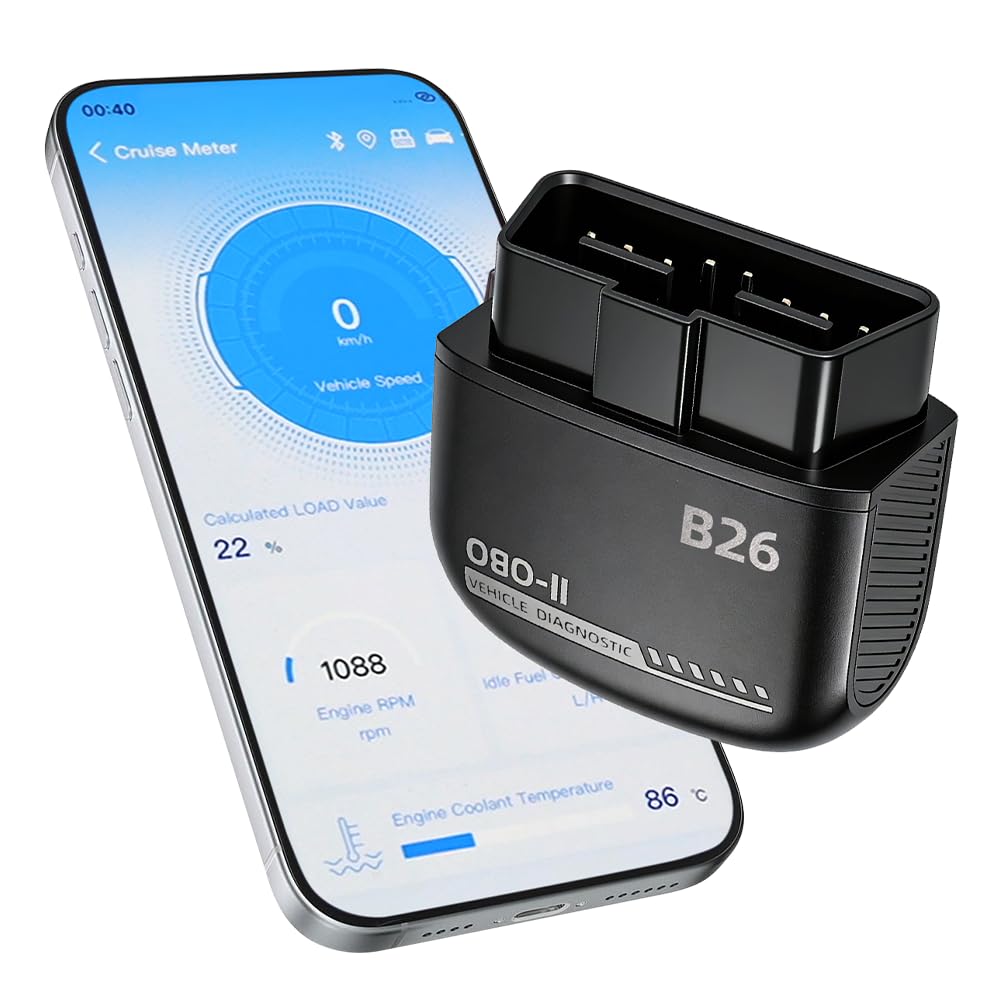
It is a solid buy for DIYers who want a small, subscription-free scanner to read and clear engine codes quickly.
Pros
- Fast, stable Bluetooth pairing with phones.
- Small design stays tucked in the port for continuous monitoring.
- Reads many engine codes and shows live data without extra fees.
Cons
- Engine-only diagnostics — no ABS, SRS, or transmission support.
- Some users find the app bulky and a few features inconsistent.
- Labeling on the box vs. device can confuse buyers.
The Feronix B26 felt simple to use during testing. It paired instantly with a phone and started showing live engine parameters within seconds. The compact plug stays out of the way and did not snag or block anything when left in the car.
Reading and clearing check-engine codes worked as expected. It caught pending and temporary faults and let the app clear them after a repair. The device did not drain the battery in my experience, so leaving it plugged in for 24/7 monitoring seemed safe.
The app provides plain-English code descriptions and freeze-frame data, which helped diagnose a minor misfire quickly. A few features in the app looked unfinished, and occasional wording and labelling mixed names like FX26 and B26, which could confuse someone new to OBD2 tools.
For someone who needs basic engine diagnostics without subscriptions, this scanner delivers clear, real-world value. It’s not for full car system work, but it makes checking and clearing engine lights easy and affordable.
Vgate iCar Pro BLE4.0

It’s a solid, no-frills Bluetooth OBD2 adapter that reads and clears check engine codes quickly and works well with common apps.
Pros
- Easy to plug in and use with phones.
- Low power draw that helps avoid draining the car battery.
- Solid Bluetooth link and app compatibility for quick live data.
Cons
- Only supports standard OBD2 functions, not ABS or SRS.
- Some Android pairing steps needed (PIN 1234).
- Auto-wake can be unreliable on hybrids or EVs.
The adapter fit my car’s OBD2 port without fuss and stayed out of the way. It paired with my phone fast and sent steady live data to the app I used.
Reading and clearing a CEL took seconds. The Bluetooth stayed stable during short drives and the small LEDs made connection status obvious.
It felt light and low-power in use; I left it plugged in overnight and saw no big battery drain. Advanced systems like ABS or TPMS did not show up, so expect basics only.
Firmware updates were easy through the app when I ran one, which gave confidence this unit will keep working with newer apps.
BLCKTEC 440 Bluetooth OBD2 Scanner

The BLCKTEC 440 is worth buying for drivers who want a simple, handheld tool to read and clear check engine lights and view live data without fuss.
Pros
- Easy plug-and-play use
- Clear live-data display for tracking issues
- Helpful I/M readiness and color LEDs for smog prep
Cons
- Some units may arrive with cosmetic wear
- Limited to OBD2-compatible vehicles (1996+)
- Printer hookup and extra features feel more pro-oriented
He plugged the 440 into the car and it powered on right away. The 2.8″ color screen made freeze-frame data and live graphs easy to read while standing beside the engine. It felt solid and simple to operate compared with phone-only dongles.
They liked how the tool showed readiness status and gave clear codes that matched what a mechanic later confirmed. Clearing the check engine light took seconds, and the live data helped spot a charging-system hiccup without needing a shop visit. The free lifetime updates reassured them it would stay useful.
She noticed one unit on arrival looked like it had been used, so packaging checks matter. Advanced features like printer output and some menu items seemed aimed at pros, but the basics—read, clear, and view live data—worked well for everyday DIY fixes.
Foxwell NT301

It is a solid buy for someone who wants a simple, plug-and-play scanner to read and clear check engine lights without apps or subscriptions.
Pros
- Easy to use right out of the box
- Clear live-data display for basic sensors
- Fast code reads and simple I/M readiness check
Cons
- Does not scan ABS, SRS, or other advanced systems
- No Bluetooth or mobile app support
- Limited special-function resets
The NT301 felt ready the moment it was plugged in. It powered on instantly, showed a bright 2.8″ screen, and walked through reading codes without fuss. The menus are straightforward so it did not take long to find the read-codes and live-data screens.
Live data plotting helped spot trends quickly. Watching RPM, coolant temp, and oxygen sensor values made it easy to see what changed when the engine idled or revved. The readiness LED was a helpful quick check before an emissions test.
Clearing the check engine light was simple, but the scanner only removes codes — it does not fix faults. After clearing, the light returned on one car because the underlying problem stayed. That mirrors real use: it confirms repairs but won’t substitute for parts or hands-on fixes.
This tool fits a home mechanic who wants reliable OBDII checks without extra tech headaches. It works on most gasoline cars and many light trucks from 1996 onward, yet it’s not a full professional tool for ABS, SRS, or advanced resets. If those functions are needed, a different scanner will be required.
Veepeak Mini Bluetooth OBD2 (Android only)

This is a good budget scan tool for Android users who want quick check engine reads and live data without a big handheld unit.
Pros
- Pairs fast with Android and shows live sensor data.
- Small, stays plugged in without getting in the way.
- Works well with popular apps like Torque and Car Scanner.
Cons
- Not compatible with iPhone or iPad.
- No advanced ABS, SRS, or manufacturer-specific functions.
- Some units can fail after long-term constant use.
They plugged the Veepeak into an older car and got codes and live RPM, speed, and coolant temp within seconds. Reading and clearing the check engine light felt simple using Torque on a phone.
It stayed in the OBD port with no extra power needed and did a steady job for logging while towing. The small size made it easy to forget it was there, but one user noted the unit eventually lost Bluetooth after years of constant use.
Compatibility is the main catch: it only works with Android apps that speak the ELM327-style protocol. It won’t run iPhone apps or handle deep module work like ABS resets or injector coding, so it’s best for drivers who want CEL checks and basic live data.
For an Android-only, low-cost reader that pairs quickly and shows real-time sensors, it delivers solid everyday value but don’t expect dealer-level diagnostics.
Buying Guide
They should check compatibility first. Verify the scanner works with the car’s make, model year, and OBD2 protocols. Many vehicles after 1996 in the U.S. use OBD2, but some foreign or older models may differ.
They should look for ease of use. A clear app interface and simple setup matter. Fast pairing and one-button scans save time.
They should consider supported diagnostics. Basic code read/clear is essential. Live data and freeze-frame help with deeper troubleshooting.
They should weigh connectivity and range. Bluetooth Low Energy (BLE) gives better battery life and stable links. Range of at least several meters helps when the phone is outside the cabin.
They should check update policy and app support. Regular firmware and app updates add new features and vehicle coverage. Good developer support fixes bugs faster.
They should note extra features that matter. Enhanced PIDs, ABS/SRS codes, and battery tests add value. Clear error descriptions and repair hints help non-experts.
They should verify safety and power draw. Low power consumption prevents battery drain during long tests. A secure pairing method protects data and prevents unauthorized access.
They should compare price versus functionality. Higher cost may reflect more features or wider vehicle support. Prioritize features needed for their driving and repair habits.
They should read reviews and test reports. Real-world feedback reveals reliability and app quality. Look for consistent performance across different cars.
Editor’s Choice
The scanner chosen as Editor’s Choice is the FIXD OBD2 Bluetooth Scanner. It gives reliable check engine light readings and clear code descriptions that a driver can act on quickly.
It pairs easily with phones and shows live data like engine RPM and coolant temp. The app uses plain language, so a user does not need technical skills to understand fault codes.
Benefits include fast code reads, helpful repair suggestions, and a durable build. It works with most 1996 and newer cars in the US, and it draws minimal power when plugged in.
Key features:
- Simple app interface for quick code definitions.
- Live data streaming to watch sensor values.
- Active maintenance reminders to track routine service.
The FIXD unit is not a mechanic, but it reduces guesswork. It helps users decide whether a drive to the shop is necessary or if a minor issue can wait.
Conclusion
Choosing the right Bluetooth OBD2 scanner helps drivers find and fix check engine light issues faster. They give clear codes, live data, and basic fixes without a trip to the shop.
Users should match a scanner to their needs: basic code readers for simple fixes, full-featured adapters for diagnostics and live monitoring. Compatibility with the vehicle and the app ecosystem matters for a smooth experience.
Price and ease of use often trade off with advanced features. Affordable models cover most common faults, while pricier devices add deeper diagnostics and bi-directional controls.
A short checklist can guide the choice:
- Vehicle compatibility
- App quality and updates
- Supported protocols and data streams
- Warranty and customer support
They should buy from trusted brands and check recent user reviews before purchasing. Regular scans can catch problems early and help save money on repairs.
FAQS
What does an OBD2 Bluetooth scanner do?
It reads diagnostic trouble codes from a vehicle’s computer and sends them to a phone or tablet. This helps identify why the check engine light is on.
Will it turn off the check engine light?
Some apps can clear codes and turn off the light, but the underlying problem may remain. Clearing codes without fixing the issue can cause the light to return.
Are all scanners compatible with every car?
Most scanners work with cars made after 1996 in the U.S. Compatibility varies by make, model, and year. Always check the product specs before buying.
Which phone apps are needed?
Many scanners work with free or paid apps for iOS and Android. Manufacturers often list recommended apps and features like live data and freeze frame.
How accurate are the trouble codes?
Codes point to a problem area, not an exact fix. A code like P0301 shows a misfire in cylinder 1, but further tests may be needed to find the cause.
Is Bluetooth safe to use in a car?
Bluetooth is generally safe for data transfer. Users should avoid using the phone while driving and set up the app before starting the trip.
How to choose the best scanner?
Consider ease of use, app quality, compatibility, and extra features like ABS or SRS support. Price and customer reviews also help make a smart choice.
