
10 Best Car Code Reader for Oxygen Sensor Testing: Top Picks and Buying Guide

Oxygen sensors help cars run cleaner and use less fuel by measuring exhaust gases and telling the engine control unit how to adjust the air–fuel mix. Code readers for oxygen sensor testing let users read live sensor data, check heater circuits, and view fault codes without expensive shop visits. They range from simple OBD-II scanners to advanced diagnostic tools that graph sensor voltage and show rich/lean conditions in real time.
Buyers should focus on real-time data display, compatibility with OBD-II protocols, and the ability to test heater circuits and view sensor voltages and fuel trims. A good oxygen-sensor code reader shows live voltage or narrow-band/AFR data, supports multiple protocols, and logs data for comparison so users can decide whether to replace the sensor or diagnose wiring and heater issues. This guide compares popular models, explains key features, and highlights the tools that make oxygen-sensor testing accurate and affordable.
Best Car Code Readers for Oxygen Sensor Testing
Below is their full list of the best car code readers for testing oxygen sensors. The picks focus on ease of use, accurate O2 sensor data, and compatibility with many vehicle makes and models. This list helps buyers choose a reliable tool for diagnosing sensor issues and emissions problems.
ANCEL AD310

It’s a solid buy for someone who needs a simple, reliable OBD2 reader to test oxygen sensors and clear emission codes quickly.
Pros
- Easy to use and reads/clears codes fast
- Sturdy build and compact for garage or travel
- Shows live data that helps check oxygen sensor behavior
Cons
- Only reads emission-related OBD2 codes
- No advanced system tests beyond engine/EMISSION
- Not compatible with older OBD-I cars
I plugged this ANCEL into a 2010 sedan and it powered up right away from the car’s port. The screen is clear and menus are simple, so spotting O2 sensor data and freeze frame info took just a few button presses.
They included a thick, flexible cable that held up while reaching under the dash. It felt durable in hand and didn’t flop around when the scanner sat on the seat during testing.
Reading live oxygen sensor voltages and short-term fuel trim gave immediate clues about sensor response and possible exhaust leaks. After fixing a wiring issue, the device cleared the code instantly and confirmed readiness monitors later.
It won’t do ABS or transmission diagnostics, so a shop-level tool would be needed for non-emission faults. For everyday DIY checks of oxygen sensors and emission codes, it worked dependably and saved time on troubleshooting.
This tool fits in a small toolbox or glovebox, and no batteries are required since it draws power from the car. If someone wants a straightforward OBD2 reader focused on emission and O2 checks, this ANCEL is a practical pick.
FOXWELL NT301

The NT301 is a solid choice for someone who needs a simple, reliable O2 sensor test and basic live-data checks without paying for a full scan tool.
Pros
- Easy to plug in and read live oxygen sensor data.
- Clear I/M readiness indicator helps before emissions tests.
- Compact, rugged feel that works right out of the box.
Cons
- Not a full professional scanner — no ABS, SRS, or advanced resets.
- Limited to wired use and Windows-only updates.
- Some vehicle types (ATVs, side-by-sides) may not connect.
He plugged the NT301 into a few cars and liked how fast it powered up and showed live data. The 2.8″ color screen made oxygen sensor traces and fuel trims easy to watch while the engine warmed up.
She used the O-2 sensor test to compare readings before and after swapping a bad sensor. The tool let her spot rich/lean trends and verify the repair cleared the issue, which saved time at the shop.
They appreciated the simple I/M readiness LEDs when preparing for an emissions test. Clearing codes worked as expected, but the light came back until the fault was truly fixed — the scanner follows the same rule as larger tools.
He found the NT301 feels sturdy and straightforward, ideal for DIYers who want quick diagnostics. Just know it won’t replace a full diagnostic suite for ABS, SRS, or advanced resets.
She recommends this if the buyer needs a focused, affordable reader for O2 sensor work and basic live-data checks; shoppers who need deep system scans should consider a higher-end tool.
ANCEL AD410 OBD2 Scanner
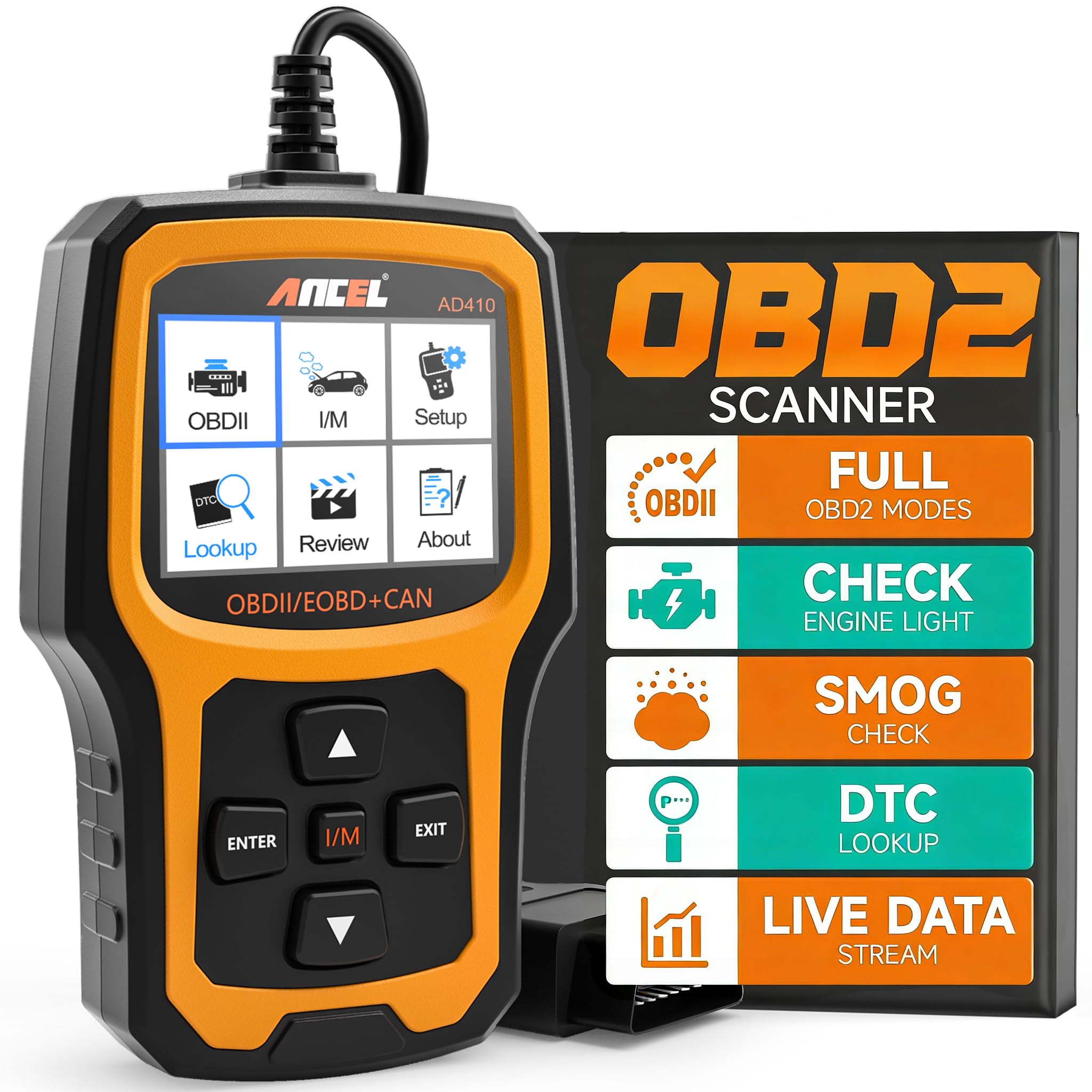
It is a solid budget choice for testing O2 sensors and clearing engine codes because it reads live data and runs O2 tests without needing subscriptions.
Pros
- Easy to use for quick checks and clearing codes.
- Built-in DTC library helps identify issues fast.
- No battery needed — it powers from the car.
Cons
- Only covers engine-related systems, not ABS or SRS.
- USB update process and manual can be confusing.
- Some vehicles may need engine-on for full data.
They plugged the AD410 into several cars and liked how fast it pulled live data. The color screen made graphs and numbers easy to read while watching O2 response and fuel trims.
He found the O2 sensor test helped confirm whether a sensor was slow or operating correctly before buying parts. The scanner showed short-term and long-term fuel trims, which made leaning or rich conditions clearer during road testing.
They used the tool to clear codes after fixes and appreciated the readiness checks before emissions tests. The menu is simple, though updating via USB on a PC felt fiddly and the included instructions left a few steps unclear.
V500 OBD2 Scanner
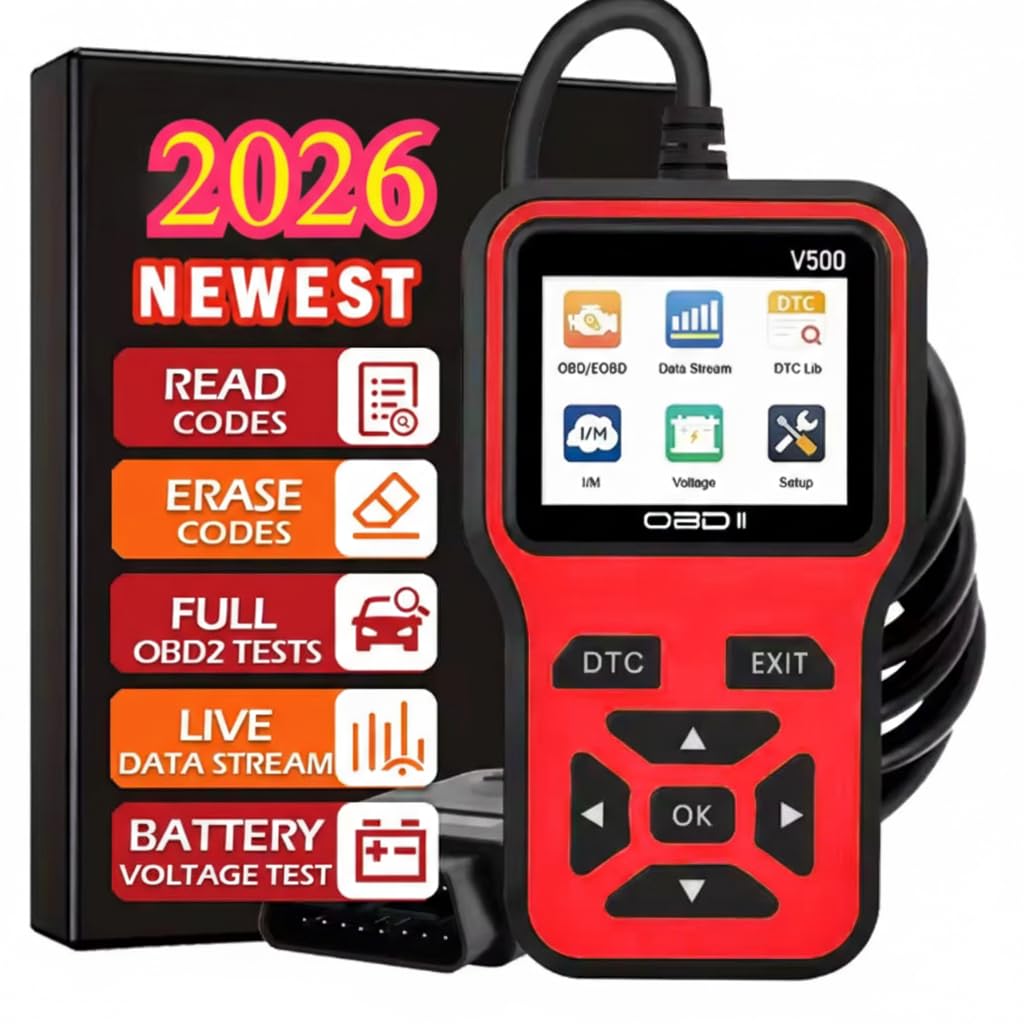
This is a solid pick for DIY mechanics who want a simple tool to test O2 sensors and read live data without fuss.
Pros
- Easy plug-and-play use, no apps required.
- Shows live data streams that help judge O2 sensor response.
- Small and light to carry in a glove box.
Cons
- Screen can be hard to read in bright sunlight.
- Menus feel a bit basic compared with pricier models.
- Limited warranty and few user reviews for deeper trust.
They connected the V500 to several cars and watched oxygen sensor readings change as the engine warmed up. The live data felt responsive and let them see how the O2 voltages moved with throttle changes, which made it easy to spot a slow or stuck sensor.
Navigation used simple buttons and a color-coded display. It took only a minute to plug in and pull codes; the built-in DTC lookup made the results clear without needing a phone or laptop.
On the downside, the display washed out in sun and some advanced diagnostic fans might miss extra features. Still, for routine O2 sensor checks and basic OBD2 troubleshooting, it worked well and saved time.
Buy link: V500 OBD2 Scanner
GearWrench Smart OBD2 Scanner

It is a strong value pick for mechanics who need bi-directional testing and live data without ongoing fees.
Pros
- Bi-directional controls let them actuate sensors and test O2 responses in real time.
- Free lifetime updates reduce long-term tool cost.
- Covers many manufacturers so it works on most shop cars.
Cons
- Some exotic or non-U.S. models may not fully communicate.
- Bluetooth-only means they must use a phone or tablet during testing.
- Occasional setup quirks require patience during first use.
They plugged the little dongle into several cars and the O2 sensor data came up fast on an Android tablet. Live data streams were smooth enough to watch voltage swings while revving the engine. That made it easy to see whether the sensor responded quickly or lagged, which helps decide if the sensor or wiring is the issue.
Using the bi-directional functions, they ran actuator tests and watched how the engine responded. That helped confirm some intermittent faults without pulling parts. It felt like a full shop tool for a fraction of the cost, especially when a quick actuator test ruled out a bad sensor.
A few vehicles did not expose every module, so they had to check compatibility before relying on it for rare imports. The Bluetooth app setup took a few minutes, but after registration and one firmware update the tool worked reliably for daily garage use.
FOXWELL NT604 Elite

It is a solid mid-range scanner for DIYers who want reliable oxygen sensor and system diagnostics without paying dealer prices.
Pros
- Clear live data helps spot a failing oxygen sensor quickly.
- Reads ABS, SRS, transmission and engine codes in one unit.
- Sturdy case and lifetime updates add long-term value.
Cons
- No advanced service functions like resets or relearns.
- AUTOVIN can fail on older or unusual vehicles.
- Lacks bidirectional tests for active component checks.
They tested the NT604 Elite on several cars and found its live data display especially useful for oxygen sensor work. It showed the sensor voltage swings and short-term/long-term fuel trim changes, so they could tell if the sensor was switching properly.
The scanner boots fast and worked right out of the box. The built-in DTC library and playback helped confirm intermittent O2 faults after a short drive. Often the device pointed to wiring or heater circuit issues, not just the sensor itself.
Users will like the rugged case and easy updates. It did not clear crash-related SRS history and it won’t do maintenance procedures, so they still needed shop tools for some fixes.
MOTOPOWER MP69033 OBD2 Scanner

It is a solid budget scanner for checking O2 sensor codes and basic engine diagnostics, and it gives clear live data for quick troubleshooting.
Pros
- Simple plug-and-play use for quick code reads.
- Clear, readable screen for live data and engine info.
- Wide vehicle compatibility for most OBD-II cars.
Cons
- Can’t access ABS, airbag, or other non-OBDII systems.
- Monochrome screen and basic interface feel dated.
- Limited advanced features compared with pro tools.
He plugged the MP69033 into the OBD-II port and it connected right away. Reading trouble codes and viewing live O2 sensor data was fast, so he could see voltage swings and heater status without fuss.
She liked the clear backlit display when checking oxygen sensor response at idle and during a drive. The real-time graph helped spot a sluggish sensor, though the single-color screen made fine details a bit harder to read than on pricier scanners.
They appreciated that the scanner draws power from the car and has a long, flexible cable. It handled VIN reads and freeze-frame data, which made confirming intermittent O2 sensor faults straightforward.
He found limits when deeper system access was needed. If someone wants ABS or airbag diagnostics, or advanced scripting, this unit won’t do it. For most home users who just need O2 sensor tests and basic engine codes, it worked reliably and saved a trip to the shop.
Innova 5210 Scanner
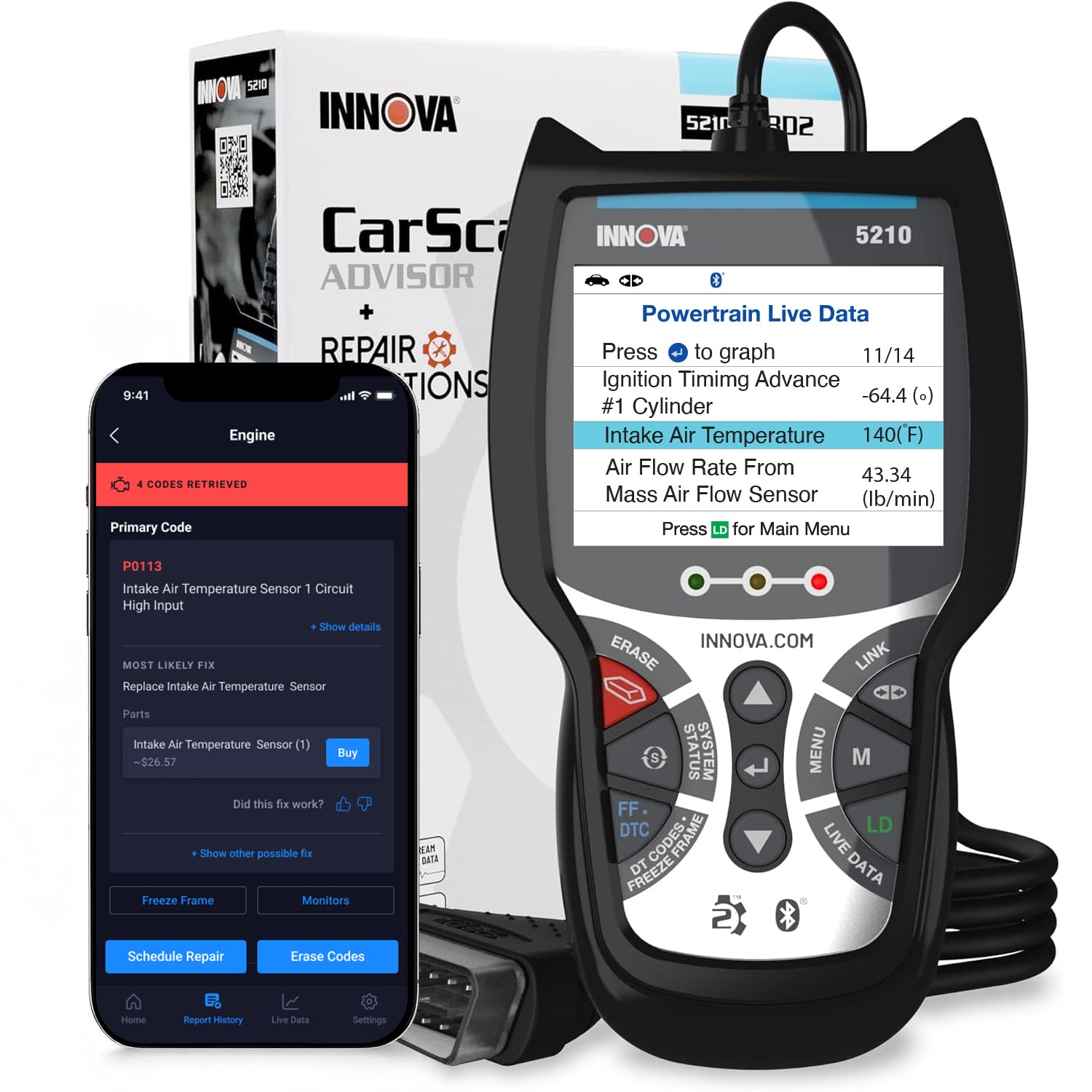
It’s a solid buy for DIYers who want reliable oxygen sensor data and basic battery checks without a subscription.
Pros
- Shows live O2 sensor readings and key engine data in real time.
- Built-in battery and alternator checks catch charging issues fast.
- Free RepairSolutions2 app gives practical repair guidance from mechanics.
Cons
- Bluetooth setup and app updates can be fiddly at first.
- Coverage for ABS or special modules may vary by vehicle.
- Doesn’t always point to the exact replacement part for a code.
They used this scanner on a few older and newer cars and liked how quickly it showed oxygen sensor voltages and fuel trims. Reading live O2 graphs made it easy to tell a slow or stuck sensor from wiring problems during a short road test.
They also tested the battery and alternator check after seeing a rough start. The scanner’s battery test delivered clear pass/fail info and helped rule out charging faults before digging deeper into emissions issues.
Pairing with the RepairSolutions2 app gave step-by-step repair ideas that matched what a local shop suggested. The app saved time, but the initial Bluetooth pairing and occasional software update slowed things down.
For anyone who wants straightforward O2 sensor data, basic battery checks, and guided fixes without recurring fees, this unit performs well for the price.
Yakry HC368Pro 2‑in‑1 Scanner
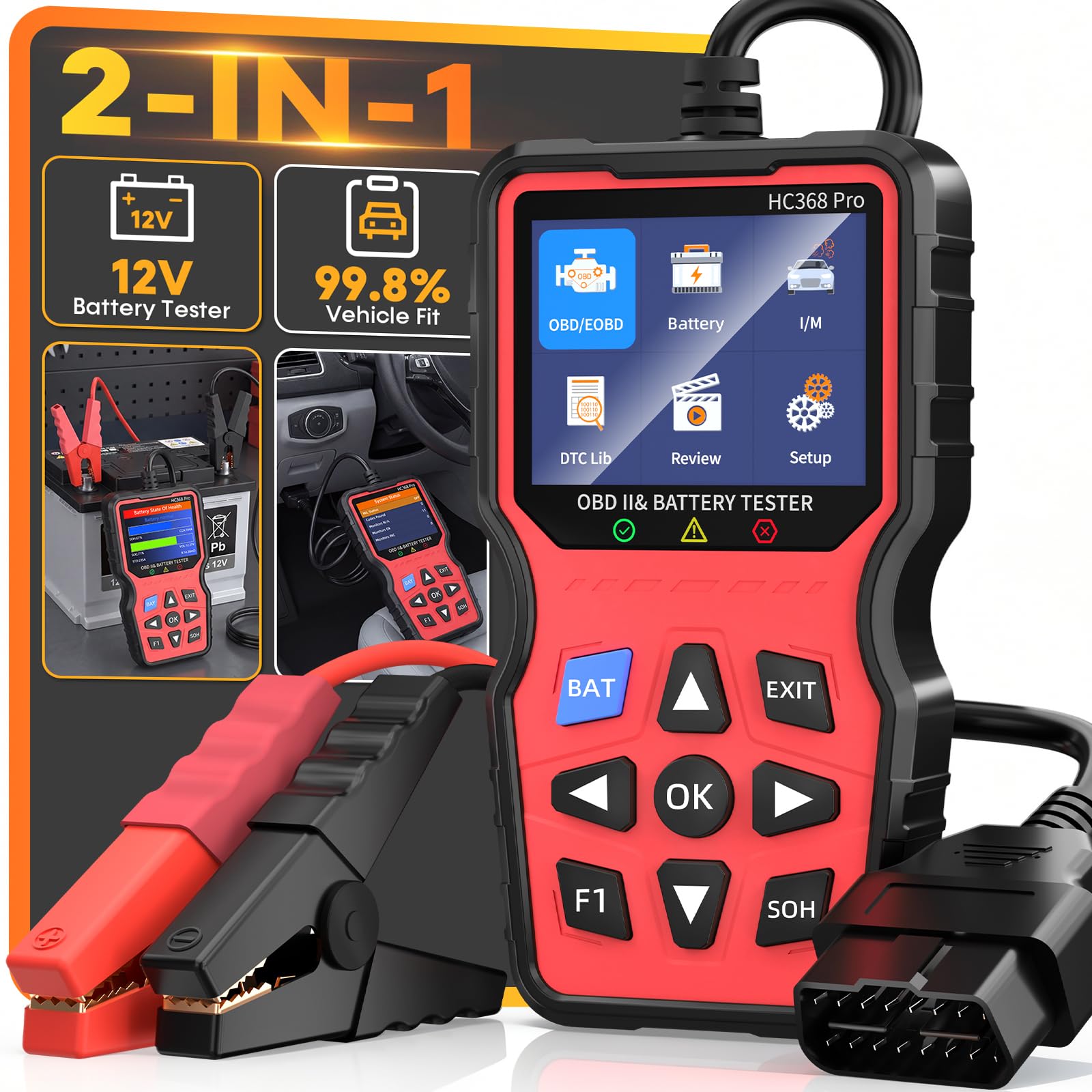
It is a solid buy for DIYers who want quick check‑engine reads plus a reliable battery health check in one handheld tool.
Pros
- Quick code reads and clear explanations on the screen.
- Built‑in battery tests give useful numbers for CCA, SOC, and SOH.
- Easy to use with a bright color display and live data graphs.
Cons
- No storage case included, so it can get banged up in a toolbox.
- Screen and menus are simple but feel a bit dated.
- Not a substitute for full shop diagnostics on complex problems.
They plugged it into several older and newer cars and it found the check‑engine codes almost instantly. The built‑in DTC definitions saved time because they did not need to look up cryptic codes online.
The battery tester felt precise in hands‑on checks. It reported charge, internal resistance, and cold‑cranking ability in clear percentages and symbols. Running a pre‑trip battery check took only minutes and gave confidence before a long drive.
Using the live data view made intermittent problems easier to spot. The graphs and streaming values showed RPM and sensor changes in real time. For the price, it handled engine and basic transmission faults well, though a shop tool would be needed for deep diagnostics.
UJS SafeScan OBD2 Scanner
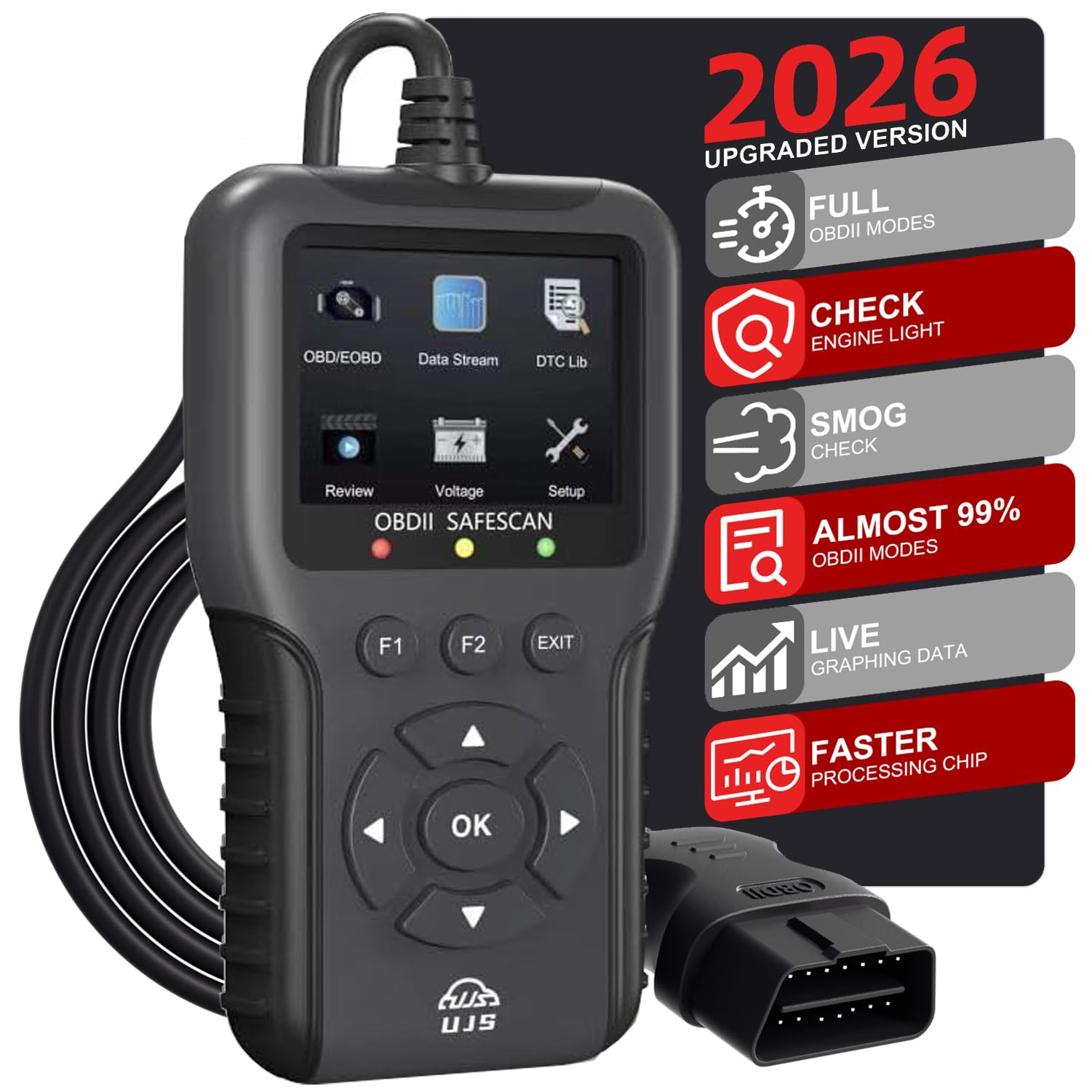
It is worth buying for anyone who wants a fast, reliable way to test oxygen sensors and check engine readiness before paying a shop.
Pros
- Runs O2 sensor tests and shows live data so you can see sensor response in real time.
- Fast plug-and-play use—scans engine health in about a minute.
- Built-in code explanations and I/M readiness help avoid unnecessary repairs.
Cons
- Only reads engine codes; it won’t diagnose ABS, airbags, or transmission faults.
- Screen is small, so long data streams feel a bit cramped.
- Cloud printing is handy but requires extra setup for reports.
They used the scanner on a 2010 sedan to test oxygen sensor performance and liked how quickly the O2 response showed on the live data screen. The unit pulled real-time voltage traces, which helped confirm a slow sensor without guessing.
They found the read-and-clear flow simple—plug it in, turn the key, then watch codes appear. I/M readiness lights made pre-inspection checks faster, and battery voltage monitoring caught a weak battery during testing.
The device felt solid in hand and fit a glove box for weekend troubleshooting. Small screen limits long live-data viewing, but the clear menus and code descriptions made it easy to decide whether a sensor swap was needed before visiting a mechanic.
Buying Guide
When choosing a car code reader for oxygen sensor testing, they should check compatibility with the vehicle’s OBD-II system. Confirm the reader supports live-data streaming and can read oxygen sensor (O2) or wideband sensor parameters.
They should look for graphing or real‑time plotting of sensor voltage and fuel trim. Visual plots make it easier to spot slow responses or stuck values. A reader that records data for later review adds value during road tests.
Battery and connection type matter. A handheld unit with its own power lasts longer for field work. Bluetooth or Wi‑Fi adapters work with phones and tablets but require stable pairing.
Ease of use affects accuracy and speed. Clear menus and readable live-data screens reduce mistakes. Multilingual menus and simple navigation help less technical users.
Build quality and software updates are important. Durable housings stand up to shop use. Regular firmware updates fix bugs and add vehicle coverage.
Price should match required features. Basic code readers can read and clear O2 fault codes. Advanced tools add waveform capture, graphing, and freeze-frame data. They should balance cost with the needed diagnostics.
Warranty and support reduce risk. A solid warranty and accessible tech support help if the device fails or needs vehicle-specific guidance.
| Feature | Why it matters |
|---|---|
| OBD-II and O2 parameter support | Ensures the reader can access sensor data |
| Live data & graphing | Reveals sensor response and trends |
| Data logging | Allows review after road tests |
| Power & connectivity | Determines usability in-field or via phone |
| Updates & support | Keeps the tool current and reliable |
Editor’s Choice
The Autel MaxiScan MS509 stands out for oxygen sensor testing. It reads live data, shows O2 sensor voltages, and displays short-term and long-term fuel trims. Technicians and DIYers find its real-time graphs helpful for spotting slow responses or stuck values.
It offers built-in DTC lookup and freezes frame data. That saves time when confirming a faulty sensor versus wiring or heater circuit problems. It also supports OBD-II modes that are vital for emissions-related diagnostics.
The unit is compact and easy to use with one-hand operation. Menus are clear, buttons are responsive, and the backlit display helps in dim garages. Battery life is solid, and power via the vehicle’s OBD-II port prevents mid-test shutdowns.
Key features at a glance:
- Live O2 sensor voltage display
- Fuel trim and short/long term data
- DTC definitions and freeze frame
- Compact handheld design
It balances cost, functionality, and ease of use. That makes it a reliable pick for those who need consistent O2 sensor testing without professional shop expense.
Conclusion
The right code reader makes oxygen sensor testing faster and more reliable. It helps pinpoint sensor faults, verifies heater circuits, and shows real-time readings that guide repairs.
Professionals and DIYers should weigh features like live data, O2 sensor tests, and freeze-frame help. Ease of use and clear displays reduce guesswork during diagnosis.
Price and build matter. A mid-range scanner often balances useful functions and durability without extra cost for features most users never need.
They should pick a tool that matches their skill level. Simple readers suit beginners, while advanced tools benefit techs who work on many makes and models.
Recommended features to look for:
- Live O2 sensor voltage and current
- Ability to read/erase codes and view freeze-frame
- Graphing or waveform display for sensor response
- Wide vehicle compatibility and software updates
A good scanner saves time and helps avoid replacing perfectly good sensors. It also prevents missed engine issues by confirming whether a sensor truly fails or if another problem affects readings.
FAQS
What does an O2 sensor code reader do?
It reads fault codes from the car’s computer that relate to oxygen sensors. It shows live data so the user can see sensor voltage and response time.
Can any OBD-II reader test O2 sensors?
Not all can. Some basic readers only read codes. A more advanced reader or scan tool displays live data and graphs needed for proper O2 sensor testing.
Does it work on all cars?
Most scanners work on vehicles made after 1996 in the U.S. Users should check the device compatibility list for specific makes and models.
Is live data necessary?
Yes. Live data shows how the sensor behaves while the engine runs. That helps determine if the sensor is slow, stuck, or switching properly.
How much should one spend?
A decent O2 sensor-capable reader can cost from $70 to $300. Higher-priced models offer better displays, graphing, and advanced tests.
Can a code reader replace a mechanic?
It helps diagnose problems but does not replace professional repair skills. Technicians use the reader plus experience and tools to confirm and fix issues.
What features matter most?
Look for live data, graphing, freeze frame, readiness monitors, and wideband support if needed. Clear display and easy menus speed up diagnosis.
