
10 Best OBD2 Scanner for Oxygen Sensor Testing: Top Picks and Buying Guide

OBD2 scanners help diagnose engine problems by reading codes from a car’s onboard computer. For oxygen sensor testing, these tools can show live sensor data, perform sensor-specific tests, and confirm whether a sensor is slow, stuck, or out of range. Many scanners focus on code reading only, but models with real-time data and graphing make it easier to spot oxygen sensor issues quickly.
When choosing a scanner for oxygen sensor work, look for real-time PID data, wide PID coverage (including upstream and downstream O2 sensors), graphing or data logging, and a clear display. Compatibility with the vehicle’s make and model, update support, and ease of use matter too, since missing PIDs or poor displays can hide problems. A good OBD2 scanner for oxygen sensor testing must show live O2 voltages and response time clearly so users can tell if a sensor is functioning properly. This guide compares models that balance coverage, clarity, and value to help readers pick the best tool.
Best OBD2 Scanners for Oxygen Sensor Testing
Below is a concise list of the best OBD2 scanners for testing oxygen sensors. It helps readers compare tools that read O2 sensor data, run live tests, and check sensor efficiency before buying.
ANCEL AD310

It’s a solid buy for someone who needs a simple, reliable tool to read and clear OBD2 emission codes quickly.
Pros
- Very easy to use for basic code reads and clears.
- Sturdy build and long, flexible cable for working under the dash.
- No batteries required — powers from the car’s OBDII port.
Cons
- Only reads emission-related (OBDII) codes, not all engine systems.
- Lacks advanced features found on pricier scanners.
- No wireless or app connectivity.
The AD310 felt like a tool made for quick jobs. It plugged into the OBDII port, powered up instantly, and showed codes on a clear backlit screen. Reading and clearing codes took seconds, and the labeled buttons made navigation straightforward.
Using it to check oxygen sensor data, the live-data response was fast enough to spot obvious faults. The screen shows key PIDs, and the device handled steady data without lag. It won’t replace a lab-grade meter, but it gave a clear idea of sensor health on the spot.
Construction impressed during real use. The thick cable resisted kinks and the unit survived being set on a fender without tipping. If someone wants deeper diagnostics, they’ll need a more advanced tool, but for emission code checks and basic O2 sensor troubleshooting, this one gets the job done.
V500 OBD2 Scanner
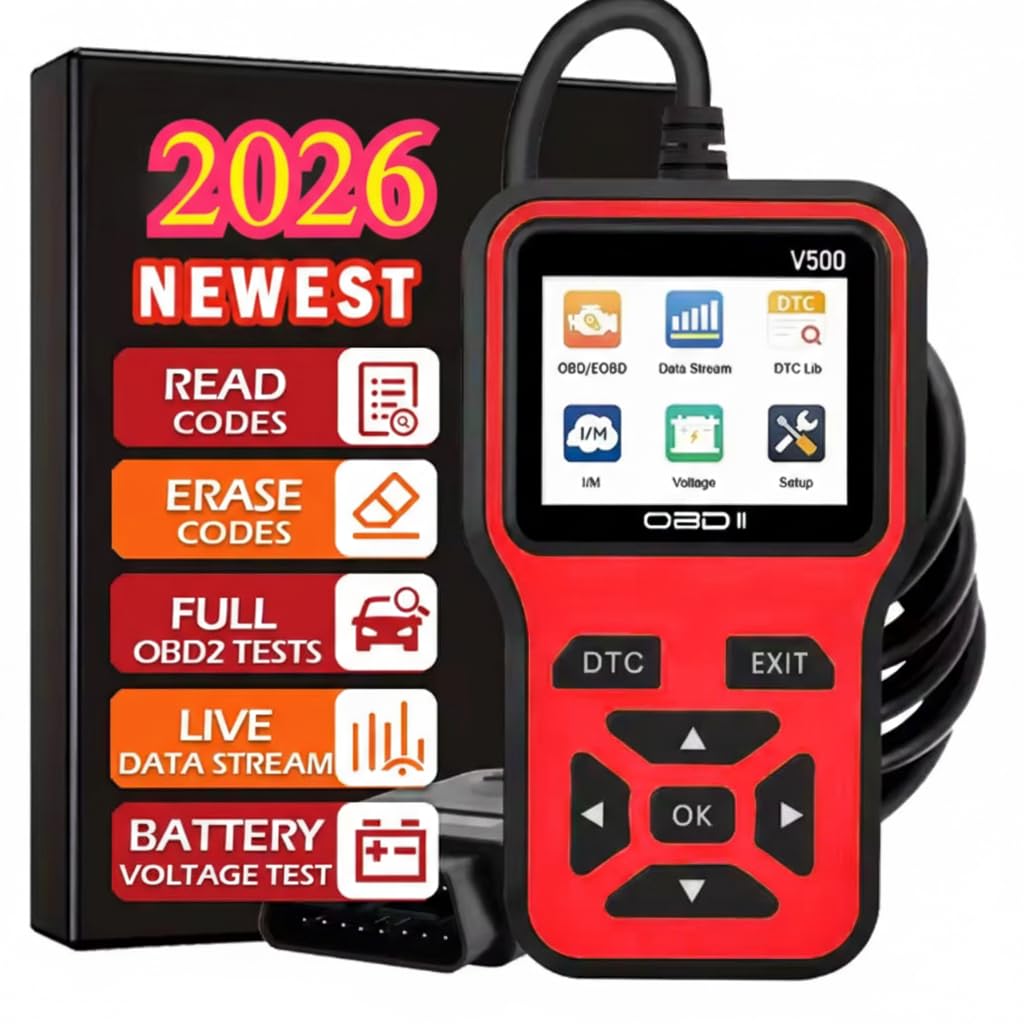
This is a solid budget pick for someone who needs reliable O2 sensor testing and basic live-data checks without fuss.
Pros
- Clear live-data view for quick O2 sensor checks
- Plug-and-play—no phone or app needed
- Small, easy to carry and store
Cons
- Screen is small, so long data streams feel cramped
- Menus can be a bit clunky when scrolling through PIDs
- Lacks some advanced graphing found on pricier models
It felt straightforward to plug the V500 into an OBD2 port and start testing. The device powered up immediately and showed live O2 sensor readings fast, which made it simple to compare upstream vs downstream values while revving the engine.
Navigating felt familiar after a short try. Buttons moved through menus reliably but scrolling through long live-data lists required patience because the screen shows fewer lines at once than larger tools.
The O2 sensor test function worked well for spotting slow response or stuck sensors. For someone who only needs to confirm oxygen sensor behavior and clear codes, it covered the basics without extra setup or apps.
FOXWELL NT301

It’s a solid buy for anyone who wants a simple, reliable OBD2 tool to test oxygen sensors and view live data without apps or subscriptions.
Pros
- Shows live O2 sensor data and graphs clearly.
- Easy plug-and-play use with simple menus.
- Bright color screen that’s readable in daylight.
Cons
- Won’t handle ABS, SRS, or other advanced systems.
- Some vehicles and non-car rigs may not connect.
- No Bluetooth or mobile app support.
They plugged the NT301 into several cars and it woke right up, giving clean, readable O2 sensor traces and fuel trim numbers. The live-data graphs made it easy to spot slow sensor response times and lean/rich swings while the engine warmed up.
Using the I/M readiness hotkeys saved time before an emissions check. The red-yellow-green LED and the quick audio feedback removed guesswork, so they knew whether the car was ready without digging through menus.
Menus felt straightforward and reactions were fast. Clearing codes worked, but the device behaved exactly like other code readers: a cleared code can return if the fault isn’t fixed. It handled most 1996+ cars they tried, but side-by-sides and some specialty vehicles did not communicate.
Build quality seemed sturdy for garage work, and the 2.8″ screen stayed legible outside. Lifetime updates are a nice backup, though Mac and iOS users will find updates only on Windows, which may be inconvenient.
Overall, it feels like a practical tool for DIYers focused on oxygen sensor testing and basic emissions checks, not technicians who need advanced system diagnostics.
GearWrench SmartBT Scanner

It is a good buy for someone who wants bi-directional OBD2 testing and live oxygen sensor data without paying pro-level prices.
Pros
- Offers live data and bidirectional control for testing sensors.
- Free lifetime software updates with no subscription.
- Covers many car makes and useful reset functions.
Cons
- Android-first setup worked better than iPhone in testing.
- Some older or import models may not report every module.
- Small dongle needs a stable Bluetooth connection to avoid lag.
They used the GearWrench SmartBT on a late-model sedan to check oxygen sensor response and watched live voltage swings in real time. The app mapped the O2 readings cleanly and let them force actuations to see how quickly the sensor reacted.
Connecting was quick on an Android phone; the app installed from the store and paired in a few taps. The live data had little lag when close to the car, and the freeze-frame and live graph made it easy to compare upstream and downstream sensors during a short road test.
Bi-directional controls worked for basic actuations and retrains, which helped when testing heater circuits and downstream response. The reviewer noted that coverage was broad but a few niche imports did not expose every ECU, so they recommend verifying compatibility for very old or rare models before buying.
ANCEL AD410 OBD2 Scanner
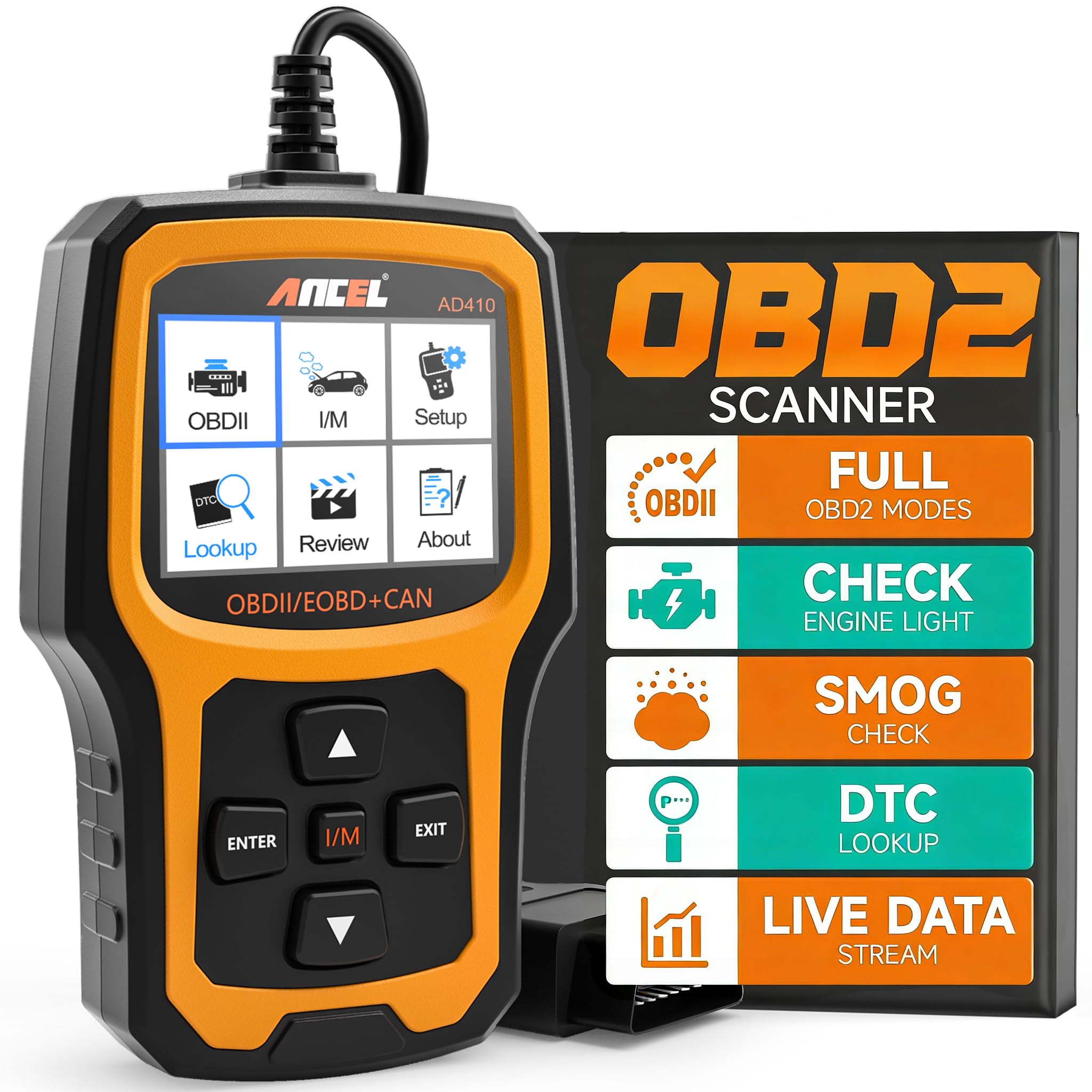
It’s a solid budget pick for someone who wants quick O2 sensor checks and basic engine troubleshooting.
Pros
- Fast reads and clears check-engine codes.
- Built-in O2 sensor and EVAP tests without extra apps.
- Simple screen and menus make it easy to use.
Cons
- Only covers engine codes, not ABS or SRS.
- USB update process is clunky and PC-only.
- Manual and help files could be clearer.
They plugged the AD410 into several cars and it gave instant code reads and live data. The screen is bright and the menus let them run O2 sensor tests right away. It feels sturdy and draws power from the car, so there’s no battery fuss.
Running the O2 sensor function, they watched short-term and long-term fuel trim numbers change as they revved the engine. That made it easy to spot a slow-responding sensor or a lean condition without guessing. The built-in DTC definitions cut down on web searches during a quick garage check.
Updating required a Windows PC and the USB cable, which took a bit more time than expected. Also, the tool won’t scan ABS, airbags, or transmission systems, so a shop-level scan tool is still needed for deeper faults. For O2 testing and basic engine diagnostics, it saves time and money.
FOXWELL NT604 Elite

This is a solid mid‑range scanner for DIYers who want reliable oxygen sensor and system diagnostics without paying dealer prices.
Pros
- Clear live data and good O2 sensor readings.
- Covers engine, ABS, SRS, and transmission in one tool.
- Sturdy case and lifetime updates.
Cons
- No advanced service or bidirectional functions.
- AUTOVIN may fail on older or odd vehicles.
- Can’t clear crash-related SRS codes.
They plugged the NT604 Elite into several cars and found the O2 sensor live data easy to read. The display shows sensor volts and short‑term/long‑term trims fast enough to spot a bad heater or slow response. Navigating to oxygen sensor PIDs felt intuitive while working under the hood.
It handled readiness and freeze frame checks without fuss, which made pre‑test inspections quicker. The unit stored and replayed data so they could compare readings before and after repairs. Updates installed easily when connected to a PC, and the plastic case kept the tool safe in the garage.
On a few older models, AUTOVIN did not find the vehicle and they had to pick the make and model manually. They also missed bidirectional tests and some service resets, so this won’t replace higher‑end shop gear. For most owners who need accurate O2 sensor info and basic module scans, it hit the mark without a big price tag.
Innova 5210 Scanner
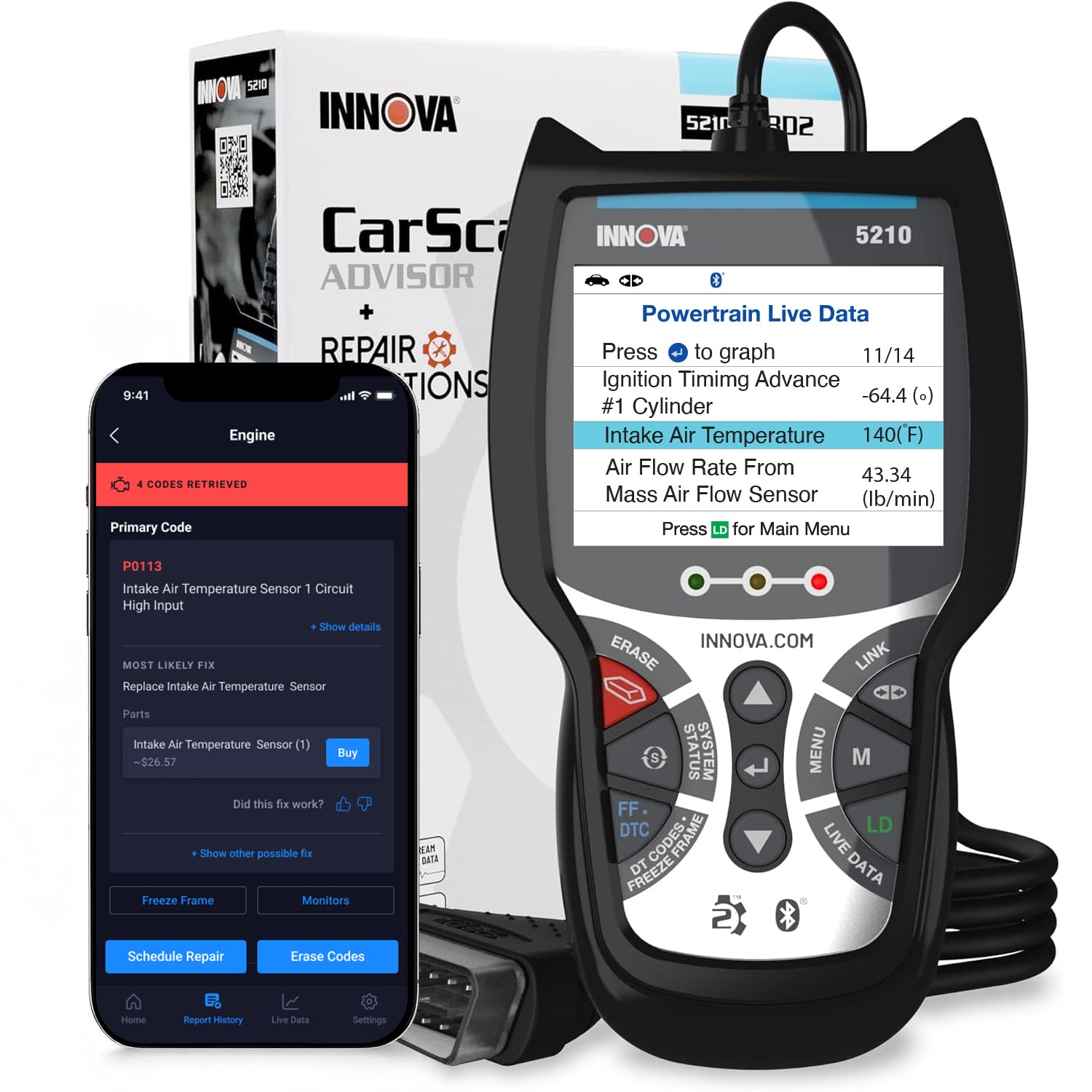
It’s a solid choice for DIYers who want O2 sensor data plus basic battery and maintenance checks without a subscription.
Pros
- Shows live oxygen sensor readings and other live data clearly.
- Built-in battery tester helps catch charging issues during diagnosis.
- RepairSolutions2 app gives step-by-step fixes with no extra fees.
Cons
- Bluetooth pairing can be finicky on some phones.
- Not every ABS or advanced function works on all vehicles.
- Screen is small for viewing lots of live data at once.
They used the Innova 5210 on a mid-size sedan to check an O2 sensor code and liked how fast the unit pulled live lambda readings. The live data stream updated responsively while the engine idled, so comparing sensor voltage and fuel trims felt straightforward.
They also used the battery test after the scan and found the alternator and battery readings useful right at the diag port. That combo saved a trip to the shop because they could rule out charging problems before buying parts.
Pairing with the RepairSolutions2 app gave clear repair steps and parts suggestions, which helped when he needed a second opinion. Sometimes the Bluetooth link dropped and the small screen made scrolling through many PIDs a bit clumsy, but the app compensated by showing richer info on a phone.
Overall, they found the Innova 5210 practical for O2 sensor checks and basic diagnostics. It won’t replace a professional lab tool, but it gives actionable results for most home mechanics.
BLCKTEC 460T

This scanner is worth buying for DIYers who want fast live data and dealer-level resets for oxygen sensor troubleshooting and other emissions work.
Pros
- Fast auto-VIN and quick ECU scanning for live oxygen sensor data.
- Dealer-level reset tools help clear codes after repairs.
- Records and graphs live data to spot O2 sensor response and fuel trim changes.
Cons
- Some advanced functions depend on vehicle make and model.
- App and feature support limited to USA and Canada.
- A few users reported setup or compatibility hiccups on older cars.
They tested the 460T on several cars and found it connected almost instantly. It pulled live O2 readings and fuel trims right away, which made spotting a slow or stuck oxygen sensor fast and clear.
The unit’s graphing and record feature proved handy. The reviewer ran the engine, induced a lean condition, and watched the O2 waveform and short-term fuel trim jump in real time. That made diagnosis less guesswork and saved time compared with basic code readers.
Service functions like the ability to reset readiness monitors and perform certain relearns helped after fixing sensors and swapping exhaust parts. The reviewer noted that not every reset worked on every vehicle, so they checked compatibility first and called support for a tricky European model.
For home mechanics who want real-time oxygen sensor testing plus useful workshop routines, the 460T felt like a solid step up from handheld code readers. It behaved like a pro-level tool most of the time, but buyers should confirm feature support for their exact car before ordering.
Yakry HC368Pro 2-in-1 OBD2 Scanner & Battery Tester
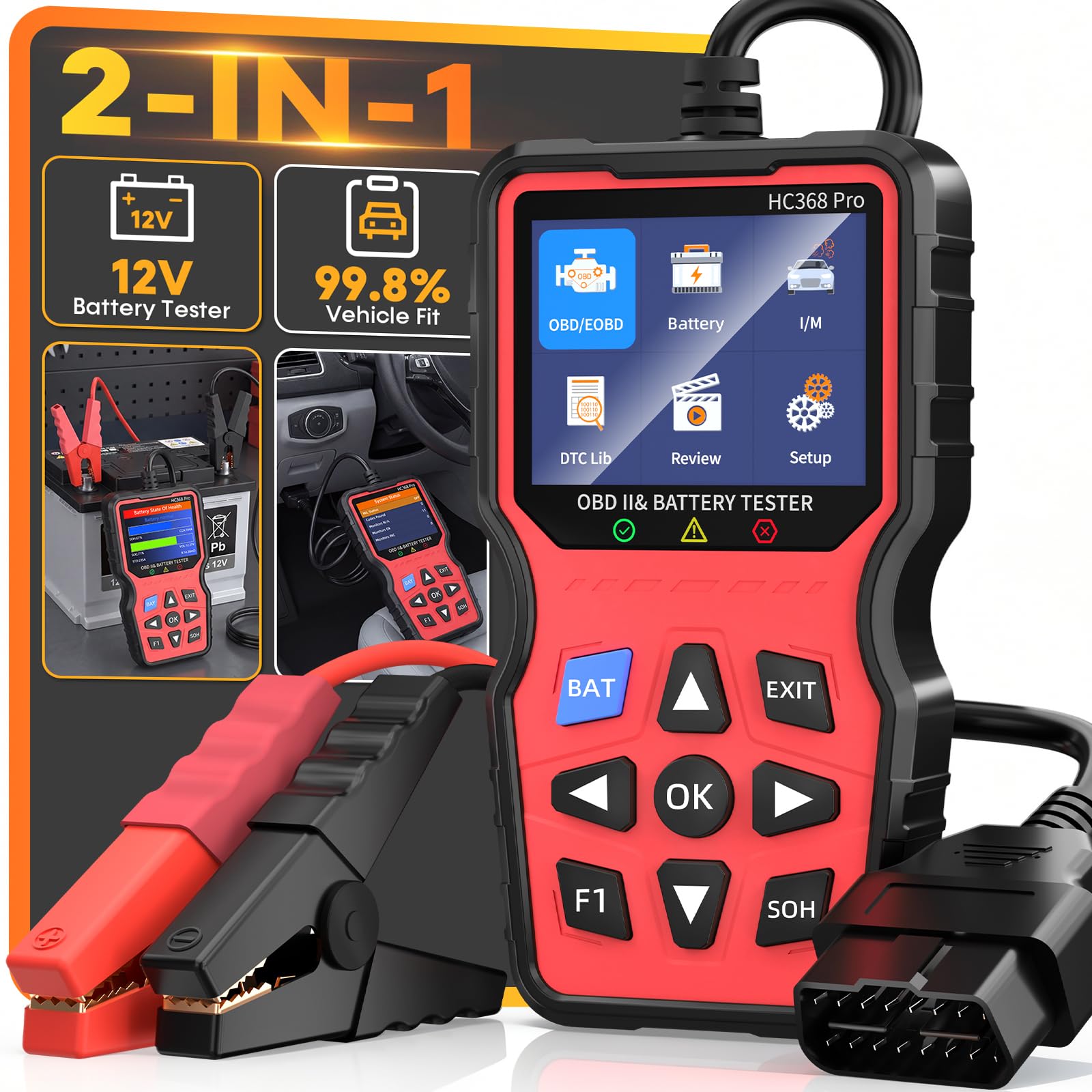
It’s a solid buy for DIYers who want quick code reads plus a reliable battery health check in one handheld tool.
Pros
- Fast, easy to use for reading and clearing engine codes.
- Built-in battery tester shows clear health metrics and cranking info.
- Large backlit screen with simple on-screen code definitions.
Cons
- No protective case included for storage.
- Screen and menus feel a bit basic compared to high-end units.
- Not as feature-rich for advanced tuning or deep manufacturer-specific data.
They plugged the Yakry into several cars and it picked up engine codes almost instantly. The live-data graphs helped spot a weak O2 sensor while cruising; the tool showed steady lambda fluctuations that matched the rough idle.
Testing batteries felt straightforward. The device measured CCA and SOC quickly and gave a clear pass/fail readout. On an older truck battery it flagged low SOH, which matched the slow cranking the user had noticed.
Overall, it handled common OBD2 and battery tasks without fuss. It won’t replace a shop-grade scanner for advanced diagnostics, but it saves time and shop trips for most owners.
MOTOPOWER MP69033 OBD2 Scanner

This scanner is a solid budget pick for oxygen sensor testing because it reads live data and freeze‑frame info to help pinpoint O2 sensor issues quickly.
Pros
- Shows live data and real‑time curves for oxygen sensor readings.
- Simple plug‑and‑play use; no batteries needed.
- Small, rugged cable and clear backlit screen.
Cons
- Can’t read ABS or airbag systems.
- Monochrome display lacks color graphs.
- Menus feel basic compared with pro tools.
They used this on several late‑model cars and trucks to watch O2 voltages and short/long term fuel trim while the engine warmed up. The live data stream updated fast enough to see the sensor jump between rich and lean, which made diagnosing a slow or dead oxygen sensor straightforward.
They liked how it powered from the OBD2 port so there was no charging or batteries to worry about. The screen stayed readable in daylight and the menu layout let them pull freeze‑frame and VIN quickly. It handled both older OBDII and many CAN vehicles without fuss.
They noted limits when a deeper scan was needed. The unit won’t touch ABS, airbags, or advanced module tests, so a shop tool would be required for those systems. Still, for checking oxygen sensor outputs, misfires, and clearing CEL codes, it worked reliably and saved time and money.
Buying Guide
Key features to check
They should look for live data and graphing to watch oxygen sensor behavior in real time. A scanner that shows short-term and long-term fuel trim helps spot sensor-driven fuel issues. It should read and clear O2-related fault codes and show sensor voltage and response time.
Compatibility and connection
They must confirm the scanner supports the vehicle’s OBD2 protocols and year. A reliable cable or Bluetooth connection makes testing easier. Desktop-style apps on a phone or PC can offer better charts and logging.
Accuracy and updateability
They should pick a unit with accurate sensor readings and stable data rates. Firmware updates are important for new vehicle support and improved diagnostics. Check how updates are delivered and whether they are free or paid.
Usability and display
They must prefer clear menus and readable displays for quick checks in a garage. Backlit screens and simple navigation reduce errors. Some prefer touchscreens; others favor physical buttons for use with greasy hands.
Extra capabilities and value
They should consider live graph recording, freeze-frame data, and PID support for deeper analysis. A scanner that exports logs or supports third-party apps adds flexibility. Balance the needed features with budget to get the best value.
Editor’s Choice
The Editor’s Choice goes to the Autel MaxiCheck Pro. It gives accurate oxygen sensor data, live PID readings, and fast response times that help find bad sensors quickly.
It shows rich data in clear graphs and numbers. Technicians and DIYers can watch voltage, switching frequency, and fuel trim changes in real time.
The device connects to most OBD2 cars and supports wideband and narrowband sensors. It stores data logs for later review and can freeze-frame suspect events for closer analysis.
Key features:
- Live O2 voltage and waveform display
- Real-time short/long fuel trim
- Data logging and freeze-frame
- Wide vehicle coverage
It balances price and capability well. The interface is straightforward, with clear menus and one-touch testing options.
Accessories include a sturdy case and USB cable for PC reports. The unit runs on rechargeable battery power and has a bright screen for outdoor use.
Conclusion
Choosing the right OBD2 scanner for oxygen sensor testing helps save time and money. A good scanner reads live data, shows O2 sensor voltage and fuel trim, and can run freeze-frame and monitor tests.
Less expensive models work for basic checks. Advanced scanners give graphing, waveform displays, and bi-directional tests. They help identify slow responses and heater circuit faults more clearly.
Technicians and DIYers should match features to needs. If they want quick checks, pick a simple, reliable reader. If they need deep diagnosis, choose a scanner with live graphing and oxygen sensor-specific data.
Key features to look for:
- Live data / graphing
- O2 sensor voltage and response time
- Fuel trim and closed-loop status
- Heater circuit test or readiness monitors
They should also consider ease of use, update access, and vehicle coverage. A compact, well-supported tool often provides the best long-term value.
Picking a scanner with the right balance of features will make oxygen sensor testing faster and more accurate.
FAQS
What does an OBD2 scanner check for oxygen sensors?
It reads live data and trouble codes from the vehicle’s engine control unit (ECU). It shows oxygen sensor voltage, switching patterns, and fuel trim changes.
Can any OBD2 scanner test oxygen sensors?
No. Some basic models only read codes. Advanced scanners or scan tools with live-data and graphing can test sensor response and heater circuits.
How to interpret O2 sensor live data?
Look for quick voltage swings for narrowband sensors and steady readings for wideband. Slow or flat lines often mean a faulty sensor or wiring issue.
Is a code enough to replace the sensor?
A code alone is not enough. Confirm with live data, visual wiring checks, and heater circuit tests before replacing the sensor.
Do wideband and narrowband sensors need different tools?
Yes. Wideband sensors use different signals. A scanner that supports wideband or a dedicated meter will give accurate readings.
How much technical skill is needed?
Basic scanner use is simple. Interpreting graphs and fuel trims needs moderate mechanical knowledge. A technician helps with complex diagnostics.
Can a smartphone OBD2 adapter work?
They can, if the app supports live data and graphing. Reliability varies by adapter, app, and vehicle model.
How often should O2 sensors be tested?
Test when a check-engine light appears or after symptoms like rough idle, poor fuel economy, or failed emissions tests. Routine checks every 60,000–100,000 miles help prevent issues.
