
P0101 Causes — What Triggers the Mass Air Flow Sensor Code and How to Fix It

P0101 means your engine’s computer detects the Mass Air Flow (MAF) sensor reporting airflow that does not match expected values.
Most common causes: dirty MAF sensor (65% of cases), clogged air filter, vacuum leaks after the MAF, loose intake ductwork, or a failing sensor.
Start with the air filter and MAF cleaning before replacing anything. These two steps fix P0101 more often than all other repairs combined.
Your check engine light came on. You pulled the code. P0101. Now you’re staring at a screen wondering if this means a $400 sensor replacement or something simpler. Most people jump straight to buying a new MAF sensor. That’s the wrong move. Here’s what actually triggers this code — and what to check first.
The P0101 diagnostic trouble code lives in every OBD2-equipped vehicle sold in North America since 1996. It’s one of the top 15 most frequent check engine light codes across all makes and models. But the fix isn’t always the same. Understanding what the code actually measures changes everything about how you approach it.
What Does the P0101 Code Actually Mean?
P0101 stands for “Mass Air Flow Sensor Circuit Range/Performance.” Your car’s computer — the ECM or PCM — watches the MAF sensor constantly. The MAF sensor measures how much air enters the engine. The computer then calculates how much fuel to inject. P0101 triggers when the reported airflow falls outside the range the computer expects for current driving conditions.
Think of it like a scale that’s reading 80 pounds when you know you weigh 160. The computer doesn’t trust the number. It knows engine RPM, throttle position, intake manifold pressure, and ambient temperature. From those inputs, it predicts roughly what airflow should be. When the MAF sensor disagrees significantly and consistently, the computer sets P0101.
This is not the same as P0100 (MAF circuit malfunction) or P0102 (MAF signal low). P0101 specifically means the sensor works electrically but its reading makes no sense compared to what the engine is actually doing. That distinction matters for diagnosis.
P0101 = sensor reports implausible airflow, not no airflow. The circuit is intact. The signal exists. It’s just wrong. This means electrical testing alone won’t catch every problem — you need to look at the mechanical side too.
The 5 Most Common Causes of a P0101 Code

Every P0101 diagnosis should start with the simplest, cheapest checks first. Here are the five causes ranked by how often they appear in real repair data — not by part cost or complexity.
1. Dirty or Contaminated MAF Sensor
This is the number one cause. Dirt, oil, dust, and debris coat the MAF sensor’s hot wire or hot film element over time. The sensor works by measuring how much current it takes to keep a tiny wire at a set temperature as air passes over it. When that wire gets coated in gunk, the reading drifts. The computer sees airflow numbers that don’t line up with reality. P0101 sets.
Oil-contaminated MAF sensors are especially common on vehicles with aftermarket oiled air filters. Too much oil on the filter migrates downstream and bakes onto the sensor element. The sensor can’t read airflow accurately through the oil film. A $12 can of MAF cleaner solves this in 10 minutes on most vehicles.
Never use brake cleaner, carb cleaner, or compressed air on a MAF sensor. Only use MAF-specific cleaner. Other solvents leave residue. Compressed air can shatter the delicate sensor element. One wrong spray and you’ll need that $400 replacement after all.
2. Clogged or Dirty Engine Air Filter
A restricted air filter chokes airflow into the engine. The MAF sensor reports low airflow because low airflow is actually happening. But the computer sees throttle position and RPM suggesting more air should be moving. The mismatch triggers P0101. This is not a sensor problem — the sensor is telling the truth. The filter is the problem.
Check your air filter first. Hold it up to a light source. If you can’t see light through the filter media, it’s clogged enough to potentially trigger airflow codes. Replacement filters cost $15–35 on most passenger vehicles and take under 5 minutes to swap. Many P0101 codes disappear immediately with a new filter and a code clear.
3. Vacuum Leaks After the MAF Sensor
Any air that enters the engine after passing the MAF sensor is unmetered air. The sensor measured X amount of air. But the engine actually gets X plus the leak amount. The oxygen sensors detect the lean condition this creates. The computer sees a mismatch between measured airflow and actual combustion results. P0101 is the result.
Common leak points include intake manifold gaskets, throttle body gaskets, brake booster hoses, PCV hoses, and cracked intake boots. These leaks often produce a hissing sound at idle and may cause rough running. A smoke test is the definitive way to find them. Spraying carb cleaner around suspected leak points while watching live MAF data works as a DIY alternative — RPM changes when spray hits the leak.
4. Intake Air Leaks or Loose Ductwork
The plastic ductwork between the MAF sensor and the throttle body cracks, loosens, or gets reinstalled incorrectly after other repairs. Even a small gap lets unmetered air in. The clamp holding the intake tube to the throttle body loosens over years of heat cycling. The rubber intake boot develops hairline cracks on the underside where you can’t easily see them.
This cause is frustrating because it’s mechanically simple but visually subtle. Inspect every inch of intake ducting with a flashlight. Flex the rubber boots. Look for cracks that open when the engine torques under load. A surprisingly large number of P0101 codes trace back to a loose clamp after someone replaced an air filter and didn’t fully tighten everything.
5. Failing or Failed MAF Sensor
The sensor itself can fail. Internal contamination that cleaning can’t remove, electrical degradation of the sensing element, or internal circuit board failure all cause permanent P0101 codes. This is the most expensive fix and should be the last thing you try — not the first.
A genuinely dead MAF sensor usually shows other symptoms beyond just the code. The car may stall, hesitate badly, refuse to rev, or enter limp mode. Before condemning the sensor, check live data with a scan tool. At warm idle, most 4-cylinder engines should show roughly 2–5 grams per second of airflow. At wide-open throttle, expect readings 10–15 times higher. A sensor stuck at one value regardless of RPM is dead. One that reads inconsistently might just need cleaning.
Symptoms You’ll Notice When P0101 Is Active
The check engine light is the obvious sign. But P0101 rarely shows up alone in the symptoms department. Your car will tell you something is wrong in multiple ways.
- Rough or unstable idle. The engine may surge between 500–900 RPM or feel like it’s about to stall at stoplights.
- Hesitation on acceleration. Pressing the gas pedal feels delayed or jerky as the computer guesses at fuel delivery.
- Reduced fuel economy. The ECM defaults to a rich fuel mixture for safety when it can’t trust the MAF. Expect 10–25% worse mileage.
- Black smoke from the exhaust. Excessively rich fuel mixture produces visible soot at the tailpipe in severe cases.
- Hard starting or stalling. The engine may crank longer before firing or stall immediately after starting when cold.
- Failed emissions test. P0101 is an emissions-related code. It will cause an automatic failure in any state with OBD2 inspection.
Symptoms vary by severity. A mildly dirty MAF sensor might only trigger the light with no drivability change. A large vacuum leak can make the car nearly undrivable. The same code, completely different experiences behind the wheel.
How to Diagnose a P0101 Code Step by Step
Most shops follow a diagnostic flow that starts cheap and escalates. You can do the same at home with basic tools and patience. Each step eliminates one potential cause before moving to the next.
Step 1 — Visual inspection. Open the hood. Check the air filter. Inspect every inch of intake ducting from the MAF sensor housing to the throttle body. Look for loose clamps, cracked rubber, disconnected hoses. This 2-minute check finds the problem in roughly 30% of cases.
Step 2 — Clean the MAF sensor. Remove the sensor. Spray the sensing element with MAF cleaner. Let it dry completely. Reinstall. Clear the code. Drive for 2–3 drive cycles. If the code stays gone, you’re done.
Step 3 — Check for vacuum leaks. With the engine idling, listen for hissing. Spray small bursts of carb cleaner around intake gaskets, vacuum lines, and the intake manifold. Any RPM change means you found a leak. A smoke machine makes this step foolproof if you have access to one.
Step 4 — Watch live data. Connect a scan tool capable of live data. Look at MAF grams per second at idle, at 2500 RPM, and under load. Compare to known-good values for your engine size. Also watch short-term fuel trim. Numbers above +10% or below -10% point to airflow measurement problems.
Step 5 — Scope or replace the sensor. If everything above checks out and the code returns, the MAF sensor itself is likely failing. An oscilloscope can confirm by checking the sensor’s frequency or voltage output pattern. Without a scope, replacement becomes the diagnostic step.
Write down your fuel trim numbers before and after each repair step. They tell you whether you’re moving in the right direction. Trims trending toward zero after a cleaning or leak fix confirm you’re on the right path — even before the check engine light turns off.
What Most People Get Wrong About P0101
Three misconceptions about this code lead people down expensive and unnecessary repair paths. Here’s what the data actually shows.
Wrong belief #1: “P0101 always means the MAF sensor needs replacement.” It doesn’t. Real-world repair data from multiple sources shows the MAF sensor itself is the root cause in only about 20–30% of P0101 cases. The other 70–80% are contamination, air filter restriction, leaks, or ductwork problems. Replacing the sensor without checking these first is a $200–500 gamble you’ll lose more often than you’ll win.
Wrong belief #2: “Cleaning the MAF sensor is a temporary fix.” It’s not — when contamination was the actual problem. A properly cleaned MAF sensor can function correctly for years afterward. The sensor element doesn’t wear out from cleaning. It wears out from heat cycling and electrical degradation over 100,000+ miles. Cleaning addresses contamination. It won’t fix a sensor that’s electrically dying. But if contamination caused the code, cleaning is a permanent fix, not a band-aid.
Wrong belief #3: “My scan tool says MAF sensor, so that’s the problem.” The scan tool reports what the computer sees — not the root cause. The computer sees bad airflow data. It doesn’t know whether the sensor is dirty, the air filter is clogged, or a vacuum hose is disconnected. It just knows the number doesn’t make sense. The code points you to the circuit, not the specific failed component. Diagnosis is still required.
P0101 Repair Options — From Cheapest to Most Expensive
| Repair | Parts Cost | DIY Time | Success Rate |
|---|---|---|---|
| Replace air filter | $15–$35 | 5 minutes | ~30% |
| Clean MAF sensor | $10–$15 | 15 minutes | ~35% |
| Repair vacuum leak | $5–$50 | 30–90 minutes | ~15% |
| Replace intake ducting | $30–$120 | 20–45 minutes | ~10% |
| Replace MAF sensor | $80–$400 | 15–30 minutes | ~20–30% |
Start at the top. The first two steps combined — new air filter plus MAF cleaning — resolve roughly 65% of all P0101 codes for under $50 total. If those don’t work, you’ve eliminated the most likely causes and can confidently move to leak detection or sensor replacement.
Can You Drive With a P0101 Code?
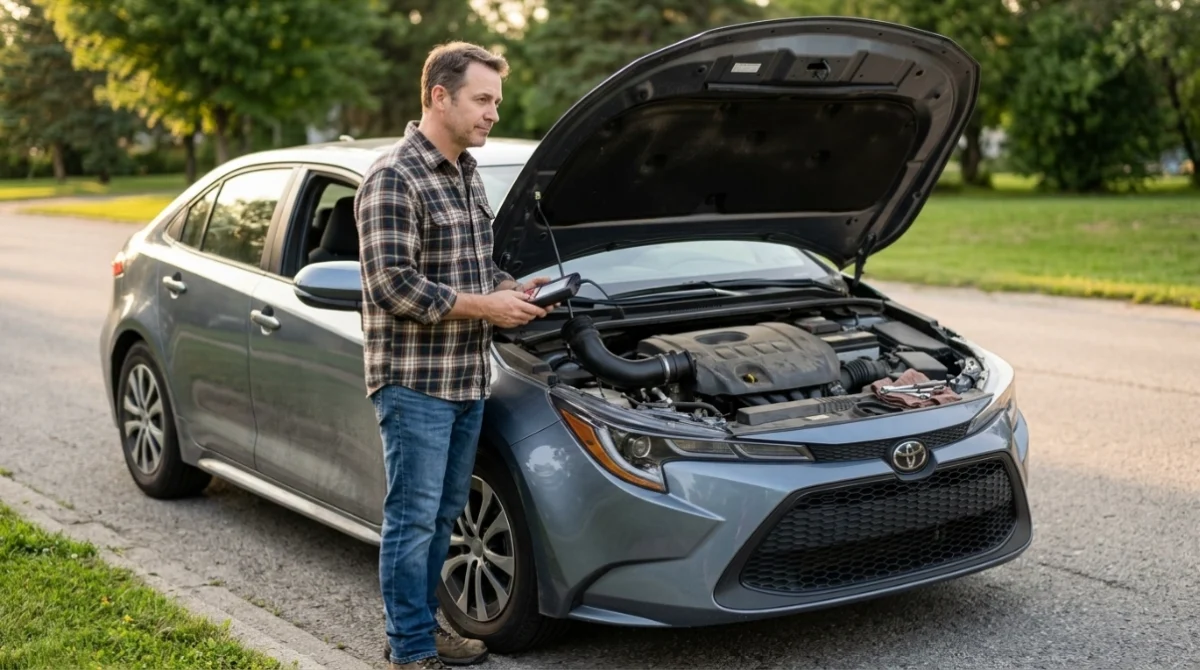
You can drive with P0101 active in most cases — but you shouldn’t ignore it for long. The computer falls back to estimated airflow values when it can’t trust the MAF sensor. This limp-along strategy keeps the engine running but at reduced efficiency. Fuel economy drops. Emissions increase. The catalytic converter works harder, which can lead to premature failure if the problem persists for months.
A car with a severe P0101-related problem may stall unexpectedly, hesitate dangerously when merging, or refuse to start when hot. If your car drives normally despite the light, you have some time — but not unlimited time. Fix it within a few weeks. If the car runs poorly, jerks, or stalls, address it immediately. Those symptoms create safety risks beyond just mechanical damage.
What most people don’t think to ask is whether P0101 can damage other components. The answer is yes — indirectly. A rich-running engine from untrusted MAF data can foul spark plugs, contaminate oxygen sensors, and overload the catalytic converter over time. The code itself won’t cause catastrophic failure next week. But ignoring it for 6 months while the engine runs rich can turn a $15 air filter problem into a $1,200 catalytic converter replacement.
P0101 is a circuit performance code — not a death sentence for your MAF sensor. Two-thirds of all cases resolve with a clean air filter and MAF sensor cleaning, both costing under $50 combined.
Replace the sensor only after you’ve ruled out the simple causes. The repair data is consistent across decades: the sensor itself fails far less often than the things feeding it dirty or restricted air.
Your next move: Open your hood right now. Pull the air filter. Hold it to the light. If it’s dirty, replace it. Then remove and clean the MAF sensor with proper MAF cleaner. Clear the code. Drive. This 20-minute sequence fixes more P0101 codes than any shop diagnostic.
Frequently Asked Questions
What’s the difference between P0101 and P0102?
P0101 means the MAF sensor reading is out of expected range but still present. P0102 means the MAF sensor signal voltage is too low — often indicating a wiring problem, unplugged sensor, or complete sensor failure. P0102 is an electrical fault. P0101 is a performance plausibility fault.
Will P0101 clear itself after fixing the problem?
The code will not clear instantly. After repairing the underlying issue, you need to either clear the code with a scan tool or complete several drive cycles. Most vehicles require 2–3 complete warm-up and cool-down drive cycles before the computer runs the MAF rationality monitor again and turns off the light on its own.
Can a bad oxygen sensor cause a P0101 code?
Rarely directly. A failed oxygen sensor can create fuel trim problems that make the computer question MAF accuracy. But a P0101 with a separate oxygen sensor code usually means the O2 sensor is the primary fault. Fix the O2 sensor first, clear codes, then see if P0101 returns.
Is P0101 the same across all car brands?
Yes. P0101 is a generic SAE/ISO OBD2 code with the same definition across all manufacturers sold in North America since 1996. However, some manufacturers have additional enhanced codes that provide more specific fault information alongside the generic P0101.
How much does a shop charge to fix P0101?
Diagnostic time runs $80–$150 at most independent shops. If the fix is a simple MAF cleaning and air filter, expect $100–$200 total. A full MAF sensor replacement typically runs $250–$600 depending on the vehicle and whether you use OEM or aftermarket parts. Dealership pricing is typically 30–50% higher across all categories.
This guide covers the generic P0101 diagnostic approach applicable to all OBD2 vehicles. Some models have known issues — like specific intake gasket failures or MAF housing design flaws — that trigger this code more frequently. Search for your specific year, make, and model alongside “P0101” for vehicle-specific bulletins and common fixes.
