
P0138 O2 Sensor Code Meaning — High Voltage on Bank 1 Sensor 2 Explained

You’re seeing a check engine light and a code like P0138, and the car still drives normally. That creates confusion fast. The problem is happening in your exhaust monitoring system, not immediately in engine performance.
This code is part of the oxygen sensor feedback loop that controls emissions and fuel balance. According to diagnostic patterns and emissions systems documentation, P0138 is linked to a high voltage reading in the downstream O2 sensor circuit. :contentReference[oaicite:0]{index=0}
This guide explains what it means, why it happens, and what you should do next in simple terms.
Quick Answer: What P0138 Means
P0138 means the Bank 1 Sensor 2 oxygen sensor is sending a high voltage signal, usually above 0.9V, which indicates excess fuel or a faulty sensor reading.
- Most common cause: faulty downstream O2 sensor
- Other causes: rich fuel mixture, wiring issues
- Risk level: medium (affects emissions, not immediate engine failure)
- Fix time: 30 minutes to 2 hours
What P0138 Actually Means in Your Car
P0138 is an OBD-II diagnostic trouble code linked to oxygen sensor behavior. It specifically refers to Bank 1 Sensor 2, which sits after the catalytic converter.
This sensor monitors how well your catalytic converter is cleaning exhaust gases. It should fluctuate slowly, not stay high. When voltage stays high, the system thinks fuel is too rich.
The ECU interprets this as an imbalance in combustion efficiency. That triggers the warning code.
Bank 1 Sensor 2 explained simply
Bank 1 means the side of the engine with cylinder 1. Sensor 2 means downstream sensor after the catalytic converter.
This sensor does not control fuel injection directly. It only monitors emissions performance.
That’s why your car may still feel normal.
Main Causes of P0138 Code
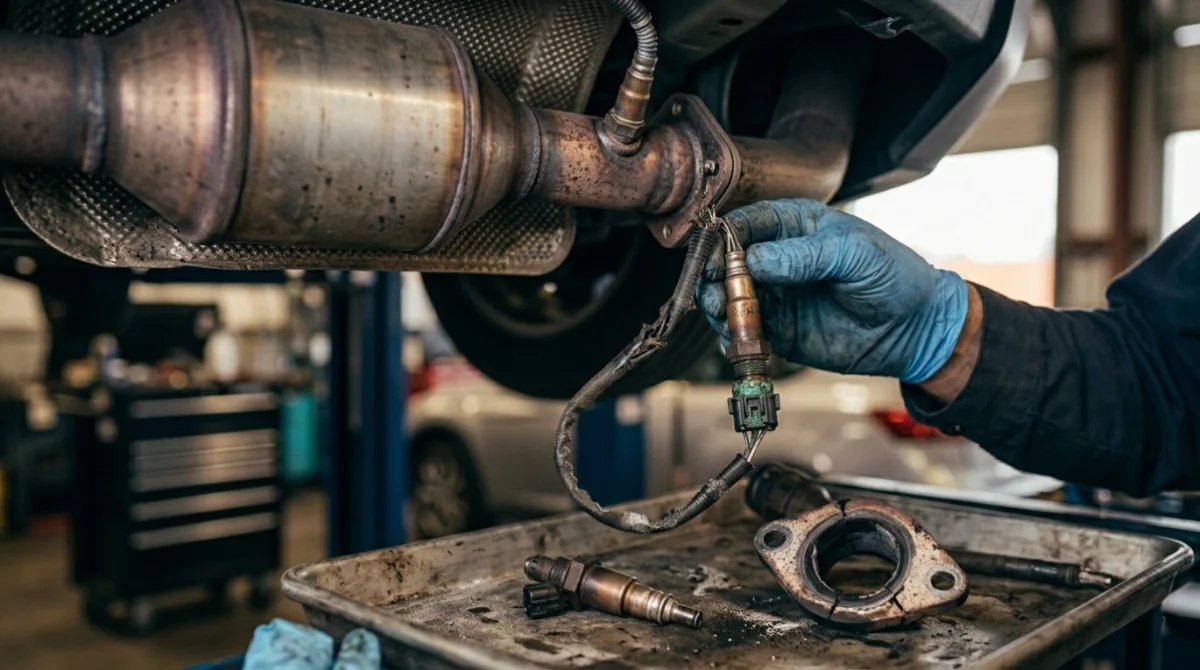
P0138 does not come from one single failure. It comes from signal distortion in the oxygen sensor system.
The ECU expects voltage between 0.1V and 0.9V. When it stays high, the system flags a fault.
1. Faulty oxygen sensor
The most common cause is sensor degradation. Over time, heating elements and internal ceramic cells wear out.
Example: a 100,000+ km sensor often becomes slow or stuck at high voltage.
Takeaway: replacement often solves the issue quickly.
2. Rich fuel mixture
If too much fuel enters combustion, exhaust oxygen drops. This increases sensor voltage.
Common reasons include leaking injectors, faulty fuel pressure regulator, or dirty air filter.
This is more serious than a sensor fault.
3. Wiring or connector issues
Damaged wiring can send false high voltage signals to the ECU.
Corrosion near exhaust heat zones is a frequent issue.
What most people miss is heat damage near the catalytic converter harness.
4. Exhaust leaks near sensor
An exhaust leak can distort oxygen readings by pulling in outside air.
This confuses the sensor signal and may trigger false high voltage readings.
Symptoms of P0138 Code
P0138 does not usually cause severe drivability issues. But it still affects efficiency.
- Check engine light stays on
- Reduced fuel economy
- Rough idle in some cases
- Failed emissions test
Some drivers notice nothing at all except the warning light.
That does not mean the issue should be ignored.
How Serious Is P0138?
P0138 is a moderate severity code. It does not usually damage the engine immediately.
However, long-term driving with incorrect fuel feedback can reduce catalytic converter lifespan.
That increases repair costs significantly if ignored.
Step-by-Step Diagnosis
Correct diagnosis avoids unnecessary part replacement. Many drivers replace sensors without checking fuel system conditions.
Step 1: Scan live data
Check voltage readings from Bank 1 Sensor 2.
If voltage is stuck above 0.9V, the sensor may be faulty.
Step 2: Inspect wiring
Look for melted insulation, corrosion, or loose connectors.
Heat damage is common near exhaust pipes.
Step 3: Check fuel mixture
Use fuel trim data from scan tool.
If fuel trim is strongly negative, engine is running rich.
Step 4: Test oxygen sensor response
Sensor should fluctuate. A flat signal indicates failure.
Repair Options for P0138
Fixing P0138 depends on root cause. Replacing parts without diagnosis can waste money.
| Cause | Fix | Cost Range |
|---|---|---|
| Faulty O2 sensor | Replace downstream sensor | Low to moderate |
| Rich fuel mixture | Fix injectors or fuel system | Moderate to high |
| Wiring issue | Repair harness or connectors | Low |
| Exhaust leak | Seal or replace exhaust section | Low to moderate |
The most common real-world fix is replacing the downstream oxygen sensor.
What Most People Get Wrong About P0138
Many assume P0138 always means a bad oxygen sensor. That is not always correct.
First misconception: replacing the sensor automatically fixes the issue. Sometimes fuel system problems trigger the same code.
Second misconception: downstream sensors affect engine power. They mainly affect emissions monitoring, not performance control.
Third misconception: clearing the code fixes the problem. It only resets the warning temporarily.
When You Should Act Immediately
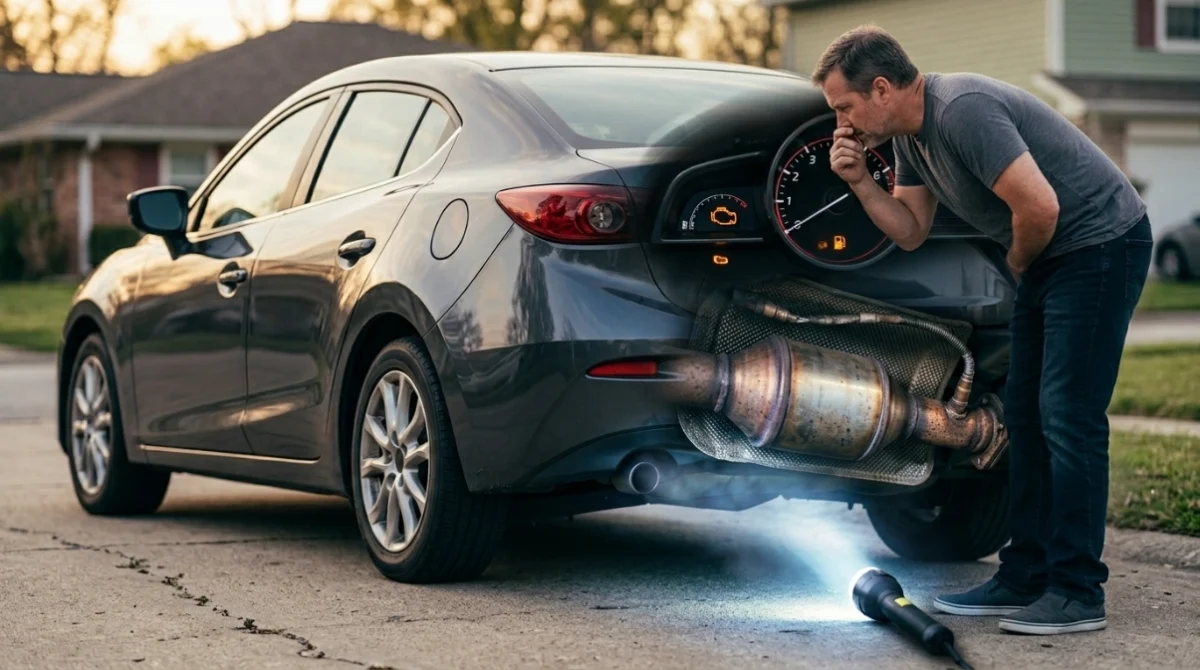
If fuel economy drops significantly or exhaust smells strong, act quickly.
A rich fuel condition can damage catalytic converters over time.
That is the most expensive downstream failure.
Verified Information Source
For standardized OBD-II definitions and emission monitoring logic, refer to official diagnostic frameworks.
Official OBD-II oxygen sensor reference documentation
Frequently Asked Questions
Can I drive with P0138?
Yes, you can drive short-term with P0138. The engine usually runs normally. However, long-term driving may reduce fuel efficiency and damage the catalytic converter if the underlying issue is fuel-related.
What causes P0138 the most?
The most common cause is a failing downstream oxygen sensor. Over time, sensors lose accuracy due to heat and contamination, leading to stuck high voltage readings.
How much does it cost to fix P0138?
Typical repair costs range from low to moderate depending on cause. Sensor replacement is usually affordable, while fuel system repairs can be more expensive.
Will P0138 clear itself?
It may temporarily disappear if conditions change, but it usually returns if the underlying issue remains. Permanent fix requires addressing root cause.
