
P0455 Symptoms: What You’ll Notice and What to Check First

Quick Answer
The most common P0455 symptom is a check engine light with little or no change in how the vehicle drives. You may also notice a gasoline or fuel-vapor smell, especially near the fuel tank or filler area. P0455 means the evaporative emissions system cannot hold the vacuum or pressure expected during its self-test. You can confirm the stored code with an OBD-II trouble-code scan before troubleshooting the EVAP system.
Common P0455 Symptoms
- Check engine light: This is often the first and only noticeable symptom.
- Normal drivability: Many vehicles continue to start, idle, and accelerate normally.
- Fuel-vapor odor: A damaged EVAP component can allow gasoline vapors to escape.
- Emissions-test problems: An active P0455 or incomplete readiness monitor may prevent a passing inspection.
- Occasional starting issues: Some purge-valve faults can contribute to rough or difficult starting, particularly after refueling.
What to Check First
- Inspect the fuel cap, cap seal, filler area, and visible EVAP hoses before replacing any components.
P0455 can look alarming on an OBD-II scanner because it includes the words “large leak.” In many cases, though, the engine still feels completely normal.
I’ve seen this type of code confuse drivers because they expect a large leak to cause obvious engine trouble. The EVAP system handles fuel vapors, so its failures often produce subtle symptoms instead.
In This Guide
What Are the Most Common P0455 Symptoms?
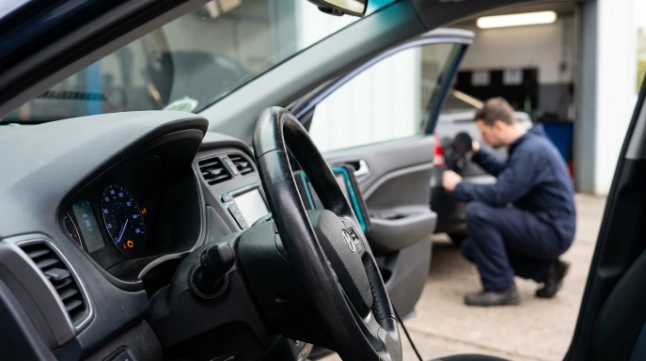
A check engine light is the most typical P0455 symptom. Many drivers notice nothing else because an EVAP leak usually doesn’t interfere directly with combustion.
Your exact symptoms depend on what caused the EVAP system to lose its seal. A loose fuel cap can behave differently from a purge valve stuck open.
- Illuminated check engine light: The engine control module stores P0455 after its EVAP monitor detects a large leak or inability to create the expected vacuum.
- Gasoline or vapor smell: Escaping fuel vapor may create an odor around the filler neck, rear of the vehicle, or another damaged EVAP component.
- No noticeable performance problem: Acceleration, idle quality, and fuel delivery can remain normal.
- Hard starting after refueling: This can occur on some vehicles when a purge valve allows vapor into the intake when it shouldn’t.
- Rough idle in some cases: An abnormal purge path can act like an intake vacuum leak on certain systems.
- Failed emissions inspection: A stored fault or incomplete EVAP readiness monitor may create inspection problems where OBD-based testing is used.
Can P0455 appear with no symptoms?
Yes. A P0455 code can appear while the vehicle seems to run perfectly.
That’s one reason scanning matters. The OBD-II system may detect an EVAP sealing problem long before you can feel anything from the driver’s seat.
On mobile automotive calls, I often see drivers assume a steady check engine light must mean the engine itself is failing. Reading the stored code first keeps you from guessing.
Section Takeaway: The check engine light is often the only P0455 symptom. Fuel odor or starting problems provide extra diagnostic clues but aren’t required for the code to appear.
What Does Code P0455 Mean?
P0455 means the vehicle detected a large leak or similar sealing problem in its evaporative emission control system. Depending on the manufacturer, the definition may also include insufficient purge flow.
The EVAP system captures gasoline vapors instead of allowing them to escape directly into the atmosphere.
Definition: The evaporative emission control system, or EVAP system, is a sealed network of vapor lines, valves, a charcoal canister, the fuel tank, and related components that stores and controls fuel vapor.
During an EVAP self-test, the vehicle’s computer checks whether the system can develop and maintain the expected vacuum or pressure. A major loss of sealing can trigger P0455.
General Motors diagnostic documentation, for example, describes P0455 as an EVAP large-leak condition detected when the system cannot achieve the expected vacuum during its test. You can review the manufacturer’s official OBD diagnostic information for an example of how one automaker monitors this fault.
Does “large leak” mean fuel is pouring out?
No. The term describes what the computer detects during the EVAP integrity test.
It does not automatically mean liquid gasoline is leaking. A missing fuel cap, disconnected vapor hose, or valve that cannot close can create a large EVAP leak without a visible liquid leak.
Safety note: a strong gasoline smell, wet fuel, or visible fuel leakage is different. Stop driving and have the vehicle inspected rather than assuming it is only an EVAP vapor fault.
What Causes a P0455 Code?
P0455 can come from anything that prevents the EVAP system from sealing or reaching its expected test pressure or vacuum. The code identifies a system condition, not one guaranteed failed part.
Start with simple sealing problems before buying valves, sensors, or a charcoal canister.
- Loose fuel cap: A cap that isn’t fully seated may leave the EVAP system open to atmosphere.
- Missing fuel cap: The system may be unable to seal at all.
- Damaged cap seal: A cracked, hardened, distorted, or contaminated seal can leak.
- Incorrect fuel cap: An incompatible replacement may fit physically but fail to seal correctly.
- Disconnected EVAP hose: A vapor line may come loose after repairs or age-related deterioration.
- Cracked vapor hose: Heat, road debris, and aging can damage EVAP plumbing.
- Purge valve problem: A valve that leaks when commanded closed can prevent a successful system test.
- Vent valve problem: A vent valve that cannot close may leave the system open during testing.
- Damaged charcoal canister: Cracks, broken fittings, or internal damage can create an EVAP leak.
- Filler-neck or tank sealing problem: Damage around the fuel tank, filler pipe, seals, or connected components can also trigger P0455.
Is the gas cap always responsible?
No. Checking the fuel cap first makes sense because it’s fast and requires no special tools.
Replacing it automatically is different. Inspect the seal, confirm that the cap matches the vehicle, and look for other evidence before buying parts.
Technician’s tip: don’t treat P0455 as a parts-replacement instruction. Confirm where the system loses its seal before replacing expensive EVAP components.
How Do You Diagnose P0455 Correctly?
Start by confirming the code, inspecting obvious leak points, and checking for related trouble codes. If nothing obvious appears, an EVAP smoke or pressure test can help locate the leak.
An OBD-II scanner is useful here, but reading P0455 is only the beginning. AAA also notes that trouble codes provide diagnostic clues rather than identifying the failed component by themselves.
- Scan all stored codes. Record P0455 plus any pending, permanent, or related EVAP codes before clearing anything.
- Check the fuel cap. Look for a loose cap, damaged seal, incorrect fit, or debris around the sealing surface.
- Inspect visible EVAP lines. Look for disconnected hoses, cracked tubing, broken fittings, or obvious damage.
- Check purge and vent operation. Vehicle-specific procedures may use a bidirectional scan tool, vacuum testing, or electrical measurements.
- Perform an EVAP leak test. A properly performed smoke test can expose leaks that cannot be seen during a visual inspection.
- Verify the repair. Clear codes only after documenting them, then confirm that the EVAP monitor completes without P0455 returning.
Should you clear P0455 immediately?
I prefer recording the code and freeze-frame information first. Clearing it too early can erase useful clues about when the fault occurred.
AAA’s check-engine-light guidance also recommends diagnosing why the warning appeared rather than relying only on clearing the light.
Diagnostic note: manufacturer EVAP test routines vary by model year and powertrain. Follow service information for your exact vehicle instead of copying a valve-command sequence from another car.
Section Takeaway: Diagnose P0455 in stages. Confirm the code, inspect simple leak points, test the valves, and use an EVAP leak test when visual checks don’t reveal the cause.
Can You Drive With a P0455 Code?
A vehicle with P0455 may remain drivable when it runs normally and there is no strong fuel smell or visible leak. You should still arrange diagnosis because the EVAP system is no longer operating as intended.
The urgency changes if you notice symptoms suggesting an active fuel leak or another serious problem.
- Usually lower immediate urgency: Steady check engine light, normal engine operation, and no noticeable fuel odor.
- Needs prompt inspection: Persistent gasoline-vapor odor or repeated starting problems.
- Stop and seek help: Visible liquid fuel, an intense gasoline smell, smoke, or another clear safety concern.
- Flashing check engine light: Treat this as a separate urgent warning rather than assuming P0455 alone explains it.
If your vehicle has unusual symptoms or you suspect a broader defect, you can also check its VIN through the NHTSA recall database.
An EVAP fault may also matter before an emissions inspection. Clearing the code immediately before testing can reset readiness monitors, which then need to complete again.
Safety note: when fuel odor is strong, don’t keep driving simply because an OBD scanner shows P0455. A scan code cannot determine whether the vehicle is safe.
How Much Does It Cost to Fix P0455?

P0455 repair cost depends completely on the failed component. The fix might involve correcting a simple sealing issue or diagnosing a leak that requires professional testing.
As of August 2026, national RepairPal estimates illustrate how much the diagnostic path can vary. Actual prices depend on your vehicle, location, labor rates, taxes, and the repair ultimately required.
| Service or Repair | 2026 Reference Range | When It Applies |
|---|---|---|
| Emission control system inspection | About $61–$90 | Initial inspection or targeted emissions-system evaluation |
| Check engine light diagnosis and testing | About $122–$233 | Professional diagnosis when the cause isn’t obvious |
| Purge valve replacement | About $207–$248 average | Only when testing confirms the purge valve is faulty |
A fuel-cap problem may cost much less than a valve, canister, damaged line, or hard-to-access tank-side repair. That’s why diagnosing first usually saves more money than guessing.
Ask whether a diagnostic charge applies toward the final repair before authorizing work. Also ask what test confirmed the failed component.
Repair-cost note: never approve an expensive EVAP component solely because P0455 is stored. Prices and procedures vary significantly by make, model, year, engine, region, and component access.
Frequently Asked Questions About P0455
What is the first symptom of P0455?
The check engine light is usually the first P0455 symptom. Many vehicles continue running normally, so drivers may not notice anything else until they scan the stored diagnostic trouble code.
Can a loose gas cap cause P0455?
Yes. A loose, missing, damaged, or incorrectly fitting fuel cap can prevent the EVAP system from sealing. Inspect the cap and its sealing surface first, but don’t assume the cap is responsible without checking the rest of the system if the code returns.
Can P0455 cause a gasoline smell?
Yes. A large EVAP leak may allow fuel vapor to escape, producing a gasoline odor. A strong smell or visible liquid fuel deserves prompt attention because a scan code alone cannot rule out an active fuel leak.
Will P0455 make the engine run rough?
Usually, P0455 causes little or no drivability change. Rough idle or hard starting can occur when the underlying problem affects purge flow, but those symptoms should be diagnosed rather than automatically blamed on the EVAP code.
Can P0455 clear itself after tightening the gas cap?
The fault may not disappear immediately. The vehicle normally needs another EVAP monitor opportunity to verify that the system now passes its test, and monitor timing varies by manufacturer and operating conditions.
Do I need a smoke test for P0455?
Not always. Start with the fuel cap, visible hoses, related codes, and basic component checks. When the leak isn’t obvious, an EVAP smoke or approved pressure test is one of the most useful ways to locate escaping vapor-system pressure.
Is P0455 the same as P0456?
No. Both concern EVAP leakage, but P0455 represents a large or gross leak condition. P0456 is generally associated with a smaller detected EVAP leak, although exact diagnostic thresholds and strategies vary by manufacturer.
The main takeaway: don’t panic when you see P0455, but don’t ignore it either. Start with the fuel cap and visible EVAP plumbing, then test the system instead of replacing parts at random.
If the code returns after the simple checks, use vehicle-specific service information or have a qualified technician perform an EVAP leak test. A good diagnosis should identify why the system won’t seal before you spend money on the repair.
