
What Does P0455 Mean? Causes, Symptoms, Diagnosis, and Fixes

Quick Answer
P0455 means your vehicle’s onboard diagnostic system has detected a large leak in the evaporative emission control system, commonly called the EVAP system. A loose or missing fuel cap is one possible cause, but damaged vapor hoses, a vent valve, purge valve, charcoal canister, or disconnected EVAP line can also trigger the code. If your check engine light is on, AAA’s check engine light guidance recommends identifying and repairing the underlying problem rather than ignoring the warning.
What to check first
- Fuel cap: Check that it’s present, correctly seated, tightened, and not visibly damaged.
- EVAP hoses: Look for disconnected, split, crushed, or deteriorated vapor lines.
- Vent valve: A valve stuck open can prevent the EVAP system from sealing during its self-test.
- Purge valve: A purge valve that doesn’t seal correctly can also cause a large-leak fault.
- Charcoal canister: Cracks or damaged connections can allow fuel vapor to escape.
Best next step
- Reseat the fuel cap, inspect accessible EVAP connections, scan for related codes, and arrange an EVAP smoke test if P0455 returns.
If your OBD2 scanner has shown P0455, don’t assume you’re facing a major engine repair. This code points to the system that captures fuel vapor, not usually to an internal engine failure.
I’ve seen drivers spend money replacing sensors before checking the simple parts first. This guide explains what P0455 means, what usually causes it, and how to diagnose it without guessing.
In This Guide
What Does P0455 Mean?
P0455 is a generic OBD-II diagnostic trouble code indicating a large leak in the evaporative emission control system. You may also see scanner descriptions such as “EVAP system large leak detected” or “gross leak detected.”
Definition: The EVAP system captures gasoline vapor from the fuel tank and stores it rather than allowing it to escape directly into the atmosphere.
Your vehicle’s computer periodically checks whether this system can seal properly. If it can’t create or maintain the expected pressure or vacuum during the test, it can store an EVAP leak code.
P0455 describes the size or severity of the detected leak condition. It doesn’t identify the failed part by itself.
Is P0455 the same on every vehicle?
P0455 is a standardized powertrain code, so its general meaning applies across many OBD-II vehicles. The exact diagnostic strategy and likely failure points can still differ by manufacturer, model, engine, and year.
That’s why an OBD2 scanner gives you a starting point rather than a final diagnosis. Freeze-frame data and additional stored codes can narrow the search.
How is P0455 different from P0442 or P0456?
- P0455: Indicates a large or gross EVAP leak condition.
- P0442: Usually indicates a smaller EVAP system leak.
- P0456: Commonly describes a very small EVAP leak.
The smaller the leak, the harder it may be to find visually. A large P0455 leak can still require testing when the problem involves a valve instead of a visibly broken hose.
What Causes a P0455 Code?

A missing or incorrectly sealed fuel cap is one of the easiest P0455 causes to check, but it isn’t the only one. The entire EVAP system must seal correctly when the vehicle runs its leak test.
General Motors service information published through NHTSA’s technical bulletin database notes that large leaks can involve disconnected tubes, damaged tubes, vent-valve problems, or purge-valve problems.
Loose, missing, or damaged fuel cap
Start here if your vehicle uses a removable gas cap. A cap that isn’t seated correctly can leave an opening large enough for the computer to recognize a leak.
- Cap wasn’t tightened after refueling
- Cap is missing
- Seal is cracked, hardened, or damaged
- Cap doesn’t match the vehicle correctly
- Filler-neck sealing surface is dirty or damaged
Capless fuel systems don’t eliminate EVAP leak problems. Their filler-door sealing components can also develop faults.
Disconnected or damaged EVAP hose
Fuel vapor moves through several hoses and tubes between the tank, canister, engine, and control valves. A disconnected line can create the kind of obvious sealing failure associated with P0455.
Pay particular attention to connections near components that were recently repaired. A hose can be disturbed during unrelated service.
Stuck-open vent valve
The EVAP vent valve normally lets fresh air into the system when required. During certain leak tests, the computer needs that path to close.
If the valve remains open, the system can’t seal. The computer may interpret that as a large leak even when no hose has split.
Purge valve that doesn’t seal
The purge valve controls when stored fuel vapor enters the engine to be burned. It must also behave correctly during EVAP system testing.
A purge valve that leaks internally can prevent the computer from seeing the pressure or vacuum response it expects.
Cracked charcoal canister or damaged fittings
The charcoal canister stores fuel vapor until the engine can consume it. Physical damage to the housing or its connections can create a vapor leak.
Don’t replace the canister based on P0455 alone. Test the system first because canisters usually cost far more than checking a cap or reconnecting a hose.
Fuel filler neck or tank-area leak
Corrosion, impact damage, deteriorated seals, or disturbed fuel-system connections can create leaks near the tank. These faults may be difficult to see without lifting the vehicle safely.
Technician’s note: fuel-vapor systems involve flammable gasoline vapors. If diagnosis requires working around the fuel tank, electrical valves, or inaccessible lines, use a qualified repair shop rather than improvising a pressure test.
Section Takeaway: P0455 doesn’t automatically mean “replace the gas cap.” Check the cap first, then treat the code as a system-level sealing problem until testing identifies the actual leak.
What Are the Symptoms of P0455?
The most common P0455 symptom is simply an illuminated check engine light. Many vehicles continue to start, idle, and drive normally because the EVAP system manages fuel vapor rather than directly controlling basic engine operation.
Honda’s official indicator guidance also notes that an emissions-control problem or a loose or missing fuel cap can illuminate the malfunction indicator lamp.
You can review that guidance through Honda’s malfunction indicator information.
Common signs include
- Check engine light: Often the only obvious symptom.
- Fuel-vapor odor: You may notice gasoline vapor around the vehicle if the leak is substantial.
- Recent refueling connection: The warning may appear after the fuel cap was left loose.
- Failed emissions inspection: An active fault or incomplete readiness monitor may prevent a passing result.
- Related EVAP codes: Your scanner may find additional purge, vent, pressure, or leak codes.
A strong raw-fuel smell deserves more attention than a code alone. Don’t assume every gasoline odor comes from a harmless EVAP hose.
If you see liquid fuel leaking, stop treating this as routine code troubleshooting. Have the vehicle inspected promptly.
How Do You Diagnose and Fix P0455?
Diagnose P0455 from the simplest sealing problems toward the components that require testing. Replacing parts based only on the trouble-code description can waste money.
1. Scan all stored and pending codes
Start with your OBD2 scanner and record every code before clearing anything. Related codes can tell you whether the computer has also detected purge, vent, pressure-sensor, or circuit problems.
Check freeze-frame information if your scanner supports it. This snapshot records operating conditions associated with the fault.
2. Inspect the fuel cap or filler seal
If your vehicle has a removable cap, remove it and inspect the sealing surface. Reinstall it according to the vehicle manufacturer’s instructions.
- Look for a damaged rubber seal.
- Check for cracks in the cap.
- Inspect the filler-neck sealing surface.
- Confirm the cap is correct for the vehicle.
- Check capless filler components for visible debris or damage.
A successful repair may not turn the check engine light off immediately. The vehicle may need additional trips before its EVAP monitor reruns and confirms the fault is gone.
3. Inspect accessible EVAP lines
Follow visible vapor hoses and connections where safe. Look for a line that is disconnected, broken, pinched, or deteriorated.
Recent work near the fuel tank, engine bay, intake, or canister area deserves extra attention. A connector or hose may have been disturbed.
4. Test the purge and vent valves
If the obvious checks look good, the purge and vent valves become important suspects. A professional technician can command valves with a scan tool and verify whether they open and seal correctly.
Electrical testing alone doesn’t always prove that a valve seals mechanically. A valve can receive the correct command yet still leak.
5. Perform an EVAP smoke test
A smoke machine introduces controlled test vapor or smoke into the system so leaks become easier to locate. This is often the fastest professional method when visual inspection doesn’t reveal the problem.
| Diagnostic step | Best for finding | Special equipment |
|---|---|---|
| Fuel-cap inspection | Loose, missing, or damaged cap | None |
| Visual hose inspection | Disconnected or visibly damaged lines | Usually none |
| Bidirectional scan-tool test | Purge and vent control problems | Compatible scan tool |
| EVAP smoke test | Leaks that aren’t visible during inspection | EVAP-rated smoke machine |
Technician’s note: don’t pressurize an EVAP system with an improvised air source. Fuel-vapor systems require appropriate equipment and the vehicle manufacturer’s diagnostic procedure.
6. Repair the confirmed fault and retest
Once you locate the problem, repair that component rather than replacing several possible causes. Clear the code only after recording useful diagnostic information.
Drive the vehicle normally and allow its readiness monitors to rerun. If P0455 returns, continue diagnosis because a second leak or valve problem may still exist.
Section Takeaway: The best P0455 diagnostic order is scan, inspect the fuel-cap area, check hoses, test valves, then smoke-test the system. That order catches inexpensive problems before you buy costly parts.
How Much Does It Cost to Fix P0455?
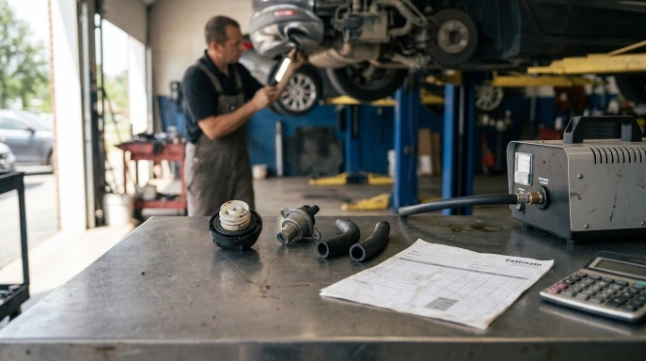
P0455 repair cost can range from almost nothing to several hundred dollars because the code identifies a leak condition, not one specific failed component. Prices vary by vehicle, region, labor rate, and access to the damaged part.
| Possible repair | Typical cost level | Why cost varies |
|---|---|---|
| Reseat existing fuel cap | $0 | No replacement part needed |
| Replacement fuel cap | Often under $50 for the part | OEM design, capless systems, and vehicle application differ |
| EVAP diagnostic or smoke test | Roughly $100–$200 in many U.S. markets | Shop labor rates and diagnostic time vary |
| Purge valve replacement | Around $207–$248 on a recent national estimate | Part price and accessibility differ by vehicle |
| Canister, filler-neck, or tank-area repair | Potentially several hundred dollars | Parts and underbody labor can increase the total |
As of 2026, I would treat those figures as budgeting ranges rather than quotes. Your make, model, year, region, and exact failure determine the real bill.
Technician’s note: ask for the confirmed leak location or failed component before approving an expensive EVAP repair. P0455 alone doesn’t prove that a charcoal canister, purge valve, vent valve, or fuel tank needs replacement.
Can You Drive With a P0455 Code?
A vehicle with P0455 will often remain drivable when the only symptom is a steady check engine light, but you shouldn’t ignore the fault indefinitely. The code indicates that the emissions system isn’t operating as designed.
If you smell strong gasoline vapor, see liquid fuel, have poor engine operation, or notice other warning lights, get the vehicle inspected sooner. Those symptoms can point to a problem beyond a simple loose cap.
Will P0455 cause an emissions-test failure?
It can. OBD-based inspection programs commonly check the malfunction indicator light, stored emissions faults, and readiness-monitor status.
Toyota’s official owner guidance explains that an illuminated malfunction indicator lamp or incomplete readiness status can prevent a vehicle from passing an OBD-based emissions inspection. See Toyota’s emission inspection and maintenance guidance for an example.
Should you clear P0455 before an emissions test?
Clearing the code isn’t the same as repairing the vehicle. It also resets readiness information on many vehicles.
If the EVAP monitor hasn’t completed again, the inspection system may report the vehicle as not ready. Repair the cause first, then allow the required monitors to complete.
What if the check engine light is flashing?
A flashing malfunction indicator light should not be treated as a normal P0455 symptom. It can indicate a more serious running problem, such as a damaging engine misfire.
Reduce driving and follow the warning guidance in your owner’s manual. AAA also advises prompt attention when the check engine light flashes or the vehicle begins running abnormally.
P0455 Frequently Asked Questions
Can a loose gas cap cause P0455?
Yes. A loose, missing, damaged, or incorrectly fitting fuel cap can prevent the EVAP system from sealing and may trigger P0455. Check the cap first, but don’t assume it’s the cause if the code returns after the cap has been correctly reseated.
Will P0455 clear itself after tightening the gas cap?
It can, but the light may not switch off immediately. The vehicle normally needs to run its EVAP self-test again and confirm that the leak is gone, which may require several normal driving trips depending on the vehicle.
Does P0455 mean I need a new charcoal canister?
No. P0455 only indicates a large EVAP leak condition. A loose cap, disconnected hose, vent valve, purge valve, filler connection, or damaged canister can all produce similar results, so test the system before replacing expensive components.
Can a bad purge valve cause P0455?
Yes. If the purge valve doesn’t seal when the EVAP monitor expects a closed system, the computer may detect a large-leak condition. Manufacturer service information confirms purge-system faults can be part of P0455 diagnosis.
Can a bad vent valve cause P0455?
Yes. A vent valve that remains open can prevent the EVAP system from sealing during its leak test. A technician can test valve operation rather than replacing the part based only on the code.
Can P0455 make the car run poorly?
Many vehicles with P0455 drive normally because the fault is limited to vapor containment. However, some purge-system failures can affect engine behavior, and unrelated codes may be present, so scan the entire vehicle before assuming P0455 explains every symptom.
What should I do if P0455 keeps coming back?
If P0455 returns after checking the fuel cap and accessible hoses, stop clearing the code repeatedly. Have the EVAP system tested for leaks and verify purge and vent valve operation so the actual failure can be identified.
P0455 is usually a diagnosis problem before it’s a parts problem. Start with the fuel cap and visible connections, use your OBD2 scanner to check related codes, and move to a professional EVAP smoke test if the fault remains.
Finding the leak first is cheaper than guessing. It also gives the vehicle the best chance of completing its EVAP readiness monitor and keeping the check engine light off.
