
P0456 Symptoms: Signs of a Very Small EVAP Leak

Quick Answer
The most common P0456 symptom is a steady check engine light with little or no change in how the car drives. P0456 means the vehicle detected a very small leak in its evaporative emission control, or EVAP, system. You may also notice a fuel-vapor smell, another EVAP code, or an emissions-test problem. An OBD2 code check should be your starting point, not a reason to replace parts immediately.
Common P0456 symptoms
- Check engine light: This is often the only symptom you can see.
- Normal driving: The engine usually continues to start, idle, and accelerate normally.
- Fuel-vapor odor: A small leak can sometimes let gasoline vapor escape.
- Related EVAP codes: Your scanner may show P0442, P0455, P0457, or another EVAP fault with P0456.
- Inspection issue: A stored code or incomplete readiness monitor can affect emissions testing where such testing is required.
Best first check
- Save the code and freeze-frame data, inspect the fuel-cap seal, then look for obvious EVAP hose damage before clearing anything.
I’ve scanned vehicles where P0456 looked alarming on the screen, yet the driver couldn’t feel anything wrong. That is normal for this type of EVAP fault.
The difficult part is finding a leak small enough to trigger the code without causing obvious drivability trouble. Here is how I separate useful symptoms from guesswork.
In This Guide
What Does the P0456 Code Mean?
P0456 is a generic OBD2 diagnostic trouble code commonly described as an EVAP system very small leak detected fault. The engine computer has detected that the fuel-vapor system cannot hold pressure or vacuum as expected during a self-test.
The EVAP system keeps gasoline vapor from escaping freely into the atmosphere. It stores the vapor and later routes it into the engine to be burned.
A typical EVAP system can include:
- Fuel cap or capless filler: Helps seal the fuel system.
- Charcoal canister: Stores fuel vapor temporarily.
- Purge valve: Controls vapor flow toward the engine.
- Vent valve: Controls airflow and helps seal the system during testing.
- Vapor hoses: Connect the tank, canister, valves, and engine.
- Pressure sensor: Helps the computer monitor EVAP pressure on many vehicles.
- Leak-detection hardware: Some vehicles use a dedicated pump or similar device.
A diagnostic trouble code is a clue, not a failed-part label. P0456 tells you what the computer detected, but not which component caused it.
I’ve seen this distinction save a lot of wasted parts. A loose cap, cracked hose, valve problem, or vehicle-specific EVAP issue can all lead you toward the same code.
Manufacturer bulletins filed with NHTSA also show that P0456 can appear from vehicle-specific EVAP problems, so the same repair should never be assumed for every model.
Locksmith’s diagnostic note: When vehicle-specific repair or electronic testing is involved, confirm the year, engine, emissions configuration, and VIN before following a detailed procedure.
What Are the Most Common P0456 Symptoms?
The main P0456 symptom is usually a steady check engine light. Many drivers notice no change in engine performance at all.
1. The check engine light comes on
This is the symptom I expect first. Your vehicle may store P0456 even while everything feels normal from the driver’s seat.
An OBD2 scanner can confirm whether P0456 is stored, pending, or accompanied by other codes. Save that information before clearing the light.
2. The vehicle may drive completely normally
P0456 usually concerns fuel-vapor containment rather than the engine’s ability to make power. That means acceleration, idle quality, and starting can remain normal.
This is why owners often ask whether the scanner is wrong. Usually, the absence of drivability symptoms simply means the EVAP fault is small.
3. You may smell gasoline vapor
A fuel-vapor smell can appear when vapor escapes through a damaged seal, hose, fitting, or another EVAP component. However, P0456 does not guarantee that you’ll smell anything.
Do not ignore a strong or persistent gasoline smell. Liquid fuel leakage is a different and potentially more serious problem than a minor vapor leak.
Safety note: If you see liquid fuel, notice a strong fuel odor, or suspect an active fuel leak, avoid flames and sparks and have the vehicle inspected promptly.
4. Other EVAP codes may appear
P0456 sometimes appears alone. In other cases, another EVAP code gives you useful diagnostic direction.
| Code | Common Description | How It Differs From P0456 |
|---|---|---|
| P0456 | Very small EVAP leak detected | Points toward a very small leak condition. |
| P0442 | EVAP small leak detected | Also indicates leakage, though wording and thresholds vary by manufacturer. |
| P0455 | Large or gross EVAP leak detected | Often points toward a larger sealing problem than P0456. |
| P0457 | EVAP leak associated with fuel-cap condition | Can provide a stronger clue toward the filler-cap area on applicable vehicles. |
Descriptions can differ slightly between manufacturers. Always use the service information for your exact vehicle when interpreting related codes.
5. The vehicle may have emissions-test trouble
Clearing P0456 shortly before an emissions inspection can reset OBD readiness monitors. The check engine light may disappear while those monitors remain incomplete.
That is why I don’t clear codes just to make the dashboard look clean. Record the diagnostic information first, repair the cause, and then confirm the system passes its self-test.
Section Takeaway: P0456 often produces only a check engine light. Normal driving does not prove the EVAP system is leak-free.
What Causes P0456?
P0456 can come from any fault that prevents the EVAP system from sealing closely enough during its leak test. A fuel-cap problem is common, but it is not the only possibility.
I work from easy checks toward testing rather than replacing the first part that appears in an online search.
- Loose fuel cap: A cap that was not tightened or seated correctly can prevent proper sealing.
- Damaged cap seal: Cracks, distortion, debris, or wear may create a small leak.
- Capless filler problem: Dirt or damage can affect the sealing mechanism on vehicles without a removable cap.
- Cracked EVAP hose: Heat, age, abrasion, and previous repairs can damage vapor lines.
- Loose hose connection: A fitting can remain partly attached while still leaking.
- Purge valve problem: A valve that does not seal correctly can interfere with the leak test.
- Vent valve problem: A sticking valve or contaminated vent path can prevent proper system testing.
- Charcoal canister damage: Cracks or contamination can create an EVAP fault.
- Leak-detection system fault: Some vehicles use pumps, sensors, or valves that can fail or produce misleading test results.
- Wiring problem: Damaged connectors or circuits can affect electronically controlled EVAP components.
A technical bulletin may sometimes identify a known problem on a certain vehicle. You can check manufacturer communications and safety information through NHTSA’s vehicle lookup resources.
Pro tip: Don’t order an EVAP component from the code alone. Verify compatibility with the VIN and vehicle-specific parts information first.
How Do You Diagnose P0456 Correctly?
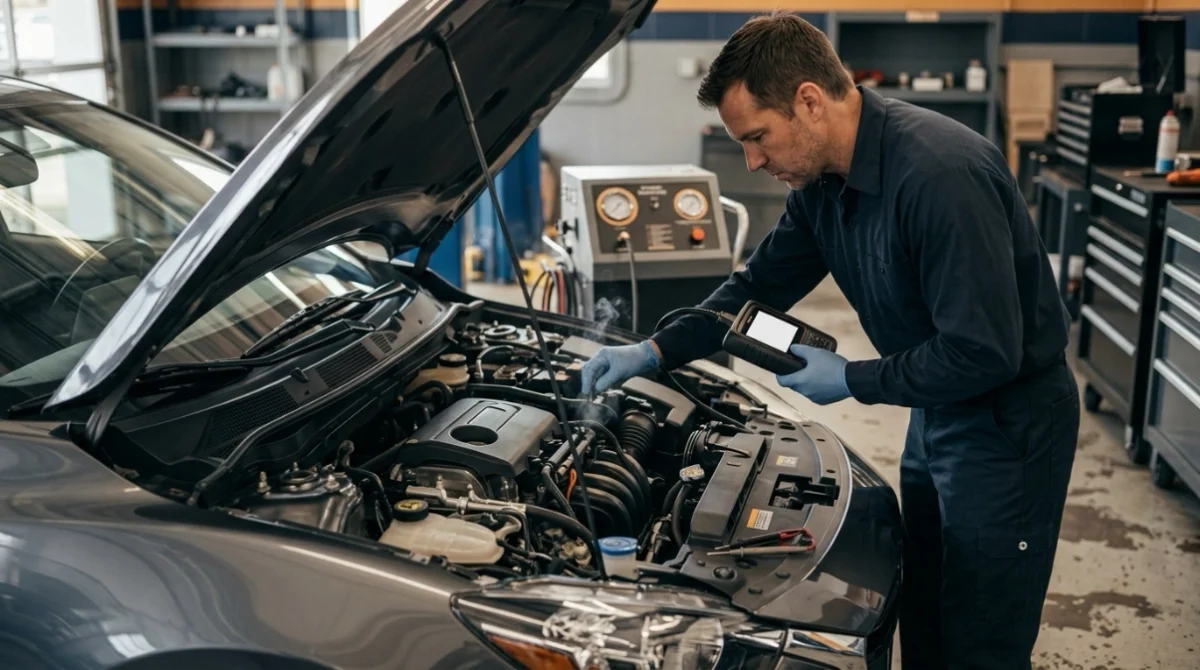
The best P0456 diagnosis starts with the scanner and ends with proof. Clearing the code before saving diagnostic data can remove clues you may need.
Step 1: Scan every stored and pending code
Record P0456 plus any related EVAP, fuel-system, or electrical codes. Save freeze-frame data if your scanner provides it.
AAA also explains that OBD codes provide diagnostic clues rather than automatically identifying an expensive failed part.
Step 2: Inspect the fuel-filler area
Look at the cap, seal, filler neck, or capless sealing mechanism. Check for visible damage, contamination, or anything preventing proper closure.
If the cap was simply loose, correct it. Do not assume the repair is confirmed until the vehicle reruns its EVAP monitor without returning P0456.
Step 3: Inspect accessible EVAP components
Use a bright light and inspect what you can reach safely. Small leaks often hide at hose bends, fittings, and areas exposed to heat or road debris.
- Look for split or rubbed-through hoses.
- Check for disconnected fittings.
- Inspect valve electrical connectors.
- Look for broken connector locks.
- Check the canister for obvious physical damage.
- Inspect recently serviced areas first.
Step 4: Review scan-tool data
A more capable OBD2 scanner may provide EVAP pressure readings, commanded purge information, or bidirectional controls. Available functions depend on the vehicle and scan tool.
Do not decide that a sensor or valve is bad from one unexplained number. Compare readings with manufacturer specifications and test procedures.
Step 5: Use proper leak testing when needed
A tiny EVAP leak may be too small to find visually. A professional smoke test can help reveal leaks at hoses, fittings, valves, the canister, or the filler area.
Fuel-vapor systems need controlled test equipment. I would not improvise by forcing compressed air into the system.
Technician referral: When diagnosis requires smoke testing, bidirectional control, or fuel-system work, use proper service information or a qualified repair facility.
Step 6: Repair and verify
Fix the fault confirmed by testing, then follow the correct procedure for clearing codes if required. The vehicle may need specific operating conditions before the EVAP monitor runs again.
A repair is not proven just because the warning light stays off for one short trip. Rescan the vehicle and confirm P0456 does not return.
Section Takeaway: Diagnose P0456 in order: save the code, inspect simple sealing points, review scanner data, leak-test when necessary, then verify the repair.
Can You Drive With a P0456 Code?
A P0456 code by itself usually does not cause the immediate drivability problems associated with severe engine faults. You may find that the vehicle starts and drives normally.
That does not mean you should ignore it. The EVAP system is designed to contain and manage fuel vapor, so the leak still deserves diagnosis.
If the check engine light is steady and the vehicle otherwise behaves normally, schedule an inspection rather than continuing indefinitely without diagnosis.
Your response should change if you notice more serious warning signs:
- Strong gasoline odor: Have the vehicle inspected promptly.
- Visible liquid fuel: Do not treat this as a routine P0456 symptom.
- Flashing check engine light: This can indicate a more urgent engine problem unrelated to a simple EVAP leak.
- Rough running or stalling: Scan for other codes instead of blaming P0456 alone.
- Multiple warning lights: Diagnose the complete fault picture.
AAA’s check engine light guidance also recommends investigating the cause rather than ignoring the warning.
For vehicle-specific safety concerns or possible manufacturer campaigns, you can also review NHTSA vehicle safety resources.
P0456 Frequently Asked Questions
Can a loose gas cap cause P0456?
Yes. A loose or poorly sealing fuel cap can contribute to P0456 on vehicles that use a conventional cap. However, the code does not prove the cap is responsible, so continue diagnosis if P0456 returns after the cap is properly installed.
Will P0456 make my car run rough?
P0456 alone often causes no noticeable drivability problem. If your engine runs rough, stalls, misfires, or loses power, scan for additional codes because another fault may be present.
Can P0456 cause a gasoline smell?
It can. An EVAP leak may allow fuel vapor to escape, but many P0456 cases produce no noticeable smell. A strong odor or visible liquid fuel deserves prompt inspection because the problem may be more serious than a tiny vapor leak.
Does P0456 mean I need a purge valve?
No. A purge valve that fails to seal can be one cause, but P0456 may also involve the fuel cap, hoses, vent valve, canister, leak-detection hardware, or another sealing point. Test before buying parts.
Can I clear P0456 with an OBD2 scanner?
Most suitable OBD2 scanners can clear generic engine codes. Clearing P0456 does not repair the leak, and it can reset emissions readiness information, so save the code and diagnostic data before erasing anything.
How long does P0456 take to come back?
There is no universal number of miles or trips. EVAP self-tests run only when manufacturer-defined conditions are met, which can involve fuel level, temperature, soak time, speed, and other factors.
Do I need a smoke test for P0456?
Not always. Start with the fuel-filler area, visible hoses, connectors, and scan data. If those checks reveal nothing, a controlled EVAP smoke test can be one of the most effective ways to locate a very small leak.
What Should You Do Next?
If your scanner shows P0456, don’t start replacing EVAP parts at random. Save the diagnostic information and check the simple sealing points first.
Inspect the fuel cap or capless filler, look over accessible vapor hoses, and scan for related codes. Move to proper leak testing if the fault remains hidden.
That method has served me better than treating an OBD2 code as a parts list. Find the leak, repair what testing proves, and confirm the EVAP monitor can complete without P0456 returning.
The key takeaway is simple: P0456 often causes a check engine light with no obvious driving symptoms, but the code still deserves a proper EVAP diagnosis.
