
10 Best OBD2 Extension Cable for 2026

A dead or hard-to-reach OBD2 port turns a five-minute diagnostic check into a wrestling match under the dash. Anyone who has scanned codes on a modern vehicle knows the port often hides behind trim panels, sits at an awkward angle, or has a worn connector that no longer grips a scan tool securely. An OBD2 extension cable solves that by moving the connection point somewhere you can actually reach.
These cables also protect the vehicle’s factory port from repeated plugging and unplugging, which matters if you run a permanent GPS tracker, a dash cam power tap, or a Bluetooth OBD2 dongle that stays installed year-round. The right cable depends on the job: a shop running daily diagnostics needs something different than a driver hiding a tracker behind a dash panel. Matching cable length, connector profile, and build quality to your specific use case matters more than just grabbing the longest cable on the shelf. We looked at connector shape, pin pass-through, flexibility, and extra features like power switches and splitters to sort out which cables solve which problems.
Best for daisy-chaining multiple runs: iKKEGOL 5ft OBD2 Extension Cable
Best for running two devices at once: bbfly-A9 OBD2 Splitter Cable
Best for tight, hidden dashboard spaces: iKKEGOL 1ft OBD2 Extension Cable
Best low-profile ribbon design: YPP Low Profile OBD2 Ribbon Cable
Best reinforced short-run cable: LAUNCH OBD2 Extension Cable
Best for battery-safe permanent installs: OLLGEN Ultra Slim Cable with Power Switch
Best for under-hood diagnostic work: Autel OBD2 Extension Cable
Best for scanner brand compatibility: ANCEL OBD2 Extension Cable
Best for factory scan tool bundles: thinkcar Universal OBD2 Extension Cable
Best for multi-bay shop setups: iKKEGOL 33ft OBD2 Extension Cable
iKKEGOL 5ft OBD2 Extension Cable

This is the cable to buy if you need more than one extension run linked together to reach a far-off scanner mount or inspection lane.
Pros
- Daisy-chain design lets you combine multiple cables for custom length
- Flexible jacket handles repeated coiling without stiffening
- Straightforward male-to-female 16-pin layout with no surprises
Cons
- No low-profile connector for tight dash gaps
- No power switch or splitter function
- 5 feet may be short for shop-wide setups
At 5 feet, this cable covers most reach problems without turning into a tangle of excess cord. The daisy-chain compatibility stands out for shops that need flexible, reconfigurable lengths rather than committing to one fixed size. Build quality feels solid for the price, though it’s a basic extension cable without frills like a power switch. For drivers who just need a reliable, no-nonsense extension between the dash and a scan tool, it does the job cleanly.
bbfly-A9 OBD2 Splitter Cable

Drivers running two OBD2 devices at once, like a GPS tracker plus a dash cam power adapter, should look at this splitter first.
Pros
- Passes all 16 pins straight through with no shared ground wires
- Flat, low-profile shape fits behind trim panels easily
- Splitter design adds a second port without losing the original
Cons
- Female ports can loosen if the cable gets bumped
- Only 2 feet long, limiting reach on its own
- Not built for daisy-chaining like some competitors
This cable solves a specific problem well: keeping a permanent device like an insurance tracker or theft monitor plugged in while still leaving the OBD2 port open for a scan tool. Owners report tucking trackers out of sight behind the dash while both ports stay functional. The flat design helps with routing, though the fit can feel a little loose if the cable takes a hard knock. For anyone juggling two OBD2 devices, it’s a practical fix.
iKKEGOL 1ft OBD2 Extension Cable

This short cable is built for relocating a device just a few inches, the kind of job where a longer cable would only create clutter.
Pros
- Compact 1-foot length keeps installs neat
- Angled connector helps clear tight steering column areas
- Daisy-chain compatible if more length is needed later
Cons
- 90-degree angle on one end can be awkward near side-mounted ports
- Too short for under-hood or across-cabin work
- Basic round cable, no flat or ribbon profile
Owners use this one mainly to hide OBD2 trackers and Bluetooth dongles just behind the dash panel, out of sight but still reachable. The short length keeps things tidy instead of leaving loose cable dangling. One recurring complaint involves the angled connector, which doesn’t suit every port orientation. Anyone with a worn factory OBD2 socket also appreciates that it takes the daily wear instead of the vehicle’s original port.
YPP Low Profile OBD2 Ribbon Cable

Cramped OBD2 ports with a hinged cover or tight surrounding trim call for this cable’s slimmer-than-average connectors.
Pros
- Connectors are noticeably thinner than standard 16-pin plugs
- Thicker 26-gauge wire adds durability over typical 28-gauge cables
- All 16 pins connected individually for full compatibility
Cons
- Short 1-foot length limits placement options
- Ribbon shape isn’t ideal for routing through round conduit
- Fewer reviews than more established brands
Drivers with an OBD2 port tucked inside a small plastic housing with a closing door often can’t fit a standard connector, and that’s exactly where this cable earns its keep. The slim plug lets the door close over a permanently mounted GPS tracker or dash cam adapter. The thicker gauge wire adds a bit more confidence for long-term installs. It’s not a cable built for reach, just for fitting where others won’t.
LAUNCH OBD2 Extension Cable

Shops and DIYers who want a short, reinforced cable that stays put during frequent scan tool use should consider this one.
Pros
- Bendable design holds its shape once positioned
- Reinforced with internal copper wire for added durability
- Weather-resistant coating handles shop environments
Cons
- Short 1.2-foot length restricts placement
- Listed cable type spec incorrectly references USB
- Fewer reviews than category leaders like bbfly or iKKEGOL
The moldable design means you can position the cable once and leave it there, so you’re not hunting for the socket every time you plug in a scanner. That’s a real convenience for anyone running diagnostics regularly. Build quality feels a step above basic extension cables thanks to the internal reinforcement. It’s a short cable, so it suits relocation rather than serious reach.
OLLGEN Ultra Slim Cable with Power Switch

Anyone running a permanently connected OBD2 device that risks draining the battery needs the physical power switch built into this cable.
Pros
- Inline switch cuts power to the connected device without unplugging
- Flat, flexible design routes easily around trim
- Handles common shop fluids like gas and oil without degrading
Cons
- Adds bulk compared to a plain extension cable
- Switch adds one more point of failure over time
- Not necessary for occasional scan tool use
Drivers running AFM disablers, dash cams, or diagnostic loggers full-time cite the switch as the reason they bought this cable. Flipping it off during long parking stretches prevents parasitic battery drain, a real concern with always-on OBD2 devices. The flat design tucks along a steering column or dash edge without adding much bulk. For occasional scan tool use, the switch is an unnecessary extra rather than a core feature.
Autel OBD2 Extension Cable
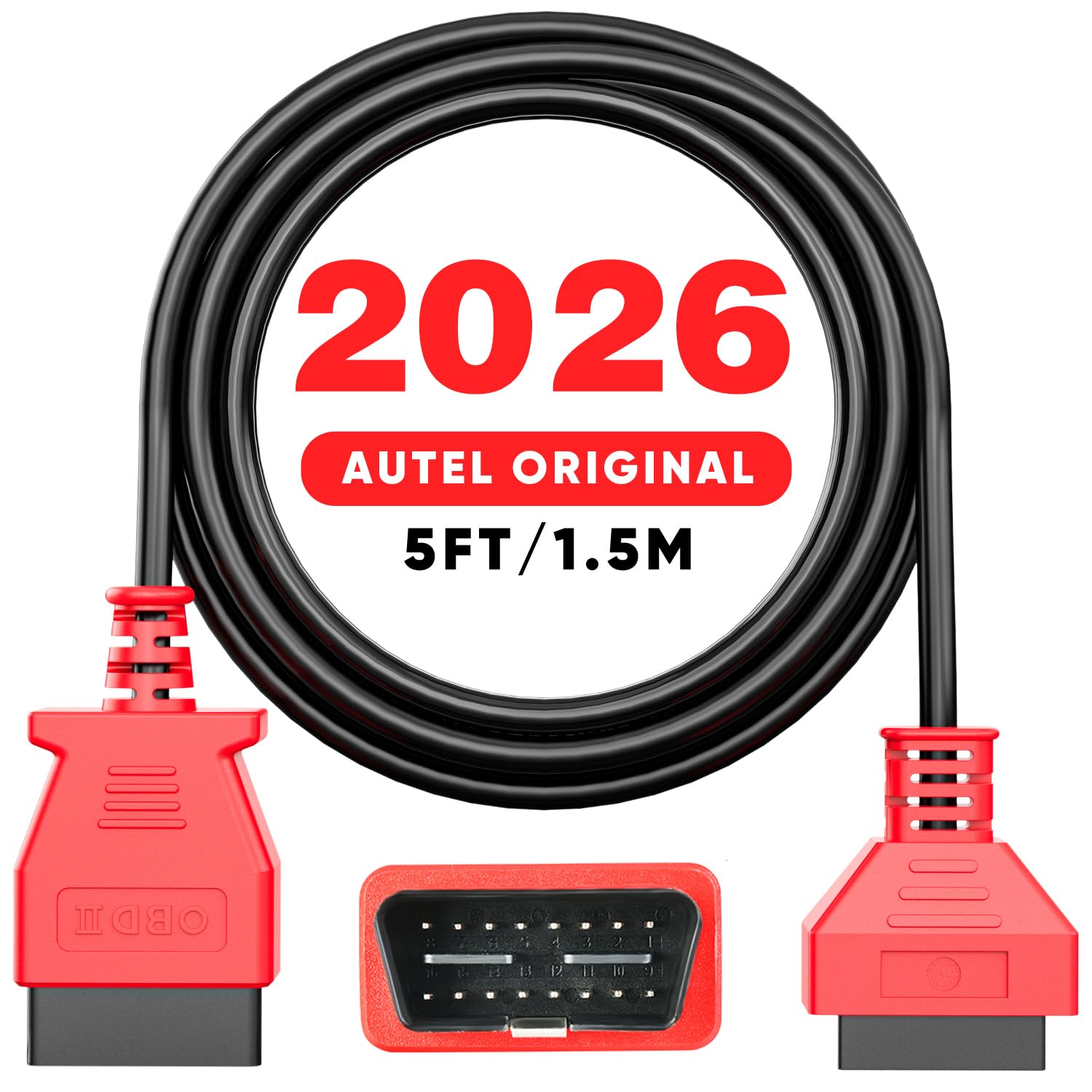
Working under the hood while reading live data calls for this cable’s 5-foot reach and heavier-gauge copper core.
Pros
- Pure copper core supports stable, fast data transmission
- 5-foot length reaches from the cabin to the engine bay
- Reinforced connector reduces strain on the vehicle port
Cons
- Some VCI dongles sit shallow in the female socket
- Heavier cable than slim ribbon alternatives
- Overkill for simple in-cabin scans
Mechanics doing live-data diagnostics while working under the hood get real value from the extra reach here, since it removes the need to run back to the driver’s seat to check readings. The copper core keeps data transmission consistent, which matters for real-time monitoring rather than just pulling stored codes. A few owners note that certain VCI dongles don’t seat as deep as expected in the female end. For general under-hood work, it holds up well.
ANCEL OBD2 Extension Cable
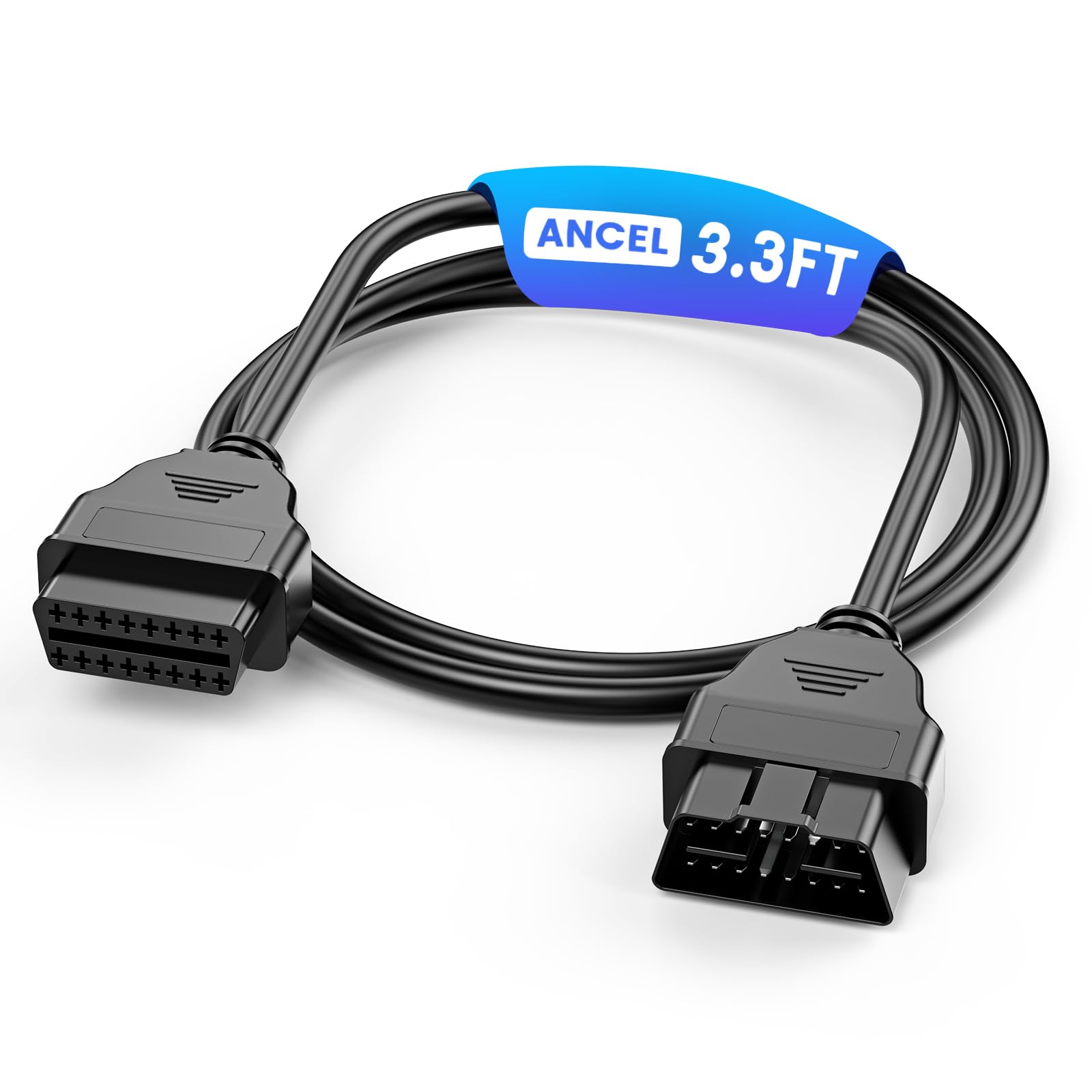
Owners of ANCEL scan tools looking for a cable built to match their specific hardware will find a dependable fit here.
Pros
- Compatible with common ANCEL scanner models by design
- High-purity copper cable minimizes signal interference
- Oil- and tensile-resistant housing suited to workshop use
Cons
- Does not support CAN FD or DoIP protocols
- Right-angle connector can conflict with some dash panels
- 3.3 feet may feel short for engine bay work
This cable earns its spot from matching well with ANCEL’s own scan tool lineup, which reduces the guesswork some universal cables carry. The copper cable construction keeps diagnostic readings accurate rather than introducing lag or dropped signal. The right-angle connector on one end causes fit issues in certain vehicles, so check your port orientation first. It’s a solid middle-length option for scanning from the driver’s seat.
thinkcar Universal OBD2 Extension Cable

Buyers of thinkcar or MUCAR scan tools with unusually short factory cables should pair this extension with their existing hardware.
Pros
- Ultra-thin connectors fit narrow or recessed OBD2 housings
- Waterproof, scratch-resistant jacket suits regular shop use
- Works with most standard OBD2 scanners beyond thinkcar’s own lineup
Cons
- At 2 feet, it won’t reach the engine bay
- Listed length has caused confusion for some buyers expecting more
- Not intended for daisy-chaining multiple sections
This cable gets bundled often with thinkcar diagnostic tools, and its main job is stretching an already-short factory scanner cable into something usable from the driver’s seat. The slim connector profile helps in vehicles where the OBD2 port sits close to trim panels or under the steering column. Reviewers confirm it holds a tight connection despite the thin design. Buyers expecting a longer cable should double check the actual 2-foot spec before ordering.
iKKEGOL 33ft OBD2 Extension Cable

Multi-bay shops running fixed emissions or inspection equipment benefit most from this cable’s exceptional 33-foot length.
Pros
- Reaches across a shop bay without needing a second vehicle move
- All 16 pins populated for full diagnostic functionality
- Daisy-chain compatible for even longer custom runs
Cons
- Far more cable than most home users will ever need
- One reviewer notes it doesn’t read PWM protocol on older vehicles
- Bulkier and heavier than shorter extension options
Shops running stationary emissions testing equipment or shared inspection stations get genuine use from a cable this long, since it removes the need to reposition vehicles for every test. For a home garage or single-car setup, 33 feet is excessive and mostly ends up coiled and in the way. The PWM protocol limitation is worth flagging for anyone testing older pre-CAN vehicles. This is a specialty cable for a specific commercial setup, not a general-purpose pick.
Buying Guide
Cable Length: Match It to the Job
Longer isn’t automatically better with OBD2 extensions. A 1 to 2-foot cable suits relocating a device a few inches behind a dash panel, while 5-foot cables handle reaching from the cabin to the engine bay. Anything past 10 feet only makes sense for shared shop equipment or multi-bay setups where the scan tool stays fixed and vehicles rotate through.
| Length Range | Best Use Case |
|---|---|
| 1 ft | Hiding trackers or dongles just behind the dash |
| 2 to 3.3 ft | In-cabin scanning from the driver’s seat |
| 5 ft | Reaching engine bay or under-hood diagnostics |
| 10+ ft (33 ft) | Shop bays, fixed inspection or emissions equipment |
Connector Profile and Fit
Low-profile, flat, or ribbon-style connectors matter when the vehicle’s OBD2 port sits inside a small housing with a hinged cover. Standard round connectors are thicker and won’t always fit behind trim panels or inside recessed sockets. Check the connector angle too; a 90-degree plug can clear a steering column but conflict with a port mounted close to a side panel.
Pin Count and Signal Integrity
Confirm the cable passes all 16 pins straight through rather than sharing ground wires, especially for splitter cables running two devices simultaneously. Cables built with pure copper or high-purity copper cores transmit diagnostic data with less interference, which matters most for live-data streaming rather than simple code pulls.
Extra Features Worth Considering
A built-in power switch prevents battery drain on permanently connected devices like AFM disablers or dash cams. Splitter cables let two OBD2 devices share one port without alternating plugs. Daisy-chain compatibility lets you combine shorter cables into a custom length instead of committing to one fixed size upfront.
Build Quality and Durability
Look for cables rated for oil, gas, and general shop fluid resistance if the cable will see regular garage use. Reinforced or thicker-gauge wiring holds up better to repeated coiling and uncoiling than thin, unshielded cable jackets.
Editor’s Choice
The iKKEGOL 5ft OBD2 Extension Cable earns the top spot for most drivers and DIY mechanics because it balances reach, flexibility, and daisy-chain versatility without unnecessary bulk. Five feet covers the gap between a driver’s seat and most under-hood diagnostic needs, and the option to link additional cables later means the length isn’t a hard ceiling.
For anyone running a permanent tracker or dash cam alongside regular scan tool use, the bbfly-A9 Splitter Cable solves a problem no single-port extension can, letting two devices share one OBD2 port cleanly. Shops with multiple bays or fixed inspection equipment should look at the iKKEGOL 33ft cable instead, since its extreme length only pays off in a commercial setting.
Conclusion
Picking the right OBD2 extension cable comes down to matching length and connector shape to a specific problem rather than defaulting to the longest or cheapest option. A hidden tracker needs a short, slim connector; an engine bay diagnostic session needs real reach and a solid copper core; a shared shop bay needs a cable long enough to skip repositioning vehicles. Check your vehicle’s OBD2 port location and housing shape before ordering, since connector angle and profile cause more return requests than length ever does.
FAQS
Does an OBD2 extension cable affect scan tool accuracy? A quality cable with all 16 pins passed through and a solid copper core won’t introduce noticeable data errors. Cheaper cables with thin wiring can cause intermittent connection drops during live-data streaming.
Can I connect multiple OBD2 extension cables together? Several cables in this roundup, including both iKKEGOL options, support daisy-chaining. Check the product listing for daisy-chain compatibility before combining cables from different brands.
Will an extension cable damage my car’s electrical system? No, as long as the cable passes pins straight through without shorting or crossing wires. Splitter cables that share ground wires improperly are the main exception worth avoiding.
Do I need a power switch on my OBD2 extension cable? Only if a device stays plugged in permanently, like an AFM disabler or a dash cam power tap. Occasional scan tool users don’t need this feature.
Why do some cables have angled connectors instead of straight ones? Angled connectors help clear obstructions like a steering column or dash trim close to the port. They can also conflict with ports mounted near a vehicle’s side panel, so check your specific port orientation first.
Is a 10-meter OBD2 cable ever necessary for home use? Rarely. That length suits shared shop equipment or multi-bay inspection stations. A single-car garage rarely needs more than 5 feet of reach.
